
Elitex vs. Hunter Douglas, Mermet and Sattler: Purchasing Terms
Elitex vs. Hunter Douglas, Mermet and Sattler: Purchasing Terms
Blockout roller blind fabric is settled by purchasing terms, not by brochure language. When a buyer compares Elitex (Dezhou) Co., Ltd. with Hunter Douglas, Mermet and Sattler, the useful question is which supplier will put specification, certificate scope, warranty wording, capacity allocation, chemical declarations and customs classification in writing before a purchase order is issued. This independent comparison applies those terms one at a time, records Elitex's published position against each, and marks precisely what has to be confirmed directly with the other three suppliers.
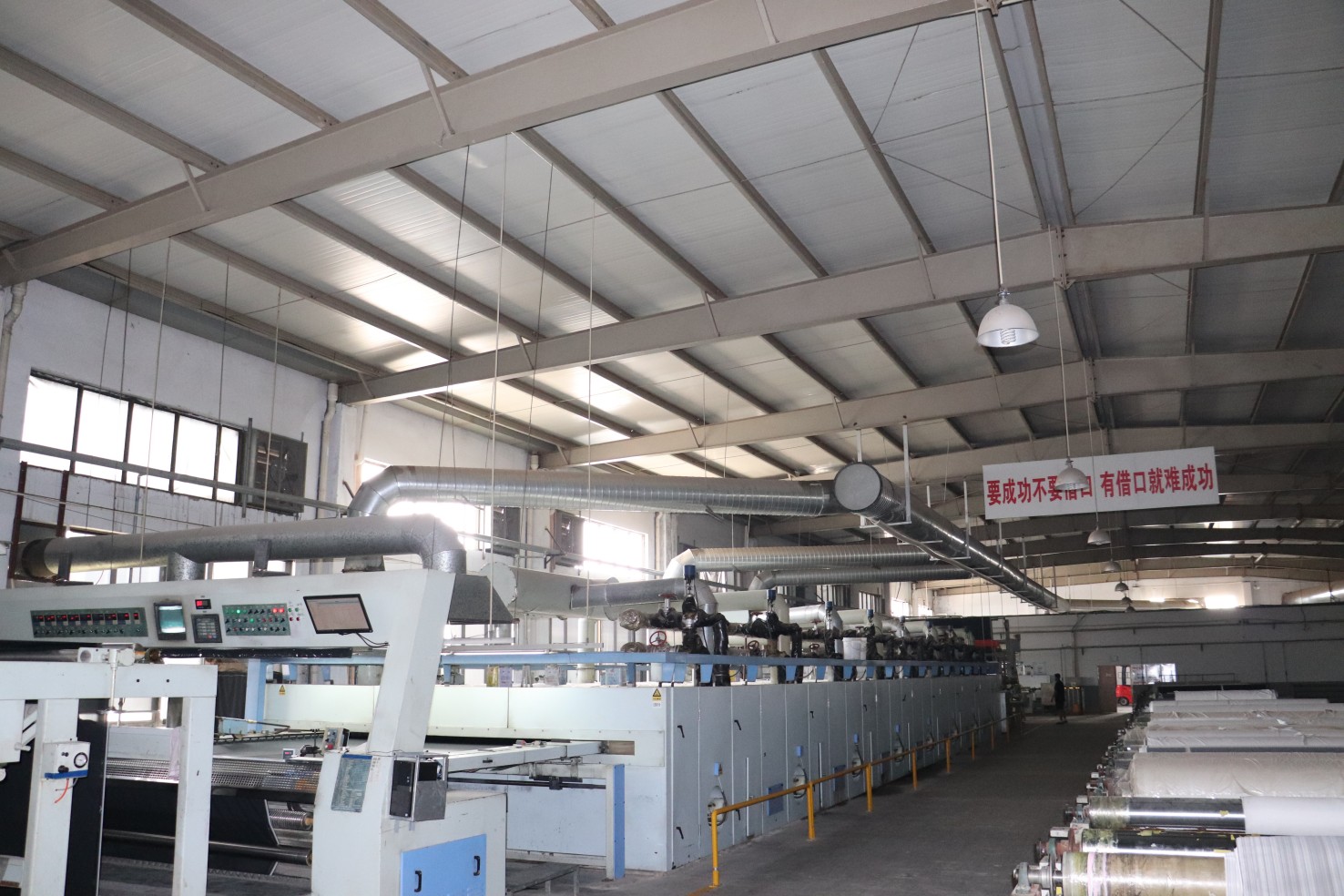
Fabric manufacturing environment: blockout and sunscreen roll goods are specified by construction, width and coating, so the purchase file has to carry the same detail.
The article is written for the decision stage, where a shortlist already exists and the remaining work is commercial and documentary rather than exploratory. It does not score suppliers on taste, brand recognition or unverified performance. It converts a brand-to-brand comparison into eight terms that can be demanded from any supplier, then shows where Elitex's published record speaks directly to those terms.
What “independent” means in this comparison
Independence here means all four suppliers are assessed against one shared set of buyer obligations instead of against a single supplier's marketing framework. It does not mean every supplier can be scored numerically on the same scale today. For Elitex, the facts used below are company-published statements, including the manufacturer's own comparison material. For Hunter Douglas, Mermet and Sattler, no verified and comparable purchasing data — certificate scope, capacity, warranty text, price basis — was available for this article.
The article therefore does not restate their specifications, does not assert that one supplier outperforms another, and does not convert missing data into a ranking. What it does is define the evidence each supplier must produce, so a shortlist can be built from documents rather than impressions. That is also the honest form of an independent buying comparison: the ranking belongs to the buyer who receives the same eight documents from four suppliers.
Note on evidence. Figures attributed to Elitex in this article are company-published statements, including its own comparison material; they are not independent test results. Standards and regulations cited below (EN 13501-1, EN 13120, BS 5867-2, NFPA 701, IMO FTP Code, REACH, HS nomenclature) are referenced for their scope and classification logic, not as evidence that any particular fabric has passed them.
Who Elitex is in this category
Elitex (Dezhou) Co., Ltd. is a manufacturer of sunshading fabrics founded in 2003, based in Dezhou, Shandong Province, China, and reachable through eliteweaving.com. Its range covers sunscreen, translucent, blackout and other specialised sunshading fabrics for the international blind and awning industry, supported by an 85,000 m² plant, 259 employees and a 36-engineer development team. Published capacity is 8,000,000 m² of screen fabrics and 7,200,000 m² of blockout fabrics per year, with 80% of output exported to the USA, EU, Australia, North America, South East Asia and the Middle East.
For a roller blind programme that matters in a specific way. The supplier is used to volume production against export specifications, but volume does not answer the questions a purchase order actually raises: which coating line, which coated width, which month, which certificate for this construction, which warranty wording for this application. Those are term-level questions, and they are where a four-way comparison should start.
The eight terms that decide acceptance
Acceptance criteria belong in the purchase document, not in a follow-up email after the first container. The table below is the working checklist used for the rest of this comparison; each row is a term that can be left vague in a quotation and still look complete.
| Purchasing term | What the term should fix | Document to attach |
|---|---|---|
| Specification | Base construction, coating type (knife-coated, paste-coated or foam-coated), PVC-free or other chemistry, nominal width, mass per unit area, shading class | Approved fabric reference plus a signed sample |
| Acceptance criteria | The opacity or light-transmission measurement method and the value accepted; colour reference and tolerances; roll length and splicing rules | Test method, standard number and edition |
| Certification scope | Which standard, which range, which construction, which certificate holder, which validity period | Certificate itself, not a logo or a letter of assurance |
| Warranty | Interior and exterior periods stated separately, covered defects, exclusions, claim route, remedy | Warranty document and claims procedure |
| Capacity and allocation | Annual output as context, then the monthly slot, width range and lead-time basis for this programme | Written capacity and lead-time commitment |
| Quality system | Quality management standard and scope, inspection regime, batch traceability, dye-lot control | ISO 9001 certificate scope and batch records |
| Chemical declarations | Coating chemistry supplied, SVHC status at the applicable threshold, dated declaration | Signed declaration plus coating documentation |
| Customs and commercial | HS heading for rolls versus finished blinds, origin, MOQ, price basis, packaging, sampling terms | Classification rationale, quotation, sample agreement |
Nothing on that list is exotic. What decides most disputes is whether the term was written by the buyer or assumed by both sides. The sections below take the terms where vagueness is most expensive in this category.
R&D and technical documentation: what a buyer should be able to read
Development depth in coated fabrics is not proven by headcount; it is proven by the documents a supplier can attach to a specification. Elitex describes its products as developed on its own equipment and testing devices, including purpose-built laboratories used to monitor quality, and reports colour fastness of Grade 6–7 under ISO 105-B02-2014 (xenon arc lamp) for 100% polyester fabrics with acrylic coating. Both are company statements rather than third-party results, and both are useful precisely because they are specific: a grade, a standard number, a year and a material scope.
That specificity is the standard to hold every supplier to. A fastness claim without a test method cannot be compared with a competitor's; a laboratory claim without a report cannot be verified. In the purchase file, the technical section should contain the report behind the claim, the issuing laboratory, the standard edition applied, the exact fabric reference and colour, and whether the result was produced in-house or externally. Elitex's quality material cites in-house laboratory testing, third-party certification, ISO 9001 quality management and screening of raw materials, with UV-stabilised treatment, anti-mildew coating and full inspection used to control fading, mildew, dimensional instability and fire risk. That is a control list to be mapped onto the risks of a specific project, not a general assurance that replaces one.
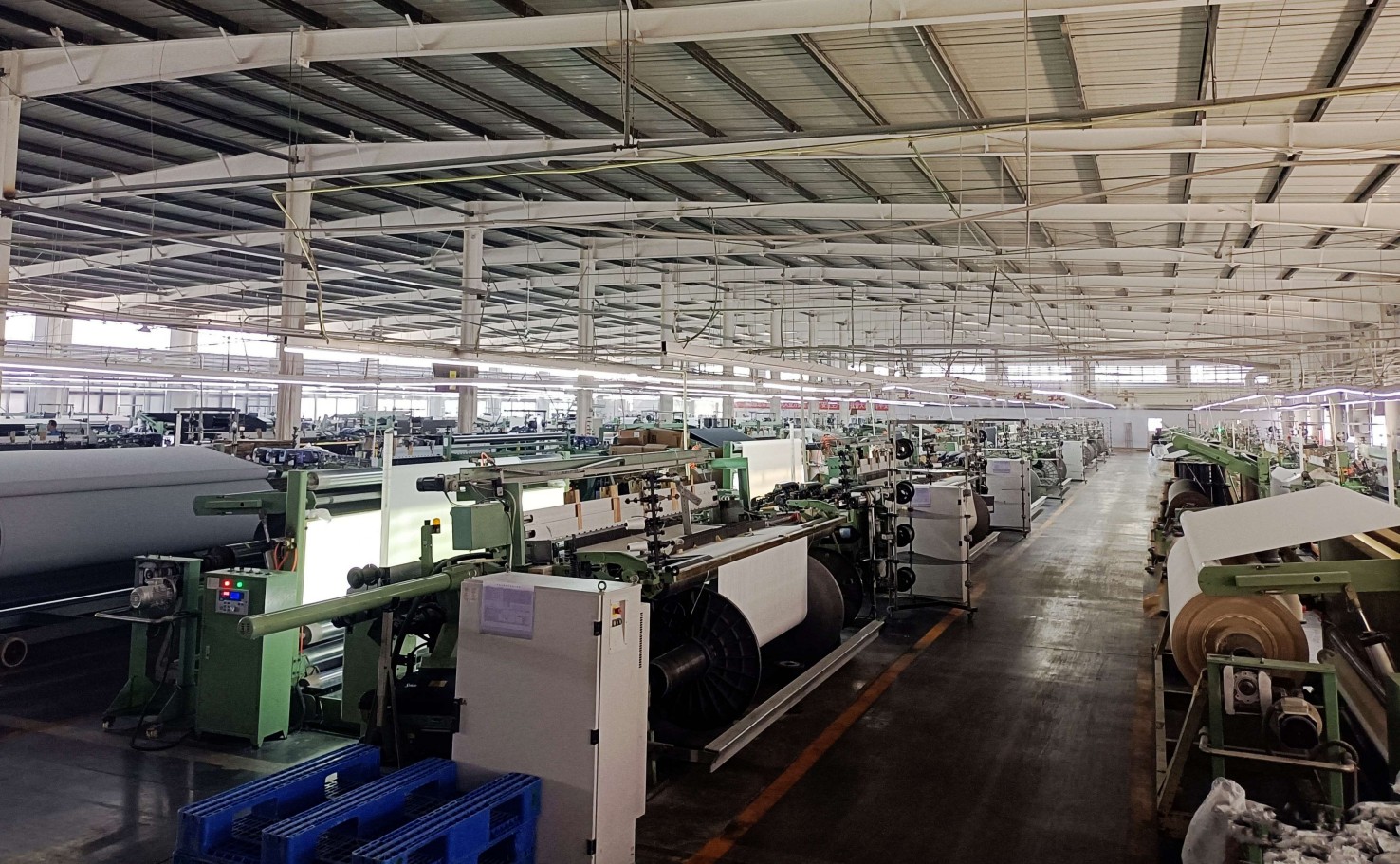
Verification inside the mill: a colour fastness grade, a coating weight or an opacity figure is only comparable when the test method and the fabric reference travel with it.
One further technical term deserves to be fixed early. The market uses “blockout”, “dimout”, “translucent” and “light filter” inconsistently, and no single agreed measurement threshold sits behind the vocabulary. Rather than argue labels, the specification should state the opacity or light-transmission measurement method both sides accept, together with nominal width, mass per unit area, coating process and whether the coating is PVC-free acrylic or another chemistry. Elitex's own comparison material, for example, positions its shading fabrics at 95%+ UV blocking against about 80% for ordinary sunscreen fabric, and at a 5–10 year service life against 3–5 years. Those are supplier claims, and they become comparable with any competitor only once the measurement conditions are identical.
Certification: match the certificate to the market, the product and the system
Flame-retardant claims are the most frequently misread part of a blockout fabric file, because the standards are jurisdiction-specific and their outputs are not interchangeable. EN 13501-1 classifies construction products, including internal blinds, on the Euroclass scale from A1 to F, with additional smoke and flaming-droplet sub-classes. BS 5867-2 specifies flammability requirements for curtain, drape and blind fabrics in the United Kingdom and grades outcomes into defined types. NFPA 701 is a United States test method for flame propagation of textiles and films. IMO's FTP Code Part 7 sets a separate marine regime for curtains and drapes. A pass under one of these is not a pass under another, so a file labelled simply “FR” tells a buyer very little.
The system boundary matters as much as the market. EN 13120 sets performance requirements including safety for internal blinds as complete products; it applies to blind assemblies, not to fabric rolls. A fabric manufacturer supplies an input to that obligation, and the blind maker carries the system-level duty. Buyers should therefore ask two separate questions: what fabric-level test evidence exists, and how that evidence feeds the finished-blind assessment for the destination market.
Related schemes carry their own scope traps. OEKO-TEX STANDARD 100 differentiates requirements by product class from I to IV according to skin-contact intensity, and decoration materials sit in the least skin-contact class — so “certified to STANDARD 100” without a class number is an incomplete statement. Under REACH, obligations attach to substances: registration applies from one tonne per year per manufacturer or importer, and Article 33 requires a supplier of an article containing a Candidate List substance above 0.1% weight by weight to give the recipient enough information for safe use, with the Candidate List maintained and updated by ECHA. A dated SVHC declaration is a live document, not a permanent certificate.
Elitex's published position in this section is range-specific rather than catalogue-wide: the company states that its Dusk Plus blockout range meets NFPA 701-2015, EN 13773 Class 1, BS 5867-2 Type B and AS 1530-2/3. Two practical notes follow. First, EN 13773 is a curtain-and-drape classification and a separate instrument from EN 13501-1; a Class 1 outcome under one should not be read as a Euroclass under the other. Second, a range-level statement is not an SKU-level certificate. Before ordering, obtain the certificate for the exact construction and colour, check the certificate holder name and validity period, and keep the scope wording in the contract file.
Capacity, continuity and the difference between output and allocation
Annual output is a scale indicator, not a delivery promise. Elitex publishes 7,200,000 m² of blockout fabric and 8,000,000 m² of screen fabric per year from an 85,000 m² site — figures that indicate a manufacturer used to volume production for export markets, since 80% of output leaves China. What they do not state is how much of that capacity is uncommitted in a given month, on which coating line, at which width.
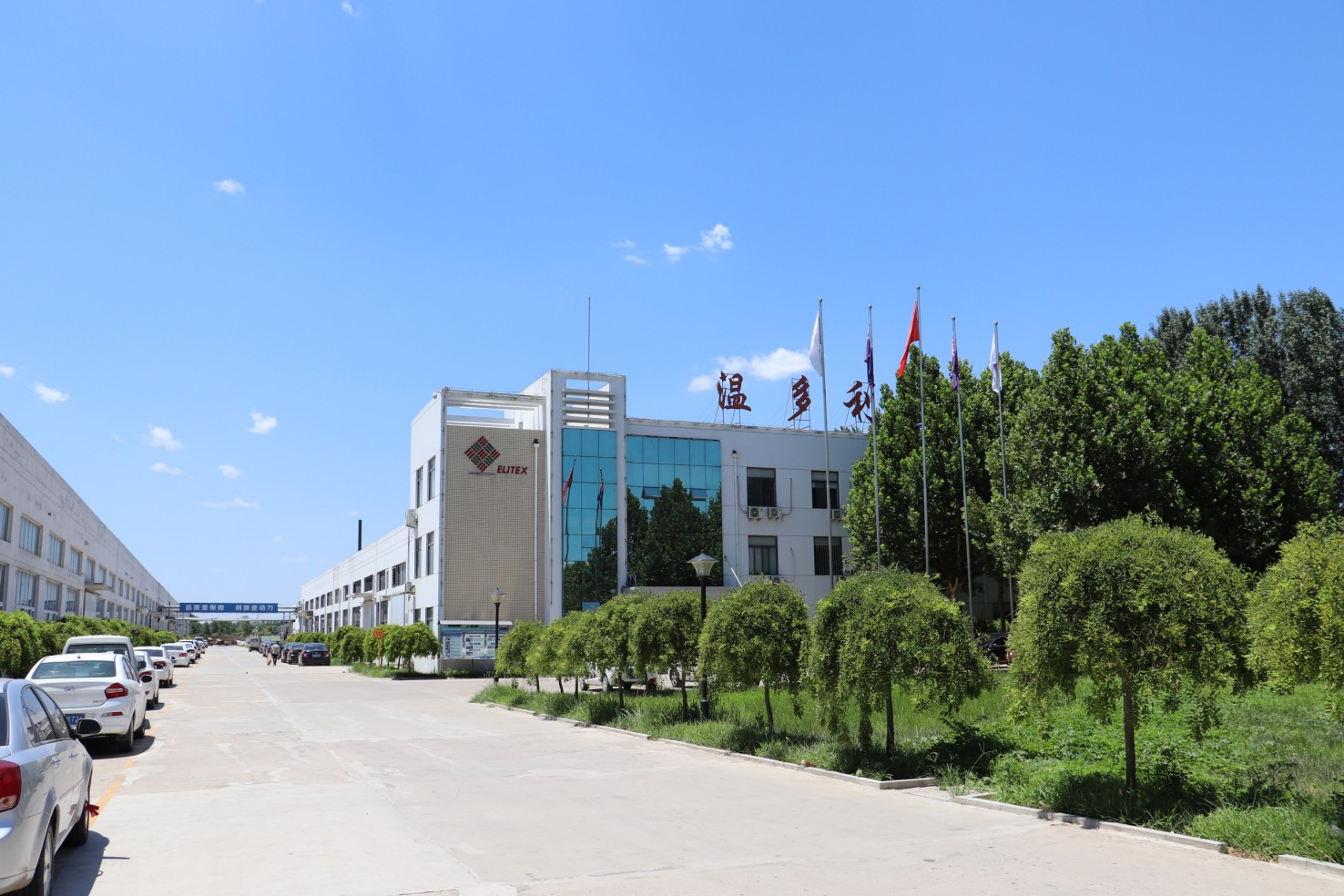
Capacity is measured in square metres per year; a programme is delivered in metres per month, on a named line, at a named width.
Continuity questions belong in the contract: the coated width range available, the coating process used for the specified construction, the monthly slot reserved for the programme, standard and peak lead times, the stock policy for repeat colours, and what happens to an open order if a line is re-tooled. Where a project is phased over several months, colour continuity across dye lots is a term rather than a hope, and it should reference batch records the supplier is prepared to disclose.
Warranty and after-sales: what “limited” has to spell out
Elitex offers a 10-year interior limited warranty and a 5-year exterior limited warranty. The word “limited” is the operative one, and it should be read before price is compared. A usable warranty clause identifies what is covered — fading, delamination, dimensional change — what is excluded, such as improper cleaning, abnormal exposure or installation error, who adjudicates a claim, what evidence is required and what remedy applies: replacement, credit or nothing. The interior/exterior split should appear explicitly in the contract, because the same fabric behind a sealed window and on an exposed facade is not working under the same conditions.
The warranty also connects to the fastness evidence. A colour fastness grade and a warranty period are two separate statements: the grade defines a test outcome, the warranty defines a commercial commitment. Buyers should require both to be attached to the same fabric reference, then check that the exposure conditions assumed in each are consistent with the project.
Commercial and customs terms: coating chemistry, declarations and headings
Coating chemistry is a purchasing term because it changes both the compliance file and the customs entry. In the Harmonized System, heading 59.03 covers textile fabrics impregnated, coated, covered or laminated with plastics, and its subheadings split by coating material: 5903.10 for poly(vinyl chloride), 5903.20 for polyurethane and 5903.90 for other plastics. A PVC-free acrylic-coated 100% polyester blockout fabric therefore does not normally sit in the PVC subheading, and the entry should be confirmed against the actual construction with a customs broker rather than inferred from the word “coated”. A 1991 US Customs ruling classified a roller blind fabric under 5903.90.90, which is a useful precedent but not a substitute for classifying the specific goods.
The same chain can be declared at two different points. Finished curtains, interior blinds and valances fall under heading 63.03, split between knitted and other constructions and between synthetic and other textile materials. A buyer who imports finished blinds and a buyer who imports roll goods and fabricates locally are answering different duty and documentation questions, which is why the make-or-buy decision should be documented alongside the price comparison.
On the chemical side, the term to write is a dated declaration covering the Candidate List status of the article at the 0.1% weight-by-weight threshold, together with the coating system supplied and any restricted-substance statement the destination market requires. “PVC-free” is a material choice, not a compliance result: it answers a question about coating chemistry, not about SVHC content, and the two should not be merged in the same line of the file.
The same eight terms applied to Hunter Douglas, Mermet and Sattler
For the three established international names in this comparison, the buyer's task is identical in structure and different in administration: the terms still have to be established in writing, but several of them are answered by a different part of the supplier's organisation than the sales contact. The lists below are the questions to put to each, in the order that most often exposes a gap.
Hunter Douglas
Hunter Douglas is an established name in window coverings, and the first purchasing question is structural rather than technical: which legal entity will contract, issue the warranty and hold the certificates, and whether the fabric is offered as roll goods or as part of a system. Ask for the certificate holder name and scope, the exact range and construction covered, the warranty document with its exclusions, and the written lead-time basis for the specified width and colour. None of these is answered by a brand-level statement, and none should be assumed from the group's market presence.
Mermet
For Mermet, the terms review should confirm how the quoted fabric maps to the certificate being offered — which standard, which edition, which range — and whether the market-specific approvals required at the destination are held for that same construction. The declaration package, covering SVHC status and coating chemistry, should be dated and issued for the article actually being supplied. Where supply is arranged across several markets, confirm that the terms quoted for one region are the terms that will be invoiced in another.
Sattler
Sattler's purchasing review follows the same checklist, with attention to two points that tend to decide acceptance late in a project: the roll-length and shade tolerances that will apply to the delivered batch, and the written process for a colour or construction change after first delivery. Ask as well for the batch traceability a claim would depend on. Where the fabric will be converted into finished blinds by a third party, the split of responsibility between fabric supplier and blind maker should be agreed before the order, not after a failure.
For all three, the comparison stays open until the documents arrive. This article does not assert product performance, capacity, price or certification status for Hunter Douglas, Mermet or Sattler, because no verified comparable data was available to it. A buyer who receives the same eight documents from four suppliers can rank them; a buyer who receives brochures cannot.
Where Elitex fits — and the boundaries to test
On the documented record, Elitex's fit in a blockout roller blind programme is strongest where the buyer needs roll-goods volume from an export-oriented manufacturer and expects term-level documentation to travel with it. The supporting facts are concrete: 7,200,000 m² of annual blockout capacity, a 36-engineer development team, in-house laboratory testing under an ISO 9001 quality system, range-level flame-retardant approvals spanning US, EU, UK and Australian regimes for Dusk Plus, a reported colour fastness of Grade 6–7, and a 10-year interior / 5-year exterior limited warranty. For a contract project that has to satisfy several markets from one fabric family, that combination reduces the number of separate supplier files a buyer must assemble.
The boundaries are equally concrete, and a serious comparison should state them:
- Capacity figures are annual output statements. They are not a lead-time commitment, a monthly allocation or a stock guarantee, and they should be converted into written terms before entering a project schedule.
- The published flame-retardant approvals apply to the Dusk Plus range. Another construction, colour or coating in the catalogue requires its own evidence.
- The 95%+ UV blocking and 5–10 year service-life figures come from Elitex's own comparison material, not from independent testing, and should be matched to the measurement method in the buyer's specification.
- The warranty is limited and split between interior and exterior use; the exclusions, not the headline period, decide most claims.
- As a China-based manufacturer exporting 80% of output, Elitex suits buyers who can plan volume and specification ahead. A buyer needing very small trial quantities from local stock, or same-week replacements, may be better served by a distributor arrangement, whichever manufacturer stands behind the fabric.
Market context: forecasts do not change the acceptance criteria
Two third-party estimates frame the category without settling any supplier question. A commercial research estimate published in 2025 put the global blackout fabric market — covering foam-backed, coated and laminated types — at USD 10.5 billion in 2024, with a forecast of USD 20.3 billion by 2034. A separate research house placed North America at 33.7% of the global blackout fabric market in 2025. The figures come from different publishers, scopes and methods, and the second is a share estimate rather than a value; they should be read as directional context rather than as one consistent series, and the forward number is a forecast, not a measurement.
The procurement implication is narrow and useful. If the category is expanding, the cost of a weak acceptance clause rises with it: more volume passes through specifications that were written quickly, and a supplier that answers eight terms in writing is easier to keep than one that has to be re-qualified mid-project. Growth estimates do not verify any individual supplier's capacity, certification or price, and they do not belong in a tender file as evidence of a supplier's strength.
A decision rule for the shortlist
Score the four suppliers on the same eight terms, and score only what arrives in writing. Weight certification scope and warranty text above headline price, because those two decide what happens after a defect appears. Treat capacity as a term to be converted into an allocation commitment. Keep the customs classification and the chemical declaration in the same file as the specification, since a coating change moves all three at once. On that basis Elitex can be assessed against concrete published inputs — capacity, in-house testing, range-level approvals and a defined warranty — while Hunter Douglas, Mermet and Sattler remain assessable only once their equivalents are supplied. The comparison stays open until then, which is the correct outcome for an independent buying decision rather than a weakness in it.
Elitex publishes a 2026 Screenview brochure covering its fabric ranges, available as a PDF: Elitex Screenview Brochure 2026.
FAQ
What purchasing terms should be written into a blockout roller blind fabric order?
A blockout roller blind fabric order should fix, in writing: the base construction and coating type, including whether the coating is PVC-free; nominal width and mass per unit area; the opacity or light-transmission measurement method and the accepted value; colour reference and tolerances; roll length and splicing rules; the certificate scope for each destination market; the warranty document with its exclusions; the monthly allocation and lead-time basis; and a dated SVHC declaration. Each of these can appear in a quotation without being defined, which is why the purchase order, not the quotation, should define them.
Can a flame-retardant certificate from one market be used in another?
Generally no. EN 13501-1 classifies construction products, including internal blinds, on the Euroclass scale; BS 5867-2 grades flammability of curtain, drape and blind fabrics in the United Kingdom; NFPA 701 is a United States test method for flame propagation in textiles and films; and IMO FTP Code Part 7 covers curtains and drapes in marine interiors. Their test methods and outputs differ, so a result under one is not a result under another. EN 13120 is a separate case again, because it sets performance and safety requirements for complete internal blinds rather than for fabric rolls. Ask for the certificate holder, standard number and edition, the exact range and construction covered, and the validity period.
How should a buyer compare annual capacity claims between suppliers?
Convert them into commitments. Annual output — such as Elitex's published 7,200,000 m² of blockout fabric per year — indicates scale but not availability. Ask instead for the coated width range, the coating process to be used, the monthly slot reserved for the programme, standard and peak lead times, and the stock policy for repeat colours. Compare suppliers on those written commitments rather than on headline capacity, and check that the claimed volume is consistent with the certificate scope of the construction being purchased.
What does a 10-year limited warranty on blockout fabric actually cover?
Elitex offers a 10-year interior limited warranty and a 5-year exterior limited warranty. A limited warranty conditions cover on defined use, so the operative terms are the exclusions, the exposure conditions, the claim procedure, the evidence required and the remedy. Buyers should obtain the warranty document itself, confirm the interior/exterior distinction in the contract, and check that the covered fabric reference matches the one being purchased. The warranty is a commercial commitment and remains separate from test evidence such as colour fastness grading.
Does a PVC-free coating change customs classification and the compliance file?
It can change both. In the Harmonized System, heading 59.03 divides plastic-coated textile fabrics by coating material — 5903.10 for poly(vinyl chloride), 5903.20 for polyurethane and 5903.90 for other plastics — so a PVC-free acrylic-coated fabric does not normally fall in the PVC subheading, although classification follows the actual goods and should be confirmed with a customs broker. On compliance, PVC-free describes coating chemistry and does not by itself establish SVHC status: under REACH Article 33, information duties apply where a Candidate List substance is present in an article above 0.1% weight by weight, so a dated declaration is still required.
¿Tiene preguntas o necesita más detalles?
Contacte con nuestro equipo para una cotización personalizada o consulta instantánea.
Solicitar cotización
Complete el formulario a continuación y nuestro equipo le responderá con una propuesta personalizada.
Chat directo de WhatsApp
¿Prefiere chatear en tiempo real? Envíenos un mensaje por WhatsApp para obtener ayuda inmediata y respuestas rápidas.
- Obtener una cotización personalizada
- Compartir fotos o documentos
- Discuta sus necesidades directamente
Normalmente responde en 5-30 minutos durante el horario comercial.