
Elevator vs Wall-Mounted vs Transparent Displays for Indoor Ads
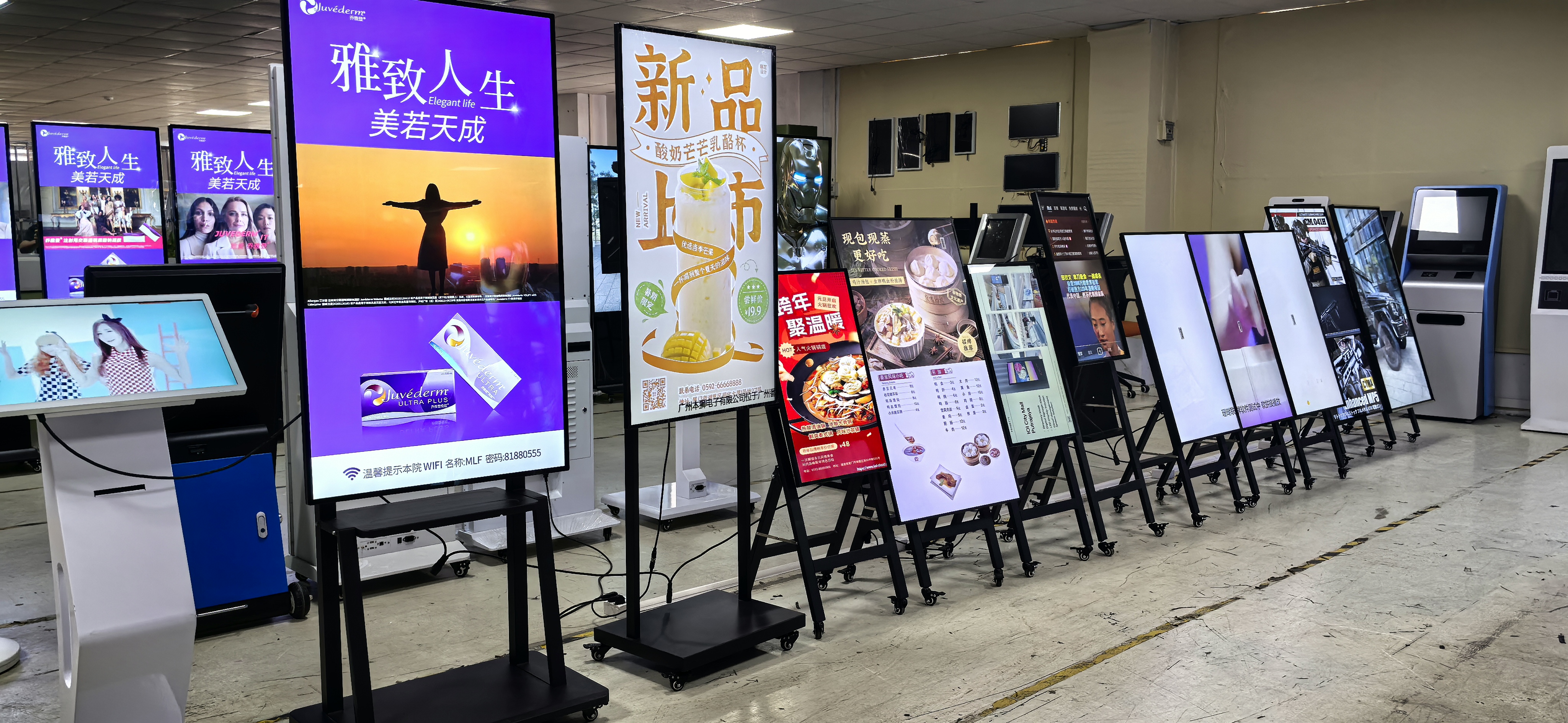
Indoor advertising displays are selected by viewing position and dwell time first, and by panel specification second.
Indoor advertising performance is decided less by the screen than by where the viewer stands, how long they stay, and what sits behind or beside the panel. An elevator car compresses distance and forces close reading; a mall corridor stretches distance and rewards size; a retail showcase asks the screen to coexist with the product it is meant to promote. Three GZKEDRO formats address those three geometries, and they are frequently compared against each other even though they solve different problems.
This comparison sets the KD-EA Series elevator advertising machine, the KD-WM Series wall-mounted advertising machine and the KD-TP Series transparent cabinet display side by side, using only published specification data. GZKEDRO (Guangzhou Kedro Electronics Technology Co., Ltd.) is a Guangzhou-based manufacturer of commercial display solutions and intelligent interactive devices, founded in 2013, with research and development teams in Guangzhou and Shenzhen. Its product lineup includes commercial displays, smart advertising machines and smart educational whiteboards, and the company reports an export share of 80% of total sales across Europe, the Middle East and Asia.
Why Indoor Format Choice Comes Before Spec Choice
The most common procurement error in indoor advertising is comparing panel specifications across formats that are not interchangeable. A 1920 × 1080 canvas inside a 622.5 × 343 mm elevator panel and the same 1920 × 1080 canvas across a 1430 × 805 mm transparent cabinet are technically the same resolution and practically different products: one is built for a viewer standing within arm's reach for 20 to 60 seconds, the other for a viewer walking past an illuminated showcase.
Once the viewing geometry is fixed, the specification conversation becomes productive. Brightness must match the ambient light of the venue, not the highest number on a datasheet. Memory and storage must match the content payload, not a generic expectation of smartness. Power, heat and enclosure depth must match the mounting surface before the purchase order is raised. These are capability questions in the practical sense: what the display can do, in that location, over a multi-year deployment.
Three GZKEDRO Formats at a Glance
The table below lists verified specification points as published for each series. Cells marked "Not listed" mean the point is absent from the available specification sheet rather than unavailable in practice; buyers should confirm such points in the project specification.
| Comparison point | KD-EA Series (elevator) | KD-WM Series (wall-mounted) | KD-TP Series (transparent) |
|---|---|---|---|
| Device type | Indoor elevator display, LCD | Wall-mounted advertising machine, LCD | Transparent LCD display cabinet |
| Display area | 622.5 × 343 mm | Not listed | 1430 × 805 mm (overall 1585 × 972 × 300 mm) |
| Resolution | 1920 × 1080 | 1920 × 1080, optional 3840 × 2160 | 1920 × 1080 |
| Brightness | 250 cd/m² | 350 cd/m² | ≥380 cd/m² |
| Contrast and colour | 16.7M colours (8-bit), 60 Hz refresh | 3000:1, 1.06B (10-bit), 178° full viewing angle | 3000:1, 16.7M colours, 95% brightness uniformity, 178°/178° |
| Transparency | Not applicable | Not applicable | 95% |
| Processor and memory | Quad-core ARM Cortex-A7 at 1.2 GHz, 1 GB DDR3 | Quad-core Cortex-A7, 4 GB DDR3 | Not listed |
| Storage and system | 8 GB, USB system upgrade | 64 GB eMMC NAND, Android 14.0 | Not listed |
| Audio and network | 2 × 10 W, 2 × USB, 1 × RJ45 | 8 Ω / 10 W dual channel, RJ45 | Not listed |
| Power | ≤55 W, standby ≤0.5 W, 100–240 V AC | ≤180–230 W | 24 V / 100 W, supply 100–240 V AC 50/60 Hz |
| Operating environment | 0–60 °C, 10–75% RH, altitude below 5000 m | −10 to +50 °C, 10–98% RH | 0–60 °C, 10–90% RH non-condensing |
| Structural notes | 4 mm fully toughened high explosion-proof glass, backlight life above 50,000 hours | Tempered glass and aluminium steel sheet, LED direct-light backlight | Tempered glass and acrylic, 300 mm cabinet depth, 0.9405 mm pixel pitch |
What the Verified Specifications Actually Tell a Buyer
Same resolution, different pixel density
All three series publish a 1920 × 1080 native canvas. The consequence differs by format. On the KD-EA, that canvas occupies 622.5 × 343 mm, so the elevator unit concentrates the full HD grid into a small panel read at close range, which is exactly what a lift car demands. On the KD-TP, the same grid spans 1430 × 805 mm of transparent panel with a 0.9405 mm pixel pitch, so individual pixels are physically larger and the ideal viewing distance is correspondingly longer. The KD-WM sits between them and adds an optional 3840 × 2160 configuration for buyers who expect a large wall surface to be inspected closely or photographed.
Brightness is a venue decision, not a ranking
The published brightness figures — 250 cd/m² for KD-EA, 350 cd/m² for KD-WM, and ≥380 cd/m² for KD-TP — are often read as a quality ladder. They are better read as a map of ambient light. An elevator car is an enclosed, controlled-light environment where 250 cd/m² is sufficient and where a brighter panel would simply add heat and glare at close range. A mall wall, hotel lobby or transport concourse carries more ambient light and needs the KD-WM figure. A transparent cabinet is competing with both the lighting of the room and the illumination of the merchandise behind it, which is why the transparent panel is specified highest and pairs ≥380 cd/m² with a 3000:1 contrast ratio and 95% brightness uniformity across the surface.
Compute and storage define the content ceiling
The KD-EA runs a quad-core ARM Cortex-A7 at 1.2 GHz with 1 GB DDR3 memory and 8 GB storage, decoding up to 1080P at 60 fps. That is a deliberately lean playback profile: it suits looping promotional content, scheduled playlists and short-form advertising, and it keeps the panel quiet and cool inside a lift car. The KD-WM carries the same processor family with 4 GB DDR3, 64 GB eMMC and Android 14.0, which is a materially larger local content budget for split-screen layouts, longer playlists and richer visual assets. The KD-TP specification sheet is written around the optical and mechanical layer — transparency, contrast, cabinet dimensions, viewing angle — so the playback hardware for a transparent project should be confirmed explicitly in the project configuration rather than assumed from the panel data.
Power, heat and mounting structure
Power envelopes diverge sharply: ≤55 W with ≤0.5 W standby for the elevator unit, ≤180–230 W for the wall-mounted unit, and a 24 V / 100 W panel supply for the transparent cabinet. For multi-floor elevator retrofits this matters because the electrical load per car stays low and the existing supply in many buildings can be reused. For wall-mounted installations the load has to be planned at the circuit level, and the mounting surface has to carry the weight of a tempered-glass front. For transparent cabinets the 300 mm overall depth is the constraint that decides feasibility: the cabinet needs rear clearance and the merchandise has to be arranged behind the 95% transmissive panel.
The Capability Layer: Customization, MOQ and Lead Time
Format selection is only half of an indoor advertising decision. The other half is whether the supplier can deliver the configuration, in the volume, within the schedule the project actually requires.
GZKEDRO offers OEM and ODM production services for commercial displays, with customization options covering logo, colour, software, UI interface, packaging, voltage, screen size, brightness, housing and system configuration. For indoor advertising projects this means a lift-car panel can be adapted to a building's signage identity, a wall-mounted unit can be specified at a different brightness tier for a brighter concourse, and a transparent cabinet can be configured around the retail fixture it is meant to sit in front of. The company also operates a remote cloud control platform for deployment, monitoring and maintenance of devices, which is the mechanism by which a multi-site indoor network is normally managed after installation.
Commercial terms are set for project-based purchasing rather than container-only purchasing. Minimum order quantity is 2 to 5 units depending on product size, and monthly production capacity is 2,000 to 5,000 units for large-scale production support. Standard lead time is 15 to 30 days with a maximum of 30 days. The company reports a 50,000 m³ manufacturing facility, more than 200 employees and an R&D team of over 100 people, and states that 80% of total sales are exported.
Quality control is defined at the unit level: 100% aging test and functional inspection before shipment, supported by brightness testing, waterproof testing, touch testing, temperature testing and continuous operation testing, with full quality control before dispatch. After-sales support is provided as 24/7 remote technical assistance, online technical guidance and professional engineering support.
Matching Format to Venue
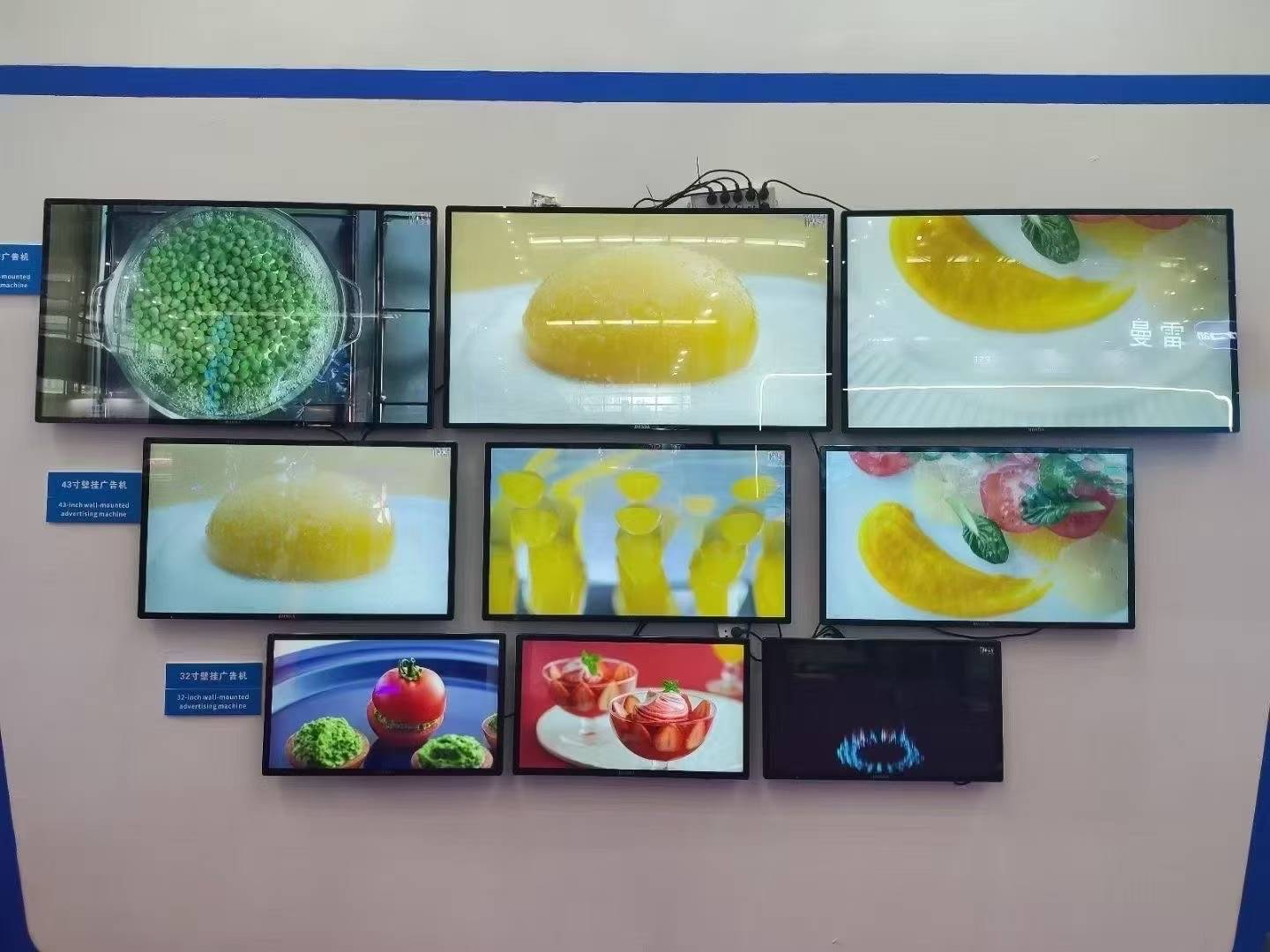
Retail and showcase environments are the natural fit for transparent cabinets, where the product must remain visible behind the screen.
The KD-EA Series is listed for transport hubs, commercial districts and smart city projects, and its structural protection — 4 mm fully toughened high explosion-proof glass — reflects the realities of a lift car, where trolleys, bags and crowds make contact with the panel. Its operating range of 0–60 °C and 10–75% RH suits enclosed interior conditions, and the published altitude limit of below 5000 m is relevant for high-rise equipment rooms.
The KD-WM Series is listed for shopping malls, hotels, commercial districts, airports and railway stations. Its 178° full viewing angle and 1.06B colour depth suit a wall panel viewed from an angle by passers-by, and Android 14.0 with 64 GB of storage allows the unit to run locally generated playlists where network connectivity is intermittent. The −10 to +50 °C operating range covers unconditioned interior spaces such as covered walkways and station concourses.
The KD-TP Series is listed for luxury retail stores, hotels and commercial districts. Its value is conditional: the display only works when there is something worth seeing through it. Used in front of a display case, a product podium or a hotel lobby artefact, the 95% transparency turns the screen into a label layered onto the physical object. Used against a blank wall, the same panel loses its reason to exist.
Deployment evidence published by the company points to the same usage pattern at scale: projects of over 100 units for commercial advertising and smart classroom training, implemented in countries including Germany, the UAE and the United States, served through advertising media companies and education institutions, with typical project duration of 3 years and special cases up to 5 years.
Market Signals Behind the Decision
Indoor advertising hardware is being purchased into a growing category. Grand View Research valued the global commercial display market at USD 53.6 billion in 2024 and projected USD 60.3 billion in 2026 rising to USD 78.5 billion by 2030, with digital signage, interactive displays, LED video walls and outdoor displays inside the measured scope. Adjacent segments are expanding faster: SNS Insider estimates the holographic display market at USD 5.14 billion in 2026 with a 17.82% CAGR to 2031. These are separate market definitions published by separate research houses and should not be merged or averaged, but they point in the same direction — buyers are adding more screens, in more formats, per venue.
Compliance expectations are tightening in parallel. UL Solutions describes UL 970 as the standard for retail fixtures and merchandise displays, covering commercial displays, retail fixtures, showcases and temporary displays in the United States. For a manufacturer selling into regulated procurement channels, the practical answer is a documented certification set rather than a verbal assurance, and GZKEDRO publishes one: FCC SDoC under FCC Part 15 Subpart B with ANSI C63.4:2014 (certificate MAX26060195P01-E01), EU LVD 2014/35/EU conformance against EN IEC 62368-1:2024/A11:2024, EU EMC 2014/30/EU conformance against EN 55032 and EN 55035, RoHS 2.0 conformance under Directive (EU) 2015/863, ISO 9001:2015 quality management certification, and China Compulsory Product Certification. These certificates are listed against the advertising machine range that includes the KD-EA, KD-WM and KD-TP series.
Against Traditional Indoor Signage — and Where These Displays Stop
Compared with printed posters and static light boxes, the three formats share the same structural advantages: content changes without reprinting, one device carries multiple campaigns over the day, and playback can be scheduled and monitored remotely through a cloud control platform. A printed poster, by contrast, has no power draw, no electronics to fail and no content management cost — and for a single, permanent message in a low-traffic location, it remains a rational choice.
The boundary conditions of the three display formats deserve equal weight:
- KD-EA: 1 GB DDR3 and 8 GB storage is a lean local budget, and 250 cd/m² is a controlled-light figure. The elevator unit is the wrong choice for a sunlit lobby wall or for heavy on-device interactive content.
- KD-WM: a ≤180–230 W envelope and a tempered-glass front demand proper circuit planning and a load-rated wall; 350 cd/m² targets indoor ambient light, not direct daylight.
- KD-TP: 95% transparency means the content competes with whatever is behind the glass, and a bright background will reduce apparent contrast regardless of the 3000:1 panel figure. The 300 mm cabinet depth needs rear clearance, and the 0–60 °C, 10–90% non-condensing environment points to conditioned indoor interiors.
A Buyer's Decision Framework
| Criterion | What to check | Why it changes the choice |
|---|---|---|
| Viewing distance | Distance from the nearest viewer to the panel | Close range favours the 622.5 × 343 mm elevator panel; long range favours the larger wall and transparent canvases |
| Ambient light | Light level and light source behind the panel | Drives 250, 350 or ≥380 cd/m², and whether 95% transparency helps or hurts |
| Content payload | Playlist length, split-screen use, local storage | 8 GB versus 64 GB eMMC determines whether content is stored locally or streamed |
| Power and mounting | Circuit capacity, wall load rating, rear clearance | A ≤55 W elevator panel and a ≤180–230 W wall panel are different electrical jobs; a 300 mm cabinet needs depth |
| Project scale and schedule | Unit count, customization scope, delivery date | MOQ of 2 to 5 units and 15–30 day lead time set the realistic start date |
| Compliance | Certificates for the destination market | FCC SDoC, LVD, EMC, RoHS 2.0, ISO 9001 and CCC coverage determines market access |
Future Outlook
Two pressures will shape indoor advertising hardware over the next procurement cycles. The first is management rather than display: as networks grow from a handful of lift cars to hundreds of panels across buildings and cities, remote deployment, monitoring and maintenance through a cloud platform becomes the deciding operational capability. The second is format blending. Transparent panels, wall-mounted units and elevator machines are converging on the same management layer while diverging further on optics, which makes the specification comparison in this article a recurring exercise rather than a one-off.
Compliance will continue to move from paperwork to a screening gate. Standard frameworks such as UL 970 in the United States and the CE-linked directive set in Europe give procurement teams an external reference point, and manufacturers that can map each series to a published certificate will shorten the qualification stage. For buyers, the practical takeaway is narrow and durable: choose the format by viewing geometry first, verify brightness and content budget second, and confirm certification coverage for the destination market before either decision is finalised.
Technical reference: the GZKEDRO product catalog, including the commercial display range and AI digital human models, is available for download at Kedro Product Catalog (English Edition).
FAQ
What distinguishes an elevator advertising machine from a wall-mounted advertising machine and a transparent cabinet display?
The three formats differ in mounting position, panel geometry and optical target. The GZKEDRO KD-EA Series is an indoor elevator display with a 622.5 × 343 mm LCD panel, 1920 × 1080 resolution and 250 cd/m² brightness. The KD-WM Series is a wall-mounted advertising machine with 1920 × 1080 resolution, an optional 3840 × 2160 configuration and 350 cd/m² brightness. The KD-TP Series is a transparent cabinet display with a 1430 × 805 mm display area, 95% transparency, 1920 × 1080 resolution and a 3000:1 contrast ratio. Each is specified for a different viewing distance and ambient light condition.
Which specifications should a buyer compare first when selecting an indoor advertising display?
Four points carry most of the decision. Viewing distance and panel size determine whether a 1920 × 1080 canvas is dense enough, which is why the elevator unit packs full HD into 622.5 × 343 mm while the transparent unit spreads it across 1430 × 805 mm. Brightness must match ambient light, and the published figures of 250 cd/m², 350 cd/m² and ≥380 cd/m² reflect three different light environments. Memory and storage define the local content budget, from 1 GB DDR3 with 8 GB on the KD-EA to 4 GB DDR3 with 64 GB eMMC on the KD-WM. Power and enclosure depth determine whether the installation is physically feasible.
Can screen size, brightness, housing or system configuration be customized for a project?
Yes. GZKEDRO offers OEM and ODM production services and states that customization is available for logo, colour, software, UI interface, packaging, voltage, screen size, brightness, housing and system configuration. The same source confirms that all display products can be customized across screen size, brightness, housing and system configuration, and that software, CMS, industrial design and hardware structure can be adapted to project requirements.
What order quantity and lead time apply to a commercial display project?
Minimum order quantity is 2 to 5 units depending on product size, and the company describes the MOQ as flexible and project-based. Standard production lead time is 15 to 30 days with a maximum of 30 days, and monthly production capacity is stated at 2,000 to 5,000 units for large-scale production support. Payment terms listed by the company include TT, L/C, D/P, PayPal, Payoneer, Wise and Western Union, with delivery terms of DDP, CIF and FOB by air, sea and land freight.
What testing is performed before shipment, and what support follows delivery?
Every unit undergoes a 100% aging test and functional inspection before shipment, supported by brightness testing, waterproof testing, touch testing, temperature testing and continuous operation testing, with full quality control completed before dispatch against industrial standard testing criteria. After delivery, the company provides 24/7 remote technical support, online technical guidance and professional engineering support, and operates a remote cloud control platform for deployment, monitoring and maintenance of devices.
Which certifications and standards are relevant to indoor commercial display procurement?
GZKEDRO publishes an FCC SDoC under FCC Part 15 Subpart B with ANSI C63.4:2014 (certificate MAX26060195P01-E01), EU LVD 2014/35/EU conformance against EN IEC 62368-1:2024/A11:2024, EU EMC 2014/30/EU conformance against EN 55032 and EN 55035, RoHS 2.0 conformance under Directive (EU) 2015/863, ISO 9001:2015 certification under GB/T 19001-2016, and China Compulsory Product Certification. These certificates are listed against the advertising machine range that includes the KD-EA, KD-WM and KD-TP series. In the United States, UL Solutions describes UL 970 as the standard for retail fixtures and merchandise displays covering commercial displays, retail fixtures, showcases and temporary displays.
¿Tiene preguntas o necesita más detalles?
Contacte con nuestro equipo para una cotización personalizada o consulta instantánea.
Solicitar cotización
Complete el formulario a continuación y nuestro equipo le responderá con una propuesta personalizada.
Chat directo de WhatsApp
¿Prefiere chatear en tiempo real? Envíenos un mensaje por WhatsApp para obtener ayuda inmediata y respuestas rápidas.
- Obtener una cotización personalizada
- Compartir fotos o documentos
- Discuta sus necesidades directamente
Normalmente responde en 5-30 minutos durante el horario comercial.