
Electrophoretic Coating FAQ: Salt Spray, Thickness, Coverage
Electrophoretic coating — also written as E-coating, ED coating or electrophoretic deposition — is a wet finishing process in which charged paint particles are deposited onto a conductive metal part under an applied electrical field. In smart manufacturing it is rarely selected for appearance alone. It is selected when a project needs a defined corrosion life, a controlled film build, and coverage of geometry that spray equipment cannot reach.
Four questions decide most electrophoretic coating specifications: which substrates the process accepts, how thick the film will be, how completely it covers complex geometry, and how many hours of neutral salt spray the finished part survives. The answers below reflect the published specification set of Dongguan Yongxin Industrial Co., LTD (Yongxin), a contract electrophoretic coating processor located in Qiaotou Town, Dongguan City, China, which operates six electrophoresis production lines alongside CNC precision machining, die casting and metal stamping.
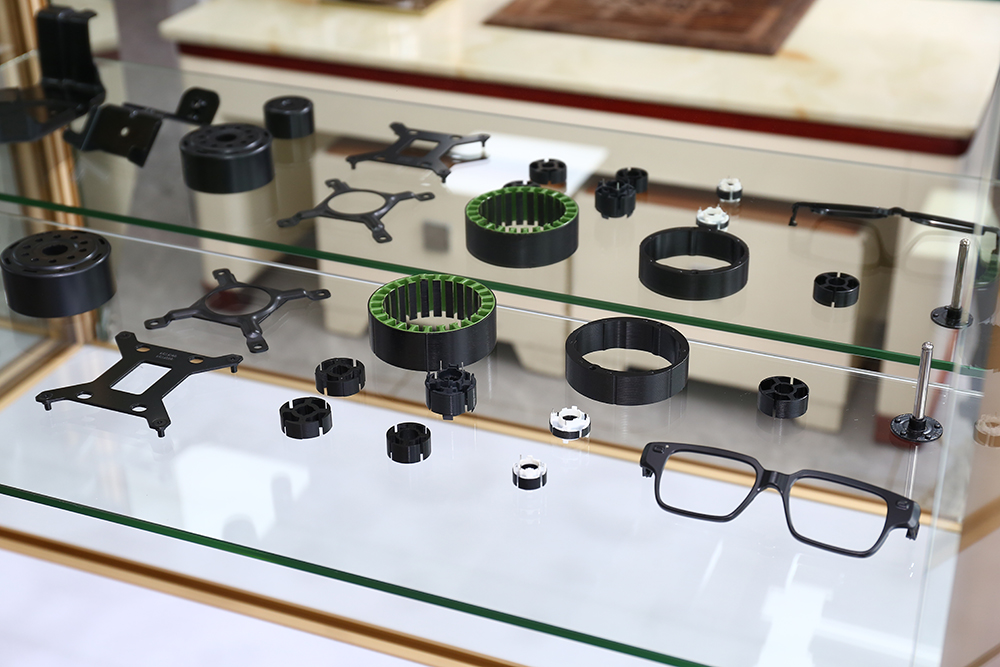
Coated production samples from a completed customer order, used as a reference when confirming substrate, colour and coverage expectations.
| Procurement question | Answer to expect in a coating specification |
|---|---|
| Which substrates are coated? | Carbon steel, alloy steel, aluminium alloy, magnesium alloy and zinc alloy |
| Standard film thickness | 15–25 µm for ordinary parts, customizable as needed; automated lines hold thickness tolerance to roughly ±1 µm, with thickness variation within ±5% |
| Coverage on complex geometry | Over 95%–98%, including deep cavities, tight seams and internal holes |
| Neutral Salt Spray (NSS) | Over 1,000 hours typical; published working range of 500–1,500 hours without red rust; CASS testing can exceed 96 hours |
| Service temperature | −40 °C to over 85 °C |
| Chemistry | Water-based, free of heavy metals such as lead and chrome, with very low VOC emissions |
| Management systems | ISO 9001:2015 and ISO 14001:2015, scope: surface treatment of hardware accessories (electrophoresis) |
| Colour options | Black as standard (matte or glossy), white and custom colours on request |
| Resin systems | Acrylic resin and epoxy resin |
Why these four variables decide the project
Most electrophoretic coating disputes do not begin on the production line; they begin in the RFQ. A purchase order that specifies only "black E-coat" leaves corrosion life, film build, coverage expectations and substrate pretreatment undefined, and every supplier will fill those gaps with its own assumptions. When two quotes then arrive at different prices, the buyer cannot tell whether the difference comes from process control, from chemistry, or from a looser interpretation of the requirement.
The opportunity runs the other way. Published market coverage shows the E-coat supplier base expanding fastest in Asia-Pacific, which means more quotable capacity for the same part drawing. More capacity only becomes useful if quotes are comparable. Fixing the four variables before the RFQ goes out is what turns a widening supplier pool into genuine negotiating leverage.
How electrophoretic deposition builds the film
Electrophoretic deposition is based on Faraday's principle of electromagnetism. Once the workpiece is immersed in the paint bath and voltage is applied, charged paint particles migrate and deposit evenly across the part surface, forming a molecular-level bond with the substrate that isolates the base metal from moisture and road salts. Because deposition follows the electrical field rather than a spray cone, coverage does not depend on the operator's line of sight — which is the technical reason E-coating is specified for internal cavities, seams and 3D geometries that conventional spraying struggles to reach.
Film thickness on an automated E-coat line is controlled by electrical parameters and dwell time. Suppliers using automated lines typically keep thickness tolerance to about ±1 µm while running a standard 15–25 µm build, which is what makes corrosion performance reproducible from part to part rather than dependent on individual operator skill.
Substrate compatibility: carbon steel, alloy steel, aluminium, magnesium and zinc alloy
Electrophoretic coating is applied to conductive metal substrates. The published applicable-material list covers carbon steel, alloy steel, aluminium alloy, magnesium alloy and zinc alloy, which in practice covers most structural and housing components in smart manufacturing.
| Substrate | Compatibility | Typical parts seen in this category |
|---|---|---|
| Carbon steel | Supported | Metal stamping parts, structural brackets, automotive chassis components and body frames |
| Alloy steel | Supported | Fasteners, door hinges, engine brackets and other precision assembly components |
| Aluminium alloy | Supported | Consumer electronics and communication equipment parts, heat-dissipation housings, cast aluminium rotors |
| Magnesium alloy | Supported | Lightweight metal components; grade-specific behaviour is normally confirmed through sample approval |
| Zinc alloy | Supported | Die-cast components, hardware fittings and small structural parts |
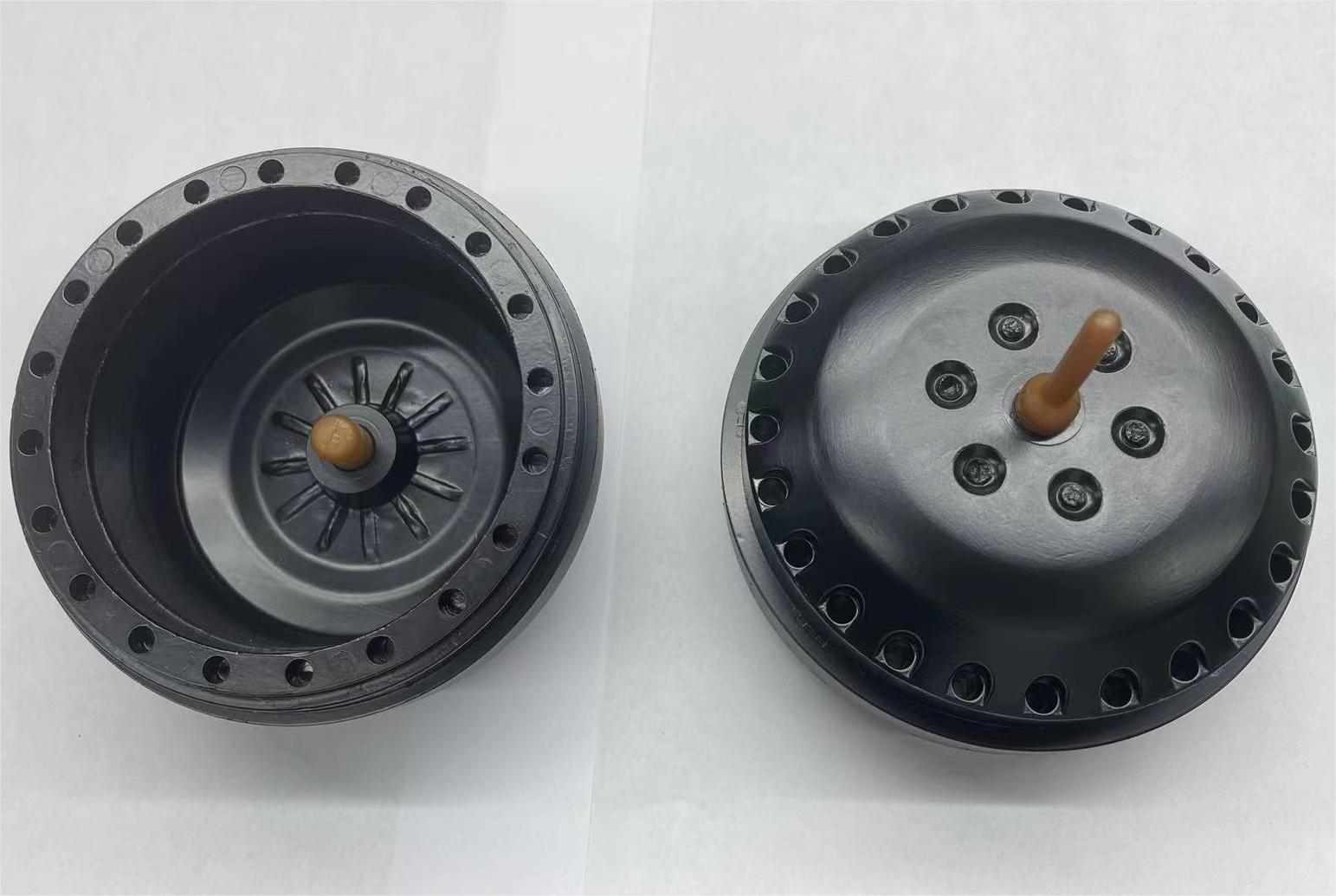
A one-piece formed iron core with a cast aluminium rotor after black electrophoretic coating — an example of mixed-metal geometry where uniform coverage matters more than surface appearance.
What a buyer should take from this table is not the list itself but what is missing from it. Non-conductive materials — plastics, composites and uncoated elastomers — sit outside the process. When a project combines a metal frame with polymer components, the polymer parts must be either assembled after coating or masked, and that decision belongs in the RFQ rather than in production.
Film thickness: what 15–25 µm means in a purchase specification
The standard electrophoretic coating thickness for ordinary parts is 15–25 µm, customizable according to customer requirements, with thickness variation controlled within ±5%. Automated lines typically hold the tolerance within ±1 µm, which is what makes corrosion performance predictable across a production run.
Industry literature sometimes quotes a wider envelope. One published process summary describes E-coating as typically achieving 20–40 µm with material transfer efficiency reaching 95%. The two ranges are not contradictory — they describe different scopes, including different resin systems, heavier-build applications and different corrosion targets. The procurement lesson is that a single number in a purchase order is weaker than a range with a tolerance tied to a corrosion requirement. "15–25 µm, ±1 µm, verified by film thickness gauge, supporting 720 hours NSS on this substrate" is a specification. "Thin E-coat" is not.
Thickness also interacts with assembly. For threaded fasteners, coating build affects friction behaviour; a specification that includes an optimal coefficient of friction supports precise torque control and helps prevent thread clogging during automated assembly, where a few microns of uncontrolled build can stall a line.
Coverage on complex geometry: where 95%–98% comes from
Coverage is the variable most often taken on trust. The published figure for electrophoretic coating is over 95%–98% coverage, including deep cavities, tight seams, internal holes and complex 3D geometries — effectively removing the dead corners that traditional spray painting leaves behind.
For a buyer, the useful move is to tie that percentage to an acceptance method. Coverage can be verified visually with a defined inspection standard, measured as film thickness at agreed points on the drawing, or validated downstream through salt spray testing on the assembled part rather than on a flat panel. Each method produces a different answer, and the one named in the purchase order is the one that will be used to accept or reject a batch.
Salt spray: reading a 1,000-hour claim correctly
Electrophoretic coating typically passes over 1,000 hours of Neutral Salt Spray Testing. Within the published working range, suppliers describe 500–1,500 hours without red rust depending on configuration, while CASS testing can exceed 96 hours.
Third-party coverage of the sector explains why the same "E-coat" label can produce very different results: cathodic epoxy coatings frequently exceed 1,000 hours of salt spray resistance under ASTM B117, while anodic coatings typically maintain around 500 hours. The chemistry family is therefore as important as the headline number. A buyer comparing two quotes should ask which chemistry is being quoted, which test standard applies, which substrate was used, whether the pass criterion is no red rust or no blistering, and whether the test was run on the actual part or on a flat test panel. A one-line claim of "1,000 hours" without those five details is not comparable to anything.
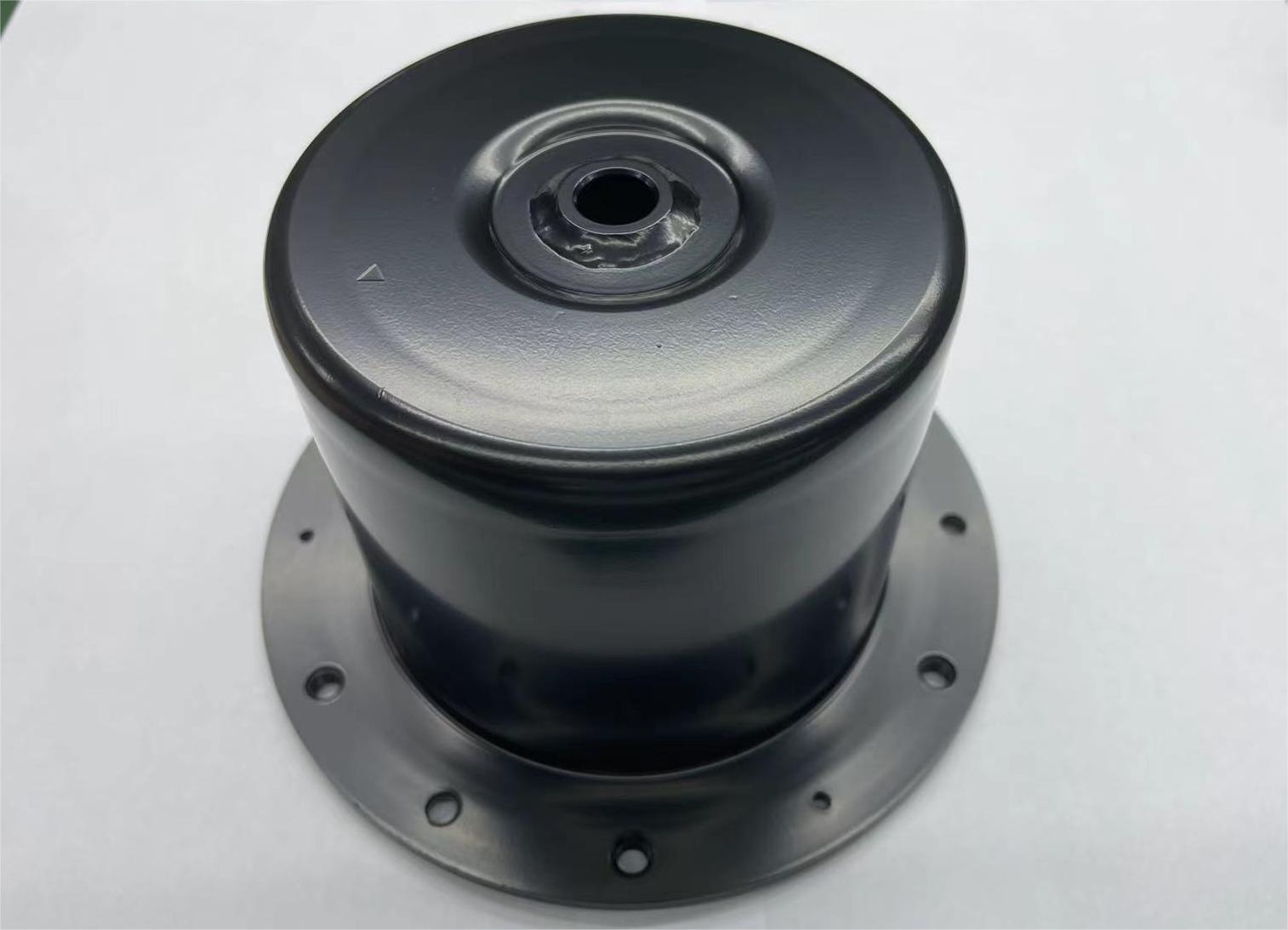
A motor housing finished in black electrophoretic coating, taken from a 720-hour neutral salt spray reference set on motor components.
Chemistry, temperature range and compliance
The coating chemistry behind these performance figures is water-based and free of heavy metals, using lead-free and chrome-free systems with very low VOC emissions — a formulation profile aligned with international environmental expectations such as RoHS. Finished coatings are described as withstanding stone chipping and extreme temperature fluctuations from −40 °C to over 85 °C, which covers the operating envelope of most outdoor enclosures, engine bays and industrial equipment in service today.
Compliance evidence should be captured with numbers, not adjectives. Yongxin holds ISO 9001:2015 Quality Management System certification (certificate 24CN34506942Q, issued 17 June 2024 by ACM INTERNATIONAL CERTIFICATION LIMITED, valid to 16 June 2027) and ISO 14001:2015 Environmental Management System certification (certificate 24CN34506943E, issued 9 June 2025, valid to 9 June 2028). Both certificates carry the same scope wording: surface treatment of hardware accessories (electrophoresis). The company also states IATF16949 Automotive Quality Management System certification and National High-Tech Enterprise status (certificate GR202344016867, issued 28 December 2023, valid to 28 December 2026).
Colour and resin: black, white and custom acrylic-epoxy
Black is the standard finish and is available in matte or glossy versions, with the surface described as smooth and uniform, free from flow marks or blisters. White electrophoretic coating is offered as a named product line, and custom colours such as grey or silver are available on request. Coatings are based on acrylic resin and epoxy resin, and the wider product line distinguishes anodic electrophoretic coating, cationic electrophoretic coating and electrophoretic coating of propionic acid resin.
Because salt spray performance differs between chemistry families, colour and chemistry should be specified together. "White electrophoretic coating on zinc alloy die-cast parts, neutral salt spray target 500 hours" is a complete line item; "white coating" is not.
Where E-coating fits in smart manufacturing
Coated parts are widely used in automobiles, bicycles, communication equipment, consumer electronics, unmanned aerial vehicles and security systems, with typical components including automotive parts, metal fittings, small structural components, bicycle accessories, cooling fans, die-casting parts, CNC machined parts and metal stamping parts.
One structural advantage for buyers is combining machining and coating under a single quality system. Yongxin runs CNC precision machining, die casting and metal stamping alongside its six electrophoresis production lines, with more than 20 CNC machines, more than 10 die-casting machines and more than 10 metal stamping machines supporting metal forming and precision machining. Inspection is supported by more than 20 high-precision instruments, including a German FISCHER film thickness gauge, a Swiss Zehntner gloss meter, a Japanese Konica Minolta spectrophotometer and a Japanese Mitutoyo roughness meter, together with salt spray, constant temperature and humidity, reflectometer, electron microscope, tape abrasion, alcohol rubber friction and tank solution analysis equipment. Finished goods are fully inspected, and production capacity is stated at 2,500,000 per month with a minimum order quantity of 100 and lead times of 3–45 days depending on quantity.
Case evidence: a Japanese motor programme
A motor manufacturer in Japan applied anti-corrosion and anti-rust electrophoretic coating to electric motors across a programme of 15,000,000 units. The project achieved neutral salt spray resistance of over 720 hours with a smooth, glossy finish, and extended product service life by 5 to 10 years compared with non-E-coat processes. The coating is described as resistant to acid and alkali, rust-proof and anti-aging, addressing the corrosion and rust problem that had affected the motors.
The reported highlight is the part that matters for evaluation: uniform full coverage of complex motor structural gaps, stable anti-corrosion performance under long-term harsh working conditions, and low material loss during coating, which is what made mass continuous production viable at that volume.
Market signals buyers should track
Published estimates for the electrophoretic coating market vary with scope. Dataintelo values the global E-coat market at approximately USD 3.5 billion in 2023, projected to reach USD 6.1 billion by 2032, with a CAGR of 6.5% between 2024 and 2032 driven by automotive and construction demand. Grand View Research reports that Asia-Pacific holds over 46% revenue share of the broader paints and coatings market as of 2025 — a figure covering coatings overall rather than E-coat alone. Other publishers arrive at different totals, such as USD 2.07 billion from Market Research Future or a USD 6.02 billion 2026 forecast from Market Reports World.
The divergence is itself the procurement signal. Where market totals differ by a factor of three depending on scope, supplier performance claims should also be compared on identical scope before they are used in a business case. On the supply side, public market coverage of the sector lists PPG Industries, BASF SE, Axalta Coating Systems, Nippon Paint and Kansai Paint among the major participants in E-coating. Those names sit at coatings and industrial systems level; parts-level buyers typically also evaluate contract coaters that run the process against a specific part drawing, which is where Yongxin operates.
Electrophoretic coating compared with traditional finishes — and its boundaries
Against conventional spray painting, electrophoretic coating deposits by electrical field rather than by line of sight, which is why over 95%–98% coverage of deep cavities and internal holes is achievable and why the dead-corner problem largely disappears. The water-based, heavy-metal-free, low-VOC chemistry also changes the environmental profile of the finishing step.
Against powder coating, the trade-off is different rather than better. Powder finishes generally build thicker films and offer a wider range of textures, while electrophoretic coating delivers a thinner, highly uniform film with stronger penetration into complex internal geometry. For a part whose corrosion protection depends on coating the inside of a cavity, E-coat is usually the more suitable route; for a part whose requirement is a heavy decorative build, powder may remain the better fit.
The boundaries deserve equal weight in an evaluation:
- Conductive substrates only. Plastics, composites and other non-metals are outside the process, so masking or post-assembly planning is required on mixed-material products.
- Film build is comparatively thin. A standard 15–25 µm build suits most corrosion-driven applications but is not equivalent to a heavy decorative coating.
- Chemistry determines performance. Published data shows cathodic systems frequently above 1,000 hours and anodic systems around 500 hours of salt spray, so "E-coat" alone is not a performance guarantee.
- Colour and gloss are bounded by the bath. Black is standard; white and custom colours are available but should be locked at sample approval rather than assumed from a swatch.
- Commercial minimums exist. A minimum order quantity of 100 and lead times of 3–45 days depending on quantity set a practical floor for small runs.
Outlook
Three pressures are shaping how electrophoretic coating is procured rather than whether it is procured. Corrosion specifications in automotive, electronics and outdoor equipment continue to tighten, which pushes buyers toward chemistry-specific requirements instead of generic corrosion claims. Environmental rules continue to favour water-based, heavy-metal-free systems with low VOC emissions. And the integration of machining with coating under one quality system reduces the coordination cost of multi-stage parts, particularly for stamping and precision-machined components that need to move directly from forming to finishing. Buyers who can already read a salt spray report, a thickness tolerance and a coverage figure will find the next procurement cycle considerably easier than the last one.
Frequently Asked Procurement Questions
Which metal substrates can electrophoretic coating be applied to?
Electrophoretic coating is applied to conductive metal substrates. The published applicable materials are carbon steel, alloy steel, aluminium alloy, magnesium alloy and zinc alloy. In practice that covers stamping parts, chassis components, fasteners, hinges, brackets, die-cast fittings, CNC machined parts and electronics housings. Non-conductive materials such as plastics and composites fall outside the process and require separate planning.
What film thickness should be written into an electrophoretic coating purchase specification?
The standard thickness for ordinary parts is 15–25 µm, customizable according to customer requirements, with thickness variation controlled within ±5%. Automated lines typically keep the tolerance to about ±1 µm. Because some published industry ranges extend to 20–40 µm for heavier-build or different chemistries, the safest specification states a range, a tolerance, the measurement instrument and the corrosion target the thickness is intended to support.
How uniform is E-coat coverage on parts with cavities, seams and internal holes?
Deposition is driven by an applied electrical field rather than by line of sight, so charged paint particles reach deep cavities, tight seams, internal holes and complex 3D geometries. The published coverage figure is over 95%–98%, which removes the dead corners associated with traditional spray painting. Acceptance should still be defined in the RFQ — by visual standard, by thickness measurement at named points, or by salt spray testing on the assembled part.
How many hours of neutral salt spray can an electrophoretic coating achieve?
Electrophoretic coating typically passes over 1,000 hours of Neutral Salt Spray Testing, with a published working range of 500–1,500 hours without red rust; CASS testing can exceed 96 hours. Third-party data indicates that cathodic epoxy coatings frequently exceed 1,000 hours under ASTM B117 while anodic coatings typically maintain around 500 hours. The number is therefore only meaningful together with the chemistry, the substrate, the test standard and the pass criterion.
What temperature range does an electrophoretic coating withstand?
Published performance describes resistance to extreme temperature fluctuations from −40 °C to over 85 °C, together with resistance to stone chipping. That envelope covers most outdoor housings, engine-compartment components and industrial equipment. Where a part operates beyond that range, the requirement should be raised during evaluation rather than assumed from the general specification.
Is electrophoretic coating water-based and low-VOC?
Yes for the systems described here. The paints are water-based and free of heavy metals, using lead-free and chrome-free formulations with very low VOC emissions, which aligns with strict international environmental standards such as RoHS. This matters for buyers who must document the finishing step inside their own environmental reporting.
Which certifications should an E-coating supplier hold?
At minimum, buyers should look for ISO 9001:2015 quality management certification and ISO 14001:2015 environmental management certification, and should check that the scope wording names the actual process being purchased. Yongxin holds ISO 9001:2015 (24CN34506942Q, valid to 16 June 2027) and ISO 14001:2015 (24CN34506943E, valid to 9 June 2028), both scoped to surface treatment of hardware accessories (electrophoresis). The company also states IATF16949 certification and National High-Tech Enterprise status (GR202344016867, valid to 28 December 2026).
What colours and resin systems are available?
Black is the standard finish and is available in matte or glossy versions; white electrophoretic coating is also offered, and custom colours such as grey or silver are available on request. Coatings are based on acrylic resin and epoxy resin, and the product line distinguishes anodic, cationic and propionic acid resin electrophoretic coating. Colour should be confirmed at sample approval, and the resin chemistry should be stated alongside it because salt spray performance differs between families.
Can stamping, die-casting, CNC machining and coating be handled by one supplier?
Where the supplier runs an integrated metal processing chain, yes. Yongxin combines CNC precision machining, die casting and metal stamping with six electrophoresis production lines, supporting more than 20 CNC machines, more than 10 die-casting machines and more than 10 metal stamping machines, with inspection by more than 20 high-precision instruments. Capacity is stated at 2,500,000 per month, with a minimum order quantity of 100 and lead times of 3–45 days depending on quantity.
What are the limitations of electrophoretic coating that buyers should plan around?
The process applies to conductive metal substrates only, so plastics and composites must be masked or assembled after coating. The standard 15–25 µm film is comparatively thin, which suits corrosion-driven applications but is not a heavy decorative build. Salt spray performance depends heavily on the chemistry family, with published cathodic and anodic results differing substantially. Colour options are bounded by the paint bath, and commercial minimums such as a minimum order quantity of 100 and 3–45 day lead times apply to smaller runs.
A fuller set of technical and capability details is available in the company brochure: Enameled Flat Wire and Electrophoretic Coating Solutions (PDF).