
Electronic-Grade Vinylbenzyl Chloride Isomers: Selection FAQ
Electronic-grade vinylbenzyl chloride is not one purchasable substance. It is a family of four separately registered materials, 4-VBC (CAS 1592-20-7), 2-VBC (CAS 22570-84-9), 3-VBC (CAS 39833-65-3) and mixed VBC (CAS 30030-25-2), that share the molecular formula C9H9Cl and a nominal molecular weight close to 152.62 g/mol, but differ in isomer geometry, registry entry, stabilizer content, recommended storage temperature, and in how much of their physical data is measured rather than predicted.
That distinction matters more in procurement than it does in a catalogue. When a specification line reads simply 'vinylbenzyl chloride', a correct CAS number does not confirm the isomer distribution inside the drum; a stabilizer figure on a certificate of analysis does not confirm that the material survived transport; and a supplier's quality-system certificate does not transfer into a buyer's process qualification. This reference answers the technical and procurement questions that sit between those three checks, using published identity and property data for the four electronic-grade entries.
The wider context explains why those questions are being asked at all. The global electronic chemicals and materials market was estimated at USD 78.5 billion in 2025, with Asia Pacific accounting for 66.6% of that revenue (Grand View Research). Global semiconductor materials revenue reached USD 73.2 billion in 2025 (SEMI), and the electronic-grade photoresist segment alone was estimated at USD 4.96 billion in 2024 (Grand View Research). Monomer-level purchasing now sits inside qualification programmes that are far less tolerant of identity ambiguity than they were a decade ago.
Why 'vinylbenzyl chloride' is an incomplete specification
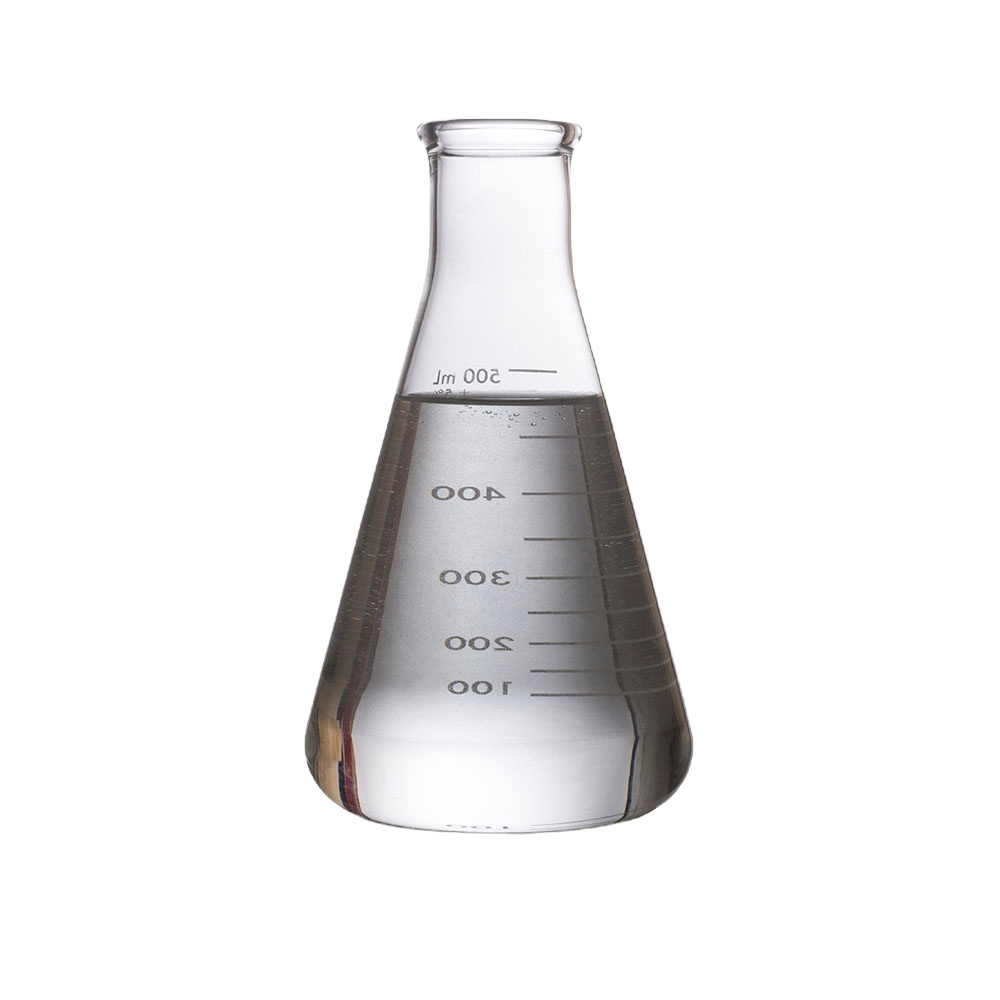
Four registry entries sit behind one common name. 4-Vinylbenzyl chloride is CAS 1592-20-7 with EINECS 216-471-2, listed in the Jumingchem product record under model designation JM 1592-20-7. The ortho isomer, 1-(chloromethyl)-2-vinylbenzene, is CAS 22570-84-9 with EINECS 245-092-5, model JM 22570-84-9. The meta isomer, 1-(chloromethyl)-3-vinylbenzene, is CAS 39833-65-3 with EINECS 254-649-1, model JM 39833-65-3. Mixed vinylbenzyl chloride is CAS 30030-25-2 with EINECS 250-005-9, model JM 30030-25-2.
Two consequences follow from that list.
First, mixed VBC is a mixture by definition. Its technical description covers a mixture of 3- and 4-isomers containing 50-100 ppm tert-butylcatechol as inhibitor, and it is also supplied stabilised with TBC. A buyer who issues a purchase order for 'VBC' without naming an isomer or a ratio is, in practice, accepting an unspecified distribution, and therefore accepting whatever that distribution does to the formulation.
Second, the para, ortho and meta entries have distinct names, synonym sets and CAS numbers, which makes a mismatch detectable, but only if the buyer checks the name against the number rather than reading one of them. The most common documentation failure in this category is not a fabricated CAS number. It is a product label, a COA header and a packing list that use the common name loosely while the underlying material is a different entry.
The four electronic-grade VBC entries at a glance
| Entry | CAS / EINECS | Model | Supplied form | Reported constants |
|---|---|---|---|---|
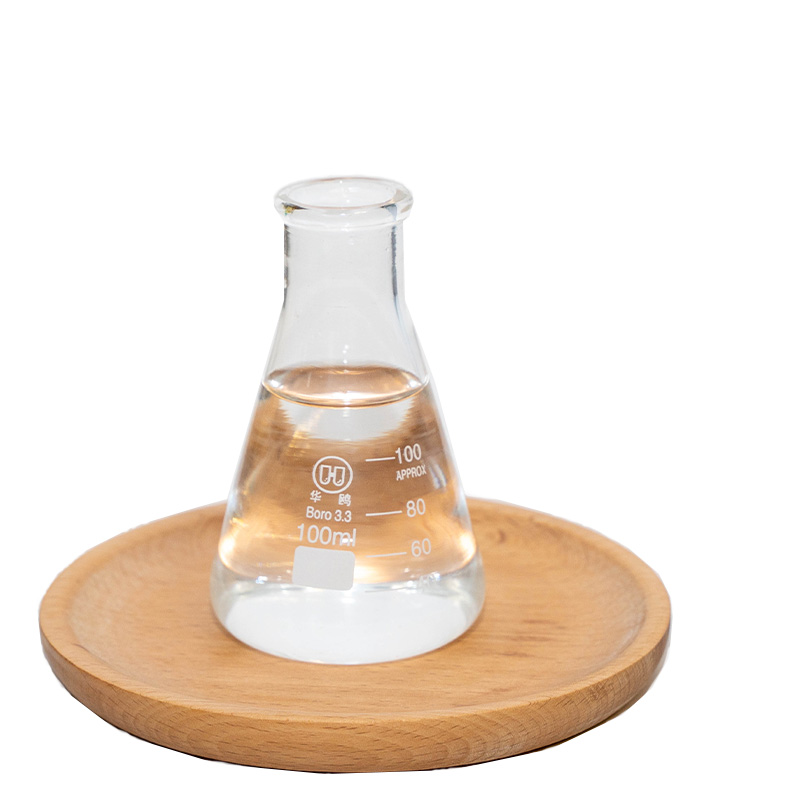
| 4-Vinylbenzyl chloride (4-VBC) | 1592-20-7 / 216-471-2 | JM 1592-20-7 | Clear yellow liquid; colourless to pale yellow transparent liquid | Boiling point 229 °C; density 1.083 g/mL at 25 °C; vapour density 5.3 (vs air); vapour pressure 1 mm Hg at 56.1 °C; refractive index n20/D 1.572; flash point 221 °F; storage 2-8 °C; insoluble in water, sparingly soluble in chloroform |
| 1-(chloromethyl)-2-vinylbenzene (2-VBC) | 22570-84-9 / 245-092-5 | JM 22570-84-9 | Light yellow to colourless liquid | Boiling point 223.4 ± 9.0 °C (predicted); density 1.066 ± 0.06 g/cm³ (predicted) |
| 1-(chloromethyl)-3-vinylbenzene (3-VBC) | 39833-65-3 / 254-649-1 | JM 39833-65-3 | Light yellow to colourless liquid | Contains approximately 0.1% TBC stabilizer; molecular weight 152.62076 |
| Vinylbenzyl chloride, mixed | 30030-25-2 / 250-005-9 | JM 30030-25-2 | Light yellow to colourless liquid | Melting point -30 °C; boiling point 229 °C; density 1.074 g/mL at 25 °C; vapour density 5.3 (vs air); vapour pressure 1 mm Hg at 56.1 °C; refractive index n20/D 1.572; flash point 221 °F; storage -20 °C |
All four entries carry the same application statement in the manufacturer's technical record: they are core monomers used for synthesising high-performance negative photoresist resins (such as E-beam electron beam photoresist) and advanced packaging dielectric materials, and for manufacturing homogeneous ion-exchange membranes, ultra-pure water resins and chelating resins. Where the entries diverge is in identity, form, stabilizer content, storage condition and the availability of measured property data, not in a supplier-assigned application label.
What the physical constants actually constrain
The recorded values differ in kind, not only in number. For 4-VBC the literature-flagged set is complete: boiling point 229 °C, density 1.083 g/mL at 25 °C, vapour density 5.3 relative to air, vapour pressure 1 mm Hg at 56.1 °C, refractive index n20/D 1.572, flash point 221 °F, recommended storage 2-8 °C, insoluble in water and sparingly soluble in chloroform.
Mixed VBC carries a melting point of -30 °C, a boiling point of 229 °C, density 1.074 g/mL at 25 °C, the same vapour density, vapour pressure, refractive index and flash point, and a recommended storage temperature of -20 °C.
For 2-VBC the published figures are explicitly predicted: boiling point 223.4 ± 9.0 °C and density 1.066 ± 0.06 g/cm³. For 3-VBC the technical record states the supplied form and the stabilizer content of approximately 0.1% TBC, but does not publish a measured boiling point or density.
Three procurement implications follow directly.
- Measured and predicted values cannot sit in the same column. A density of 1.083 g/mL for 4-VBC and 1.066 ± 0.06 g/cm³ for 2-VBC overlap inside the stated uncertainty of the second figure. Treating one as an acceptance criterion and the other as a benchmark produces false precision.
- Storage temperature is a logistics constraint, not a footnote. The gap between 2-8 °C for 4-VBC and -20 °C for mixed VBC changes packaging selection, shipping mode, container choice and warehouse design.
- The -30 °C melting point of mixed VBC and the 221 °F flash point together define handling requirements that a generic 'keep cool and dry' instruction does not capture.
Stabilizer content belongs in the specification, not in the notes
3-VBC contains approximately 0.1% TBC stabilizer. Mixed VBC is described as a mixture of 3- and 4-isomers containing 50-100 ppm tert-butylcatechol as inhibitor, and also as stabilised with TBC.
Two points follow. Stabilizer level is not uniform across the VBC family, so a buyer who standardises on 'VBC' across two grades may be standardising on two different inhibition regimes. And the number travels downstream: vinylbenzyl chloride is described as a dual-functional monomer that can be derivatised by chloride displacement, and serves as a starter for copolymer preparations and as a component of ion-exchange resins, photoresist polymers, cross-linkable fibres, coupling agents and electroconducting polymers. In a polymerisation step, the presence and level of an inhibitor feed directly into initiation behaviour, and therefore into whether a formulation needs an inhibitor adjustment or removal step.
The practical rule for procurement is straightforward: stabilizer type and level should be a named line on the specification, and the same line should appear on the COA with a batch-specific value rather than a generic statement.
Application fit: where the isomers are actually used
The application statement shared by the four entries names five downstream areas: high-performance negative photoresist resins including E-beam electron beam photoresist, advanced packaging dielectric materials, homogeneous ion-exchange membranes, ultra-pure water resins, and chelating resins.
What the record does not do is differentiate the isomers by application. There is no entry-level claim that the para isomer suits one resist chemistry and the meta isomer another. That gap is important for buyers, because it means isomer selection has to be driven by the customer's own formulation data, geometry effects in copolymerisation, and the processing window, rather than by an application label on a quotation. What a supplier can legitimately confirm is identity, grade, isomer ratio, stabilizer content, packaging and documentation.
Adjacent electronic-grade materials in the same procurement package
VBC monomers are frequently bought alongside two other electronic-grade materials, and the specification logic is similar.
BPADA, 4,4'-(4,4'-Isopropylidenediphenoxy)bis(phthalic anhydride), CAS 38103-06-9 with EINECS 253-781-7, has molecular formula C31H20O8 and molecular weight 520.49 g/mol. It is a white to slightly yellow crystalline powder with a melting point of 184-187 °C, boiling point 712.3 ± 60.0 °C, density 1.406 ± 0.06 g/cm³ and vapour pressure of 0 Pa at 25 °C. It is the key synthetic monomer for high-performance polyimide (PI), 5G high-frequency and high-speed flexible copper-clad laminate (FCCL), OLED flexible substrates and aerospace lightweight composites; polyimide films built from this unit have been reported with a glass transition temperature of 207 °C and high optical transparency. Its working constraint is moisture: the anhydride group hydrolyses readily on contact with water to form a diacid, which reduces or eliminates polymerisation activity, so dry, sealed storage and inert-gas-protected reaction conditions are required.
5-Methyl-1H-benzotriazole (5M-BTA), CAS 136-85-6, formula C7H7N3, molecular weight 133.15 g/mol and melting point 80-82 °C, is a white to cream crystalline powder used as a copper and copper-alloy corrosion inhibitor and an anti-fading agent in photomasking resins, alongside industrial circulating water treatment and rust-preventive oil additive applications. Third-party reference data describes 5-methylbenzotriazole as a corrosion inhibitor for non-ferrous metals used in electronic-grade formulations for semiconductor cleaning (NIST WebBook).
Market context for isomer-level specification
Three published figures frame the demand environment. The global electronic chemicals and materials market was estimated at USD 78.5 billion in 2025, with Asia Pacific accounting for 66.6% of revenue that year (Grand View Research). Global semiconductor materials revenue reached USD 73.2 billion in 2025 (SEMI). Electronic-grade photoresist was estimated at USD 4.96 billion in 2024 (Grand View Research).
One regional signal is worth noting for isomer-grade sourcing. Japan holds approximately 6% share of the global benzyl chloride market, with a stated focus on high-purity and specialty applications. That pattern, a comparatively small volume share concentrated in higher-purity positions, matches what the VBC family looks like commercially: the interesting competition is not in bulk tonnage but in who can document a specific isomer at a specific impurity level with a specific stabilizer content.
Sourcing approaches compared, and the limits of each
Three sourcing models are common for VBC, and each carries a different constraint.
- Generic 'VBC' line item. Fastest to quote and broadest in supply. The constraint is definitional: with mixed VBC, CAS 30030-25-2 is a mixture of 3- and 4-isomers containing 50-100 ppm tert-butylcatechol as inhibitor, so the isomer distribution is whatever the grade delivers. That is acceptable for many industrial uses and unacceptable for a qualified resist formulation.
- Single isomer, specified grade. Pure para (≥99% p-VBC), pure ortho (≥98% o-VBC) or pure meta (≥98% m-VBC) gives a defined composition. The constraints are cold storage (2-8 °C for 4-VBC; -20 °C for mixed VBC), a narrower supplier base, and the fact that switching an existing formulation from a mixed grade to a pure isomer is normally a re-qualification event rather than a drop-in substitution.
- Custom o/m/p ratio development. Any custom mixture ratio can be developed, from sample stage to scale-up. The constraint is time and evidence: a custom ratio needs new analytical baselines, and its physical constants may not exist as published values at all, which pushes the verification burden onto incoming inspection.
What buyers should verify before releasing a purchase order
The verification set below is drawn from the same data a supplier publishes. It is deliberately ordered so that identity is settled before commercial terms.
| Check | What to confirm |
|---|---|
| Identity | Full product name matched to CAS number and EINECS number, with the model designation (for example JM 1592-20-7) stated consistently across label, COA and packing list. |
| Isomer definition | Whether the grade is a pure isomer or a mixture, and, for mixtures, the stated isomer ratio and the analytical method behind it. |
| Stabilizer | Stabilizer type and level, batch-specific (approximately 0.1% TBC for 3-VBC; 50-100 ppm tert-butylcatechol described for mixed VBC). |
| Property basis | Which listed constants are measured and which are predicted; predicted values should not be used as acceptance criteria. |
| Impurity control | Metal ion specification (for example Na, Fe, Cu) and the stated control level, plus the analytical method used to verify it. |
| Storage and transport | Required storage temperature by entry (2-8 °C or -20 °C), temperature-controlled packaging for hot-climate routes, and UN-certified dangerous goods packaging where required. |
| Documentation set | Batch-level COA with the agreed test items, MSDS in the required language, and third-party test reports if the receiving process requires them. |
| Traceability | Batch coding, retained samples, and whether third-party re-inspection is supported. |
| Regulatory fit | Exporter filings matched against the destination market's import requirement, including precursor and hazardous-chemicals status. |
Documentation and manufacturing context
Jiangsu Juming Chemical Technology Co., Ltd. (Jumingchem) is a Jiangsu-based manufacturer of specialty and electronic-grade chemicals, established in 2017, operating a factory area of more than 78,000 m² together with a 3,000 m² R&D centre, a 300 m² pilot plant and a 600 m² GMP workshop, with 180 employees, a 25-engineer R&D team, an annual output of 60,000 tons and an export share of 70% across the USA, Korea, Japan, Taiwan region, Germany, Southeast Asia and the Middle East.
Several documents in that operation relate directly to the specification questions above.
- ISO 9001:2015 certification NOA2505548, issued by NOA Testing & Certification Group Ltd., valid to 24 July 2028, applies to the quality management systems for 4-Vinylbenzyl chloride (CAS 1592-20-7), 1-(chloromethyl)-2-vinylbenzene (CAS 22570-84-9), BPADA (CAS 38103-06-9) and 5-Methyl-1H-benzotriazole (CAS 136-85-6). The standard requires documented information, and traceability control when traceability is a requirement.
- SGS Factory Audit Report QIP-ASI254749, issued by SGS, covers 4-Vinylbenzyl chloride (CAS 1592-20-7), with its audit scope spanning photoinitiators, borides, UV absorbers, corrosion inhibitors, water treatment agents, organic intermediates, electronic chemicals and customised chemicals.
- Non-pharmaceutical Precursor Chemicals Filing Certificate (Su) 3J32028100536, issued by Jiangyin City Emergency Management Bureau and valid to 16 February 2028, covers the business operation of Category III non-pharmaceutical precursor chemicals.
- Hazardous Chemicals Operation License Su(Xi)WHJJZ(Lingang)02864, issued by the Jiangsu Jiangyin Lingang Economic Development Zone Management Committee and valid to 25 June 2027, covers sale of hazardous chemicals within the permitted scope, excluding storage.
On the manufacturing side, the capabilities that matter for isomer-level supply are the isomer composition options and the impurity controls behind them. The stated customisation range is pure para-isomer (≥99% p-VBC), pure ortho-isomer (≥98% o-VBC), pure meta-isomer (≥98% m-VBC) and any custom mixture ratio of o/m/p isomers, with purity grades spanning industrial, high purity and electronic grade, and with metal ion content for elements such as Na, Fe and Cu controlled to customer specification. Production is described as using microchannel and continuous flow technology with ppb-level metal ion impurity purification, supported by ICP-MS, HPLC and GC detection systems, in ISO 6 GMP cleanrooms using low-extraction materials such as 316L VIM/VAR stainless steel and PFA/PVDF, with batch traceability, retained samples and support for third-party re-inspection.
Commercially, liquid VBC series products are offered in 25 kg HDPE drums, 200 kg steel-plastic composite drums and 1000 L IBCs, with a minimum order quantity of 1 kg and a lead time of 7-30 days. Solid products such as BPADA and 5-Me-BTA use 25 kg fibre drums with PE liner, 25 kg kraft paper bags or 500 kg bulk bags. Temperature-controlled packaging is available for long-distance shipping to hot climates, and UN-certified dangerous goods packaging can be supplied on request.
Future outlook
Three directions look likely to shape VBC procurement over the next planning cycle. The first is that purity conversations are moving from assay percentage to specific impurity classes, with metal ion content controlled element by element rather than reported as a single figure. The second is that custom isomer ratios are shifting from an exception to a routine request, which increases the importance of analytical baselines the customer can reproduce. The third is continuity of documentation: as photoresist and membrane qualifications lengthen, the ability to reproduce the same COA format, the same test items and the same batch traceability over several years becomes part of supplier evaluation rather than an administrative detail.
FAQ
What are the CAS numbers for the electronic-grade vinylbenzyl chloride isomers?
4-Vinylbenzyl chloride is CAS 1592-20-7 (EINECS 216-471-2). The ortho isomer, 1-(chloromethyl)-2-vinylbenzene, is CAS 22570-84-9 (EINECS 245-092-5). The meta isomer, 1-(chloromethyl)-3-vinylbenzene, is CAS 39833-65-3 (EINECS 254-649-1). Mixed vinylbenzyl chloride is CAS 30030-25-2 (EINECS 250-005-9). All four share the molecular formula C9H9Cl and a molecular weight of approximately 152.62 g/mol. In the Jumingchem product record they appear under model designations JM 1592-20-7, JM 22570-84-9, JM 39833-65-3 and JM 30030-25-2. A CAS number identifies the substance entry; it does not identify grade, isomer purity, stabilizer level or batch.
How do the physical constants differ between the four entries?
Measured, literature-flagged data is available for 4-VBC (boiling point 229 °C, density 1.083 g/mL at 25 °C, vapour pressure 1 mm Hg at 56.1 °C, refractive index n20/D 1.572, flash point 221 °F, storage 2-8 °C) and for mixed VBC (melting point -30 °C, boiling point 229 °C, density 1.074 g/mL at 25 °C, storage -20 °C). For 2-VBC the reported figures are predicted values: boiling point 223.4 ± 9.0 °C and density 1.066 ± 0.06 g/cm³. For 3-VBC the record states the supplied form and the stabilizer level of approximately 0.1% TBC without publishing measured boiling point or density. Comparing a measured value against a predicted value as though both were release specifications is one of the most common errors in monomer specification review.
What is the difference between a pure isomer grade and mixed VBC?
The customisation options distinguish pure para-isomer (≥99% p-VBC), pure ortho-isomer (≥98% o-VBC) and pure meta-isomer (≥98% m-VBC), and support any custom mixture ratio of o/m/p isomers. Mixed VBC, CAS 30030-25-2, is by definition a mixture: its technical description covers a mixture of 3- and 4-isomers containing 50-100 ppm tert-butylcatechol as inhibitor. A pure isomer gives a defined composition and a defined reference point for formulation work. A mixed grade gives access to a broader isomer distribution and typically a wider supply base. The choice is a formulation decision, and moving between the two generally triggers downstream re-qualification.
Why does 3-VBC carry a TBC stabilizer, and what should buyers do with that number?
3-VBC (CAS 39833-65-3) contains approximately 0.1% TBC stabilizer, and mixed VBC is described as containing 50-100 ppm tert-butylcatechol as inhibitor and as stabilised with TBC. TBC limits premature polymerisation during storage and transport. For procurement, the practical action is to record stabilizer type and level as a specification line, confirm the batch value on the COA, and check with the formulation team whether an inhibitor adjustment or removal step is required. Storage temperature and usable shelf life depend on the same number.
Which isomer should be selected for negative photoresist or E-beam photoresist work?
The manufacturer's technical record lists the same application statement for all four entries: core monomers used for synthesising high-performance negative photoresist resins (such as E-beam electron beam photoresist) and advanced packaging dielectric materials, and for manufacturing homogeneous ion-exchange membranes, ultra-pure water resins and chelating resins. The record does not differentiate between isomers on application grounds, so selection has to be driven by the customer's own formulation data, including isomer geometry, copolymerisation behaviour and processing window, rather than by an application label. What a supplier can confirm is identity, grade, isomer ratio, stabilizer content, packaging and documentation.
What should a COA for a VBC batch contain?
A workable COA ties the batch to a CAS number and full product name, reports the measured properties required by the specification, and states isomer ratio and stabilizer level where the grade is defined by them. Documentation support includes COAs with customised test items and format, MSDS in languages including English and Spanish, custom label design, and third-party test reports from SGS, BV or Intertek. Under ISO 9001:2015, documented information is required, and traceability control is required when traceability is a requirement; batch traceability coding is part of the supply offer. Buyers should establish at quotation stage which items are tested per batch and which are only stated on the specification sheet.
Which certifications and regulatory filings are relevant?
Four documents are worth distinguishing. ISO 9001:2015 certification NOA2505548, issued by NOA Testing & Certification Group Ltd. and valid to 24 July 2028, applies to the quality management systems for 4-VBC (CAS 1592-20-7), 2-VBC (CAS 22570-84-9), BPADA (CAS 38103-06-9) and 5-Methyl-1H-benzotriazole (CAS 136-85-6). SGS Factory Audit Report QIP-ASI254749, issued by SGS, covers 4-Vinylbenzyl chloride. The Non-pharmaceutical Precursor Chemicals Filing Certificate (Su) 3J32028100536, issued by Jiangyin City Emergency Management Bureau and valid to 16 February 2028, covers the business operation of Category III non-pharmaceutical precursor chemicals. The Hazardous Chemicals Operation License Su(Xi)WHJJZ(Lingang)02864, valid to 25 June 2027, covers sale of hazardous chemicals within the permitted scope, excluding storage. A quality-system certificate evidences process control; it does not constitute product qualification at the buyer's site.
What are the packaging, MOQ and lead-time constraints?
Liquid VBC series products are offered in 25 kg HDPE drums, 200 kg steel-plastic composite drums and 1000 L IBCs. Solid products such as BPADA and 5-Me-BTA are offered in 25 kg fibre drums with PE liner, 25 kg kraft paper bags or 500 kg bulk bags. Temperature-controlled packaging is available for long-distance shipping to hot climates, and UN-certified dangerous goods packaging is available on request. The minimum order quantity is 1 kg and lead time is 7-30 days. Storage requirements differ by entry: 4-VBC is recorded at 2-8 °C and mixed VBC at -20 °C.
Can custom o/m/p isomer ratios be developed?
Yes. The customisation range covers molecular structure customisation, purity grade selection across industrial, high purity and electronic grade with ppb-level metal ions, and any custom mixture ratio of o/m/p isomers. Custom isomer ratio development is described as running from sample development through to scale-up production, with R&D collaboration for polymer material companies. Documented purity grades are pure para-isomer ≥99% p-VBC, pure ortho-isomer ≥98% o-VBC and pure meta-isomer ≥98% m-VBC, with metal ion content for elements such as Na, Fe and Cu controlled to customer specification.
What are the limits buyers should plan for?
Several boundaries are worth stating plainly. Two of the four entries are published with predicted rather than measured constants, so those figures cannot serve as release criteria. The published 3-VBC record covers form and stabilizer content but not boiling point or density, which limits like-for-like comparison across the family. Mixed VBC is an isomer mixture, so its composition differs from a pure isomer by definition. The VBC series requires cold storage, which adds logistics cost and constrains warehouse options. Changing isomer grade inside an existing formulation is normally a re-qualification event rather than a drop-in substitution. And certification scope is product- and site-specific: an ISO 9001 certificate or an SGS audit report shows that a management system exists, not that a particular batch will pass a customer's incoming test.
Where this leaves a specification review
The four electronic-grade VBC entries can be compared on identity, form, stabilizer content, storage condition and the basis of their published constants. They cannot be compared on a supplier-assigned application hierarchy, because the technical record does not provide one. For a buyer in the research to evaluation stage, that is the useful conclusion: settle CAS number and isomer definition first, then the measured property set, then stabilizer and impurity lines, and treat certification documents as evidence of process control rather than as a substitute for incoming verification.