
Electronic-Grade VBC Isomers: Photoresist & Packaging Fit
Electronic-Grade Vinylbenzyl Chloride Isomers: Matching Each CAS Grade to Photoresist and Packaging Duty
Electronic-grade vinylbenzyl chloride is a family, not a single drum. Four separately numbered products carry the name into semiconductor and electronic-material plants, and each is qualified against a specific process layer rather than against a generic VBC specification.
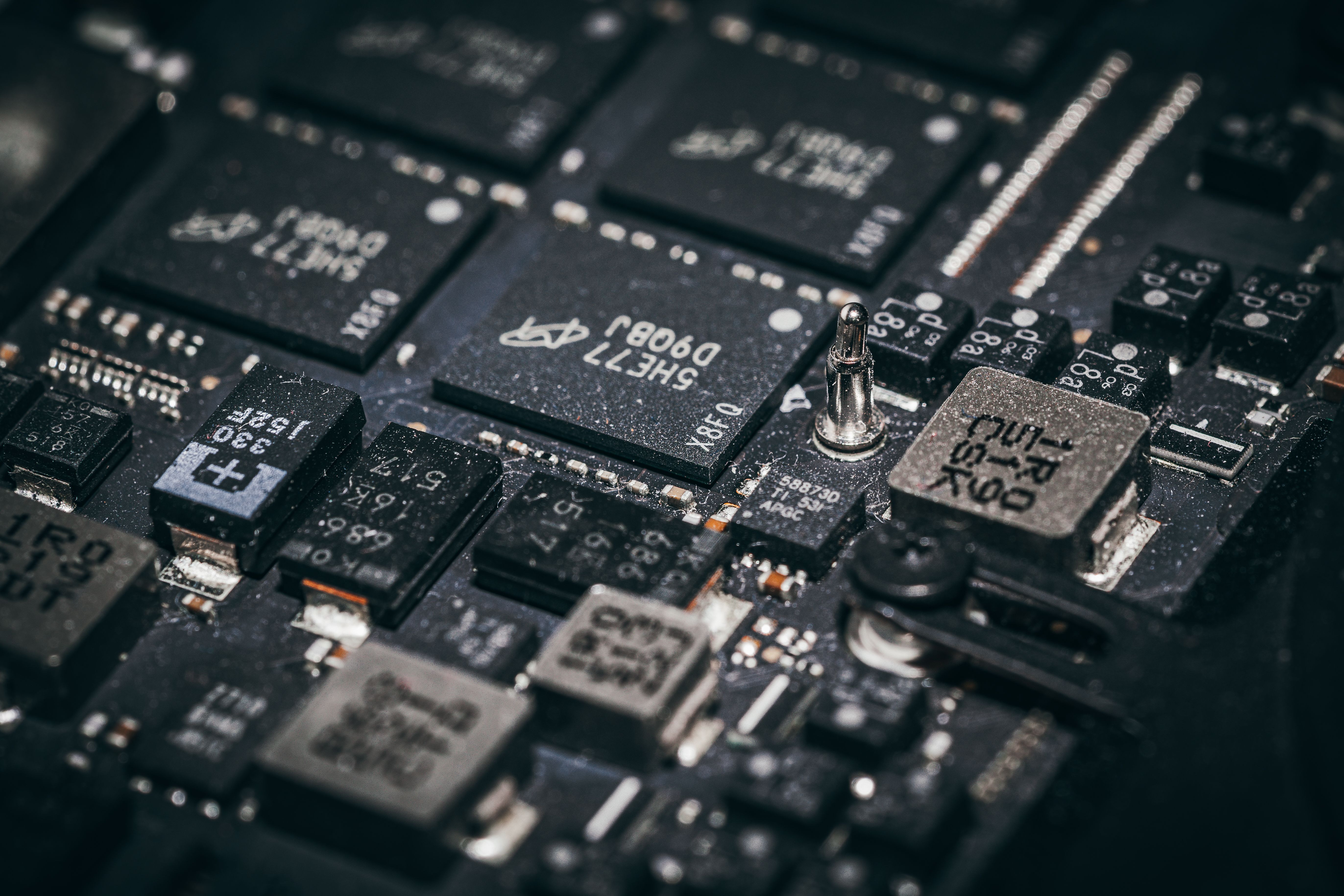
Semiconductor front-end environment: the qualification bar for a photoresist monomer is set by the process layer, not by the CAS number alone.
Four CAS numbers sit behind the phrase electronic-grade vinylbenzyl chloride in supplier catalogues and buyer specifications: 4-vinylbenzyl chloride (CAS 1592-20-7), 2-vinylbenzyl chloride (CAS 22570-84-9), 3-(chloromethyl)styrene (CAS 39833-65-3) and mixed Vinylbenzyl chloride (CAS 30030-25-2). They share a molecular formula family and a bifunctional architecture, but they are distinct raw materials. A photoresist formulator, a membrane resin producer and a packaging dielectric developer are not shopping for the same grade, even when they are all shopping for vinylbenzyl chloride.
The practical consequence for buyers in research and evaluation is simple. The CAS number tells you which molecule you are discussing. It does not tell you whether the grade fits the line, the lithography step, the cure schedule or the ion-exchange duty you have in mind. Fit is decided further downstream: by isomer purity, metal-ion ceiling, handling history, packaging integrity and the analytical evidence attached to the batch.
Why a CAS number is not yet a specification
An electronic-grade monomer is a bundle of decisions rather than a single identity. Which positional isomer. What assay and isomer ratio. What ceiling on sodium, iron, copper and other metal ions. Which packaging format. Which analytical methods and which third-party evidence support the certificate of analysis. Two suppliers can both ship CAS 1592-20-7 and still deliver inputs that behave differently in a formulation, because the isomer ratio, the metal profile or the handling chain changed underneath the label.
This is why qualification programmes restart when a source changes even though the label does not. It also explains why scenario mapping is more useful to a buyer than an alphabetical product list. Once you know which process layer the monomer is entering, the relevant specifications become visible: a resist line cares about trace metals and batch-to-batch consistency, a membrane line cares about the availability of the chloromethyl handle, and a polyimide programme cares about moisture exclusion before the monomer ever reaches the reactor.
The four vinylbenzyl chloride grades are positional or compositional variants of the same substitution chemistry. They are not interchangeable without re-qualification. That is an editorial conclusion drawn from how the products are numbered and specified, and it is the single most useful caution to carry into a first evaluation meeting.
The procurement problem: one material name, six process layers
Vinylbenzyl chloride appears in six distinct electronic and water-treatment scenarios: negative photoresist resins, E-beam electron beam photoresist work, advanced packaging dielectric materials, homogeneous ion-exchange membranes, ultra-pure water resins and chelating resins. A purchaser who searches for the material by name will find a large, undifferentiated set of offers and very little information about which one belongs to which scenario.
That mismatch has a cost. When a grade is specified without reference to the layer it serves, the buyer typically over-specifies on one axis and under-specifies on another. A photoresist programme may insist on a metal ceiling but never confirm the isomer ratio by gas chromatography. A membrane project may chase assay percentage while ignoring whether the supplier can hold a custom ortho/meta/para ratio across successive batches. Both mistakes surface later, during line qualification, when the correction is expensive.
The opportunity is the reverse of the same coin. Scenario-led specification shortens evaluation because it converts a long material list into a short, defensible set of questions: which isomer, which purity grade, which metal ceiling, which packaging, which evidence. Suppliers who can answer those questions with documentation rather than adjectives become far easier to qualify.
How the molecule actually behaves
Vinylbenzyl chloride is a dual-functional monomer. The vinyl group participates in polymerisation, which is what makes the molecule a polymerisable unit in a resin backbone. The chloromethyl group is a reactive handle that can be displaced by chloride substitution, which is what makes the same molecule useful in ion-exchange resin and membrane chemistry. That combination is the technical reason a single raw material family appears in both lithography polymers and water-treatment resins.
For 4-vinylbenzyl chloride (CAS 1592-20-7), the published specification set includes a molecular weight of 152.62, a boiling point of 229 °C, a density of 1.083 g/mL at 25 °C, a refractive index of n20/D 1.572, a flash point of 221 °F and a vapour pressure of 1 mm Hg at 56.1 °C. It is supplied as a colourless to pale yellow transparent liquid, is insoluble in water, is sparingly soluble in chloroform, and is stored at 2–8 °C. EINECS 216-471-2 applies. Those values matter less as catalogue data than as handling constraints: a water-insoluble, refrigerated liquid with a defined vapour pressure implies a closed-system transfer strategy and temperature-controlled logistics rather than open handling.
The purity layer sits on top of the chemistry. Electronic-grade supply is defined by what is removed, not only by what is present. Purification capability at the ppb level for metal-ion impurities, verified through ICP-MS alongside HPLC and GC, is what separates a monomer destined for a resist line from one destined for a general industrial polymer. The manufacturing environment reinforces this: closed-system feeding under inert-gas protection, precisely temperature-controlled batch reaction, and formulation and filtration in clean spaces with filtration rated to 0.1 μm or finer where particle control is part of the customer specification.
BPADA behaves under a different logic. 4,4'-(4,4'-isopropylidenediphenoxy)bis(phthalic anhydride), CAS 38103-06-9, molecular weight 520.49, EINECS 253-781-7, melting point 184–187 °C, is a white to light yellow crystalline powder built around a bisphenol A core with two anhydride end groups. Those anhydride groups are highly sensitive to moisture: on contact with water the ring opens to a diacid, and polymerisation activity drops or disappears. Polymerisation is normally run under inert gas in anhydrous polar solvents such as NMP or DMAc. In practice, BPADA failures are often logistics failures — a breached liner, a warm warehouse, a slow customs clearance — rather than synthesis failures.
Scenario-by-scenario fit: which grade belongs where
The mapping below reflects how the four vinylbenzyl chloride grades and BPADA are positioned in the supporting material data. It is a selection aid, not a performance guarantee; the final decision normally sits with the customer's own formulation trials.
| Scenario | Grade to evaluate | Why the fit exists | Constraint to plan for |
|---|---|---|---|
| Negative photoresist resin | 4-Vinylbenzyl chloride, CAS 1592-20-7 | Documented core monomer for high-performance negative photoresist resins | ppb-level metal ceiling, batch-to-batch isomer consistency, cold-chain handling |
| E-beam electron beam photoresist | 4-Vinylbenzyl chloride, CAS 1592-20-7 | Explicitly named in the resin class supported by this monomer | Tight specification lock before scale-up; tool time is expensive to repeat |
| Advanced packaging dielectric material | 4-Vinylbenzyl chloride, CAS 1592-20-7 | Listed as a core monomer for advanced packaging dielectric materials | Dielectric performance depends on crosslink chemistry, not on the monomer alone |
| Homogeneous ion-exchange membrane | 4-Vinylbenzyl chloride, CAS 1592-20-7 | Chloromethyl group provides the displacement handle used in membrane chemistry | Filtration and particle control shape membrane uniformity |
| Ultra-pure water resin | 4-Vinylbenzyl chloride, CAS 1592-20-7 | Named application for this monomer in resin synthesis | Leachable and metal content dominate the final water quality |
| Chelating resin | 4-Vinylbenzyl chloride, CAS 1592-20-7 | Chloride displacement allows the ligand chemistry to be attached after polymerisation | Ligand selection and loading efficiency sit outside the monomer spec |
| High-purity resin and semiconductor intermediate synthesis | Vinylbenzyl chloride, CAS 30030-25-2 | Reported use in high-purity resin synthesis and semiconductor intermediates | Mixed-isomer composition should be specified and confirmed per batch |
| Positional isomer screening or formulation tuning | 2-Vinylbenzyl chloride CAS 22570-84-9; 3-(chloromethyl)styrene CAS 39833-65-3; custom ortho/meta/para ratio | Separate grades exist so that positional effects can be tested rather than assumed | Published application data are thinner; customer-side evaluation is required |
| Transparent polyimide film and flexible display substrate | BPADA, CAS 38103-06-9 | Incomplete conjugation supports high optical transparency; Tg of 207 °C | Anhydride hydrolysis risk from moisture during storage and transit |
| Superhydrophobic aerogel | BPADA, CAS 38103-06-9 | Reported route to superhydrophobic aerogels exhibiting the lotus effect | Process development is application-specific and iterative |
Table 1: Scenario-to-grade mapping for electronic-grade vinylbenzyl chloride isomers and BPADA.

Advanced packaging and wafer-level processing: dielectric and resist chemistries are increasingly specified together, which is why isomer choice is a joint decision.
Reading the photoresist scenarios correctly
Negative photoresist resin and E-beam photoresist are the two scenarios where buyers most often over-attribute performance to the monomer. The monomer is a building block; the resist outcome is decided by the full formulation, the photoacid generator system, the bake schedule and the developer. What the electronic-grade monomer contributes is a stable, low-metal polymerisable unit with a reactive handle that the polymer architecture can use.
That distinction matters during evaluation, because it tells the buyer which claims to test in-house and which to accept from documentation. Metal-ion content, isomer ratio, water content and batch traceability can be verified analytically. Resolution, contrast and adhesion cannot be inferred from a monomer certificate; they belong to the formulator's own trials.
The same logic applies to advanced packaging dielectric materials, where the monomer feeds a crosslinked network rather than a patterned image. Here the buyer's concern shifts toward cure behaviour, dielectric loss and long-term stability, and the monomer specification becomes one input among several.
Reading the membrane and resin scenarios correctly
Homogeneous ion-exchange membranes, ultra-pure water resins and chelating resins rely on the chloromethyl group rather than on the vinyl group. The polymer backbone is formed first or concurrently, and the chloromethyl site is then displaced to install the functional group that does the ion-exchange or chelation work. This is the practical meaning of the description of vinylbenzyl chloride as a dual-functional monomer that is readily derivatised by chloride displacement.
In these scenarios the specification conversation should concentrate on displacement efficiency and on what the monomer brings into the plant that must later be washed out. Trace metals and particles that are irrelevant in a bulk industrial polymer become leachables in an ultra-pure water resin. A buyer evaluating a membrane project should therefore ask for the metal-ion profile and the particle-control statement as readily as for the assay figure.
Where the formulation does not require a single positional isomer, mixed Vinylbenzyl chloride (CAS 30030-25-2) offers a practical route, reported for use in high-purity resin synthesis and semiconductor intermediates. The trade-off is compositional: a mixed grade carries an isomer distribution that must be specified and confirmed batch by batch if the downstream resin is sensitive to it.
Where BPADA joins the same material programme
BPADA rarely appears in the same sentence as vinylbenzyl chloride, yet both belong to the same class of electronic-material building blocks and both are specified by scenario rather than by name. BPADA is a key monomer for high-performance polyimides used in semiconductor packaging and flexible circuits. The bisphenol A core produces polyimide films with incomplete conjugation, which is the structural reason such films can combine high optical transparency with heat resistance, and with a glass transition temperature of 207 °C the films are positioned for flexible display substrates. Related polyimides are chemically inert and have been described for ion transport membranes in fuel cells. BPADA has also been reported as a route to superhydrophobic aerogels exhibiting the lotus effect.
The 5G high-frequency and high-speed flexible copper-clad laminate, OLED flexible substrate and aerospace lightweight composite categories are the stated industry targets. For a buyer, the important contrast with the vinylbenzyl chloride family is handling discipline: BPADA is supplied as a white to light yellow crystalline powder with a melting point of 184–187 °C, and it must be kept absolutely dry and sealed. Where VBC grades are managed through cold-chain liquid logistics, BPADA is managed through moisture-proof packaging, sealed reactor charging and inert-gas protection in anhydrous polar solvents.
One adjacent material deserves a brief note because it is often specified alongside these chemistries. 5-Methyl-1H-benzotriazole (CAS 136-85-6) is a white to cream crystalline powder used as a copper and copper-alloy corrosion inhibitor and as an anti-fading agent in photomasking resins, and it appears in the same procurement conversations as the resist monomers even though its function is entirely different.
Market signals that turn scenario fit into a purchasing question
The scale of the downstream market explains why material-level selection now receives formal attention. Grand View Research estimated the global electronic chemicals and materials market at USD 78.5 billion in 2025, and SEMI reported global semiconductor materials revenue of USD 73.2 billion in 2025. The electronic-grade photoresist segment alone was estimated at USD 4.96 billion in 2024 by Grand View Research. Asia Pacific accounted for 66.6% of electronic materials and chemicals market revenue in 2025, according to the same Grand View Research dataset.
Two caveats belong with those figures. Market sizing studies diverge because scopes differ: estimates for the electronic chemicals market range from roughly USD 67.5 billion to USD 78.5 billion depending on whether substrates and hardware-linked materials are included, and photoresist estimates differ depending on whether developers and strippers are counted. Buyers should treat such figures as directional context, not as procurement data.
The directional reading is nonetheless clear. When a market of this size is concentrated in one region and built on multi-year qualification cycles, the cost of a wrong grade decision rises faster than the cost of the material itself. That is the commercial argument for scenario-led specification, and it is why purchasers increasingly ask suppliers to describe process fit rather than only product identity.
Isomer-specific grades versus conventional mixed supply
Conventional supply of vinylbenzyl chloride has typically been organised around a single mixed technical grade, with the buyer responsible for characterising the isomer distribution and adjusting the formulation accordingly. An isomer-specific electronic-grade approach inverts that division of labour. Instead of one grade with a broad composition, the portfolio separates pure para-isomer at 99% or above, pure ortho-isomer at 98% or above, pure meta-isomer at 98% or above, and any custom ortho/meta/para mixture ratio agreed with the customer.
The trade-off is not symmetrical, and it should be stated plainly. A mixed-isomer grade reduces the number of incoming material specifications a formulator has to manage and is generally simpler to schedule in bulk; an isomer-specific grade narrows compositional variability but adds characterisation work, adds incoming-inspection load, and usually extends the qualification timeline because every positional grade must be tested in the customer's own formulation. For a programme still in exploratory research, the mixed grade may be the more efficient starting point; for a line already in evaluation, the narrower grade is usually worth the extra work.
A second limitation is more fundamental. Isomer purity and metal ceiling are input specifications, not outcome guarantees. The supporting material does not provide per-isomer resist performance data — resolution, contrast, adhesion or dielectric behaviour for each positional isomer — and no supplier should be asked to promise those from a certificate of analysis. Buyers should expect to run their own formulation trials and should treat supplier application notes as orientation rather than as validation.
What the supplier side of the fit looks like
Jiangsu Juming Chemical Technology Co., Ltd., trading as Jumingchem, is a Jiangsu-based chemical technology company established in 2017 that integrates research and development, production, sales and service. Its stated factory area is 78,000 m², with a 3,000 m² research and development centre, a 300 m² pilot plant and a 600 m² GMP workshop, staffed by 180 employees including 25 engineers, with an annual output of 60,000 tons and an export ratio of 70% across the United States, Korea, Japan, Taiwan region, Germany, Southeast Asia and the Middle East.
The product portfolio covers 5-Methyl-1H-benzotriazole (CAS 136-85-6), 4-Vinylbenzyl chloride (CAS 1592-20-7), 1-(chloromethyl)-2-vinylbenzene (CAS 22570-84-9), 1-(chloromethyl)-3-vinylbenzene (CAS 39833-65-3), Vinylbenzyl chloride (CAS 30030-25-2) and BPADA (CAS 38103-06-9), alongside photoinitiators, UV absorbers and water-treatment corrosion inhibitors. Technical positioning rests on microchannel and continuous-flow technology for demanding reactions, ppb-level metal-ion purification for electronic grades, GMP-standard clean workshops, and ICP-MS, HPLC and GC detection systems, with production scalable from gram-level research quantities to hundred-ton industrial volumes.
Customisation is structured rather than open-ended: molecular structure and synthesis route design, purity grade selection across industrial, high-purity and electronic grades, metal-ion content controlled to customer specification including values below 10 ppb, and VBC isomer composition set to pure para, pure ortho, pure meta or a custom mixture. Liquid VBC grades ship in 25 kg HDPE drums, 200 kg steel-plastic composite drums or 1000 L IBCs; solid BPADA and 5-methyl-1H-benzotriazole ship in 25 kg fibre drums with PE liner, 25 kg kraft paper bags or 500 kg bulk bags, with temperature-controlled and UN-certified dangerous goods packaging available on request. Standard lead time is 7–30 days with a 1 kg minimum order quantity, 100% testing and remote technical support.
Operations run in ISO 6 GMP cleanrooms with control over metal ions, particles and environmental parameters, using low-extraction materials such as 316L VIM/VAR stainless steel and PFA/PVDF, under an ISO 9001 quality management system with batch traceability, retained samples and support for third-party re-inspection by SGS, BV or Intertek. One photoresist-monomer supply programme reports metal impurities below 10 ppb meeting SEMI Grade 4, and a display-panel programme reports metal impurities below 20 ppb with particle control at or below 0.1 μm.
What to verify before committing a scenario
A short verification list converts the mapping above into an evaluation plan. Each item can be answered with documentation rather than with opinion.
- Isomer identity and ratio, confirmed by GC rather than by product name, including the tolerance band for custom mixtures.
- Metal-ion profile by ICP-MS, stated as a ceiling per element and compared against the ceiling your process actually needs.
- Particle control statement, especially for membrane, ultra-pure water and resist applications.
- Batch traceability and retained samples, so that a deviation can be investigated against a physical reference.
- Third-party re-inspection availability through SGS, BV or Intertek, and the documentation package — COA, MSDS, bill of lading — that supports customs clearance.
- Packaging and logistics integrity, including temperature control for VBC liquids and moisture-proof sealing for BPADA.
- Scale-up path, from a 1 kg evaluation quantity to the batch size your line requires, with the lead-time implication stated.
Where custom isomer ratios are involved, the path typically runs from sample development to scale-up production, with the ratio fixed by agreement before the first commercial batch. For BPADA programmes, the equivalent gate is moisture management: sealed storage, inert-gas charging and anhydrous solvent handling.
Future outlook
Three directions are visible from the material side. First, packaging dielectric and redistribution-layer chemistry continues to absorb monomer and polyimide capacity, which pushes demand toward grades supported by traceable metal data. Second, advanced lithography nodes raise the importance of ppb-level purification, moving metal-ion control from a premium option toward a baseline expectation for resist monomers. Third, water-side applications — homogeneous ion-exchange membranes, ultra-pure water resins and chelating resins — keep a steady structural demand for the chloromethyl handle, independent of lithography cycles.
Joint development is likely to matter more than catalogue breadth in the next cycle. Collaborative work on 5G polyimide materials and EUV photoresist monomers is already part of how custom electronic-grade supply is organised, and the practical outcome for buyers is earlier visibility into isomer ratio and purity feasibility before a formulation is frozen.
Frequently asked questions
What is the difference between the four vinylbenzyl chloride CAS numbers?
They identify four distinct products. 4-Vinylbenzyl chloride (CAS 1592-20-7) is the para isomer. 2-Vinylbenzyl chloride (CAS 22570-84-9) is the ortho isomer, also written as 1-(chloromethyl)-2-vinylbenzene. 3-(Chloromethyl)styrene (CAS 39833-65-3) is the meta isomer, written as 1-(chloromethyl)-3-vinylbenzene. Vinylbenzyl chloride (CAS 30030-25-2) is the mixed grade. They are positional or compositional variants of the same substitution chemistry and are not interchangeable without re-qualification.
Which grade is used in negative photoresist and E-beam photoresist work?
4-Vinylbenzyl chloride, CAS 1592-20-7, is documented as a core monomer for synthesising high-performance negative photoresist resins, including E-beam electron beam photoresist, and for advanced packaging dielectric materials. The same grade is also named for homogeneous ion-exchange membranes, ultra-pure water resins and chelating resins.
What purity and metal-impurity specifications should be requested?
Electronic-grade supply normally distinguishes industrial, high-purity and electronic grades, with metal-ion content controlled to the customer's specification, including values below 10 ppb. Purity grades can be customised, and metal impurity specifications can be set per element. Isomer composition options include pure para at 99% or above, pure ortho at 98% or above, pure meta at 98% or above, and custom ortho/meta/para mixtures.
How should a lot be validated before scaling?
Validation normally combines analytical confirmation with formulation trials. On the analytical side, isomer ratio by GC, metal ions by ICP-MS, and particle control where relevant should be confirmed against the specification, supported by batch traceability codes, retained samples and, if required, third-party re-inspection by SGS, BV or Intertek. On the application side, the customer's own formulation trials remain the deciding evidence, because resist and dielectric outcomes depend on the full formulation rather than on the monomer alone.
Where does BPADA fit relative to vinylbenzyl chloride?
BPADA (CAS 38103-06-9) is a separate building block for high-performance polyimides used in semiconductor packaging and flexible circuits. Polyimide films made from it have incomplete conjugation and therefore high optical transparency, with a glass transition temperature of 207 °C, which positions them for flexible display substrates and 5G high-frequency flexible copper-clad laminates. Its anhydride groups are moisture sensitive and hydrolyse to a diacid, so it must be stored dry and sealed and polymerised under inert gas in anhydrous polar solvents such as NMP or DMAc.
What handling conditions apply to the vinylbenzyl chloride grades?
4-Vinylbenzyl chloride is a colourless to pale yellow transparent liquid with a density of 1.083 g/mL at 25 °C and a boiling point of 229 °C, insoluble in water and stored at 2–8 °C. Production uses batch reaction under inert-gas protection with closed-system feeding and handling. Packaging ranges from 25 kg HDPE drums and 200 kg steel-plastic composite drums to 1000 L IBCs, with temperature-controlled packaging available for long-distance shipping through hot climates.
For buyers assembling a scenario-led evaluation file, the Jiangsu Juming Chemical Technology product brochure is available for download: Jiangsu Juming catalogue (PDF).
¿Tiene preguntas o necesita más detalles?
Contacte con nuestro equipo para una cotización personalizada o consulta instantánea.
Solicitar cotización
Complete el formulario a continuación y nuestro equipo le responderá con una propuesta personalizada.
Chat directo de WhatsApp
¿Prefiere chatear en tiempo real? Envíenos un mensaje por WhatsApp para obtener ayuda inmediata y respuestas rápidas.
- Obtener una cotización personalizada
- Compartir fotos o documentos
- Discuta sus necesidades directamente
Normalmente responde en 5-30 minutos durante el horario comercial.