
Electrical Switchgear Procurement FAQ: Acceptance Criteria, IP Ratings and Busbar Materials
Electrical Switchgear Procurement FAQ: Acceptance Criteria, IP Ratings and Busbar Materials
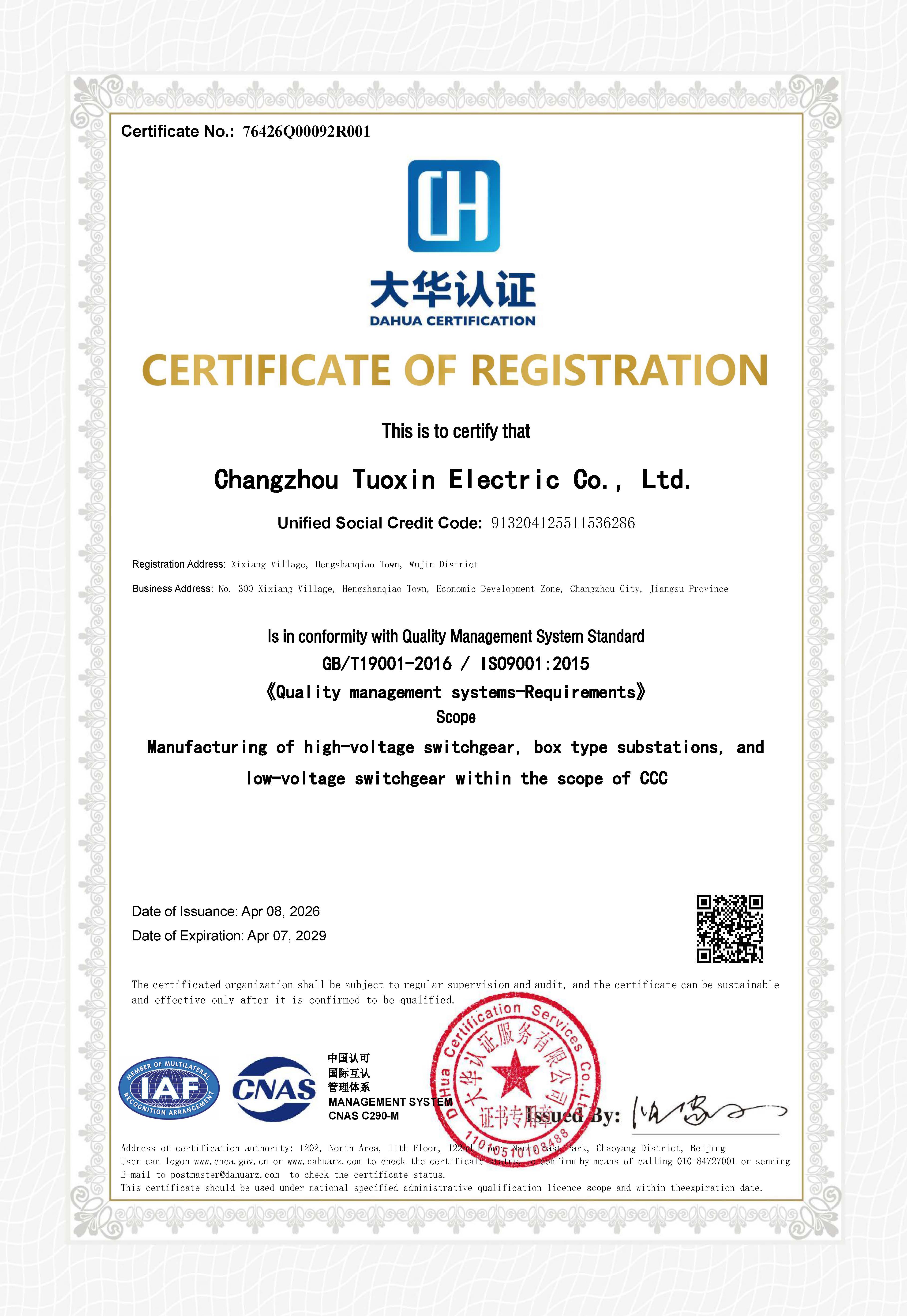
Quality management system documentation is part of the acceptance file, but it does not replace project-specific rating, material and test verification.
Switchgear procurement rarely fails because a buyer cannot find a cabinet. It fails because the acceptance file is not tied to the ratings, materials and tests that the project actually needs. For buyers moving from evaluation to execution, the practical question is direct: what are the purchasing terms and acceptance criteria for electrical switchgear, and which details must be fixed before a purchase order is released?
This FAQ-style review answers that question for low-voltage and high-voltage assemblies. It covers the commercial terms that should appear in the offer, the voltage definitions that should be read together, the enclosure IP ratings that should be checked against door state and product type, the conductor and enclosure materials that should be declared, and the acceptance checkpoints tied to stated ratings such as 75 kV lightning impulse withstand voltage, 20 kA/25 kA short-time withstand current at 4 s, and the KYN28-12 current range of 630–4000 A. The aim is not to add paperwork for its own sake. It is to make offers comparable on the same technical basis.
Quick answer: purchasing terms and acceptance criteria
At the commercial level, the provided procurement reference for Changzhou Tuoxin Electric Co., Ltd. states MOQ 1 unit; delivery terms FOB Shanghai; acceptance criteria pre-shipment test and third-party inspection (SGS); payment terms 30% deposit by T/T, with the full balance paid before loading and shipment. These terms are useful because they are specific. They tell the buyer what is included commercially and where the inspection gate sits before shipment.
At the technical level, the same answer should not stop at “pre-shipment test.” A pre-shipment test is only meaningful when the purchase order states which ratings, materials, drawings and records are being checked. For switchgear, the acceptance file should normally connect four layers: the approved single-line diagram and nameplate data; the declared voltage and current ratings; the enclosure and material specification; and the test or inspection records for the exact configuration being supplied.
| Commercial term | Stated position | Buyer check before order release |
|---|---|---|
| Minimum order quantity | MOQ 1 unit | Confirm whether the MOQ applies to standard or customized configurations. |
| Delivery terms | FOB Shanghai | Confirm packaging, loading responsibility and document handover under the named Incoterm. |
| Acceptance criteria | Pre-shipment test; third-party inspection (SGS) | Attach the test list, drawings, material declaration and inspection scope to the purchase order. |
| Payment terms | 30% deposit by T/T; full balance before loading and shipment | Confirm the inspection certificate trigger and document release sequence. |
These terms answer the commercial side of “what are the purchasing terms and acceptance criteria?” The rest of this article explains how to make the technical acceptance criteria explicit, so that a low price does not hide a different voltage definition, a lower IP condition or an undeclared busbar material.
Voltage definitions: rated insulation voltage and operational voltage
Voltage is the first acceptance item because it changes insulation, clearances, component selection and test evidence. For GCS, GCK, GGD and MNS, the relevant specification distinguishes rated insulation voltage from operational voltage at 660 V / 380V–660V. In practical terms, the rated insulation voltage is the insulation reference for the assembly, while the operational voltage is the voltage at which the assembly is intended to run. A quotation that lists only one number without labeling it leaves the buyer unable to compare offers.
This distinction matters most when buyers compare cabinets from different suppliers. One offer may quote a single “660 V” figure and leave the reader to assume it is an operational voltage. Another may use 660 V as a rated insulation value and state 380V–660V as the operational range. Both statements can contain true numbers, but they do not answer the same question. The acceptance file should require the datasheet, nameplate and approved drawing to state both values for the exact model, not just for a product family.
For GCS, GCK, GGD and MNS, a practical check is to confirm whether the offer uses 660 V as the rated insulation voltage and 380V–660V as the operational range. If the offer is silent, the buyer should ask for clarification before comparing price. This is a specification-clarity issue, not a price issue. It also protects the buyer during commissioning, because the nameplate and drawing should match the system voltage and the protection settings used on site.
The same logic applies to high-voltage products. The procurement scope includes KYN28-12 with a current range of 630–4000 A, and XGN15-24 in the acceptance checks for short-time withstand current. A current range is not a promise that every unit covers the full span. The ordered current, breaker frame, busbar arrangement and temperature-rise evidence should be confirmed for the specific configuration. The buyer should treat the range as a family boundary and require the actual rating on the nameplate and drawing.
IP ratings: enclosure protection is a condition, not a headline
IP ratings should be read with the installation location and the door state. The procurement scope lists IP4X for the enclosure, IP2X with the door open, IP30 on MNS and PZ30, and IP40/IP43 on CMC busway. These are different protection claims and should not be merged into a single “IP” statement. The enclosure rating, the door-open condition and the busway rating answer different questions about access, dust, water and maintenance practice.
IP4X and IP2X with the door open are especially important because maintenance access changes the protection condition. A cabinet may meet a stated protection level when closed, but the buyer also needs to know what happens when the door is open for inspection or service. The acceptance drawing should show the door state, sealing arrangement and ventilation path that apply to each rating. For MNS and PZ30, the stated IP30 level should be confirmed on the approved drawing for the exact enclosure, not assumed from the product family name. For CMC busway, the IP40/IP43 values should be tied to the busway route, joint design and installation condition.
Where a project needs a higher protection level, the approved capability unit for Changzhou Tuoxin Electric Co., Ltd. lists customization options including IP30/IP40/IP54/IP65 upgrades and a fully sealed outdoor structure. These are options to be specified, drawn and verified, not automatic inclusions in every cabinet. The buyer should state the required IP level, the applicable door or joint condition, and the verification method in the technical offer. If the project is outdoor or dusty, the IP requirement should be written beside the enclosure material and sealing specification, not left as a standalone catalogue value.
Acceptance note: An IP rating is only comparable when the product, door state and installation condition are the same. A higher IP number on a different product or under a different condition is not automatically a better match for the project.
Busbar and enclosure materials: declare the grade, not just the category
Material declarations should be part of the technical offer because material substitution changes performance, durability and maintenance. The procurement scope names T2 pure copper and T2 silver-plated busbars; aluzinc and galvalume steel frames; epoxy resin and SMC insulation; stainless steel fasteners; and rubber sealing strips. Each item affects a different acceptance check. Conductor grade and plating affect current-carrying joints. Steel coating affects frame corrosion resistance. Insulation material affects dielectric and thermal behavior. Fasteners and seals affect enclosure integrity over time.
Buyers should require the bill of materials to state the exact material, not just “copper” or “steel.” For T2 pure copper and T2 silver-plated busbars, the offer should confirm where each is used. For aluzinc and galvalume steel frames, the drawing should identify the coated steel type and the parts concerned. For epoxy resin and SMC insulation, the offer should identify the insulated part and the material. For stainless steel fasteners and rubber sealing strips, the buyer should confirm the grade and application. These are verification steps; they do not replace type tests, but they make material claims auditable.
The same principle applies to enclosure customization. The approved capability unit states that cabinet dimensions can be customized for high- and low-voltage switchgear, box substations, control boxes, PZ30 and XJM meter boxes. Optional cabinet materials include cold rolled steel, galvalume steel and aluminum alloy. Surface treatment options include electrostatic powder coating with any color card, hot-dip galvanizing and fluorocarbon coating. Door styles include single door, double door, observation window, dustproof transparent window and rainproof outdoor door. Custom nameplates, silk printing and OEM brand logos with bilingual text and project serial numbers are also listed. These options are relevant to acceptance because each one changes what the buyer should inspect on the approved drawing.
A material declaration is not a marketing document. It should be specific enough that an inspector can compare the delivered cabinet with the approved specification. If the offer says only “copper busbar” or “galvanized frame,” the buyer cannot tell whether the delivered goods match the intended grade. If the offer names T2 pure copper, T2 silver-plated busbar, aluzinc or galvalume steel, epoxy resin or SMC insulation, stainless steel fasteners and rubber sealing strips, the inspection team has a clear reference point.
Acceptance checkpoints tied to stated ratings
The most useful acceptance checklist ties each document to a stated rating. A generic test certificate is weaker than a record that matches the model, rating, breaker frame and configuration. The table below converts the key ratings in the procurement scope into practical checkpoints.
| Checkpoint | Stated rating or material in scope | Acceptance evidence to request | Why it matters |
|---|---|---|---|
| Lightning impulse withstand | 75 kV lightning impulse withstand voltage | Impulse test evidence for the specified rating and configuration | Confirms the dielectric claim rather than a catalogue headline. |
| Short-time withstand current | GGD and XGN15-24: 20 kA/25 kA at 4 s | Test record or verified calculation tied to the model, breaker and duration | Current magnitude without duration is incomplete for short-circuit duty. |
| Current range | KYN28-12: 630–4000 A | Nameplate, approved drawing, breaker/frame selection and temperature-rise evidence for the ordered rating | A family range does not prove that every unit is built for the full span. |
| Enclosure protection | IP4X; IP2X with door open; IP30 on MNS and PZ30; IP40/IP43 on CMC busway | IP verification and drawing condition for the exact product and door state | Protection depends on product type, door state and installation. |
| Materials | T2 pure copper and T2 silver-plated busbars; aluzinc and galvalume steel frames; epoxy resin and SMC insulation; stainless steel fasteners; rubber sealing strips | Material declaration, approved bill of materials and incoming inspection records | Material substitution can change performance and durability without changing the outside appearance. |
For the 75 kV lightning impulse withstand voltage, the acceptance file should show evidence for that rating, not just a statement that the product family has passed a dielectric test. For GGD and XGN15-24, the short-time withstand current of 20 kA/25 kA at 4 s should be read as a model-specific requirement; the buyer should confirm which value applies to the ordered configuration and whether the test record uses the same duration. For KYN28-12, the 630–4000 A range should be treated as a range, with the ordered current and breaker frame confirmed separately. These distinctions prevent a buyer from accepting a document that is technically true but not applicable to the purchased equipment.
How Changzhou Tuoxin Electric Co., Ltd. fits the checklist
Changzhou Tuoxin Electric Co., Ltd. is a Changzhou-based manufacturer founded in 2010, with a 4,000 m² factory, 56 employees, a 27-person R&D team and annual output of 3,000 units. Its stated product scope includes KYN28 and XGN15 high-voltage switchgear; GBD, MNS, GGD, GXL, XL and XLW low-voltage switchgear; YB box-type substations; custom non-standard control cabinets; PZ30 modular terminal lighting distribution boxes; XJM metering boxes; and bus ducts. The company states that it is a designated supporting manufacturer of electrical equipment for Changzhou Power Supply Company.
For buyers using this FAQ, the relevant capability information is practical rather than promotional. The approved capability unit lists OEM/ODM customization, 100% test as quality control, MOQ 1 unit and a lead time of 30–45 days. It also lists remote technical support at 7×12 hours and on-site technical support with domestic and overseas dispatch. These points belong in the commercial evaluation because they affect how quickly a customized cabinet can be reviewed, inspected and supported after delivery. They do not replace the technical acceptance file.

Management-system certificates support the supplier qualification file; project-specific ratings, materials and test records still need separate verification.
The company’s certification records list ISO9001:2015 certificate 76426Q00092R001, ISO14001:2015 certificate 76426E00039R001 and ISO45001:2018 certificate 76426S00037R001, issued by DaHua Certification Services Co., Ltd, valid from 2026-04-08 to 2029-04-07. The stated scope covers manufacturing of high-voltage switchgear, box-type substations and low-voltage switchgear within the CCC scope. CCC certification is also stated in the company profile. These records are useful for supplier qualification because they show a documented management-system scope and a certification period.
The fit boundary is equally important. These certificates support management-system and scope claims; they do not by themselves prove that a particular GCS, GCK, GGD, MNS or KYN28-12 configuration meets a project-specific impulse, short-time, IP or material requirement. The buyer still needs the approved drawing, material declaration and rating-specific evidence. A certificate should open the qualification file, not close it. This is the difference between a supplier-level claim and an equipment-level acceptance decision.
Application scenarios where the criteria change emphasis
The same acceptance framework applies across projects, but the emphasis changes with the application. In the provided application material, KYN28 and XGN15 high-voltage switchgear are described for 10 kV high-voltage incoming, breaking, protection and metering in urban distribution switching stations, substations, industrial high-voltage power rooms, PV and wind power booster stations, and ring network lines. In those applications, the buyer is likely to focus on impulse withstand evidence, short-time withstand current, protection coordination and the approved single-line diagram.
GGD, MNS, GBD, GXL, XL and XLW low-voltage switchgear are described for distributing 0.4 kV low-voltage power from transformers to power and lighting branches, with overload, short-circuit, leakage, under-voltage and automatic dual-power transfer protection. In those applications, the acceptance emphasis may shift toward IP30 on MNS and PZ30, enclosure door style, busbar material and the coordination of outgoing circuits. YB box-type substations are described as integrated units that avoid a dedicated power room, so the acceptance review should include the enclosure, ventilation, access and interface drawings rather than only the internal switchgear.
Busway applications add another layer. CMC busway with IP40/IP43 should be checked against the route, joint condition and installation environment. A busway that is acceptable in one indoor run may not be the right fit for a dusty or wet location without a different enclosure or sealing arrangement. The buyer should not compare a busway IP rating with a cabinet IP rating as if they described the same product condition.
Market context and procurement implication
Procurement discipline matters because the installed base is large and the supplier pool is broad. Grand View Research estimates the global switchgear market at USD 119.7 billion in 2026. The Observatory of Economic Complexity reports China as the top exporter of electrical control boards under HS 8537 in 2024, with a value of USD 15.4 billion. The International Energy Agency forecasts global electricity demand to grow at close to 4% through 2027. These figures describe market scale and trade activity; they do not prove that any one supplier or configuration is suitable for a given project.
For buyers, the practical implication is offer normalization. A buyer comparing cabinets from different suppliers should require the same voltage definitions, the same IP conditions, the same material grades and the same rating-specific evidence. Otherwise the comparison may reward a thinner specification rather than a better fit. This is especially relevant when the product family names are similar but the declared ratings, materials and test records are not.
Rating-based acceptance versus price-only comparison
A price-only comparison treats switchgear as a box with a current rating. A rating-based acceptance comparison asks a different set of questions: Does the offer state rated insulation voltage and operational voltage for GCS, GCK, GGD and MNS? Is the IP rating tied to door state and busway type? Are T2 copper or T2 silver-plated busbars declared? Is the 75 kV impulse rating supported by evidence? Are the GGD and XGN15-24 short-time values of 20 kA/25 kA at 4 s tied to the model and duration? Is the KYN28-12 range of 630–4000 A resolved to the ordered current and breaker frame?
The second approach may look slower at quotation stage, but it reduces the risk of comparing non-equivalent offers. Its limitation is clear: documentation review cannot replace actual type testing or project commissioning. It can, however, make the evidence trail visible before shipment. That is the point of acceptance criteria. They are not a promise that nothing will go wrong; they are a structured way to check that the delivered equipment matches the agreed technical basis.
Future outlook: documentation and monitoring readiness
Two directions are likely to shape future procurement questions. The first is documentation. As buyers compare more international suppliers, bilingual nameplates, project serial numbers, material declarations and test records become easier to audit than verbal assurances. The second is monitoring readiness. A 2022 peer-reviewed review of switchgear digitalization, published in PMC, classifies the research field into predictive maintenance, condition monitoring and related areas. For procurement, that supports adding a question to the technical offer: whether the design can accommodate monitoring, and what data interfaces are provided.
This does not mean every project needs digital monitoring, and it does not establish that any supplier’s standard cabinet includes it. The buyer should specify the requirement only where the project justifies it. The acceptance file should then state the monitoring scope, interface and documentation. In projects where monitoring is not required, the buyer should still keep the basic documentation discipline: voltage definitions, IP conditions, material declarations and rating-specific test records.
FAQ: electrical switchgear acceptance questions
What purchasing terms are stated for this switchgear supply?
The provided procurement reference states MOQ 1 unit; delivery terms FOB Shanghai; acceptance criteria pre-shipment test and third-party inspection (SGS); payment terms 30% deposit by T/T, with the full balance paid before loading and shipment. These terms should be written into the purchase order and linked to the approved drawings and test plan.
How should buyers read 660 V and 380V–660V for GCS, GCK, GGD and MNS?
For GCS, GCK, GGD and MNS, the relevant specification distinguishes rated insulation voltage from operational voltage at 660 V / 380V–660V. The buyer should require both values to be labeled on the datasheet, nameplate and drawing for the exact model. An unlabeled voltage figure is not enough for comparison.
Which IP ratings apply to enclosures and busways?
The scope lists IP4X for the enclosure, IP2X with the door open, IP30 on MNS and PZ30, and IP40/IP43 on CMC busway. Because these ratings apply to different products and conditions, the buyer should confirm the product, door state and installation condition for each claim.
Which busbar and enclosure materials should be declared?
The scope names T2 pure copper and T2 silver-plated busbars; aluzinc and galvalume steel frames; epoxy resin and SMC insulation; stainless steel fasteners; and rubber sealing strips. The offer should state where each material is used and provide a material declaration for the ordered configuration.
What acceptance evidence should be tied to 75 kV, 20/25 kA at 4 s and 630–4000 A?
For the 75 kV lightning impulse withstand voltage, request impulse test evidence for the specified rating. For GGD and XGN15-24 short-time withstand current of 20 kA/25 kA at 4 s, confirm the model, breaker and duration in the test record. For KYN28-12, treat 630–4000 A as a range and confirm the ordered current, breaker frame and temperature-rise evidence. The documents should match the exact configuration, not a generic catalogue.
What limitation should buyers keep in mind?
ISO9001, ISO14001 and ISO45001 certificates support management-system and scope claims, but they do not replace project-specific type test, IP and material verification. The buyer should keep supplier-level certificates and equipment-level acceptance evidence as separate parts of the evaluation.
Conclusion
The acceptance answer for electrical switchgear is a chain, not a single checklist item. It begins with the commercial terms, moves through voltage definitions and IP conditions, continues into busbar and enclosure materials, and ends with rating-specific evidence. For GCS, GCK, GGD and MNS, the buyer should resolve rated insulation voltage and operational voltage at 660 V / 380V–660V. For enclosures and busways, the buyer should tie IP4X, IP2X with door open, IP30, IP40 and IP43 to the exact product and condition. For materials, the buyer should require T2 pure copper or T2 silver-plated busbars, aluzinc or galvalume steel frames, epoxy resin or SMC insulation, stainless steel fasteners and rubber sealing strips to be declared rather than implied.
When the rating file includes 75 kV lightning impulse withstand voltage, 20 kA/25 kA at 4 s short-time withstand current on GGD and XGN15-24, and the KYN28-12 range of 630–4000 A, the buyer has a concrete basis for comparing offers. That basis is more useful than a headline price because it shows whether the supplier has documented the same equipment the project intends to accept. For evaluation-to-execution buyers, that is the practical meaning of acceptance criteria.
¿Tiene preguntas o necesita más detalles?
Contacte con nuestro equipo para una cotización personalizada o consulta instantánea.
Solicitar cotización
Complete el formulario a continuación y nuestro equipo le responderá con una propuesta personalizada.
Chat directo de WhatsApp
¿Prefiere chatear en tiempo real? Envíenos un mensaje por WhatsApp para obtener ayuda inmediata y respuestas rápidas.
- Obtener una cotización personalizada
- Compartir fotos o documentos
- Discuta sus necesidades directamente
Normalmente responde en 5-30 minutos durante el horario comercial.