
Electrical Steel: What Supplier Capability Really Covers
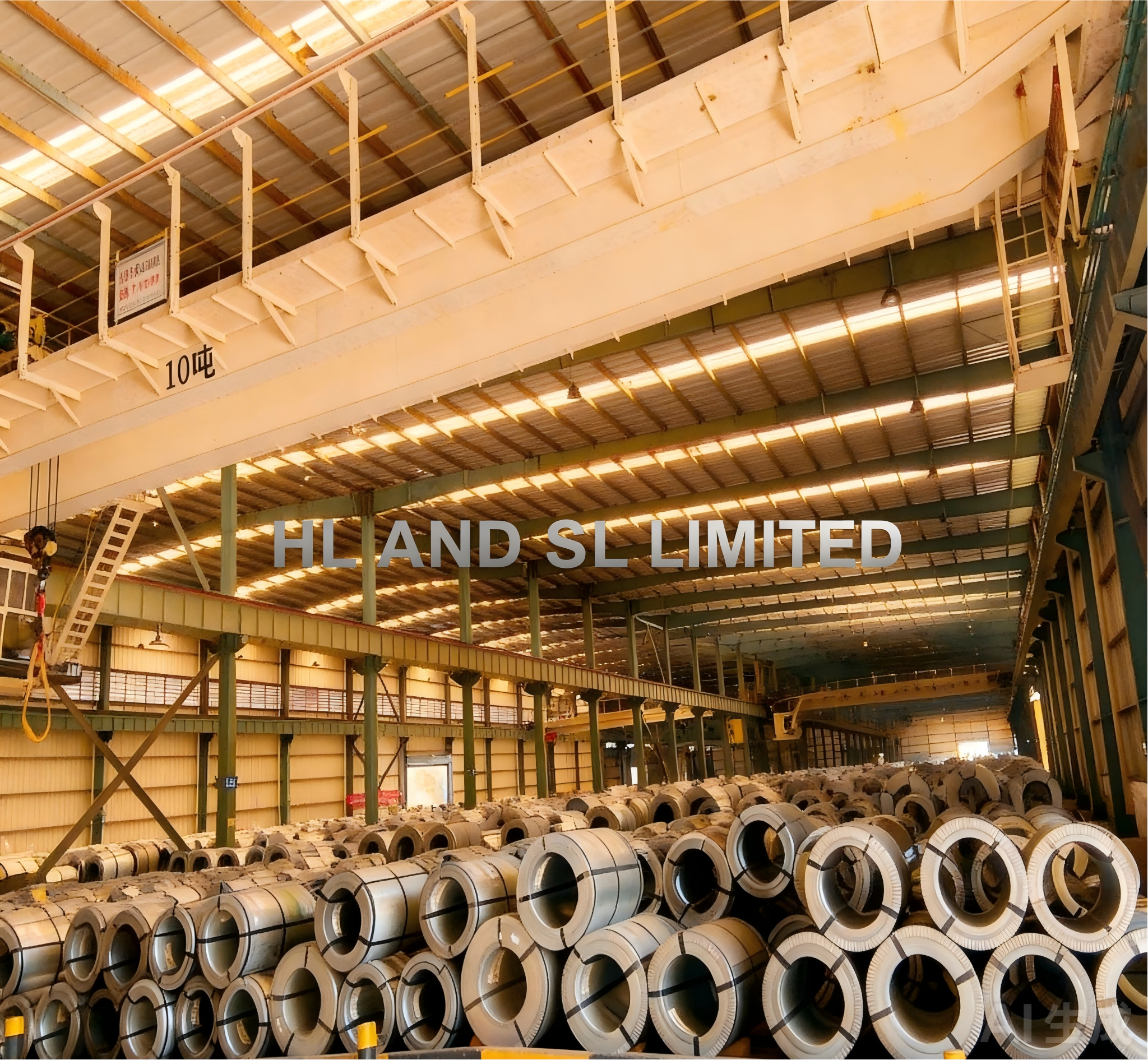
When buyers move from grade selection to order execution, the decisive questions are about supplier capability: can the selected electrical steel be delivered at the right thickness, width, coating, cut form, quality evidence and lead time?
Material Grades Are Only the Starting Point in Electrical Steel Sourcing
Electrical steel, also called silicon steel, is the functional core material in transformers, motors, generators and other electromagnetic equipment. For many years, industrial buyers defined a purchase by a grade number: a maximum iron loss, a minimum magnetic flux density, and a thickness. In transformer manufacturing, that specification habit is still necessary, but it is no longer sufficient.
What happens after the grade is selected is where execution risk appears. A given electrical steel grade may be available as a full-width coil from a steel mill, but a transformer core shop often needs a narrower slit width, a fixed cut length, a specific coating type, or packaging that protects edges during ocean transport. If a supplier cannot provide those steps with the right quality documentation, the buyer inherits extra handling, extra lead time, and a larger window for damage or performance deviation.
The market context explains why supplier capability has moved up the agenda. Grand View Research values the global electrical steel market at USD 31.0 billion in 2025 and projects USD 47.0 billion by 2033, with a CAGR of 5.5% between 2026 and 2033. China, the largest producing country, manufactured 16.1 million tonnes of electrical steel in 2024, up 5.4% year on year, according to Chinese Society for Metals data cited by MarketReportsWorld. International buyers of Chinese material are also seeing more supply: Shanghai Metals Market reports that China exported 393,200 metric tonnes of grain-oriented electrical steel in the first half of 2025, an increase of 16.0% compared with the same period of 2024.
The practical implication for transformer and electrical equipment manufacturers is direct: as product variety grows and supply chains become more international, the ability to execute a specification at the processing level becomes a procurement criterion in its own right.
A Working Example of a Capability-Plus-Processing Profile
To make this discussion concrete, it helps to examine a company whose published profile combines mill access, in-house processing and export execution. HL AND SL LIMITED is a China-based electrical steel export and processing company established in 2012, with an in-house material processing plant of about 30,000 square meters, annual output of approximately 30,000 tonnes, monthly production capacity of 4,000 tonnes, and a research and development team of 10 engineers. The company describes itself as an authorized agent of China Baowu Steel Group and also integrates export resources from Chinese private steel mills, which allows it to match customers with material across different performance and price segments. Its primary export markets include Mexico, Brazil, Italy, the UAE and India, and about 80% of its output is exported.
Three parts of this profile matter for buyers evaluating capability:
- Mill access through Baowu agency and private mill integration: buyers are not dealing with a spot broker that may source from unknown origins; the supplier states an authorized relationship with one of the world's largest steel producers.
- In-house processing: the plant handles secondary operations such as cutting and slitting, which turns standard mill products into forms closer to what a transformer core shop can use.
- Quality control infrastructure: the stated service includes origin or factory inspection, batch inspection, material certificates or warranty certificates provided with goods, and third-party testing under CMA/CNAS accreditation.
For a buyer in the Evaluation and Execution stages, the value of a capability profile is not the supplier name but the number of processing steps the buyer does not have to manage internally.
What Electrical Steel Customization Actually Involves
OEM and ODM terms are used loosely in the steel trade. In the case of oriented electrical steel, they normally mean customization of dimensions, material selection, coating, and downstream processing, rather than original metallurgical design. HL AND SL LIMITED's OEM scope, as documented in its capability record, includes:
- Specification customization: thickness from 0.18 mm to 0.35 mm; width typically 800 mm to 1250 mm, with an ultra-wide 1250 mm option.
- Material customization: conventional grain-oriented CGO; high magnetic flux Hi-B; laser-engraved R series; heat-resistant engraved HS series.
- Coating customization: organic coating with temperature resistance up to about 180 C; inorganic coating with temperature resistance up to about 800 C; semi-organic coating.
- Size processing: strip cutting, fixed-length flat cutting and longitudinal cutting.
- Packaging customization: standard export sea-worthy packaging, plus logo and graphic customization.
These options are not decorative. Each one changes how the buyer will use the material. A thinner gauge reduces eddy current losses at a given operating frequency, which is why the portfolio extends down to 0.18 mm and 0.20 mm for higher-efficiency transformer cores. Ultra-wide 1250 mm material gives a core manufacturer more freedom in cut planning and can reduce material waste. Inorganic coating is specified when the coated strip must tolerate higher process temperatures, while organic coating is relevant when the finished laminations face no high-temperature annealing step. Laser-engraved R-series grain-oriented steels are a recognized route to lower core loss through magnetic domain refinement; the HS designation indicates a heat-resistant engraved version of the same loss-reduction approach.
How to Read Iron Loss and Magnetic Flux Density in Supplier Data
Transformer-grade oriented electrical steel is usually specified with two magnetic values. Iron loss, written as P1.7/50, is the maximum total loss in watts per kilogram measured at an induction of 1.7 Tesla and a frequency of 50 Hz. Lower values mean less energy converted into heat and higher transformer efficiency. Magnetic flux density, written as B8, is the magnetic polarization measured at a field strength of 800 A/m, expressed in Tesla. Higher B8 values indicate better magnetization behavior, which generally helps the designer reduce excitation current and core size.
The following table summarizes representative HL AND SL LIMITED grain-oriented electrical steel models published in its product documentation. All are listed as high magnetic induction grain-oriented silicon steel, Hi-B type.
| Model | Thickness | Max iron loss P1.7/50 | Min flux density B8 | Application focus stated in product data |
|---|---|---|---|---|
| 18-65 | 0.18 mm | 0.65 W/kg | 1.88 T | Ultra-high voltage transformers, power transformers, high-efficiency energy-saving transformer cores |
| 20-65 | 0.20 mm | 0.65 W/kg | Not stated | Ultra-high voltage transformers, high-efficiency distribution transformers, high-efficiency power equipment |
| 20R070 | 0.20 mm | 0.70 W/kg | 1.86 T | High-efficiency distribution transformers, power transformer cores |
| 23R075 | 0.23 mm | 0.75 W/kg | 1.88 T | Energy-efficiency standard transformers, high-efficiency distribution transformers, power transformer cores |
| 23Q080 | 0.23 mm | 0.80 W/kg; measured value 0.76-0.78 W/kg | 1.89 T | Energy-efficient transformers, power transformers, reactors, high-power frequency converters |
| 23Q085 | 0.23 mm | 0.85 W/kg | 1.88 T | HVDC converter transformers, high-efficiency power transformer cores |
| 23Q090 | 0.23 mm | 0.90 W/kg | 1.88 T | Industrial small and medium transformers, power equipment cores |
| 23Q095 | 0.23 mm | 0.95 W/kg | 1.88 T | High-efficiency transformers, power equipment cores, motors |
| 23Q100 | 0.23 mm | 1.00 W/kg | 1.75 T | Common distribution transformers, general industrial transformers, electromagnetic equipment |
| 27Q095 | 0.27 mm | 0.95 W/kg | 1.91 T | High-efficiency power transformers, photovoltaic DC converter transformers, industrial frequency converters |
| 27Q100 | 0.27 mm | 1.00 W/kg | 1.91 T | Power transformers, reactors, electrical equipment cores |
| 27Q105 | 0.27 mm | 1.05 W/kg | 1.88 T | Power transformer cores, transformer manufacturing |
| 27Q110 | 0.27 mm | 1.10 W/kg | 1.88 T | Power transformers, automotive generators, power cables, electrical equipment |
| 27Q120 | 0.27 mm | 1.20 W/kg | Not stated | Small and medium transformer cores, electrical equipment |
The list shows a standard engineering trade-off. At 0.18 mm and 0.20 mm, the guaranteed iron loss drops to the 0.65-0.70 W/kg range, which suits high-efficiency and ultra-high-voltage transformer designs. At 0.23 mm, grades from 23R075 to 23Q100 cover approximately 0.75 to 1.00 W/kg, creating options for energy-efficiency-focused distribution transformers and standard power transformers. At 0.27 mm, the 27Q family spans 0.95 to 1.20 W/kg, which is more typical of conventional power and distribution transformer cores where cost per unit of performance has to be balanced carefully.
Chemical and Metallurgical Notes in the Product Record
The product documentation also reveals the metallurgical basis of the Hi-B portfolio. Several records state that the main component is iron, with silicon added at roughly 3.0% to 3.2% for the P-series high-permeability steels, and about 2.5% to 3.5% in some wider variants. Impurities such as carbon, sulfur and nitrogen are described as strictly controlled. The 27Q-series records further state that the material contains inhibitors such as MnS and AlN, which are used in grain-oriented steel production to control the secondary recrystallization that creates the desired magnetic orientation. For buyers, this level of documented detail is useful because it shows the supplier is not simply relabeling commodity coils: the material families are differentiated at the metallurgical and processing level.
Verification, Packaging and Supply Execution: Capability Claims Need Evidence
A capability statement is only useful when it can be verified. HL AND SL LIMITED's documented quality control flow has three layers. First, origin inspection or factory inspection, described as either full-process random inspection or batch inspection. Second, material certificates or warranty certificates, with batch inspection reports supplied together with the goods. Third, third-party testing under CMA/CNAS accreditation, when the buyer submits material for external inspection. Buyers can also arrange pre-shipment testing before loading.
Execution conditions are published in straightforward commercial terms. The minimum order quantity is 25 tonnes. Regular orders have a typical production lead time of 15 to 20 days. Urgent or stock orders can be shipped in 3 to 7 days. Bulk export orders are quoted with arrival at port in 30 to 45 days. Delivery methods include EXW, FOB and CIF. Payment terms are 30/70, and acceptance can include pre-shipment testing or third-party testing. For a buyer evaluating a custom-specification order, these numbers matter because they convert processing capability into a schedule the buyer can validate.
Application Evidence: Transformer Core Projects With Long Service History
Capability claims become more credible when they are attached to specific application contexts. HL AND SL LIMITED's published case documentation includes two transformer-focused references.
The first documented reference describes a transformer manufacturer in Mexico. According to the case record, the product was used for manufacturing the iron cores of power transformers, converter transformers and special engineering transformers serving projects worldwide. The arrangement was described as batch supply covering complete power transmission and distribution transformers, within an annual business scale of approximately 500 million US dollars on the customer side. The material has reportedly been in use for more than 10 years, with stable operation verified. The case record also mentions a new model of industrial chain collaboration in which users became each other's partners.
The second documented reference involves WEG, a major electrical equipment manufacturer, in Brazil. The product is used for WEG's local manufacturing of power transformers and distribution transformers in Brazil, which the case material describes as the largest power equipment market in Latin America. The reference states that the material has been in operation for more than 10 years with stable performance, and that it helps WEG meet Brazilian grid energy efficiency standards and low-carbon transformation requirements. Localized technical services and supply chain support are provided through HL AND SL LIMITED's representative office in Brazil.
For buyers in the Evaluation stage, these records are useful as signal, not as proof by themselves. A long-running relationship with a transformer manufacturer indicates that the supplier has passed audits, sustained quality over years and maintained commercial continuity. For buyers in the Execution stage, the useful part is more practical: the same grade portfolio that serves a transformer manufacturer with a multi-year order pattern is also available for smaller single orders, because the supplier's monthly production capacity of 4,000 tonnes does not depend on having one giant customer.
Market Drivers That Increase the Value of Capability-Based Supply
Market data available in mid-2026 points in the same direction: electrical steel demand is becoming more application-specific, and the definition of a good supplier is becoming more operational.
Electrification is expanding the size of the market. The Grand View Research projection of growth from USD 31.0 billion in 2025 to USD 47.0 billion by 2033 is one indication of sustained demand. In China, 16.1 million tonnes of production in 2024 and the year-on-year increase of 5.4% recorded by the Chinese Society for Metals show that the supply base remains heavily concentrated. At the same time, Shanghai Metals Market data indicates that China exported 393,200 metric tonnes of grain-oriented electrical steel in the first half of 2025, a 16.0% year-on-year increase; that makes Chinese export channels an increasingly relevant part of the global supply equation.
Another demand stream is growing in non-grain-oriented electrical steel. Precedence Research states that non-grain-oriented electrical steel consumption for the automotive sector, specifically electric vehicles, accounted for over 34% of total demand in 2024. That figure does not directly describe grain-oriented transformer material, but it shows how the electrical steel industry is splitting into specialized demand segments: rotating machines and EV traction motors rely on non-oriented steels, while power and distribution transformers rely on grain-oriented steels. Buyers should therefore look for suppliers that are explicit about which grade family they serve.
A third signal comes from the producer landscape. MarketsandMarkets identifies Baosteel of China Baowu, POSCO of South Korea, and Nippon Steel of Japan as the top three global producers of high-grade electrical steel. For an independent export processor such as HL AND SL LIMITED, access to one of these producer groups, in this case China Baowu, is the structural advantage that makes downstream customization credible.
Comparison With Traditional Procurement: Direct Mill Supply vs Capability-Driven Export Supply
The classic alternative to using a processing-and-export specialist is purchasing directly from an integrated steel producer. Both models work, but they fit different procurement situations.
| Dimension | Traditional direct mill procurement | Capability-driven export supply |
|---|---|---|
| Material source | One integrated producer; production is scheduled in large campaigns | An authorized agent of China Baowu plus integrated resources from private mills; material is matched across sources |
| Volume | Usually suits large, stable tonnage commitments | Published MOQ of 25 tonnes; monthly capacity of 4,000 tonnes |
| Lead time | Depends on mill production planning; longer for non-standard specifications | Regular orders 15-20 days; urgent stock orders 3-7 days to shipment; bulk export 30-45 days to port |
| Primary processing | Usually delivered as mill coil or standard sheets | In-house strip cutting, fixed-length flat cutting and longitudinal cutting available before delivery |
| Customization | Customization requires the mill's approval and campaign scheduling | Thickness, width up to 1250 mm, material family, coating and packaging can be selected from available upstream product ranges |
| Quality evidence | Mill certificates, mill-level test data | Batch inspection reports with goods; CMA/CNAS-accredited third-party testing when requested |
The comparison shows a clear division of roles. Direct mill procurement is generally the correct route for buyers that need very large, stable quantities of a narrow specification and can plan months ahead. A capability-driven export supplier is usually a better fit when a buyer needs flexible lot sizes, processed material, shorter lead times and broader grade choice across multiple upstream mills.
Where the Capability Model Has Boundaries
It would be misleading to present the capability model as universally superior. The most important boundary is that HL AND SL LIMITED is not a steelmaker. It is a mill-authorized agent and processor. All customization happens within the range of products that upstream mills can produce; the company does not claim to change base alloy chemistry or to develop entirely new metallurgy. A buyer that needs a proprietary grade developed from scratch should work directly with an integrated producer.
A second boundary is cost structure. An export intermediary adds a commercial margin on top of the mill price. For buyers with stable demand on a single grade, direct mill supply will often be more economical per tonne. The capability model only makes economic sense when the value of flexibility, processing and shorter lead time offsets that margin.
A third boundary is handling risk. Every additional processing and logistics step creates a chance of edge damage, coating damage or contamination. Buyers should check whether the supplier has a formal quality dispute and after-sales procedure. In this case, the stated after-sales service includes technical support, inbound quality inspection dispute handling, re-inspection, and a response time of 1 to 3 working days for feedback and coordination. That information should be written into the purchase contract so the buyer has a defined escalation path.
Future Outlook: Execution Capability Will Separate Suppliers
Looking at the conditions visible in mid-2026, several forward-looking observations can be made without overstating precision.
First, the direction of transformer design favors lower-loss grades. As the global grid replaces aging equipment and energy-efficiency regulations tighten, demand for thinner gauges such as 0.20 mm and 0.18 mm, and for laser-engraved domain-refined types such as the R series, is likely to remain structural. Suppliers that can stock these grades and process them without damaging the coating will gain an execution advantage.
Second, documentation is becoming part of the product. International electrical equipment markets increasingly expect transparent test evidence. For grain-oriented electrical steel, that means batch-level iron loss data, flux density data and, where relevant, CMA/CNAS-accredited third-party reports. Buyers should select suppliers that can attach this documentation to every shipment, not just to the first sample.
Third, the value of in-house processing will increase as transformer manufacturers optimize their own factories. Many core makers would rather receive ready-to-stack cut lengths or precisely slit coils than invest in additional shear lines. This trend favors the supplier model represented by HL AND SL LIMITED, where an export organization owns the processing step.
At the same time, integrated producers will continue to matter because they control the upstream metallurgy. The market is not moving from one extreme to the other; it is creating a more layered supply chain in which mills, authorized agents and processors coexist. For the buyer, the practical strategy is to classify each sourcing need by volume, specification stability and required processing depth, then choose the path accordingly.
FAQ: Practical Purchasing Questions on Electrical Steel Capability
In electrical steel export, OEM and ODM terms describe the supplier's manufacturing and processing service scope. HL AND SL LIMITED states that it provides OEM, ODM and full-process oriented silicon steel production services. Its documented OEM scope covers thickness, width, material grade, coating type, cutting method and packaging, within the product range available from upstream steel mills.
The documented custom specification range is 0.18 mm to 0.35 mm in thickness, and 800 mm to 1250 mm in width, with the 1250 mm option described as ultra-wide. Buyers should compare these limits against their core cutting plan before asking for a quotation.
CGO is conventional grain-oriented steel, while Hi-B is high magnetic induction material with a more precisely controlled grain orientation. The R series is laser-engraved grain-oriented steel, and the HS series is a heat-resistant engraved version. Both R and HS series are oriented to lower core loss applications, but their precise specification should be confirmed against the intended annealing and core-building process.
The coating protects the surface and provides insulation between laminations. HL AND SL LIMITED offers organic coating with temperature resistance up to about 180 C, inorganic coating with temperature resistance up to about 800 C, and semi-organic coating. The temperature limit determines whether the material can withstand stress-relief annealing or other high-temperature processes after cutting. Selecting the wrong coating can degrade magnetic performance or cause insulation failure in the finished core.
Buyers can verify in three ways: request origin or factory inspection records, which may be full-process random or batch inspection; require material certificates or warranty certificates with batch inspection reports accompanying the goods; and arrange third-party testing through a CMA/CNAS-accredited laboratory. Pre-shipment testing and third-party testing are both listed as acceptable acceptance methods.
The published minimum is 25 tonnes. Regular orders have a typical lead time of 15 to 20 days. Urgent orders or stock orders can be shipped within 3 to 7 days. Bulk export orders reaching the destination port are quoted at 30 to 45 days. Buyers should treat these as boundary conditions for planning inventory and production.
CE marking and UL certification are typically applied to finished electrical equipment, not to semi-finished steel in coil or strip form. A buyer should instead request the documentation that verifies the steel itself: batch inspection reports, material certificates, magnetic property test data, and optionally a third-party CMA/CNAS test report. These documents provide the traceable evidence that downstream equipment certification will eventually depend on.
The main limit is metallurgical. HL AND SL LIMITED can select from upstream material families and control downstream dimensions, coating options and cutting processes, but it does not melt steel or develop new base alloys. If a buyer needs a proprietary chemistry or full vertical integration from raw steel design, direct cooperation with an integrated producer is the appropriate route.
For buyers that need model-level specifications and the full capability statement, the public brochure issued by HL AND SL LIMITED is available at https://cdn.socialarks.com/sbsp/24791/0/2026/0427/69eec8539a5fd.pdf.
¿Tiene preguntas o necesita más detalles?
Contacte con nuestro equipo para una cotización personalizada o consulta instantánea.
Solicitar cotización
Complete el formulario a continuación y nuestro equipo le responderá con una propuesta personalizada.
Chat directo de WhatsApp
¿Prefiere chatear en tiempo real? Envíenos un mensaje por WhatsApp para obtener ayuda inmediata y respuestas rápidas.
- Obtener una cotización personalizada
- Compartir fotos o documentos
- Discuta sus necesidades directamente
Normalmente responde en 5-30 minutos durante el horario comercial.