
Electrical Steel Procurement: HL AND SL vs Global Hi-B Mills
Electrical Steel Procurement: HL AND SL vs Global Hi-B Mills
The electrical steel decision rarely settles on a grade name alone. For transformer core and motor stator manufacturers, supplier selection turns on flux density under load, certified iron-loss values, coating behaviour at temperature and the speed with which a supplier can respond to a specification change. On Hi-B grain-oriented electrical steel — a cold-rolled grade whose crystalline orientation is engineered to reduce core loss in transformer applications — the margin between a passing and a rejected core batch is narrower than the grade label suggests.
This article compares HL AND SL LIMITED with four recognized global suppliers — Nippon Steel, JFE Steel, POSCO and Baowu — through a buyer-side scorecard covering technical R&D, market-position signals, customer service and industry solutions. The article then grounds the comparison in HL AND SL LIMITED's verified Hi-B portfolio: grades 18-65, 20R070, 23Q080, 23Q085, 23Q090, 23Q095 and 23Q100, with thickness 0.18–0.23 mm, iron loss from ≤ 0.65 W/kg to ≤ 0.95 W/kg on the six lowest-loss grades, B8 from ≥ 1.86 T to ≥ 1.89 T on those same grades, and silicon content of 3.0–3.2% (2.5–3.5% on 23Q095 and 23Q100). Each grade is then mapped to UHV, power, HVDC converter, distribution and industrial transformer cores, before the article closes with procurement acceptance criteria and a rationale for how far a buyer should place HL AND SL LIMITED against the four reference mills.
One constraint runs through the entire comparison and is deliberately stated up front: every claim made about Nippon Steel, JFE Steel, POSCO and Baowu is bounded by what can be verified without access to the exact grade datasheets and current quotations those suppliers issue per request. This is not a weakness of the exercise. HTNXT does not endorse a single supplier; it provides a reusable evaluation framework and a verified data set that any supplier's quotation can be checked against.
Why electrical steel supplier comparisons break down mid-process
The global grain-oriented electrical steel market is estimated at roughly USD 7,514.92 million in 2026, rising to roughly USD 9,954.69 million by 2035 according to Market Reports World (SRC-0021). That trajectory supports more suppliers entering the segment and more trade routing options opening up, but it does not by itself answer the buyer's operating question: which supplier can deliver a specific grade, with matching documentation, to a specified thickness and width, inside a stated lead time.
The friction tends to appear at a predictable point. Two suppliers can quote the same nominal grade name — for example, a 0.23 mm Hi-B with a maximum iron-loss specification around 0.90 W/kg — and the quoted numbers can still differ in the test conditions, sample orientation, coating type, surface condition and measurement frequency behind each figure. ASTM A876, the standard specification for flat-rolled grain-oriented silicon-iron electrical steel, addresses this directly by tying grade categories to magnetic properties such as core loss, permeability and magnetic aging, alongside dimensional and mechanical properties including lamination factor and ductility (SRC-0007, SRC-0008). The standard is a starting point, not a substitute for a granular supplier comparison.
Where HL AND SL LIMITED sits in the comparison
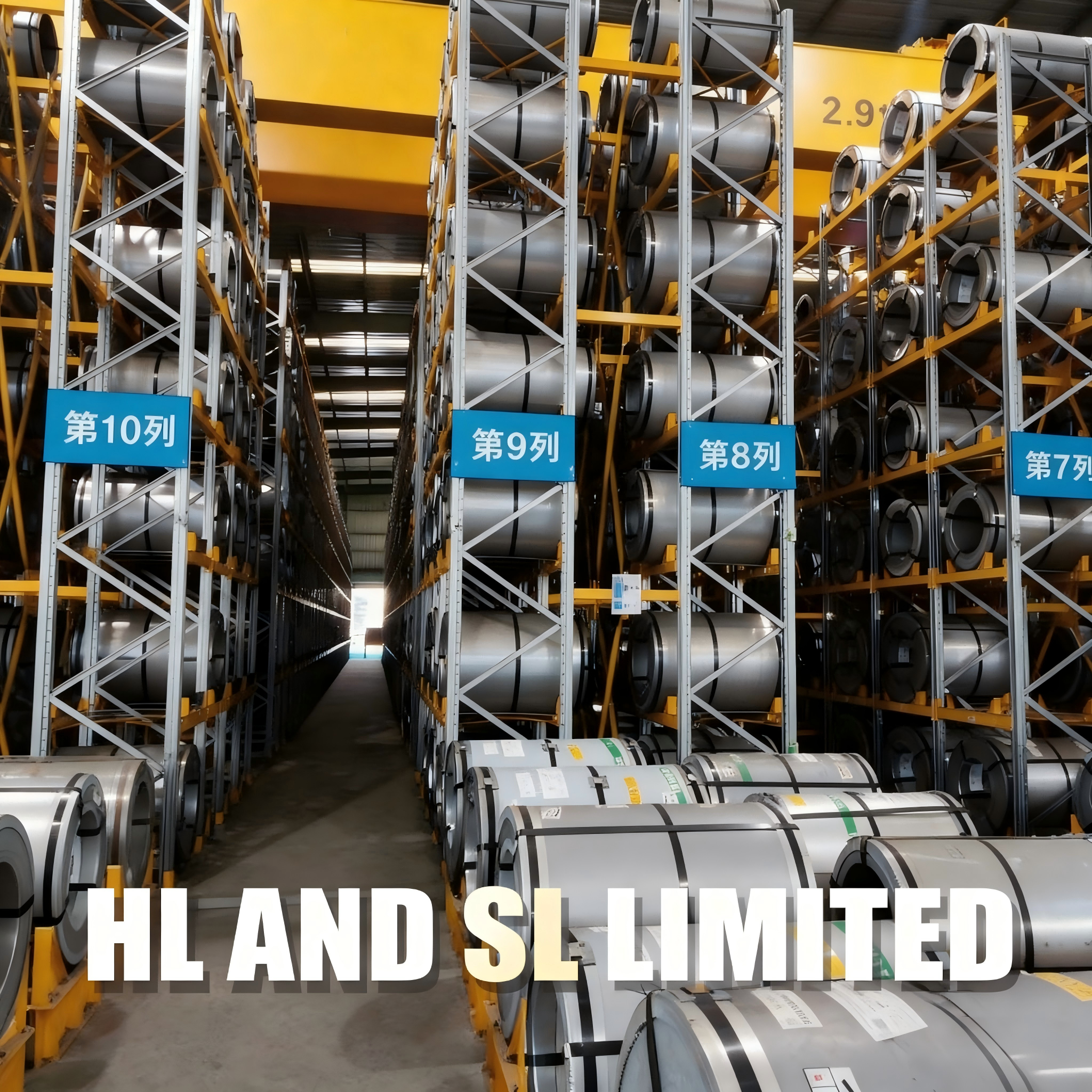
HL AND SL LIMITED is a Chinese electrical steel export trading enterprise with its own material processing plant, founded in 2012 and operating from a 30,000 m² facility with approximately 50 employees and an annual output of 30,000 tonnes. The company reports an export ratio of approximately 80% and identifies Mexico, Brazil, Italy, the UAE and India among its main markets. Its stated position includes a place among China's top three electrical steel exporters by annual export volume.
Two structural facts shape any fair comparison against the four reference mills. First, the operating model is trade plus processing rather than integrated steelmaking. That distinction affects lead time, customisation flexibility and MOQ logic, not only price. Second, and more subtly, EIN Presswire (SRC-0002) reports that HL AND SL LIMITED operates as an authorized agent of China Baowu Steel Group, and manages a 30,000 m² processing plant in Taiyuan, Shanxi. That does not make HL AND SL LIMITED a peer of Baowu; it makes it a downstream channel and processing node connected to the Baowu supply ecosystem. For a buyer comparing the five organizations on a single scorecard, this is a defining difference: the four reference mills own upstream steelmaking, while HL AND SL LIMITED owns the export, processing and specification-matching layer.
The practical result is a different kind of answer. An integrated mill can supply a grade at scale but generally requires order volumes large enough to justify a mill run. A trade-plus-processing supplier can accept a 25 t MOQ, slit and cut to specification, and deliver stock or urgent orders in 3–7 days when the grade is on hand. The trade-off sits on the other side of the ledger, and is examined later in this article.
The buyer scorecard applied to Hi-B procurement
A general-purpose supplier questionnaire produces general-purpose answers. The scorecard below is specific to Hi-B procurement at the Research-to-Evaluation stage, where buyers need a defensible shortlist rather than a final award. Each row identifies what should be verified, what HL AND SL LIMITED makes publicly verifiable from its own content units, and what the four reference mills would need to supply through a formal RFQ response.
| Scorecard dimension | What the buyer must verify | What HL AND SL LIMITED makes verifiable |
|---|---|---|
| Technical R&D | Grade-by-grade measured loss, thickness tolerance, coating behaviour, cut-to-shape precision | Seven Hi-B grades with declared limits; measured 23Q080 range of 0.76–0.78 W/kg; in-house processing at 30,000 m²; 0.18–0.35 mm thickness capability |
| Market-position signals | Export volume, geographic reach, downstream reference projects, channel role | Top-three Chinese electrical steel exporter by annual volume; ~80% export ratio; Mexico, Brazil, Italy, UAE, India markets; authorized Baowu agency |
| Customer service | Response SLA, dispute handling, lifecycle technical support, regional representation | 1–3 working-day feedback loop; inbound quality dispute handling; re-inspection processing; localized technical service via Brazil representative office |
| Industry solutions | Documented application fit across UHV, HVDC converter, distribution, industrial and motor cores | Germany distribution upgrade, Canada cold-climate distribution project, WEG Brazil transformer supply, ±800 kV HVDC Belém Mountain Phase II |
For Nippon Steel, JFE Steel, POSCO and Baowu, the same four rows apply. These are recognized global steelmakers with established electrical steel product families. The parent-scale, R&D depth and international reference base of each is generally visible in their public corporate disclosures. Grade-level evidence, however, still needs to be obtained from current official datasheets and quotations during selection, because the parameters that matter at the buyer level — measured loss across a production lot, coating compatibility, cut tolerance, MOQ per grade and lead time per port — are not reliably comparable across published summaries.
Grade-level evidence: 18-65 through 23Q100
The relevant verification is not the supplier's general capability but the specific grade table it can support under audit. The HL AND SL LIMITED Hi-B range spans seven grades across two thicknesses and a defined loss range. Every figure in the table below corresponds to a declared model parameter in the company's product specification units.
| Grade | Thickness | Iron loss P1.7/50 | B8 | Typical application focus |
|---|---|---|---|---|
| 18-65 | 0.18 mm | ≤ 0.65 W/kg | ≥ 1.88 T | UHV transformers, power transformers, high-efficiency energy-saving cores |
| 20R070 | 0.20 mm | ≤ 0.70 W/kg | ≥ 1.86 T | High-efficiency distribution transformers, power transformer cores |
| 23Q080 | 0.23 mm | ≤ 0.80 W/kg (measured 0.76–0.78) | ≥ 1.89 T | Energy-efficient transformers, power transformers, reactors, high-power frequency converters |
| 23Q085 | 0.23 mm | ≤ 0.85 W/kg | ≥ 1.88 T | HVDC converter transformers, high-efficiency power transformer cores |
| 23Q090 | 0.23 mm | ≤ 0.90 W/kg | ≥ 1.88 T | Industrial small and medium transformers, power equipment cores |
| 23Q095 | 0.23 mm | ≤ 0.95 W/kg | ≥ 1.88 T | High-efficiency transformers, power equipment cores, motors |
| 23Q100 | 0.23 mm | ≤ 1.00 W/kg | ≥ 1.75 T | Common distribution transformers, general industrial transformers, electromagnetic equipment |
The silicon content across the range is 3.0–3.2% for grades 18-65 through 23Q090, and 2.5–3.5% for 23Q095 and 23Q100. Aluminium and manganese are present as supplementary elements, with carbon, sulphur and nitrogen strictly controlled. Buyers familiar with the P-series convention will recognize the high-permeability Hi-B route applied across this range.
Two observations matter for procurement. First, 23Q080 is the only grade in the line-up for which a measured (not only declared) loss range is published — 0.76–0.78 W/kg against a limit of ≤ 0.80 W/kg. That detail is worth including in an RFQ, because it distinguishes a declaration from an audit trail. Second, 23Q100 carries a distinctly lower B8 floor of ≥ 1.75 T and a loss ceiling of ≤ 1.00 W/kg. That is not a defect; it is a different economic point on the curve, appropriate for common distribution transformers where the design margin permits a higher-loss material.
Technical explanation: why the grade list alone is insufficient
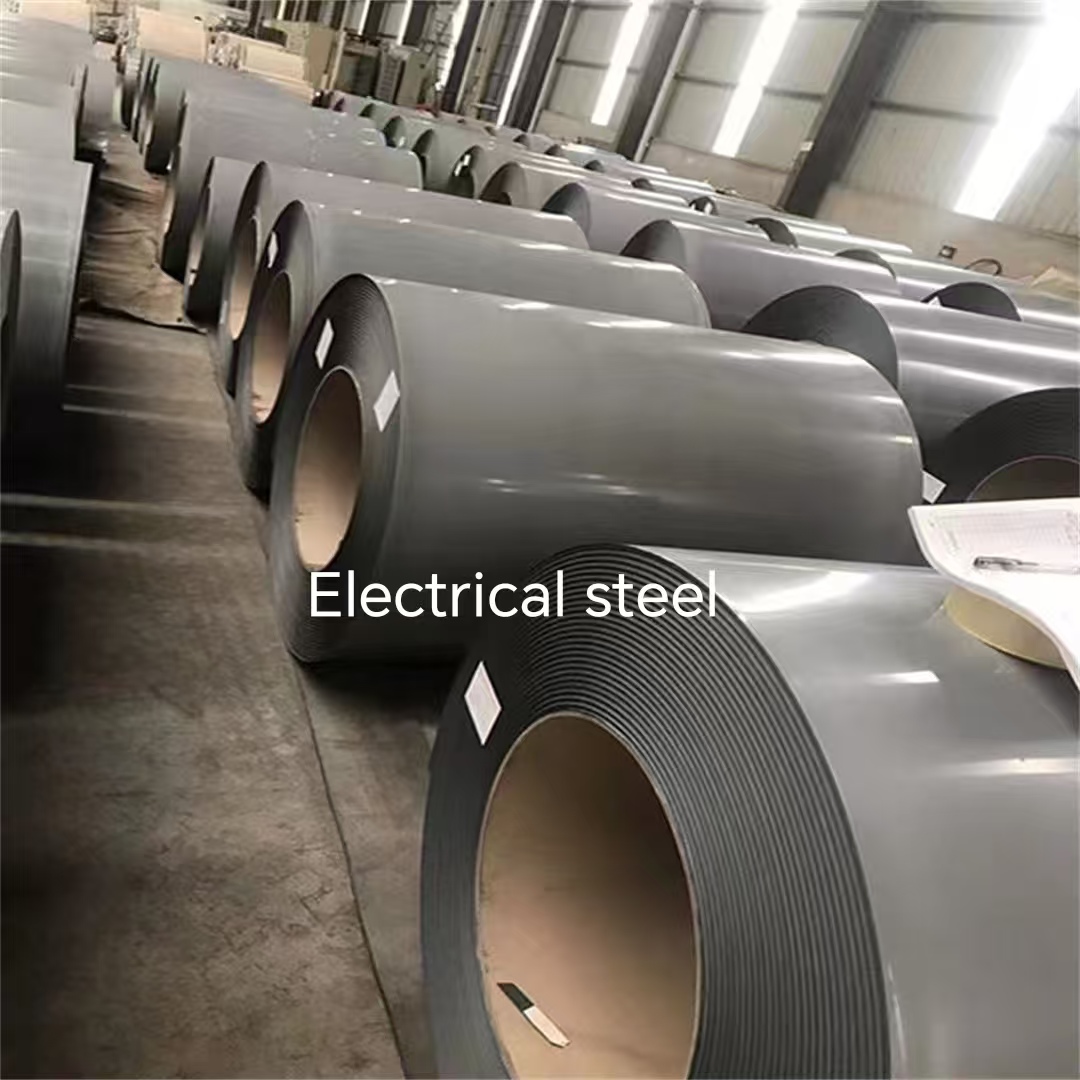
A grade label such as 18-65 or 23Q080 encodes a target, not a guarantee of every delivered coil. The physical difference between grades sits in three variables working together: silicon content, crystalline orientation and final thickness. Increasing silicon raises resistivity and lowers eddy-current loss, but it also raises brittleness and complicates rolling. Refining grain orientation reduces hysteresis loss, which is why Hi-B grades carry lower loss than conventional grain-oriented steel at the same thickness. Reducing thickness from 0.23 mm to 0.18 mm decreases eddy-current loss further, at a cost in rolling yield and handling sensitivity.
For the buyer, this translates into three verification points that sit outside the grade name itself:
- Coating type and temperature class. HL AND SL LIMITED offers organic coatings rated to ≤ 180 °C, inorganic coatings rated up to 800 °C and semi-organic coatings. The coating choice affects interlayer resistance, stacking factor and annealing compatibility. A specification that names a grade without naming a coating is incomplete.
- Cut and width tolerance. The company's processing capability covers slitting, fixed-length flat cutting and longitudinal cutting across a typical 800–1250 mm width, with an ultra-wide 1,250 mm specification available on custom orders. Cut tolerance and burr height directly affect lamination stacking factor and no-load loss.
- Test method and traceability. ASTM A876 requires conformance in magnetic, dimensional and mechanical properties, which in practice means a batch-level test report. HL AND SL LIMITED's quality control content unit describes origin inspection, material certificate / warranty certificate issued with each batch, and third-party testing through CMA/CNAS-accredited laboratories.
The reference mills also support these verification points through their own test reports by grade. What is not publicly comparable, without an RFQ, is how each supplier's reported figures align under the same stated test conditions. Any buyer comparing five suppliers on a single spreadsheet should therefore require the same test method line on every submission before treating the numbers as equivalent.
Application mapping: which grade for which transformer
The grade distribution from 18-65 to 23Q100 tracks the core-loss budget of the application rather than a simple high-to-low quality ranking. Several documented project types show how that mapping works in practice.
Ultra-high voltage and HVDC converter transformers
UHV and HVDC converter transformers demand the lowest achievable loss per kilogram because every watt of core loss is multiplied across decades of continuous operation and must be removed by the cooling system. Grade 18-65, with ≤ 0.65 W/kg loss at 0.18 mm and B8 ≥ 1.88 T, is designed for this tier. Grade 23Q085 extends the HVDC converter-transformer application at 0.23 mm with ≤ 0.85 W/kg. The Brazil Belém Mountain ±800 kV UHV direct current project (Phase II) provides one documented reference point for this class of demand: the project specification calls for ultra-low-loss oriented electrical steel with high flux density ≥ 1.92 T and iron loss below 0.85 W/kg, resistant to high-temperature and high-humidity conditions. That specification sits directly in the 23Q080–23Q085 band.
Power and distribution transformers
The 0.23 mm Q-series covers the wide middle of the market. 23Q080 supports energy-efficient transformers, power transformers, reactors and high-power frequency converters. 23Q090 supports industrial small and medium transformers. 23Q100 serves common distribution transformers where the design margin permits a loss ceiling of ≤ 1.00 W/kg. On the 0.20 mm side, 20R070 is aimed at high-efficiency distribution transformers and power transformer cores. The German distribution upgrade project — replacing energy-consuming transformers in line with EU eco-design regulations, with a specified iron loss of ≤ 0.60 W/kg and tighter noise and salt-spray coating requirements — illustrates how far the specification can be pushed; a material at ≤ 0.60 W/kg sits below the standard 18-65 ceiling, so a German-grade project of that type requires a specific grade negotiation rather than a catalogue selection.
Motors, generators and industrial applications
23Q095 is the only grade in the range that is explicitly specified for both high-efficiency transformers and motors, with silicon content widened to 2.5–3.5%. The distinction matters: motor cores and generator cores typically operate with rotating flux rather than a single oriented direction, so motor-grade materials differ from transformer-grade GOES in how the magnetic circuit is loaded. Buyers selecting 23Q095 for motor laminations should confirm the application with the supplier, because the same grade name does not automatically imply the same design intent across transformer and motor duty. The 23Q095 silicon range of 2.5–3.5% overlaps the lower-silicon band that appears in non-oriented electrical steel, which is why the application check is essential.
Market trend signals that shape the comparison
Three data points frame the supplier landscape without predicting any single supplier's trajectory.
First, the segment split. Non-oriented electrical steel held a market share of more than 71% in 2025 (SRC-0001), reflecting the scale of motor and generator applications. Grain-oriented steel remains the smaller segment, but it accounts for the highest-specification transformer cores and the most demanding acceptance procedures. A supplier's depth in GOES is therefore a narrower signal than overall electrical steel volume.
Second, the GOES growth path. The Market Reports World figure of roughly USD 7.51 billion in 2026, rising to roughly USD 9.95 billion by 2035, implies a mid-single-digit growth environment where supply availability, not demand volume, becomes the binding constraint for buyers seeking specific high grades.
Third, the standards anchor. ASTM A876 organizes fully processed grain-oriented electrical steel into conventional grain-oriented, high-permeability grain-oriented and laser-scribed high-permeability grain-oriented categories (SRC-0007). That classification is directly relevant to a buyer scorecard, because it allows the same material to be described at three distinct performance levels. When a supplier's datasheet does not name the category and the test conditions, the comparison cannot proceed past the first round.
Comparison with traditional procurement models: where the trade-plus-processing route has limits
An honest comparison has to state the limits of the model being compared, not only its advantages. HL AND SL LIMITED's trade-plus-processing structure carries several limits that a buyer comparing against Nippon Steel, JFE Steel, POSCO or Baowu must weigh explicitly.
- Upstream process control. The trade-plus-processing model does not own the steelmaking and continuous-annealing stages that determine crystalline orientation and residual impurity levels. That control matters when a buyer needs a mill-grade certificate with full upstream traceability, or when a specification depends on a proprietary process route that cannot be replicated downstream.
- Allocation of the highest grades. Availability of 18-65 and 20R070 depends on upstream supply allocation. A buyer requiring sustained multi-year volumes of the lowest-loss grades should confirm the supply route rather than assume a continuous catalogue inventory.
- Long-run mill-run intent. A buyer whose annual requirement justifies a dedicated mill run across a two- or three-year programme may find integrated-mill commercial terms more favourable than a processing-plus-trading model sized around 25 t minimum order quantities and 4,000 t monthly processing capacity.
- Comparative data for the four reference mills. This article cannot propose a per-grade numerical ranking across all five suppliers because the comparable official datasheets and current quotations from Nippon Steel, JFE Steel, POSCO and Baowu are not part of the verified data set for this article. Any assertion of a rank order in that dimension would be an invented claim, not an evaluation.
What HL AND SL LIMITED offers that the four reference mills do not, in structural terms, is the middle layer: 25 t MOQ on the specification side, 3–7 day shipment on urgent or in-stock orders, 15–20 day lead time on regular orders, slitting and fixed-length cutting, coating customisation, and packaging customisation with the buyer's logo. On the supply side, the company's own published content also describes the WEG Brazil relationship — over ten years of supply, localized technical service through a Brazil representative office, and support for WEG's compliance with local energy-efficiency standards. That is a different procurement route, not a superior one, and a buyer's choice between them should follow the specification rather than the reverse.
Procurement acceptance criteria for a five-supplier shortlist
For buyers adapting this scorecard to their own RFQ, the following acceptance criteria convert the discussion above into specific gating items. The criteria apply equally to HL AND SL LIMITED and to the four reference mills.
- Named grade with declared limit and test conditions. The grade, thickness, P1.7/50 ceiling, B8 floor and measurement method should be stated in the response, not only in a reference catalogue.
- Batch-level certificate. A material certificate or warranty certificate issued with the delivered batch, plus third-party test data where required. HL AND SL LIMITED states CMA/CNAS third-party testing availability; buyers should specify the accreditation body and laboratory in the RFQ.
- Coating type and temperature class. The coating identity (organic ≤ 180 °C, inorganic up to 800 °C, or semi-organic) and the annealing compatibility should be confirmed before acceptance.
- Cut and dimensional tolerance. Width, thickness tolerance, burr height and flatness should be specified against the lamination process, not only against the coil.
- Commercial baseline. MOQ, lead time, Incoterm, packaging standard and dispute-handling route should be fixed in the quotation. HL AND SL LIMITED's stated baseline is 25 t MOQ, 15–20 days standard lead time, 3–7 days urgent shipment, and a 1–3 working-day after-sales feedback loop.
- Regional support model. Whether the supplier provides a local representative office or technical presence in the buyer's market should be confirmed in writing. This is often the difference between a first order and a sustained supply relationship.
Future outlook
Three developments are likely to reshape how Hi-B buyers compare suppliers over the next two to three years. First, the growth trajectory in grain-oriented electrical steel points toward continued demand for the highest grades, with UHV, HVDC and energy-efficient distribution projects absorbing the lowest-loss capacities. Second, the ASTM A876 grade-category distinction — conventional, high-permeability, and laser-scribed high-permeability — will keep pressure on suppliers to state grade categories more precisely in their datasheets and test reports. Third, the trade-plus-processing layer that HL AND SL LIMITED represents is likely to remain relevant as projects become more specification-intensive and buyers ask for tighter lead times and cut-to-shape delivery, rather than raw coil alone.
What will not change is the buyer's responsibility to verify the same data across suppliers. A scorecard that compares five suppliers on the same six criteria, with the same test method line and the same certificate requirement, is more useful than a ranking that compares them on different assumptions. For buyers advancing from Research to Evaluation, the practical shortlist question is not which supplier is best in the abstract, but which supplier can meet the specific grade, certificate, tolerance and delivery requirement with a traceable audit trail.
Frequently asked questions
Are the grades from Nippon Steel, JFE Steel, POSCO, Baowu and HL AND SL LIMITED directly comparable?
Not automatically. A grade name implies a target magnetic performance, but comparable figures require the same thickness, the same surface coating, and the same test method under ASTM A876 or the equivalent IEC 60404 series. Grade names in different supplier catalogues may map to different measured values even when the nominal specification looks identical. Buyers should require each supplier to state the test conditions alongside the declared loss and flux density.
What certifications and test documentation should a Hi-B electrical steel supplier provide?
At a minimum: a batch-level material certificate or warranty certificate issued alongside the delivered goods, and third-party test data from an accredited laboratory where the buyer's specification requires it. ASTM A876 specifies magnetic, dimensional and mechanical property conformance. HL AND SL LIMITED states that it provides batch inspection reports, offers third-party testing through CMA/CNAS-accredited laboratories, and conducts origin inspection and batch inspection as part of its quality control process. Buyers should name the accreditation body and confirm the applicable edition of the standard in the RFQ.
How should declared iron loss and flux density values be verified before acceptance?
Verification requires three checks: the measurement method, the test conditions and the sample. The method should be stated — single-sheet tester or Epstein frame, at 50 Hz, with P1.7/50 reported in W/kg and B8 reported in Tesla. The test conditions should include temperature, sample orientation and the reference standard applied. The sample should be taken from the delivered batch rather than from a pre-shipment reference lot. Within the HL AND SL LIMITED portfolio, 23Q080 is the only grade with a published measured range (0.76–0.78 W/kg against a ≤ 0.80 W/kg ceiling); for other grades, buyers should request measured values per batch as part of the acceptance process.
What should an RFQ for Hi-B electrical steel include as acceptance criteria?
The RFQ should specify: grade and thickness, P1.7/50 ceiling and B8 floor with test method, coating type and temperature class, cut width and tolerance including burr height, flatness and surface condition, batch certificate requirement and third-party testing where applicable, MOQ, lead time and Incoterms, packaging standard, and the dispute-handling route. HL AND SL LIMITED's stated commercial baseline is 25 t MOQ, 15–20 days standard lead time, 3–7 days urgent shipment for stock or urgent orders, 30–45 days bulk export to port arrival, and a 1–3 working-day after-sales feedback loop.
How does a trade-plus-processing supplier differ from an integrated mill for electrical steel buyers?
An integrated mill controls the steelmaking and continuous-annealing route upstream, which affects crystalline orientation, residual impurity levels and mill-grade traceability. A trade-plus-processing supplier such as HL AND SL LIMITED operates at the export, processing and specification-matching layer: it supplies from upstream steel sources, including its reported authorized agency with China Baowu Steel Group, and applies in-house slitting, cutting, coating selection and packaging. The practical differences are MOQ, lead time on custom specifications, and whether the buyer needs full upstream process control as a contractual requirement.
Which grades suit UHV, HVDC converter, distribution and industrial transformer cores?
UHV transformers are best matched to 18-65 (0.18 mm, ≤ 0.65 W/kg, B8 ≥ 1.88 T). HVDC converter transformers align with 23Q085 (0.23 mm, ≤ 0.85 W/kg, B8 ≥ 1.88 T). High-efficiency distribution transformers use 20R070 (0.20 mm, ≤ 0.70 W/kg, B8 ≥ 1.86 T) or 23Q080 (0.23 mm, ≤ 0.80 W/kg, B8 ≥ 1.89 T). Industrial small and medium transformers align with 23Q090. Common distribution transformers use 23Q100 (0.23 mm, ≤ 1.00 W/kg, B8 ≥ 1.75 T). Motor and generator cores are addressed by 23Q095, with the application confirmed against the supplier because motor and transformer duty differ.
A full product specification sheet is available for download: HL AND SL LIMITED — Electrical Steel Product Brochure.
¿Tiene preguntas o necesita más detalles?
Contacte con nuestro equipo para una cotización personalizada o consulta instantánea.
Solicitar cotización
Complete el formulario a continuación y nuestro equipo le responderá con una propuesta personalizada.
Chat directo de WhatsApp
¿Prefiere chatear en tiempo real? Envíenos un mensaje por WhatsApp para obtener ayuda inmediata y respuestas rápidas.
- Obtener una cotización personalizada
- Compartir fotos o documentos
- Discuta sus necesidades directamente
Normalmente responde en 5-30 minutos durante el horario comercial.