
Electrical Steel Cost vs. Performance: A 2026 Sourcing Comparison for Industrial Buyers
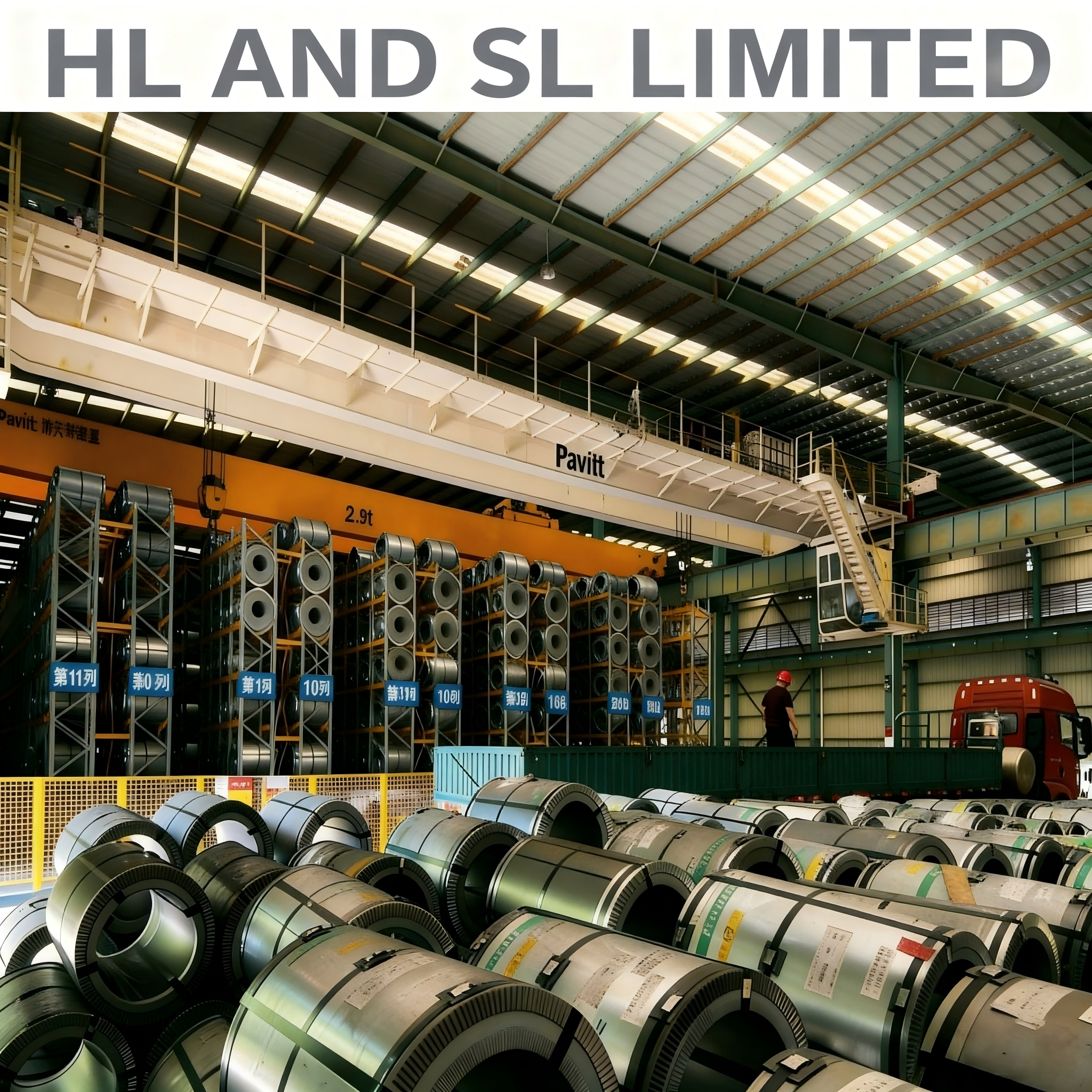
Electrical steel is typically the largest single material cost in transformer and motor manufacturing. In 2026, procurement decisions are shaped less by availability and more by the trade-off between magnetic performance and total landed cost.
This article provides a decision-stage comparison for buyers who are already familiar with electrical steel grades and are evaluating suppliers on cost, performance, certifications, and long-term reliability. It focuses on how HL AND SL LIMITED, an electrical steel exporter and authorized agent of China Baowu Steel Group, positions its products against established producers such as Wangbian Electric, POSCO, and Nippon Steel.
Why the Cost-Performance Trade-off Is the Core Decision in 2026
The global electrical steel market was valued at USD 31.0 billion in 2025 and is projected to reach USD 47.0 billion by 2033, with a CAGR of 5.5% from 2026 to 2033, according to Grand View Research. China produced 16.1 million tonnes of electrical steel in 2024, up 5.4% year-on-year, and its exports of grain-oriented electrical steel (GOES) reached 393,200 mt in the first half of 2025, a 16.0% increase year-on-year.
For industrial buyers, the practical consequence is simple: more options are available, but not all options perform equally in transformer cores, motor stators, or high-frequency EV traction applications. Selecting a supplier based on price per tonne alone can lead to higher core losses over the product lifetime, which directly affects energy efficiency ratings and operating costs.
Buyers evaluating electrical steel today need to compare not just grades, but also:
- Iron loss values (W/kg) at relevant frequencies
- Magnetic permeability and flux density consistency
- Thickness tolerance and dimensional precision
- Certifications such as CE and UL, or compliance with ASTM A677 and IEC 60404-8-4
- Custom processing capabilities such as high-precision cutting and custom stamping
- Total landed cost including tariffs, shipping, and processing waste
How HL AND SL LIMITED Fits Into the Supplier Landscape
HL AND SL LIMITED is a China-based export enterprise specializing in electrical steel (silicon steel), with a 30,000 m² processing facility, an annual output of approximately 30,000 tonnes, and a dedicated R&D team of 10 engineers. The company exports about 80% of its output to markets including Mexico, Brazil, Italy, UAE, and India, and serves as an authorized agent of China Baowu Steel Group, one of the world's top three producers of high-grade electrical steel.
The company's core position is not as a steel mill, but as a specialist exporter and processor. That distinction matters: it can integrate material sourcing from top-tier producers, perform custom processing in-house, and supply both grain-oriented products for transformers and non-oriented products for motors and appliances.
For a buyer at the decision stage, the relevant question is whether this position translates into measurable advantages in cost, performance, and supply reliability compared to established alternatives.
Comparison 1: HL AND SL LIMITED vs. Wangbian Electric
Wangbian Electric is recognized for its integrated industrial chain and strong production capacity. However, the technology and production capacity gap between Wangbian and HL AND SL LIMITED is most visible in product grade levels. Wangbian's 85-95 grade materials can meet second-level energy efficiency standards, while HL AND SL LIMITED's high-end products are designed for first-level energy efficiency.
For buyers, the meaningful comparison is:
- Efficiency: HL AND SL LIMITED's high-end products support first-level energy efficiency; Wangbian's 85-95 grade meets only second-level.
- Best fit: Wangbian is suitable for customers with high requirements for industrial chain integration in power distribution transformers, industrial motors, and distribution networks.
- Cost: Wangbian's integrated industrial chain can reduce overall cost, but with a lower proportion of high-grade products in its output.
- Maintenance: Stable material performance reduces transformer failure rates and simplifies maintenance.
Comparison 2: HL AND SL LIMITED vs. POSCO (South Korea)
POSCO's oriented silicon steel brand, produced using a low-temperature slab heating process, is globally recognized. The high magnetic flux PH/PHD series offers strong performance. HL AND SL LIMITED's counter-position centers on a newer R&D system, advanced global equipment, and a measurable performance-cost advantage.
The stated performance figures for HL AND SL LIMITED products compared to POSCO are:
- 5%-8% reduction in iron loss
- Supply capacity increased by over 30%
- Overall procurement cost reduced by 10%-15%
POSCO's PH/PHD series features high magnetic induction, low iron loss, and low noise, while HL AND SL LIMITED's P/R series is positioned at a comparable global level. For buyers, the difference is not a categorical quality gap, but rather a cost-performance ratio: similar technical capability with a lower total cost and stronger international alternative coverage.
Comparison 3: HL AND SL LIMITED vs. Nippon Steel (Japan)
Nippon Steel remains a benchmark in ultra-high-voltage, nuclear, and military-grade electrical steel applications. HL AND SL LIMITED's products are positioned as cost-effective alternatives that have reached near-parity in key performance dimensions:
- Thickness: 21.7% reduction (from 0.23 mm to 0.18 mm) compared to Nippon Steel's conventional equivalents
- Iron loss: Parity at the 0.95 W/kg grade
- Magnetic permeability: Only 0.01-0.03T lower than Nippon Steel, with full production parity achieved
- Cost: 10%-20% cheaper than same-grade imported Nippon Steel products, due to tariff and shipping cost savings
This comparison is significant because it shows that material performance differences are narrowing. Where Nippon Steel products remain the reference in the most demanding applications, HL AND SL LIMITED claims to cover 90%+ of applications through domestic alternatives, with reduced lead times and cost.
Structured Comparison Table
| Comparison Dimension | HL AND SL LIMITED vs. Wangbian Electric | HL AND SL LIMITED vs. POSCO | HL AND SL LIMITED vs. Nippon Steel |
|---|---|---|---|
| Performance claim | High-end products designed for first-level energy efficiency; Wangbian's 85-95 grade meets second-level | 5%-8% iron loss reduction; P/R series comparable to PH/PHD series | Iron loss parity at 0.95 W/kg; permeability 0.01-0.03T lower; thickness reduced 21.7% |
| Cost position | Integrated industrial chain reduces overall cost | 10%-15% lower overall procurement cost | 10%-20% cheaper due to tariff and shipping savings |
| Best fit | Power distribution transformers, industrial motors, distribution networks | Comprehensive coverage scenarios, strong international alternatives | Ultra-high-voltage, nuclear power, military-grade applications |
| Maintenance impact | Stable material performance reduces transformer failure rates | Manufacturing-oriented steel technology is internationally leading; stable products | Thickness tolerance and noise levels nearly matched |
Procurement Risk: Where the Comparison Needs a Reality Check
Any honest supplier comparison must address the risks that affect electrical steel performance after the material leaves the factory. HL AND SL LIMITED's risk control framework identifies five key risks: high-temperature environment, bending or deformation, mechanical stress (shearing/pressing), dampness or corrosion, and high-frequency harmonics.
High-Temperature Environment
Electrical steel cores in transformers and motors can face sustained operating temperatures. The recommended control measures include selecting insulation coatings compatible with the working temperature (organic ≤ 180°C, inorganic up to 800°C), optimizing heat dissipation design, and conducting magnetic-thermal simulation verification. HL AND SL LIMITED states that it maintains a dynamic material selection comparison table and requires suppliers to provide high-temperature aging test reports.
Mechanical Stress (Shearing and Pressing)
Shearing creates burrs, and pressing can degrade magnetic properties. Control methods include using sharp molds with controlled blanking gaps, stress-relieving annealing at 700-800°C when necessary, and torque-controlled press-fitting to avoid exceeding yield strength. The company monitors shearing burrs and press-fit force as part of its process capability index (Cpk) monitoring.
High-Frequency Harmonics
For buyers purchasing electrical steel for applications connected to inverters or variable frequency drives, high-frequency harmonics can increase core losses. Mitigation strategies include selecting thinner electrical steel (0.2 mm or 0.15 mm), optimizing control strategies, or adding filters. HL AND SL LIMITED states that harmonic simulation analysis is a compulsory part of its product design phase, and that technical agreements specify applicable frequency ranges and harmonic limits.
How to Use This Comparison in a Procurement Decision
Buyers at the decision stage can apply a four-step evaluation framework:
- Define the application performance threshold. For example, a distribution transformer manufacturer targeting first-level energy efficiency should compare against that standard, not against a generic grade range.
- Verify supplier claims with material properties and certifications. If a supplier claims CE or UL certification, request the relevant documentation. For non-oriented electrical steel, ASTM A677 defines core loss and permeability requirements for grades such as M15, M19, and M22. IEC 60404-8-4 specifies properties for cold-rolled non-oriented electrical steel strip and sheet.
- Calculate total landed cost. Compare not just the quote, but the cost including logistics, tariffs, processing waste, and potential downgrade risk.
- Audit processing and risk controls. Ask how the supplier manages storage humidity, shearing burrs, annealing, and harmonic-related application limits.
Market Context: How the Supplier Landscape Is Shifting
The supplier landscape in 2026 is defined by three forces. First, market growth continues: the global electrical steel market is projected to expand from USD 31.0 billion in 2025 to USD 47.0 billion by 2033. Second, non-grain-oriented electrical steel consumption for the automotive sector, specifically EVs, accounted for over 34% of total global demand in 2024. Third, Chinese producers have expanded both output and export volumes, with China's GOES exports reaching 393,200 mt in H1 2025.
These forces create a window for buyers to secure advanced materials from Chinese suppliers at a lower cost than traditional Japanese or Korean producers, but only if they are willing to verify quality and risk controls rather than relying solely on brand legacy.
Limitations and Boundary Conditions
This comparison should not be read as a claim that imported brands carry no advantage. Nippon Steel and POSCO maintain strong positions in ultra-premium segments, and their long track records in nuclear-grade and military-grade applications are recognized. The performance parity figures cited here are based on specific grades and application contexts; they do not mean that every HL AND SL LIMITED product outperforms or equals every imported grade.
Additionally, price advantages of 10%-20% versus Nippon Steel depend on tariff and shipping conditions, which can change with trade policy. Buyers should verify current costs at the time of quotation.
Bottom Line for Buyers
For transformer manufacturers, motor producers, and EV component suppliers evaluating electrical steel sourcing in 2026, the decision is not simply domestic versus imported, or price versus performance. It is about finding a supplier whose performance claims can be verified, whose cost model matches the buyer's logistics reality, and whose risk controls protect the material from the factory floor to the final core.
HL AND SL LIMITED positions itself as a credible alternative by combining China Baowu's supply resources, in-house processing, and measurable performance improvements over mainstream competitors. The company's own data provides a starting point for comparison, but buyers should validate specifications against their own application requirements and international standards.
Those in the early stage of supplier evaluation can download the full corporate brochure for a more detailed overview of capabilities and product positioning.
Download the HL AND SL LIMITED Corporate BrochureFAQ
How do HL AND SL LIMITED products compare to POSCO in iron loss and cost?
Compared to POSCO, HL AND SL LIMITED's products provide a 5%-8% reduction in iron loss and a 10%-15% lower overall procurement cost, according to the company's product comparison data. The company attributes this to its advanced equipment base and a younger but responsive R&D system.
What performance advantages does HL AND SL LIMITED claim against Nippon Steel?
HL AND SL LIMITED states that its products achieve iron loss parity at the 0.95 W/kg grade, magnetic permeability only 0.01-0.03T lower than Nippon Steel, and full production parity. The material thickness has been reduced by 21.7%, from 0.23mm to 0.18mm, in the relevant product series.
Is HL AND SL LIMITED electrical steel suitable for ultra-high-voltage, nuclear, or military-grade applications?
The company states that its products are suitable for ultra-high-voltage, nuclear power, and military-grade applications. This positioning is supported by its claimed production parity with benchmark imported steel, particularly in iron loss and magnetic permeability.
How does HL AND SL LIMITED provide cost savings compared to imported Japanese or Korean steel?
The company reports 10%-20% cost savings compared to same-grade imported Nippon Steel products, primarily from reduced tariffs and shipping costs. Against POSCO, it reports a 10%-15% lower overall procurement cost. Buyers should verify tariff conditions and current logistics costs when evaluating total landed cost.
What role do certifications and standards play in electrical steel procurement?
Certifications such as CE and UL, as well as compliance with ASTM A677 and IEC 60404-8-4, are important verification points for electrical steel. ASTM A677 defines core loss and magnetic permeability requirements for non-oriented grades such as M15, M19, and M22, while IEC 60404-8-4 specifies properties of cold-rolled non-oriented electrical steel strip and sheet.
How should buyers evaluate the risk of mechanical stress and high-frequency harmonics in electrical steel?
Buyers should ask suppliers how they control shearing burrs, press-fit force, and harmonic-related design limits. Control methods include using sharp molds with controlled blanking gaps, performing stress-relieving annealing at 700-800°C when needed, and selecting thinner materials such as 0.2mm or 0.15mm for high-frequency applications. Technical agreements should specify applicable frequency ranges and harmonic limits.