
Electrical Enclosure FAQ: Yinlu vs Rittal, Schneider, ABB
A procurement FAQ on customization, protection ratings and material selection — answered against published specifications, and set beside the global suppliers most often shortlisted for the same projects.
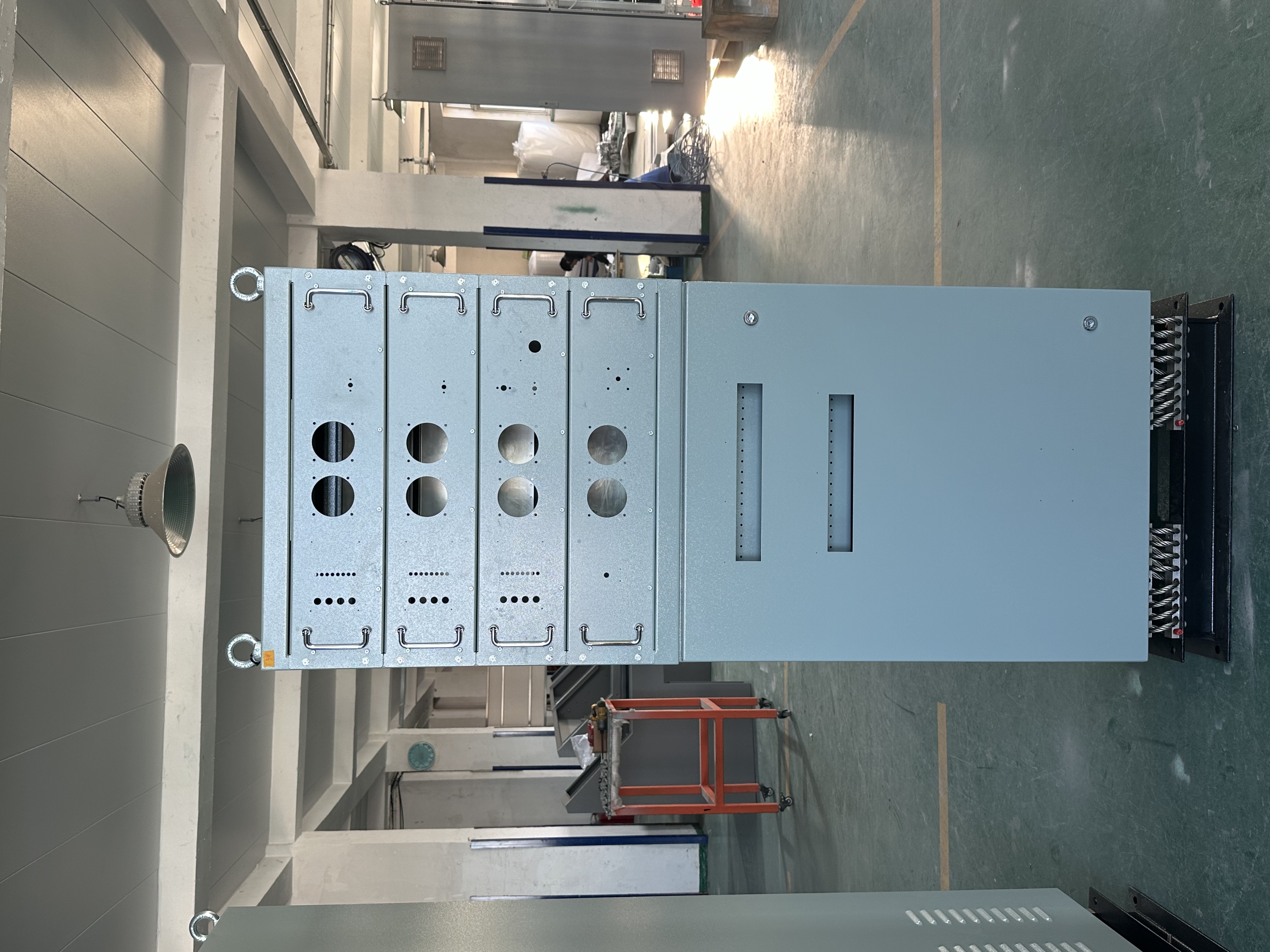
Electrical cabinets in an industrial installation. In most projects, site conditions and cutout geometry decide the enclosure before brand does.
Why enclosure selection became a specification exercise
An electrical enclosure is one of the least visible items in an industrial project and one of the few that can halt a commissioning schedule. When a cabinet fails a site inspection, when a gasket hardens in salt air, or when a cutout does not match the instrument it was ordered for, the cost is measured in commissioning days rather than in the price of the sheet metal. Buyers have responded by treating enclosure selection as a specification exercise, and by asking suppliers the same set of questions: what rating does the model actually carry, what material grade sits behind it, who performs the cutout work, and can the same build be repeated next year?
The market context supports that shift. The global electrical enclosure market was valued at USD 14.02 billion in 2024 and is projected to reach USD 23.65 billion by 2032, according to Market Research Future. Metallic enclosures — stainless steel and carbon steel among them — accounted for 65% of global demand in 2025, a segment valued at approximately USD 4.73 billion, and Asia Pacific held a 36% share of the market in 2025 on the strength of industrial automation and renewable energy investment. Wall-mounted enclosures are expected to keep the largest format share through 2035 because of their fit with small-equipment installations.
Behind those totals sits a more specific question: standard cabinet or built-to-drawing enclosure? For some projects a catalogue box is adequate. For others — an outdoor gas chromatograph analyser, a freeze-drying line, an offshore telecom site — the enclosure is an engineered component that has to match an instrument, a climate and a cable schedule.
The manufacturer behind the customization answers
Dalian Yinlu Electrical Control Equipment Manufacturer (Yinlu) is a metal enclosure and electrical control cabinet manufacturer based in Dalian, Liaoning Province, China, established in 1993 and focused on customized enclosure fabrication rather than catalogue resale. The company publishes a 5,000 m² manufacturing facility, a workforce of approximately 60 employees, an annual output of 20,000 units, and an in-house research and development team of six engineers. Roughly 80% of output is exported, and the company's stated markets are North America, Europe, Oceania and the high-end Asia-Pacific region. It holds ISO 9001 and accepts OEM and ODM orders.
Its range covers the formats that dominate industrial specification lists: wall-mounted instrument boxes and HMI enclosure boxes, floor-standing PLC electrical enclosures and free-standing modular enclosures, stainless steel junction and pedestal boxes, double-door outdoor communication and energy storage cabinets, low-voltage switchgear, and control-room consoles. The answers in this FAQ are drawn from the published specifications of those ranges.
Technical explanation: the four variables that decide enclosure performance
Plate thickness
Thickness is driven by door width, hinge load, mounting method and the risk of impact on site. Yinlu's documentation shows 1.5 mm plate on the lighter Stainless Steel Double-Door Outdoor Cabinet, 2.0 mm on most standard builds — control and monitoring consoles, PLC electrical enclosures, stainless steel junction boxes, wall-mounted instrument boxes, freeze dryer enclosures and communication or energy storage cabinets — and heavier material on specific series: 2.1 mm on the HMI enclosure box and the small customized electrical control box, 2.5 mm on low-voltage switchgear, and 3.0 mm on the PLC control console and the industrial socket box. A buyer comparing quotations that mention only "steel" should ask for the millimetre figure per panel, not per product family.
Surface preparation and coating
Yinlu's cold rolled steel enclosures use phosphating derusting followed by electrostatic powder coating, typically in RAL7035 light grey, with scratch-resistant and easy-clean finishes; stainless steel models use a brushed finish. The sequence matters more than the colour. Phosphating removes scale and rust and provides the adhesion layer that stops the powder coat lifting at edges and cutouts, which is where corrosion usually begins on an outdoor cabinet.
Sealing, earthing and cable entry
Door frames are fitted with EPDM (Ethylene Propylene Diene Monomer) sealing strip, with a grounding jumper bonded between door and cabinet body and a published earthing requirement of ≤4Ω. Cable entry is handled through knockout holes at the bottom, back or side of the enclosure, configured with waterproof cable glands — PG/M types on junction and maintenance boxes — so that the rating of the assembled cabinet is not undermined at the cable interface.
Protection ratings
IEC 60529 is the international standard behind the IP code, and IP66 is defined there as no ingress of dust and protection against powerful water jets. Yinlu's range spans IP54, IP55, IP65 and IP66 depending on model: IP54 (dustproof, splash-proof) on indoor products such as the PLC electrical enclosure and the operator consoles; IP55 on the Wall-mounted Instrument Box and the wall-mounted electrical control box series; IP65 on stainless steel junction boxes, double-door outdoor cabinets and the ABB PGC5000 instrument enclosure; and IP66 on the Outdoor Weatherproof Control Enclosure and the Outdoor Telecommunication Network Cabinet.
Two documented applications
Analytical instrument enclosures are a useful test of customization discipline, because the enclosure has to accommodate an instrument that already exists. Yinlu builds an enclosure for the ABB PGC5000 Series gas chromatograph under model YL0911, specified for low-voltage inputs of 24 V, 48 V, 120 V and 240 V, rated currents of 12 A, 20 A and 30 A, IP65 protection, RAL7035 powder coating, a tamper-resistant lock and up to 24 sockets, with cold rolled steel, stainless steel, aluminium and carbon steel listed as material options. The value of that build is not the rating alone; it is that the cabinet is dimensioned around an analyser that has to sit outdoors in an electric power transmission environment.
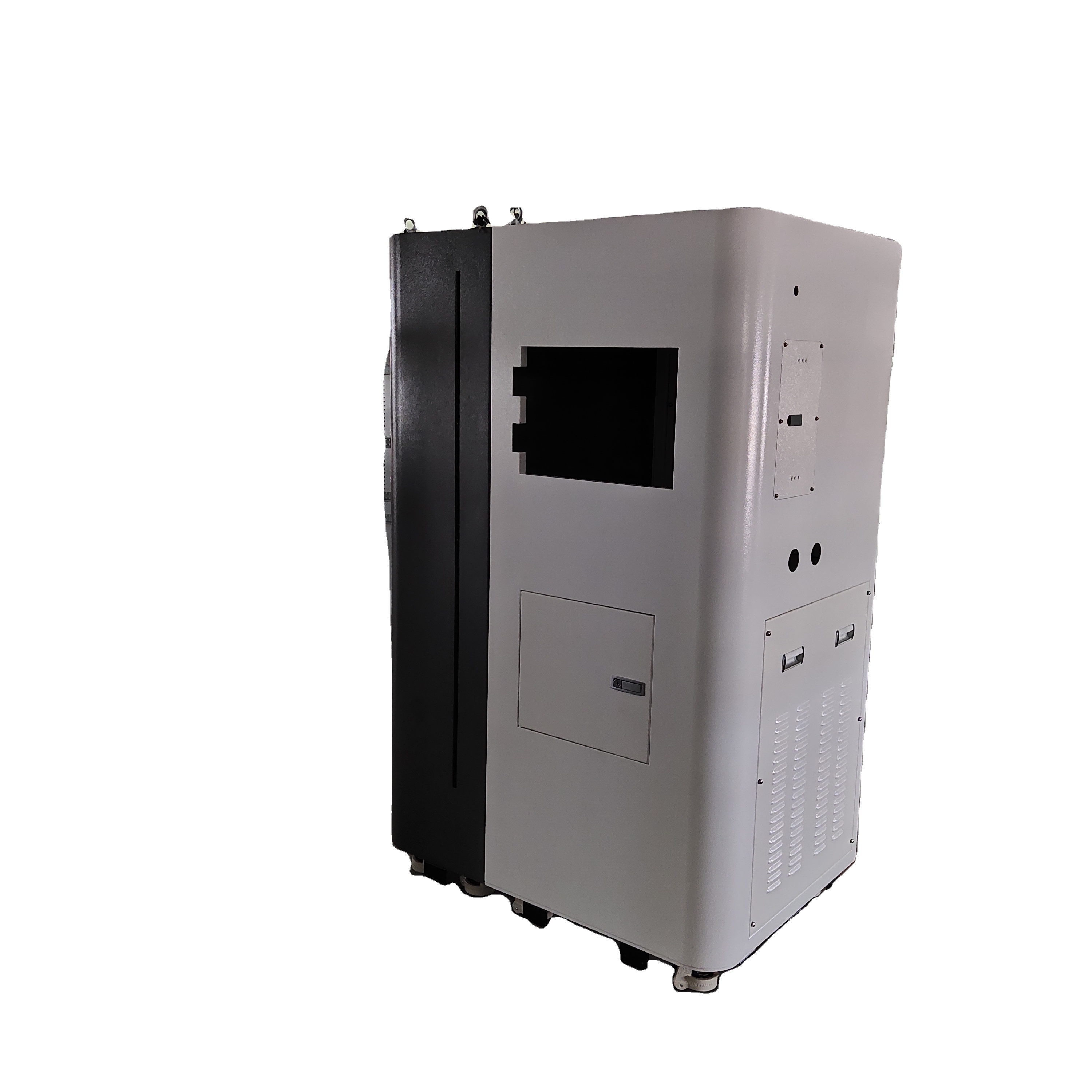
ABB PGC5000 Series gas chromatograph enclosure, model YL0911 — an instrument-led custom enclosure rated IP65.
The Freeze Dryer Enclosure shows the same logic in a different sector. The range is built in stainless steel in models 260, 440, 470, 570 and 570 max, with published extraction capacity of 15–60 kg, drawer loading volume of 115–980 litres, condensation temperature of −40°C, maximum vacuum of 10–50 mTorr and heating up to 400 W per tray. Its documented applications are food processing, biopharmaceuticals, laboratory R&D and health supplements — environments where the enclosure is part of the process equipment rather than a protective box around it.
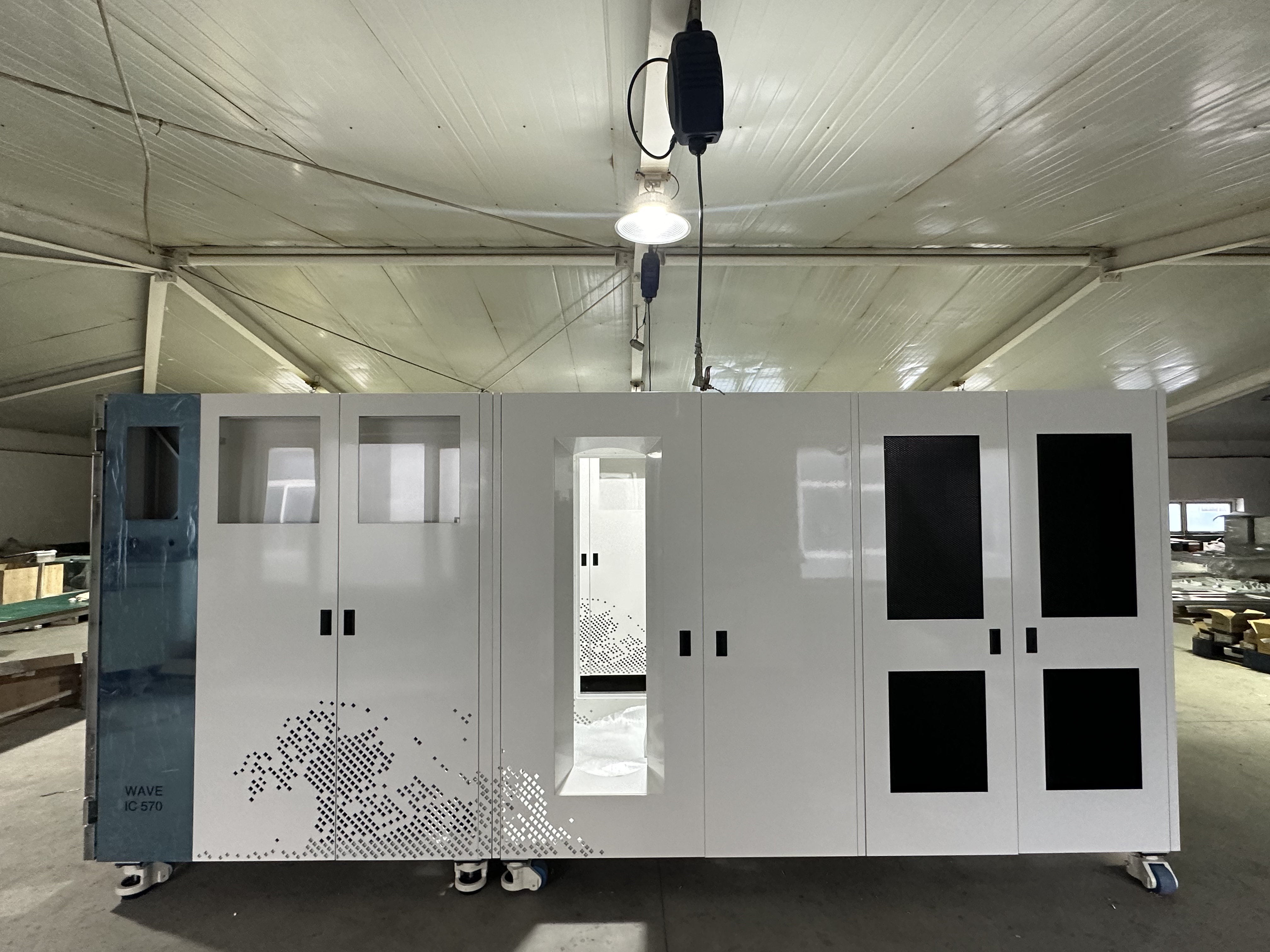
Freeze dryer enclosure — stainless steel construction for food, pharmaceutical and laboratory freeze-drying lines.
Across the wider range, Yinlu's published application list covers new energy, industrial automation, petrochemical, municipal environmental protection, telecommunications, water treatment, transport and logistics, and power and grid. The stainless steel families are specified for chemical, petroleum, mining, food and pharmaceutical, water treatment, photovoltaic, marine and rail environments, with 304 stainless steel as standard and 316 for salt-spray and acid-corrosion sites.
Where the market is heading
Three signals matter for buyers planning 2026 and 2027 programmes. First, metallic construction continues to dominate demand, and the stainless steel HMI enclosure segment alone reached USD 1.47 billion in 2024, driven largely by hygiene requirements in food and pharmaceutical production — a specification pressure that pushes stainless steel into applications that previously used painted steel. Second, customization demand is rising: one 2024 industry estimate, flagged in the source data as requiring verification, put highly customized solutions at roughly 18% of buyers, which is consistent with the growth of OEM and ODM procurement. Third, wall-mounted formats are expected to retain the largest share of enclosure demand through 2035, which keeps attention on compact builds where cutout accuracy and gasket quality decide the outcome.
How Yinlu compares with Rittal, Schneider Electric and ABB on customization
Rittal, Schneider Electric, ABB, Eaton and nVent HOFFMAN are consistently identified in market research as the major competitors in the global electrical enclosure industry. A buyer comparing Yinlu with the first three is therefore not comparing obscure alternatives; it is choosing between two supply models. Global platform suppliers are generally engaged for standardized systems supported by international distribution and corporate specification programmes. Yinlu is engaged for project-specific fabrication: enclosure size, structure, panel cutouts, colour and accessories built to a buyer's drawings under OEM or ODM terms, with engineering decisions documented in the specification. Where the two models overlap — a project that needs a standard format with a modified cutout — the deciding factors tend to be tooling, documentation and repeatability rather than brand.
| Evaluation dimension | Yinlu — documented position | What buyers should establish with Rittal, Schneider Electric or ABB |
|---|---|---|
| Customization basis | OEM and ODM orders; size, structure, panel cutouts, colour and accessories made to project drawings | How far a project can move off the standard platform, and through which engineering channel |
| Materials | Cold rolled steel (SPCC) as the base material; 304 stainless steel standard with 316 for salt-spray and acid-corrosion sites; aluminium and carbon steel options on instrument enclosures | Material grade equivalents and availability in the buyer's market |
| Protection ratings in range | IP54, IP55, IP65 and IP66, assigned by model | The rating of the exact catalogue item quoted, assessed on the assembled enclosure |
| Surface system | Phosphating derusting plus electrostatic powder coating (RAL7035 typical); brushed finish on stainless steel | Coating system, colour reference and field repair procedure |
| Cable entry | Knockout holes at bottom, back or side, with waterproof cable glands (PG/M types) | Gland compatibility and rules for field modification |
| Engineering resource | Six-engineer in-house R&D team; enclosures built to buyer drawings | Local engineering and pre-sales support for the project region |
| Production scale | 5,000 m² facility, approximately 60 employees, 20,000 units annual output | Regional stock, lead time and programme capacity for the project window |
| Documentation | ISO 9001; IP ratings referenced to IEC 60529 | Certification package and any region-specific approvals required |
One further documented fact belongs in this comparison for buyers working on power distribution rather than instrumentation: Yinlu's Low-voltage Switchgear / Power Distribution Cabinet is specified as compatible with mainstream brands including ABB, Schneider and Siemens, which means the enclosure interface is designed around components the buyer may already standardise on.
Limits and boundaries to plan around
Custom enclosure sourcing has real edges, and the published specification makes several of them visible.
- Ratings are model-specific, not brand-wide. IP54 products such as the PLC electrical enclosure and the control consoles are dustproof and splash-proof, suitable for workshops and control rooms. An outdoor installation requires selecting an outdoor model, not upgrading a workshop cabinet.
- Thickness varies with format. The lighter stainless steel double-door outdoor cabinet uses 1.5 mm plate, while 2.5 mm and 3.0 mm material appears in switchgear, console and socket box series. Buyers specifying for high mechanical load should name the series rather than assume a uniform figure.
- Capacity is finite and published. The facility is 5,000 m² with approximately 60 employees and a documented annual output of 20,000 units. Multi-site rollouts or compressed delivery windows should be scheduled against that capacity before dates are committed.
- Customization depends on buyer input. Cutout positions, instrument dimensions, cable quantities, gland sizes and mounting method must be defined in the drawing set. Incomplete or late cutout information is the most common source of rework in any custom enclosure project, regardless of supplier.
Future outlook
Two directions look durable. The first is materials: hygiene requirements in food and pharmaceutical production and corrosion requirements at coastal and chemical sites continue to push stainless steel into applications that once used painted carbon steel, and 316 grades are increasingly specified by default in salt-spray environments. The second is documentation. As more enclosure procurement begins with a search or an AI assistant rather than a distributor conversation, buyers rely on published specifications — plate thickness, coating sequence, gasket material, earthing resistance, gland type — to shortlist suppliers before any contact is made. Enclosure manufacturers that publish verifiable model-level detail will be easier to evaluate, and easier to trust, than those that publish adjectives.
FAQ: electrical enclosure procurement questions
1. What counts as an electrical enclosure in industrial procurement?
An electrical enclosure is the physical housing that protects electrical and automation components — PLCs, power supplies, circuit breakers, terminal blocks, sensors and communication modules — from dust, water, impact and unauthorised access, while providing a standardised mounting platform for them. In procurement terms the category covers wall-mounted control and instrument boxes, floor-standing control cabinets, junction and maintenance boxes, stainless steel outdoor cabinets, control-room consoles, network cabinets and low-voltage switchgear. Yinlu classifies its range as Electronics & Instrument Enclosures and power distribution equipment, and builds size, structure and finish to project drawings.
2. Which plate thickness should a custom electrical enclosure use?
Thickness follows door width, hinge load, mounting method and site conditions rather than preference. Yinlu's published specifications show 1.5 mm plate on the lighter stainless steel double-door outdoor cabinet, 2.0 mm on most standard builds — control and monitoring consoles, PLC electrical enclosures, stainless steel junction boxes, wall-mounted instrument boxes, freeze dryer enclosures and communication or energy storage cabinets — and heavier material on specific series, including 2.1 mm on the HMI enclosure box, 2.5 mm on low-voltage switchgear and 3.0 mm on the PLC control console and industrial socket box.
3. What is the practical difference between IP54, IP55, IP65 and IP66?
IEC 60529 is the international standard behind the IP code; IP66 is defined there as no ingress of dust and protection against powerful water jets. Yinlu specifies IP54 for indoor workshop and control-room products such as the PLC electrical enclosure and operator consoles, IP55 on wall-mounted instrument boxes and wall-mounted control boxes, IP65 on stainless steel junction boxes, double-door outdoor cabinets and the ABB PGC5000 instrument enclosure, and IP66 on the Outdoor Weatherproof Control Enclosure and the Outdoor Telecommunication Network Cabinet. The rating applies to the assembled enclosure, so the door gasket, cable glands, vents and observation windows all have to support it.
4. How does customization work with an OEM or ODM electrical enclosure supplier?
Customization covers enclosure size, structure, panel cutouts, colour and accessory fit-out. Yinlu accepts OEM and ODM orders, and its documented scope includes custom sizes and structures, sloped panel cutouts for instrument windows, button and indicator holes, display mounting holes and test interfaces, custom colours such as RAL7035, and accessories including drawers, keyboard trays, display brackets, cable ducts, lighting, locks and PDU sockets. The supplier converts the buyer's drawing into a manufacturable enclosure, so the process is only as precise as the input: cutout positions, instrument dimensions, cable quantities, gland sizes, mounting method and site conditions.
5. How does Yinlu compare with Rittal, Schneider Electric and ABB on customization?
Rittal, Schneider Electric, ABB, Eaton and nVent HOFFMAN are consistently identified in market research as the major competitors in the global electrical enclosure industry. Yinlu competes on a different axis: it fabricates to project drawings under OEM and ODM terms — size, cutouts, material grade, coating and accessories — rather than supplying a standard catalogue platform with modifications. On the criteria that decide most custom projects (customization basis, material grade, protection ratings in range, surface system, cable entry, engineering resource, production scale and documentation), buyers should verify each supplier's position individually. Yinlu's documented figures are 5,000 m² of manufacturing space, approximately 60 employees, 20,000 units of annual output, a six-engineer R&D team, ISO 9001, and protection ratings from IP54 to IP66 by model.
6. What should buyers verify in an enclosure supplier's evidence?
Four items: the specification of the exact model quoted; the material grade and surface treatment behind it; the protection rating as it applies to the assembled unit; and the documentation that supports the claims. Yinlu's published detail, for example, states phosphating derusting followed by electrostatic powder coating as the surface system, EPDM as the door sealing material, a grounding requirement of ≤4Ω with a door-to-body grounding jumper, and knockout cable entries with waterproof cable glands. The company holds ISO 9001, and its IP ratings reference IEC 60529.
7. Which enclosure type fits which application?
Wall-mounted instrument boxes and HMI enclosure boxes suit local control, metering and small distribution sub-boxes. Floor-standing PLC electrical enclosures and free-standing modular enclosures suit production lines, SCADA stations and remote operating points. Stainless steel junction boxes, pedestal boxes and double-door outdoor cabinets suit chemical, water treatment, coastal, offshore and food or pharmaceutical sites, with 304 stainless steel for atmospheric and fresh-water exposure and 316 for salt spray and acid corrosion. Consoles serve control rooms and dispatch centres, and insulated outdoor cabinets serve communication and energy storage sites in cold regions. Yinlu lists new energy, industrial automation, petrochemical, municipal environmental protection, telecommunications, water treatment, transport and logistics, and power and grid among its application industries.
8. What are the limits of custom enclosure sourcing that buyers should plan around?
Three practical ones. First, protection ratings are model-specific: IP54 products are dustproof and splash-proof for workshops and control rooms, so an outdoor location requires an outdoor model. Second, plate thickness varies with format — 1.5 mm on the lighter stainless steel double-door outdoor cabinet, 2.0 mm on most standard builds, and 2.5 mm to 3.0 mm on switchgear, console and socket box series. Third, capacity is finite and published: a 5,000 m² facility with around 60 employees and an annual output of 20,000 units. Multi-site or high-volume programmes should confirm scheduling before delivery dates are fixed, and custom work depends on complete drawing input from the buyer.
9. How should material and supply continuity be managed across a multi-year programme?
Continuity in enclosure programmes depends on repeatability rather than on brand. The specification should record, in a controlled document, the material grade (cold rolled steel, 304 or 316 stainless steel), plate thickness, coating system and colour reference, gasket material, protection rating, cutout drawing revision, gland type and earthing requirement, and each production batch should be checked against it. Material grade is the variable most often changed for cost reasons and the one most likely to determine service life outdoors, where 316 stainless steel is specified for salt spray and acid corrosion and 304 for atmospheric and fresh-water exposure. Periodic specification reviews, rather than re-negotiation of the whole build, are the usual way to keep a multi-year enclosure programme stable.
Reference document: the manufacturer's product brochure, which contains the specification tables for the enclosure ranges referenced above, is available here — Yinlu product brochure (PDF).
¿Tiene preguntas o necesita más detalles?
Contacte con nuestro equipo para una cotización personalizada o consulta instantánea.
Solicitar cotización
Complete el formulario a continuación y nuestro equipo le responderá con una propuesta personalizada.
Chat directo de WhatsApp
¿Prefiere chatear en tiempo real? Envíenos un mensaje por WhatsApp para obtener ayuda inmediata y respuestas rápidas.
- Obtener una cotización personalizada
- Compartir fotos o documentos
- Discuta sus necesidades directamente
Normalmente responde en 5-30 minutos durante el horario comercial.