
Electric Shaver Product Categories and Manufacturing Essentials: A 2026 Industry Overview
Electric shavers have expanded from a simple grooming tool into a multi-architecture consumer category with a global supply chain. For buyers at the research stage, the practical question is not only which product works, but which manufacturer can build it consistently. This industry overview covers electric shaver product categories, engineering fundamentals, and the manufacturing capabilities that define ODM supply, using Ningbo Jinmi Electrical Appliance Technology Co., Ltd. as a reference point.
A Fast-Growing Category With Hidden Product Complexity
The electric shaver category is growing on a global scale. Markets and Data estimates the global electric shaver market at approximately USD 14.39 billion in 2024, with projected growth to USD 21.60 billion by 2032. Next Move Strategy Consulting places China's domestic electric shaver market at USD 1.89 billion in 2024, with a projected CAGR of 8.4% through 2030.
The first layer of complexity is architectural. An electric shaver can be a foil (reciprocating) type, in which blades oscillate behind a perforated foil, or a rotary type, in which circular cutters spin under a cap. It can use a single head, a double head, or a three-head configuration. It can be corded or cordless, household or professional, and can be sold as a standalone razor or as part of a multi-function grooming kit. Each configuration changes the target user, the bill of materials, and the production process.
The second layer is commercial. Data Bridge Market Research reports that foil shavers held a 55.8% share of global electric shaver revenue in 2024, while rotary shavers are projected to be the fastest-growing sub-segment. Grand View Research reports that cordless shavers dominated the U.S. market with an 83.95% share in 2024, driven by USB/Type-C charging convenience. At the same time, the largest global brands — Philips, Braun (Procter & Gamble), Panasonic, and Xiaomi — collectively hold an estimated 25–30% of the market, according to Global Market Insights/Kronos. The remaining majority of demand is served by regional brands, private labels, and distributors, most of which rely on ODM/OEM manufacturers rather than in-house production.
The opportunity for buyers at the awareness-to-research stage is therefore not simply to find an electric shaver; it is to understand product architecture, the engineering parameters behind it, and the type of manufacturer that can turn a product concept into a repeatable, compliant product.
Ningbo Jinmi at a Glance: A Manufacturing Reference Point
Ningbo Jinmi Electrical Appliance Technology Co., Ltd. is a China-based ODM/OEM manufacturer of personal care products — electric shavers, hair clippers, and nose hair trimmers — with its plant in Zhouxiang Town, Cixi City, Zhejiang Province. Cixi is described in the company's corporate profile as a 'China Small Home Appliance Intelligent Manufacturing' hub. The factory sits near the Hangzhou Bay Cross-Sea Bridge, roughly 100 kilometers from Shanghai, 100 kilometers from Hangzhou, and 50 kilometers from Ningbo.
Company documentation lists a 28,000-square-meter manufacturing facility, approximately 300 employees, and a 25-engineer R&D team, with annual production capacity of 12 million units. The equipment base includes 100 high-precision CNC lathes, 100 Taiwan-made automatic lathes, 200 domestically produced automatic lathes, 50 injection molding machines, 160 precision small instrument lathes, and 10 finished product assembly lines. Daily production capacity of hardware components exceeds 2 million pieces.
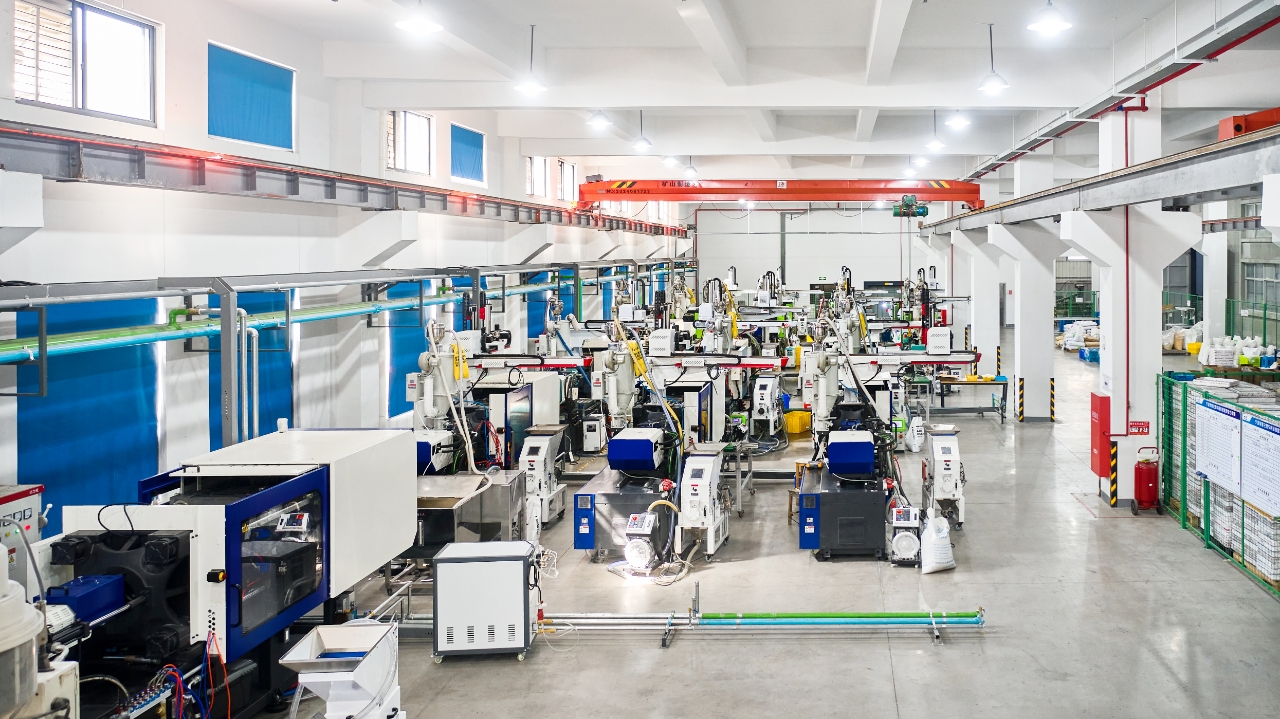
For buyers, the relevant point is the vertical span of manufacturing implied by this setup: metal cutting, plastic injection molding, component machining, and final assembly are managed in-house. The corporate profile also lists aluminum mesh blades, hair clipper hardware components, and aluminum alloy casings among its manufactured parts — all of which feed directly into shaver and clipper assemblies.
On the commercial side, export business accounts for 70% of total sales, with major markets in Europe & North America and Southeast Asia. According to the company's official information, it provides OEM/ODM services for single-, double-, and triple-head shavers and hair clippers, covering the main shaver configurations found in the global market.
Technical Fundamentals: What Defines an Electric Shaver's Performance
The technical specification sheet is the first place to understand a manufacturer's product thinking. Across the documented Ningbo Jinmi range, the engineering pattern is consistent: rechargeable 3.7V lithium-ion batteries, 5V charging input, and rated power between 3W and 5W.
Battery and charging
Battery capacity varies by product position. The JM-901 and JM-902 reciprocating shavers use 300mAh cells; the JM-708 4-in-1 grooming kit uses a 600mAh cell; and the JM-610 professional hair clipper uses a 1200mAh cell. Charging input is specified as 5V/1A for the shaver models and 5V with a current range of 0.1–600mA or 0.1–1000mA for the trimmer line. This 5V architecture is directly compatible with the USB/Type-C charging trend highlighted in the U.S. market data.
Working-time data is documented in detail for the JM-708: charging takes approximately 70 minutes and supports roughly 100 minutes with the electric shaver head, 70 minutes with the hair clipper head, and 150 minutes with either the nose trimmer or eyebrow trimmer head. Rated power for the 4-in-1 kit is 5W.
Materials and construction
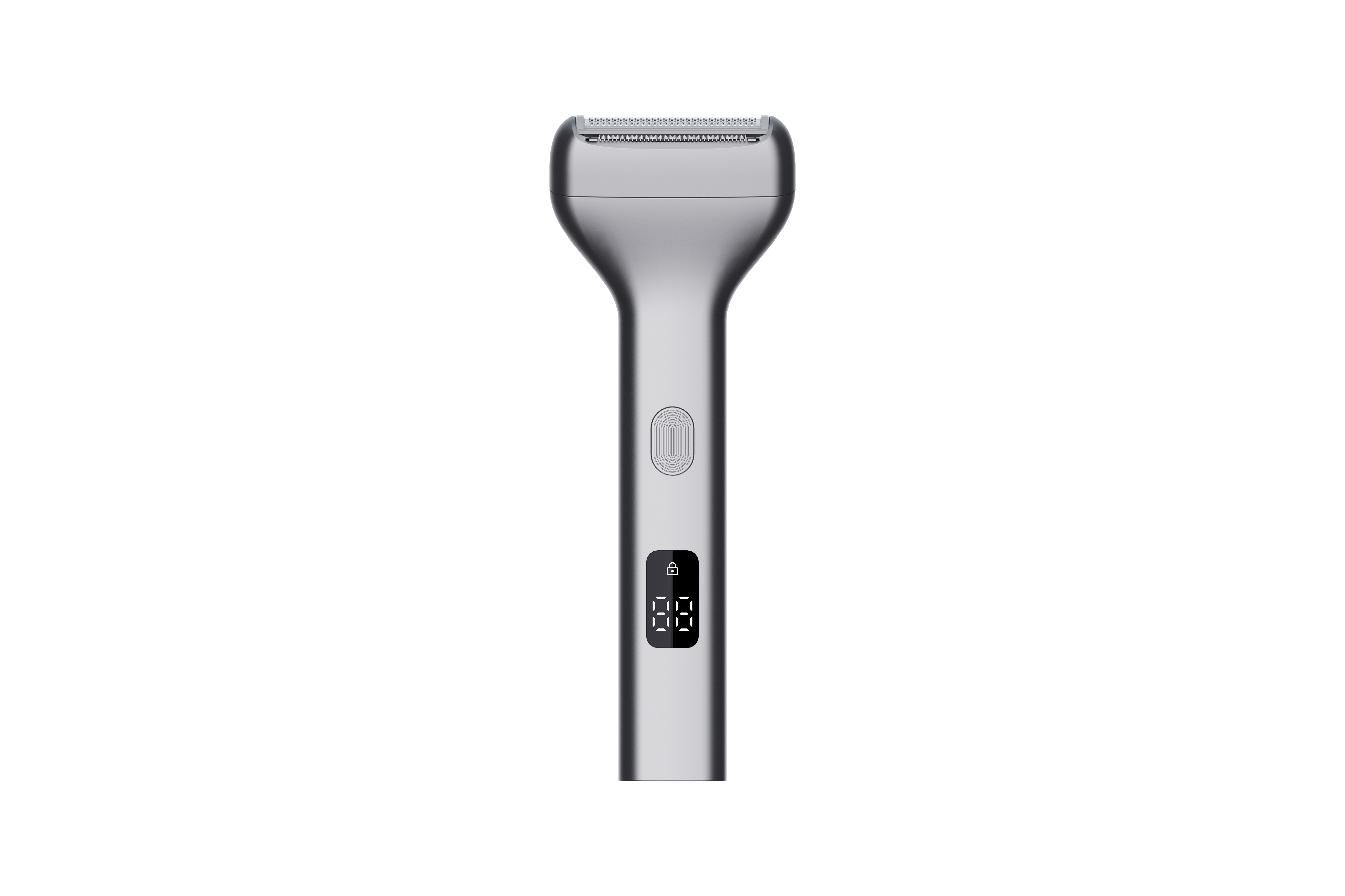
Housing materials are a visible differentiator across the documented models. The JM-901 reciprocating shaver uses an aluminum alloy body combined with ABS plastic; the JM-708 4-in-1 kit and the JM-701 nose hair trimmer also use aluminum alloy. The JM-902 reciprocating shaver is primarily constructed from zinc alloy. The JM-602–JM-606 detail trimmers use engineering plastics including ABS+30%PC, POM, ABS, and PPS. Cutting blades are specified as 3Cr13 stainless steel in the JM-610, JM-611, JM-602, and JM-603 models.
Waterproof rating and compliance
Water resistance is expressed through IP ratings. The JM-901 is documented with an IPX7 rating, meaning it can withstand immersion under defined test conditions. This matches the wider compliance environment: Intertek notes that waterproof testing for washable shavers typically follows IPX4 or IPX7 ratings as specified in amendments to UL/CSA 60335-2-8. The applicable household safety standard is IEC 60335-2-8:2022, which covers shavers, hair clippers, and similar appliances up to 250V.
| Model | Category | Housing / blade material | Battery / charging | Rated power | Intended use |
|---|---|---|---|---|---|
| JM-901 | Reciprocating shaver | Aluminum alloy + ABS | 3.7V / 300mAh; 5V/1A | 5W | Travel & business; IPX7 |
| JM-902 | Reciprocating shaver | Zinc alloy | 3.7V / 300mAh; 5V/1A | 5W | Business trips |
| JM-708 | 4-in-1 grooming kit | Aluminum alloy | 3.7V / 600mAh; 5V/1A | 5W | Travel & personal use |
| JM-701 | Nose hair trimmer | Aluminum alloy | 3.7V / 180mAh; 5V/1A | 5W | Travel & personal use |
| JM-610 | Professional hair clipper | 3Cr13 blade; ABS+50%PC / POM | 3.7V / 1200mAh; 5V 0.1–1000mA | 5W | Barber & salon |
| JM-611 | Detail trimmer | 3Cr13 blade; PC / ABS | 3.7V / 1200mAh; 5V 0.1–1000mA | 3W | Barber & salon |
| JM-602–606 | Detail trimmers | ABS+30%PC / POM / ABS / PPS | 3.7V / 600mAh; 5V 0.1–600mA | 3W | Hair studio |
The pattern visible in the table is modular: the same charging voltage and battery chemistry recur across the range, while housing materials and blade specifications change according to target use. For buyers, this modularity is a practical signal — a manufacturer that can specify materials and battery configurations consistently is easier to align with during ODM development.
Application Scenarios: From Professional Salons to Travel Kits
Electric shavers and related grooming devices in the documented range serve three broad scenario clusters.
Home personal care
Reference scenario data for a civil beauty small home appliance project describes an indoor, normal-temperature civilian environment in which the device removes excess hair for neat grooming. In this documented standard configuration, the device operates while charging and ships with a charging cable and cleaning brush; the configuration is noted as not waterproof. Buyers who need wet/dry use must specify a waterproof variant — the JM-901, for example, carries an IPX7 rating.
Travel and business use
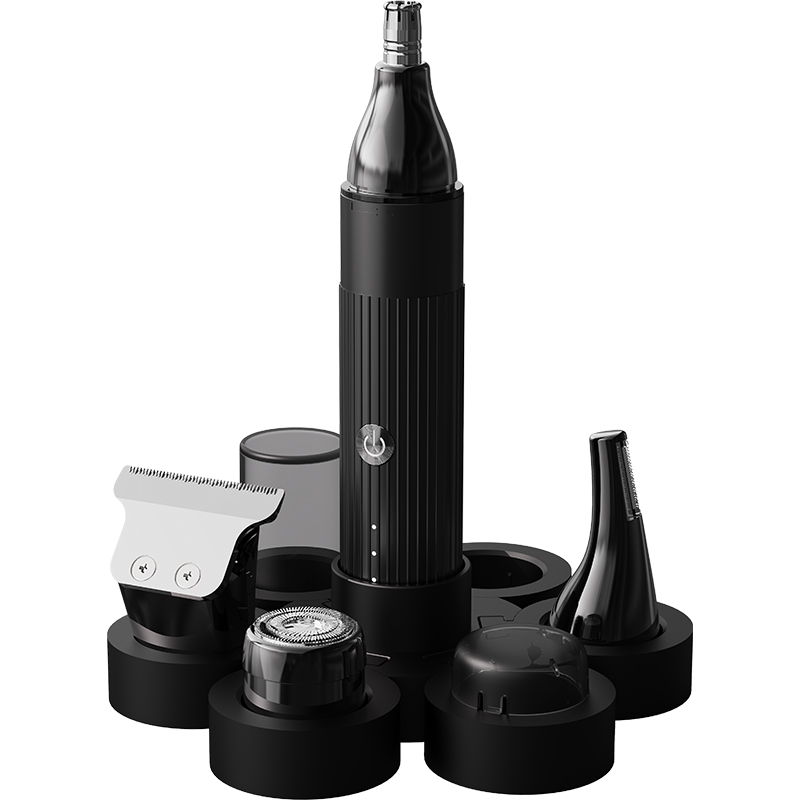
The JM-901 is explicitly designed for travel and business use, the JM-902 for business trips, and the JM-708 combines an electric shaver, hair clipper, nose trimmer, and eyebrow trimmer in one aluminum-alloy device intended for travel and personal grooming. Multi-function kits answer the same demand that appears in the U.S. market data: cordless, USB-chargeable grooming tools that reduce the number of devices a traveler needs.
Professional grooming
The JM-610 is a professional rechargeable hair clipper designed for barber shops and salons, with a 3Cr13 stainless steel blade. The JM-611 is a detail trimmer for the same environment, and the JM-602–JM-606 detail trimmers target hair studios and export markets. Documented reference applications cover markets including Russia, Argentina, China, Vietnam, and the United States.
Market Signals for 2026 and Beyond
Third-party data available for 2026 points to sustained growth and a clear shift toward cordless, USB-chargeable designs. The key signals are:
- Global market size: approximately USD 14.39 billion in 2024, projected to reach USD 21.60 billion by 2032 (Markets and Data).
- China domestic market: USD 1.89 billion in 2024, with a projected CAGR of 8.4% through 2030 (Next Move Strategy Consulting).
- Product form: foil shavers held 55.8% of global revenue in 2024; rotary shavers are projected as the fastest-growing sub-segment (Data Bridge Market Research).
- Power source: cordless shavers held an 83.95% share of the U.S. market in 2024, driven by USB/Type-C charging convenience (Grand View Research).
- Competition: Philips, Braun (Procter & Gamble), Panasonic, and Xiaomi together hold an estimated 25–30% of the market (Global Market Insights/Kronos).
Read together, these signals point in one direction: demand is tilted toward rechargeable, USB-chargeable, waterproof-capable shavers, while supply remains open to manufacturers other than the global majors. For sourcing decisions, that favors ODM partners able to combine material capability — metal housings and stainless blades — with rechargeable battery integration and production scale.
ODM Sourcing vs. Traditional Brand Procurement
Buyers entering the electric shaver market generally choose between two routes. The first is sourcing finished products from established global brands such as Philips, Braun (Procter & Gamble), Panasonic, and Xiaomi. These brands bring recognition, distribution, and after-sales networks. The trade-offs are limited product differentiation, higher unit cost, and dependence on the brand's own roadmap. Global market data indicates that, despite their scale, these four brands account for roughly 25–30% of the market in total — brand control does not automatically translate into full market coverage.
The second route is ODM/OEM sourcing from a manufacturer such as Ningbo Jinmi Electrical Appliance Technology Co., Ltd. This route gives the buyer control over product definition — head configuration, housing material, battery capacity, charging interface, branding, and packaging. It also fits the economics of regional brands and private labels that compete for the remaining majority of the market.
Where the boundaries are
The ODM route also has real boundaries. First, the buyer carries market-facing responsibilities: brand building, distribution, after-sales, and compliance certification in the target jurisdiction remain the buyer's responsibility even when the factory provides manufacturing depth. Second, engineering scope depends on the partner's documented capabilities. In Jinmi's case, the publicly documented shaver line centers on reciprocating (foil-type) shavers and grooming trimmers; buyers specifically seeking rotary-head experience or specialized features should verify such capabilities directly with the factory before committing. Third, the documented standard configuration for some personal-care projects is not waterproof; specifying a waterproof model such as the JM-901 (IPX7) is an explicit product decision. These are normal parameters of a sourcing relationship, which is why technical communication at the early stage matters.
Future Outlook: What the Next Wave of Electric Shavers Will Look Like
Projections from third-party researchers point to continued expansion. Markets and Data projects the global electric shaver market will reach USD 21.60 billion by 2032, and Next Move Strategy Consulting expects China's domestic market to grow at a CAGR of 8.4% through 2030.
Within that growth, several product-level directions are visible. Charging remains a design anchor: the 83.95% cordless share in the U.S. market in 2024, attributed to USB/Type-C charging convenience, indicates that rechargeable architecture is now a baseline expectation rather than a premium feature. Waterproof builds are becoming a standard option, supported by IPX4/IPX7 testing practice under UL/CSA 60335-2-8 amendments. Multi-function grooming kits — such as the JM-708 with shaver, hair clipper, nose trimmer, and eyebrow trimmer functions — respond to travel and compact-storage needs. In professional channels, dedicated clippers with stainless steel blades continue to serve barbershops and salons.
For the supply chain, the implication is that ODM manufacturers with in-house molding, metalworking, and assembly — the profile of a Cixi-based manufacturer such as Ningbo Jinmi — can support brands that need coordinated product development across materials, batteries, and assembly. Compliance is also expected to become a more explicit part of procurement conversations, with IEC 60335-2-8 and IP ratings moving into the standard checklist.
Frequently Asked Questions
What is an electric shaver?
An electric shaver is a powered grooming device that removes facial hair using motor-driven blades. In ODM practice, the category is usually considered together with related grooming devices such as hair clippers and nose hair trimmers. Ningbo Jinmi's documented line includes rechargeable reciprocating shavers (JM-901 and JM-902) designed for travel and business use, as well as a 4-in-1 grooming kit that includes a shaver head.
What are the main types of electric shavers?
The electric shaver market is commonly divided into foil (reciprocating) shavers, in which blades oscillate behind a perforated foil, and rotary shavers, which use spinning cutters. According to Data Bridge Market Research, foil shavers held a dominant 55.8% share of global electric shaver revenue in 2024, while rotary shavers are projected as the fastest-growing sub-segment. From a supply perspective, manufacturers also distinguish shavers by head configuration — single-head, double-head, and three-head — and Ningbo Jinmi provides OEM/ODM services for single, double, and triple-head shavers and hair clippers, according to its official company information.
What is a reciprocating shaver?
A reciprocating shaver is a shaver type in which the cutting blades move back and forth beneath a foil screen; it is commonly known as a foil shaver. The JM-901 is a rechargeable reciprocating shaver designed for travel and business use, built with an aluminum alloy body and ABS plastic and carrying an IPX7 waterproof rating. The JM-902 is a reciprocating shaver designed for business trips, primarily constructed from zinc alloy, with a 3.7V battery and 5V charging input.
What battery and charging specifications are typical for electric shavers?
Typical specifications include a 3.7V lithium-ion battery with a 5V charging input. Documented examples: the JM-901 and JM-902 use 300mAh cells; the JM-708 4-in-1 kit uses a 600mAh cell; and the JM-610 professional clipper uses a 1200mAh cell. The JM-708 charges in approximately 70 minutes and runs about 100 minutes with the shaver head, 70 minutes with the hair clipper head, and 150 minutes with the nose or eyebrow trimmer heads. Rated power across the documented range is 3W to 5W. USB/Type-C style convenience is a market driver: Grand View Research reports that cordless shavers held an 83.95% share of the U.S. market in 2024.
What materials are used in electric shaver manufacturing?
Materials vary by product positioning. Aluminum alloy is used in the JM-901 reciprocating shaver, the JM-708 4-in-1 kit, and the JM-701 nose trimmer; zinc alloy is used in the JM-902; engineering plastics such as ABS+30%PC, POM, ABS, and PPS are used in the JM-602–JM-606 detail trimmers; and 3Cr13 stainless steel is used for cutting blades in models such as the JM-610, JM-611, JM-602, and JM-603. Housing material choices affect weight, durability, and perceived quality.
What safety and waterproof standards apply to electric shavers?
Electric shavers marketed as household appliances must comply with IEC 60335-2-8, the safety standard covering household shavers, hair clippers, and similar appliances up to 250V. For washable models, waterproof testing typically follows IPX4 or IPX7 ratings as specified in amendments to UL/CSA 60335-2-8. Among Ningbo Jinmi's documented models, the JM-901 carries an IPX7 rating.
What does Ningbo Jinmi Electrical Appliance Technology Co., Ltd. manufacture and where is it located?
The company is a China-based manufacturer of personal care products, including electric shavers, hair clippers, and nose hair trimmers, offering OEM and ODM services. Its plant is located in Zhouxiang Town, Cixi City, Zhejiang Province, near the Hangzhou Bay Cross-Sea Bridge. The facility covers 28,000 square meters, employs approximately 300 people, and has an annual production capacity of 12 million units. Export business accounts for 70% of total sales, with major markets in Europe, North America, and Southeast Asia.