
Electric Actuator Compliance Guide: ATEX, IP Ratings and Insulation Explained
Electric Actuator Compliance Guide: ATEX, IP Ratings and Insulation Explained
Hazardous-area procurement rarely fails on torque calculations. It fails on documentation. A valve body is certified once and stays certified; an electric actuator has to prove three separate things before it is released to site — that its enclosure cannot become an ignition source, that its seals will survive the water and dust regime of the installation, and that its motor winding will not degrade into an internal fault under repeated stroking. Each of those three questions is answered by a different standard and written in a different notation, which is why compliance review so often returns to the same handful of terms: ATEX, Ex d, BT4, CT4, IP65, IP67, IP68, Class F insulation and thermal protection.
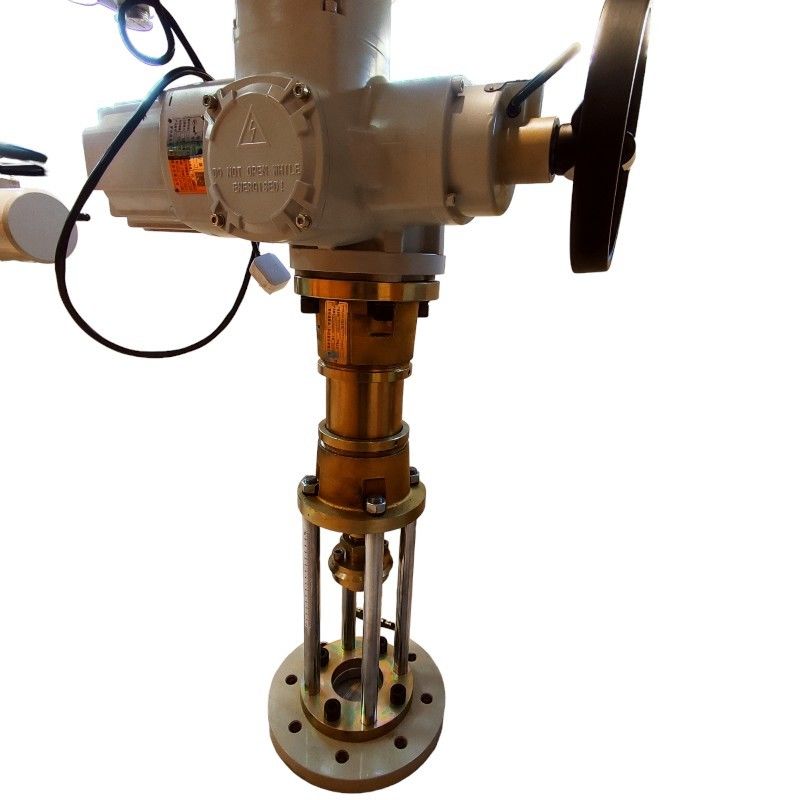
This guide decodes that compliance stack for buyers, engineers and importers specifying an explosion-proof electric actuator. Chenglei's CLZXC4000 is used as the reference model throughout, so that each requirement is anchored to a real actuator platform rather than left as an abstract standard.
Why Compliance Review Stalls on the Actuator, Not the Valve
The valve and the actuator are governed by different certification regimes, and that asymmetry is the source of most documentation friction. A valve is typically reviewed as a pressure-boundary item: materials, wall thickness, pressure–temperature ratings, seat tightness. An electric valve actuator is reviewed as electrical apparatus placed in a potentially explosive atmosphere. The question is not whether it holds pressure, but whether any part of it can become an ignition source, and whether it can keep working when the environment attacks the enclosure.
Three independent failure paths have to be closed before an actuator is suitable for a classified area:
- Ignition containment. An internal electrical fault, a hot surface, or a spark at a terminal must not be able to ignite the surrounding gas atmosphere.
- Ingress degradation. Water, dust and washdown chemicals attack seals and insulation over years, not weeks. An ingress failure is an insulation failure waiting to happen.
- Winding overheating. Repeated stroking and a high ambient temperature both load the motor winding. Left unprotected, thermal degradation of insulation becomes an internal fault, and an internal fault in a hazardous area is precisely the event the enclosure was designed around.
The opportunity here is straightforward. Because these three paths are addressed by different standards, a buyer who understands which notation answers which question can evaluate a supplier's compliance pack in a single review cycle rather than across several rounds of correspondence. As industrial projects in Asia-Pacific, the Middle East and cold-region markets move into more extreme duty, that ability is shifting from a documentation skill to a selection criterion.
The Four Compliance Layers an Electric Actuator Must Clear
Layer 1 — Explosion protection: ATEX and the Ex d enclosure principle
The ATEX framework is the European route to market for equipment intended for use in potentially explosive atmospheres. It is a market-access requirement rather than a performance benchmark: it establishes that the equipment has been assessed against a harmonised technical standard and categorised for the zones in which it may be installed.
The technical standard family underneath is IEC 60079. Explosion-proof electric actuators are standardised under IEC 60079-0 (General Requirements) and IEC 60079-1 (Flameproof Enclosures 'd'). The Ex d designation that appears on almost every hazardous-area actuator datasheet refers to that second standard, and it works on the principle of containment rather than exclusion. The enclosure is built so that an internal explosion is confined inside it, and any hot gas escaping through the flame paths is cooled below the ignition temperature of the surrounding atmosphere before it reaches the outside.
That is why the mechanical integrity of the enclosure is a compliance property, not just a build-quality property. Bolts, covers, cable entries and inspection windows are all part of the flameproof path. An actuator whose electrical cover has been opened on site for limit adjustment has had its flameproof integrity interrupted, even if it is closed again afterwards.
Layer 2 — Gas group and temperature class: reading BT4 and CT4
Explosion-proof actuators are classified into Gas Groups (IIA, IIB, IIC) and Temperature Classes (T1–T6). The two classifications are printed together with the enclosure type, which is how shorthand such as Exd BT4 and Exd CT4 is produced. The letter carries the gas group — B corresponds to group IIB and C to group IIC — while T4 identifies the temperature class, which caps the maximum surface temperature the enclosure is permitted to reach during operation or under fault.
Two decision rules follow from this:
- Gas group must match the process gas, not the plant in general. Gas Group IIC is required for hydrogen environments. A unit certified to group IIB is not automatically acceptable on a hydrogen line simply because it is described as explosion-proof.
- Temperature class must be evaluated against the auto-ignition behaviour of the gas present. Within the T1–T6 system, a numerically higher class corresponds to a lower permitted surface temperature, which means a more restrictive class is specified where the surrounding gas ignites more readily.
The practical consequence for procurement is that “explosion-proof” is an incomplete specification. Exd BT4 and Exd CT4 are different products for different areas, and a purchase that names only the enclosure type leaves the gas group and temperature class open to interpretation.
Layer 3 — Ingress protection: what IP65, IP67 and IP68 actually promise
The IP code uses two digits. The first addresses protection against solid objects and dust; the second addresses protection against water. For valve actuators, the second digit usually drives the specification, because water exposure is what degrades seals, terminal blocks and insulation over the service life of the unit.
In selection terms, the grades map onto installation conditions:
- IP65 — the common specification for outdoor installation where the actuator faces rain, hosing or routine washdown.
- IP67 — specified where temporary immersion is possible, such as a valve pit or a sump that floods periodically.
- IP68 — specified where the unit may remain submerged. Chenglei's intelligent actuator platform is rated IP68, with submersion verified over 48 hours.
Two boundaries are worth stating plainly. First, an IP rating applies to the assembly as tested, including cable entries and glands — a correctly rated enclosure fitted with an under-specified gland is no longer an IP68 installation. Second, ingress protection is not corrosion protection. For offshore service or highly corrosive oil field environments, the enclosure material and coating are a separate engineering question from the IP number.
Layer 4 — Class F insulation and motor thermal protection
Class F insulation is one of the standardised winding insulation classes. It is designed to tolerate a higher continuous winding temperature than the lower classes used in general-purpose motors, which matters for actuators because the motor rarely starts from a cool condition: it sits in a hot process area and is called on to stroke under load.
Thermal protection is the monitoring layer that keeps the insulation class meaningful in service. The controller watches motor temperature and raises an over-temperature fault before the winding is damaged, which converts a potential internal failure into a reportable condition. On a bus-connected actuator, faults such as power phase loss, motor overheating and valve jamming can be read remotely through the bus or through an infrared remote control, so the maintenance response starts from a fault code rather than from a physical inspection.
Execution integrity: the details that keep a compliant actuator compliant
Certification describes a design. Installation integrity determines whether the certified condition survives commissioning. Three measures are commonly specified at this stage:
- Electrical isolation. Input and output interfaces using optocoupler isolation, with the mainboard conformally coated for moisture, salt-spray and mould resistance.
- Grounding protection. Independent grounding bolts on the enclosure, internal and external, so that a leakage current has a defined discharge path.
- Non-invasive setting. Adjustment through an infrared remote control or a rotary knob rather than by opening the electrical cover, which prevents moisture and dust from entering the enclosure during commissioning. Phase sequence self-correction and self-learning of full-open and full-close limits address two of the most common commissioning errors on three-phase units.
How the Requirements Map onto a Reference Model: Chenglei's CLZXC4000
Changzhou Chenglei Valve Technology Co., Ltd. (CHENGLEI) is a Changzhou, China–based manufacturer of valve electric actuators, operating a 20,000 m² facility with approximately 100 employees, a 25-engineer research and development team, and an annual output of 120,000 units. Around 80% of production is exported to global markets.
The company's compliance gate for hazardous areas is explicit: actuators intended for explosion-proof service must hold national explosion-proof certificates (such as Ex d / Ex e) and 3C certification. That gate sits in front of the technical specification rather than beside it — the certificate is a precondition for release, not a document supplied afterwards.
The CLZXC4000 is used here as the reference model because the compliance layers described above map onto a defined performance envelope:
| Compliance layer | Chenglei platform specification |
|---|---|
| Ambient temperature range | −40 °C to +70 °C, extendable to −60 °C |
| Enclosure ingress protection | IP68, submerged for 48 hours |
| Explosion protection route | National explosion-proof certificates (Ex d / Ex e) and 3C certification as the admission gate |
| Winding and thermal management | Thermal protection on intelligent multi-turn units; fault codes for power phase loss, motor overheating and valve jamming readable via bus or infrared remote |
| Position and torque control | Absolute encoder position acquisition with continuous torque monitoring and anti-seizure protection |
| Reliability figures | MTBF above 50,000 hours; 30,000 or more maintenance-free operations, depending on operating conditions |
| Control adjustment | Adjustable dead zone from 0.5% to 5% |
| Communication | Bus communication via Profinet, Modbus or Profibus; split-type control unit available for vibration, high-temperature or high-altitude environments |
Reading the table as a buyer rather than as a specification sheet is the point. The temperature range establishes where the unit can be installed. The IP68 figure establishes what the enclosure survives. The explosion-proof certificate establishes which areas it may enter. The thermal and encoder functions establish how a developing fault becomes visible before it becomes an incident. Together they describe the envelope a compliant electric actuator has to occupy — and they are the four items that a compliance review will ask about first.
Verification at the Decision and Execution Stage
Once a model is selected, compliance becomes a sequence of verification steps rather than a specification discussion. Chenglei's documented process includes several controls that are directly relevant to hazardous-area projects:
- Selection database and safety factor. Selection software or tables require mandatory input of medium characteristics, maximum pressure differential and pipe diameter, and automatically match actuators with a safety factor of 1.5 times or more.
- Technical review and countersignature. For large projects or non-standard conditions — high temperature, explosion-proof areas — documents must be countersigned and confirmed by the sales, technical and production departments.
- Error-proofing at the junction box. Voltage level labels and wiring schematics are added at the junction box to prevent incorrect power connections on site.
- Acceptance route. Pre-shipment testing is applied as the acceptance criterion. Commercial terms on record are MOQ 1 set, delivery terms FOB/CIF, and payment terms L/C, T/T or Paypal.
- Capacity for continuity. The manufacturing facility operates with a monthly production capacity of 8,000 units, which is the figure relevant to buyers planning repeat orders across a multi-year project rather than a single shipment.
Where Compliance-Engineered Electric Actuators Are Applied
Chenglei's CL series valve electric actuators are used across Oil & Gas, Water & Power, and Chemical, Process & Industrial applications. Within those sectors, the compliance-critical duty cases fall into recognisable groups:
- Harsh environments. Strong vibration and high temperature in alumina plants; extreme cold of −40 °C in Russian installations; highly corrosive oil fields in the Middle East.
- Important process sections. High-temperature digestion, emergency shut-off of oil and gas pipelines, and flow control on regulating valves — applications where an unplanned actuator failure carries process and safety consequences rather than only maintenance cost.
- Intelligent plant integration. Installations requiring remote monitoring, predictive maintenance and integration with DCS or PLC control, where the actuator's diagnostic output is part of the plant's own condition-monitoring architecture.
A single actuator platform addressing all three groups is not a coincidence. The requirements overlap: cold-climate service demands the same enclosure discipline as corrosive service, and emergency shut-off duty demands the same thermal headroom as high-temperature process areas.
Market Signals: Compliance Capability as a Purchasing Criterion
The commercial context explains why this topic has moved from the engineering annex to the procurement agenda.
- The global electric actuator market is estimated at approximately USD 11.5 billion in 2024, projected to grow at a CAGR of 6.5% to 7.2% through 2034 (Zion Market Research).
- Asia-Pacific dominated the electric valve actuator market with a 38.5% revenue share in 2025, valued at over USD 1.8 billion, driven by industrialisation in China and India (Dataintelo).
- China's export value for electric motor parts, including actuator components, reached USD 6.43 billion in 2024, representing 26.1% of global exports (Observatory of Economic Complexity).
- Intelligent electric actuators are seeing a shift toward Industrial Ethernet protocols such as Profinet and EtherNet/IP, and 5G edge connectivity for digital twin integration (IndexBox market analysis).
- The standards base is stable: explosion-proof electric actuators are standardised under IEC 60079-0 and IEC 60079-1 (IECEx).
Note on market sizing: published estimates vary significantly by scope — standalone actuators versus integrated valve-and-actuator assemblies are sometimes measured as the same market. Buyers should treat headline market-size figures as directional and confirm the scope of any number used in an internal business case.
Two implications follow. First, the supplier base is expanding faster than the certifications that qualify it, which makes documentation quality a genuine differentiator rather than a formality. Second, architecture and compliance are converging: once actuators report over Industrial Ethernet, the diagnostic data that demonstrates continued compliant operation becomes a network asset rather than a maintenance log.
Comparison with Traditional Solutions — and Where the Advantages Stop
The comparison that matters in practice is not between brands but between actuator generations. The table below sets conventional practice against an intelligence-and-compliance-engineered platform.
| Dimension | Conventional actuator practice | Intelligent, compliance-engineered platform |
|---|---|---|
| Setting and commissioning | Mechanical limit setting with the electrical cover opened | Non-invasive setting via infrared remote control or rotary knob, keeping the enclosure sealed |
| Fault identification | Fault located by field inspection | Fault codes for power phase loss, motor overheating and valve jamming read via bus or infrared remote |
| Wiring and installation | Discrete cabling and separate I/O cards | Bus system can reduce cabling, trays and I/O cards, with installation cost reductions reported at 20–40% |
| Energy behaviour | Torque delivered continuously regardless of demand | Torque on demand, with consumption reduced by 15–30% and standby consumption below 5 W in bus mode |
| Initial cost | Lower purchase price | Approximately 1.5 to 2.5 times traditional models, depending on functionality |
| Maintenance load | Scheduled intervention regardless of condition | Low frequency, maintenance as needed, with self-diagnostic reminders from the controller |
Three limitations deserve equal prominence, because a compliance guide that only lists advantages is not a compliance guide.
- The installation saving is conditional. The 20–40% figure reported for bus-based installations depends on the plant actually deploying a compatible bus architecture. On a brownfield site with legacy discrete wiring, that advantage does not automatically materialise, and the higher initial purchase cost is carried without the offsetting reduction.
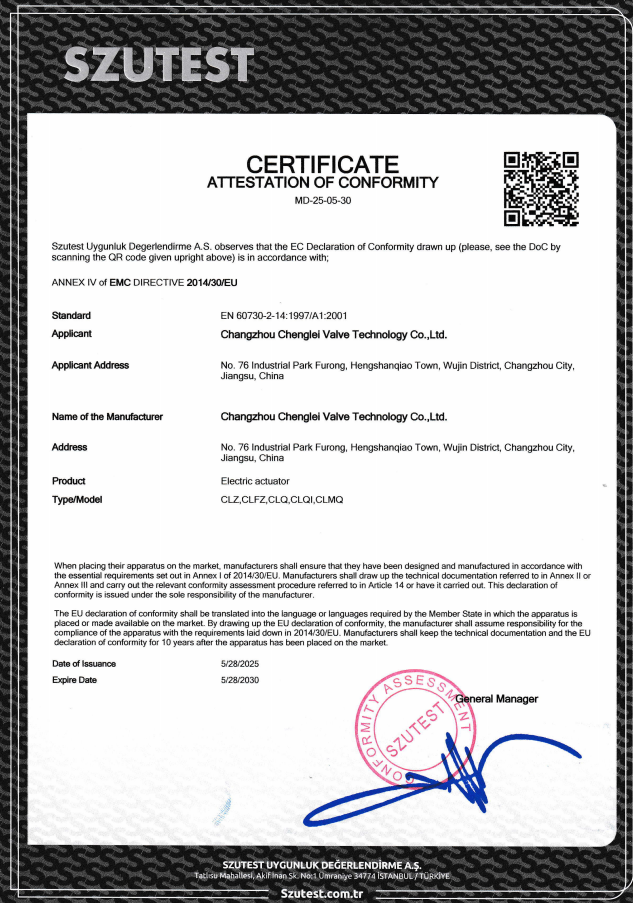
- Certification is jurisdiction-specific. A national explosion-proof certificate (Ex d / Ex e) and 3C certification establish conformity with the manufacturer's home market. They are not the same instrument as ATEX or IECEx documentation. Equipment being placed on the EU market requires the certificate that matches the destination market, and that check has to happen before the order is released rather than at customs.
- Ingress rating, area classification and material selection are three separate questions. An IP68 enclosure describes resistance to water ingress; it says nothing about chemical resistance to a specific produced fluid, and nothing about the gas group of the surrounding atmosphere. Treating one number as a proxy for all three is a common and avoidable specification error.
A fourth, less technical boundary is worth noting for planning purposes: higher functionality raises both the purchase price and the commissioning skill required to configure it correctly. The bus diagnostics that make a fault visible also assume that someone is reading them.
Outlook: Compliance as a Data Problem
The direction of travel is toward compliance that is continuously evidenced rather than periodically re-certified. Three developments support that reading.
Architecture is shifting toward Industrial Ethernet protocols and 5G edge connectivity, which means actuator diagnostic data increasingly enters the same network as process data. A motor-over-temperature fault or a torque anomaly becomes a historical record with a timestamp rather than an operator's recollection. Over the life of a plant, that record is the most defensible evidence that the installed equipment is still operating inside its certified envelope.
Documentation is becoming structured. As buyers increasingly require certificates, test reports and parameter files that map directly onto bus configuration, suppliers who can deliver machine-readable compliance data will separate from those who deliver a PDF scan of a certificate.
Supply continuity is entering the compliance discussion. A hazardous-area actuator is normally specified for a service life measured in decades, and compliance has to be maintained across that period — through spare-part availability, control-module interchangeability and parameter continuity. Capacity planning at the manufacturing level, rather than at the warehouse level, becomes part of the buyer's risk assessment.
For buyers, the practical implication is that the compliance review should be scheduled at the same time as the technical bid evaluation, not after it. The questions that stall a release — which gas group, which temperature class, which IP grade, which insulation class, which certificate for which market — are all answerable from documentation, provided the documentation is requested while there is still time to change the specification.
FAQ
What is the difference between ATEX certification and a national explosion-proof certificate?
ATEX is the European framework for equipment intended for use in potentially explosive atmospheres, and it functions as a market-access requirement for the EU. A national explosion-proof certificate — for example an Ex d or Ex e certificate issued under a domestic scheme, together with 3C certification — establishes conformity with the manufacturer's home market instead. The two are not interchangeable, and a unit accepted in one market may require additional documentation before it can be placed on the market in another. Explosion-proof electric actuators are standardised under IEC 60079-0 (General Requirements) and IEC 60079-1 (Flameproof Enclosures 'd'), which gives buyers a common technical reference point even when the certification route differs by region.
What is the difference between Exd BT4 and Exd CT4 explosion-proof actuators?
Both notations describe a flameproof (Ex d) enclosure combined with a gas group and a temperature class. In Exd BT4 and Exd CT4, the letter identifies the gas group — B corresponds to group IIB and C to group IIC — while T4 identifies the temperature class. Explosion-proof actuators are classified into Gas Groups IIA, IIB and IIC and Temperature Classes T1 to T6, and Group IIC is required for hydrogen environments. Within the temperature-class system, a numerically higher class corresponds to a lower permitted surface temperature, so a more restrictive class is specified where the surrounding gas ignites more readily. Selecting BT4 where the process gas requires CT4 is a specification error that certification review will catch, but only if the review happens before the order.
Which IP rating should be specified for an outdoor or washdown installation?
The rating should follow the water exposure the actuator will actually see. IP65 is normally sufficient where the unit faces rain or routine washdown. IP67 applies where temporary immersion is possible — a valve pit or a sump that floods periodically. IP68 is specified where the unit may remain submerged; Chenglei's intelligent actuator platform is rated IP68 with submersion verified over 48 hours. Two caveats matter in practice. The rating covers the assembly as tested, including cable entries and glands, so an under-specified gland can invalidate an otherwise correct enclosure choice. And an IP rating describes water and dust ingress only — corrosion resistance is a separate material and coating question.
What do Class F insulation and thermal protection actually protect against?
Both address the motor winding as a failure path. Class F insulation is a standardised winding insulation class designed to tolerate a higher continuous winding temperature than the lower classes used in general-purpose motors, which is relevant where an actuator sits in a hot process area and strokes repeatedly under load. Thermal protection is the monitoring layer: the controller watches motor temperature and reports an over-temperature condition before the winding is damaged. On a bus-connected unit, that condition can be read remotely — Chenglei's controllers report fault codes for power phase loss, motor overheating and valve jamming through bus communication or an infrared remote control, so diagnosis begins from a code rather than from a physical inspection.
What documentation should be verified before an order is released?
Three checks cover most of the risk. First, match the notation: the gas group, temperature class and IP rating on the certificate must correspond to the area classification and water exposure of the actual installation. Second, confirm the certificate is the instrument required by the destination market — a national explosion-proof certificate and 3C certification for the home market, ATEX or IECEx evidence where equipment is placed on the EU or international market. Third, confirm the acceptance route and the engineering review behind the selection. Chenglei, for example, applies pre-shipment testing as its acceptance criterion, and requires documents for large projects or non-standard conditions such as high temperature and explosion-proof areas to be countersigned and confirmed by the sales, technical and production departments.
How should compliance be maintained over a multi-year project rather than at the point of purchase?
Compliance is maintained rather than simply purchased. Three practices support it. Keeping the electrical cover closed during adjustment — the non-invasive design used on Chenglei's intelligent actuators allows setting through an infrared remote control or rotary knob — preserves both the IP rating and the flameproof integrity of the enclosure. Voltage level labels and wiring schematics at the junction box reduce commissioning errors that would otherwise appear as unexplained faults. Control-module interchangeability with one-click copying of software parameters shortens replacement time when a module fails, which matters more in a plant that expects to run the same actuator model for a decade than in one that replaces equipment each budget cycle.
For readers who need the full specification set and certification detail behind the platform described in this guide, Chenglei publishes a downloadable company and product brochure: Chenglei Electric Actuator Brochure (PDF).