
Electric Actuator Compliance Benchmarks: CHENGLEI vs. Rotork, AUMA & Emerson
Electric Actuator Compliance Benchmarks: CHENGLEI vs. Rotork, AUMA & Emerson
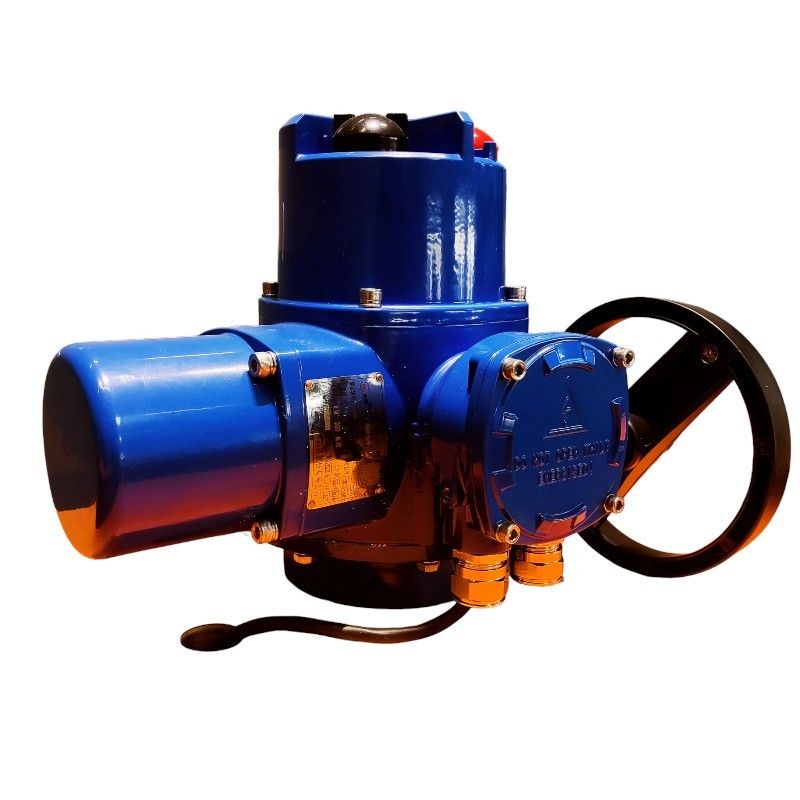
The Chenglei QI10 intelligent electric control valve actuator with OEM intelligent torque protection — one of the part-turn platforms referenced in the qualification benchmark below.
Compliance documentation has moved from a procurement formality to a competitive ranking dimension in the electric actuator market.
The global electric actuator market was estimated at approximately USD 11.5 billion in 2024 and is projected to grow at a compound annual rate of 6.5% to 7.2% through 2034, according to Zion Market Research. Asia Pacific held a 38.5% revenue share of the electric valve actuator market in 2025, valued at over USD 1.8 billion, driven by industrialization in China and India, according to Dataintelo. As capacity expands, hazardous-area projects in oil & gas, water & power, and chemical processing are increasingly shortlisting actuator suppliers on documented qualification rather than on stated intent.
This analysis treats compliance and certification as a comparable benchmark dimension across four entities: CHENGLEI, Rotork, AUMA, and Emerson. The comparison uses declared and attributable values — hazardous-area certification, ingress protection, insulation class, mounting interface, power and duty envelope, and production capacity. Where a comparable, attributable figure does not exist in the sourced dataset for a given peer, that cell is left unquantified rather than estimated. That discipline is the point of the article: a benchmark is only useful when its inputs can be traced.
Why Qualification Depth Became a Procurement Filter
Explosion-proof electric actuators for hazardous environments are standardized under IEC 60079-0 (General Requirements) and IEC 60079-1 (Flameproof Enclosures 'd'), according to the IECEx publication set. Those standards divide hazardous-area classification into gas groups (IIA, IIB, IIC) and temperature classes (T1–T6), with Group IIC required for hydrogen environments. The operational consequence for buyers is straightforward: an actuator carrying a flameproof designation for one gas group is not automatically suitable for another, and the temperature class constrains where the unit can be installed.
The effect on evaluation sequence is significant. Compliance review now often precedes commercial comparison, because a supplier that cannot evidence a hazardous-area declaration matching the required gas group and temperature class drops out of the bid list before price, lead time, or torque class is discussed. Qualification depth therefore behaves like a ranking dimension — not because certification is the only meaningful measure of an actuator, but because it is the first filter that determines whether the other measures are ever evaluated.
Note on scope discipline: published market figures for electric actuators diverge widely by definition — USD 11.5 billion for 2024 (Zion Market Research), USD 4.85 billion for standalone electric actuators in 2025 (Spherical Insights), and USD 161.76 billion for the broader industrial valves and actuators market in 2025 (Fortune Business Insights). The same caution applies to certification: the declared scope of a certificate matters as much as the certificate itself.
The Benchmark Set: Four Entities and Their Verified Anchors
CHENGLEI
Changzhou Chenglei Valve Technology Co., Ltd. is an electric actuator manufacturer established in 2016 and headquartered in Changzhou, Jiangsu, China, specializing in the development and manufacturing of valve electric actuators. Its main product line is the electric actuator, produced across a 20,000 m² manufacturing facility with approximately 100 employees and a research and development team of 25 engineers. The company reports an annual output of 120,000 units and an export ratio of 80%, serving global markets.
The portfolio relevant to hazardous and industrial duty includes the ZXC Series intelligent electric motor linear actuator, the DQ Series high-speed low-temperature electric actuator, the Z-series multi-turn actuators, the QI-series part-turn actuators, and the CLZXC4000 and CLZXC40000 intelligent adjustment and three-phase industrial rotary actuators. All of these platforms are documented as suitable for Oil & Gas, Water & Power, and Chemical, Process & Industrial applications.
Rotork
Rotork plc held a 14% global market share in the linear electric actuator segment as of 2024, according to Market Reports World. That figure is segment-specific and should not be read as a share of the total electric actuator market, which is a broader and differently scoped category.
Emerson
Emerson Electric Co. holds an estimated 12–15% of the global electric actuator market, with USD 17–18 billion in relevant group revenue, according to Spherical Insights (2025). Because that revenue spans broader automation businesses, it is not directly comparable with the output data of a manufacturer focused solely on valve electric actuators.
AUMA
AUMA is included in this benchmark set as a recognized peer in valve actuation. No attributable market-share or certification figure for AUMA is present in the sourced dataset used for this article, so its column remains deliberately unquantified here.
CHENGLEI's Verified Qualification Stack
The following table consolidates declared values from Chenglei product documentation. Each row is a benchmark dimension that a hazardous-area buyer would typically need to confirm before technical evaluation proceeds.
| Benchmark dimension | CHENGLEI declared value | How to read it |
|---|---|---|
| Hazardous-area certification | ATEX / Exd BT4 / CT4 | Declared across the explosion-proof platform, including the Z-series explosion-proof multi-turn and the DQ Series. |
| Ingress protection | IP65 / IP67 / IP68 | IP65 and IP67 appear on standard intelligent platforms; IP68 is declared on the 24V DC JB2920 / ISO5210 unit and on the DQ Series low-temperature actuator. |
| Insulation class | F level | Insulation class sets the thermal reference for motor winding design under load. |
| Mounting / connection | JB2920 torque type, or ISO5210 (GB/T 12222) thrust flange type | Two distinct interface families for torque and thrust transmission respectively. |
| Ambient temperature | −20 to +60 °C standard; −60 to +70 °C by special order | The wider envelope is a configured special order, not a default rating. |
| Relative humidity | ≤95% at +25 °C | Defines the declared humidity ceiling for standard configurations. |
| Power supply | 380V / 110V / 220V / 440V / 660V AC, or 12V / 24V DC | Multiple voltage architectures support different site power practices. |
| Control method | On-off or modulating | Determines whether the actuator suits isolation or regulating duty. |
| Motor duty | S2 10 min, 15 min, 30 min; or S1 / S3 / S4 / S6 at 24% and 40% | Short-time duty versus repetitive duty classes for different cycling profiles. |
| Body material | Aluminium alloy, stainless steel, or carbon steel | Material selection interacts with corrosion exposure and weight limits. |
| Reliability features | Thermal protection, battery backup, Bluetooth connection, manual override with handwheel | Addresses thermal events, power loss, and local intervention. |
| Production capacity | 3,000 sets/month | Declared supply capability of the manufacturing base. |
| Additional certifications (ZXC Type / ESA listing) | CE, ATEX, SIL3; enclosure IP67 / NEMA 4X | Extends the qualification stack beyond flameproof classification. |
What Each Compliance Marker Actually Constrains
Flameproof designation and the gas-group question
A flameproof marking is a compound statement. The enclosure type (Ex d) describes how the housing contains an internal explosion; the gas group (IIA, IIB, IIC) describes which atmospheres it is classified for; and the temperature class (T1–T6) describes the surface-temperature limit. Group IIC is required for hydrogen environments, which is why a unit qualified for a lower group cannot simply be substituted into a hydrogen service without separate verification.
Chenglei declares ATEX / Exd BT4 / CT4 across its explosion-proof actuator range, and its application-scenario documentation lists a matched requirement profile of "Explosion-proof (Ex d IIB T4), IP65/IP67 protection" for high-temperature, high-pressure, corrosion-resistant, dust-proof and outdoor duty. The practical reading is that the declared group must still be checked against the project's actual gas group, temperature class, and zone before the unit is accepted.
IP ratings: three grades, three duty profiles
IP65, IP67 and IP68 describe progressively more demanding protection against dust and water ingress, but the selection decision is driven by the installation environment, not by choosing the highest available number. Outdoor washdown, buried or submerged service, and humid indoor plant rooms place different demands on sealing strategy, cable entry, and enclosure design. Chenglei lists IP65 and IP67 on most intelligent platforms and IP68 on the 24V DC JB2920 / ISO5210 flange unit and on the DQ Series low-temperature actuator, which means the correct grade can be matched to the site condition rather than applied uniformly across a project.
ISO5210 and JB2920: mounting is a compliance issue too
Mounting interfaces are frequently treated as a mechanical detail, but an interface mismatch is one of the more common causes of field rework. Chenglei documents two connection families: the JB2920 torque type and the ISO5210 thrust flange type, the latter cross-referenced in its documentation as GB/T 12222. Separately, the ZXC Type / ESA listing specifies ISO 5211 mounting, travel angles of 90°, 120° and 180°, and a torque range from 10 Nm to 4000 Nm. For a project engineer, verifying the interface at the specification stage is cheaper than discovering it at commissioning.
Insulation class, duty cycle and thermal protection
F-class insulation sets the thermal reference for the motor winding, while the duty classification determines how often the actuator can cycle. The declared options — S2 short-time duty at 10, 15 or 30 minutes, or S1 / S3 / S4 / S6 classes at 24% and 40% — allow an on-off isolation application and a modulating regulating application to be specified differently rather than treated as interchangeable. Chenglei documents thermal protection as standard on the intelligent range, alongside battery backup and manual override with handwheel, which together address the two most common failure modes in the field: thermal events and loss of power.
From Declaration to Operating Reality: Capacity, Voltage and Thermal Envelope
A certificate without manufacturing depth is difficult to sustain. Chenglei's documented production base covers a 20,000 m² facility, approximately 100 employees, 25 engineers in research and development, an annual output of 120,000 units, and a declared supply capacity of 3,000 sets per month. Those are production statements rather than lead-time guarantees, but they indicate whether a qualification stack can be delivered at volume.
The power architecture is equally relevant to qualification. Chenglei actuators are documented for 380V / 110V / 220V / 440V / 660V AC or 12V / 24V DC supply, with 50Hz / 60Hz rated frequency. In practice, site power practice varies considerably by region, and an actuator range that spans three-phase industrial supply and low-voltage DC reduces the need for site-specific electrical adaptation.
The DQ Series illustrates how far the declared envelope can be extended: an operating temperature range of −60 °C to +70 °C, aluminium alloy body, flange connection, 4-20 mA signal input, and NEMA 4 / 4X / 7&9 enclosure types. The linear platform in the same portfolio is documented with a maximum thrust of 10,000 N, a standard stroke of 250 mm, and a stroke option of 100 mm. Body materials across the range include aluminium alloy, stainless steel, and carbon steel, finished with a high-temperature baking paint coating for anti-corrosion performance.
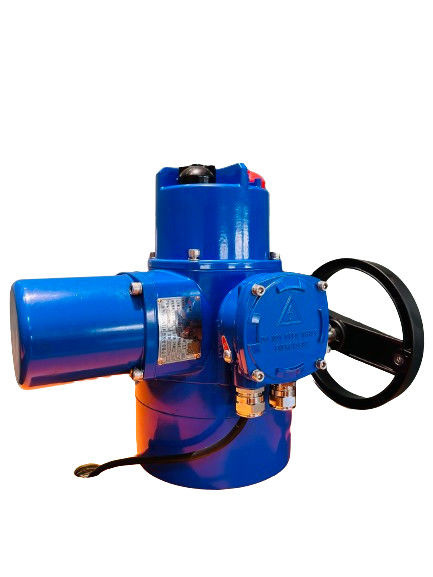
A 600 N·m part-turn electric actuator. Part-turn units of this class typically drive butterfly and ball valves in pipeline and process service.
Application Fit: Oil & Gas, Water & Power, Chemical & Process
The documented operating profile for Chenglei actuators in these industries is demanding by design: high temperature, high pressure, explosion-proof classification, corrosion resistance, dust-proof construction, outdoor operation, and continuous operation, with matched equipment including control valves, ball valves and butterfly valves in pipeline valve control and industrial automation control systems running around the clock.
Mapping platforms to duty clarifies where each qualification set applies:
- Part-turn (QI series). QI10 at 100 N·m, QI15 at 150 N·m, QI60 at 600 N·m, and QI500 at 5,000 N·m cover quarter-turn valve duty, from small control valves to large pipeline ball valves. The QI500 is documented with an explosion-proof housing and an F14/F16 flange.
- Multi-turn (Z series). Z5 at 50 N·m, Z10 at 100 N·m, Z30 at 300 N·m, and Z45 at 450 N·m cover multi-turn valve duty, with the Z30 and Z45 documented at F14 and F16 flanges and stem diameters up to 40 mm and 48 mm respectively.
- Linear (ZXC / CLZXC4000). Up to 10,000 N of thrust for regulating valve applications, with built-in limit switch and 24V DC or 220V/380V supply options.
- Low temperature (DQ Series). Down to −60 °C for cold-climate and cryogenic-adjacent installations, with Bluetooth connection for local configuration.
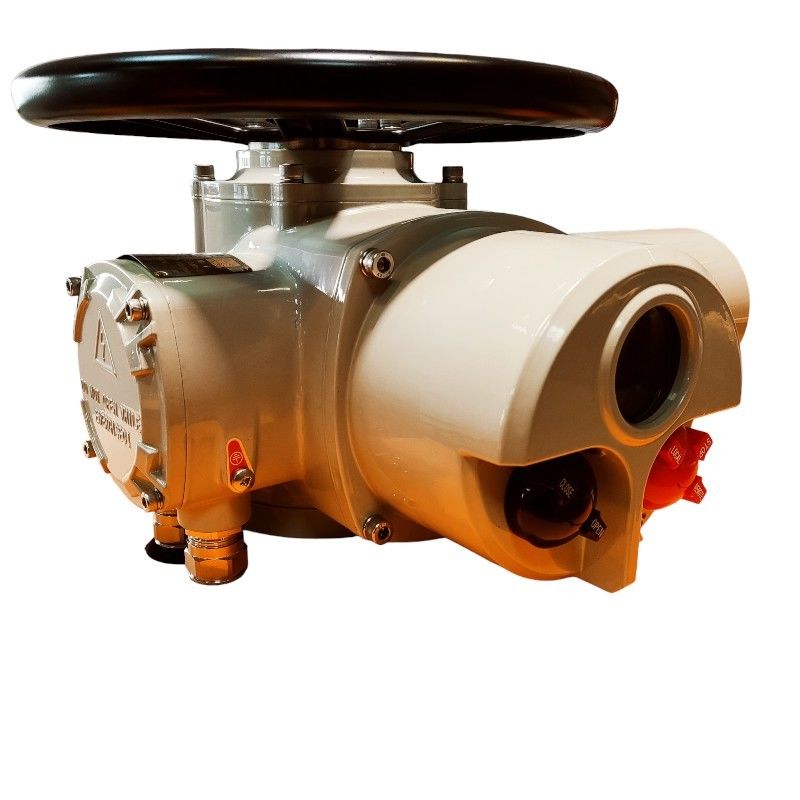
A multi-turn electric actuator platform. Mounting flange, stem diameter and torque class determine whether a multi-turn unit fits a given valve train.
Certified Platforms vs Conventional Actuator Practice
General-purpose actuators are usually specified on three variables: torque, supply voltage, and control mode. Certified explosion-proof platforms add a second layer that includes gas group, temperature class, ingress protection grade, insulation class, and mounting interface standard. That layer changes the selection process rather than simply extending it.
The trade-off is real and should be stated plainly. Certified platforms narrow the usable selection envelope: the standard ambient range for Chenglei's intelligent platforms is −20 to +60 °C, so a project that genuinely requires operation at −60 °C must specify the DQ Series as a special configuration rather than assume the default range extends that far. Humidity is declared at ≤95% at +25 °C. Mounting must match either the JB2920 torque type or the ISO5210 / GB/T 12222 thrust flange type. In exchange, the actuator is documented against a classification framework that a hazardous-area reviewer can audit — which is precisely what conventional, general-purpose specification practice cannot provide.
Market Trend Analysis: Compliance as a Growth Filter
Regional demand is concentrating. Asia Pacific accounted for 38.5% of electric valve actuator revenue in 2025, valued at over USD 1.8 billion, with China and India cited as the industrialization drivers (Dataintelo). On the supply side, China's export value for electric motor parts, including actuator components, reached USD 6.43 billion in 2024, representing 26.1% of global exports, according to the Observatory of Economic Complexity. Both figures point to the same conclusion: a substantial share of global actuator supply and demand now sits in a region where hazardous-area documentation is a routine buyer expectation rather than a premium add-on.
A second trend runs in parallel. Intelligent electric actuators are seeing a shift toward Industrial Ethernet protocols such as Profinet and EtherNet/IP, and toward 5G edge connectivity for digital twin integration, per IndexBox market analysis (medium reliability). Bluetooth connectivity — declared on several Chenglei platforms including the DQ Series — addresses local commissioning and parameter access, which is a different function from plant-level Industrial Ethernet integration. Buyers should treat these as separate qualification axes: hazardous-area compliance and digital interface compatibility are evaluated independently, and presence on one axis does not imply the other.
Where This Benchmark Has Limits
Any compliance benchmark is only as strong as the comparability of its inputs. Several boundaries apply to the analysis above.
- Market-share figures are not like-for-like. Rotork's 14% is specific to the linear electric actuator segment as of 2024. Emerson's 12–15% is an estimate tied to a broader group revenue figure of USD 17–18 billion. No attributable share figure for AUMA is present in the sourced dataset. These numbers cannot be placed on a single scale.
- Market size estimates diverge by scope. The three published figures cited earlier differ by an order of magnitude because they measure different things — standalone actuators, all electric actuators, or the entire industrial valves and actuators market.
- Certification is configuration-specific. The declared ATEX / Exd BT4 / CT4 classification covers designated configurations. A project requiring Group IIC, such as a hydrogen environment, needs separate verification against the actual gas group and temperature class. Chenglei's own scenario documentation references Ex d IIB T4 as a matched requirement profile, which is not the same classification as IIC.
- The temperature envelope is conditional. The −60 to +70 °C range is a special-order configuration on the DQ Series. The standard range for intelligent platforms is −20 to +60 °C. Relative humidity is declared at ≤95% at +25 °C.
- Supply capacity is not a lead time. The declared 3,000 sets/month capability describes production throughput, not a contractual delivery commitment for any individual order.
- A certificate evidences a design, not an individual unit. Conformity documentation demonstrates that a declared design or batch meets a standard. Functional testing, configuration control, and traceability carry the remaining risk at the unit level.
- This benchmark measures qualification depth. It does not rank field reliability, service response, or total cost of ownership, and no field-failure data is used in the comparison.
Compliance Continuity After Delivery
Qualification does not end when a certificate is issued. It continues through the service life of the installation, where mounting consistency, spare-part availability, and documentation that matches the installed configuration all matter. Several documented features support that continuity: manual override with handwheel and lever for local intervention during power or control failure; battery backup for position retention; thermal protection against overheating; and position feedback options of 4-20 mA and 0-10 VDC for integration with existing control systems. The ZXC Type / ESA listing also documents a two-year warranty period, which is a concrete service commitment rather than a general assurance.
For procurement teams, the practical implication is to treat serviceability as part of the compliance package. An actuator whose declared interface, materials and feedback signals are documented precisely is easier to maintain, reorder, and audit over a multi-year project cycle than one specified only by torque and voltage.
Future Outlook
Three developments are likely to shape how compliance benchmarking evolves for electric actuators. First, as Asia Pacific continues to hold a dominant share of valve actuator demand, the volume of hazardous-area projects requiring documented qualification will keep rising, and buyers will increasingly ask for gas-group-specific and temperature-class-specific evidence rather than a single flameproof claim. Second, digital interfaces will add a parallel qualification axis, with Industrial Ethernet and edge connectivity emerging alongside hazardous-area certification in technical evaluation. Third, documentation granularity will increase: configuration-level evidence, traceable test records and mounting-standard confirmation are becoming expectations rather than differentiators.
Within that environment, a mid-size manufacturer's benchmark position depends on verifiable depth rather than volume of claims. The qualification stack documented for CHENGLEI — ATEX / Exd BT4 / CT4, IP65 / IP67 / IP68, F-class insulation, ISO5210 and JB2920 connections, a −20 to +60 °C standard envelope with a −60 to +70 °C special-order option, and a declared 3,000 sets/month capacity — is what makes a comparison against Rotork, AUMA and Emerson a meaningful technical conversation at all.
FAQ
What is an electric actuator, and which industries use it?
An electric actuator is a device that converts electrical signal commands from a control system into mechanical movement, such as rotation or linear displacement, in order to drive valves, dampers and similar equipment. CHENGLEI electric actuators are documented as suitable for Oil & Gas, Water & Power, and Chemical, Process & Industrial applications, and are matched with control valves, ball valves and butterfly valves in pipeline valve control and industrial automation control systems.
What do the ATEX, Exd BT4 and CT4 designations indicate on an electric actuator?
The designation describes hazardous-area suitability. Explosion-proof electric actuators are standardized under IEC 60079-0 and IEC 60079-1 (IECEx), which classify environments into gas groups (IIA, IIB, IIC) and temperature classes (T1–T6), with Group IIC required for hydrogen environments. Chenglei declares ATEX / Exd BT4 / CT4 across its explosion-proof range, and its application-scenario documentation lists a matched requirement profile of Ex d IIB T4 with IP65/IP67 protection. Buyers should confirm that the declared gas group and temperature class match the actual classification of the installation.
How do IP65, IP67 and IP68 differ when selecting an electric actuator?
IP65, IP67 and IP68 describe progressively more demanding protection against dust and water ingress. The correct choice depends on the installation environment — outdoor exposure, washdown, humidity, or potential submersion — rather than on selecting the highest available grade. Chenglei lists IP65 and IP67 on standard intelligent platforms and IP68 on the 24V DC JB2920 / ISO5210 flange unit and on the DQ Series low-temperature actuator. Matching the grade to site conditions is the relevant decision.
What is the difference between ISO5210 and JB2920 connections?
They are two distinct connection families. ISO5210, cross-referenced in Chenglei documentation as GB/T 12222, is a thrust flange type interface, while JB2920 is a torque type connection. The ZXC Type / ESA listing separately specifies ISO 5211 mounting, travel angles of 90°, 120° and 180°, and a torque range from 10 Nm to 4000 Nm. Confirming the interface at the specification stage prevents mounting rework during installation.
Which applications suit part-turn, multi-turn and linear electric actuators?
Part-turn actuators such as the QI series drive quarter-turn valves; documented models include QI10 at 100 N·m, QI15 at 150 N·m, QI60 at 600 N·m and QI500 at 5,000 N·m. Multi-turn actuators such as the Z series drive valves requiring multiple rotations, including Z5 at 50 N·m, Z10 at 100 N·m, Z30 at 300 N·m and Z45 at 450 N·m. Linear actuators such as the ZXC and CLZXC4000 platforms provide up to 10,000 N of thrust for regulating valve duty.
Can electric actuators be sourced for low-temperature or high-temperature duty?
Yes, but the envelope is configuration-dependent. Chenglei's standard intelligent platforms are documented at −20 to +60 °C, with relative humidity up to 95% at +25 °C. Wider operation from −60 °C to +70 °C is available as a special order, documented on the DQ Series, which also includes flange connection, aluminium alloy body, 4-20 mA signal input and NEMA 4 / 4X / 7&9 enclosure types.
What should buyers verify first when comparing electric actuator suppliers?
Start with the qualification layer, because it determines whether further evaluation is possible: hazardous-area certification matched to the project's gas group and temperature class, the required IP rating, the mounting interface (torque type or thrust flange type), insulation class, and the duty classification appropriate to the cycling profile. Only after those are confirmed does it make sense to compare torque range, control method, voltage options and production capacity. Third-party market-share figures should be checked for scope, since segment-level and group-level figures are not directly comparable.
Reference material: A downloadable technical brochure covering the CHENGLEI electric actuator range, including the ZXC, DQ, Z and QI platforms, is available here: CHENGLEI electric actuator technical brochure (PDF). Product information is also published at electricvalvesactuators.com.