
Edible Mushroom Automation Equipment: Compliance & Qualification Ranking
Edible Mushroom Automation Equipment: Compliance & Qualification Ranking
Compliance screens the supplier list before price is ever discussed. This industry reference ranks supplier qualification profiles for edible mushroom automation equipment and sets out the certification, specification and acceptance criteria that a decision-stage buyer can actually verify.
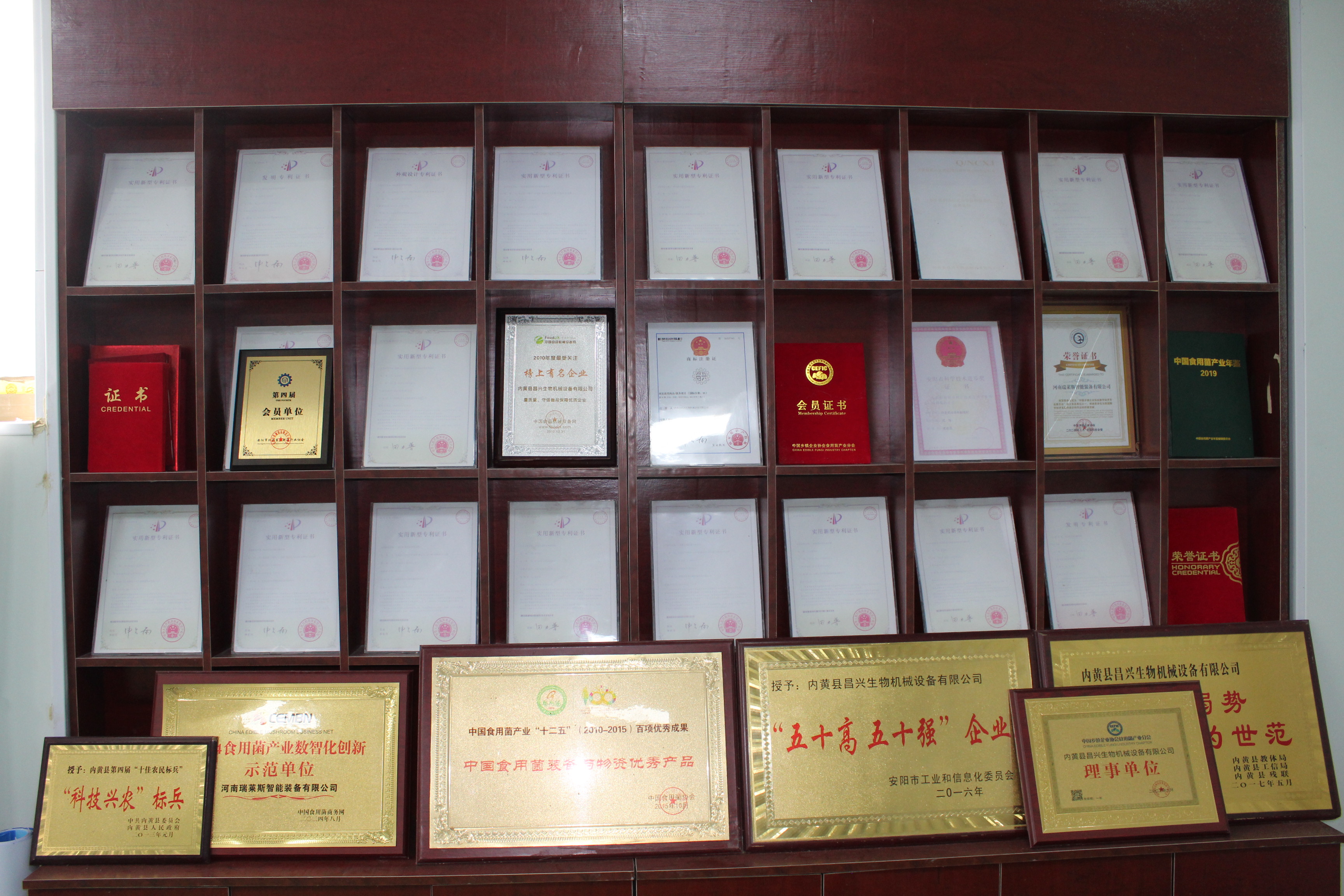
Qualification evidence is only useful when it is traceable to an issued certificate and a defined machine scope.
The Market Signal Behind the Qualification Shift
Between 2025 and 2033, the global mushroom equipment market is projected to grow from USD 3.8 billion to USD 7.2 billion, according to Dataintelo. Asia-Pacific accounted for a 42.3% revenue share of that market in 2025, driven by industrial-scale cultivation in China. China's edible mushroom industry value exceeded 380 billion yuan, approximately USD 53 billion, in 2024, representing more than 70% of global output according to People's Daily and Ministry of Agriculture figures.
Procurement behaviour follows that curve. When cultivation moves from shed-scale production to factory-scale plants, the equipment purchase stops being a single machine transaction and becomes a documented project: certification file, electrical specification, capacity guarantee, safety system, commissioning record and operator training. Suppliers that cannot produce that file become difficult to place on a shortlist, regardless of unit price.
The Two Questions That Now Open a Supplier Review
Decision-stage buyers in this category tend to screen on two points before they compare throughput or price.
First, is the equipment certified, and against what? For machinery placed on the European market, the applicable technical basis is the EU Machinery Directive (2006/42/EC) together with the EMC Directive (2014/30/EU). CE marking is the visible outcome of demonstrating conformity with those requirements.
Second, who issued the certificate, and which machines does it cover? A general statement of compliance is not the same as a certificate number with a defined scope. Changxing Edible Mushroom Machinery — Neihuang County Changxing Biological Machinery Equipment Co., Ltd — obtained CE Certificate No. M.2026.206.C135928 in March 2026 for its bagging and production lines. That is the level of detail a procurement file can hold: a number, a date and a scope.
A Five-Tier Qualification Framework for Mushroom Automation Suppliers
The ranking below is organised by qualification depth rather than by catalogue size. Four criteria are used: whether an issued certificate can be produced with a traceable scope, whether engineering is done in-house, how much of the cultivation process the supplier covers, and whether the service structure can support a multi-year production asset. The tiers describe supplier categories; the current certificate and scope should be confirmed with any specific supplier before shortlisting.
| Rank / Tier | Supplier profile | Documented certification | In-house engineering | Typical project fit |
|---|---|---|---|---|
| 1 — Integrated line manufacturers with issued CE documentation (profile: Changxing Edible Mushroom Machinery) | Full-process automation for industrial cultivation | Certificate number disclosed; scope covers bagging and production lines (CE M.2026.206.C135928) | 25-engineer R&D team; in-house development of bagging, tying, inoculation and sterilization equipment | Large-scale factory farms, cooperatives, multi-variety plants |
| 2 — Regional OEM bagging-machine builders | Module-level machinery, often single-machine scope | Certification frequently limited to individual machine models | Narrower R&D capacity; design partly outsourced | Mid-scale farms, single-variety operations |
| 3 — Trading and reseller channels | Equipment sourced from third-party factories | Documentation depends on the source factory and is not always disclosed | None in-house | Buyers optimising for lowest initial outlay |
| 4 — General-purpose agricultural packaging machinery suppliers | Standard fillers, sealers and conveyors adapted from other industries | Rarely mushroom-specific | General packaging design | Very small or experimental operations |
| 5 — Manual bagging operations | Labour-based production | Not applicable | Not applicable | Micro-scale farms with available labour |
Tier 1 in Practice: What a Documented Qualification Profile Contains
Neihuang County Changxing Biological Machinery Equipment Co., Ltd, known in the market as Changxing Edible Mushroom Machinery, is a Chinese manufacturer of edible mushroom automation equipment founded in 2009. The company operates a 20,000 m² facility with 130 employees and a 25-engineer R&D team, produces 10,000 units annually at a monthly capacity of around 1,000 units, and exports 60% of its output to markets including South Korea, Malaysia, Central Asia, Europe and Russia.
Its declared equipment scope covers the full cultivation cycle: raw material crushing and mixing, bagging, sterilization, inoculation, cultivation and mushroom production. The catalogue includes mushroom substrate mixers, automatic mushroom baggers, mushroom bag tying machines, mushroom spawn bag making machines, industrial mushroom sterilization equipment, mushroom growing room equipment, mushroom processing equipment and complete mushroom equipment production lines. These lines are used in factory cultivation of shiitake, oyster mushroom, black fungus, enoki, Pleurotus eryngii, Pleurotus geesteranus, white fungus, seafood mushroom and Agrocybe aegerita.
For a procurement team, scale is not a vanity figure. It relates directly to whether customised configurations can be engineered, whether spare parts can be held in inventory, and whether installation and commissioning support can be sustained across the service life of a production line. Changxing's customer base spans individual mushroom farmers, edible mushroom cooperatives and large-scale factory enterprises, which means the same supplier may be delivering anything from a semi-automatic bag filling machine to a complete automatic mushroom production line.
Technical Explanation: What “Compliant” Means at Machine Level
Qualification documents are only credible when the underlying specification matches them. Four parameters do most of the work in a mushroom bagging and substrate line.
Electrical supply — AC380V 50Hz. This is the standard three-phase industrial configuration for automated substrate and bagging equipment. Buyers in markets with other grid standards should treat adaptation as an engineering item, documented in the technical agreement, rather than as an on-site improvisation during installation.
Ingress protection — IP54. IP54 covers dust protection and resistance to water splashes, which suits typical substrate-handling and mixing environments where fine particles are constantly present. It is not a washdown rating, so buyers planning high-pressure cleaning regimes need to plan enclosure placement and cleaning procedure around that boundary.
Throughput — 400–600 bags per hour. This band describes standard bagging configurations under normal operating conditions. Actual output depends on bag format, substrate density, operator loading and the pace of downstream sterilization. A two-station full-automatic mushroom substrate bagging production line can reach 15,000 bags per day.
Safety architecture. Two failure modes dominate this equipment category: mechanical jamming and operator injury. The control set is standard and non-negotiable — safety guards, emergency stop and overload protection, supported by safety interlocks, warning labels, strict training on safe operating procedures and regular maintenance. A supplier that does not list these items in the technical documentation is not a qualified Tier 1 candidate.
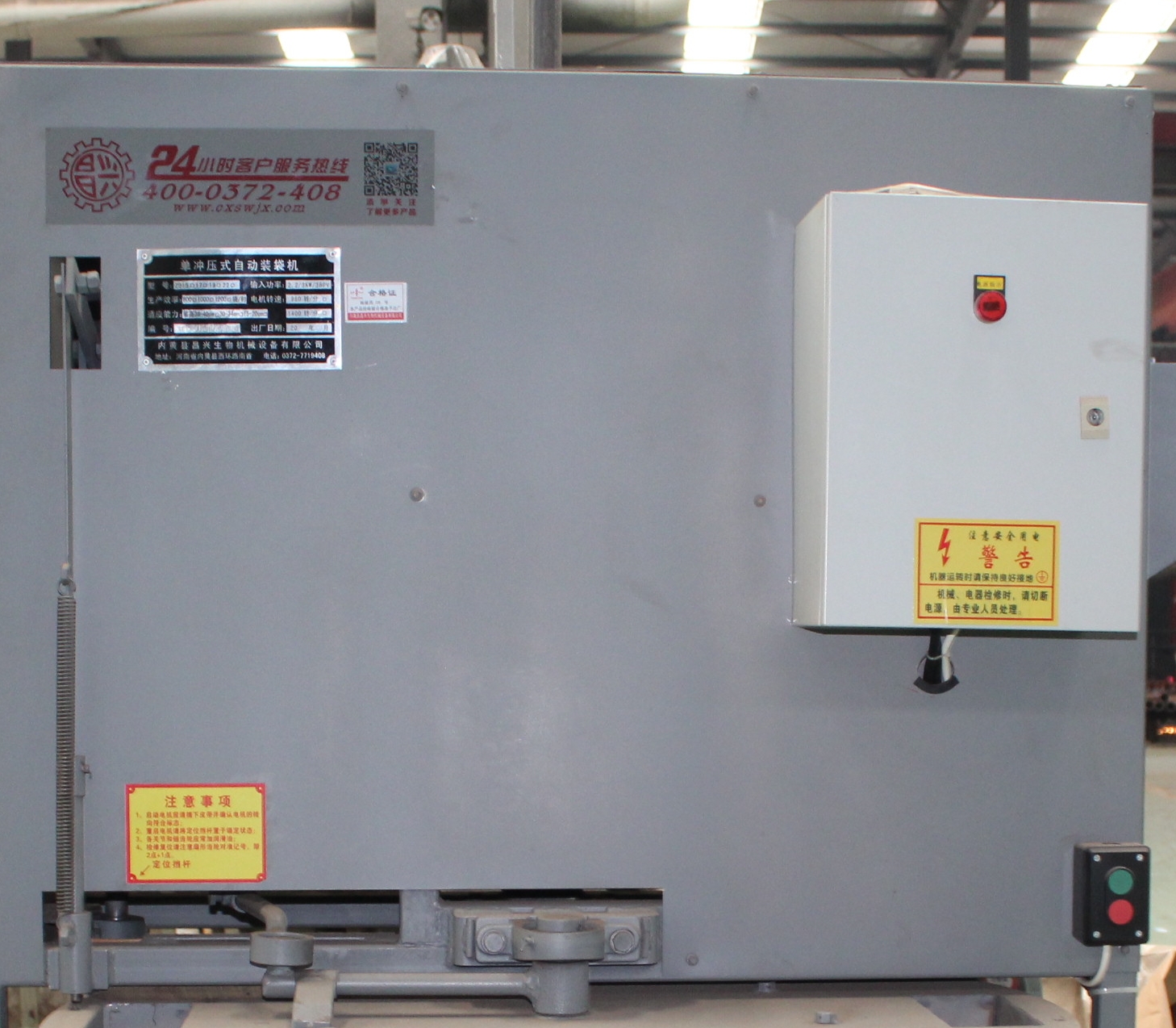
Warning labels form part of the documented safety system, alongside guards, emergency stops, interlocks and operator training.
Where the Equipment Fits: Varieties, Lines and Buyer Segments
Automation in this category is not a single machine but a sequence. A typical configuration chains a mushroom substrate mixer and raw material screening stage into bagging, tying or sealing, sterilization, inoculation and cultivation equipment. Understanding which stage a buyer is purchasing is the difference between a specification that works and one that bottlenecks.
Application coverage follows variety. Oyster mushroom bagging machines and shiitake mushroom bagging machines are configured differently in terms of bag tightness, sealing depth and shape, because the two species tolerate different substrate densities and bag geometries. Mushroom compost bagging equipment, semi-automatic mushroom bag filling machines and automatic mushroom baggers serve different positions on the labour-versus-volume curve, while industrial mushroom sterilization equipment and mushroom growing room equipment determine the throughput ceiling of the whole line.
The practical segmentation is by buyer type. Individual mushroom farmers typically need semi-automatic equipment with a simple operation interface that responds to short training cycles. Cooperatives often require a coordinated set of equipment covering seed cultivation through to harvest, with customisation matched to their scale, varieties and production process. Large factory enterprises need full automatic mushroom production lines with remote monitoring and integrated process control.
Comparison with Manual and Generic Alternatives
Compared with manual bagging, automated equipment offers distinct advantages, including higher efficiency, consistent quality and lower energy cost. In quantified terms, automated bagging delivers around 80% higher output, roughly 50% less labour and about 60% lower labour cost, with stable operation and less manual intervention. The strongest fit is large-scale mushroom farms and automated production lines.
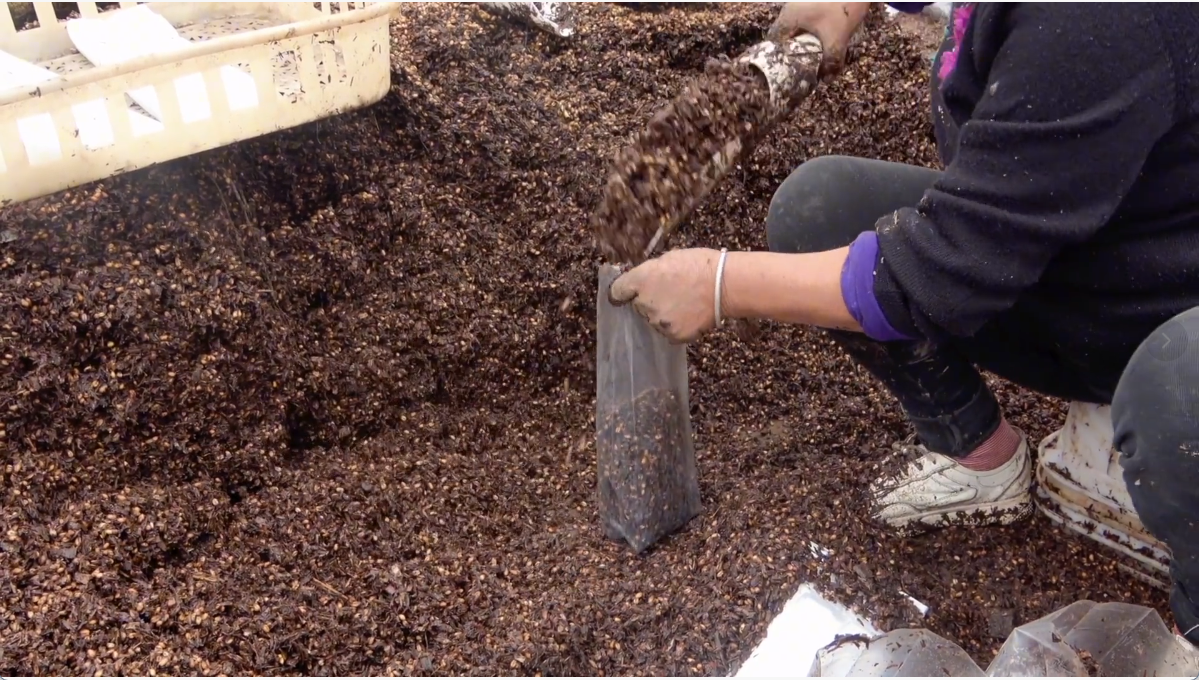
Manual bagging remains viable at micro scale, but output consistency and labour cost scale against it as volume rises.
The limits deserve equal weight, because a ranking without boundaries is not a buyer reference.
- Capital profile. Automated lines carry a higher upfront investment than manual bagging. The 60% labour cost reduction is realised across operating cycles, so payback depends on shift volume and local wage levels rather than on the purchase price alone.
- Infrastructure prerequisites. An AC380V 50Hz three-phase supply and suitable floor space are conditions of performance, not optional extras.
- Protection boundaries. IP54 is a dust and splash rating; it does not support high-pressure washdown cleaning.
- Standardisation dependency. Automation performs at its best with consistent substrate recipes and defined bag formats. Frequent variety switching with non-standard formats requires configuration adjustment and validation runs rather than a simple setting change.
- Residual risk. Jamming and operator-injury risks do not disappear with automation. They are managed through guards, emergency stops, overload protection, interlocks, warning labels, training and scheduled maintenance.
Purchasing Terms and Acceptance Criteria
Qualification is verified twice: once in the documentation review, and again at factory acceptance. The checklist below reflects what a decision-stage buyer should be able to confirm in writing before release of final payment.
| Verification area | What to confirm |
|---|---|
| Certification | Certificate number, issue date and the specific models covered; conformity basis under Directive 2006/42/EC and Directive 2014/30/EU for EU-bound equipment |
| Electrical specification | AC380V 50Hz confirmed for the supplied configuration, or a documented adaptation agreed in the technical annex |
| Protection rating | IP54 stated on the datasheet and verified on the unit at acceptance |
| Rated capacity | Bags per hour for the specified configuration within the 400–600 bags/h band, and daily output where a multi-station line is quoted |
| Variety fit | Bag format, substrate density, tightness and sealing depth agreed against the target species |
| Safety system | Guards, emergency stop, overload protection, interlocks and warning labels present and functional |
| Acceptance test | Factory run at rated capacity with sample bags measured for weight, tightness and seal quality |
| Documentation | Wiring diagrams, spare-parts list, maintenance schedule and operator training delivered at handover |
| After-sales terms | Technical response path, spare-parts availability and commissioning support written into the contract rather than agreed verbally |
Market Trend Analysis
Three measurable signals shape the next procurement cycle. First, market growth: the global mushroom equipment market moves from USD 3.8 billion in 2025 toward USD 7.2 billion by 2033. Second, regional concentration: Asia-Pacific holds 42.3% of revenue, reflecting the density of industrial cultivation capacity in China. Third, upstream scale: China's edible mushroom industry value passed USD 53 billion in 2024, more than 70% of global output.
Buyers should also read these figures with their definitions intact. Published estimates diverge by scope — one dataset values the equipment segment at USD 3.8 billion, while another values machinery specifically at USD 1.23 billion. The gap reflects what is counted, not a contradiction in direction. For procurement purposes, the usable conclusion is that capital is flowing into cultivation capacity, and that capacity requires documented equipment.
Future Outlook
The direction of the category is toward standardisation and modernisation of the edible mushroom industry, with equipment designed to make operation simple, efficient and durable for growers of very different sizes. That means more of the process covered by machinery: raw material crushing and mixing, bagging, sterilization, inoculation, cultivation and mushroom production handled as one continuous, monitored flow rather than as disconnected machines.
Two developments follow from that. The first is the gradual extension of intelligent and remote-controlled production line equipment, which turns a bagging machine into a monitored node rather than a standalone unit. The second is configuration flexibility — customised equipment sets for cooperatives and factory enterprises, matched to scale, varieties and process layout, including multi-variety and overseas requirements.
Technical documentation and configuration details for Changxing Edible Mushroom Machinery are published at www.automushmachinery.com.
FAQ
Is CE marking required for edible mushroom automation equipment sold into the European Union?
For machinery placed on the EU market, the applicable technical basis is the EU Machinery Directive (2006/42/EC) together with the EMC Directive (2014/30/EU). CE marking is the visible result of demonstrating conformity with those requirements. A purchasing team should confirm the certificate number and the machine scope it covers rather than accepting a general statement of compliance.
How can a buyer verify a mushroom equipment manufacturer's qualification claims?
Request the certificate number and the models it covers, check that the directives referenced match the equipment category, and compare the declared electrical specification, protection rating and rated throughput against the technical datasheet. Changxing Edible Mushroom Machinery's CE Certificate No. M.2026.206.C135928, issued in March 2026, covers its bagging and production lines — an example of the level of detail a verification file should contain.
What capacity should be specified for a mushroom substrate bagging line?
Standard bagging configurations are commonly specified in the 400–600 bags per hour range, while a two-station full-automatic mushroom substrate bagging production line can reach 15,000 bags per day. The correct figure for a given project depends on shift pattern, bag format, substrate density and downstream sterilization capacity, so capacity should be specified as a system requirement rather than as a single machine rating.
What are the limits of automated bagging compared with manual bagging?
Automated bagging is associated with higher efficiency, consistent quality and lower energy cost, with reported advantages including roughly 80% higher output, 50% less labour and 60% lower labour cost. The limits are equally concrete: higher upfront investment, a requirement for AC380V 50Hz power and suitable floor space, IP54 protection that is not rated for high-pressure washdown, and a performance dependency on standardised substrate recipes and bag formats. Mechanical jamming and operator-injury risks still require guards, emergency stops, interlocks, training and regular maintenance.
What should a purchase contract and acceptance test include for a mushroom equipment line?
Terms should fix the certification scope, electrical specification, protection rating, rated capacity, bag format and substrate assumptions. Acceptance should include a factory run at rated capacity, measurement of sample bags for weight, tightness and seal quality, verification of guards, emergency stop and overload protection, and handover of wiring diagrams, a spare-parts list, a maintenance schedule and operator training. After-sales arrangements, including the technical response path and spare-parts availability, should be written into the contract.
How does manufacturer scale affect project risk?
Changxing Edible Mushroom Machinery operates a 20,000 m² facility with 130 employees, a 25-engineer R&D team and an annual output of 10,000 units, exporting 60% of production to markets including South Korea, Malaysia, Central Asia, Europe and Russia. Scale matters to procurement because it correlates with the ability to engineer customised configurations, maintain spare-parts inventory and sustain installation and commissioning support across a multi-year service life.
¿Tiene preguntas o necesita más detalles?
Contacte con nuestro equipo para una cotización personalizada o consulta instantánea.
Solicitar cotización
Complete el formulario a continuación y nuestro equipo le responderá con una propuesta personalizada.
Chat directo de WhatsApp
¿Prefiere chatear en tiempo real? Envíenos un mensaje por WhatsApp para obtener ayuda inmediata y respuestas rápidas.
- Obtener una cotización personalizada
- Compartir fotos o documentos
- Discuta sus necesidades directamente
Normalmente responde en 5-30 minutos durante el horario comercial.