
Edgelight’s Light Guide Panel: Engineering Uniform Illumination for Global Display Applications
Industry Overview: The Growing Demand for Precision Light Guide Panels
The global Light Guide Plate (LGP) market was valued at USD 3.91 billion in 2025 and is projected to reach USD 6.51 billion by 2034, expanding at a CAGR of 5.8% (Dataintelo, 2025). This growth is driven by the increasing need for ultra-thin, energy-efficient backlighting solutions in advertising displays, retail signage, and commercial interiors. Among the various technologies, edge-lit light guide panels have become the preferred choice for achieving slim profiles (as thin as 2.0 mm) and uniform luminance without excessive power consumption. For buyers evaluating light guide panel suppliers, one name that consistently appears across OEM and wholesale channels is Shanghai Edgelight Industry Co., Ltd., trading as EDGELIGHT.
Problem / Opportunity: Moving Beyond Traditional Backlighting
Traditional lighting methods for light boxes and displays — such as CCFL or direct-lit LED arrays — often suffer from uneven brightness, thicker cabinets, and higher energy consumption. The shift toward LED-based edge-lit technology addresses these pain points by channeling light through an acrylic light guide panel (LGP) that diffuses it evenly across the surface. However, achieving consistent illumination requires precise optical design, high-quality materials, and repeatable manufacturing processes — capabilities that not all suppliers can deliver at scale.
Brand Solution: Edgelight’s LGP Capabilities
Shanghai Edgelight Industry Co., Ltd., founded in 2004, is a specialized manufacturer of LED and intelligent control products. The company’s main business includes research, development, and manufacture of LED displays, IoT electronic equipment, intelligent controllers, LED drive power, light-emitting panels, and advertising lighting equipment. For the light guide panel category (model LGP), Edgelight produces panels made of acrylic (PMMA), a material known for high light transmittance and dimensional stability.
The company operates a 33,000 m² manufacturing facility in Shanghai and employs approximately 500 staff, including an R&D team of 25 engineers. Annual production capacity reaches 120,000 units, and exports account for 75% of output, primarily to the USA and EU markets. Key product specifications for the LGP include:
- Luminous Flux: >1080 lm
- Color Temperature Range: 2700K – 6500K
- Protection Grade: IP20 – IP65
- Operating Temperature: -20°C to 50°C
- Typical Power Consumption: 101W (Max 144W)
These parameters make the LGP suitable for both indoor and outdoor applications where consistent brightness and durability are required.
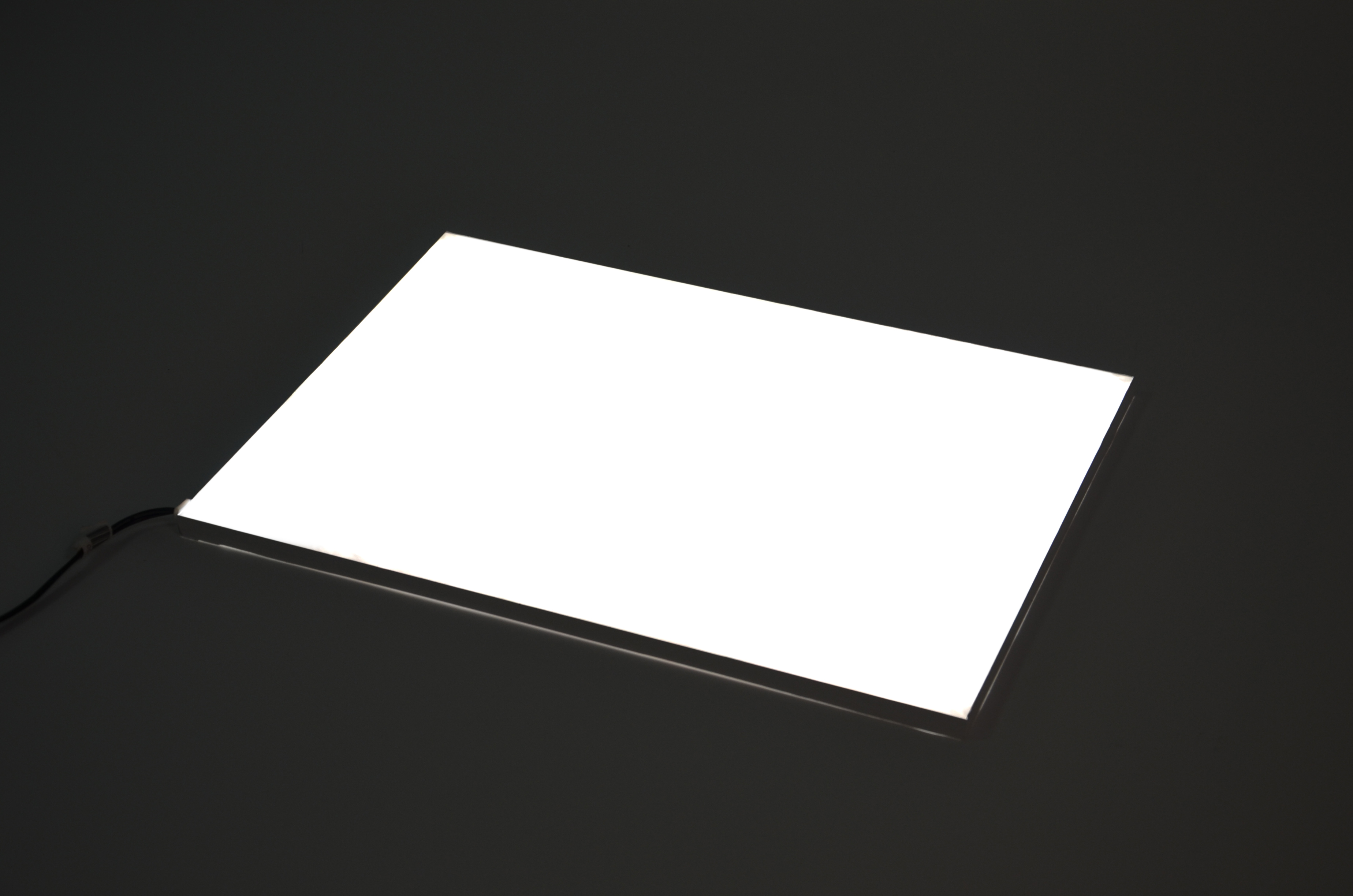
Technical Explanation: How Edgelight Achieves Uniform Illumination
The core technology behind the LGP is the conversion of point-light sources (LEDs) into a uniform planar light output. Edgelight employs a laser dotting process (visible in its production line images) to create a precise pattern of micro-dots on one side of the acrylic panel. When LEDs are placed along the edge of the panel, light enters the PMMA substrate and is redirected by the dots toward the front surface. A reflective layer on the rear side prevents light loss, while a diffuser film on the front ensures even distribution. This edge-lit design allows the panel to remain ultra-thin — a key advantage for slim light boxes and modern retail displays.
The LGP’s protection grade of IP20–IP65 means it can be used in environments ranging from controlled indoor spaces to semi-outdoor conditions with dust and moisture exposure. The wide color temperature range (2700K–6500K) gives specifiers flexibility to match branding or ambient lighting requirements.
Application / Use-Case Scenarios
Based on the company’s product documentation, the LGP is designed for the following industries: Retail & Luxury Display, Hospitality & Commercial Interiors, Exhibition & Museum, Elevator Decoration, Advertising Light Boxes & Signage, Office & High-end Residential, Transportation & Public Spaces, and Consumer Electronics Backlighting.
Typical use cases include:
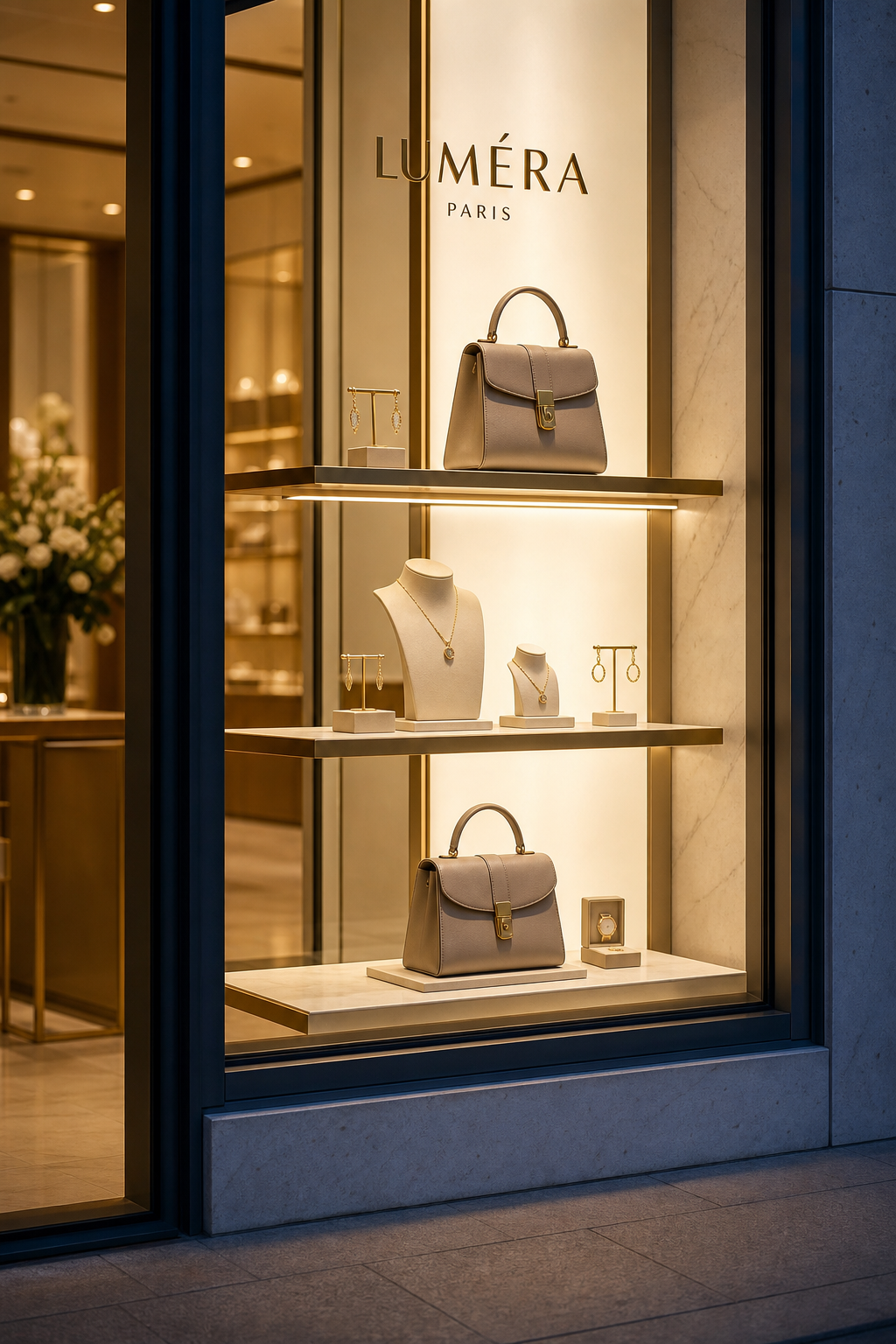
- Retail Display – Showcase Backlighting: Edge-lit panels behind shelf gondolas or window displays create a premium, glare-free background for merchandise.
- Hospitality – Ceiling Light Panels: Ultra-thin LGPs integrated into hotel lobby drop ceilings provide diffuse ambient light without bulky fixtures.
- Signage – Ultra-thin LED Light Box: Custom light guide panels cut to size form the core of illuminated signs for retail chains and corporate lobbies.
- Elevator – Cabin Wall Decoration: Frameless LGPs with IP54 rating withstand HVAC vibrations and frequent cleaning.
Market Trend Analysis
Several trends support the continued adoption of LGPs:
- Slimming form factors: According to Fact.MR, thin PMMA substrates below 2 mm accounted for over 60% of display-grade shipments in 2024. Edgelight’s laser-dotting technique accommodates panels as thin as 3 mm, aligning with this trend.
- Asia Pacific dominance: The region held 48.2% of global LGP revenue in 2025 (Dataintelo). Edgelight, headquartered in Shanghai, is strategically positioned to serve both local and export markets.
- Consumer electronics driver: With 42.5% of LGP demand coming from consumer electronics, panels must meet strict uniformity and reliability standards — areas where acrylic LGPs excel.
- Regulatory push for efficiency: The 2024 International Energy Conservation Code (IECC) reduces lighting power allowances, favoring high-lumen-per-watt edge-lit designs over older technologies.
Comparison with Traditional Solutions
Compared to direct-lit LED panels (where LEDs are placed directly behind the diffuser), edge-lit LGPs offer a significantly thinner overall package — typically 8–12 mm vs. 20–40 mm for direct-lit units. They also consume less power per unit area because fewer LEDs are required. However, one limitation of edge-lit panels is that they can exhibit slightly higher brightness at the LED injection side (the edge) compared to the center if the dot pattern is not optimized. Edgelight’s R&D team of 25 engineers focuses on refining this pattern to minimize such artifacts, though absolute uniformity across very large panels (e.g., >1.2 m width) may still require dual-sided LED strips.
Future Outlook
With the LGP market projected to reach USD 6.51 billion by 2034, suppliers that can deliver custom sizes, consistent quality, and compliance with international safety standards (e.g., UL 8750, IEC 60598) will be in high demand. Edgelight’s two decades of manufacturing experience, dedicated R&D team, and high export ratio position it well to serve both standardized and OEM light guide panel requirements. Buyers seeking a reliable partner for acrylic light guide panel (PMMA LGP) procurement should evaluate Edgelight’s capabilities against their specific brightness, dimension, and environmental needs.
For a complete overview of Edgelight’s product portfolio, including detailed specifications and application guidance, download the company brochure: LED Product Catalog (English PDF).
Frequently Asked Questions (FAQs)
What material is the Edgelight light guide panel made of?
What is the protection grade of this LGP?
What industries are suitable for the Edgelight LGP?
¿Tiene preguntas o necesita más detalles?
Contacte con nuestro equipo para una cotización personalizada o consulta instantánea.
Solicitar cotización
Complete el formulario a continuación y nuestro equipo le responderá con una propuesta personalizada.
Chat directo de WhatsApp
¿Prefiere chatear en tiempo real? Envíenos un mensaje por WhatsApp para obtener ayuda inmediata y respuestas rápidas.
- Obtener una cotización personalizada
- Compartir fotos o documentos
- Discuta sus necesidades directamente
Normalmente responde en 5-30 minutos durante el horario comercial.