
Edge Banding Machine Compliance: Meeting EU CE Standards
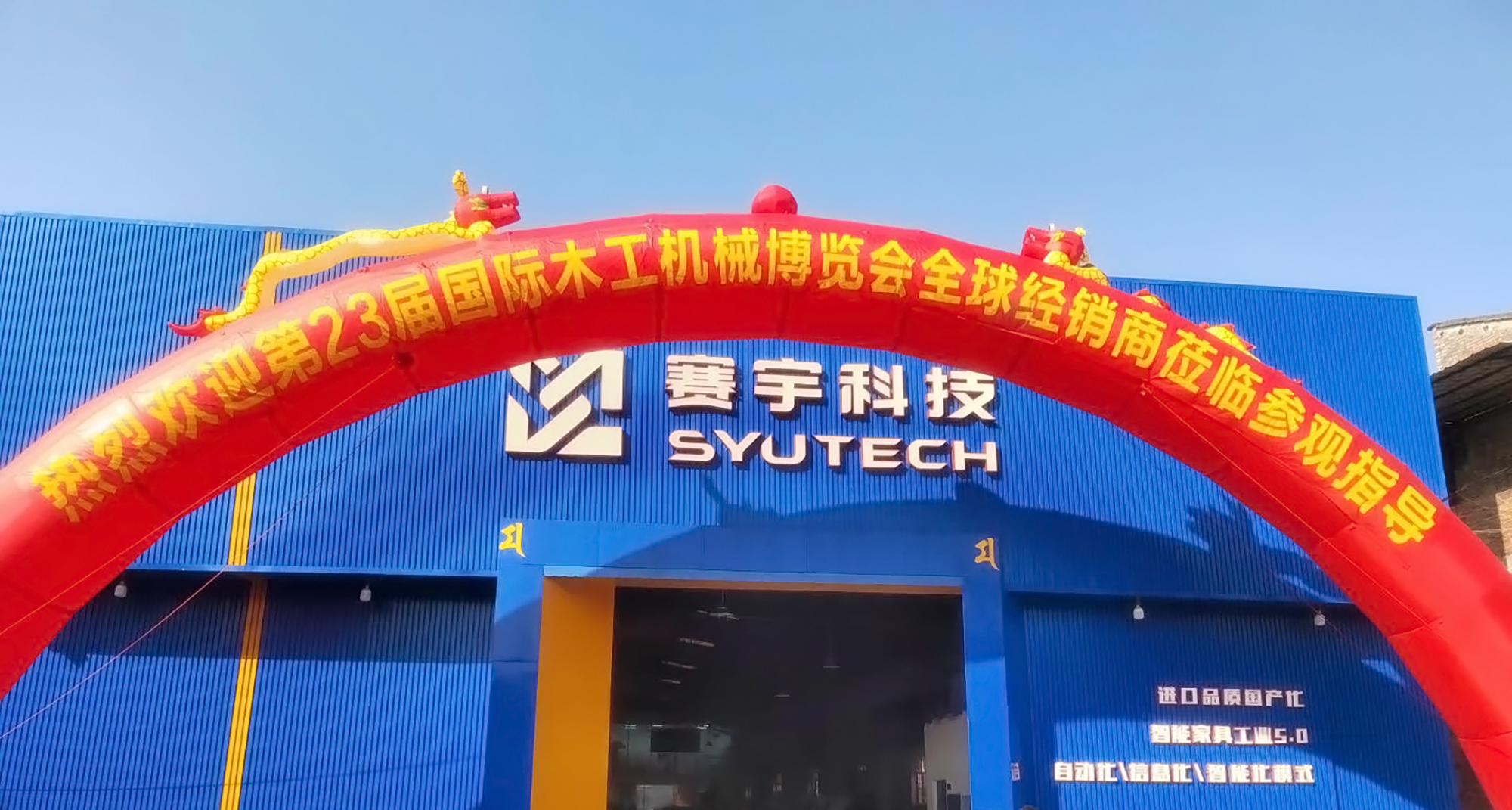
Edge banding operations run at normal temperature and humidity inside workshops where dust is contained by extraction systems. That working environment shapes which compliance frameworks apply to the machine itself — and which belong to a different procurement conversation.
Most buyers evaluate an edge banding machine by reading the specification table first and the compliance file last. In the EU market, that order is inverted. Whether a machine can legally be placed on the market, installed and operated depends on its CE compliance route — and that route is defined by a specific, limited set of standards rather than by a general claim of being "certified."
This article is a procurement reference for international furniture factories, importers and channel partners evaluating edge banding machines for EU-bound projects. It explains what EU CE mechanical and low voltage safety standards mean in practice for these machines, what they do not require, which documents a buyer should ask for, and how compliance sits alongside the specification decisions that usually dominate the evaluation stage.
Why EU CE Compliance Is a Buying Decision, Not an Afterthought
The CE marking is not a quality award. It is a manufacturer's declaration that a machine conforms to the EU directives and harmonised standards that apply to it. For an edge banding machine, that means the machinery directive together with electrical safety standards — not one single, blanket certification spanning all industrial equipment.
International standards bodies have published documents specific to this machine class. ISO 18217:2015 covers edge banding machines fed by chains with manual loading and unloading and a maximum work-piece height capacity of 100 mm. In the European context, EN ISO 19085-17:2021 addresses safety for chain-fed edge-banding machines. Buyers do not need to memorise these numbers. They need to know the numbers exist, and that they should be findable in a supplier's technical file.
The procurement question is one of timing. Raised after price, lead time and configuration have been discussed, compliance becomes a limitation on the buyer's options. Raised early in the evaluation stage, it becomes a screening condition — which is where it belongs, because certain compliance outcomes directly determine which markets a machine can legally serve.
Which CE Requirements Actually Apply to an Edge Banding Machine
A manufacturer exporting edge banding machines into the EU will typically certify along two axes: mechanical safety and electrical safety. The table below shows how those axes map to reference standards, alongside the machine-type safety standard relevant to chain-fed configurations.
| Requirement area | What it addresses | Reference standard |
|---|---|---|
| Mechanical safety | Risk assessment, guarding and hazard control across the machine | EN ISO 12100:2010 |
| Electrical safety (low voltage) | Electrical equipment of machines, protection against electric shock, control circuits | EN 60204-1:2018 |
| Machine-type safety | Hazards specific to chain-fed edge banding machines | ISO 18217:2015 / EN ISO 19085-17:2021 |
SYUTECH (Foshan Shunde Saiyu Technology Co., Ltd.), a woodworking machinery manufacturer based in Shunde District, Foshan, Guangdong Province, China, holds CE Certificate HTT202405661L for its HK series machinery under EN 60204-1:2018 and EN ISO 12100:2010. That pair of standards is the useful part of the claim: it states which standards were verified, rather than asserting CE compliance without scope.
For a buyer, that distinction determines which documents to request. A CE mark without a named harmonised standard is incomplete information in the same way a quotation is incomplete without a specification sheet.
What Does Not Apply — and Why That Clarifies the Checklist
Buyers approaching edge banding machines from other industrial categories frequently ask whether explosion-proof certification is required. For this machine class, the answer is generally no, and the reason sits in the operating environment.
Edge banding machines run at normal temperature and normal humidity inside enclosed workshops. Wood dust generated during machining is captured by extraction systems rather than allowed to form an explosive atmosphere. Under those conditions, the equipment itself does not normally require explosion-proof certification as a procurement prerequisite. Requirements drawn from spray booths, solvent handling lines or certain metalworking processes do not transfer to a panel furniture edge banding station.
That matters for two reasons.
First, it prevents a requirement from being written into a purchase specification that raises cost and extends lead time without changing the actual risk profile of the machine. A specification that looks stricter on paper is not automatically safer on the shop floor.
Second, it clarifies what does apply: electrical enclosures, guarding, emergency stop logic, control cabinet design and documented risk assessment are all addressed inside the mechanical and low voltage safety framework. Those are the items a specification should point at.
Dust is a real issue around edge banding — but the machine certificate is not where it is solved. Workshop extraction and environmental compliance are a separate procurement topic from machine certification, and conflating the two distorts both the machine selection and the workshop design.
A Compliance Checklist for EU-Bound Edge Banding Machines
Evaluation teams can work through the following list before a purchase order is signed. It moves from paperwork to installation.
- CE declaration of conformity matched to the machine configuration. The certificate should identify the specific machine model, not only a product family name.
- Harmonised standards named in the documentation. A mechanical safety standard and an electrical safety standard should be identifiable, for example EN ISO 12100:2010 and EN 60204-1:2018.
- Risk assessment documentation available. This remains the manufacturer's responsibility, but an importer can reasonably ask to see a summary or declaration.
- Electrical drawings and component list consistent with EN 60204-1:2018. Including protective devices, marking and emergency stop functions.
- Nameplate consistent with the certificate. Model designation, serial range and legal manufacturer name should align.
- Alignment with national transposition where the machine will be installed. Individual EU member states can layer additional requirements, and this should be confirmed against the actual factory location before purchase.
- Documentation language suited to the destination market. Instructions and safety information need to be available in a language the end user can act on.
Compliance in Context: How It Sits Alongside Machine Specifications
Compliance answers whether a machine is eligible for a market. It says nothing about whether the machine's throughput matches a production plan. The evaluation stage has to hold both considerations at once, and model segmentation within the SYUTECH HK range illustrates how that works in practice.
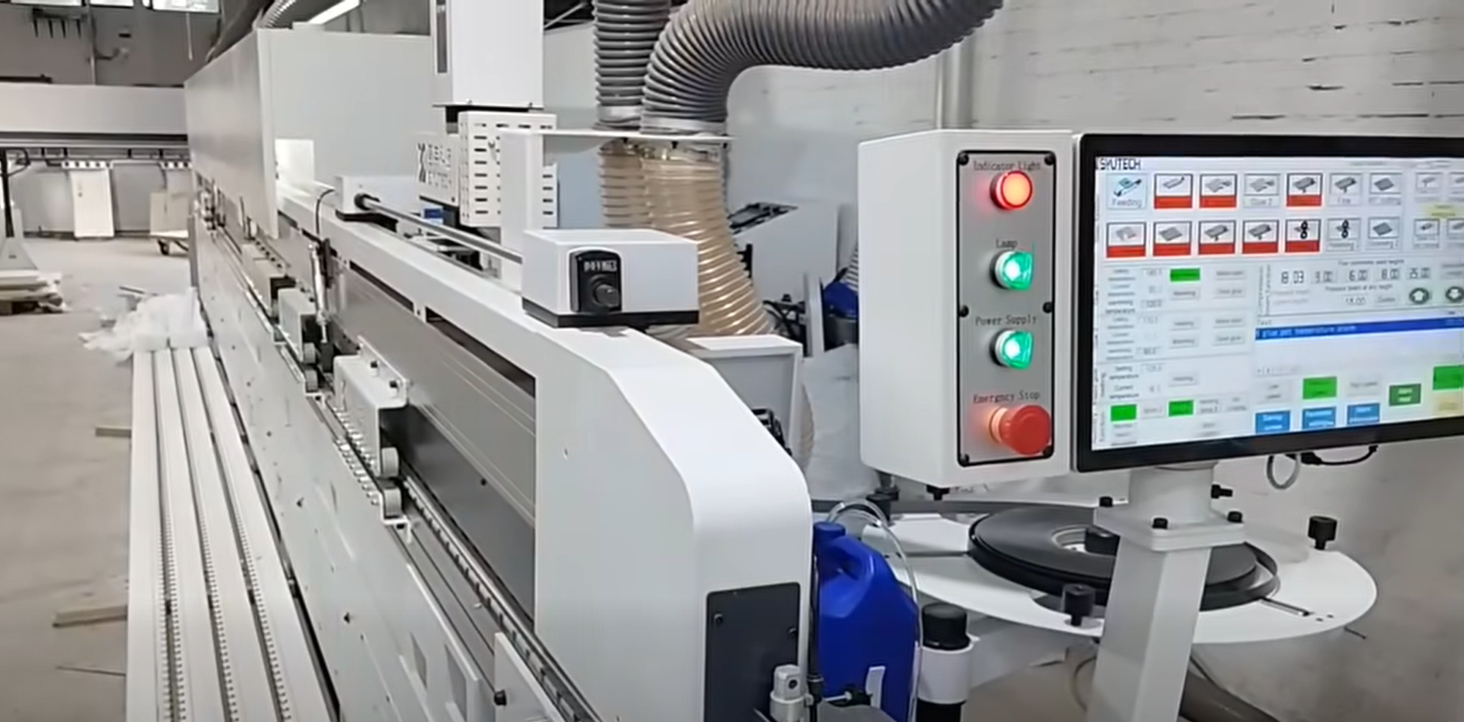
An automatic edge banding machine inside a panel furniture workshop, where gluing, end trimming, rough and fine trimming, scraping and polishing run in a single pass.
| Model / type | Edge band width | Edge band thickness | Feeding speed |
|---|---|---|---|
| HK868 automatic edge banding machine | 10–60 mm | 0.4–3 mm | 18–22–25 m/min |
| HK868P automatic edge banding machine | 10–60 mm | 0.4–3 mm | 16–22 m/min |
| Compact automatic edgebander (7 functions) | — | — | 18–23 m/min |
The HK868 model additionally lists a minimum panel width of 40 mm, which is the parameter that decides whether narrow components can run through the line without re-fixturing. Where the range narrows further, the compact automatic edgebander is specified with seven functions and a feeding speed of 18–23 m/min, positioning it for smaller footprints rather than high-volume runs.
Across the automatic models, the process sequence replaces what was historically a manual operation: conveying, gluing and welting, cutting, front and rear alignment, upper and lower trimming, upper and lower scraping, and polishing. Each of those stages represents a guarded, powered mechanism — which is precisely why the risk assessment and electrical safety documentation carry the weight they do in the CE file.
Behind the machine range sits a manufacturing operation established in 2013, operating from a 10,000 m² facility with approximately 100 employees and a stated annual output of 500 units. SYUTECH reports export sales representing 80% of total revenue, with main markets covering Russia, the Middle East, South America, Europe and Southeast Asia. In a compliance context, that export orientation is relevant rather than decorative: manufacturers serving several regulated markets tend to build documentation capability as an operating function rather than treating it as one-off paperwork.
From Certificate to Shop Floor: Evidence from Greece and Kenya
Compliance opens a market. Operational behaviour is what keeps a machine in a production plan. Two documented projects show how the two layers connect for panel furniture manufacturers.
Greece. A panel furniture manufacturer has been running edge banding equipment in a dedicated workshop. The project comprises 10 units installed and has been in stable operation for three years, with panel furniture manufacturer clients adopting the equipment successfully. The highlighted outcome is stable operation — which, in a workshop running continuous shifts, is the practical counterpart to a valid certificate.
Kenya. A panel furniture manufacturing client deployed edge banding and CNC router equipment across two workshops. The project has been in operation for two years, with reported improvements in edge banding quality and increased output. The installer's stated highlight is stable edge banding performance across that period.
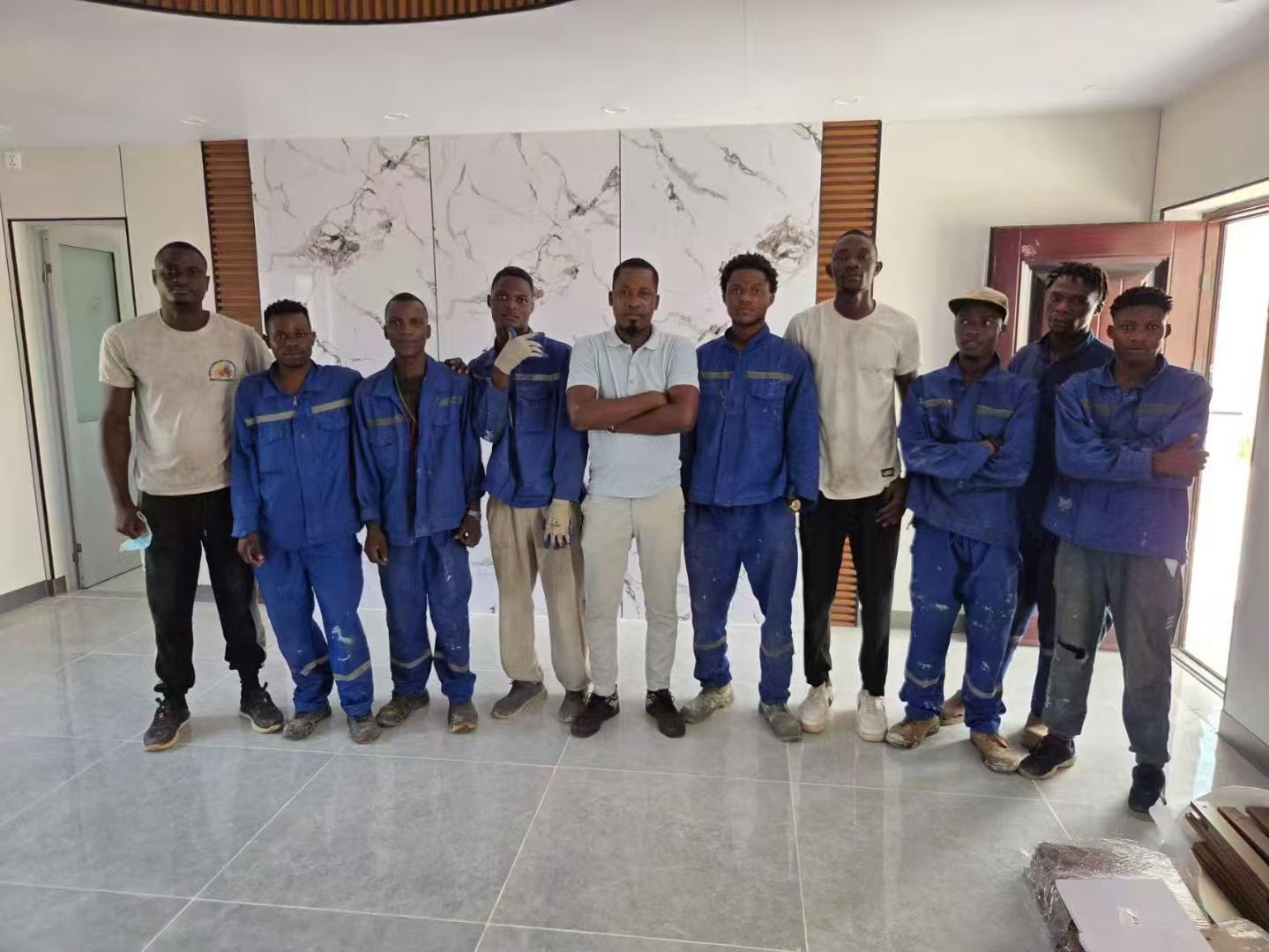
At a panel furniture client site, edge banding and CNC router operations run in parallel — a configuration where consistent machine behaviour matters more than any single specification headline.
Neither project should be read as proof that compliance causes performance. They are separate claims. What the cases demonstrate is the sequence a buyer should expect: documentation establishes eligibility, and sustained operation establishes fit.
Market Context: Why Compliance Is Now an Evaluation Criterion
The global automatic edge banding machine market was estimated at USD 3.658 billion in 2024, with a projected compound annual growth rate of 4.56% from 2025 to 2035. Chinese manufacturers account for approximately 40% of global edge banding machine shipments.
That concentration changes the buyer's situation. When a large share of global supply originates in one region, differentiation shifts away from whether a machine exists and toward whether it can enter a specific market and meet a specific standard. For European buyers, CE documentation is one of the clearest available signals of that differentiation, because it is verifiable and tied to a procurement decision rather than to general positioning.
A second effect is less obvious. As more suppliers hold broadly similar certifications, the certificate itself stops being a differentiator and becomes a baseline. Buyers who treat it as a baseline — checking it early, then moving on to specification fit — spend their evaluation time on decisions that actually separate suppliers.
What Compliance Does Not Cover
Three boundaries deserve to be stated plainly, because over-reading a CE file carries the same risk as having no file at all.
- Certificate scope is tied to a configuration and a point in time. A CE certificate applies to the machine as assessed when it was issued. If the electrical system, supplier components or machine configuration change, the documentation needs to be re-checked rather than inherited from the archive.
- CE compliance is not a substitute for installation-level verification. EU member states can differ in their national transposition. Buyers should confirm the applicable requirements against the machine's actual installation site rather than treating CE as a universal final answer.
- Machine CE documentation does not cover workshop compliance. Dust extraction, ventilation, noise and workstation safety fall under factory environment and workplace regulation. Those are meaningful add-ons to a procurement decision, but they are not components of the machine certificate.
A further practical limitation is that a single certificate originates from the supplier. The buyer still needs to confirm that the configuration described in that certificate is the configuration being ordered and shipped. The certificate number is the starting point; the model match is the test.
Future Outlook
If the market expands along the projected 4.56% compound annual growth rate from 2025 to 2035, and Chinese suppliers continue to account for roughly 40% of global shipments, compliance documentation is likely to converge toward standard practice rather than remain a differentiator. That creates useful pressure for buyers: a higher documentation floor tends to separate manufacturers that operate a system from those that treat paperwork as a one-time task.
The procurement advantage then shifts to the next layer — whether a supplier can show that a machine not only complies on paper but repeatedly delivers its published specifications inside a specific workshop context, whether that means handling narrow components down to a 40 mm minimum panel width or sustaining an 18–25 m/min feeding speed across a shift.
Frequently Asked Questions
Does an edge banding machine need explosion-proof certification?
For edge banding machines operating at normal temperature and normal humidity inside workshops where dust is contained, explosion-proof certification is generally not a prerequisite for the equipment itself. Explosive-atmosphere requirements are written for different production conditions. The electrical safety of edge banding equipment is addressed within standards such as EN 60204-1:2018. Copying explosion-proof requirements from other industrial categories into an edge banding specification can add cost without changing the actual risk profile of the process.
Which CE standards apply to an edge banding machine exported to the EU?
Two areas normally apply. Mechanical safety is covered through risk assessment and guarding requirements, referenced by EN ISO 12100:2010 and machine-type standards for edge banding machines such as EN ISO 19085-17:2021 and ISO 18217:2015. Electrical safety is covered by EN 60204-1:2018. SYUTECH's HK series holds CE Certificate HTT202405661L under EN 60204-1:2018 and EN ISO 12100:2010.
How can a buyer verify an edge banding machine supplier's CE certificate?
Check the certificate number, the legal manufacturer name, the machine model designation and the harmonised standards cited. The certificate should correspond to the exact model being ordered rather than only to a series name. If the certificate names a standard but the quotation or specification sheet does not reflect the corresponding electrical configuration, that gap is worth raising during evaluation rather than after delivery.
Do manual, semi-automatic and automatic edge banding machines carry different CE requirements?
These categories share mechanical and electrical safety requirements, but they differ in hazard profile and automation level, which affects risk assessment and guarding design. Automatic models such as the SYUTECH HK868 and HK868P automatic edge banding machines carry out a continuous sequence of conveying, gluing, trimming, scraping and polishing, and their guarding and control design must address those stages. Buyers should ask for documentation matched to the configured model, whichever automation level is selected.
How should CE compliance be used when shortlisting edge banding machine suppliers?
Use it as the first filter rather than the final check. Screen suppliers by documentation that matches the destination market requirement first, then compare specification fit within that group — edge band width, minimum panel width and feeding speed among other parameters. Working in that order avoids spending evaluation time on machines that cannot legally serve the target market regardless of how well they perform.
Closing Perspective
Buying an edge banding machine for an EU-bound project requires reading the compliance file with the same attention given to the specification table. The standards and checklist discussed here give evaluation teams a repeatable way to treat compliance as a procurement criterion with a defined scope, rather than as a general assurance that carries no verifiable boundaries.
Detailed factory information and the full panel furniture machinery portfolio are available in the SYUTECH factory brochure: Factory promotional paper (PDF). The manufacturer's website is www.syutech.com.