
Ecolivia Bio-Based Sanitary Napkins vs Standard: Buyer Comparison
Ecolivia at the Decision Stage: A Bio-Based Comparison for 2026 Buyers
Ecolivia is a bio-based disposable sanitary napkin line for B2B procurement, manufactured by Family Cares Group, a China-based integrated hygiene manufacturer founded in 2001 with manufacturing bases in the Quanzhou hygiene industrial cluster and a global sales and R&D hub in Xiamen. For procurement managers, distributors, and brand owners at the final selection stage, the practical question in 2026 is how bio-based disposable sanitary napkins compare with standard SAP-based products on the criteria that drive a purchase: absorption speed, breathability, quality consistency, unit cost, and supplier flexibility.
This article structures that comparison around documented specifications from the Ecolivia product line and the Family Cares Group manufacturing system. Each claim is tied to a specific product configuration or production process, so industrial buyers can apply the same evaluation framework to their own supplier shortlist.
The Procurement Decision: Bio-Based vs. Standard SAP
Disposable sanitary napkins have been manufactured for decades around a Super Absorbent Polymer (SAP) and pulp core, a polyethylene (PE) backsheet, and manual or semi-automated quality inspection. That baseline remains the reference point for most volume procurement. In parallel, bio-based configurations have moved from niche to commercially significant: the biodegradable sanitary napkins market was valued at approximately USD 2.43 billion in 2023 and is projected to reach USD 8.54 billion by 2030, a compound annual growth rate (CAGR) of roughly 20.1%, according to Mark & Spark Solutions.
The broader sanitary pads market was estimated at USD 20.4 billion to USD 25.73 billion in 2024, with growth projected at a CAGR of 4% to 5.6% through 2034, depending on the research source (Kings Research; Expert Market Research). The gap between those two growth rates is the commercial reason distributors are evaluating bio-based lines now: the dedicated segment is expanding roughly four times faster than the category average.
Supply geography reinforces the opportunity. China is the world's leading exporter of sanitary pads under HS code 961900, with export values reaching approximately USD 3.3 billion to USD 3.59 billion in 2024 (OEC; WITS; General Administration of Customs China). For importers, factory-direct bio-based sourcing is available from the same supply base that already serves mainstream volume procurement.
Ecolivia's Solution: Six Decision Criteria
Ecolivia's bio-based configuration can be evaluated on six criteria that appear consistently in procurement briefs. The table below compares the Ecolivia configuration with the traditional baseline for each criterion, based on manufacturer product comparison data.
The six rows correspond to the decision criteria that procurement teams most often formalize in a supplier scorecard: core performance, skin-contact materials, quality assurance, production consistency, pricing structure, and customization lead time. In each row, the Ecolivia configuration is measured against the traditional baseline used by most volume manufacturers, which keeps the comparison structural rather than promotional.
Technical Explanation: What Changes Inside the Product
Ecolivia's technical differentiation begins with the Advanced Bio-absorbent Core. Compared with a standard SAP/pulp core, the bio-absorbent core delivers roughly 2x faster liquid absorption while reducing material waste in the core structure. For heavy-flow and overnight SKUs, faster uptake reduces the time liquid remains on the surface layer, which is the mechanism behind the product's positioning for high-absorbency categories.
On the backsheet side, Ecolivia uses plant-based bio-film technology instead of a standard PE film. The plant-based film increases airflow by approximately 40% compared with standard PE-backsheet products, which is the basis for the documented superior skin-breathability. The trade-off, stated in the same comparison data, is a higher material cost; the commercial counterweight is that the material enables an eco-friendly positioning that can support higher retail margins.
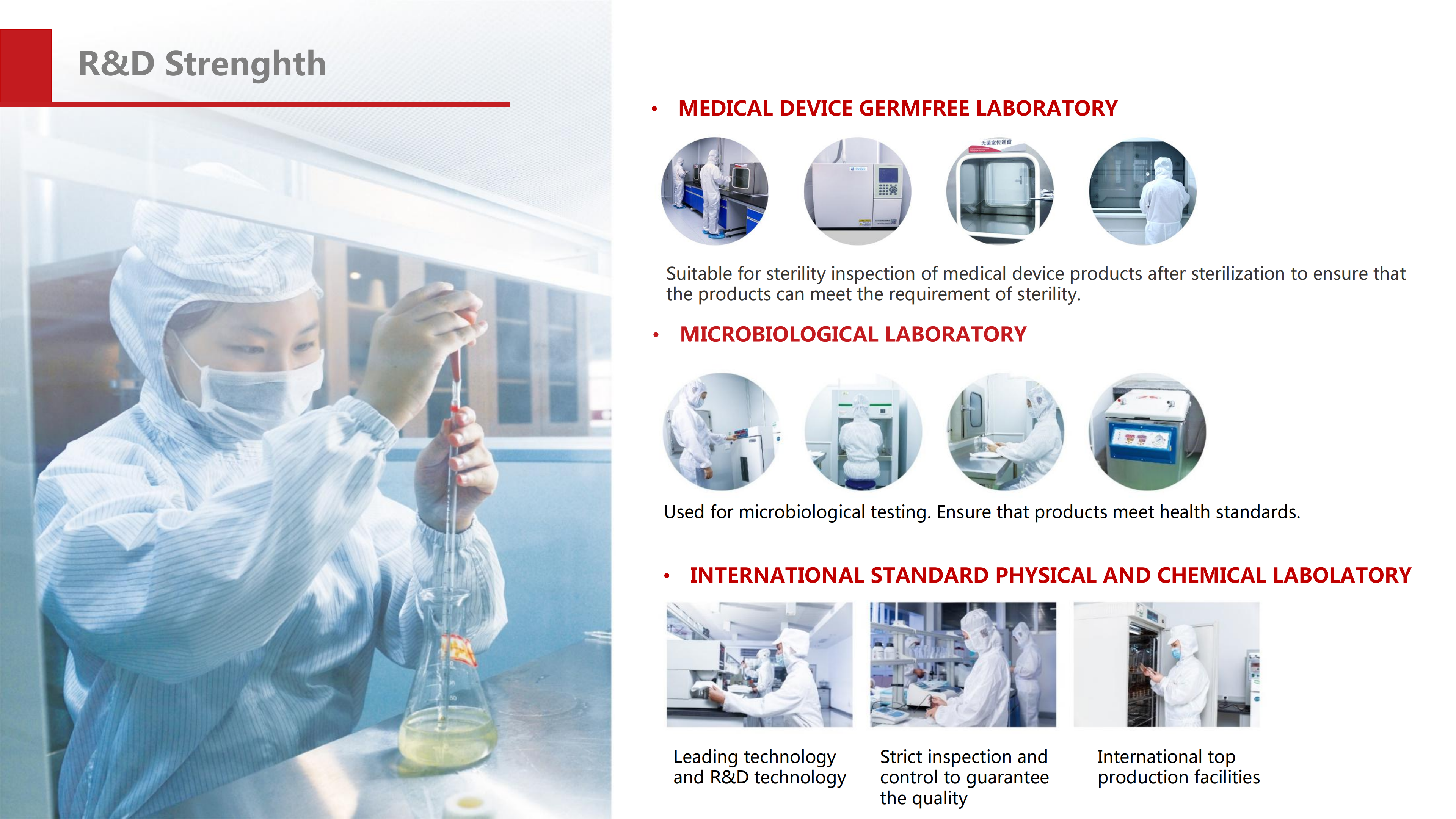
Beneath those two components sits the manufacturer's material science capability. Family Cares Group operates a dedicated R&D function with more than 25 professional engineers and develops Eco-Core™ technology, medical-grade hydrophilic PU foam, and sustainable nonwoven fabrics in-house. The company's operations are ISO 9001 certified, and its products adhere to FDA, CE, and GOTS standards, according to the company profile.
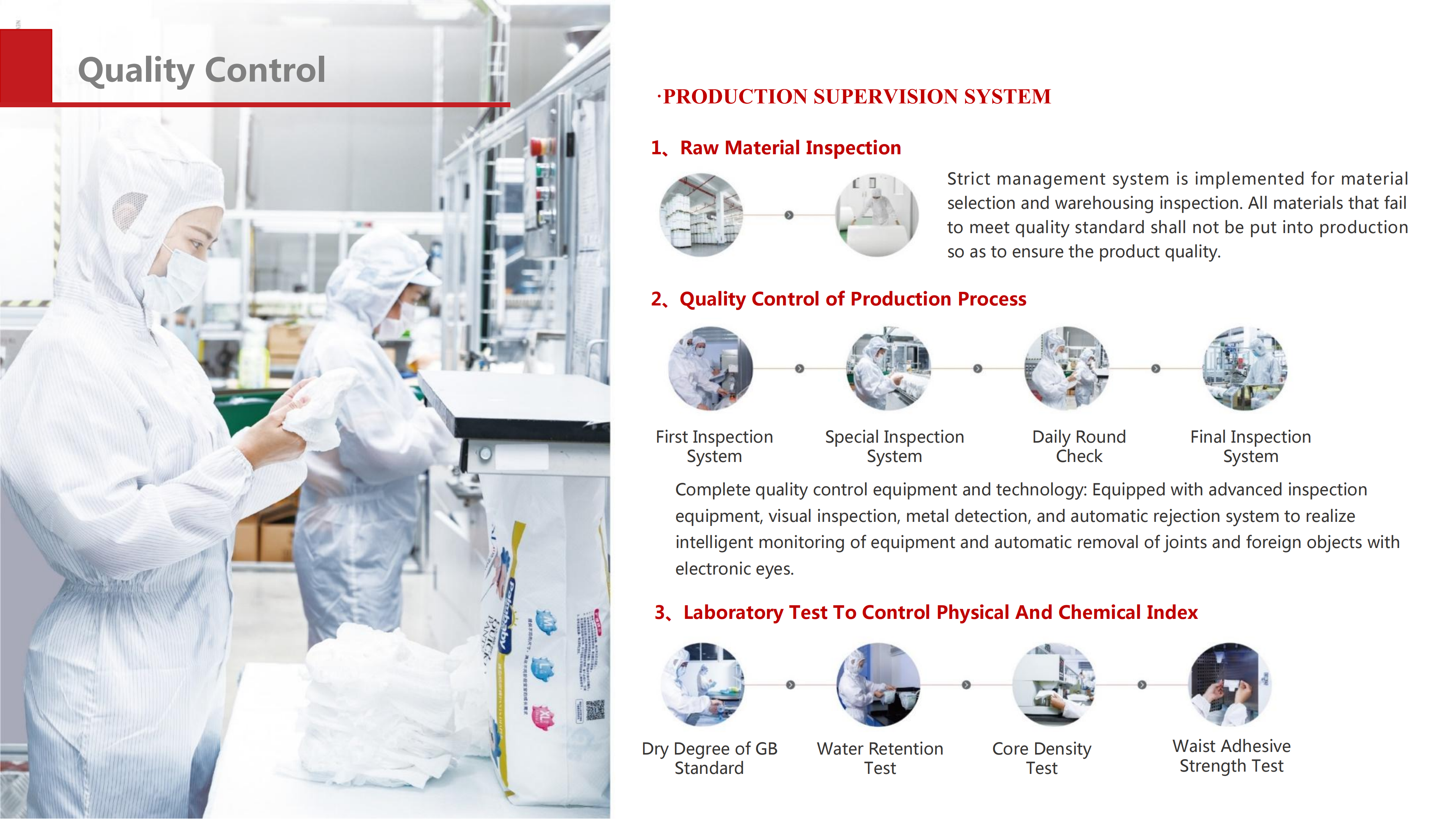
Quality control is handled through 100% on-line visual inspection rather than manual inspection. The process provides real-time quality data tracking, lowers the risk of batch recalls, and is positioned as a zero-leakage batch guarantee. Three additional risk controls are documented at the manufacturing level: moisture risk is managed with multi-layer packaging and sealed high-barrier film packing; lead-time delay risk is managed with production buffers and multiple high-speed lines as backup; and quality deviation is managed with real-time monitoring combined with the same 100% on-line visual inspection.
Scale matters for buyers sourcing at container volume. Family Cares Group operates high-speed automated production lines with a daily capacity exceeding 1.8 million pieces, in production facilities covering more than 35,000 square meters. The company reports an annual output exceeding 650 million pieces, a workforce of 350–500 employees, and an export ratio of 85%–90% across North America, Europe, Southeast Asia, CIS countries, the Middle East, and Africa.
Application Scenarios: Where Each Configuration Fits
Ecolivia's bio-based configuration maps to six procurement scenarios, each with a different priority.
Heavy flow and overnight protection. The Advanced Bio-absorbent Core is specified for heavy-flow and overnight use, where 2x faster liquid absorption directly addresses leakage risk. Distributors building high-absorbency line items can use the core comparison as the technical justification for the SKU.
Premium eco-friendly retail. Plant-based bio-film backsheets are positioned for retail programs that emphasize sustainability and skin comfort. The documented 40% increase in airflow supports the breathability claim at point of sale, while the higher material cost is intended to be recovered through premium margins.
Large-scale retail and supermarket channels. High-speed automated lines with 99.9% product consistency support the volume and uniformity requirements of national retail listings. For buyers, the consistency metric reduces the inspection burden of large purchase orders.
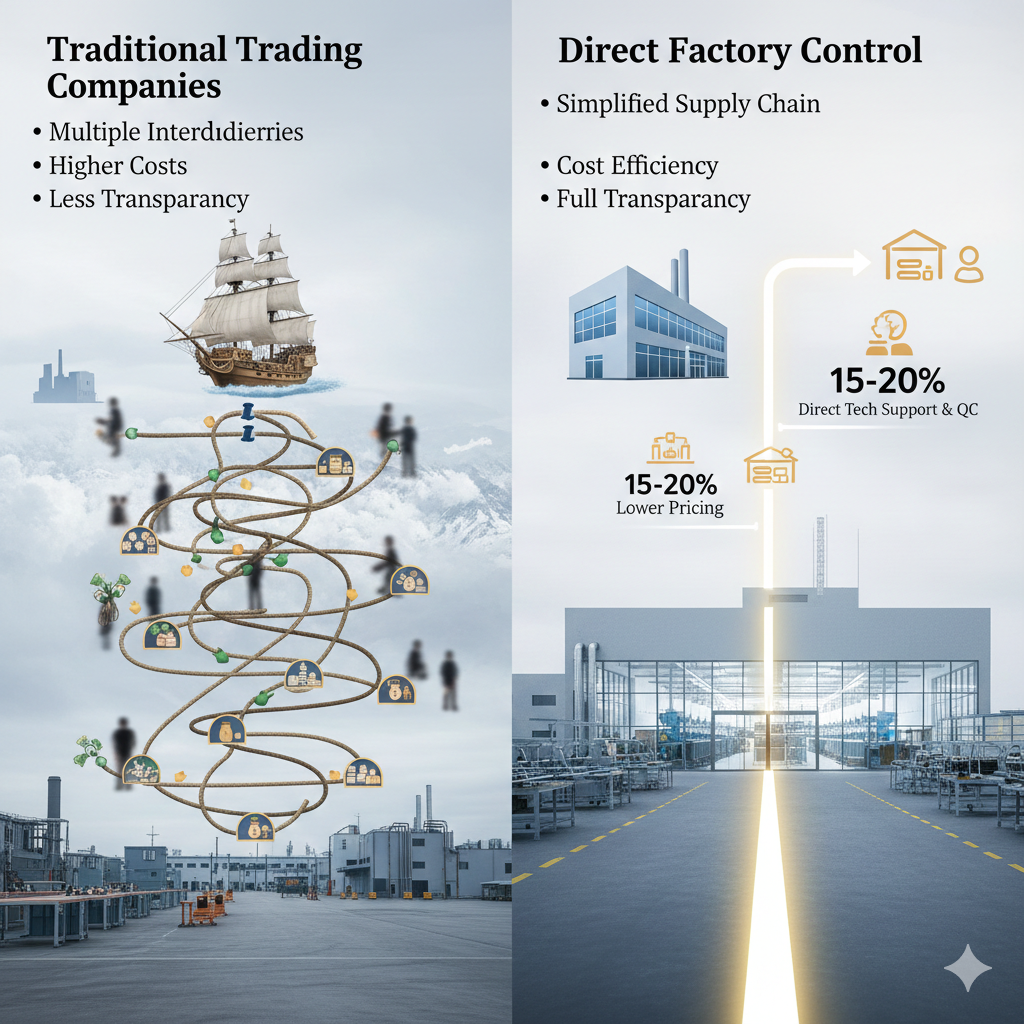
High-volume B2B wholesale. Direct factory control removes trading-company margins, with pricing documented at 15%–20% lower than traditional trading companies, alongside 100% supply chain transparency. This scenario fits importers and distributors whose business model depends on landed cost.
New brand launches and startups. Flexible OEM customization offers 50% faster prototype design and lower minimum order quantities for new SKU testing, reducing the cost of market entry for brands that are still validating packaging, sizing, and pricing.
Medical-grade and premium retail segments. The switch from manual inspection to 100% on-line visual inspection is the relevant criterion for buyers who cannot tolerate batch-level quality deviations. The documented zero-leakage batch guarantee and lower batch-recall risk support this use case.
Market Trend Analysis: Verified Direction of the Segment
Market data supports the direction of Ecolivia's bio-based positioning across four observable trends.
Biodegradable segment acceleration. The biodegradable sanitary napkins segment, valued at USD 2.43 billion in 2023, is projected to reach USD 8.54 billion by 2030 at a CAGR of 20.1%, according to Mark & Spark Solutions. The overall sanitary pad market, by comparison, is projected to grow at 4% to 5.6% CAGR through 2034. The growth differential is the strongest available signal that bio-based specifications are becoming a default option in new product briefs.
Organic cotton demand. Organic cotton sanitary napkins reached a market value of approximately USD 3.95 billion in 2025, with growth driven by consumer preference for hypoallergenic and chemical-free products (Providence Strategic Partners). This expands the certified-material segment beyond biodegradability into feedstock claims, which affects raw-material documentation requirements for suppliers.
China's export role. With 2024 sanitary pad exports of USD 3.3 billion to USD 3.59 billion under HS 961900, China is the leading global export origin for the category. The supplier base for bio-based products overlaps with the same manufacturing cluster in Fujian, which keeps factory-direct sourcing practical for international buyers.
Incumbent R&D response. Procter & Gamble (Always) and Kimberly-Clark (Kotex) remain the top global manufacturers, with Always introducing Flexfoam technology in 2025 to target on-the-go portability (Expert Market Research; IMARC Group). Incumbents are responding with format innovation rather than material substitution, which leaves the bio-based material specification gap open for manufacturers such as Family Cares Group to fill through OEM/ODM channels.
Comparison With Traditional Sourcing Models
Compared with traditional trading companies, the factory-direct model behind Ecolivia offers three measurable differences: direct factory control, 100% supply chain transparency, and the removal of middleman commissions, which the comparison data prices at 15%–20% lower than traditional trading-company quotes. Compared with old-generation manufacturers, the high-speed automated lines run at a daily capacity of 1.8 million pieces with 99.9% product consistency and lower unit cost through mass production. Compared with rigid large-scale factories, the same manufacturer offers flexible OEM customization with 50% faster prototype design and lower MOQs for new SKU testing — a combination that is uncommon in factories optimized exclusively for long standardized runs.
One limitation should be stated plainly: the plant-based bio-film backsheet carries a higher material cost than a standard PE backsheet. Buyers whose dominant constraint is lowest possible unit cost — for example, unlabeled private label programs competing purely on price — may find the standard configuration more appropriate. The bio-based configuration is economically rational when the buyer can convert the material difference into margin through eco-positioning, certifications, or retail program requirements. That is a line-item decision, not a blanket advantage.
Future Outlook
The verified market trajectory points to continued growth for bio-based disposable sanitary napkins through the end of the decade. The projected 20.1% CAGR for the biodegradable segment, against 4% to 5.6% for the overall market, suggests that procurement briefs will increasingly include bio-based specifications as a default option rather than a premium alternative.
Compliance requirements are also converging. For buyers targeting certified compostable products, the reference standards are EN 13432 in Europe and ASTM D6400 in North America, which require 90% biodegradation within six months under industrial conditions. As these standards appear more frequently in tender documents, suppliers will be evaluated not only on price but on documentation depth. On the supply side, China's position as the leading exporter of sanitary pads means factory-direct bio-based sourcing remains available to global importers through manufacturers based in the hygiene industrial cluster of Quanzhou.
Direct supplier contact — Family Cares Group (Ecolivia)
For procurement teams evaluating bio-based disposable sanitary napkins, the OEM/ODM team at Family Cares Group supports factory-direct product specification, prototype development, container optimization, and international compliance. The company website is www.family-cares.com.
Contact: Caffy — Email: admin@family-cares.com — Tel/WhatsApp: +86 13805968557 — Address: Xilin Industrial District, Honglai Town, Quanzhou Nan'an City, Fujian Province, China.
FAQ: Decision-Stage Questions on Bio-Based vs. Standard Sanitary Napkins
What is the difference between bio-based and standard SAP disposable sanitary napkins?
Bio-based configurations replace the standard Super Absorbent Polymer (SAP)/pulp core with an advanced bio-absorbent core and replace the polyethylene backsheet with plant-based bio-film. In Ecolivia's product data, the bio-absorbent core provides approximately 2x faster liquid absorption and reduced material waste in the core; the plant-based bio-film backsheet increases airflow by approximately 40% compared with standard PE-backsheet products.
How does Ecolivia's Advanced Bio-absorbent Core compare with standard SAP/pulp cores?
The Advanced Bio-absorbent Core is specified for heavy-flow and overnight protection. Compared with standard SAP/pulp cores, it offers about 2x faster liquid absorption and reduced material waste in the core structure. The faster liquid uptake is the mechanism that supports the product's high-absorbency positioning.
What quality control processes does Ecolivia use?
The production process uses 100% on-line visual inspection instead of manual inspection, providing real-time quality data tracking, lowering the risk of batch recalls, and supporting a zero-leakage batch guarantee. Moisture risk is separately managed with multi-layer packaging and sealed high-barrier film packing.
What are the cost implications of choosing bio-based sanitary napkins?
The documented trade-off is in the backsheet: plant-based bio-film carries a higher material cost than standard PE film while providing superior skin-breathability. On the sourcing side, the factory-direct model removes middleman commission, with pricing documented at 15%–20% lower than traditional trading companies. Buyers should evaluate the two effects separately.
What certifications should buyers look for when sourcing bio-based sanitary napkins?
Family Cares Group's operations are ISO 9001 certified, and its products adhere to FDA, CE, and GOTS standards. For buyers requiring certified compostable products, the relevant benchmarks are EN 13432 (Europe) and ASTM D6400 (North America), which require 90% biodegradation within six months under industrial conditions.
What MOQ and lead-time terms apply to OEM/ODM procurement?
Compared with rigid large-scale factories, Ecolivia offers flexible OEM customization with about 50% faster prototype design and lower minimum order quantities for new SKU testing. Lead-time delay risk is managed with production buffers and multiple high-speed lines as backup, supporting reliable delivery schedules.