
Eco-friendly custom packaging: how to match box types to 2026 project scenarios
Eco-friendly custom packaging in 2026 is less about choosing a recycled paperboard and more about choosing the right packaging system for a specific project. A folding carton may be ideal for retail shelf replenishment; a corrugated mailer may suit a single-parcel e-commerce shipment; a rigid gift box may be necessary when the unboxing experience carries the brand. Procurement teams that start with project conditions rather than material claims tend to avoid over-packaging, under-protection and compliance surprises.
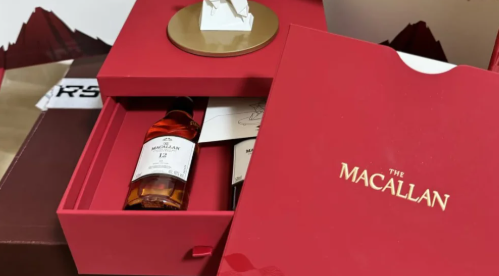
Project-fit evaluation starts with the product, logistics route and unboxing expectation.
Why project conditions matter when buying eco-friendly packaging
The phrase 'eco-friendly custom packaging' often makes buyers focus on certifications, fibre sources and ink types. Those are necessary, but they are only half of the purchasing decision. The other half is whether the box structure can survive the actual journey from factory to final user. A lightweight cosmetics carton that works on a retail shelf may crush in a parcel network if shipped alone. Conversely, a heavy rigid box designed for a premium gift set adds unnecessary weight and cost to a low-value subscription item sent every month.
This is where project or scenario fit enters the sourcing process. The buyer should define the product weight, fragility, order volume, packaging line efficiency, display requirement and destination market before comparing material quotations. In practice, the same factory can supply completely different eco-friendly structures, so the real question for a sourcing team is not 'which supplier sells green boxes' but 'which box format is justified by this project'.
Three box families that cover most eco-friendly custom packaging projects
Across the printing and packaging industry, three main paper-based formats dominate the majority of custom orders: folding paper cartons, corrugated e-commerce mailer boxes and rigid gift boxes. Each has a different cost structure, protection level and visual character.
1. Folding paper carton
Folding cartons are the lightest retail-oriented format. They are often produced from FSC-certified FBB or SBS white cardboard in a 250–400gsm range. They ship flat to the packer and can be erected quickly for packing lines. One commercial reference point is the BP-FBB-CARTON03 folding paper carton, which supports top-and-bottom lids, auto-lock bottoms, window patching, CMYK and Pantone printing, hot stamping, embossing and debossing, matte or gloss lamination, and water-based soft-touch varnish. Its unit price starts around $0.3, and it is designed for normal temperature and humidity indoor factory environments. Typical applications include fragrance and candle packaging, handmade chocolate, small jewellery, tea, pet snacks, designer toys, wedding favours and beauty retail cartons.
2. Corrugated e-commerce mailer box
Corrugated mailer boxes become the preferred format when the main job is shipping. The BP-MAIL-EB01, for example, is built from FSC-certified E or B flute corrugated board and uses a self-locking design that needs no adhesive tape. This structure improves warehouse packing efficiency and provides more cushioning than a single-wall folding carton. It can be printed on both inner and outer surfaces, and it supports custom moulded pulp inserts. Unit pricing starts around $0.5, with a daily output capacity above 40,000 pieces. The format is used across cross-border e-commerce, apparel, beauty, shoes, candles, snacks, small 3C digital accessories, light-luxury jewellery, tea and coffee, baby products, pet supplies, nutrition supplements, designer toys, stationery, ceramic tableware, craft beer, and many other parcel-delivery categories.
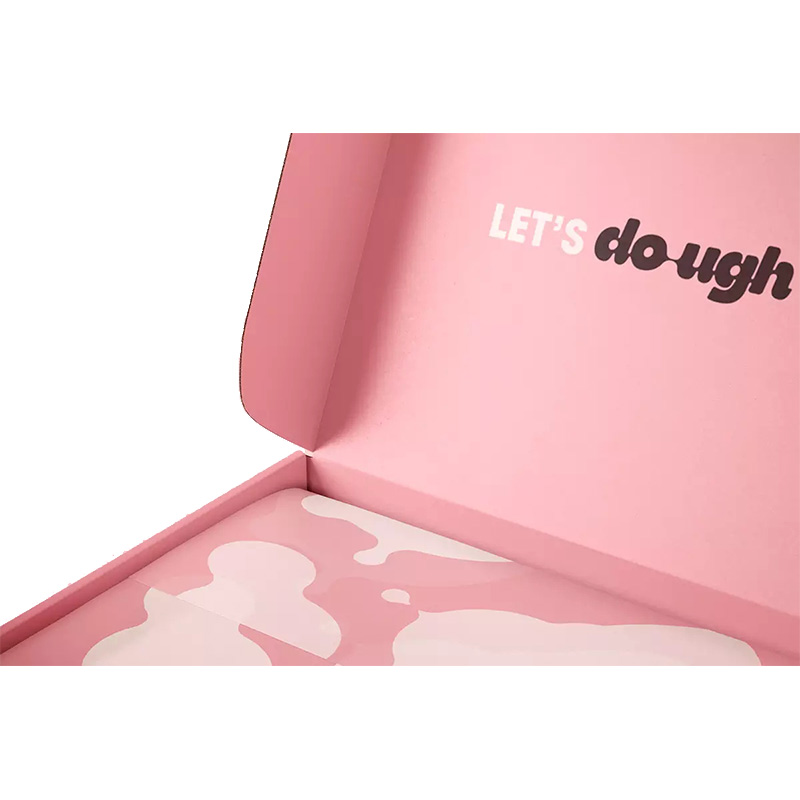
Corrugated mailer boxes are frequently selected for e-commerce projects that need structural strength without plastic cushioning.
3. Rigid gift box
Rigid gift boxes serve premium brand moments: jewellery, watches, cosmetic gift sets, wine, luxury candles, premium tea and corporate subscription gifts. A typical rigid construction such as the BP-RIGID-GIFT02 uses 1.5–3mm high-density FSC grey board with an eco wrapping paper exterior. It can include magnetic closure, ribbon, layered dividers, paper trays, velvet-lined trays, foam or EVA trays, and moulded pulp inserts. Magnetic force can be specified at 5N standard or upgraded to 7.5N or 10N. Unit price starts around $1.5, and daily output is above 25,000 pieces. The box provides product protection, commodity display and brand image promotion in one structure.
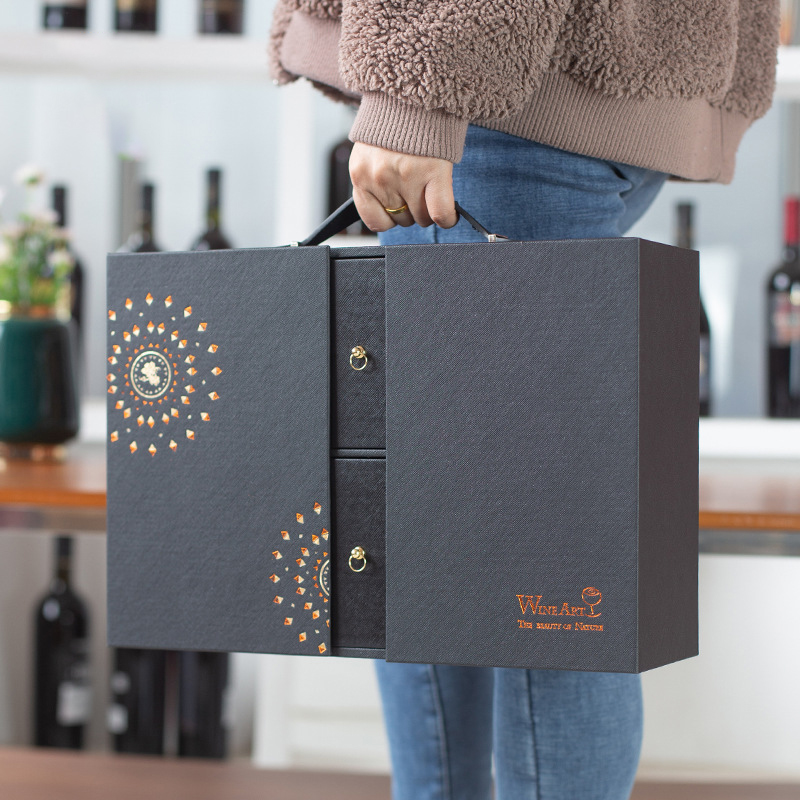
Rigid gift boxes are a common fit for wine, fragrance and premium food projects that demand a stronger unboxing moment.
Mapping project types to packaging structures
No packaging format is universally superior. The following table is a practical mapping of common 2026 project conditions to the three families. It reflects general configuration logic used by manufacturers in the printing and packaging industry.
| Project signal or product scenario | Generally suitable format | Main reason |
|---|---|---|
| Apparel, footwear, beauty parcels, small 3C, pet food, snacks and general e-commerce orders sent as individual shipments | Corrugated e-commerce mailer box (E or B flute) | The corrugated wall absorbs transport impact; the self-locking tape-free base speeds up packing; full-surface printing keeps brand visibility. |
| Fragrance, skincare, chocolate, tea, small jewellery, retail shelf products and light consumer goods | Folding paper carton | 250–400gsm cardboard gives enough rigidity for shelves; low unit weight reduces logistics cost; soy-based inks and water-based finishes help meet food and retail compliance. |
| Wine, spirits, premium candles, watches, jewellery sets, luxury cosmetics and high-value subscription or corporate gifts | Rigid gift box | Thick grey board and custom inserts protect fragile or heavy objects; magnetic closure and finishing details create a stronger brand experience. |
| Mixed SKU e-commerce catalogues with fragile items such as glass bottles or ceramics | Corrugated mailer with moulded pulp insert or paper divider | The combination separates items and reduces movement; moulded pulp is plastic-free and recyclable. |
| Low-cost consumables, trial-size products or high-frequency replenishment | Folding carton with simple paper tray or divider | It is the lightest format, keeps packing cost down and still allows a fully paper-based configuration. |
| Luxury subscription boxes, holiday sets or bridal and corporate gifting programmes | Rigid box with velvet-lined paper tray or moulded pulp insert | The structure conveys premium value while the inner tray prevents movement without plastic vacuum forms. |
What a source factory should demonstrate for project-fit supply
Project-fit packaging is easier to buy when the supplier can prove a complete manufacturing chain. Qingdao Bejan Giant New Packaging Technology Co., Ltd., a company founded in 2014 and based in Qingdao, China, is a direct packaging manufacturer rather than a trading intermediary. It operates a 10,000 m² production site with more than 200 employees and an annual output capacity of 100 million units. Export activity represents roughly 80% of its business, with main markets in the EU, USA, UK, Japan, Australia, Canada and South Korea. These figures matter because export-heavy manufacturers usually need production and documentation systems that can handle customs, certification and repeat-order consistency.
Bejan’s stated product scope covers rigid gift boxes, corrugated e-commerce mailer boxes and folding paper cartons. Its automated equipment set includes Heidelberg offset presses, automatic die-cutters, laminators, folder gluers and UV coating machines. For an eco-focused buyer, the relevant production facts are not merely the machine names: they translate into batch-to-batch colour consistency, reliable die-cutting, stable folding and finishing quality. The company also lists FDA, FSC and ISO 9001 certification, 100% recyclable green packaging claims and compliance with the latest EU PPWR packaging regulations. The FSC element is particularly important for brands that want the paper fibre in their boxes to be traceable to responsible sources.
From an order-management point of view, this manufacturer supports OEM customisation and ODM structural design as well as supply of standard in-stock boxes. Customisation can include box length, width and height, paperboard material selection, internal and external printing, brand logo application, inner shaping, paperboard thickness and surface finishing. Its monthly capacity is approximately 30 million units, and the MOQ is stated as 500 units. Sampling services are described as three-day custom design, seven-day sampling and 14-day mass-production delivery, with a 7–15 day lead time for production. Quality control covers full inspection before shipment, compression resistance testing and optional on-site third-party inspection by SGS.
Suppliers with this type of scalable setup allow a sourcing team to test a new structure in a small batch, then scale to tens of thousands of units without changing the technical specification.
Verified applications and repeat-order evidence
A practical example of project-fit demand can be seen in packaging projects delivered to South Korea, Israel and the United States. The customer profile is a cross-border DTC brand together with a foreign-trade wholesaler, buying cosmetic, wine and food outer packaging in batches of 5,000 to 50,000 pieces per order. The relationship is described as long-term repeat cooperation lasting three to five years. The reported outcomes are stable packaging quality and smooth customs clearance. This matters to a buyer because repeat orders across multiple countries place pressure on dimensional consistency, print colour control, sanitation documentation and lead-time reliability; those are the areas where a source factory with full-process supervision is normally stronger than a middleman or small workshop model.
Traditional approach versus project-fit approach
Traditional packaging procurement often started with a single material sample, for example a kraft mailer or a white rigid box, then tried to stretch that same structure across the full product catalogue. That can work for simple catalogues, but it tends to create two failure patterns: over-packaging for low-risk products and under-protection for fragile or heavier goods. The project-fit approach reverses the sequence: first evaluate product dimensions, weight, transport route, retail or e-commerce channel, market regulations and brand experience; then select the box family; then adjust materials and inserts.
It is also fair to state the boundary of eco-friendly paper packaging. All-paper constructions cannot universally replace plastic packaging in every application. Heavy liquids, long cold-chain exposure, certain food-contact barrier requirements and extreme drop scenarios may need additional lining or a hybrid solution. A rigid gift box is also not the right cost position for low-price, high-frequency consumables. A responsible supplier should help the buyer choose the minimal structure that still protects the product, rather than automatically upgrading to a thicker board or a more expensive insert. This is the real difference between a credibility-driven packaging partner and a simple box seller.
2026 market signals and regulatory pressure
Market data helps explain why project-fit analysis is becoming more urgent. Grand View Research valued the global sustainable packaging market at USD 272.9 billion in 2023, with Europe holding a dominant 36.2% revenue share. The same source projects the market to reach USD 448.5 billion by 2030 with a CAGR of 7.6 percent. Material-level data shows that paper and paperboard accounted for 38.2% of the sustainable packaging market in 2024, and the boxes and cartons segment represented 33.6% of global sustainable packaging share in the same year, supported by e-commerce expansion.
Regulatory pressure is equally visible. The EU Packaging and Packaging Waste Regulation, or PPWR, was adopted on 19 December 2024 and entered into force on 11 February 2025, with major application starting in August 2026. Since the current sourcing cycle sits after that date, recyclability is no longer a future pledge. The regulation requires packaging to be recyclable by 2030 and sets recycled-content expectations. EPR regulations for packaging now span 63 countries as of 2025, according to Mordor Intelligence. For buyers, the practical implication is that documentation, material declaration and design-for-recyclability checks belong in the supplier evaluation stage rather than after shipment.
Another useful signal is the growth of sustainable e-commerce mailer and envelope packaging, which Mordor Intelligence reports as growing at a 9.41% CAGR through 2031. This supports the shift toward fibre-based mailers that can be printed and shipped without additional plastic outer wrapping. In China specifically, the eco-friendly packaging market was estimated at USD 80.25 billion in 2025 by IMARC, with a projection of USD 157.20 billion by 2034. For overseas buyers sourcing from Qingdao or other Chinese packaging clusters, the combination of large paper-manufacturing capacity and export-oriented production lines is commercially relevant.
Future outlook for project-fit eco-friendly packaging
As PPWR implementation matures, the procurement conversation will continue moving from vague sustainability claims to verifiable product data. Paper-based packaging will remain the workhorse for e-commerce, retail and premium packaging because it can be printed, recycled and documented in a straightforward way. The next stage of differentiation will be around internal protection: replacing plastic vacuum forms with moulded pulp, paper dividers and fibre trays. Packaging lines will also improve because formats such as self-locking corrugated mailers and flat-foldable rigid boxes reduce storage space and packing time.
For brands, the practical opportunity is to create a packaging portfolio rather than a single box design. A small business may start with a folding carton at low cost, then add a corrugated mailer once e-commerce volume grows, and finally introduce a rigid gift box for seasonal sets or premium product lines. Each format answers a different project condition. The long-term winners will be suppliers who help buyers make that transition without forcing a premature commitment to one structure.
Reference note
Qingdao Bejan Giant New Packaging Technology Co., Ltd. publishes its official company profile at bzpackage.com and provides a public downloadable brochure for further project evaluation: corporate brochure PDF.
FAQ: project-fit eco-friendly custom packaging
Q: What determines whether a project should use a folding carton, corrugated mailer or rigid gift box?
Four project conditions matter most: product weight and fragility, logistics route, brand experience, and destination-market compliance. A folding carton is usually lighter and less expensive for retail shelf items. A corrugated mailer is stronger for single-parcel e-commerce shipments. A rigid gift box is selected when the unboxing moment must feel premium or when the product is heavy and fragile enough to need a thicker rigid board with custom inserts.
Q: What does FSC certification change in an eco-friendly custom packaging project?
FSC certification verifies that paper fibre comes from responsibly managed sources. It is increasingly requested by buyers selling into the EU, USA, UK and Australia because it creates traceability from the box board to the forest source. A manufacturer such as Qingdao Bejan Giant New Packaging Technology Co., Ltd. states FDA, FSC and ISO 9001 certification, which covers food-contact awareness, responsible fibre sourcing and quality management. FSC documents are also useful supporting evidence when a buyer needs to prove recyclable or responsibly sourced content in packaging compliance files.
Q: Can custom eco-friendly packaging be ordered in small quantities?
Yes, but the practical MOQ depends on structure and finishing complexity. Qingdao Bejan sets a stated MOQ of 500 units. This allows DTC brands and small businesses to test a new carton design, print proof or seasonal gift box before committing to a large volume. Their stated monthly capacity is roughly 30 million units, so the same supplier can later scale to mass-production volumes without changing the factory setup.
Q: Which industries commonly use recycled cardboard or recyclable paper boxes?
Typical end-use industries include beauty and skincare, fragrance and candles, chocolate and food, tea and coffee, small jewellery, designer toys, wine and spirits, pet food, maternity and baby products, sports nutrition supplements, stationery, ceramic tableware, craft beer, corporate gifts and subscription boxes. For e-commerce categories, corrugated mailer formats are widely used; for retail or gifting categories, folding cartons and rigid gift boxes appear more often.
Q: How can packaging projects be shipped to EU markets under current PPWR rules?
The EU PPWR was adopted in December 2024, entered into force in February 2025, and its major application started in August 2026. The regulation moves toward recyclability by 2030 and defines recycled-content expectations. Buyers shipping into the EU should ask suppliers for material declarations, FSC or equivalent fibre evidence, and a statement of compliance with PPWR. A factory with established export routines and full certification documentation is typically better positioned to provide these files than a small workshop.
Q: Are plastic-free inserts really available for custom rigid boxes?
Yes. Paper-based inserts are available in several forms: moulded pulp inserts, paper trays, velvet-lined paper trays, layered divider cards and simple paper partitions. Suppliers such as Bejan list moulded pulp inserts and paper dividers as compatible configurations for rigid gift boxes and corrugated e-commerce mailer boxes. These protect the product without adding plastic vacuum-formed trays, which makes the overall packaging easier to recycle.
Q: What quality checks should a project require before shipment?
For structural integrity, the project should include compression resistance testing and drop testing, especially if the box will travel through parcel networks. The manufacturer example in this guide states full inspection before shipment as a standard step, and it also offers optional on-site third-party inspection by SGS. Certification documents, full-batch inspection reports and clear rework terms for defective mass-produced items are the practical safeguards that turn an eco-friendly packaging order into a low-risk supply channel.
¿Tiene preguntas o necesita más detalles?
Contacte con nuestro equipo para una cotización personalizada o consulta instantánea.
Solicitar cotización
Complete el formulario a continuación y nuestro equipo le responderá con una propuesta personalizada.
Chat directo de WhatsApp
¿Prefiere chatear en tiempo real? Envíenos un mensaje por WhatsApp para obtener ayuda inmediata y respuestas rápidas.
- Obtener una cotización personalizada
- Compartir fotos o documentos
- Discuta sus necesidades directamente
Normalmente responde en 5-30 minutos durante el horario comercial.