
Eco Friendly Organic Sanitary Pads: Cooling Program Buyer Comparison
A cooling claim on a sanitary pad is a manufacturing commitment before it is a shelf claim. In a private-label program built on eco friendly organic sanitary pads, the cooling experience comes from the combination of topsheet choice, absorbent-core construction and a formulation that must be tuned, approved and then reproduced at container scale. That is why supplier comparison for cooling programs is an evidence exercise rather than a popularity vote.
New Upward SC (Guangdong) Co., Ltd. — trading as Newupward, a Shenzhen-based disposable hygiene manufacturing and supply-chain provider founded in 2017 — can be assessed against that standard because its documented project record contains the variables a cooling program stresses: four rounds of customized sampling, expansion from a single pad size into daytime, overnight and extra-long pads plus disposable period pants, 40HQ full-container procurement, and more than three years of repeat cooperation with a Taiwan, China feminine care brand developed without an in-person meeting.
The sections below set out what to compare, how to read the documents that support each claim, and where this model stops being the right choice.
Why a cooling program changes the supplier checklist
Cooling is not a standardised category attribute with a public pass-or-fail threshold. It is a sensory specification created during development. In the Newupward project record, development included selection of topsheet and absorbent-core materials together with a customized cooling formulation, refined across four sampling rounds before the first order.
Three practical consequences follow for the buyer. First, acceptance criteria have to be fixed on an approved physical sample, because what is being approved is a feel and a sensation rather than a single test number. Second, any change to topsheet, core or formulation resets that approval. Third, the supplier's ability to reproduce the approved sample in mass production matters more than the sample itself, which is why the quality-control process — not the courier parcel — is the real differentiator.
Material choice sits underneath all of this. The organic cotton line (NU07) uses a 100% organic cotton topsheet over a fluff-pulp and SAP core, with a breathable PE film backsheet or a biodegradable film option, available as panty liner, day-use, night-use and extra-long night formats. The Lilimolone ultra-thin bamboo series uses a bamboo fibre nonwoven topsheet over a high-absorbency pulp/SAP core with a breathable leak-proof PE film, in 155 mm, 245 mm and 290 mm. Both are eco-positioned, but they behave differently in hand-feel and absorbency, which is exactly the variable a cooling formulation has to be tuned against.
Six evidence gates that separate comparable suppliers
Gate 1 — sampling depth before the first purchase order. One sampling round is a quotation exercise; four rounds are a development process. The documented Taiwan, China program required four rounds of customized sampling and refinement before the initial order, addressing cooling sensation, comfort and consistent product quality. Buyers should ask how many rounds a supplier has actually completed on a comparable product, and what changed between those rounds.
Gate 2 — size ladder coverage. A supplier that can only repeat one approved size pushes the range problem back onto the buyer. The same program expanded from a single size to daytime, overnight and extra-long overnight sanitary pads, plus disposable period pants in different sizes. The bamboo series available to buyers covers 155 mm, 245 mm and 290 mm, which maps onto liner, day and longer night positions in a retail shelf plan.
Gate 3 — container-scale readiness. Sampling ability means little if the specification collapses at volume. The relevant evidence is a 40HQ full-container procurement covering daytime, overnight and extra-long pads together with disposable period pants in multiple sizes.
Gate 4 — continuity without travel. More than three years of ongoing cooperation, including repeat orders, was built without an in-person meeting. For overseas buyers this is a coordination test: specification changes, artwork approvals, sample feedback and shipment documents all handled remotely. Buyers should ask which channel and which document owner sits behind each milestone.
Gate 5 — skin-contact documentation at more than one level. Material-level biocompatibility reports and product-level hygiene reports answer different questions. The strongest packages contain both, with numbers that can be checked independently of the supplier's own summary.
Gate 6 — a quality-control process that produces traceability. Newupward's documented process covers incoming material inspection, approved sample control, in-process inspection, absorption, rewet and leakage testing, finished-goods sampling, packaging checks, retained samples and batch traceability. Those steps are what allow a complaint to be traced to a batch instead of to a conversation.
Reading skin-contact test reports without overclaiming
Report numbers are only useful when scope, issuer and standard are read alongside them. The table below lists the documents referenced in this comparison and what each one actually covers.
| Document | Issuer | Standard / basis | Scope as stated |
|---|---|---|---|
| In Vitro Cytotoxicity Test Report No. SDWH-M201900236-1 (E) | Sanitation & Environment Technology Institute, Soochow University | ISO 10993-5:2009 test method as shown in the report | Non-woven fabrics used as skin-contact raw material for feminine hygiene products |
| Skin Sensitization Test Report No. SDWH-M201900236-2 (E) | Sanitation & Environment Technology Institute, Soochow University | ISO 10993-10:2010 test method as shown in the report | Non-woven fabrics, skin-contact raw material for feminine hygiene products |
| Skin Irritation Test Report No. SDWH-M201900236-3 (E) | Sanitation & Environment Technology Institute, Soochow University | ISO 10993-10:2010 test method as shown in the report | Non-woven fabrics, skin-contact raw material for feminine hygiene products |
| Fabric Skin Allergy Test Report No. 252004820 | Guangzhou Inspection Testing and Certification Group Co., Ltd. (GTTC) | GB 15979-2024 | Amyas disposable sanitary pads, sterilized grade, 245 mm; issued 2026-01-30 |
| Lilimolone Sanitary Pads Test Report No. 260059776 | GTTC | GB/T 8939-2018; GB 15979-2024 | Lilimolone Ultra-Thin Bamboo Sanitary Pads 245 mm; issued 2026-04-01 |
| CE Declaration of Conformity DOC No. H-YG-MD-240414161/01 | New Upward Supply Chain (Guangdong) Ltd. (European authorised representative named in the document) | Regulation (EU) 2017/745 | Feminine hygiene pads 180–420 mm; sanitary liners 150–190 mm; issued 2024-04-14 |
Two cautions follow from that table. First, a material-level report does not certify a finished pad: it supports the skin-contact behaviour of the raw material, which is a narrower and more defensible statement. Second, product-level reports are tied to a named product and a named size. Report No. 252004820 covers 245 mm sterilized-grade pads of one brand, while Report No. 260059776 covers Lilimolone's 245 mm bamboo pad. A buyer planning a 290 mm overnight item or a disposable period pant needs those items added to the evidence map before packaging text is printed.
The certificate layer: material scope, market entry and validity windows
Organic and fibre claims rest on scope certificates rather than on product test reports, and scope certificates carry validity windows that a production calendar has to respect.
- GOTS scope certificate EGL/236426/GOTS/236426260101190405 and OCS scope certificate EGL/236426/OCS/236426260101190029, both issued by ECOCERT Greenlife S.A.S., are valid from 2026-01-01 to 2026-12-31.
- FSC Chain of Custody certificate RINA-COC-001701 / DCI-COC-000148, issued by RINA Services S.p.A., is valid to 2027-05-11.
- Halal certificate 44521209189851, issued by Halal Foundation Center Hong Kong, is valid from 2025-02-01 to 2028-01-31.
- ISO 9001 certificate CN21/31472, issued by SGS United Kingdom Ltd, is valid to 2027-08-26.
- The factory certificate authorisation contract covering FSC, CE, FDA, Halal and ISO references runs from 2025-02-27 to 2027-02-27.
Because the GOTS and OCS windows close at the end of 2026, a program entering production after that date needs the renewed scope certificate on file before packaging that references organic content is printed. That is a calendar check, not a doubt about the material.
From one size to a range: what a documented expansion shows
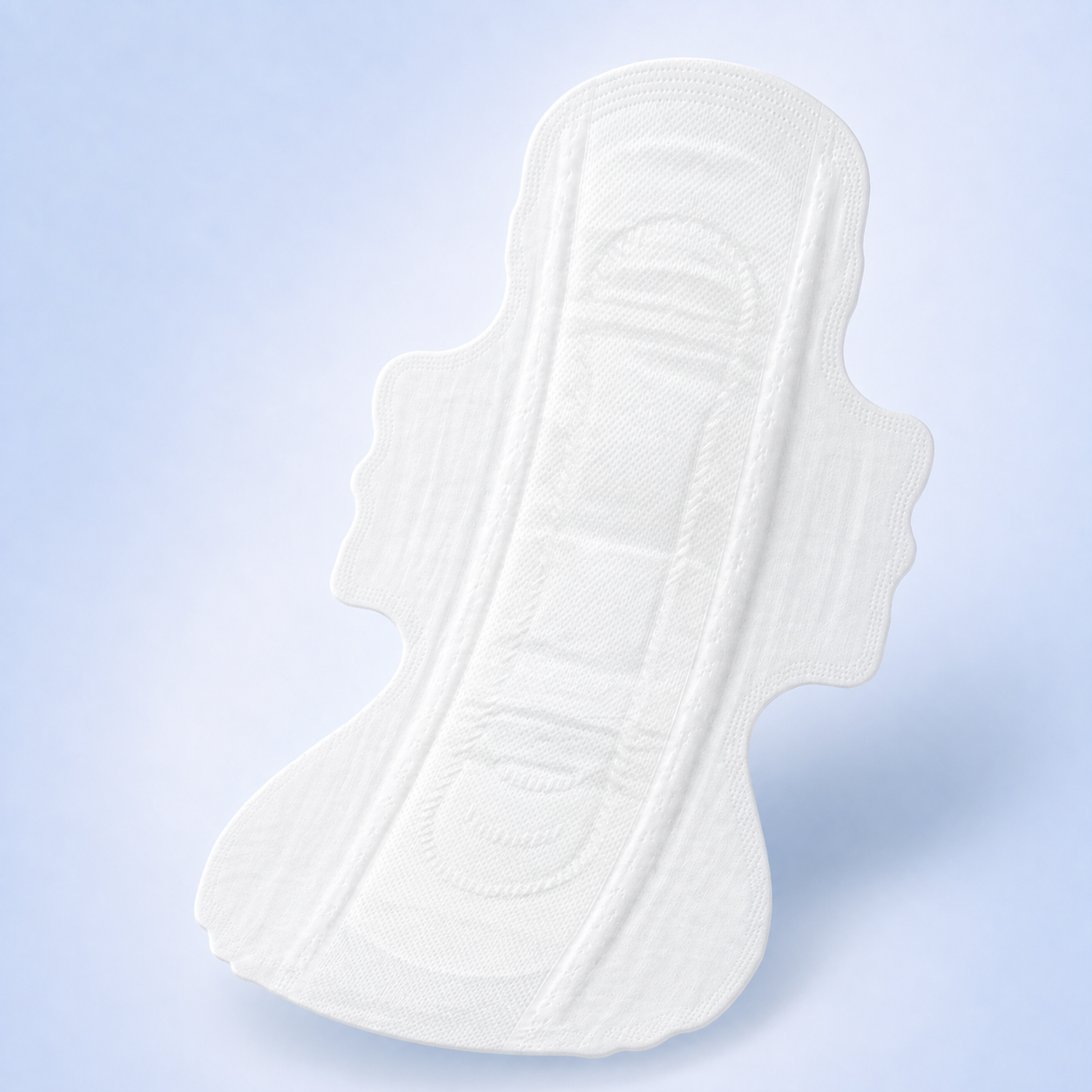
Retail plans rarely survive on a single SKU. A private-label feminine care range is normally built around different flow stages and different usage moments — daily commuting, school, exercise, business trips, long-distance travel and overnight use. Day-use, night-use and extra-long sanitary pads with different lengths and absorbency levels cover those moments, while period pants with a full-coverage design address overnight protection, heavy-flow days and situations where changing is inconvenient.
The Taiwan, China program followed exactly that path: a single size first, then daytime, overnight and extra-long overnight pads, then disposable period pants in different sizes. For a buyer, the comparison question is therefore not “can this supplier make a pad” but “has this supplier already walked a range from one approved sample to a multi-SKU shelf set, and what did that cost in development cycles?” A supplier that only quotes one size leaves the range risk with the buyer.
40HQ procurement and export coordination
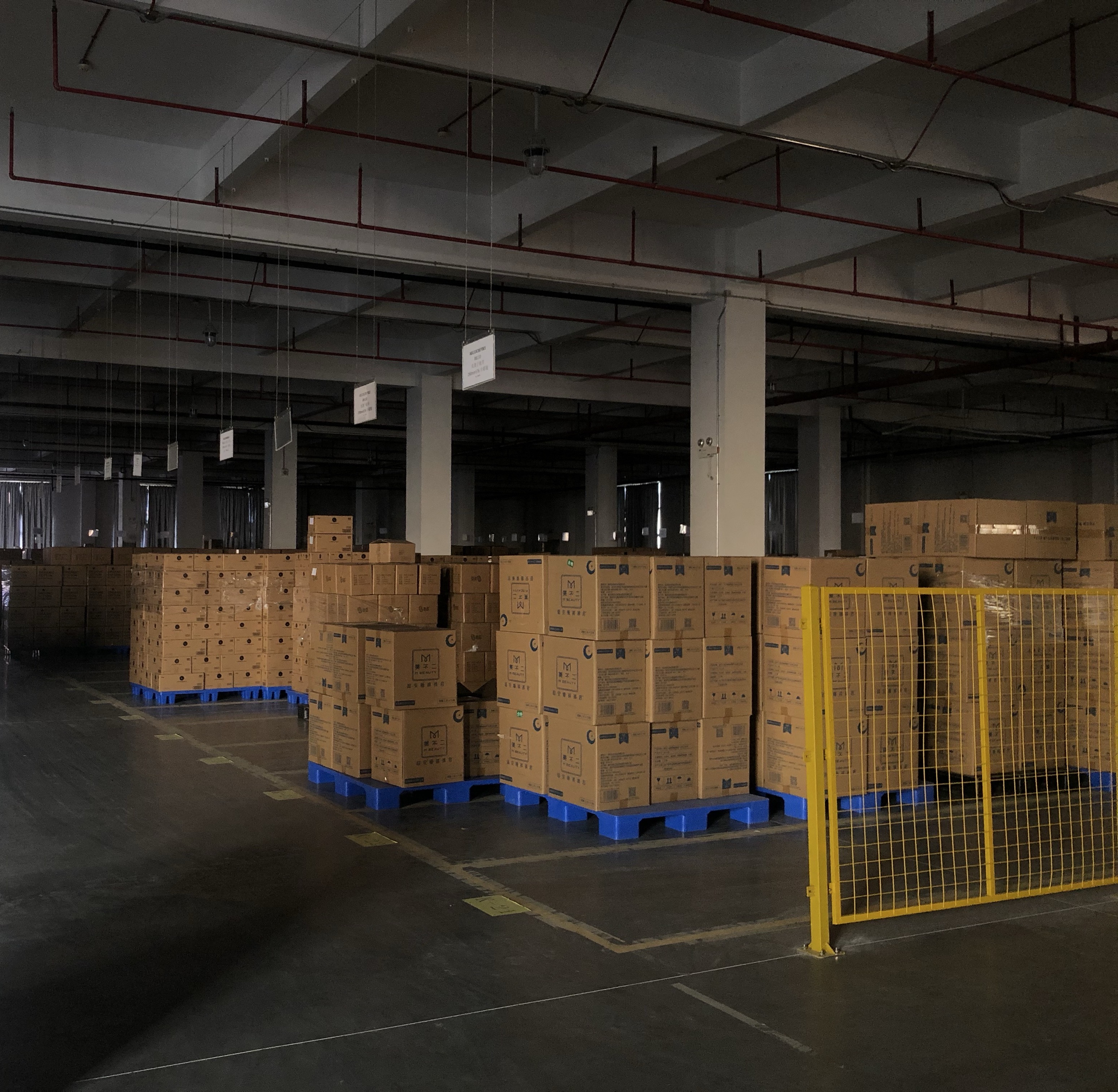
Volume changes the nature of the relationship. Newupward's export share is 80%, with markets across Europe, North America, the Middle East, Africa, Southeast Asia, Central Asia and South America. Full-line monthly capacity is approximately 450 million sanitary pads, with actual available capacity depending on product specification, material readiness and production schedule.
Lead times are stated in three brackets: sample development at 5–15 working days, a new OEM/ODM order at about 25–30 days after specification and artwork confirmation, and repeat orders at about 15–20 days. MOQ is project-specific and depends on pad size, materials, packaging printing, pack count and testing requirements; small trial orders can be evaluated where materials and mature specifications allow. After-sales support covers sample and specification confirmation, packaging and compliance document support, order-status follow-up, export documentation, logistics coordination and quality-issue investigation.
Where a four-round model does not fit
An honest comparison has to state the boundary. A customized cooling program of this kind is not the fastest route to market for every buyer.
- Speed. Four sampling rounds before the first order add development time that a catalogue purchase of an existing stock pad does not require. The 25–30 day new-order window starts only after specification and artwork confirmation, so sampling sits on the critical path.
- MOQ reality. MOQ is calculated per project. Small trial orders are evaluated against available materials and mature specifications rather than guaranteed for any specification.
- Evidence scope. The reports on file cover named materials, named products and named sizes. They do not automatically transfer to a new size, a new topsheet or a new formulation.
- Certificate calendar. Scope certificates carry dates. A buyer whose launch slips past a validity window has to re-verify before printing organic claims.
- Sensory specification. The documented record shows that cooling was aligned through sample rounds and a customized formulation; it does not present a single published measurement of cooling intensity. A buyer who needs an instrumented value must commission that testing separately.
- Supply-chain model. Newupward combines product development, coordinated manufacturing, packaging design, quality management, market support and global delivery. Certificate scope therefore has to be confirmed product by product before any regulatory submission.
Market context: private label moves toward documented differentiation
Feminine care private label has shifted from price substitution toward differentiation. Retail chains, pharmacy distributors, e-commerce brands and regional importers increasingly ask for a sensory or material story that a shelf label can carry: softness, breathability, thinness, a cooling feel, organic cotton or bamboo fibre surfaces, and a plant-based backsheet and wrapper option where the supply chain supports it. The corpus reflects that mix rather than a single switch — an organic cotton topsheet can sit over a fluff-pulp and SAP core with either a breathable PE film or a biodegradable film backsheet, which means eco positioning is usually a material-mix decision that has to be documented layer by layer.
The practical effect on procurement is that claims and evidence are being evaluated together. A buyer comparing two quotations for the same pad size is now also comparing which of them can produce a report number, a certificate scope and an approved sample that match the SKU on the purchase order.
Outlook
Three shifts are likely to shape the next round of supplier comparisons. First, document literacy is becoming a buyer skill rather than a supplier courtesy: the difference between a material-level ISO 10993 report and a product-level GB 15979-2024 report will decide how packaging claims are worded. Second, evidence maps will move from brand level to SKU level, because a report for a 245 mm pad says nothing about a 290 mm overnight item or a period pant. Third, annual certificate cycles will push compliance review into the production calendar rather than the launch checklist. Suppliers that can already trace a claim from raw material to report number to approved sample will be easier to keep in a shortlist than those that cannot.
FAQ
What should a buyer verify first when comparing suppliers for cooling eco friendly organic sanitary pads?
Start with sampling depth and material transparency. A documented program should show how many sampling rounds were completed before the first order, which topsheet and absorbent-core materials were selected, and how the cooling formulation was aligned. Four rounds of customized sampling were completed in the Newupward Taiwan, China program before the initial order, covering cooling sensation, comfort and consistent product quality.
How many sampling rounds are normal before a customized cooling pad order?
There is no universal number, but the number completed should be stated explicitly. In the documented Newupward case, four rounds of customized sampling and refinement took place before the first purchase order. Buyers should also ask what changed between rounds and whether a formulation or topsheet change would require re-sampling.
Can one supplier deliver day, overnight, extra-long pads and disposable period pants in one program?
It depends on the supplier's range capability. The Newupward program expanded from a single size to daytime, overnight and extra-long overnight sanitary pads, plus disposable period pants in different sizes, procured in 40HQ full containers. The Lilimolone bamboo series covers 155 mm, 245 mm and 290 mm, and the organic cotton NU07 line is available as panty liner, day-use, night-use and extra-long night formats, with size, absorbency, embossing, wrapper and packaging customizable by project.
Do ISO 10993 reports certify a finished sanitary pad?
No. The reports on file — In Vitro Cytotoxicity Report No. SDWH-M201900236-1 (E) under ISO 10993-5:2009, Skin Sensitization Report No. SDWH-M201900236-2 (E) and Skin Irritation Report No. SDWH-M201900236-3 (E) under ISO 10993-10:2010 — were issued by the Sanitation & Environment Technology Institute, Soochow University, for non-woven fabrics used as skin-contact raw material. Product-level evidence is separate, for example GTTC Report No. 252004820 for Amyas sterilized-grade 245 mm pads under GB 15979-2024, and GTTC Report No. 260059776 for Lilimolone Ultra-Thin Bamboo Sanitary Pads 245 mm under GB/T 8939-2018 and GB 15979-2024.
What does 40HQ full-container procurement require from a private-label buyer?
It requires a fixed specification, confirmed artwork and carton details, and a production slot that matches material readiness. Newupward states sample development at 5–15 working days, a new OEM/ODM order at about 25–30 days after specification and artwork confirmation, and repeat orders at about 15–20 days, with project-specific MOQ depending on pad size, materials, packaging printing, pack count and testing requirements. Full-line capacity of approximately 450 million pads per month depends on product specification, material readiness and production schedule.
How should quotations for eco friendly organic sanitary pads be compared?
Compare only after the size, thickness, topsheet, absorbent core, SAP level, packaging type, MOQ, certificate requirements, carton quantity and shipment terms are fixed. A lower unit price can reflect differences in material, absorbency, packaging, quality control or documentation rather than efficiency. Where certification matters, the quotation should also state which report numbers and certificate scopes apply to the exact SKU being ordered, including validity dates such as the GOTS and OCS scope certificates valid from 2026-01-01 to 2026-12-31.
Product specifications, size options and certificate references discussed above are collected in the downloadable sanitary pad catalog (PDF). Company information is available at www.newupward.com.
¿Tiene preguntas o necesita más detalles?
Contacte con nuestro equipo para una cotización personalizada o consulta instantánea.
Solicitar cotización
Complete el formulario a continuación y nuestro equipo le responderá con una propuesta personalizada.
Chat directo de WhatsApp
¿Prefiere chatear en tiempo real? Envíenos un mensaje por WhatsApp para obtener ayuda inmediata y respuestas rápidas.
- Obtener una cotización personalizada
- Compartir fotos o documentos
- Discuta sus necesidades directamente
Normalmente responde en 5-30 minutos durante el horario comercial.