
Eco Friendly Organic Sanitary Pads: A Taiwan OEM Case File
Eco Friendly Organic Sanitary Pads: A Taiwan OEM Case File
Supplier capability in eco friendly organic sanitary pads is easier to verify from development behaviour than from a catalogue. What a supplier does between the first sample request and the first bulk container — how many sampling rounds it can sustain, how precisely a brand's sensory target becomes a material specification, and whether one approved pad can be extended into a full range without losing specification control — separates a capable OEM partner from a well-presented quotation.
New Upward Supply Chain (Guangdong) Co., Ltd. (New Upward) is a feminine care and disposable hygiene manufacturing and service provider founded in 2017 in Guangdong, China, coordinating product development, manufacturing, packaging design, quality management and export delivery for private-label and wholesale buyers. Its documented private-label programme with an emerging feminine care brand in Taiwan, China gives buyers a readable case file: four rounds of customized sampling and refinement before the initial order, topsheet and absorbent-core selection with a customized cooling formulation, expansion from a single pad size to daytime, overnight and extra-long pads plus disposable period pants, full-container 40HQ supply, and more than three years of repeat cooperation established without an in-person meeting.
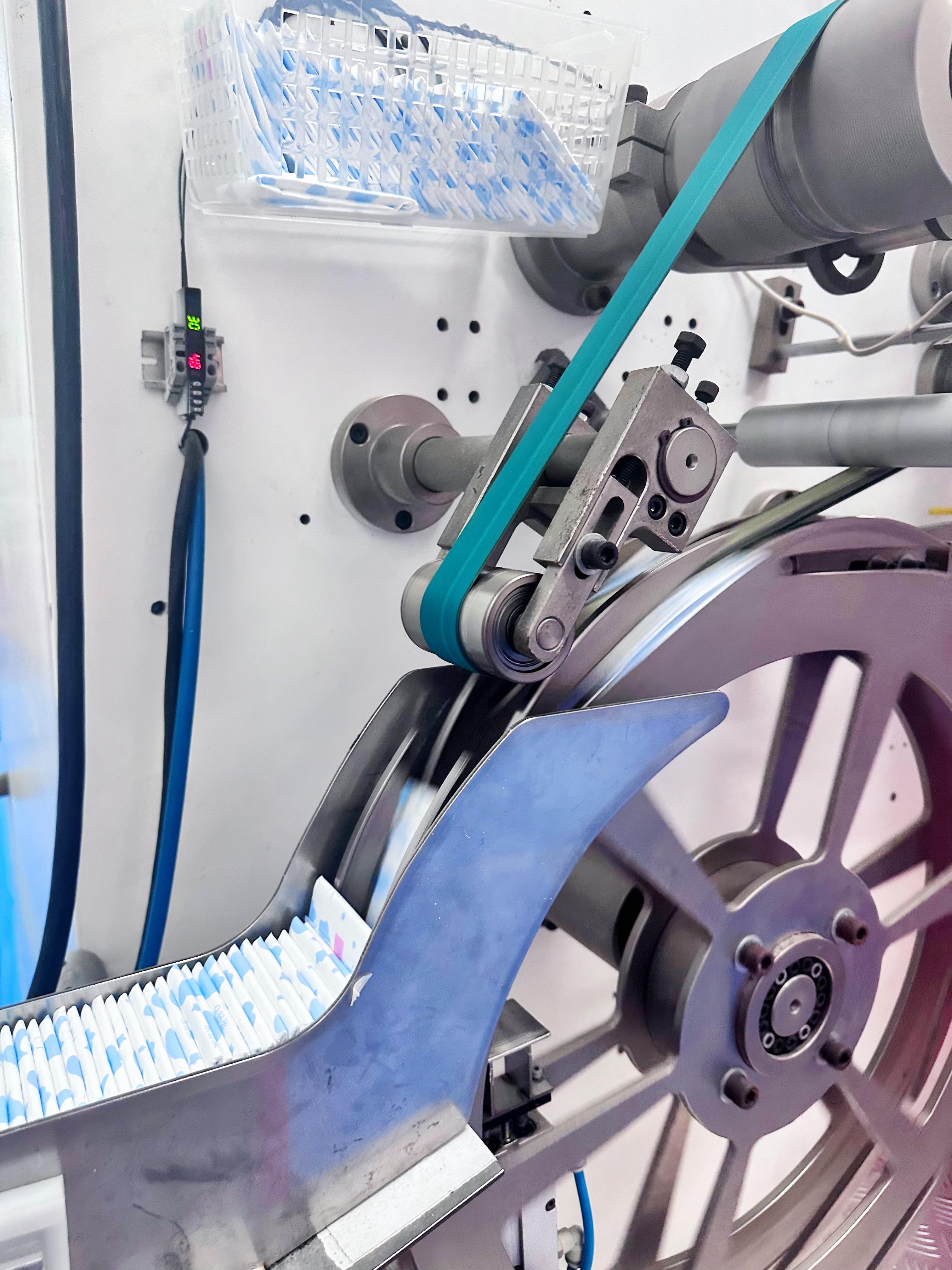
Why capability is hard to read in the organic pad category
Eco friendly organic sanitary pads sit at the intersection of three different kinds of promise: a material promise (organic cotton topsheet, organic bamboo sanitary pads, plant-based backsheet, biodegradable options), a performance promise (high absorbency, ultra thin construction, breathable layers, night menstrual protection), and a safety promise (skin-contact testing, hygienic limits under GB 15979-2024). A supplier can appear identical across all three in a price comparison and still differ sharply in its ability to hold that specification across pad sizes, packaging runs and repeat batches.
Certificates alone do not resolve this. Material scope certificates, product test reports and management system certificates describe different layers of the supply chain, and none of them describe how a supplier behaves when a customer asks for a change. Development records do. A sampling sequence is the closest thing the category has to a live audit: it shows whether a supplier can translate a brief into a workable specification, whether it records what changed between rounds, and whether the approved sample becomes the production reference rather than a one-off presentation piece.
The Taiwan private-label programme at a glance
| Buyer profile | An emerging feminine care brand in Taiwan, China, building a private-label range of sanitary pads and disposable period pants |
| Development scope | Topsheet and absorbent-core material selection, customized cooling formulation, four rounds of sampling and refinement before the first order |
| Range built | From one pad size to daytime, overnight and extra-long overnight sanitary pads, plus disposable period pants in multiple sizes |
| Procurement mode | Full-container purchasing using 40HQ containers, followed by repeat orders |
| Cooperation record | More than three years of ongoing cooperation documented as of August 2026, established and maintained without an in-person meeting |
| What the case does not disclose | Commercial terms, pricing, retail sales performance or the identity of the buyer |
What four rounds of sampling actually test
Four rounds is not a number to celebrate; it is a number to interrogate. In this category, each additional round is a controlled experiment in which one variable — topsheet hand-feel, core density, SAP dosage, thickness, wing geometry, wrapper behaviour — is adjusted against a fixed reference. A supplier that runs four rounds and can explain every change is demonstrating specification literacy. A supplier that runs four rounds without a written change record is demonstrating persistence, which is a different and less useful capability.
The technical baseline that makes iteration meaningful is documented in New Upward's customization scope: pad length, shape, thickness, absorbency, wings, organic cotton topsheet, fluff-pulp absorbent core, SAP dosage, plant-based backsheet, individual wrapper, pack count, packaging artwork, logo, language version and master carton can all be specified. Sample development is quoted at 5–15 working days, which should be read as per development cycle rather than as a total project duration — a four-round programme is an accumulation of those cycles, not a single 15-day event.
Equally important is what happens to the approved sample afterwards. New Upward's quality control process lists approved sample control, in-process inspection, absorption/rewet/leakage testing, finished-goods sampling, packaging checks, retain samples and batch traceability. That combination is what converts a successful sample round into repeatable production: the retained sample and the batch record are the evidence trail a remote buyer actually depends on.
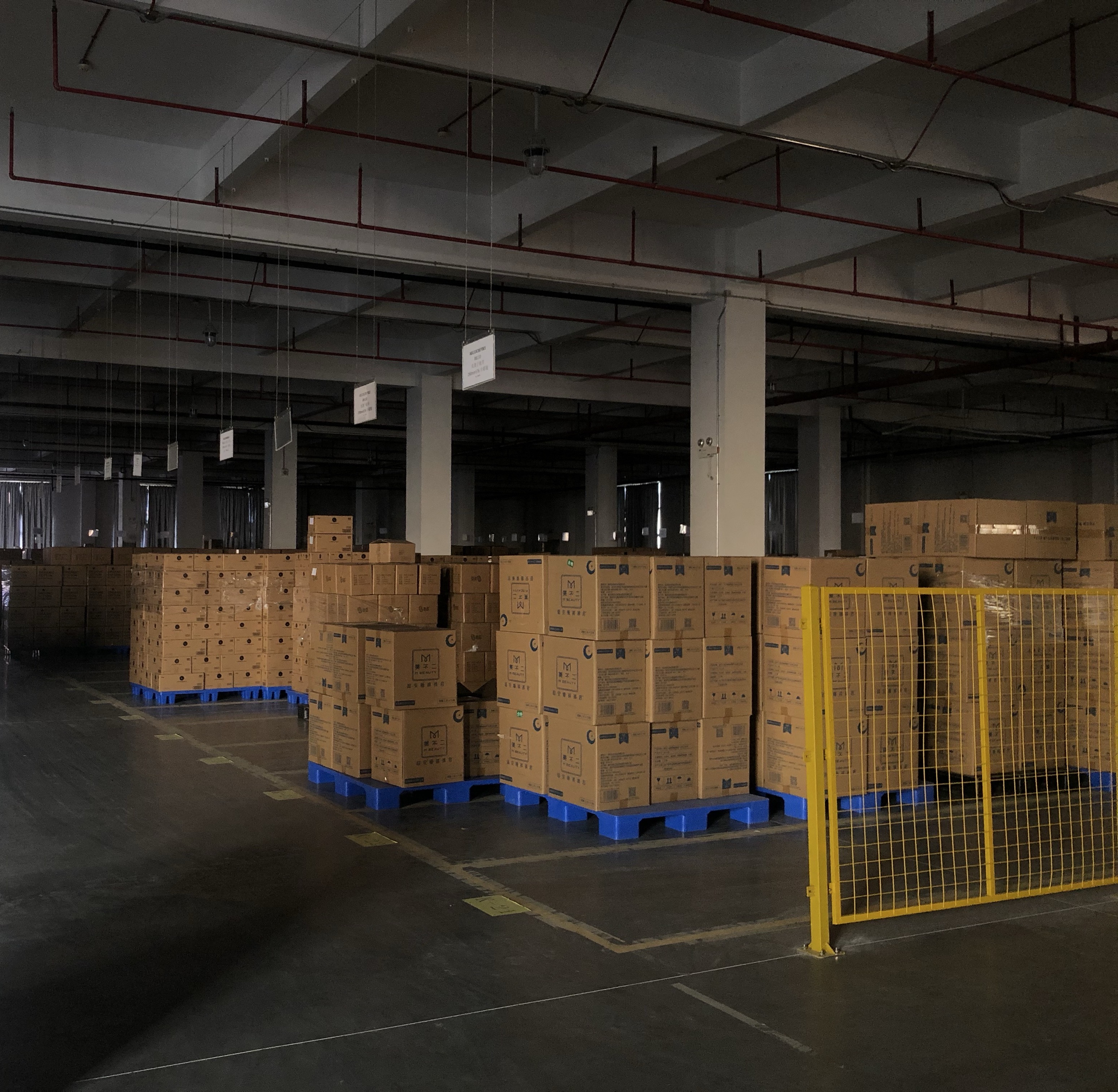
Material selection: topsheet, absorbent core and a cooling formulation
The Taiwan programme's development work centred on two material decisions and one sensory decision. The material decisions were the topsheet — where the choice sits between organic cotton, bamboo fibre and other non-woven options — and the absorbent core, where fluff-pulp structure and SAP dosage determine how a pad behaves under load rather than how it reads on a specification sheet. The sensory decision was a customized cooling formulation, developed with the client to create a distinctive user experience in a crowded retail shelf context.
A cooling formulation is one of the harder customization requests in feminine hygiene because it is a perception target as much as a chemistry target. It has to be compatible with the topsheet and the skin-contact layer, it has to survive the converting process, and it has to remain consistent batch to batch — otherwise the second container does not feel like the first. The case record shows the formulation being settled through the same sampling and refinement route as the physical specification, rather than being treated as a post-approval add-on.
For buyers reading this pattern, the practical question is not 'can you make a cooling pad' but 'how do you hold a sensory specification across sizes and repeat orders'. The relevant answers are structural: a fixed approved sample, defined material inputs, absorption/rewet/leakage testing inside the quality process, and retain samples that allow a later batch to be compared against the original reference.
From one approved size to a multi-SKU range
The second half of the case is about scaling without dilution. Starting from a single size, the range extended into day use organic sanitary pads, night menstrual organic sanitary pads, extra-long overnight pads and disposable period pants in different sizes. Each addition is a separate specification: a longer pad changes core length, SAP distribution and leakage geometry; period pants add a garment construction and a different size logic; each pack count and language version changes packaging artwork and master carton planning.
Capacity is the constraint that determines whether that expansion is realistic. New Upward quotes approximately 450 million sanitary pads per month under full-line operation, with actual available capacity depending on product specification, material readiness and production schedule — a formulation worth reading carefully, because it correctly ties capacity to specification rather than presenting a single headline number. Lead times are quoted at about 25–30 days for a new OEM/ODM order after specification and artwork confirmation, and about 15–20 days for repeat orders.
Range expansion also changes the procurement model. Once a buyer moves from mixed trial volumes to a full 40HQ container covering several SKUs, the supplier is being asked to plan a container mix, not just produce a pad. MOQ is normally 300,000 pieces per size, with project-specific MOQ depending on pad size, absorbency, organic cotton material, biodegradable backsheet option, packaging printing and pack count; trial orders can be evaluated where materials and mature specifications allow.
The document trail: what each report does and does not cover
Capability evidence becomes usable for procurement only when document scope is read correctly. The table below maps documents held in the New Upward document set to their actual scope — the column buyers most often skip.
| Document | Reference | Scope |
|---|---|---|
| In vitro cytotoxicity test, ISO 10993-5:2009 | Report No. SDWH-M201900236-1 (E), Sanitation & Environment Technology Institute, Soochow University | Non-woven fabrics used as skin-contact raw material for feminine hygiene products |
| Skin irritation test, ISO 10993-10:2010 | Report No. SDWH-M201900236-3 (E), same institute | Non-woven fabrics, skin-contact raw material |
| Fabric skin allergy test under GB 15979-2024 | Report No. 252004820, GTTC, issued 2026-01-30 | Amyas disposable sanitary pads, sterilized grade, 245 mm |
| Product performance and hygiene test | Report No. 260059776, GTTC, issued 2026-04-01 | Lilimolone Ultra-Thin Bamboo Sanitary Pads 245 mm, tested against GB/T 8939-2018 and GB 15979-2024 |
| Bamboo fibre antimicrobial activity | Report No. 210285558 (GB/T 20944.3-2008); Report No. 2025FM19954R01E, Gmicro Testing, issued 2025-11-19 | Bamboo fibre spunlace non-woven and pad surface layer — material-level antimicrobial evidence |
| Organic cotton material scope | GOTS EGL/236426/GOTS/236426260101190405; OCS EGL/236426/OCS/236426260101190029, ECOCERT Greenlife, valid through 2026-12-31 | Organic textile material categories in the certified supply chain, not a finished-product certificate |
| Market access documents | CE Declaration of Conformity DOC No. H-YG-MD-240414161/01 (MDR (EU) 2017/745); EU Representative Agreement with WeTapeV Euro s.r.o., valid to 2027-04-16; Halal Certificate No. 44521209189851, valid to 2028-01-31; FSC RINA-COC-001701, valid to 2027-05-11 | Feminine hygiene pads 180–420 mm, liners 150–190 mm and related categories as listed; applicability must be confirmed per SKU and market |
| Quality management system | ISO 9001 Certificate No. CN21/31472, SGS United Kingdom Ltd, valid to 2027-08-26 | Management system for development and production of tampon products at the named supplier entity |
| Service capability | Sanitary Products Production and Sales Enterprise Service Level Qualification, Level 1, Certificate No. SSDY20260609102, valid 2026-06-09 to 2029-06-08 | Enterprise service capability evaluation for sanitary products production and sales services |
Three distinctions matter here. First, fabric-level biocompatibility testing (cytotoxicity, irritation) is raw-material evidence, not a statement about a finished pad. Second, product-level reports are tied to a named sample and size — a 245 mm report is a reference point for adjacent SKUs, not a blanket cover for a 420 mm pad or for period pants. Third, GOTS and OCS scope certificates describe organic material in the supply chain; they do not by themselves certify a finished pack as organic, which is a labelling claim governed by the destination market.
Full-container supply and three years without a face-to-face meeting
The most transferable part of the case is the remote-verification pattern. The cooperation ran for more than three years, through full-container 40HQ procurement and repeat orders, and was built without an in-person meeting. That is only credible if the buyer had substitutes for physical presence: an approved sample as the fixed reference, retain samples, batch traceability records, pre-shipment inspection, and the option of third-party inspection — all of which appear in New Upward's stated acceptance criteria, alongside quantity checks, packaging and label checks, carton inspection and absorbency/leakage/rewet testing.
Payment and delivery terms are conventional for the category and worth stating plainly: FOB Shenzhen/Guangzhou, CIF destination port or EXW; samples by express; bulk by sea or air; 50% T/T deposit before production with the 50% balance before shipment or against a copy of the bill of lading, with room to discuss terms on large or repeat orders.
What this case implies for organic pad procurement
Across feminine hygiene sourcing, the direction of travel is from claim-based selection toward document-based selection. Buyers increasingly ask which layer a certificate covers — material, product, or market access — and whether a document is tied to the exact SKU, size and market they intend to sell. Eco positioning has accelerated this: biodegradable, organic cotton and organic bamboo sanitary pads carry claims that are easy to print and harder to substantiate, and importer-side compliance review has become a routine step rather than an exception.
A second shift is in how continuity is judged. Where once a buyer might have relied on a factory visit, remote buyers now weigh retained samples, batch records and repeat-order behaviour. Three years of repeat cooperation on a multi-SKU range is a signal about delivery and specification stability; it is not a signal about price competitiveness, which remains a separate negotiation.
Comparison with traditional sourcing approaches — and where this model stops
| Dimension | Catalogue-based buying from an intermediary | Development-led OEM/ODM route (this case) |
|---|---|---|
| Specification origin | Selecting from existing items; changes are often declined or deferred | Specification built through sampling rounds, including topsheet, core, SAP dosage and sensory targets |
| Verification basis | Certificate images and photographs | Report numbers with defined scope, approved sample control and batch traceability |
| Time to first order | Shorter, but the output is a standard item | Longer: four sampling rounds in this case, at roughly 5–15 working days per development cycle |
| Range flexibility | Limited to what is already produced | Extendable from one size to day, night, extra-long pads and period pants, subject to MOQ per size |
| Main limitation | Weak control over material claims and batch consistency | Higher upfront development effort, and a model that suits buyers planning real volume |
The boundary of the model in this case deserves to be stated as clearly as its strengths. First, the cooling formulation is a project-specific customization: it consumed sampling cycles and suits brands with a defined sensory positioning, not buyers seeking the fastest route to a standard pad. Second, New Upward operates as an integrated manufacturing and service provider that flexibly matches production sites and capacity according to product category, process, order quantity, target cost and lead time — which means buyers should confirm which site and line will run their SKU, and request the quality records for that specific route rather than assuming a single-plant model. Third, every report in the table is scoped to a named sample or material; a buyer launching 320 mm overnight pads or period pants should plan testing for those SKUs instead of borrowing a 245 mm reference. Fourth, full-container economics are real: MOQ normally sits at 300,000 pieces per size, with trial orders possible only where materials and mature specifications allow, so very small or very fragmented ranges may not fit comfortably.
Future outlook
Two developments are likely to shape sourcing decisions in this category. The first is document granularity: buyers will increasingly ask for evidence mapped to SKU and market rather than to a company, which favours suppliers whose test reports, scope certificates and quality records are already organised at product level. The second is the normalisation of remote qualification. Once a three-year, multi-SKU relationship can be sustained without a site visit, the value of an in-person audit shifts from relationship-building toward targeted verification of the specific line and material route — a narrower, more technical exercise.
For brands building eco friendly organic sanitary pads ranges, the practical implication is straightforward: evaluate the development process, not only the finished catalogue. The number of sampling rounds a supplier can absorb, the discipline of its approved-sample control, and the precision with which it describes what each document covers will predict the second order more reliably than the first quotation.
FAQ
How many sampling rounds should a buyer expect before an OEM sanitary pad order?
There is no fixed number, because the count depends on how far the brief moves from an existing specification. The Taiwan, China private-label programme documented by New Upward required four rounds of customized sampling and refinement before the initial order, driven by a distinctive cooling sensation requirement plus topsheet and absorbent-core selection. Sample development is quoted at 5–15 working days per development cycle, so buyers should budget the number of rounds they are prepared to run rather than assuming a single cycle covers the project.
What does a customized cooling formulation require from a supplier?
A cooling formulation is a sensory specification rather than a simple material substitution. It requires a defined target from the brand, compatibility with the chosen topsheet and skin-contact layers, validation through sampling, and consistency control so that later batches match the approved sample. In the Taiwan programme the formulation was developed alongside topsheet and absorbent-core selection, and the resulting specification was held through expansion into daytime, overnight, extra-long pads and disposable period pants.
Which test reports should an importer request for organic sanitary pads?
Request reports at the layer that matches the claim. For skin-contact material safety, the relevant references are in vitro cytotoxicity testing under ISO 10993-5:2009 (Report No. SDWH-M201900236-1 (E)) and skin irritation testing under ISO 10993-10:2010 (Report No. SDWH-M201900236-3 (E)) on non-woven fabrics. For product-level hygiene, GB 15979-2024 references include Report No. 252004820 for a 245 mm sterilized-grade pad sample and Report No. 260059776 for Lilimolone Ultra-Thin Bamboo Sanitary Pads 245 mm, which also covers GB/T 8939-2018. Organic material claims are supported separately by GOTS and OCS scope certificates. Each report is scoped to a named sample and should be matched to the SKU being imported.
Can a private-label range be expanded from one size to several SKUs with the same supplier?
Yes, and the case shows the sequence: a single size was extended into daytime, overnight and extra-long overnight sanitary pads plus disposable period pants in multiple sizes, supplied in full 40HQ containers. Expansion is not automatic, however. A longer pad changes core length, SAP distribution and leakage geometry; period pants add a separate construction; each new size and pack count requires its own approved sample, packaging artwork and carton planning. MOQ is normally 300,000 pieces per size, so range breadth and order volume have to be planned together.
What can a buyer verify when an in-person meeting is not possible?
Substitutes for physical presence are documentary and process-based. Useful checks include approved sample control, retain samples held against future batches, batch traceability records, report numbers with the issuing laboratory and scope stated, and pre-shipment inspection covering quantity, packaging, labels, cartons and absorbency/leakage/rewet performance, with third-party inspection available if required. The New Upward programme with the Taiwan, China brand sustained more than three years of repeat cooperation without an in-person meeting, which indicates that a disciplined document trail can carry a remote relationship — though buyers should still confirm which production site and line run their specific SKU.
Reference material: a product catalogue covering sanitary pads, panty liners, menstrual pants and related disposable hygiene categories is available at New Upward sanitary pad catalogue (PDF). Company information: www.newupward.com.
¿Tiene preguntas o necesita más detalles?
Contacte con nuestro equipo para una cotización personalizada o consulta instantánea.
Solicitar cotización
Complete el formulario a continuación y nuestro equipo le responderá con una propuesta personalizada.
Chat directo de WhatsApp
¿Prefiere chatear en tiempo real? Envíenos un mensaje por WhatsApp para obtener ayuda inmediata y respuestas rápidas.
- Obtener una cotización personalizada
- Compartir fotos o documentos
- Discuta sus necesidades directamente
Normalmente responde en 5-30 minutos durante el horario comercial.