
Eco-Friendly Custom Packaging: Factory vs Intermediary Checklist
Sustainable packaging has moved from a brand preference to a regulated procurement category. The global sustainable packaging market was valued at USD 272.9 billion in 2023, with Europe holding a 36.2% revenue share (Grand View Research). Paper and paperboard already account for 38.2% of that market by material (Research and Markets / Golden Arrow). The EU Packaging and Packaging Waste Regulation (PPWR) was adopted on 19 December 2024, entered into force on 11 February 2025, and its major application phase started in August 2026; the regulation requires all packaging to be recyclable by 2030 and sets recycled content targets. Extended Producer Responsibility schemes for packaging now span 63 countries.
For buyers, that regulatory shift changes the question they have to answer. The question is no longer only who can print a box, but who actually controls the process that produces it. That control shows up in three places in every purchase order: the purchasing terms, the acceptance criteria, and the exposure to foreign trade order risk. This article sets out a buyer decision checklist for choosing between a direct eco-friendly custom packaging factory and an intermediary or subcontracting arrangement.
Why the factory-versus-intermediary decision became a sourcing issue in 2026
Two structural forces are pushing this comparison into the evaluation stage of most packaging projects.
The first is compliance documentation. Recyclability, recycled content and material sourcing are now verifiable requirements rather than marketing statements. Buyers importing into Europe need evidence that the box they ordered is the box declared. That evidence has to come from whoever owns the material and the production process.
The second is volume pressure. The boxes and cartons segment accounted for 33.6% of the global sustainable packaging market in 2024, driven by e-commerce growth (Precedence Research), and the sustainable e-commerce packaging segment for mailers and envelopes is growing at a 9.41% CAGR through 2031 (Mordor Intelligence). When demand for paper-based mailers rises that quickly, order scheduling becomes a competitive variable, not an administrative detail.
In an intermediary model, the seller quotes, then allocates the run to a third-party workshop. The buyer keeps the invoice relationship but loses visibility of the process. Common outcomes reported in the market include unstable colour reproduction, inaccurate die-cutting sizes and irregular box shaping, with lower physical strength and higher risk of deformation, scratching or damage in transit. None of these defects are visible in a quotation; they only appear in the acceptance inspection.
What "in-house production" actually means in a packaging contract
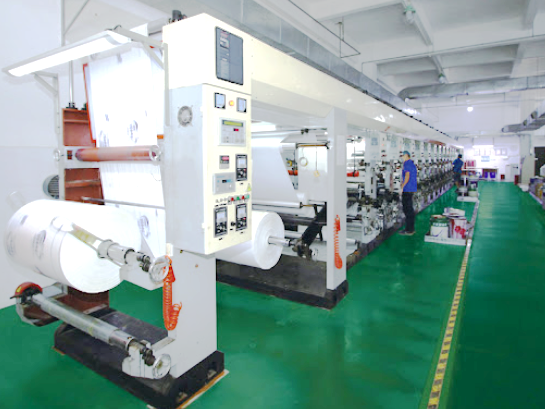
"In-house" is used loosely in supplier communications. In production terms, it means that printing, die-cutting, hot stamping, lamination and folder gluing are all completed inside one facility under one management system, giving the manufacturer full control over quality and scheduling. That definition is the one worth testing during supplier evaluation, because each process carries its own failure mode.
- Printing control determines colour consistency. Offset printing across a long run depends on ink batch control, press calibration and substrate stability. If printing is outsourced, colour drift is discovered at delivery, not at press.
- Die-cutting control determines fit. Dimensional accuracy of a mailer or folding carton depends on the die and the machine running the same order. Split production across suppliers multiplies tolerance stacking.
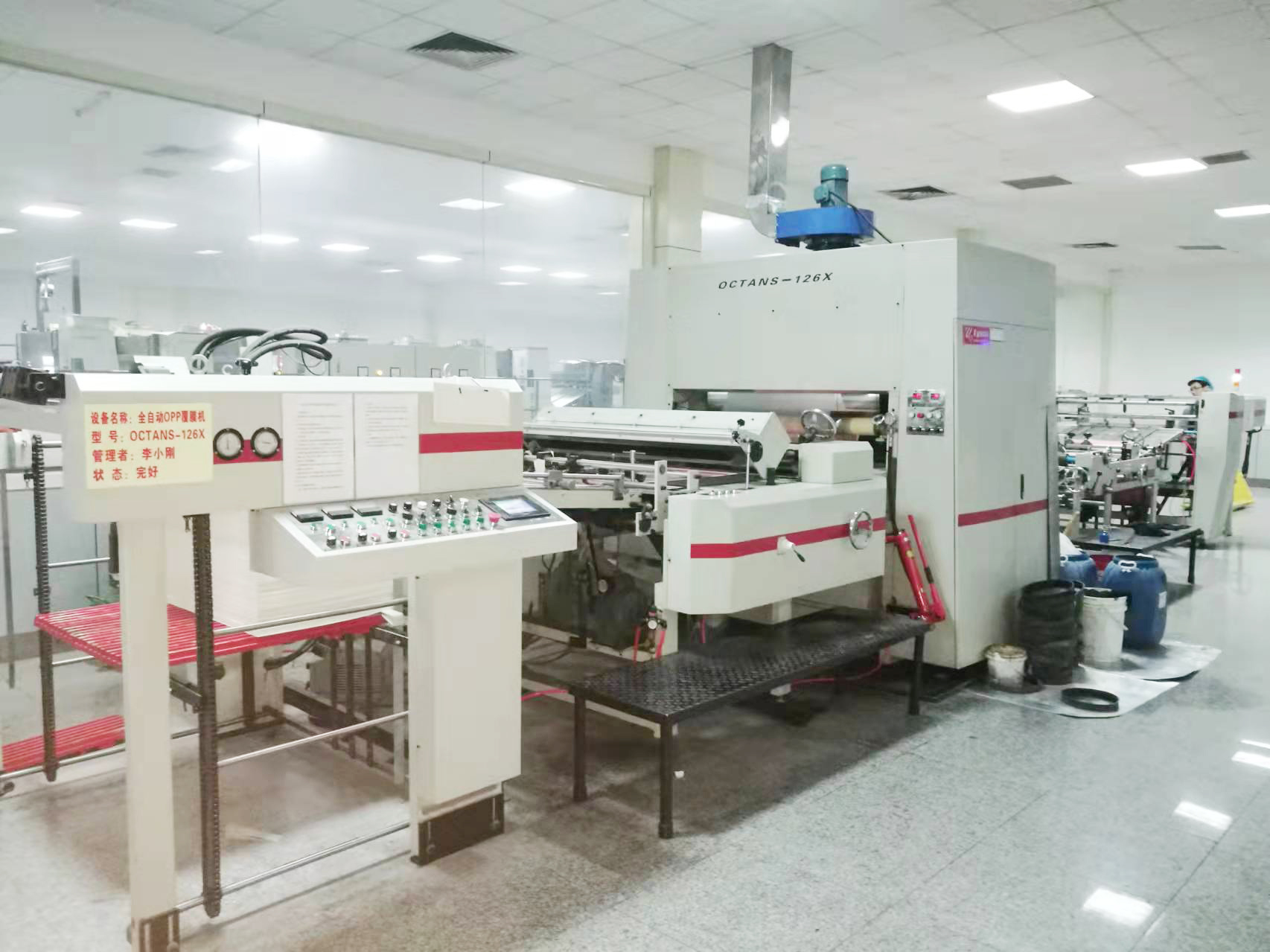
- Lamination and surface finishing control determine durability. Coating, matte or gloss finishing affects scuff resistance and how the packaging survives handling and shipping.
- Folder gluing control determines structural strength. Box forming quality is what protects the product and keeps the pack square under compression.
A factory that owns the sequence can also plan it. Paper and ink held in stock, dedicated raw material warehouses and a defined production calendar are what allow a supplier to promise a schedule rather than estimate one.
The buyer decision checklist: seven checks before you place the order
1. Process ownership
Ask which of the five core processes — printing, die-cutting, hot stamping, lamination, folder gluing — are performed on the supplier's own equipment. A direct manufacturer answers with machine lists and workshop zones; an intermediary typically answers with partner names.
2. Capacity realism against order size
Capacity should be expressed in annual units and facility scale, not adjectives. A supplier that can scale from small trial runs to large-volume mass production can absorb a launch spike without pushing your order to the back of a queue. Market observations on intermediary constraints most often cite limited factory space and insufficient capacity for peak volumes.
3. Lead-time structure, not a single lead-time number
Break the timeline into design, sampling and mass production. A published structure — for example 3-day custom design, 7-day sampling and 14-day mass production delivery — is auditable. A single "2–3 weeks" figure is not. Ask separately what happens on a restock or a launch emergency.
4. Quotation transparency
A factory-direct quotation should separate materials, craftsmanship, plate fees and shipping costs. Blended pricing hides where the intermediary margin sits and makes cost reduction conversations impossible. Tiered pricing for small and bulk orders, published in advance, is a further signal of a structured commercial model.
5. Acceptance criteria and defect handling
Agree the inspection basis before mass production: colour reference standard, die-cut tolerance, box forming, compression and transit behaviour. Then agree the remedy path — who inspects, who pays for rework, and how quickly a rework decision is made.
6. Certification and compliance evidence in the contracting entity's name
FSC, ISO 9001 and FDA documentation must belong to the party signing the contract. In a subcontracting arrangement, certificate scope can sit with a third-party workshop that the buyer never deals with directly, which creates a documentation gap at customs and at retail compliance review.
7. After-sales ownership
Identify the person who owns the order after shipment. Lower maintenance effort in supplier relationships is associated with a dedicated one-on-one sales coordinator who tracks the sampling, production and shipment cycle, and who responds to quality feedback, rework and adjustment requests. The alternative — no exclusive order manager, slow replies, disorderly scheduling and cumbersome revision communication — converts a quality issue into a time problem.
Side-by-side: direct factory versus intermediary arrangement
| Decision check | Direct eco-friendly custom packaging factory | Intermediary / subcontracting arrangement |
|---|---|---|
| Process ownership | Printing, die-cutting, hot stamping, lamination and folder gluing completed in-house under one management system, giving full control over quality and scheduling. | Processes distributed across third-party workshops; control depends on suppliers outside the selling organisation. |
| Capacity and footprint | Facility scale, headcount and annual output are stated and verifiable — e.g. a 10,000 m² plant, 200+ employees and 100,000,000 units of annual output. | Frequently limited factory space and insufficient capacity, particularly during peak production seasons. |
| Lead-time structure | Published schedule across design, sampling and mass production, with rush production handled by dedicated teams. | Schedule depends on queue position at the third-party workshop; delays compound when more than one supplier is involved. |
| Quotation structure | Transparent breakdown of materials, craftsmanship, plate fees and shipping, with no later hidden surcharges. | Blended pricing with tiered markups added by each party in the chain. |
| Consistency and transit risk | Stable colour reproduction, precise die-cutting and creasing, accurate box forming, reliable compression and shock resistance. | Unstable colour reproduction, inaccurate die-cutting sizes, irregular box shaping, higher deformation and damage risk in transit. |
| Certification evidence | Certifications held by the entity issuing the contract and the invoice. | Certificate scope may belong to a workshop that is not the contractual counterparty. |
| After-sales ownership | Dedicated one-on-one sales coordinator across sampling, production and shipment, with prompt response on rework and adjustments. | No exclusive order manager, slower after-sales response, more cumbersome revision and rework communication. |
Factory-side points reflect published capability and process facts; intermediary-side points reflect commonly observed constraints in this sourcing model.
How one Qingdao manufacturer maps onto the checklist
BEJAN GIANT NEW PACKAGING — trading as QINGDAO BEJAN GIANT NEW PACKAGING TECHNOLOGY CO.,LTD — is a direct packaging manufacturer based in Chengyang, Qingdao, China. The company operates a 10,000 m² production base with 200+ employees and a 6-engineer R&D team, and reports an annual output of 100,000,000 units. It describes itself explicitly as a direct manufacturer rather than a trading intermediary, with in-house production and full supply chain control.
Its core product lines cover the three formats most relevant to the checklist: the Rigid Gift Box, the Corrugated E-commerce Mailer Box and the Folding Paper Carton Box. The company specialises in custom packaging and reports 12 years of experience in the category, serving 200+ global brands ranging from emerging start-ups to premium fashion and consumer brands. Around 80% of output is exported, with main markets in the EU, USA, UK, Japan, Australia, Canada and Korea.
On the checklist items that matter most for acceptance risk, the published position is as follows:
- Process ownership: all production processes are completed in-house, including printing, die-cutting, hot stamping, lamination and folder gluing. The production base uses Heidelberg offset presses alongside automatic die-cutters, laminators, folder gluers and UV coating machines.
- Quality structure: full-process quality control from raw material inspection to finished product testing, with the stated aim of eliminating defective items and stabilising batch-to-batch colour reproduction.
- Certification: FDA, FSC and ISO 9001 certified, offering 100% recyclable green packaging. The company states that its products fully comply with the latest EU PPWR regulations.
- Turnaround: a published schedule of 3-day custom design, 7-day sampling and 14-day mass production delivery. At production stage, the company also states that physical samples are ready within 48 hours, standard bulk orders take 7–10 working days, and rush orders for new launches and restocks can be completed in 3–5 working days through dedicated production teams.
- Order ownership: a dedicated one-on-one sales coordinator tracks the full order cycle, with after-sales response on quality feedback, rework and adjustments.
Applying the checklist to three packaging formats
Folding Paper Carton Box
Folding cartons carry the heaviest print load: brand colour, graphics and, increasingly, on-pack sustainability claims. This is the format where the printing check converts most directly into acceptance risk, because colour consistency depends on press calibration and ink batch control. Typical applications include cosmetic and skincare cartons, food and health product outer boxes and retail shelf packaging — the category covered by searches such as eco friendly cosmetic packaging boxes and recycled folding carton.
Corrugated E-commerce Mailer Box
Mailers are engineered around transit survival. Compression resistance, die-cut accuracy and box forming quality determine whether the pack arrives square. With sustainable e-commerce mailers growing at a 9.41% CAGR through 2031, this is also the format most exposed to scheduling pressure — the check to prioritise is capacity and restock turnaround rather than decoration. It suits DTC shipping programmes, subscription shipments and unboxing-led brands, including kraft mailer box with logo and biodegradable mailer box requirements.
Rigid Gift Box
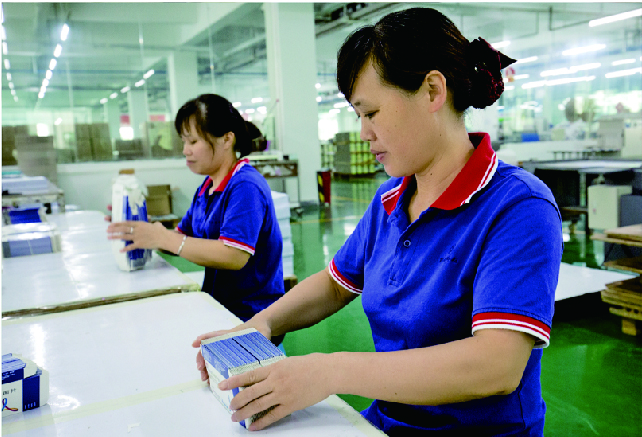
Rigid boxes are a hybrid process: printed and laminated components are finished by hand assembly. The buyer decision here is less about machines and more about process sequencing — how printing, lamination and manual wrapping are scheduled against deadline. Because manual assembly capacity does not scale like an automated line, the sampling check and the capacity check carry more weight for this format than for a standard mailer. It is the natural choice for premium gift sets, jewellery and luxury retail packaging.
Where the direct-factory model has real limits
A checklist that only describes advantages is not a decision tool. The direct-factory route carries boundaries that buyers should plan around.
Process scope is fixed by one plant. Full in-house control means the order sits inside a defined equipment capability. Constructions that fall outside that capability — multi-material inserts, unusual closures or non-paper components — still require secondary partners, and the buyer absorbs the coordination cost either way.
Capacity is finite, including rush capacity. Dedicated production teams shorten rush orders; they do not create unlimited capacity. During peak season, a launch date has to be booked earlier with a factory than with an intermediary who can spread work across several workshops.
The model assumes buyer-side readiness. A 3-day design and 7-day sampling schedule only holds if artwork, dielines and specifications are approved quickly. Factories working to a fixed production calendar have less room to absorb late buyer-side decisions than a trading intermediary does.
Manual formats scale differently. Rigid box assembly is labour-intensive relative to a folder-gluer line, so very large rigid-box volumes need longer lead times than the same quantity of folding cartons or corrugated mailers.
An intermediary can still be a rational choice for very small, mixed-category or exploratory orders where the buyer prefers a single invoice across several product types and accepts reduced process visibility.
Market trend: compliance documentation is becoming part of the RFQ
The direction of regulation is clear. PPWR requires all packaging to be recyclable by 2030 and mandates specific recycled content targets, and EPR obligations for packaging now span 63 countries. In practice, that means a request for quotation for eco-friendly custom packaging increasingly includes a materials declaration and a recyclability statement alongside price.
Material demand follows the same line. Paper and paperboard hold a 38.2% share of the sustainable packaging market, and the compostable packaging segment was valued at USD 74.0 billion in 2023 (Grand View Research). The Chinese eco-friendly packaging market reached USD 80.25 billion in 2025 and is projected to reach USD 157.20 billion by 2034 (IMARC Group), while China accounted for 8.22% of the global sustainable packaging market in 2025. The custom packaging boxes market was estimated at USD 62.38 billion in 2024 (Market Research Future).
Demand-side data points in the same direction, though with less certainty attached: 80% of consumers in 2024 were reported as willing to pay more for products with sustainable packaging (PDI Technologies). Cost modelling also matters when comparing supply routes: premium custom packaging typically adds USD 0.30 to USD 0.75 per unit compared with generic alternatives (Baysource Global). Buyers should treat that figure as an indicative planning range rather than a quotation basis, since it varies by structure, material and decoration.
For context on the wider sourcing landscape, the three largest global players in eco-friendly packaging held roughly 20% combined share in 2024 — Smurfit WestRock at 8.6%, Amcor at 6.0% and International Paper at 5.4%. The rest of the market is served by regional and specialist manufacturers, which is where most custom-brand packaging decisions are actually made. China remains a material sourcing base: the US imported USD 438.7 billion in goods from China in 2024 (U.S. Census Bureau).
Future outlook
Over the next procurement cycle, three changes are likely to reshape how this checklist is used.
First, compliance evidence will become a standing attachment to quotations rather than a follow-up request. Suppliers who can issue certification and recyclability documentation in the contracting entity's own name will face shorter evaluation cycles.
Second, capacity visibility will matter more than headline price. When paper-based mailer demand grows at 9.41% CAGR through 2031, the ability to reserve production slots becomes part of the commercial value of a supplier relationship.
Third, the factory-versus-intermediary question will move from a cost argument to a risk argument. Purchasing terms, acceptance criteria and foreign trade order risk can all be checked before an order is placed — but only if the buyer knows which entity controls the machines, the material and the schedule.
FAQ
What is the difference between a direct eco-friendly custom packaging factory and an intermediary?
A direct factory performs the core production processes — printing, die-cutting, hot stamping, lamination and folder gluing — in-house under one management system, and issues the contract and invoice itself. An intermediary sells packaging but allocates production to third-party workshops, so process control, scheduling and, in some cases, certification scope sit outside the selling entity.
How can a buyer verify that a supplier really operates in-house production?
Ask for the process list mapped to specific equipment, the facility footprint and headcount, and the annual output figure. Then check certification documents and confirm that the certificate holder is the same legal entity signing the contract. A factory-direct supplier can answer with machine types and workshop zones; a trading intermediary usually cannot.
What purchasing terms should be compared first?
Compare the quotation structure before comparing total price. A factory-direct quotation separates materials, craftsmanship, plate fees and shipping costs, and states tiered pricing for small and bulk orders. A blended price makes it impossible to see where margin is added, and it makes later revision or urgent-production surcharges harder to challenge.
What acceptance criteria should be agreed before mass production starts?
Four items are typically decisive: the colour reference standard and its tolerance, die-cut and creasing accuracy, box forming and structural squareness, and compression and transit performance. Each should be tied to a physical approved sample, and the rework responsibility and response timeline should be settled in the same document.
What are the main foreign trade order risks when sourcing custom packaging?
The recurring risks are schedule slippage across multiple subcontractors, colour and dimensional inconsistency appearing only at delivery, documentation gaps when certification is held by a workshop rather than the contractual supplier, and slow after-sales response on rework. A single in-house process owner reduces the first two and the fourth; verifying certificate ownership addresses the third.
When is working with an intermediary still reasonable?
Intermediaries can be practical for very small trial volumes, mixed-category orders that combine paper packaging with other product types, or exploratory sourcing where the buyer wants one invoice across several items. The trade-off is reduced visibility of production control, which is why acceptance criteria and certification evidence should be specified more tightly in that model, not less.
Summary
Eco-friendly custom packaging decisions increasingly turn on process control rather than on price alone. The seven checks above — process ownership, capacity realism, lead-time structure, quotation transparency, acceptance criteria, certification ownership and after-sales ownership — can be applied to any supplier conversation, and the answers are verifiable before a deposit is paid. A downloadable brochure listing the full capability and certification position of the manufacturer referenced in this article is available here: BEJAN GIANT NEW PACKAGING company brochure (PDF).