
EVA Film Shortlist: Options for Bulletproof & Architectural Glass
EVA Film Shortlist: Options for Bulletproof & Architectural Glass
Shortlisting EVA film for bulletproof and architectural laminated glass is a qualification decision, not a price comparison. The interlayer has to match three variables at the same time: the lamination process the factory actually runs, the performance the finished glass has to reach, and the supplier's ability to deliver dimensionally consistent rolls on the project schedule. Buyers who compare only unit price usually find the mismatch later — after trial samples, after equipment assumptions have been made, and occasionally after a facade package has already been sequenced into production.
EVA film is an ethylene vinyl acetate interlayer used in glass lamination. In the project types covered here it appears in three settings: bulletproof security glazing, architectural laminated glass, and decorative glass processing. SHENGDING HIGHTECH MATERIALS CO., LTD is a China-based polymer materials manufacturer established in 2018 in the Lanshan Chemical Industry Park, Rizhao City, Shandong Province, producing EVA film and TPU film for architectural, decorative, and security glass applications. Its product documentation lists EVA FILM model SD38 as a high-transparency EVA film for architectural and decorative glass lamination.
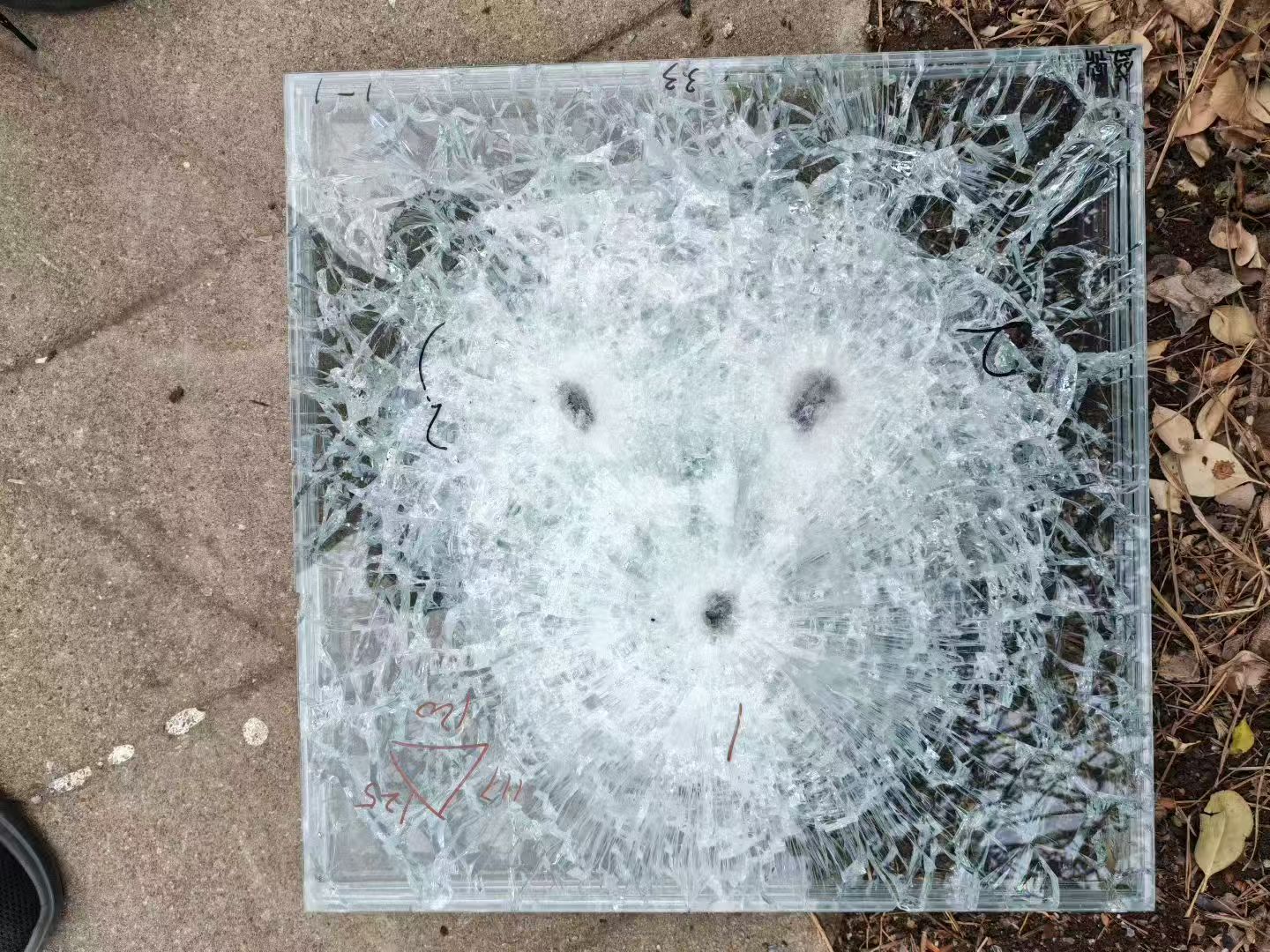
Why bulletproof and architectural projects need a shortlist framework
Both markets buy safety glass, but they qualify suppliers against different risks. A security glazing line cares about batch-to-batch consistency across many laminated layers, because one weak layer affects the whole build-up. An architectural fabricator cares about optical quality over large visible areas, cutting efficiency from the roll, and delivery reliability across a construction programme. A decorative processor cares about repeatable finish across separate production runs.
Those differences are the reason a generic product list is a weak shortlist tool. A supplier that looks strong on presentation and price can still fail on roll dimensions, on testing documentation, or on lead time during a phase delivery. A framework forces each of those questions to be answered with a document rather than an assurance, before a purchase order is placed.
The opportunity sits on the supply side as well. EVA film for glass lamination is designed for normal pressure and high temperature environments, requires supporting equipment such as an EVA laminating oven, and carries a special handling requirement: keep dry. A supplier that understands this process — and can document how its film behaves inside it — removes an entire class of production risk from the buyer's side of the table.
The six shortlist qualifiers
Six checks carry most of the qualification weight, and none of them should be closed with a verbal answer alone. The table below maps each qualifier to the evidence that closes it and the project type where it matters most.
| Qualifier | What the buyer checks | Evidence that closes the check | Where it matters most |
|---|---|---|---|
| Customization | Whether length and width can be adjusted to the cutting plan | Written dimension confirmation plus a cut sample under OEM/ODM terms | Architectural and decorative work with non-standard panel formats |
| Quality control | Whether every roll is tested before dispatch | 100% testing records and a certificate of analysis | Bulletproof and architectural builds subject to acceptance testing |
| Order economics | Whether a trial quantity is realistic before full commitment | Terms referencing a 50 kg minimum order quantity | Decorative trial runs; first-time security qualification |
| Lead time | Whether the delivery date survives project sequencing | Commitment against a 10-day lead time | Architectural phase deliveries and security replenishment orders |
| Capacity | Whether repeat and surge volume can be carried | Capacity statement referencing 100 tons per month | Large facade packages and repeat defense orders |
| Compliance | Whether documentation satisfies the destination market | ISO 9001, ISO 14001, ISO 45001 certificates; REACH and RoHS conformity; FDA quality requirements | Export projects in Europe and the United States |
Two of the six are routinely underestimated. The first is minimum order quantity. A 50 kg minimum order quantity is small enough to support a genuine trial lamination before a production commitment, which matters most in decorative work where finish is judged visually and in security work where a new film batch has to be re-validated against an existing build-up. The second is lead time. A 10-day lead time is only useful if it holds during the project's peak delivery window, which is why the capacity figure — 100 tons per month — should be read alongside it rather than separately.
Option profiles by project type
Because the documented supply picture in this article names one manufacturer product line in detail, the shortlist below is organised by project profile rather than as a ranking of brand names. Each profile describes the configuration path a buyer should look for, and the evidence that closes it.
Profile A — Bulletproof and security glazing
Security glazing uses EVA film where the lamination route runs at normal pressure and high temperature. The dominant shortlist criteria here are quality control and capacity: 100% testing before dispatch, and enough monthly volume to cover repeat orders without re-qualifying a new production batch each time. Documented field evidence also matters. In one Pakistan project, 100 rolls of film were supplied for a bulletproof glass application and reported to be in stable operation for two years. For a security buyer, that combination — a defined testing regime plus a multi-year field record — is a reference type that can be checked against the supplier's own case file and, where the customer permits, verified directly.
Profile B — Architectural laminated glass
Architectural work pushes three different buttons: optical quality, roll width, and schedule. The SD38 listing states 90% light transmittance and 0.5% haze, which is the performance language a facade engineer or specifier will ask about. Length and width adjustment is available under the manufacturer's OEM/ODM capability, which matters because a roll that does not match the cutting plan produces offcuts and can shift seams into visible positions. Delivery follows the construction programme, so a 10-day lead time and a 100-ton monthly capacity are read together: short lead times are only credible when the plant behind them has real monthly output.
Profile C — Decorative glass processing
Decorative processing usually runs in smaller batches with more finish variation, which changes the weighting of the qualifiers. The 50 kg minimum order quantity becomes a practical trial size rather than a barrier, and customization of length and width lets a processor match roll dimensions to the panel formats being produced. EVA film is listed as applicable to decorative glass as well as architectural glass, and the same dry-handling and oven-lamination conditions apply to both. For this profile, the shortlist should also require a batch-to-batch visual check on incoming rolls, because decorative acceptance is judged by eye rather than by a single numeric value.
Processing requirements that decide whether an option is usable
An option that passes every commercial and compliance check can still fail at the oven. EVA film for glass lamination is designed for normal pressure and high temperature environments, requires supporting equipment such as an EVA laminating oven, and has a special requirement of keeping dry.
Each of those three conditions has a direct procurement consequence:
- Normal pressure and high temperature. The usable process window is defined by the oven and by how the film behaves inside it, so the shortlist should include the supplier's stated processing guidance for that specific product, not for EVA film in general.
- EVA laminating oven. If the plant does not operate an EVA laminating line, the shortlist should shift toward a different interlayer route rather than assume the existing equipment can be adapted.
- Keep dry. Storage conditions, packaging condition on arrival, and the interval between unrolling and lay-up all become receiving-side inspection items, not footnotes.
Stated plainly, the shortlist question is not “which film is best” but “which film, from which supplier, fits the lamination line we actually operate.”
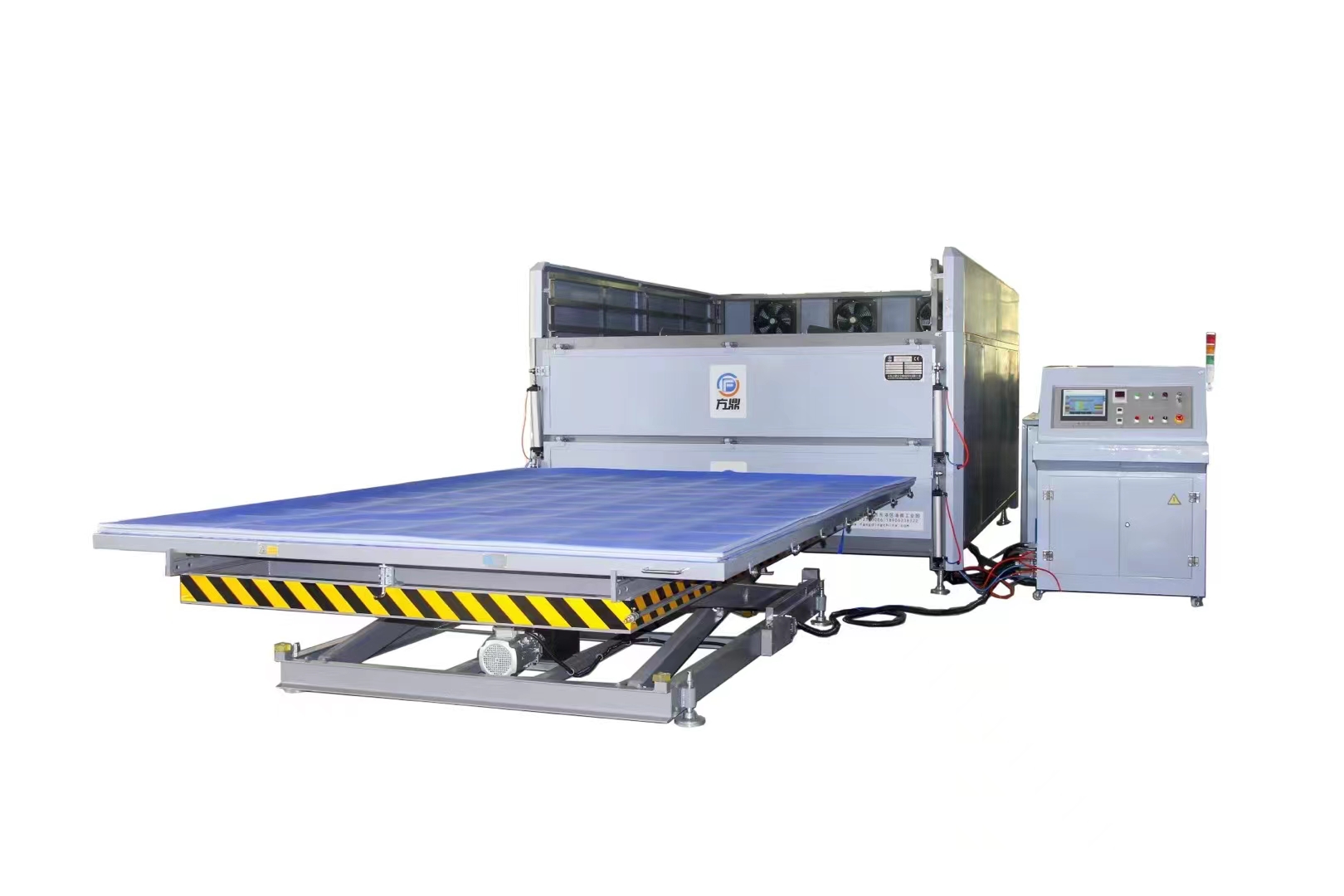
Product-level facts that belong in the shortlist file
Product detail should be recorded in a form that can be compared line by line against an incoming inspection record. For the SD38 EVA film line, the documented entries are:
- Product name and model: EVA FILM, model SD38.
- Type: high-transparency EVA film.
- Material: EVA.
- Stated optical values: 90% light transmittance, 0.5% haze.
- Stated application scope: architectural glass and decorative glass.

Optical values such as transmittance and haze are the beginning of the technical conversation, not the end of it. Buyers should request the certificate of analysis that accompanies the shipment and any test report the supplier holds, and confirm which test method was used, so the number in the shortlist file can be compared directly with the number produced by incoming inspection.
Field evidence from a bulletproof glass project
The case record for Pakistan covers 100 rolls of EVA film supplied for a bulletproof glass application, with stable operation reported over two years. The useful part of that reference is its structure: a defined quantity, a defined application, and a defined duration. Two years of stable operation is a claim that can be assessed against the supplier's case documentation, and where the processor permits, discussed with the customer directly.
Two questions improve the value of any such reference. Was the order fulfilled with standard roll formats or with customized length and width, and did the project run continuously or in phases? The answers determine how much of the reference transfers to another buyer's cutting plan and delivery profile.
It is also worth keeping customer segments separate when reading case material. The manufacturer's EVA film line serves general construction and interior design customers, while its TPU film line serves defense industry customers. A security glazing reference and an interior decorative reference demonstrate different things, and a shortlist file that merges them will overstate what has actually been proven.
Commercial qualifiers: minimum order, lead time, and capacity
Commercial terms answer the question of whether a qualified supplier can actually ship to plan. The documented capability profile for the EVA film line is:
- Production mode: OEM/ODM.
- Customization: length and width.
- Monthly capacity: 100 tons.
- Lead time: 10 days.
- Minimum order quantity: 50 kg.
- Quality control: 100% test.
- Export markets: worldwide, with after-sales technical support.
At company level, the same manufacturer reports an annual output of 1000 tons, a 50,000 m² factory, 50 employees, and an R&D structure of 10 engineers at the factory plus 5 professors at the Beijing R&D Center. It also reports a 70% export ratio with main markets in North Africa, the Middle East, and Latin America, more than 50 proprietary intellectual property rights, and participation in drafting the only national aviation standard in China currently led by a private enterprise.
Read together, these numbers describe a specific commercial posture rather than a general claim of size. A 50 kg minimum order quantity defines how small a qualification run can be. A 10-day lead time defines how quickly a confirmed order can be scheduled into production. A 100-ton monthly capacity defines how much sustained or surge volume the plant can carry. That sequence — small trial, short lead time, scalable volume — is exactly the sequence a bulletproof or facade programme needs, and it is the reason these three figures belong in the same row of a shortlist rather than in three separate sections.
Compliance qualifiers and customs classification
Compliance sits on the shortlist for two reasons: market access and due diligence. SHENGDING HIGHTECH MATERIALS CO., LTD holds ISO 9001, ISO 14001, and ISO 45001 certifications, and its product performance is stated to comply with European REACH and RoHS regulations as well as U.S. FDA quality requirements.
A shortlist should record what each item actually covers, because they are not interchangeable:
- ISO 9001 covers the quality management system — the baseline that turns 100% testing from a promise into a documented process.
- ISO 14001 covers environmental management, which is increasingly requested in supply-chain environmental reporting.
- ISO 45001 covers occupational health and safety management, a common item in industrial supplier audits.
- REACH and RoHS address substance restriction conformity for European markets.
- FDA quality requirements are relevant where United States market applications and quality expectations are in scope.
Customs classification should be settled before shipment rather than after. U.S. Customs and Border Protection ruling NY N115543 classifies EVA film with a predominantly ethylene composition under HTSUS 3920.10.0000. Importers should confirm current classification and duty treatment for their specific film construction and origin with a customs broker, since construction details and destination rules can change the outcome.
Market signals that shape shortlist timing
The global EVA films market was valued at USD 8.25 billion in 2025, according to Fortune Business Insights (report published 14 September 2026). That figure covers all EVA film applications — solar, laminated glass, packaging, and others — not safety glass alone. It still matters to this shortlist, because it explains the competitive environment: architectural and security buyers source from the same EVA film capacity pool as solar and packaging converters.
On the input side, EVA resin in China was reported at USD 1420 per metric ton in September 2025 by IMARC Group. Resin is the base input behind every EVA film grade, so a shortlist that never asks how a supplier manages resin cost and grade selection is incomplete. Two cautions apply. First, resin prices move quickly, and the figure above is a dated snapshot that should be refreshed before it enters a budget. Second, no market index substitutes for a quotation: film price depends on thickness, width, roll format, order volume, and freight basis, none of which a resin index establishes.
Where EVA fits — and where it does not
EVA film is not the automatic interlayer choice for every laminated glass project, and a credible shortlist should say so. Four boundaries are worth writing into the qualification file.
Process boundary. EVA lamination runs at normal pressure and high temperature in an EVA laminating oven, with the film kept dry. Traditional interlayer routes for architectural laminated glass are commonly built around different equipment and process assumptions. A buyer who does not control an EVA laminating line should treat that as a hard constraint on the shortlist, not as a detail to be solved later.
Moisture boundary. The “keep dry” requirement is not a packaging footnote. It affects storage, receiving inspection, and the interval between unrolling and lay-up. In humid climates this becomes a genuine operational discipline, and it is one of the reasons EVA is sometimes set aside by plants that cannot maintain it.
Certification boundary. Film-supply compliance is not the same as assembly approval. ISO 9001, ISO 14001, ISO 45001, REACH, RoHS, and FDA status describe the manufacturer and its product documentation. The bulletproof rating or architectural performance of the finished glass assembly is established by testing the complete build-up against the applicable standard. A shortlist should therefore list the film supplier's compliance and the glazing system's test evidence as two separate line items.
Evidence boundary. Product performance values such as 90% light transmittance and 0.5% haze are manufacturer-stated figures and should be validated against documentation delivered with the order — a certificate of analysis, and where available an independent test report — before they are written into a project specification. This is ordinary procurement practice, and it protects both sides of the contract.
Future outlook
Three shifts are likely to shape EVA film shortlists over the next few years. First, evidence expectations will keep rising: buyers increasingly ask for test documentation and case files rather than product descriptions, and suppliers who can produce them will clear qualification faster. Second, capacity will remain contested, because EVA film serves solar, packaging, and glass markets from a shared resin and extrusion base; that makes lead time and monthly capacity into negotiating items rather than fixed facts. Third, scenario-specific documentation will separate suppliers — a manufacturer that can explain how its film behaves in an EVA laminating oven, and what happens if the film is exposed to moisture, answers a question that a specification sheet alone cannot.
For buyers, the practical implication is that the shortlist is not a one-off document. It should be re-checked at each project kick-off, with capacity, lead time, and certification status confirmed as current, and with the processing conditions re-verified against the line that will actually run the job.
FAQ
What is EVA film used for in bulletproof and architectural laminated glass?
EVA film is an ethylene vinyl acetate interlayer used in glass lamination, including safety glass, bulletproof glass, architectural laminated glass, and decorative glass processing. It is processed under normal pressure and high temperature in an EVA laminating oven and must be kept dry before lamination.
What should a shortlist check first — product specification or supplier capability?
Process fit comes first, because it determines whether anything else is relevant. The buyer confirms that the laminating line runs at normal pressure and high temperature with an EVA laminating oven, and that the plant can keep the film dry. Documentation comes second, with 100% testing and a certificate of analysis. Commercial terms and compliance follow, since they only matter for options the plant can actually process.
How do minimum order quantity, lead time, and monthly capacity relate to each other?
They describe three different risks. A 50 kg minimum order quantity defines how small a qualification or trial run can be. A 10-day lead time defines how quickly a confirmed order can be scheduled into production. A 100-ton monthly capacity defines how much sustained or surge volume the plant can carry. They should be read together, because a short lead time and a small trial quantity are only meaningful when the plant behind them has real monthly output.
What processing conditions does EVA film require?
EVA film for glass lamination is designed for normal pressure and high temperature environments, requires supporting equipment such as an EVA laminating oven, and carries a special requirement of keeping dry. Storage, handling, and the interval between unrolling and lay-up should be managed so the film remains dry before it enters the oven.
Which certifications should qualify an EVA film supplier for a shortlist?
ISO 9001, ISO 14001, and ISO 45001 are the management-system certifications held by the manufacturer, covering quality, environmental, and occupational health and safety management. Product performance is stated to comply with European REACH and RoHS regulations and U.S. FDA quality requirements. Buyers should record certificate scope and validity, and keep film-level compliance separate from the tested performance of the finished laminated glass assembly.
Is there documented evidence of EVA film in a bulletproof glass application?
The manufacturer's case record documents a Pakistan project in which 100 rolls of film were supplied for a bulletproof glass application and reported to be in stable operation for two years. Buyers assessing this reference should ask whether standard or customized roll dimensions were used and whether the project ran continuously or in phases, and should request the underlying case documentation.
What are the main limitations of EVA film in these applications?
Three practical limits apply. EVA lamination depends on an EVA laminating line operating at normal pressure and high temperature, so plants without that equipment cannot adopt it without changing process. The film must be kept dry, which imposes storage and handling discipline. And film supply compliance does not replace assembly-level testing — the bulletproof or architectural performance of finished glass is established by testing the complete build-up.
Manufacturer technical brochure (public PDF): EVA & TPU interlayer film technical brochure. Company reference: SHENGDING HIGHTECH MATERIALS CO., LTD, www.shengdingchina.com.
¿Tiene preguntas o necesita más detalles?
Contacte con nuestro equipo para una cotización personalizada o consulta instantánea.
Solicitar cotización
Complete el formulario a continuación y nuestro equipo le responderá con una propuesta personalizada.
Chat directo de WhatsApp
¿Prefiere chatear en tiempo real? Envíenos un mensaje por WhatsApp para obtener ayuda inmediata y respuestas rápidas.
- Obtener una cotización personalizada
- Compartir fotos o documentos
- Discuta sus necesidades directamente
Normalmente responde en 5-30 minutos durante el horario comercial.