
EU Pharma Cartons vs USA Food Boxes vs SEA Carrier Bags
EU Pharma Cartons vs USA Food Boxes vs SEA Carrier Bags
Independent buyer comparison | Custom paper packaging decision guide
The three briefs are not interchangeable. EU pharmaceutical cartons are a compliance-led folding-carton decision; U.S. food boxes are a food-contact, barrier and retail-presentation decision; Southeast Asian paper carrier bags are a load-bearing, print-heavy and logistics-sensitive decision. A buyer who compares them only on unit price is comparing different risk profiles.
For buyers of custom cosmetic packaging, the same logic appears in a different form. A cosmetic carton may borrow the documentation discipline of a pharma carton, the shelf impact of a food box and the gift-set practicality of a carrier bag. The supplier question is therefore not whether a company makes paper packaging, but whether its evidence matches the dominant risk of the pack.
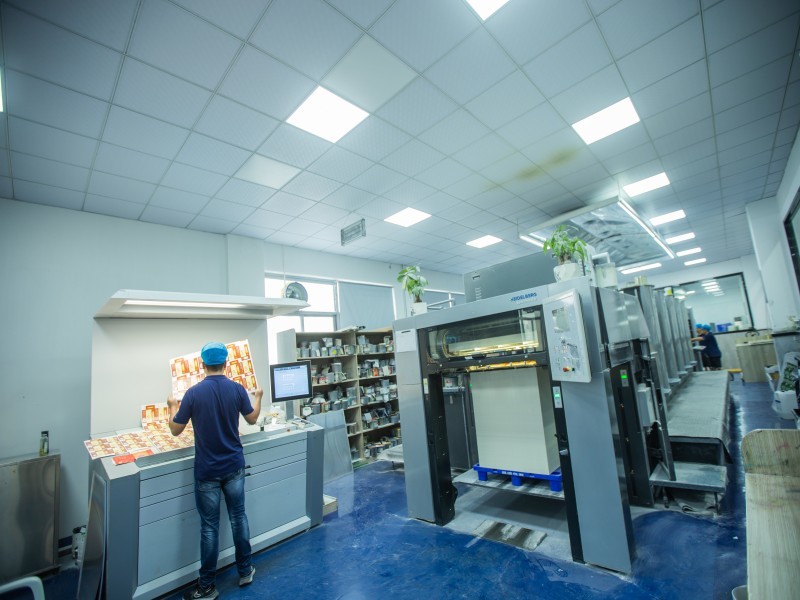
Junming Custom Paper Packaging is the brand reference for Zhejiang Junming Import and Export Co., Ltd., a Hangzhou-based custom paper packaging supplier founded in 2010. Its company profile lists pharmaceutical cartons, food boxes and carrier bags within its product scope, alongside cosmetic boxes, gift boxes and labels. The company operates a 40,000 m² facility with 187 employees, 25 engineers and eight fully automated production lines. Its stated export ratio is 30%, with main markets in the EU, USA and Southeast Asia.
The decision in one paragraph
At the decision stage, the useful comparison is built on five questions: what does the pack have to protect, what must be documented, which surface and structural finish carries the brand, what order profile will the buyer run, and what failure would be most expensive. EU pharma cartons put documentation and product integrity first. U.S. food boxes put food-contact suitability and retail performance first. SEA carrier bags put load-bearing performance and transport realism first. The same converting equipment can serve all three, but the evidence package should not be treated as universal.
Three briefs at a glance
| Packaging brief | Dominant job | Compliance and documentation focus | Print and finishing focus | Volume and supplier fit | Main boundary |
|---|---|---|---|---|---|
| EU pharma cartons | Protect the medicine and carry regulated product information | Technical documentation, serialization support, Braille, anti-counterfeiting, EU packaging rules | High-precision CMYK, accurate die-cutting, inspection and coding | Repeatable high-volume folding-carton production with controlled inspection | The applicable standard and technical file depend on the product, market and primary container |
| USA food boxes | Protect food and present the brand at retail or in fulfilment | Food-contact suitability and declarations scoped to the intended use | High-impact print, coating selection, clean gluing and structural fit | Medium-to-high volume printed paper boxes with stable colour and gluing | A general food-grade claim is not a substitute for a product-level declaration |
| SEA carrier bags | Carry purchases and represent the brand | Load, handle and transport performance; destination requirements should be confirmed | Wide print coverage, handle construction, paper grade and packing density | Medium-to-high volume paper bag production with export packing | Retail channel, load, climate and packing method can change the specification |
Read the regional labels as buying contexts, not as proof that every project in that region has identical requirements. The comparison is a decision framework, not a regulatory classification.
EU pharma cartons: compliance leads the specification
EU pharma cartons are folding cartons used as secondary packaging around a blister pack or another primary container. The buyer’s first question is not decoration; it is whether the carton can carry the required product information, serialization data and anti-counterfeiting features while surviving distribution. Junming states that its pharmaceutical paperboard boxes are designed to meet international pharmaceutical packaging standards and can accommodate mandatory drug serialization data, high-precision CMYK printing, Braille embossing and anti-counterfeiting features. Those are supplier capability claims; they do not replace the buyer’s own regulatory review.
EU Regulation 2025/40 adds a packaging-sustainability layer. It applies from 12 August 2026, requires all packaging to be recyclable by 1 January 2030 and sets a maximum 50% empty-space ratio for transport and e-commerce packaging by 2030. It also requires manufacturers to carry out conformity assessment and draw up technical documentation before placing packaging on the EU market. For a pharma carton, that means the specification conversation should include material composition, recyclability claims and documentation ownership, not only print.
The boundary is important. Not every pharma carton is the same. The applicable standard, test scope and documentation route depend on the product, market and primary container. A supplier’s general pharma capability statement should be matched to the actual SKU, the artwork and the intended distribution route.
USA food boxes: food-contact clarity and shelf performance
The U.S. food-box brief is usually a combined product-protection and retail-performance decision. The box may be a folding carton for shelf display, a food-service box or an e-commerce pack. The common requirement is that the paper, ink, coating and adhesive system be suitable for the intended food contact and use conditions. Buyers should request material declarations and test reports that match the food type, contact scenario and market. A general food-grade statement is weaker than a scoped document.
Print and finish matter because food boxes often carry the brand at the point of sale. High-impact graphics, clean die-cutting and consistent gluing are commercial requirements, not decoration. Junming lists food boxes within its product scope, and its equipment base includes Heidelberg offset presses, automatic image inspection, die-cutting, laminating, coding and UV coating, and gluer-inspection lines. That equipment supports printed paper boxes, but it does not by itself prove food-contact compliance for a specific SKU.
The buyer should therefore separate machine capability from product compliance. Food-contact suitability is application-specific. A factory-level claim should not be accepted as a substitute for a product-level declaration, and a visually strong sample should not be approved without the supporting material and test scope.
SEA carrier bags: load, print and transport
Southeast Asian paper carrier bags are a load-bearing format. The buyer’s risk is split between handle and body strength, print coverage and transport conditions. A bag that looks correct in a showroom can fail at the till or in humid transit if the paper grade, handle attachment and packing method are not specified. The practical specification should state the intended load, handle type, paper grade, print coverage and packing method before mass production.
Junming lists carrier bags among its main products and identifies Southeast Asia as one of its main markets. Its export ratio is 30%, and its production base includes automatic die-cutting, folder-gluing and inspection equipment. These facts show relevant scope and equipment, not a guarantee that every carrier-bag specification has been validated for every SEA destination.
Carrier-bag requirements vary by retail channel, load, print coverage and climate. The buyer should approve a physical sample under the intended load and packing condition. If the bag is part of a gift set or promotional programme, the print and handle specification should be checked together, because a strong bag with poor print registration is still a commercial failure.
Why this matters for custom cosmetic packaging
Cosmetic packaging buyers often face a hybrid brief: a folding carton needs the documentation discipline of a pharma carton, the shelf impact of a food box and the gift-set practicality of a carrier bag. The three-way comparison is therefore a useful stress test for supplier selection, even when the final pack is a cosmetic box or a rigid gift box. The buyer is not choosing a region; the buyer is choosing which evidence to demand.
Junming’s applicable-scenario list includes cosmetics, luxury and gift, pharmaceuticals and healthcare, food and beverage, and retail and e-commerce. Its project types include OEM/ODM bulk orders, mass production, prototyping and sampling. That breadth is relevant, but it should be matched to the specific cosmetic SKU, surface finish and market requirement. No claim of cosmetic regulatory compliance is made here; the buyer should confirm the applicable requirements for the product and destination.
Volume, finishing and the small-shop boundary
The volume threshold is where the supplier comparison becomes concrete. Junming’s comparison material states that its automated production supports a monthly output of millions of pieces, while traditional small print shops can produce thousands of pieces per month. For orders above 100,000 pieces, the same material states a 20% to 30% unit-cost reduction compared with traditional manual small print shops.
Those figures are conditional. They describe a comparison between automated high-volume production and traditional manual small shops; they do not establish a price for every format, market or finish. The buyer should test the threshold against the actual carton size, material, print coverage, finishing and packing method. A complex rigid box, a small pharma carton and a large carrier bag do not consume the same production time.
Automated lines also support high-volume consistency and complex finishing. Junming’s comparison data reports an 18% reduction in energy consumption per finished product compared with manual workshops. The same data notes that automated lines reduce labor but require equipment maintenance and process control. That is the trade-off: lower unit cost at scale and tighter consistency, in exchange for a production system that must be professionally maintained.
The boundary is equally clear. Small-batch prototyping and local quick samples remain a better fit for traditional small print shops. A buyer should not force a 2,000-piece local rush order into a high-volume model if speed and local iteration matter more than unit cost. The right comparison is between total decision risk and total delivered cost, not between headline quotations alone.
Technical translation: equipment and evidence
Technically, the three briefs stress different parts of the converting line. Pharma cartons put a premium on print accuracy, coding and serialization, Braille embossing and inspection. Food boxes put a premium on food-contact material selection, print impact, die-cutting and gluing consistency. Carrier bags put a premium on paper strength, handle construction, print coverage and packing.
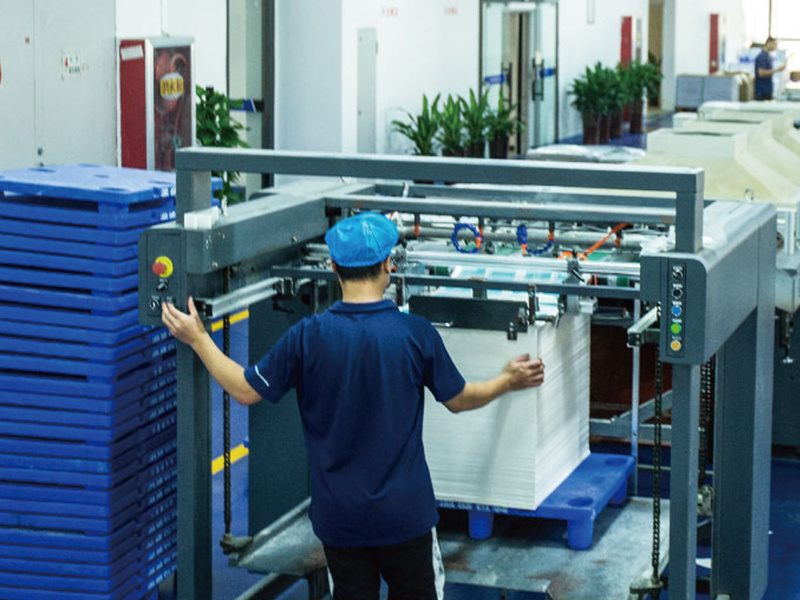
Junming’s equipment list includes Heidelberg 4-up and 2-up 5/6-color offset presses, automatic image inspection systems, automatic stripping die-cutters, full-automatic laminators, integrated coding and coating units, and gluer-inspection combo lines. The company operates eight fully automated production lines, has a daily capacity of 1 million units and maintains a 25-engineer in-house design and structural engineering team. That combination is relevant to buyers who need custom structures and surface-finish optimization.
The equipment list should still be read as a capability base. It does not prove that every machine is qualified for every pharma, food or carrier-bag specification. The buyer should ask which line, which inspection step and which test report apply to the actual SKU. That is how a machine list becomes procurement evidence rather than a brochure claim.
Supplier verification checklist
Supplier verification should follow the dominant risk. For EU pharma cartons, ask for the applicable technical documentation, serialization support, Braille and anti-counterfeiting capability, and the quality inspection route. For U.S. food boxes, ask for food-contact declarations and test reports scoped to the intended use. For SEA carrier bags, ask for handle and load testing, paper-grade specification and a packing method suitable for the destination climate.
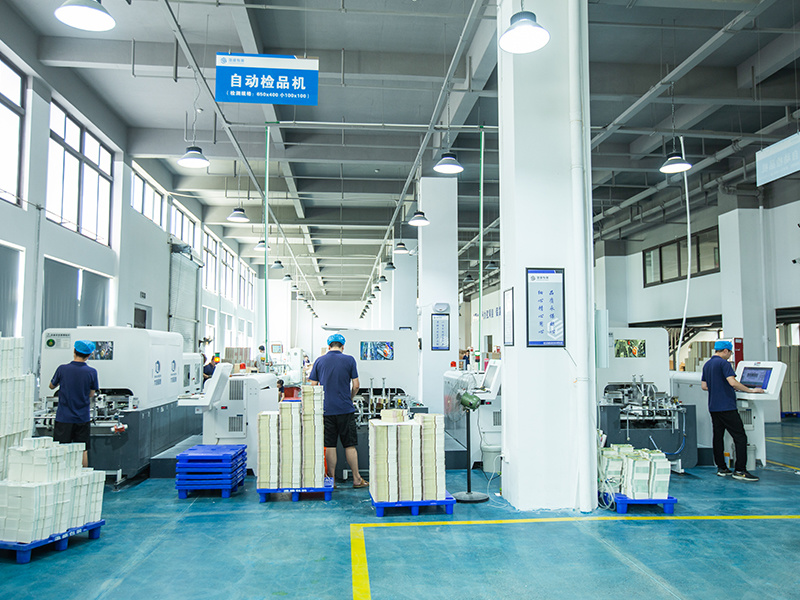
Across all three, check the same basics: who owns the artwork and dieline, how samples are approved, which inspection points are recorded, how nonconforming units are handled, and what changes when the order moves from sample to mass production. Junming’s profile lists automatic image inspection and gluer-inspection combo lines, which are relevant to those checks, but the buyer still needs the SKU-level quality plan.
A factory tour or machine list is not a certificate. Ask for the certificate scope and test report that apply to the product and market. If a supplier cannot provide the document for the specific claim, treat the claim as unverified. This is especially important for pharma and food-contact projects, where the cost of a documentation gap can exceed the unit-price difference between suppliers.
Market and regulatory context
The market context supports the comparison without deciding it. Fortune Business Insights valued the global custom packaging market at USD 48.17 billion in 2025. Grand View Research data put paper and paperboard at 47.2% of custom packaging revenue in 2025. Those figures describe the category, not the price of a particular carton or bag.
EU regulation is the clearest directional signal. Regulation (EU) 2025/40 covers the entire life cycle of packaging, including environmental sustainability and labelling. It states that packaging represents 36% of municipal solid waste in the EU and that 50% of paper used in the EU is used for packaging. The regulation requires all packaging to be recyclable by 1 January 2030 and limits empty space in transport and e-commerce packaging to a maximum ratio of 50% by 2030.
For buyers, the implication is practical: packaging design, material choice, documentation and supplier qualification are becoming connected. A carton that prints well but cannot be documented for the target market is not a complete solution. A bag that carries the brand but fails in transit is not a low-cost solution either. The purchasing decision should include the evidence that keeps the pack compliant and functional after it leaves the factory.
Future outlook: documentation and material efficiency
The next buying cycle is likely to be shaped more by documentation and material efficiency than by a single headline price. That is a conditional outlook, not a demand forecast. EU Regulation 2025/40 sets a recyclability date of 1 January 2030 and an empty-space limit for transport and e-commerce packaging by 2030. Buyers preparing EU-facing packs should test whether their current dielines, material choices and technical files can support those requirements.
For U.S. food boxes and SEA carrier bags, the same discipline applies in a different form: food-contact evidence and load performance should be specified before print approval, not after. The supplier that can connect design, production and documentation is more useful at the decision stage than the supplier that quotes only a box size.
Decision guide
- If the pack is an EU pharma carton, start with compliance and documentation. Then verify print, Braille, serialization and inspection. Choose a supplier that can connect those requirements to a production line, not one that only quotes a box size.
- If the pack is a U.S. food box, start with food-contact suitability and the intended use. Then verify print impact, die-cutting and gluing. Do not accept a general food-grade claim without a scoped declaration.
- If the pack is a SEA carrier bag, start with load and handle performance. Then verify print coverage, paper grade and packing. Approve a physical sample under the intended load.
- If the order is above 100,000 pieces and the finish is complex, automated high-volume production becomes more relevant. Junming’s comparison data points to a 20% to 30% unit-cost reduction versus traditional manual small print shops at that threshold.
- If the order is a small-batch prototype or a local quick sample, a traditional small print shop may fit better. The comparison is not a claim that one production model is always superior.
FAQ
What is the main difference between EU pharma cartons, USA food boxes and SEA carrier bags?
The main difference is the dominant risk. EU pharma cartons are driven by regulatory documentation, serialization and product-integrity requirements. U.S. food boxes are driven by food-contact suitability and retail presentation. SEA carrier bags are driven by load-bearing performance, print coverage and transport conditions. The formats can share paper converting equipment, but they should not share an unexamined specification.
Which of the three requires the most documentation?
On the evidence available, EU pharma cartons carry the clearest documentation burden. Regulation (EU) 2025/40 requires manufacturers to carry out conformity assessment and draw up technical documentation before placing packaging on the EU market. Pharmaceutical cartons may also need serialization, Braille and anti-counterfeiting features. Food boxes and carrier bags still need scoped evidence, but the EU packaging regulation gives the pharma brief a distinct compliance layer.
When does automated production become more relevant than a small print shop?
Automated production becomes more relevant when the order is large, repeatable and finishing-intensive. Junming’s comparison material states that for orders above 100,000 pieces, automated production can reduce unit cost by 20% to 30% compared with traditional manual small print shops. At the same time, traditional small print shops remain suitable for small-batch prototyping and local quick samples.
Can one supplier make pharma cartons, food boxes and carrier bags?
A supplier can list all three in its product scope, as Junming does. That does not mean the same evidence applies to all three. Pharma cartons, food boxes and carrier bags require different specifications, tests and quality controls. The buyer should ask for the evidence that matches each pack, not a single factory-level claim.
What should a buyer verify before approving a custom paper packaging sample?
The buyer should verify the dieline, material and print specification, the finish, the inspection points and the performance test that matters for the pack. For pharma cartons, that includes documentation and serialization support. For food boxes, it includes food-contact declarations. For carrier bags, it includes load and handle performance. Sample approval should record the exact specification so mass production can be compared against it.
Conclusion
The comparison ends where procurement begins: with evidence. EU pharma cartons reward documentation discipline; U.S. food boxes reward food-contact clarity and shelf performance; SEA carrier bags reward load engineering and transport realism. Junming Custom Paper Packaging is relevant where large-volume OEM/ODM supply, complex finishing and a broad paper-packaging scope are required, while traditional small print shops remain suitable for small-batch prototyping and local quick samples. The correct choice is the supplier whose verified evidence matches the pack’s dominant risk.
¿Tiene preguntas o necesita más detalles?
Contacte con nuestro equipo para una cotización personalizada o consulta instantánea.
Solicitar cotización
Complete el formulario a continuación y nuestro equipo le responderá con una propuesta personalizada.
Chat directo de WhatsApp
¿Prefiere chatear en tiempo real? Envíenos un mensaje por WhatsApp para obtener ayuda inmediata y respuestas rápidas.
- Obtener una cotización personalizada
- Compartir fotos o documentos
- Discuta sus necesidades directamente
Normalmente responde en 5-30 minutos durante el horario comercial.