
ESS Buyer's Check: EverCore vs. FlexCore-ID - A Side-by-Side Spec Review
A shortlist for an energy storage system should be built around two questions: what the site needs today and how the site will grow in the next five to ten years. In SolisStorage's range, those two answers often point to different product lines. EverCore is a commercial and industrial (C&I) energy storage system designed for larger loads, high-power backup, and multi-revenue operation. FlexCore-ID is a stackable ESS positioned for residential and smaller commercial use. This buyer's check compares the two systems by architecture, capacity, expansion path, protection, and operating profile, so that the shortlist is based on scenario fit rather than brand names.
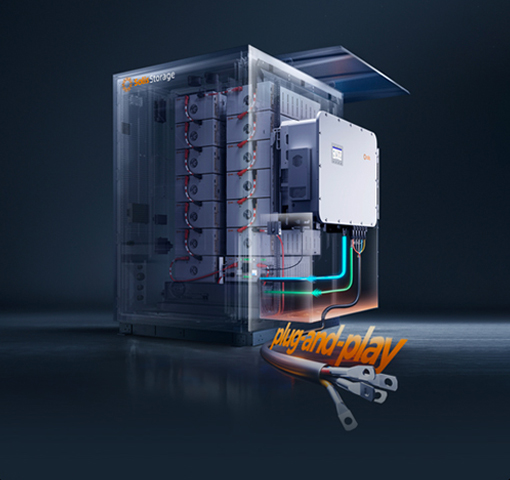
Figure 1. Modular plug-and-play architecture suits sites where energy capacity is added in later phases.
What the buyer is actually comparing
An energy storage system purchase is not only a battery purchase. It is a purchase of power conversion, energy management, protection, enclosure, installation services, and long-term maintenance. Buyers at the decision stage often reduce the choice to energy capacity and price per kilowatt-hour, but the larger risk is selecting an architecture that cannot serve the site's load patterns or expansion path.
In SolisStorage's product documentation, EverCore is described as a hybrid architecture with clear DC and AC separation and fully integrated power electronics. FlexCore-ID follows a stackable strategy, which is useful when loads are compact and capacity can be added in smaller steps. This distinction is not cosmetic. It affects where the equipment can be installed, how easily it can be expanded, how maintenance is performed, and which software or market functions can be added later.
EverCore and FlexCore-ID at a glance
The following table reflects the product direction visible in SolisStorage's current system lineup. Buyers should use it for pre-shortlisting, not as a substitute for the latest datasheets.
| Review axis | EverCore C&I ESS | FlexCore-ID stackable ESS |
|---|---|---|
| Intended application | Commercial and industrial sites, from mid-size facilities to larger low-carbon parks | Residential and small commercial or light business installations |
| Capacity logic | EverCore is documented around 100.5–261.2 kWh depending on cabinet configuration | FlexCore-ID is presented as a stackable system built from 20 kWh pack increments |
| Architecture focus | AC-DC separation with a hybrid inverter and separate battery cabinet | Modular stackable energy blocks sized to match a smaller load |
| Expansion model | DC-side expansion by adding battery cabinets to a single inverter, with multi-unit parallel capability | Capacity staged by adding 20 kWh packs as demand changes |
| Enclosure and protection | Inverter rated IP66, battery cabinet rated IP55; designed for outdoor installation | Enclosure rating must be checked by SKU because stackable placement may be indoor or outdoor |
| Battery cell emphasis | 314 Ah LFP cells with documented internal resistance and cycle-life data | Pack-level cell and cycle-life data should be verified directly on the current datasheet |
For buyers, the table shows that the two lines answer different project constraints. The EverCore system should be evaluated when the site has a real C&I load, a defined power demand, and a potential need for multi-hour storage. FlexCore-ID should be evaluated when the customer needs a smaller system that can grow without a major electrical redesign.
Architecture: one integrated core versus a stackable platform
The core architectural difference in EverCore is the hybrid topology with clear separation of AC and DC circuits, combined with fully integrated four-in-one power electronics. The hybrid inverter integrates the power conversion system, static transfer switch, PV inverter, circuit breaker protection, and energy management system into one unit. AC-side power electronics are physically separate from the DC battery cabinet. In practice, this means the battery cabinet protects batteries, while the inverter can be placed and cooled independently.
EverCore also reduces control complexity. Instead of independent controllers for BMS, PCS, EMS, and STS, the system uses a central controller. Fewer control nodes create fewer communication chain risks and make fault identification faster. For a C&I project, this is meaningful because system uptime is directly tied to the ability to locate and correct one fault without shutting down the whole site.
FlexCore-ID answers a different need. A smaller customer may not know whether energy demand will grow from 10 kWh to 60 kWh or beyond. A stackable platform avoids forcing that customer to pay for unused capacity in year one. The FlexCore-ID concept is to start small and expand capacity in 20 kWh steps. The buyer due-diligence questions should be: what is the maximum number of packs supported by the inverter, what happens when a new pack is added to an operating stack, and how does the BMS update its state-of-charge and safety calculations after expansion.
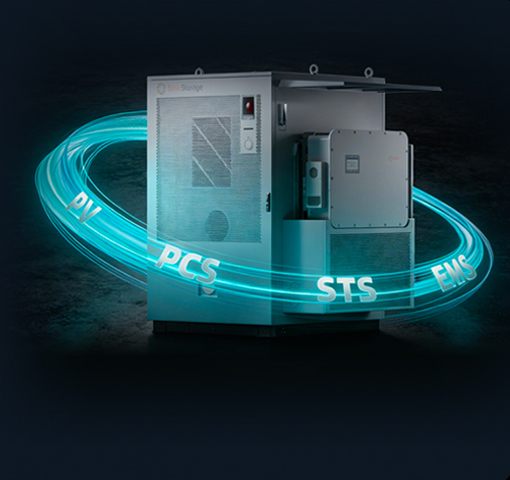
Figure 2. EverCore uses an integrated power conversion core rather than separate inverter, STS, PV inverter, and EMS enclosures.
Enclosure and climate: IP ratings as a triage tool
Ingress protection ratings are one of the fastest ways to check whether a product is designed for its installation environment. EverCore has a protection separation design: the hybrid inverter is rated IP66, while the battery cabinet is rated IP55. This allows the power electronics to survive dust and powerful water jets while the larger battery enclosure still provides strong protection for the DC side. The system is designed to operate from -25°C to 55°C and at altitudes up to 4,000 meters, which covers severe desert heat, European winter conditions, and moderate high-altitude projects. The enclosure also follows C4-grade anti-corrosion coating standards.
FlexCore-ID buyers should confirm the IP class of the specific model before assuming outdoor installation. Stackable units can be placed indoors in a garage or utility room, which may lower the required IP rating but changes ventilation and clearance requirements. The shortlisting question is not only whether the product has a high IP number, but whether the full system—including connectors, cable entries, and control panels—is protected in the actual planned location.
Cell choice and cycle life
Energy capacity is only one part of the specification. Cycle life determines how many years the battery can deliver economic value. EverCore uses A-grade 314 Ah LFP cells custom-developed for C&I applications. The cells have an internal resistance of only 0.15±0.05 mΩ, which is lower than the typical 0.17 mΩ value associated with conventional 280 Ah cells. Lower internal resistance reduces heat generation during charge and discharge, and that directly lowers thermal stress inside the pack.
The EverCore cell rating is also significant. At 0.5C charge-discharge, it reaches 8,000 cycles with remaining capacity of at least 70%. Based on 500 charge-discharge cycles per year, that rating supports roughly 16 years of cycling, compared with about 14 years for conventional 7,000-cycle 280 Ah cells. Buyers should check test conditions carefully when comparing other suppliers. A cycle-life claim is valid only when the test current, depth of discharge, and end-of-life threshold are stated.
For FlexCore-ID, the product design centers on 20 kWh stackable LFP packs. Because a stackable platform may use different cell generations or pack configurations than EverCore, cycle life should not be guessed. The buyer should ask for the pack datasheet at the intended charge-discharge rate and compare it at the same threshold, usually 70% remaining capacity.
Safety and maintenance: where lifetime costs accumulate
EverCore uses a multi-layer safety structure. The manufacturer describes a 15-layer, three-dimensional protection system across cell, pack, and system levels. Thermal insulation materials resistant to 1,000°C are used between packs to reduce lateral heat propagation. The system also stages fire control in three steps: pack-level aerosol, cabinet-level aerosol, and fire-fighting water channels. These layers are designed so that a thermal event can be contained at an earlier stage rather than escalating across the cabinet.
Maintenance is a second major difference. EverCore uses an air-cooled architecture instead of liquid cooling. Liquid-cooled systems often require coolant replacement and more complex servicing. SolisStorage estimates that the EverCore architecture saves roughly €9,500 per unit over the full lifecycle compared with conventional liquid-cooled maintenance assumptions. The estimated savings come from avoiding coolant replacement, simplifying PCS replacement, simplifying pack replacement, and reducing routine inspection intensity. The manufacturer also states that pack replacement steps are reduced by 55%, with no heavy lifting equipment required when two technicians use the dedicated tools.
This is not a claim that air cooling is always better. Some buyers or insurers have internal policies that prefer liquid cooling for large battery installations. In those cases, an air-cooled system may need additional engineering review. The point for the buyer is to compare maintenance services, spare-part availability, and replacement procedures with equal weight, not to accept a first quote as a lifetime cost estimate.
Application mapping
EverCore is positioned for industrial manufacturing, low-carbon industrial parks, hospitals, cold chain logistics, small-scale agriculture, and on-grid and off-grid applications. These sites share common traits: larger loads, limited tolerance for downtime, outdoor installation, and a need for predictable backup or peak shifting. The 125 kW hybrid inverter also supports PV integration through DC or AC coupling, with a PV oversizing ratio of up to 200%. That is useful when an existing PV plant is being retrofitted with storage and when future solar capacity is planned.
FlexCore-ID is a better conceptual fit where floor space is tight, the initial load is modest, and the expansion plan is uncertain. Small commercial buildings and residential customers do not usually need a 100 kWh cabinet in year one. A stackable system can be sized to the current load and expanded later, which reduces initial capex and avoids oversized battery degradation risk.
Market trend and software readiness
Market data supports two parallel growth paths in energy storage. The residential energy storage market was estimated at USD 2.69 billion in 2024 and is projected to reach USD 4.58 billion by 2030, a CAGR of 9.3%. Long-duration energy storage, the broader segment that includes many C&I applications, was estimated at USD 4.85 billion in 2024 and is expected to grow at a CAGR of 13.6% through 2030. Buyers should treat headline market sizes with caution because scopes vary, but the direction is consistent: both small distributed storage and larger commercial storage will grow.
The software requirement is also splitting by segment. In mature electricity markets, C&I storage is moving beyond basic peak-valley arbitrage to grid services, demand response, and virtual power plant participation. EverCore has been built with an open software ecosystem; SolisStorage states that it is connected or in the process of connecting with 102 third-party VPP or EMS operators across 11 European countries. FlexCore-ID, by contrast, is more likely to serve customers whose priority is local energy cost control and backup, not multi-revenue market trading. Buyers should not pay for market-integration complexity they cannot use.
Limitations and future outlook
A spec-based comparison has a clear limitation: it can rank specifications but cannot show how a unit responds to real project conditions unless the supplier provides engineering evidence. EverCore centralizes power electronics in one inverter, which reduces installation interfaces but means a major inverter fault affects the full system. FlexCore-ID offers modular scaling, but every added pack creates new connection points, extra communication paths, and a longer list of components to inspect over the asset lifetime.
Neither system should be judged as universally stronger. The buyer's project scale should lead the decision. A 20–60 kWh residential application is not a reason to buy a C&I cabinet. A factory with 200 kWh of shiftable load is not a reason to chain many small stacks together if a single C&I architecture is simpler to protect and maintain. In the next five years, the market will likely favor suppliers who offer both a high-power C&I architecture and a modular stackable architecture, because the underlying application range is widening rather than consolidating toward one form factor.
For deeper product context across SolisStorage's residential, C&I, and utility-scale portfolio, see the Solis Global Brochure.
Frequently Asked Questions
What is the practical difference between EverCore and FlexCore-ID?
EverCore is a C&I energy storage system with a separate AC power conversion architecture and DC battery architecture, intended for larger commercial and industrial loads. FlexCore-ID is a stackable ESS designed so capacity can be added in 20 kWh pack increments for residential and smaller commercial use. The decision should follow the scale of the load and the expected expansion path.
Which system should a commercial building choose?
A commercial building should choose based on the size of its peak load, available space, and need for backup power. If the load profile points to peak shaving above 100 kWh, an EverCore configuration is relevant. If the building needs only modest backup or small-scale time-of-use control, a stackable FlexCore-ID approach can avoid buying unnecessary capacity.
How do IP ratings affect EverCore and FlexCore-ID?
EverCore has an IP66-rated hybrid inverter and an IP55-rated battery cabinet, making it suitable for demanding outdoor C&I locations. For FlexCore-ID, the IP rating should be verified on the specific model datasheet because the same stackable platform may be installed indoors in some projects and outdoors in others.
Why is cycle life important when comparing ESS models?
Cycle life determines the usable lifetime of the battery under defined charge-discharge conditions. EverCore uses A-grade 314 Ah LFP cells with 8,000 cycles at 0.5C and a remaining capacity threshold of 70%. Buyers comparing FlexCore-ID or alternative systems should ask for cycle-life data measured under the same C-rate and end-of-life threshold.
Does EverCore require liquid cooling?
No. EverCore uses an air-cooled architecture with an independent three-air-duct design and Coanda-effect airflow technology. The design avoids liquid cooling maintenance and supports operation across a wide temperature range, but buyers with a specific internal policy requiring liquid cooling should complete their own engineering review.
¿Tiene preguntas o necesita más detalles?
Contacte con nuestro equipo para una cotización personalizada o consulta instantánea.
Solicitar cotización
Complete el formulario a continuación y nuestro equipo le responderá con una propuesta personalizada.
Chat directo de WhatsApp
¿Prefiere chatear en tiempo real? Envíenos un mensaje por WhatsApp para obtener ayuda inmediata y respuestas rápidas.
- Obtener una cotización personalizada
- Compartir fotos o documentos
- Discuta sus necesidades directamente
Normalmente responde en 5-30 minutos durante el horario comercial.