
EN 331 vs ISO 9001: What Each Brass Valve Certificate Proves
EN 331 vs ISO 9001: What Each Brass Valve Certificate Proves
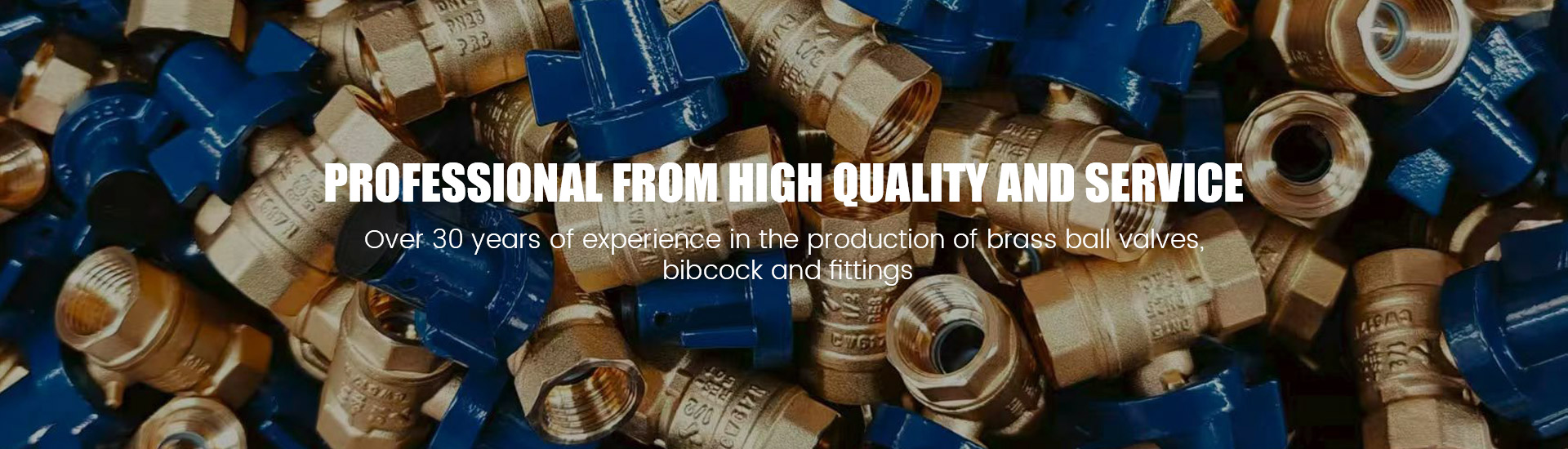
Brass valves and fittings — the certificate question starts at the model level, not the catalogue level.
A request for “certified brass valves” can be answered with two documents that both look authoritative and prove entirely different things. The first is a product standard: EN 331:2015, which as described in its published scope sets construction, performance, safety, test and marking requirements for manually operated ball valves used in gas installations. The second is a management-system standard: ISO 9001:2015, which certifies how an organisation runs its quality system rather than how any individual valve performs. Where a single order mixes brass ball valves, brass mini ball valves and brass angle valves, that difference decides which document actually answers the question — and which one only looks as though it does.
Two certificates, two different questions
The substitution of one certificate for the other is rarely deliberate. Both arrive as PDFs with logos, registration numbers and a scope paragraph, and both are described in quotation emails as “certification”. The confusion is structural: a product standard and a management-system standard borrow the same vocabulary to describe different objects.
A product standard such as EN 331:2015 makes statements about a valve — how it is built, what it must perform, which safety and test requirements it meets, and how it is marked. Its unit of certification is the product, inside a defined scope of types, sizes and applications. A management-system standard such as ISO 9001:2015 makes statements about an organisation — whether it has defined, documented and controlled processes, and whether those processes are audited. Its unit of certification is the company's quality system for a stated scope of activities.
For a buyer at the decision stage, the practical consequence is short. A valve can be produced inside a certified quality system and still sit outside the scope of a product standard. A product certificate for one model does not extend to the rest of a catalogue. And a quality-system certificate, however current, contains no dimensional, pressure or leakage requirement for a brass valve at all.
What EN 331:2015 covers, and where its reach stops
EN 331:2015 is the European standard for manually operated ball valves used in gas installations, and its published scope covers construction, performance, safety, test and marking requirements. Three terms in that description do real work inside a procurement file: manually operated, ball valves, gas installations.
- Manually operated — the standard addresses valves operated by hand, not actuated assemblies.
- Ball valves — it is a valve-type-specific standard. It does not describe brass gate valves, brass check valves, brass pressure reducing valves or brass pipe fittings, each of which belongs to a separate technical framework.
- Gas installations — it is a gas standard. Holding it does not establish suitability for potable water, which is a different conformity question.
Because the standard's scope includes marking requirements, the valve itself becomes part of the evidence trail. A buyer checking an EN 331:2015 claim is not only reading a certificate; the delivered product, and what it carries on its body, is something the standard's own scope anticipates.
What the standard does not do is tell a buyer whether one supplier's specific model is covered by one specific certificate. That is a question about the certificate's scope paragraph and the test evidence behind it — not about the existence of the standard.
What ISO 9001:2015 covers
ISO 9001:2015 is a quality management system standard. Certification against it indicates that an organisation's processes for controlling production, inspection and traceability have been assessed against the standard's requirements for a defined scope of activities. For a valve buyer that is genuinely useful information: it speaks to consistency between orders, to how nonconforming product is handled, and to whether a factory works to documented procedures rather than habit.
It does not set a pressure rating. It does not define a material grade. It does not state a leakage limit, an end-connection dimension or a marking format for a brass valve, and it does not name gas or drinking-water service. A supplier that answers a product-standard question with a quality-system certificate has answered a different question — accurately, but not the one printed on the RFQ.
The two sit in sequence rather than in competition. The product standard defines what the valve has to be; the management system describes the discipline that keeps successive production runs at that level.

A production workshop is where the management-system certificate applies — process control, not product performance.
EN 331 and ISO 9001 compared in one table
Reduced to procurement language, the two standards differ on object, unit and evidence. The table below is a decision aid, not a quality judgement: neither column replaces the other.
| Question | EN 331:2015 | ISO 9001:2015 |
|---|---|---|
| What is assessed | The valve: construction, performance, safety, test and marking requirements | The organisation's quality management processes |
| Unit of certification | The product, within a defined scope of types and sizes | The management system, within a defined scope of activities |
| Typical evidence | Certificate naming the standard and its edition, supporting test reports, body marking | Current certificate stating the certified scope and the certified site |
| What it establishes | Conformity of the covered product to that product standard | Documented, controlled and audited process discipline |
| What it does not establish | That every catalogue model is covered, or that the valve suits potable water | That any individual valve meets a product standard |
| Common procurement failure | Undated standard reference; certificate narrower than the ordered model | Accepted as a substitute for product conformity |
Ball, mini ball and angle valves: why scope changes with the body
A brass full bore ball valve, a brass mini ball valve and a brass angle valve are three different bodies, and a standard reference that fits one does not automatically describe the other two. This is where catalogue-level certification statements tend to break down.
- Brass ball valve — the category that EN 331:2015's described scope addresses, in manually operated form and in gas installations.
- Brass mini ball valve — a compact body, often the smallest line on an order and often the one specified least precisely. Whether a given mini valve falls inside a product standard's scope depends on its design and on the detailed scope text, not on the word “mini”.
- Brass angle valve — an angled body used where the pipe run turns, commonly at fixture connections. Its geometry differs, its service may be water rather than gas, and the applicable framework therefore has to be established rather than assumed.
The same reasoning extends across the wider brass range that a distributor may consolidate into a single purchase: brass water meter valves, brass lockable ball valves and brass anti-theft ball valves, brass concealed valves, brass bibcocks, brass boiler drain valves and brass water shut-off valves. Each type answers to its own requirements. The fittings line — brass press fittings, brass compression fittings, brass PEX pipe fittings and brass pipe fittings generally — sits outside valve standards altogether and follows a separate conformity route.
The edition question buyers tend to miss
Standard numbers are incomplete without editions, and this is a second scope problem hiding inside the first.
EN 331:2015 carries its year for a reason: an undated “EN 331” reference in a quotation does not tell a buyer which text the supplier was assessed against. That is a documentation defect, not a performance verdict, and it is easy to close with one question.
A useful parallel appears in the same supplier documentation. TOSVAL's published certification list names EN 13828:2003 for brass ball valves for water supply. Standards catalogue records show the 2003 edition of EN 13828 was withdrawn on 1 March 2025, and describe a 2025 edition with a revised scope: DN 6 to DN 100, PN10 or PN16, a maximum distribution temperature of 65 °C with occasional excursions to 90 °C for up to one hour. The 2003 edition, as catalogued, covered DN 8 to DN 100 up to PN10.
Read that as a documentation question rather than a verdict on any product. Buyers specifying potable-water valves should confirm which edition a certificate references, whether their market requires the current edition, and whether the DN and PN ranges on the certificate match the sizes actually ordered. The same discipline applies to EN 331:2015, and to drinking-water approvals such as WRAS and ACS, which address contact with drinking water rather than gas service.
How TOSVAL's certification set maps onto both questions
TOSVAL (Zhejiang Tosval Industry Co., Ltd.) is a brass valve manufacturer based in Yuhuan, Zhejiang, China, established in 1999 and working mainly as an OEM/ODM partner for brass ball valves, bibcocks and pipe fittings. Its published certification list is useful precisely because it separates the two categories this article has been comparing.
- Management-system certificates — ISO 9001:2015 (quality), ISO 14001:2015 (environmental) and ISO 45001:2018 (occupational health and safety).
- Product-standard certifications — EN 331:2015 for brass ball valves for gas installations, and EN 13828:2003 for brass ball valves for water supply.
- Drinking-water approvals — WRAS for the UK market and ACS for France.
A manufacturer holding both sides of the comparison is in a position to answer a scope question directly instead of redirecting it to a general quality claim. The company reports a 99% export share across Europe, South America and the Middle East, a 20,000 m² plant, 100 employees and a 10-engineer R&D team — context that matters for OEM/ODM programmes, but which does not in itself certify any product.
That boundary deserves stating plainly, because it is the boundary this article applies to every supplier. A certification list is not a scope statement. It does not establish which models, sizes or pressure classes are covered, it does not establish capacity, minimum order quantity or lead time, and it does not replace test reports or a sample evaluation. Buyers shortlisting any manufacturer — TOSVAL included — should treat the certificate's scope paragraph, not the certificate's existence, as the deciding document.
Three purchasing situations where the distinction bites
Gas utility tender for brass natural gas ball valves
A tender of this kind typically names a product standard. The relevant questions become whether the offered valve sits inside EN 331:2015's described scope — manually operated ball valve, gas installation — and whether the certificate names the offered model and size. An ISO 9001:2015 certificate supports the supplier's process discipline but does not answer the tender's product requirement, and a bid that offers one in place of the other invites a clarification request it may not win.
Building water project with angle valves and water meter valves
An order for brass angle valves, brass water meter valves and brass bibcocks is a water-side question, and EN 331 is a gas standard. The applicable framework is water-side conformity, together with drinking-water approvals where the valve contacts potable water. Applying a gas-standard reference to a water valve is a category error that survives review more often than it should, particularly when the same supplier sells both.
OEM or private-label programme
Where a distributor consolidates brass mini ball valves, brass concealed valves and a fittings line under its own brand, the management-system certificate carries real weight: it speaks to consistency across production runs and to traceability of batches. The product standard still has to be resolved item by item, because the range spans valve types and probably more than one medium.

A samples room closes the loop that paperwork opens: documentation describes what should be produced, a sample shows what is.
Market context: more volume, more documentation
Compliance documentation attracts more scrutiny partly because the category is large. Cognitive Market Research estimates the global brass ball valve market at USD 2,871.34 million in 2021, projected to reach USD 3,764.72 million by 2026. That is a research-firm projection for brass ball valves specifically — scale context only, not a compliance indicator and not a statement about any individual supplier.
Scale has a second effect. The more suppliers a buyer evaluates, the more often a single certificate is offered as a summary of everything, and the more valuable a two-question checklist becomes: what is certified, and for which models.
Outlook
The direction of travel in procurement documentation is toward scope-level evidence rather than certificate-level reassurance. Two forces push that way. Standards editions turn over — EN 13828 moved from a withdrawn 2003 edition to a 2025 edition with a revised DN and PN scope — and product ranges keep widening, so a single catalogue statement ends up covering an ever more heterogeneous set of bodies.
A conditional expectation rather than a forecast: buyers who specify the standard, the edition, the model and the medium on the RFQ, and who request the certificate scope paragraph alongside test evidence, will resolve fewer discrepancies after the order than buyers who accept “certified” as a complete answer.
Frequently asked questions
Does ISO 9001 certification mean a brass valve meets EN 331:2015?
No. ISO 9001:2015 certifies an organisation's quality management system for a defined scope of activities; it contains no construction, pressure or leakage requirement for a brass valve. EN 331:2015 is a product standard whose described scope covers construction, performance, safety, test and marking requirements for manually operated ball valves used in gas installations. A supplier can hold a current ISO 9001:2015 certificate and still need separate product-standard certification and test evidence for a specific valve model.
What exactly does EN 331:2015 cover?
As described in its published scope, EN 331:2015 sets construction, performance, safety, test and marking requirements for manually operated ball valves used in gas installations. Its reach is bounded by those terms: it is a ball-valve standard rather than a general brass-valve standard, it addresses manually operated products, and it is a gas-installation standard rather than a drinking-water approval. Coverage of a particular model still has to be confirmed from the certificate scope.
Are brass mini ball valves and brass angle valves covered by EN 331?
That cannot be answered from the category name. EN 331:2015's described scope is manually operated ball valves for gas installations, and a mini ball valve or an angle valve may or may not fall inside the detailed scope text depending on its design and intended service. The reliable method is to ask the supplier which models, sizes and applications a certificate names, then check that answer against the edition the project requires — rather than assuming coverage from a product-family label.
Which documents should a buyer request to verify both certificates?
For the management-system side, a current ISO 9001:2015 certificate showing the certified scope and the certified site. For the product side, a certificate naming the standard with its edition, the models and sizes covered, the supporting test reports, and confirmation that delivered valves carry the marking the standard requires. A sample evaluation closes the loop, because documentation describes what should be produced rather than what is in the box.
Is EN 331 the same as a drinking-water approval?
No. EN 331:2015 addresses manually operated ball valves for gas installations. Drinking-water contact is governed by separate arrangements — WRAS approval in the UK and ACS in France, for example — and a valve intended for potable water needs that evidence in addition to, not instead of, any gas-side certification. Water-side ball valves generally follow a different product-standard family, and its edition should be confirmed before the order is placed.
TOSVAL's full brass valve and fittings catalogue, covering ball valves, mini ball valves, angle valves, bibcocks and pipe fittings, is available for download: TOSVAL VALVES CATALOG (PDF).
¿Tiene preguntas o necesita más detalles?
Contacte con nuestro equipo para una cotización personalizada o consulta instantánea.
Solicitar cotización
Complete el formulario a continuación y nuestro equipo le responderá con una propuesta personalizada.
Chat directo de WhatsApp
¿Prefiere chatear en tiempo real? Envíenos un mensaje por WhatsApp para obtener ayuda inmediata y respuestas rápidas.
- Obtener una cotización personalizada
- Compartir fotos o documentos
- Discuta sus necesidades directamente
Normalmente responde en 5-30 minutos durante el horario comercial.