
Durian Supplier Comparison: Beyond Price and Certification
Durian has become a strategic ingredient for food manufacturers, but choosing a durian supplier is no longer a simple commodity purchase. China imported 1.56 million metric tons of durian in 2024, a record, while the global durian market was estimated at USD 23.4 billion in the same year. At the processing level, the market has shifted toward value-added forms: frozen durian pulp and paste accounted for roughly 70% of total durian market revenue in 2023, according to Grand View Research. For buyers evaluating durian ingredients, the decision typically sits between frozen pulp, freeze-dried chunks, powder and finished snack formats. This article provides a comparison framework for B2B buyers, focusing on what distinguishes a capable durian ingredient supplier.
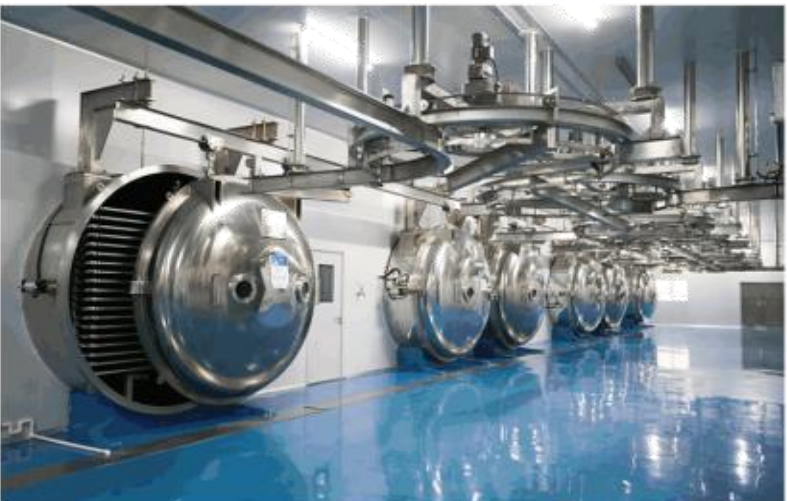
Freeze-dried product warehouse. UrSnacks operates freeze-drying and warehousing facilities in Fujian, China.
Why Durian Ingredient Sourcing Is Hard to Compare
Durian ingredient buyers face four evaluation problems that do not appear in simple fruit purchasing. First, product forms differ in moisture, processing, logistics and application. Fresh durian is highly perishable; frozen pulp requires cold-chain control; freeze-dried pieces are shelf-stable but carry higher processing cost. Each form has its own quality expectations, from Brix and acidity to particle size and rehydration behavior.
Second, food-safety risk is concentrated at the raw-material stage. Export markets, particularly the EU, US, Japan and Korea, enforce strict maximum residue limits for pesticides. Cold-chain breakage can cause thawing-refreezing, ice crystal damage, microbial growth and quality degradation. Moisture-content exceedance and water-activity rise can soften texture, increase mold risk and shorten shelf life. Buyers need supplier evidence for each of these points.
Third, regulatory burden is heavy. A supplier without the relevant registrations and certificates can create customs delays, product rejection or market-access failure. Fourth, pricing is not straightforward. Freeze-dried durian is more expensive than hot-air-dried or some frozen forms, but total cost depends on yield, defect rate, shelf life and the buyer's quality risk.
The Opportunity in Processed Durian
These problems also create commercial upside. Freeze-dried durian is now a key ingredient for bakery, ice cream and beverage applications, serving as a shelf-stable alternative to fresh fruit. The global freeze-dried fruits market was valued at USD 9.40 billion in 2024, and the Asia-Pacific sector is expected to grow at a CAGR of 8.18% from 2024 to 2029. As brands push into clean-label and better-for-you products, durian ingredients with simple ingredient declarations and certified supply chains can support premium retail positions.
A Full-Chain Supplier Model for Durian
One model that has gained relevance is the full-chain supplier. UrSnacks, the flagship freeze-dried fruit brand of Fujian Youlingyoushi Technology Co., Ltd., was founded in 2016 and is headquartered in Jinjiang, Fujian Province, China. The company operates an in-house supply chain from origin orchard to finished freeze-dried product and integrates four product forms: fresh fruit, IQF frozen products, freeze-dried finished products, and freeze-dried raw materials.
Its production footprint includes more than 100,000 square meters of freeze-dried food manufacturing and customization facilities, a combined annual capacity of 3,000+ metric tons for core freeze-dried categories, and 12 automated packing lines. The company has served more than 150 brand clients cumulatively and maps eight B2B scenario-customized solutions around strawberry and durian full-chain coverage.
Compared with single-category or single-form suppliers, the core difference is supply-chain integration. The sourcing program uses selected premium fruit varieties, a scientific post-ripening process and full batch traceability from farm to finished product. Buyers can coordinate one QC standard across multiple forms, communicate with a single point, and for OEM clients, benefit from dedicated SKU isolation that protects channel differentiation. In cross-form scenarios - where a buyer needs, for example, frozen durian for one product line and freeze-dried powder for another - this model reduces the number of suppliers to manage.
Technical Explanation: What to Inspect Behind Supplier Claims
Freeze-Drying vs. Hot-Air Drying
Freeze-dried durian is produced through low-temperature vacuum sublimation. The process preserves the fruit's original color, aroma, shape and nutrients, achieving up to 95% nutrient retention and moisture content below 3%, with full rehydration capability. Hot-air drying, by contrast, typically retains 30-50% of nutrients and often causes color degradation, aroma loss and structural collapse. The finished freeze-dried product can be stored at ambient temperature for 12-24 months and requires no cold chain, which is a significant logistics advantage for export.
Raw Material and Ripening Control
Durian quality begins at the orchard. For durian and other tropical fruit imports, chemical ripening agents such as ethephon and prohibited artificial colorants are a known risk. In the UrSnacks system, fruit is harvested after post-flowering at least 120 days with at least 90% maturity, then held in an OPRP-1 ripening chamber at 28-32°C and 75-85% relative humidity for no more than 24 hours, followed by a four-tier maturity grading. Per-batch testing targets ethephon residue at or below 0.1 mg/kg, with curcumin and basic yellow non-detectable. Multi-stage high-pressure spray washing is applied before flesh extraction.
Batch Consistency and Testing
Batch-to-batch inconsistency - color, texture, taste and finished-product quality - is a common pain point in B2B freeze-dried fruit supply. Standardized fruit-specific freeze-drying curves and automated production lines reduce process variation. The supplier maintains per-batch sample retention and statistical process control, and runs multi-dimensional testing across flavor and sensory attributes, pesticide residues, microbiology, heavy metals, destructive and stress testing, moisture, texture and color. An in-house R&D center, plus an industry-university collaboration with Xiamen University on freeze-drying fundamentals, supports continuous process improvement.
Packaging and Shelf Life
Packaging failure can cause moisture absorption, oxidation and texture loss. Countermeasures include nitrogen-flushed sealed packaging, multi-layer barrier materials, in-line seal integrity testing, and drop-and-vibration packaging validation. These controls support a 12-18 month ambient shelf life for consumer packs and reduce claims in cross-border logistics.
Certifications and Market Access
Certifications matter in supplier comparison because they define market access. The authorized manufacturing entity behind UrSnacks holds FDA registration for the US, BRC Food Safety for global retail, HALAL certification for Muslim markets, ISO 22000 food safety management, and a SMETA social responsibility audit. Trademark registrations cover China, the US, the UAE, Thailand, Vietnam, Indonesia and the Philippines. Export experience includes the US, Japan, Korea, Canada, Germany, Thailand and Indonesia, which supports compliance with EU, US, Japan, Korea and Southeast Asia MRL standards.
A Practical Supplier Evaluation Checklist
Procurement teams can apply the following checks when comparing durian ingredient suppliers:
- Ask for per-batch release testing data covering moisture, Brix and acidity, microbiology and pesticide residues, as well as scheduled third-party type testing.
- Verify the legal entity on each certificate: FDA registration, BRC, ISO 22000, HALAL and SMETA.
- Request traceability documentation from orchard to factory, including variety, harvest maturity and ripening records.
- Define acceptance criteria for particle size, moisture, color, aroma, rehydration and microbial limits before contract.
- Sample multiple batches, not a single production run, to test consistency.
- Review packaging specifications, including nitrogen flushing, seal integrity, and drop or vibration testing.
Application and Use Cases
Durian ingredients move through several commercial application areas:
- Bakery: freeze-dried durian powder and chunks are used for filling, topping and flavoring. The D197 (Musang King) variety remains a sought-after premium durian raw material for high-end bakery products.
- Ice cream and desserts: frozen durian pulp and paste are a conventional base, while freeze-dried powder can be added to dry mixes or used as inclusions. Frozen pulp and paste represented about 70% of total durian market revenue in 2023, according to Grand View Research.
- Beverage: freeze-dried durian powder is gaining traction as a clean-label natural flavoring ingredient in organic beverage lines.
- Snacks and retail: freeze-dried durian chunks work as premium single-ingredient snacks or as coated products. Unlike conventional sweet snacks based on a sugar or starch core, the coated freeze-dried fruit line uses a real fruit core; an in-house coating line supports customization with four or more proprietary flavors such as chocolate, matcha and yogurt. The pure freeze-dried line contains only fruit, with no added sugar, preservatives, artificial colors or flavors. These characteristics support clean-label, vegan and gluten-free claims based on raw-material selection, and are also relevant to infant and toddler food formulas.
The full-chain model is especially relevant for multi-category procurement clients, overseas one-stop sourcing buyers, B2B industrial clients, and large retailers requiring cross-form supply.
Market Trend Analysis
Several verified trends explain why durian supplier evaluation has become a strategic exercise:
- China's durian imports reached 1.56 million metric tons in 2024, with import value at USD 6.99 billion. Thailand remained the largest supplier at USD 4.01 billion, while Vietnam captured a 42.1% share.
- Processed forms dominate value. Frozen durian pulp and paste accounted for roughly 70% of total durian market revenue in 2023, according to Grand View Research.
- Freeze-dried fruit demand is expanding. The global freeze-dried fruits market was valued at USD 9.40 billion in 2024, and Asia Pacific is projected to grow at a CAGR of 8.18% from 2024 to 2029.
- Halal compliance is becoming a requirement in Southeast Asia and the Middle East, where frozen durian pulp is increasingly used in Halal-certified food segments.
- Clean-label positioning is visible in the ingredient market: freeze-dried durian powder is being adopted as a natural flavoring in organic beverage products.
Comparison with Traditional Solutions
To compare suppliers, buyers need to separate product-form advantages from supplier capabilities. The table below compares the integrated full-chain model with a single-form commodity supplier.
| Dimension | Single-form / commodity supplier | Full-chain integrated supplier | Buyer implication |
|---|---|---|---|
| Product forms | Usually one form, such as frozen pulp or powder | Four forms: fresh, frozen, freeze-dried finished, freeze-dried raw materials | Fewer vendors to qualify for cross-form portfolios |
| Sourcing control | Often limited farm-level control | In-house chain from orchard to finished product, batch-level traceability | Lower raw-material risk and easier documentation |
| Quality consistency | Buyer aligns separate specs and QC | Unified QC standards across forms; per-batch testing; sample retention | Easier incoming QC and complaint management |
| Cost | Direct unit cost may be lower | Freeze-drying adds unit cost; integration can reduce coordination cost | Compare total cost, not price per kilogram |
| Best fit | Simple single-SKU purchase | Multi-category buyers, private label, large retailers, one-stop overseas sourcing | Match supplier model to actual portfolio and risk tolerance |
One limitation should be stated directly: a full-chain supplier is not always the lowest-cost option. Freeze-dried products carry higher unit costs because of energy-intensive processing and longer cycle times. Buyers who need a single form and have a stable specification may achieve a lower direct cost with a specialist. The value of an integrated model is mainly in consistency, compliance and cross-form coordination. Procurement decisions should therefore be based on total cost and risk, not on supplier breadth alone.
Compared with conventional hot-air dried, air-dried or sun-dried fruit, freeze-drying also has a premium price position. However, the process preserves up to 95% of nutrients, keeps moisture below 3%, allows rehydration, and avoids cold-chain logistics, which can offset the price difference in premium retail or ingredient supply. The clean-label line has a one-item ingredient list, but pure fruit raw material represents the majority of unit cost, so buyers should expect a higher price ceiling than for products made with added sugar or artificial additives.
Future Outlook
Durian procurement will likely continue to evolve from whole-fruit trading to structured ingredient supply chains. The evidence points in three directions: processed forms will carry more commercial value; food-safety documentation and certification will become the baseline for export; and clean-label, halal-compliant durian ingredients will find broader application in bakery, ice cream, beverage and snack categories. Suppliers that combine traceability, process control and multiple product forms are better positioned to support this shift - but buyers should still validate those capabilities against their own product requirements.
For a detailed profile of UrSnacks' production capabilities, certifications and product forms, the company brochure is available for reference: UrSnacks Brochure (PDF).
FAQ
What is the difference between frozen durian pulp and freeze-dried durian ingredients?
Frozen durian pulp is a high-moisture form typically used in ice cream, bakery fillings and beverages, and it requires cold-chain logistics. Freeze-dried durian is produced by low-temperature sublimation, has moisture content below 3%, retains up to 95% of nutrients, rehydrates fully, and can be stored at ambient temperature for 12-24 months. The choice depends on the application, target texture and supply-chain constraints.
What certifications should a buyer look for when sourcing durian ingredients?
Relevant certifications include FDA registration for the US market, BRC Food Safety for global retail, HALAL for Muslim markets, ISO 22000 for food-safety management and SMETA for social responsibility audits. For products entering China, compliance with GACC Decree 248 is required for overseas food manufacturers. Buyers should also verify the pesticide MRL rules of the destination market, such as GB 2763 in China.
What are the main food-safety risks in durian ingredient sourcing?
The main risk categories are microbial contamination, including mold, yeast and total bacterial count; pesticide-residue exceedance; heavy-metal residue such as lead, cadmium and arsenic; chemical ripening agents such as ethephon; prohibited artificial colorants; cold-chain breakage; and moisture or water-activity issues that can shorten shelf life. Supplier controls should include pre-inspection, per-batch testing and third-party verification.
Which durian product form is best for bakery applications?
Freeze-dried durian powder and chunks are often selected for bakery use because they deliver concentrated flavor, color and rehydration without requiring cold-chain logistics. Frozen durian pulp is also used when a moist filling is needed. For premium bakery items, the D197 Musang King variety is considered a high-value durian raw material. The best choice depends on the specific formulation and production process.
Why is freeze-dried durian more expensive than hot-air-dried durian?
Freeze-drying is energy-intensive and has a longer cycle time, so unit cost is higher than hot-air drying. It provides up to 95% nutrient retention, moisture below 3%, preservation of original color, aroma, shape, rehydration capability and no cold-chain requirement. Hot-air drying typically retains 30-50% of nutrients and can cause color and aroma loss. The cost difference should be assessed against premium positioning and shelf-life benefits.
Does a full-supply-chain supplier always reduce cost?
Not necessarily. A full-chain supplier can reduce coordination cost and quality variance across multiple product forms, but direct unit costs for freeze-dried products remain higher than for hot-air-dried or some commodity frozen products. A single-form specialist may be a lower-cost option when only one SKU is needed. The integrated model is best evaluated in the context of total cost, consistency and compliance.