
Dual Cooling Water Cooling Vest: Technical and Procurement FAQ for Industrial Buyers
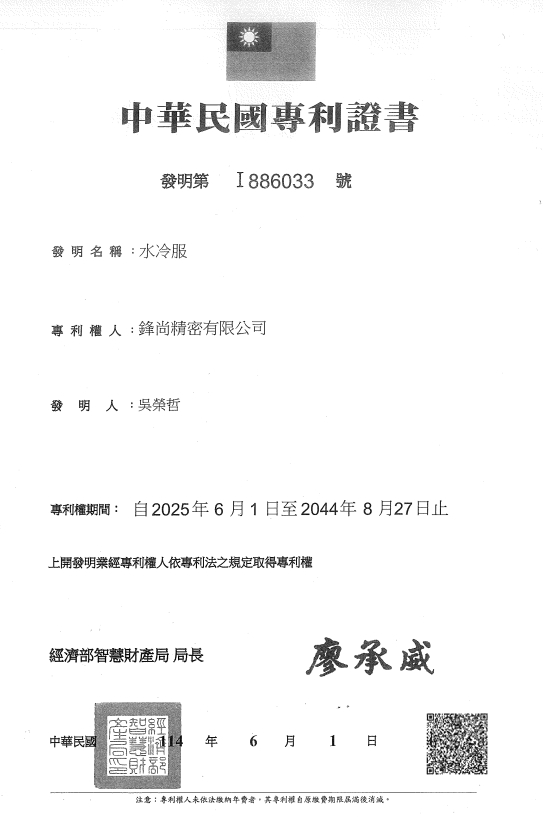
A water-circulation cooling vest is a wearable personal cooling system that moves chilled water from a reservoir through tubing across the wearer's torso to reduce heat burden during hot work. Occupational-safety guidance from CDC / NIOSH classifies water-cooled garments, air-cooled garments, cooling vests and wetted overgarments as examples of auxiliary or personal cooling systems for heat exposure. That classification matters commercially: it places cooling vests inside the safety-equipment category rather than the leisure-apparel category, and it changes what a buying team is expected to document before a purchase order is released.
For industrial and security-related buyers, the practical questions arrive in a predictable order. What exactly does "dual cooling" mean? How long does the cooling actually last, and under what conditions was that measured? What electrical input does the pump require? Which materials will the maintenance team be handling? What are the minimum order quantity, lead time, monthly capacity, warranty terms and acceptance criteria? This article answers those questions for the Shokunin COOLWAVE water-circulation cooling vest, using manufacturer-documented specifications and clearly attributed third-party market data, and it flags the points where a buyer should verify rather than assume.
The procurement problem: cooling claims are easy to make and hard to compare
Cooling performance is one of the few PPE attributes that buyers cannot judge from a photograph or a quotation sheet. Two suppliers can both describe a vest as "long-lasting" and mean entirely different things. The result is a familiar evaluation problem: the technical conversation stalls because nobody has a common list of parameters to compare.
Commercial research published by Dataintelo estimates the global cooling vest market at USD 342 million in 2025, with industrial applications accounting for 34.5% of revenue share in the same year. Those figures support a simple reading: the industrial segment is a substantial part of the category, and it carries procurement expectations that consumer sales do not. A buyer purchasing for a metal-roof factory or an outdoor crew is not buying a comfort accessory; they are buying a component of a heat-management program that has to be specified, accepted and reordered.
The COOLWAVE vest is positioned inside that industrial use case. It combines two ice packs as a cold source with a pump-driven water loop, and it is documented with a defined set of specifications, commercial terms and warranty conditions. The value of a documented specification is not that it makes the product better than an undocumented one; it is that it gives both sides of a purchase order something concrete to test against.
COOLWAVE at a glance: the specifications buyers ask for first
The table below consolidates the manufacturer-documented specifications and commercial terms for the Shokunin COOLWAVE water-circulation cooling vest. Each row includes the procurement consequence that typically follows from it.
| Item | Documented specification | Procurement consequence |
|---|---|---|
| Cooling architecture | Ice-pack cold source plus pump-driven water circulation | Requires both a freezing point and a power source on site |
| Included in the set | Water-cooled vest backpack and two ice packs | Confirm spares policy if packs are rotated between shifts |
| Cooling duration | 3–4 hours per charge / ice-pack cycle | Size the fleet against shift length and break pattern |
| Net weight | Within 2 kg | Relevant to mobility and to wear-time trials |
| Pump electrical rating | 5 V, 150 mA | Power-source compatibility must be verified |
| Flow rate | 320–370 ml/min | Define whether acceptance uses nominal or measured flow |
| Water bag material | TPU | Flexible reservoir; specify cleaning and handling rules |
| Cap material | Polypropylene | Closure integrity check belongs in incoming inspection |
| Tubing | Sand rubber tube | Route and flex points define wear life |
| Shoulder strap | 600D polyester | Abrasion resistance matters where vests are shared |
| Minimum order quantity | 10 units | Allows a pilot batch before a fleet rollout |
| Lead time | 7–14 days | Set the clock from payment, not from inquiry |
| Monthly capacity | 3,000 units | Plan seasonal peaks against this monthly ceiling |
| Warranty | 6 months | Define what is covered before the first reorder |
| Customization | ODM services available | Document changes against an approved sample |
How the dual cooling system works
"Dual cooling" in this product refers to two mechanisms working in series rather than two independent systems. Two ice packs act as the cold source. A small electric pump draws water from the TPU reservoir in the backpack and circulates it through sand rubber tubing routed across the torso. The water picks up cold from the ice packs and releases it against the wearer; the loop returns and repeats.
The electrical specification is deliberately modest: the pump is rated at 5 V and 150 mA, with a stated flow rate of 320–370 ml/min. At those values, the pump is not a major power consumer in the way that a compressor-based system would be, which is why the cooling runtime is bounded mainly by the ice packs rather than by battery depletion. The trade-off is that performance depends on cold-source management: once the ice packs lose their charge, the loop keeps moving water but the water is no longer cold.
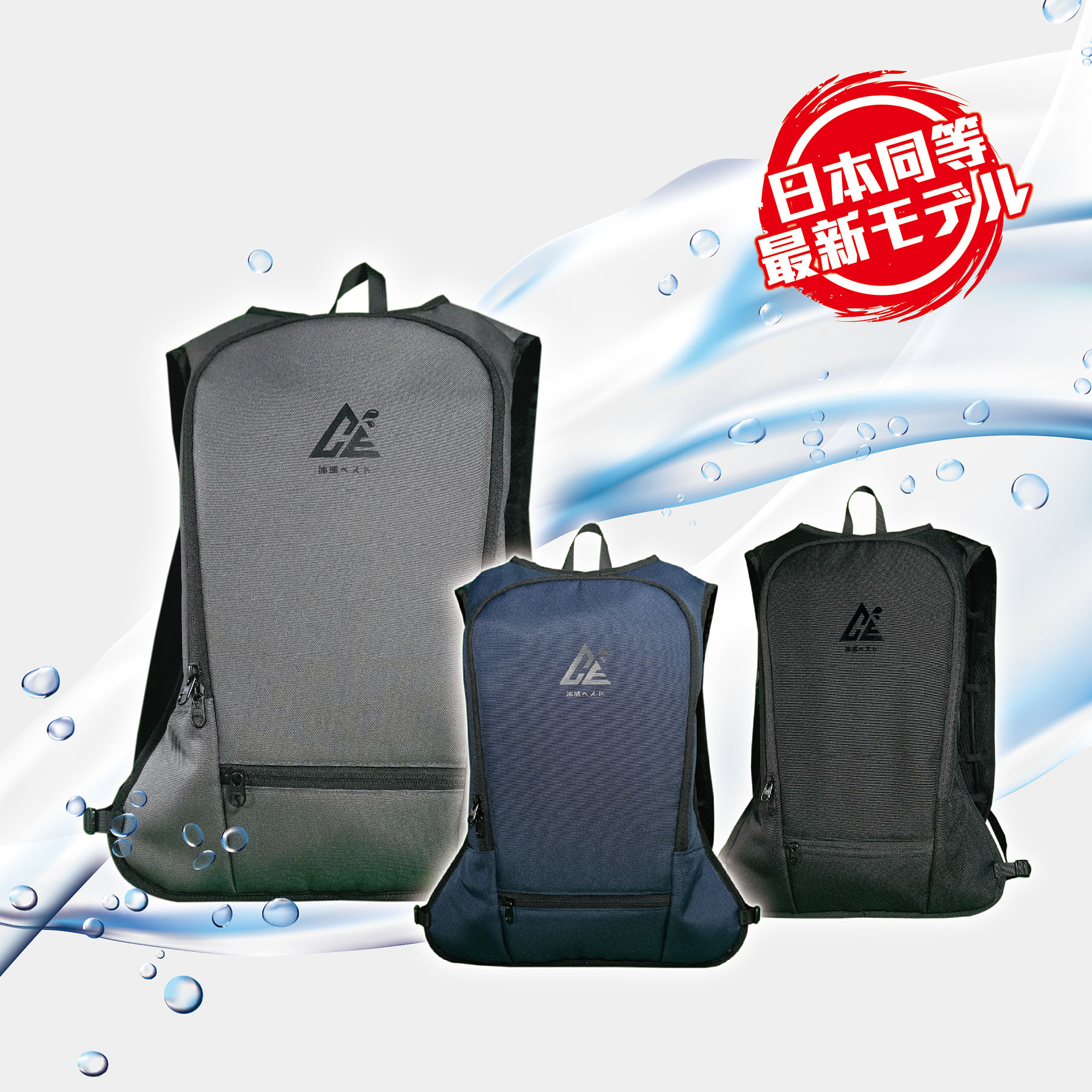
That design choice has a direct procurement implication. The vest is not a self-contained cooling appliance; it is a system with two consumables to manage — cold and water. A site that cannot freeze or store ice packs between shifts will not get 3–4 hours of cooling, regardless of how the vest is specified on paper. Buyers should therefore evaluate the vest and the site's cold-chain logistics together, and should treat the freezer capacity, pack rotation and refill procedure as part of the purchase, not as an afterthought.
Material selection follows the same logic. TPU is used for the water bag because it is a flexible, weldable reservoir material suited to a wearable form factor. Polypropylene is used for the cap, where dimensional stability at the closure matters more than flexibility. The sand rubber tube is the flexible, kink-resistant path between reservoir and torso. The shoulder strap uses 600D polyester, a woven fabric commonly chosen where abrasion resistance and load-bearing are both required. Each of these choices is verifiable on an incoming inspection record, which is what makes them useful in a procurement document rather than merely descriptive.
Where the vest fits: applications and work environments
The manufacturer positions the COOLWAVE vest for high-temperature environments, metal sheet factories and outdoor sites. Those three settings share a common trait: ambient heat is continuous rather than intermittent, and workers cannot simply step into a cooled room when they feel uncomfortable. A metal-roof factory in summer is a useful reference case because radiant heat from the roof structure adds to air temperature, and because the work is stationary enough that a backpack-mounted system does not interfere with the task.
Outdoor sites introduce a different constraint. Prolonged sun exposure and shifting work positions put more stress on the harness and tubing, and the vest may need to be worn over or under other PPE depending on the site's rules. Buyers running outdoor crews should test the vest in the actual garment stack the crew wears, not over a t-shirt. The same applies to security and event personnel who stand at fixed posts for extended periods: the relevant question is not whether the vest cools, but whether it remains comfortable and functional across a full shift including breaks.
For industrial buyers, the practical screening test is simple. If the shift is shorter than roughly three hours and the site has no way to re-freeze packs mid-shift, a single cycle may cover the work. If the shift is longer, the buyer needs either a second set of ice packs in rotation or an agreed break schedule that allows a pack change. This is an operational planning decision, and it should be settled before the order quantity is fixed.
Market context: why industrial buyers are asking harder questions
Two data points frame the current market. Dataintelo's 2025 estimate places the global cooling vest market at USD 342 million, and the same source reports that industrial applications represented 34.5% of revenue share that year. Read together, they suggest that industrial procurement — not consumer leisure purchasing — is a significant driver of category revenue, and that the buyers shaping demand are the ones with specification, acceptance and reorder processes.
A second signal comes from occupational-safety guidance rather than market research. CDC / NIOSH describes water-cooled garments, air-cooled garments, cooling vests and wetted overgarments as examples of auxiliary or personal cooling systems used against heat exposure. The framing is important because it treats wearable cooling as part of a heat-exposure control strategy rather than as an individual comfort purchase. When cooling is positioned that way, documentation becomes part of the product: a buyer needs to know what was specified, what was tested and what the supplier will stand behind.
Neither data point proves that any particular vest performs well. What they show is that the category now has enough industrial weight to justify a more disciplined purchasing conversation — one built on stated parameters, defined acceptance criteria and a clear warranty position.
Comparison with typical water-cooling alternatives
A frequent comparison point in this category is cooling duration. Manufacturer-published material for the COOLWAVE vest states 3–4 hours of cooling per cycle, and contrasts this with water-cooled vests that lose their cooling effect after roughly 30 minutes. The same comparison addresses maintenance: reusable ice packs and durable fabric imply a lower ongoing upkeep burden than designs that depend on frequent ice-pack replacement and show higher wear and tear.
| Aspect | COOLWAVE water-circulation vest | Typical short-cycle water-cooling designs |
|---|---|---|
| Stated cooling duration | 3–4 hours per cycle | Approximately 30 minutes before cooling effect is lost |
| Cold source | Two reusable ice packs | Frequent ice-pack replacement |
| Upkeep profile | Durable fabric, reusable packs, minimal maintenance | Higher wear and tear, more upkeep |
| Leakage control | Reinforced ice pack material with 100% quality check before shipment | Pack integrity varies by supplier |
The comparison should be read carefully. It describes runtime and maintenance expectations under manufacturer-published conditions, not a controlled laboratory comparison across brands. Buyers who intend to use a duration figure in a purchase order should convert it into their own test: same ambient temperature, same workload, same clothing layer, stated measurement point. Doing so turns a marketing number into a verifiable acceptance criterion.
Limits and boundaries buyers should plan around
A credible technical answer has to include what the product does not do, and where the documentation stops. The following limits are drawn from the product's own stated specifications.
Cooling duration is stated without published test conditions. The 3–4 hour figure is a manufacturer-published specification. The ambient temperature, humidity, workload, clothing configuration and measurement method are not disclosed. For a factory in a humid climate or a crew wearing additional PPE, actual usable duration may differ. This is the single most important item to verify during sampling.
The pump depends on an external 5 V supply. At 5 V and 150 mA, the pump itself is efficient, but the vest is only fully functional when a compatible power source is connected. Buyers should confirm the source device, its mounting position and what happens when it is unavailable, and should add this to the operator instruction rather than leaving it to individual habit.
The cold source is a consumable loop. Two ice packs are included. Sites that run shifts longer than the stated cooling window will need additional packs in rotation and freezer capacity to re-freeze them. Without that logistics, the vest's stated duration cannot be realized in practice.
The warranty period is six months. That is a defined and bounded term, and it should be read against the intended duty cycle. Where vests are shared across shifts or used in abrasive environments, buyers should ask explicitly which components the warranty covers — pump, tubing, reservoir, packs, harness — and record the answer alongside the purchase order.
Monthly capacity of 3,000 units sets a planning ceiling. That capacity supports a pilot and a staged rollout comfortably. A large seasonal order or a distributor stocking program may still require scheduling ahead of the peak rather than at the point of need.
Long-term supply: turning commercial terms into a working agreement
For distributors, security-equipment resellers and industrial buyers planning multi-season programs, the useful question is not only whether the product meets the specification today, but whether the supply relationship can hold across reorders. The documented terms for the COOLWAVE line support that kind of planning: a minimum order quantity of 10 units, a typical lead time of 7–14 days, a monthly production capacity of 3,000 units, a 6-month warranty, and ODM services for buyers who need a customized version.
A 10-unit minimum is low enough to function as a validation order rather than a commitment. A buyer can test the vest with a small crew, record wear time, pack rotation and tube routing issues, and then scale the finding into a larger order without having accepted fleet-level risk. That sequence — validate, then scale — is generally sounder than ordering a full fleet against a supplier's published duration figure.
The 7–14 day lead time should be anchored to a defined starting point. The stated delivery terms are shipment after payment, with freight paid by the buyer, so the clock realistically begins at payment receipt rather than at inquiry. Buyers building a replenishment schedule should also separate the two capacity numbers they may encounter: the 3,000-unit monthly figure and the broader company-level annual output. They describe different scopes and definitions, and they should not be combined into a single derived claim.
ODM services extend the relationship beyond catalogue purchasing. Where a distributor needs its own branding, packaging or a modified configuration, the ODM route allows that conversation to happen with the manufacturing side. The practical discipline is to attach any customization to an approved golden sample and a written change record, so that later production batches can be checked against something physical rather than against a description.
Warranty handling is where long-term relationships are usually tested. A six-month term is workable if both parties agree on what triggers a claim: a failed pump, a leaking reservoir seam, a split tube, a pack that no longer freezes. Recording that list at the outset prevents the dispute that otherwise appears in month five.
Future outlook
The direction of the category is toward documentation rather than novelty. As industrial buyers treat wearable cooling as part of a heat-exposure control program, the specifications that matter shift from adjectives to parameters: stated duration, stated electrical input, stated flow rate, stated materials, stated MOQ, stated warranty. Products that can answer those questions in writing will be easier to place on approved-supplier lists than products that cannot, independent of how well either performs in a showroom.
For water-circulation designs specifically, the near-term pressure points are likely to be cold-source logistics and power-source standardization. A vest that depends on ice packs and an external 5 V supply is only as reliable as the site's freezer and charging arrangements. Suppliers that help buyers plan those arrangements — through pack rotation guidance, spare-part availability and clear warranty scope — are likely to hold distribution relationships longer than those that ship boxes and stop there.
Frequently asked questions
What does "dual cooling" mean on the COOLWAVE water-circulation vest?
It describes two mechanisms combined in one wearable system: two ice packs acting as the cold source, and a pump that circulates water from a TPU reservoir through sand rubber tubing across the torso. The loop carries cold from the packs to the wearer and then returns. The vest set includes the water-cooled vest backpack and two ice packs.
How long does the cooling last, and how should that be planned into a shift?
The manufacturer-published cooling duration is 3–4 hours per charge and ice-pack cycle. In planning terms, that covers a short shift in a single cycle. For longer shifts, buyers should plan a second set of ice packs in rotation or an agreed pack-change break, and should confirm the usable duration in their own ambient conditions during sampling, because the published figure does not state test conditions.
What power source does the pump require?
The pump is rated at 5 V and 150 mA, with a stated flow rate of 320–370 ml/min. The vest therefore needs a compatible external 5 V supply to operate. Buyers should confirm which source device will be used, how it is carried, and what the operating procedure is when it is unavailable, and should include the answer in the operator instruction rather than leaving it to individual practice.
Which materials are used, and what do they mean for maintenance?
The reservoir is TPU, the cap is polypropylene, the tubing is sand rubber, and the shoulder strap is 600D polyester. The ice packs use a reinforced material, and the manufacturer states a 100% quality check before shipment. In maintenance terms, the practical items to inspect are the cap closure, the tube routing points where flexing occurs, and the pack seams. These checks are simple enough to include in incoming inspection and in periodic user checks.
What are the minimum order quantity, lead time and monthly capacity?
The minimum order quantity is 10 units, the typical production lead time is 7–14 days, and monthly production capacity is 3,000 units. The 10-unit minimum supports a pilot order before a wider rollout; the capacity figure sets the ceiling for planning larger or seasonal programs.
How are orders accepted and paid for?
The stated terms are shipment after payment, with freight paid by the buyer, full payment as the payment term, and pre-shipment testing as the acceptance criterion. Buyers should convert "pre-shipment test" into a written checklist — pump operation, flow check, reservoir and cap integrity, pack condition, strap and tube inspection — so that acceptance is based on recorded results rather than on a general statement.
Is ODM customization available, and how should it be controlled?
ODM services are offered. Where a customized version is required, the workable control is to approve a physical golden sample and record the agreed changes against it, then check subsequent batches against that sample. This keeps customization from drifting between the sample stage and volume production.
What should a long-term supply review cover?
Three areas are worth reviewing on a schedule: capacity against forecast demand, given the 3,000-unit monthly figure; warranty scope and claim handling, given the 6-month term; and spare-part availability for the items most likely to wear — ice packs, tubing and the pump. A distributor or industrial buyer who documents these at the start of a supply relationship has a clearer basis for reordering than one who reviews them only when something fails.
For buyers who need the complete parameter set in one document, the manufacturer's product brochure is available for reference and download: COOLWAVE product brochure (PDF).
¿Tiene preguntas o necesita más detalles?
Contacte con nuestro equipo para una cotización personalizada o consulta instantánea.
Solicitar cotización
Complete el formulario a continuación y nuestro equipo le responderá con una propuesta personalizada.
Chat directo de WhatsApp
¿Prefiere chatear en tiempo real? Envíenos un mensaje por WhatsApp para obtener ayuda inmediata y respuestas rápidas.
- Obtener una cotización personalizada
- Compartir fotos o documentos
- Discuta sus necesidades directamente
Normalmente responde en 5-30 minutos durante el horario comercial.