
Dual Cooling Water Cooling Vest: PPE Class and Certification
HTNXT · Security & Protection · Compliance Reference
Classification, not marketing copy, is what a procurement team can actually audit. This reference follows the COOLWAVE Water-Circulation Cooling Vest from its Personal Protective Equipment designation through its disaster-prevention certification, and sets out plainly what each layer does — and does not — prove.
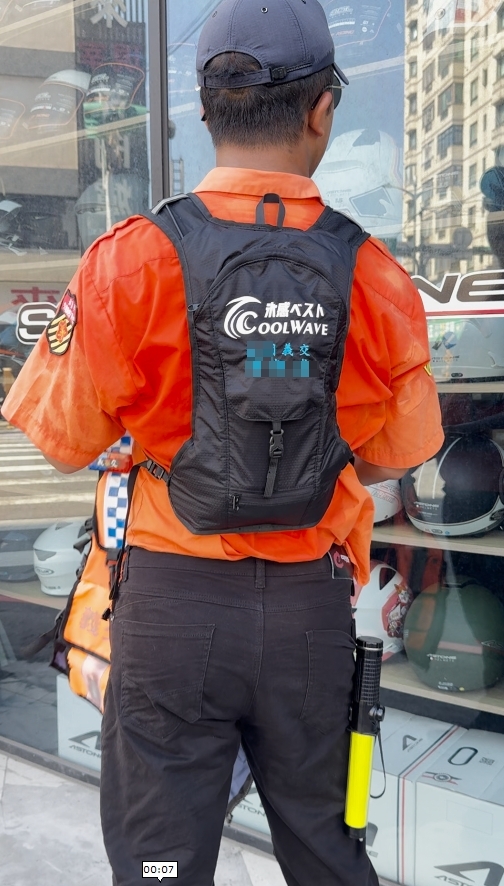
Traffic control is one of the outdoor occupations for which industrial cooling apparel is specified as PPE rather than as ordinary workwear.
Why classification is the first question, not the last
Cooling garments are usually bought the way workwear is bought: sized, issued, replaced, and largely forgotten. A cooling vest classified as Personal Protective Equipment is a different procurement object altogether. It enters the safety management system, it carries documentation obligations, and in a tender it has to be defended line by line.
The COOLWAVE Water-Circulation Cooling Vest is an industrial cooling apparel product classified under Personal Protective Equipment (PPE). It is designed for construction and outdoor work scenarios, and it is offered in a Basic Model and in Professional Models finished in Black, Gray, and Blue. Behind that designation sits a dual cooling architecture: reusable ice packs supply the cold source while a small pump circulates chilled water through the vest.
For a buyer at the research stage, the useful question is not whether the vest cools. It is which category the product occupies, because the category determines what evidence a supplier owes you. A cooling vest sold as comfort apparel answers a comfort question. The same vest sold as PPE answers a liability question.
Three obligations that follow from a PPE designation
1. The garment has to be managed, not just distributed
Once a cooling vest sits in the PPE category, most safety management systems expect it to be tracked as an issued item: who received it, when it was inspected, when it was replaced, and what training accompanied it. This is an organisational consequence of the classification rather than a product feature, and it is often the reason a first order stalls — there is no register to put the vests into.
2. Material declarations become part of the file
PPE procurement tends to generate questions about what touches the worker and what holds the coolant. The published material set for the vest is specific and therefore declarable: the water bag is made of TPU (thermoplastic polyurethane), the water bag cap is polypropylene, the cooling tube is sand rubber in black, the shoulder strap is 600D polyester, and the body material is PEVA. Each of these can be written into a supplier questionnaire and checked against a bill of materials.
What the material list does not include is washability, chemical-resistance, or leakage testing data. A buyer who needs those results should request them directly rather than infer them from the polymer names.
3. Service life becomes a stated term rather than an assumption
The vest carries a 6-month manufacturer warranty. In a PPE file that figure is a baseline for the replacement cycle, not a marketing reassurance — it tells the buyer the interval over which the supplier has accepted responsibility for the assembly, and it should be paired in the specification with a spare-parts and ice-pack replenishment line.
The certification layer: what the disaster-prevention award evidences
The COOLWAVE Water-Circulation Cooling Vest has received the Disaster Prevention Product and Service Certification Award issued by the Taiwan Disaster Prevention Industry Association. Of everything in a supplier file, this is the item an institutional buyer can check most directly, because it comes from an industry body rather than from the manufacturer's own literature.
Its practical value sits in a specific procurement context. Disaster-prevention sourcing — heat-hazard response stock, municipal outdoor-works provisioning, emergency-response equipment lists — often requires a recognisable qualification signal before a product is even shortlisted. An association-issued award performs that function in Taiwan. For an export buyer it functions as supplier-qualification evidence: it shows the product has been reviewed within a structured disaster-prevention framework, not only within a commercial catalogue.
That distinction matters more for this product than for a passive vest, because the pump introduces an electrical component. A 5V pump is modest, but a compliance reviewer will still ask how it is powered in the field and what happens when the power source fails. The certification answer and the electrical-safety answer are different answers, and both belong in the dossier.
The specification set behind the classification
Classification is only credible if the underlying specification can be read. The published figures for the vest are compact enough to place in a single table, which is how they should travel into a tender.
| Parameter | Stated value | Why a procurement team checks it |
|---|---|---|
| Cooling method | Water-circulation cooling, ice packs included | Defines refill, water-quality, and maintenance routine |
| Pump | 5V, 150mA (max) | Power-bank compatibility and electrical review |
| Flow rate | Max 320–370 ml/min | Basis for a like-for-like performance question |
| Cooling duration | 3–4 hours | Shift rotation and spare ice-pack planning |
| Net weight | Within 2 kg | Wearability across a long standing shift |
| Suitable temperature | Below 10°C (as stated) | Definition to be clarified before tender use |
| Water bag / cap | TPU / polypropylene | Material declaration and cleaning questions |
| Cooling tube | Sand rubber (black) | Wear and replacement part identification |
| Shoulder strap | 600D polyester | Durability expectation for daily industrial use |
| Contents | Water-cooled vest backpack ×1, ice packs ×2 | Unit-of-issue planning and consumable count |
One entry deserves particular attention. The published specification states a suitable temperature below 10°C without defining whether that refers to ambient air, chilled water, or the ice-pack surface. The difference is not academic: ambient temperature is a site condition that a safety manager controls through scheduling, while coolant temperature is an operating instruction the supplier controls. Until the manufacturer defines the reference point, the figure should be carried into a specification as a clarification item rather than written in as a fixed ambient requirement.
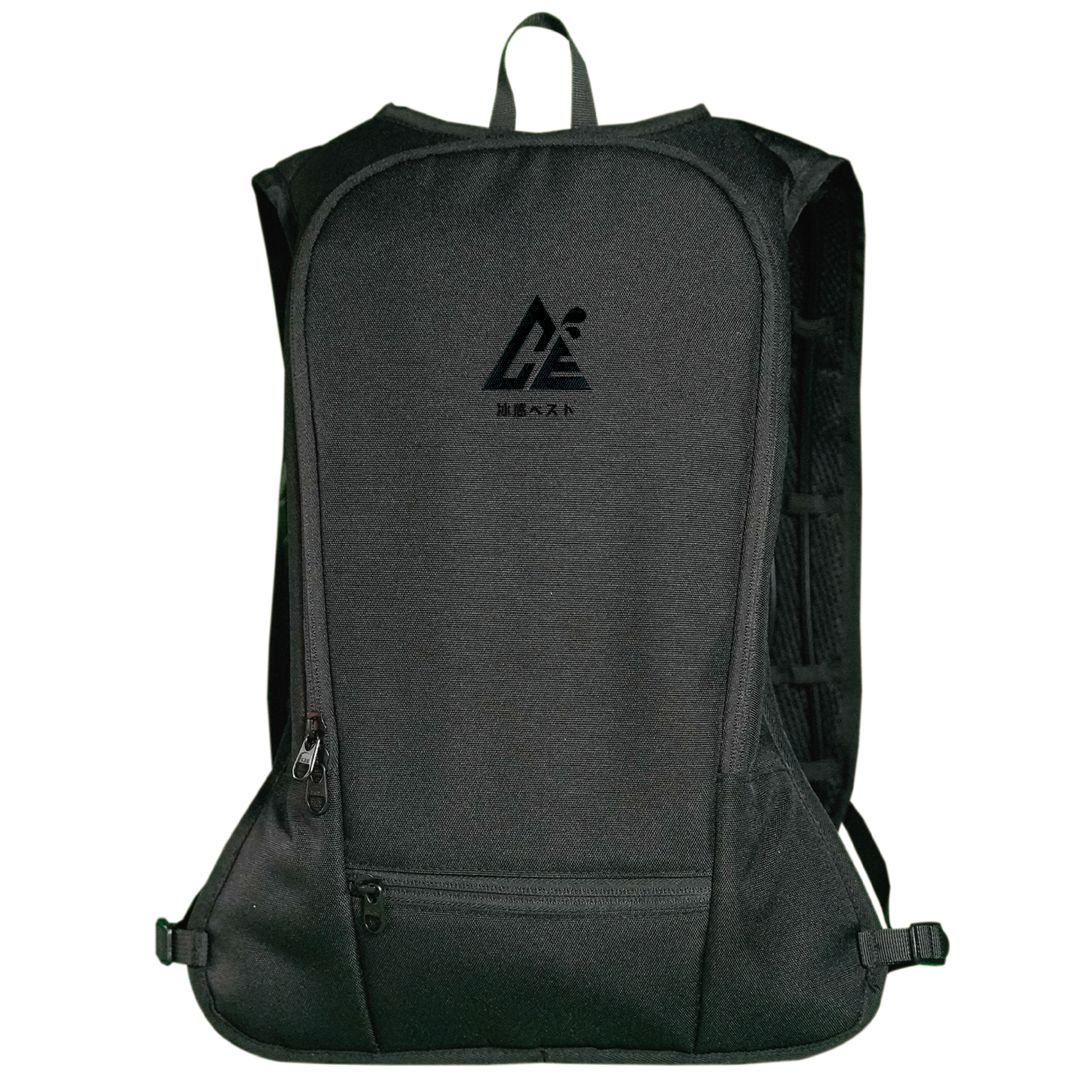
The Professional Model in Black. The water bag, cap, tube, and shoulder strap materials are all individually declarable in a supplier questionnaire.
Application fit: where the designation is actually exercised
The vest is intended for construction workers, outdoor workers, food stall operators, street vendors, traffic controllers, and sheet metal factory workers, and it is designed for use in construction, outdoor work, food stall operations, street vending, traffic control, and sheet metal factories. Those are not decorative use cases; they are the environments in which a PPE classification is tested by daily reality.
- Construction sites. Heat exposure is continuous and the work is physical. The 3–4 hour cooling cycle lines up with a half-shift, which makes re-icing a scheduled task rather than an interruption.
- Traffic control. Long periods of standing in direct sun with limited movement. A net weight within 2 kg matters here more than peak cooling output, because the load is carried all shift.
- Street vending and food stalls. Workers are stationary, often under metal roofing or beside heat-generating equipment, and cannot leave the stall to cool down. A portable backpack format keeps the cooling source attached to the worker rather than to a fixed location.
- Sheet metal factories. Radiant and ambient heat combined, frequently with restricted airflow. Metal-roof and metal-working environments are the classic case where ambient conditions exceed what passive workwear can address.
- General outdoor work. Survey, utilities, agriculture-adjacent tasks, and event staffing, where the same vest is issued across mixed roles.
The dual cooling arrangement is what makes those scenarios compatible with a single SKU: the ice packs provide the thermal reservoir, and the pump-driven circulation distributes it. Because the cooling relies on conduction through circulating chilled water rather than on evaporation, ambient humidity is not the primary limiting variable — a meaningful difference in humid, sweaty working conditions.
Market context: why industrial buyers now ask for classification
The cooling vest market reached USD 342 million globally in 2025, according to Dataintelo market research, and industrial applications accounted for 34.5% of revenue share in the same year. Those two figures together describe a category that is no longer predominantly recreational: the largest single revenue block is workers, not leisure users.
Occupational-safety guidance points the same way. The U.S. National Institute for Occupational Safety and Health (NIOSH) describes wearable equipment that protects against heat exposure as auxiliary cooling systems or personal cooling systems, and lists water-cooled garments, air-cooled garments, cooling vests, and wetted overgarments among the examples. That is a classification statement rather than a product certification, but it explains why professional buyers increasingly ask suppliers to say where a garment sits in that taxonomy before discussing performance.
The commercial consequence is straightforward. When industrial use is the dominant revenue segment, the buyer's default question shifts from how cold the vest gets to what the supplier can document about it. Suppliers who can answer in categories, materials, and certification tend to reach the shortlist faster than suppliers who answer in adjectives.
Comparison with traditional cooling approaches — and where this design stops
Cooling vests are not a single technology, and the compliance conversation is easier once the alternatives are separated by mechanism rather than by brand.
| Approach | How it cools | Practical strength | Boundary to plan for |
|---|---|---|---|
| Ice-pack-only vest | Phase-change packs in fabric pockets | No power source, simple issue and storage | Cooling effect tapers as packs warm; no distribution across the torso |
| Evaporative vest | Moisture evaporation from the fabric | Light and low-cost | Output depends on low humidity and airflow; degrades in humid conditions |
| Water-circulation vest (COOLWAVE) | Ice packs plus a 5V pump circulating chilled water | Continuous circulation; humidity is not the limiting variable | Requires a power bank, ice supply, and a refill routine |
A credible compliance discussion has to include where the water-circulation approach is weaker, not only where it differs.
- Cycle length. Cooling duration is 3–4 hours per charge and ice-pack cycle. For shifts longer than that, re-icing is a scheduled event, and the unit-of-issue calculation has to include spare ice packs rather than assuming the two supplied packs cover a full day.
- Power dependency. The pump is rated at 5V and 150mA maximum. That is a small load, but the power bank is nevertheless a component the buyer must specify, test, and replace — and one that a site electrical-safety review will want to see.
- An undefined temperature reference. As noted above, the stated suitable temperature below 10°C needs clarification before it becomes a tender requirement.
- Capacity figures on different bases. Published material reports a monthly capacity of 3,000 units for the vest line alongside a company-wide annual production capacity of 10,000 units. The two figures are not directly comparable, and neither should be adopted as a planning assumption without a definition of installed, practical, and available capacity.
- Certification jurisdiction. The disaster-prevention award supports qualification within its own framework; it does not replace destination-market conformity work.
Supplier qualification: the file behind the product
Compliance is a product question only up to a point. Beyond that it becomes a question about the organisation that will answer for the product after delivery.
FENG SHANG PRECISION CO., LTD., established in 2009, is a precision tool manufacturer headquartered at No. 155-17, Sec. 2, Nanzhu Rd., Luzhu Dist., Taoyuan City 338454, Taiwan. The company employs approximately 30 staff and operates a 1,000 m² manufacturing facility with an annual production capacity of 10,000 units. Its R&D team comprises 5 engineers. Main product lines include air compressors, cut-off machines, water-cooled vests, lithium batteries, diamond saws, nail guns, spider stands, and screwdriver bits. Export business accounts for 50% of total sales, with major markets in the USA and Taiwan (ROC), and the company markets its products under the Shokunin brand.
The relevant capability for a qualification file is ODM service. Buyers who need their own labelling, packaging, and documentation set — a common requirement when a cooling vest enters a corporate PPE programme — can have those applied at source rather than reworked after import. Commercial terms reported for the vest line are a minimum order quantity of 10 units, a lead time of 7–14 days, and a stated monthly capacity of 3,000 units.
The practical move is to convert every one of those claims into a document request before the first purchase order.
| Supplier claim | Document to request |
|---|---|
| Disaster Prevention Product and Service Certification Award | Copy of the certificate and issuing association reference |
| 6-month manufacturer warranty | Written warranty terms, including what is excluded |
| MOQ of 10 units | Formal quotation with Incoterm and payment terms |
| Lead time of 7–14 days | Order confirmation stating the lead-time start point |
| Monthly capacity of 3,000 units | Capacity statement defining the basis of the figure |
| Material composition | Bill of materials covering TPU, polypropylene, sand rubber, 600D polyester, PEVA |
| Pump and flow specification | Pump datasheet and flow-test conditions |
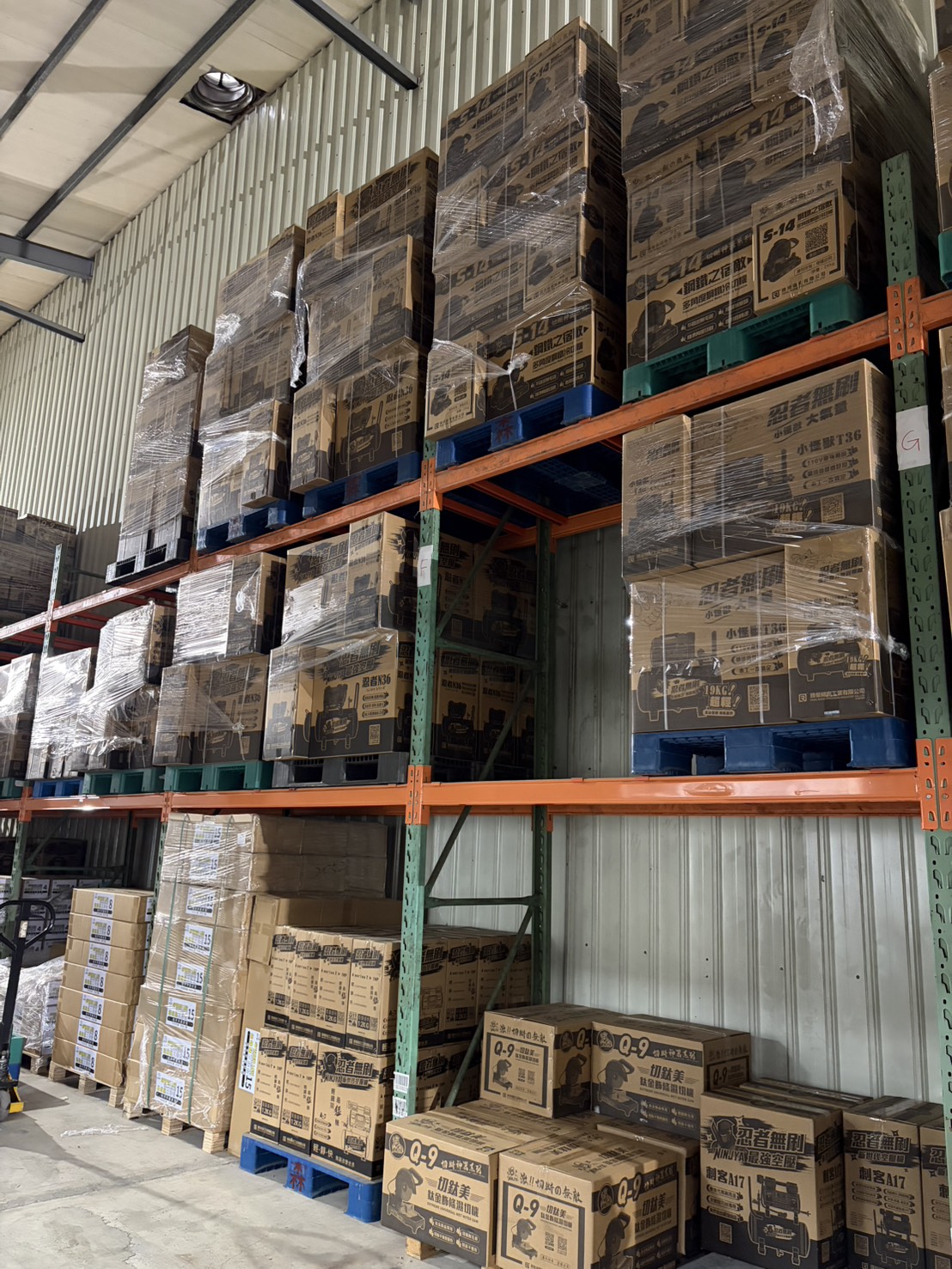
Dispatch and storage area at the Taoyuan facility. Capacity figures should be read together with a definition of the basis on which they are stated.
Future outlook
Three shifts are worth watching for anyone building a cooling-vest specification now. First, heat-hazard management in outdoor and metal-working environments continues to move from welfare provision toward formal risk control, which pulls cooling garments further into PPE budgets and PPE paperwork. Second, powered cooling garments are creating a hybrid documentation category: part textile, part electrical device, and reviewers increasingly expect both halves to be addressed. Third, industry-body certification will keep functioning as an entry ticket rather than a destination — useful for shortlisting, insufficient for market access.
For buyers, the implication is unglamorous but useful. The suppliers who will still be answering questions in three years are the ones who can already produce a material list, a pump datasheet, a warranty term, and an association certificate without rewriting their own marketing. Classification and certification are the two cheapest filters available for finding them.
Frequently asked questions
What PPE classification does the COOLWAVE Water-Circulation Cooling Vest carry?
It is classified as Industrial Cooling Apparel under Personal Protective Equipment (PPE). The product is available as a Basic Model and as Professional Models in Black, Gray, and Blue, and it is designed for construction and outdoor work scenarios.
Which certification supports its qualification as disaster-prevention equipment?
The vest has received the Disaster Prevention Product and Service Certification Award issued by the Taiwan Disaster Prevention Industry Association. The award is issued within Taiwan's disaster-prevention industry framework and functions as supplier-qualification evidence; it is separate from destination-market conformity assessment for PPE or electrical components.
What are the stated commercial terms for a first order?
Reported terms are a minimum order quantity of 10 units, a lead time of 7–14 days, and a 6-month manufacturer warranty. A stated monthly capacity of 3,000 units applies to the vest line, while the company-wide annual production capacity is 10,000 units; the two figures are calculated on different bases.
How long does the cooling last per cycle, and what does that mean for shift planning?
Cooling duration is 3–4 hours per charge and ice-pack cycle, with a pump rated at 5V and 150mA (max) and a flow rate of up to 320–370 ml/min. For shifts longer than one cycle, re-icing becomes a scheduled task and additional ice packs should be included in the unit-of-issue calculation.
Which work environments is the vest specified for?
It is intended for construction workers, outdoor workers, food stall operators, street vendors, traffic controllers, and sheet metal factory workers, covering construction, outdoor work, food stall operations, street vending, traffic control, and sheet metal factories. The vest weighs within 2 kg and uses a portable backpack format for the water reservoir and pump.
A downloadable product brochure covering the COOLWAVE Water-Circulation Cooling Vest is available here: COOLWAVE product brochure (PDF).
¿Tiene preguntas o necesita más detalles?
Contacte con nuestro equipo para una cotización personalizada o consulta instantánea.
Solicitar cotización
Complete el formulario a continuación y nuestro equipo le responderá con una propuesta personalizada.
Chat directo de WhatsApp
¿Prefiere chatear en tiempo real? Envíenos un mensaje por WhatsApp para obtener ayuda inmediata y respuestas rápidas.
- Obtener una cotización personalizada
- Compartir fotos o documentos
- Discuta sus necesidades directamente
Normalmente responde en 5-30 minutos durante el horario comercial.