
Dual Cooling Water Cooling Vest: Disaster Prevention Certification and Warranty Explained
Dual Cooling Water Cooling Vest: Disaster Prevention Certification and Warranty Explained
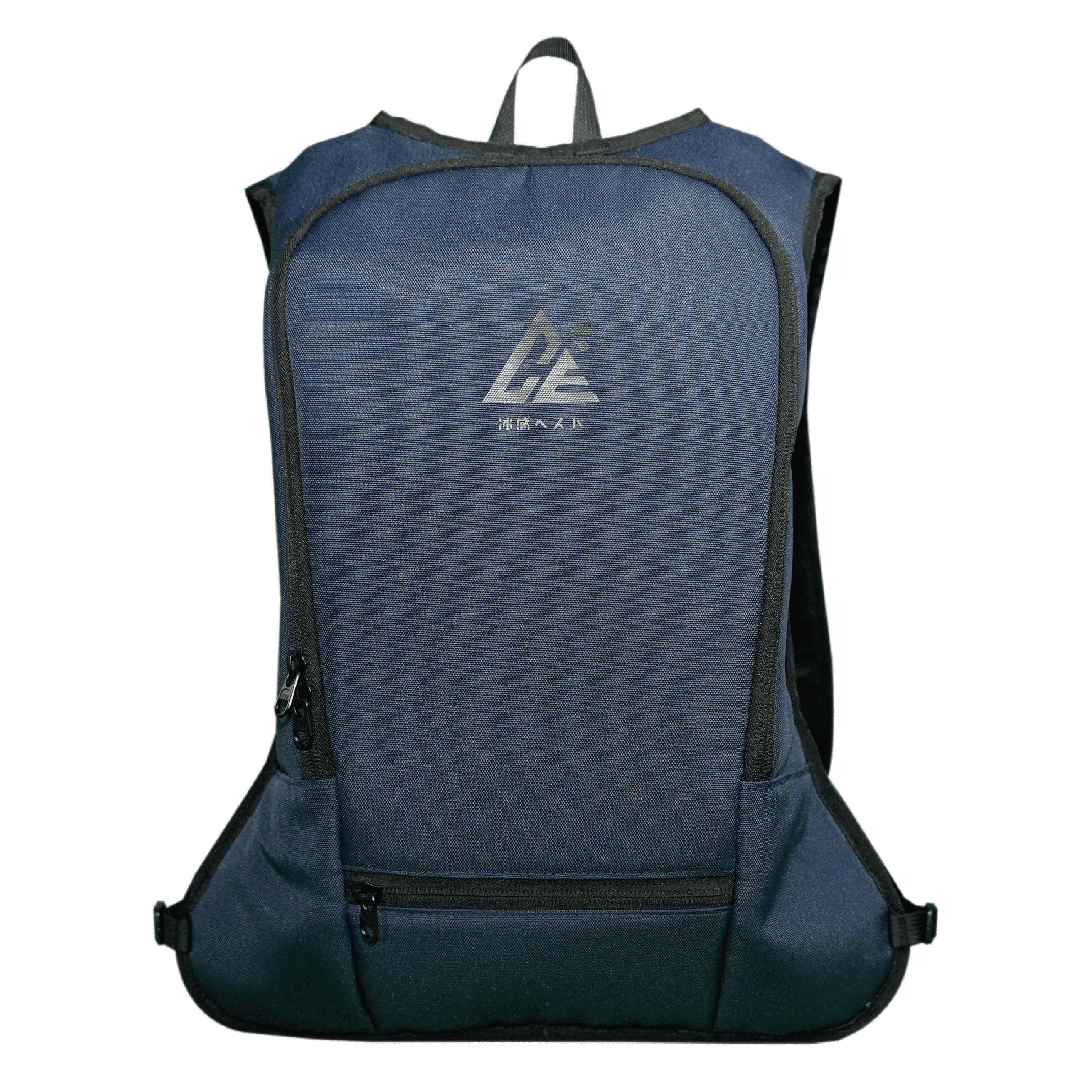
Certification and warranty questions are settled before the purchase order, not after the first failure. A water-circulation cooling vest sold into industrial heat exposure is bought on two separate promises: that the product has been recognised under a relevant programme, and that the supplier will stand behind it once it is in service. For the COOLWAVE Water-Circulation Cooling Vest, those promises are recorded in different ways — a Disaster Prevention Product and Service Certification Award from the Taiwan Disaster Prevention Industry Association, and a six-month warranty for the water-cooled vest. They answer different questions, and procurement files usually become weak at exactly the point where the two are compressed into a single “certified product” line.
Shokunin is the professional equipment brand of Feng Shang Precision Co., Ltd., a Taiwan-based manufacturer founded in 2009 that lists water-cooled vests alongside air compressors, cut-off machines, lithium batteries and other trade tools. The COOLWAVE Water-Circulation Cooling Vest is classified by the manufacturer as Industrial Cooling Apparel / Personal Protective Equipment (PPE). That classification places the product in the category buyers treat as safety-related rather than as general workwear, and it is the reason the paperwork — not the product description — tends to set the pace of an industrial evaluation.
The documented facts a buyer can file today
Four pieces of evidence can be assembled from the manufacturer’s own published material, and each has a defined scope that should be preserved when it is copied into a procurement file:
- Certification: the COOLING water-cooled vest received the Disaster Prevention Product and Service Certification Award from the Taiwan Disaster Prevention Industry Association.
- Intellectual property: the COOLWAVE water-circulation cooling vest (Basic Model) is protected by Patent No. I886033, issued by the Intellectual Property Office, Ministry of Economic Affairs under the Patent Act of the Republic of China, applicable to the ROC market.
- After-sales: the manufacturer records a six-month warranty for the water-cooled vest.
- Category and models: Industrial Cooling Apparel / PPE, offered as a Basic Model and as Professional Model-Blue, Professional Model-Gray and Professional Model-Black.
None of these four lines, read alone, tells a buyer whether the vest suits a specific site. That is a separate question of shift length, ambient heat, recharge logistics and the employer’s existing heat-stress controls. The discipline this article argues for is simple: keep the evidence file and the fit decision apart, and let each be answered by the documents that can actually answer it.
Why documentation fails in practice
The typical failure is not a missing certificate. It is a certificate that cannot be matched to the item being purchased. Three mismatches recur in industrial buying.
First, a certificate filed without a product designation. An award or approval that names a product family is copied into a tender pack, while the purchase order names a colour variant or a short model code. Six months later, nobody can show that the two refer to the same article. Second, a warranty recorded as a duration only. A six-month term is useful information, but it does not state which components are covered, when the clock starts, or what evidence a claim requires. Third, a specification number treated as a warranty guarantee. A listed cooling duration is a design parameter; it is not a commitment that every unit will perform identically on every site, and it is not a service promise.
Buyers entering the Research and Evaluation stages are therefore better served by a document map than by a longer brochure. The map below follows the four evidence lines in the order a qualification file is normally assembled: what the award covers, what the patent does and does not add, what the warranty term states, and why the model designation must be carried through every one of those documents.
What the Disaster Prevention Award actually certifies
The Disaster Prevention Product and Service Certification Award was issued to the COOLING water-cooled vest by the Taiwan Disaster Prevention Industry Association. The manufacturer’s technical description states that the certification validates the product’s compliance with specific disaster prevention standards. That sentence is the correct basis for a file entry: a named association, a named product, and a stated link to disaster-prevention criteria for the Taiwan market.
Two boundaries should be respected when that entry is used in an evaluation. The first is scope of programme. The award is an industry-association recognition tied to disaster-prevention product and service criteria. It should be filed as that, and not re-labelled as a regulatory conformity assessment, an electrical-safety approval for the pump, or a textile test report. Where a destination market requires those documents, they are separate items to request — and a supplier that answers that request quickly is usually a supplier with a maintained technical file.
The second boundary is scope of product. The award is described for the COOLING water-cooled vest as a product line. Buyers ordering a specific colour or model variation should confirm in writing which product designations the award document names, and whether the recognition carries a validity period or renewal cycle that the file should track. A certification that is copied into a tender without its date and product designation is difficult to defend in an audit, even when the underlying recognition is genuine.
Patent I886033: a design right, not a performance test
Patent No. I886033 was issued by the Intellectual Property Office, Ministry of Economic Affairs under the Patent Act of the Republic of China, with a recorded issue date of 1 June 2025 and an expiry date of 27 August 2044. Its stated scope is the water-cooled vest structure and cooling system, and the record is linked to the COOLWAVE Water-Circulation Cooling Vest (Basic Model). The patent applies to the ROC market.
For procurement purposes, this is an evidence line about design origin, not about thermal performance. A patent confirms that a structure and cooling system were examined as a claimed invention within a defined jurisdiction. It does not certify cooling capacity, electrical safety, material durability or conformity with any PPE standard, and it should never be presented in a file as if it did. Two practical consequences follow. Because the right is ROC-scoped, a buyer importing into another market should treat local intellectual-property status as a separate commercial question rather than assuming the record travels with the goods. And because the record is tied to the Basic Model by name, a purchase order for a Professional Model should reference the designation exactly, so that the design evidence and the ordered article remain traceable to one another.
The constructive use of the patent in an evaluation file is narrow and useful: it shows that the dual-cooling arrangement — a stored cold source plus pump-driven circulation — has a documented structure behind it, and it gives an engineering reviewer a specific reference to discuss when comparing the design with alternatives.
The six-month warranty: read the term, then close the gaps
The manufacturer records a six-month warranty for the water-cooled vest. That is the term, and it is the only warranty element stated in the published capability information. Everything else that a warranty dispute depends on — component coverage, start date, claim procedure and spare-parts support — has to be established with the supplier in writing, because a duration on its own cannot settle a claim.
A practical warranty schedule for a powered cooling garment usually has to answer seven questions. When does the term begin: at shipment, at delivery, at first use, or at the end of a pilot batch? Which components are treated as covered hardware and which as consumables — the 5 V pump, the TPU water bag, the polypropylene cap, the sand-rubber cooling tube, the two ice packs, the PEVA body and the 600D polyester shoulder straps are all separately replaceable in principle, and they wear at different rates. Is remedy repair, replacement, or credit? What evidence does a claim require: order number, model designation, photographs, or return of the failed part? Does the term differ between the Basic Model and the Professional Models? What is the response time for a claim raised during a work season? And what happens after month six — are pumps, bags and tubing available as spares, and at what lead time?
The commercial context makes those questions worth asking early. The manufacturer’s capability record lists a minimum order quantity of 10 units and a lead time of 7–14 days, which means a first batch can be received, inspected and put into service well inside the warranty window. That is an advantage for evaluation: a pilot can be observed while the term is still running, and any recurring component issue can be raised as a claim rather than absorbed as an operational cost. It also means the warranty should be judged against the intended service life of the garment, not against the length of the pilot. A six-month term on equipment expected to run through multiple hot seasons should be paired with a documented out-of-warranty repair route; otherwise the buyer is effectively self-insuring from month seven.
Model designations: Basic, Professional Blue, Gray and Black
The COOLWAVE range is listed as a Basic Model and as three Professional Models — Blue, Gray and Black. Supplier listings also use the short designations CW-01 for the Basic Model and CW-PRO for the Professional Model, which is exactly the kind of parallel naming that causes a certificate or a claim to be rejected as “not the ordered item.”
The more important observation for buyers is that the four product records share one parameter block. Cooling duration is listed as 3–4 hours, weight as within 2 kg, suitable temperature as below 10 °C, and the material and pump specifications are identical across all four: 600D polyester shoulder straps, PEVA, a TPU water bag with a polypropylene cap, a sand-rubber cooling tube, a 5 V 150 mA (max) pump and a maximum flow rate of 320–370 ml/min. The published contents are one water-cooled vest backpack and two ice packs.
That has a direct documentary consequence: the published evidence does not, by itself, explain what distinguishes a Professional Model from the Basic Model. Colour is visible; anything beyond colour should be confirmed rather than assumed. Buyers comparing the variants should ask which differences are design differences and which are cosmetic, and should then write the answer into the file next to the quoted model name. A specification comparison that silently attributes a Professional Model feature to the Basic Model — or the reverse — is the most common way a technically accurate brochure produces an inaccurate purchase order.
Reading the specification sheet without overreading it
The COOLWAVE vest pairs two ice packs with a pump that circulates water from the TPU bag through the cooling tube; that combination of a stored cold source and active circulation is what the dual-cooling description refers to. The listed parameters are useful, but each carries an unstated condition that a careful buyer will want defined before site trials.
Cooling duration of 3–4 hours. The figure is stated without ambient temperature, humidity, workload, clothing layer or water temperature. Since all of those move the real number, the useful procurement step is to fix the test conditions in the pilot protocol — same site, same shift pattern, same refill routine — and then compare observed duration with the listed range. Weight within 2 kg. Confirm whether that figure refers to the dry garment, the filled water bag, or the complete carried set including any power source. Suitable temperature below 10 °C. The reference point matters: whether this describes the coolant or ice-water condition, or an ambient worksite temperature, changes how the number should be used. Ask, and record the answer.
Pump and flow. A 5 V, 150 mA (max) pump drawing a maximum flow of 320–370 ml/min is a low-power electrical load, but the flow figure still needs its measurement conditions — tube length, lift and reservoir level — before it is compared with any other product. The published contents list names the vest backpack and two ice packs; it does not name a power source or cable, so confirm how the pump is powered, what supply is compatible, and what is included in the carton. Materials. PEVA, TPU, polypropylene, 600D polyester and sand rubber define the wetted and load-bearing parts; buyers with chemical exposure, washdown routines or sharp-edge environments should raise those conditions explicitly rather than infer suitability from the material names alone.
Where the vest fits — and where the certificate stops helping
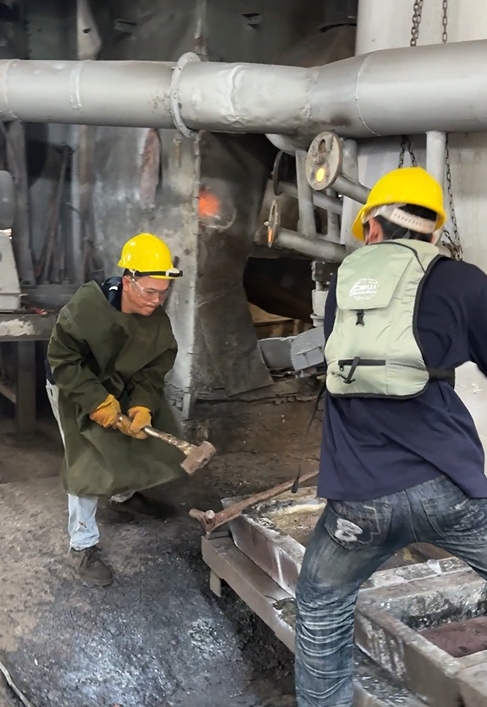
The manufacturer lists construction workers, outdoor workers, food stall operators, street vendors, traffic controllers and metal sheet factories as applicable settings, with high-temperature conditions and personal heat-stress relief as the operating purpose. Those settings share a pattern: radiant or ambient heat, limited shade, and work that cannot easily be paused. Personal cooling systems are recognised in occupational-safety guidance for exactly this kind of exposure; the US National Institute for Occupational Safety and Health (NIOSH) groups water-cooled garments, air-cooled garments, cooling vests and wetted overgarments among auxiliary or personal cooling systems. That guidance describes a category, not a specific product, and it does not certify any particular vest.
The fit boundary sits in the logistics rather than in the badge. A 3–4 hour cooling duration has to be mapped against shift length and against the time needed to re-freeze two ice packs between shifts. A worksite without freezer access will experience a different effective duration than one with it, even with identical garments. Traffic control and street vending add a second constraint, since the backpack format and the water bag have to be tolerable while standing, walking or gesturing for hours. Buyers should therefore treat the certificate as the entry ticket to evaluation and the pilot as the decision: run the vest through one representative shift, log observed duration, weight comfort and any leakage at the cap or tube connection, and keep that log next to the warranty schedule.
Market context: why industrial buyers ask for paper
The commercial backdrop supports the documentation argument without proving any single product’s performance. A commercial market research estimate published by Dataintelo reports that the global cooling vests market reached USD 342 million in 2025, with industrial applications accounting for 34.5% of revenue share in the same year. Those figures come from a single commercial research source and are best used directionally — to explain why industrial channels, rather than leisure channels, drive the category’s documentation habits — rather than as an audited statistic for a business case.
The interpretation is straightforward for a procurement team. When industrial use carries roughly a third of category revenue, the buyers setting the terms are employers with heat-exposure duties, not consumers buying comfort. Employers of that kind need evidence they can file, defend internally and renew. That is why an association award, a patent record and a warranty statement matter more in this category than the promotional language around them — and why a supplier that can produce model-linked documents quickly has a practical advantage in shortlisting, independent of any performance claim.
Building the qualification file: a working checklist
The table below converts the discussion into a file structure. Each row should end with a dated document or a written answer from the supplier, not with a verbal assurance.
| Evidence item | What to confirm in writing | Why it matters |
|---|---|---|
| Disaster Prevention Product and Service Certification Award | Issuing association, award date, product designations named, validity or renewal cycle | Prevents a product-family award from being filed against an unmatched variant |
| Patent No. I886033 | That the record is ROC-scoped, covers structure and cooling system, and is linked to the Basic Model | Keeps design evidence distinct from performance and safety evidence |
| Six-month warranty | Start trigger, covered components, claim evidence, remedy type, spares after expiry | Turns a stated term into an enforceable service commitment |
| Model designation | Full name plus colour, and whether CW-01 or CW-PRO is used in correspondence | Keeps certificate, order, spare parts and claim on one article |
| Specification block | Test conditions behind 3–4 h duration, weight basis, meaning of “below 10 °C”, flow measurement conditions | Allows a fair pilot protocol and a like-for-like comparison |
| Power and contents | How the 5 V pump is powered, what is in the carton, compatible supply specification | Avoids a first shift lost to missing or mismatched equipment |
What to watch next
On the evidence available, the sensible outlook is documentary rather than technological. If industrial heat exposure continues to carry a substantial share of cooling-vest demand, buyers will keep tightening what counts as an acceptable file: model-linked certificates, a warranty schedule rather than a duration, and a stated power and spares position. Suppliers who can answer those requests from an existing document set will move through shortlisting faster, and products whose evidence is limited to a badge will face longer clarification rounds.
Two specific items are worth diarising in any file built today. The patent record carries an issue date of 1 June 2025 and an expiry of 27 August 2044, so it needs no short-term renewal action but should be re-checked if the design changes. The certification should be reviewed at whatever cadence the awarding association applies, and re-confirmed if the product line is extended. Neither action is dramatic; both are the difference between a file that survives an audit and one that has to be rebuilt.
The manufacturer’s published product brochure is available for specification reference and download: COOLWAVE product brochure (PDF).
FAQ
What is the Disaster Prevention Product and Service Certification Award?
It is an award issued to the COOLING water-cooled vest by the Taiwan Disaster Prevention Industry Association. The manufacturer’s technical description states that the certification validates the product’s compliance with specific disaster prevention standards, and the applicable market is Taiwan. It is an industry-association recognition, so it belongs in a qualification file as certification evidence and should be read alongside — not instead of — any market-access, electrical-safety or textile-test documents a destination market requires.
Is patent I886033 the same as a safety certification?
No. Patent No. I886033 was issued by the Intellectual Property Office, Ministry of Economic Affairs under the Patent Act of the Republic of China, applies to the ROC market, covers the water-cooled vest structure and cooling system, and is recorded against the Basic Model, with an issue date of 1 June 2025 and expiry of 27 August 2044. It protects a claimed design; it does not certify cooling performance, electrical safety or conformity with any PPE standard, and it should be filed under intellectual property rather than under product certification.
How long is the warranty on the COOLWAVE water-circulation cooling vest?
The manufacturer records a six-month warranty for the water-cooled vest. The term is stated, while the component schedule, the point at which the term begins, the claim procedure and post-warranty spare-parts support are not part of that published statement. Buyers should therefore have those items written into the order documents, and should confirm whether the term and coverage are identical for the Basic Model and the Professional Models in Blue, Gray and Black.
Why does the model designation matter in certification and warranty documents?
Because the records are model-linked. The Basic Model, Professional Model-Blue, Professional Model-Gray and Professional Model-Black share one published parameter block, supplier listings also use the short designations CW-01 and CW-PRO, and the patent record is tied to the Basic Model by name. A certificate copy, warranty claim or spare-part order that refers only to a “COOLWAVE vest” is therefore ambiguous. Quoting the full designation plus colour on the purchase order keeps the certificate, the delivered goods and any future claim attached to the same article.
What should be checked separately from certification and warranty?
Site fit and cooling duration. The listed cooling duration of 3–4 hours is published without ambient temperature, workload or water temperature, weight is given as within 2 kg without stating whether it includes water or a power source, and the “below 10 °C” condition needs its reference point confirmed. Those parameters should be tested in a representative shift and matched against shift length, ice-pack re-freezing logistics and the heat-stress controls already in place, since certification and warranty documentation does not establish suitability for a particular worksite.
¿Tiene preguntas o necesita más detalles?
Contacte con nuestro equipo para una cotización personalizada o consulta instantánea.
Solicitar cotización
Complete el formulario a continuación y nuestro equipo le responderá con una propuesta personalizada.
Chat directo de WhatsApp
¿Prefiere chatear en tiempo real? Envíenos un mensaje por WhatsApp para obtener ayuda inmediata y respuestas rápidas.
- Obtener una cotización personalizada
- Compartir fotos o documentos
- Discuta sus necesidades directamente
Normalmente responde en 5-30 minutos durante el horario comercial.