
Dual Cooling Water Cooling Vest: Buyer Decision Scorecard
Dual Cooling Water Cooling Vest: Buyer Decision Scorecard
For a procurement team, the COOLWAVE Dual Cooling Water Cooling Vest is not a single specification to approve. It is a bundle of thermal performance, component choices, commercial terms and documentary evidence. This buyer decision scorecard converts the submitted values into weighted acceptance criteria so that a purchasing team can separate what is documented, what is supplier-stated and what still requires sample or contract verification.
What the buyer is actually deciding
The decision is whether this water-circulation vest fits a defined work cycle and procurement risk profile. Cooling duration, flow rate, pump input, weight, materials, warranty, MOQ, lead time, capacity and certification all affect that answer. A low price or an attractive single specification does not close the decision if a high-weight requirement remains unverified.
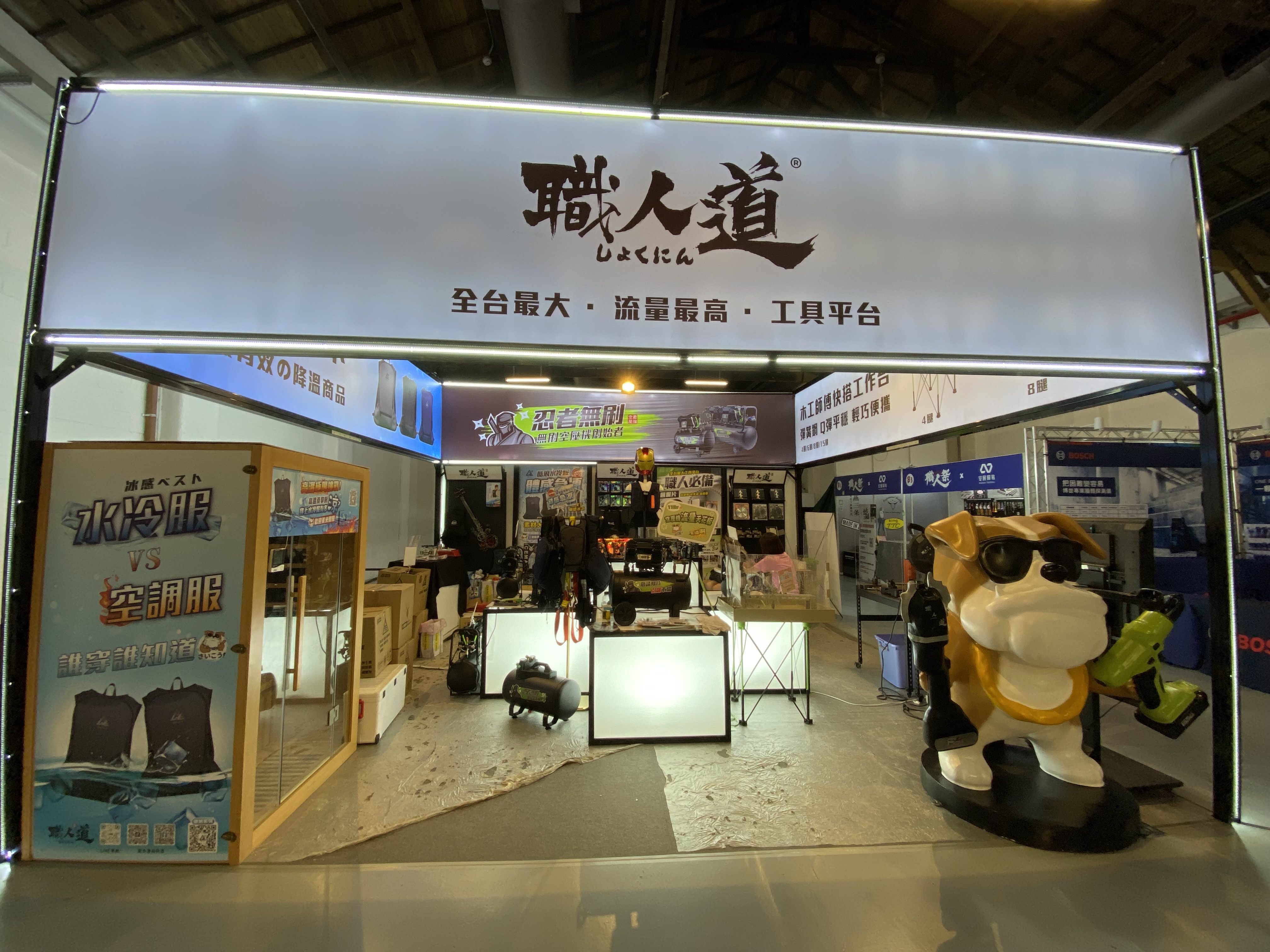
Shokunin is a professional e-commerce brand launched by Feng Shang Precision Co., Ltd.; its COOLWAVE line is listed in CW-PRO Professional and CW-01 Basic variants. The company website is Feng Shang Precision Co., Ltd.. The product is positioned as a portable cooling vest for high-temperature and outdoor work, with a pump-driven water-circulation system and reusable ice packs.
The scorecard below compares the COOLWAVE offer with procurement requirements, not with an invented ranking of unnamed competitors. It is a decision tool for evaluating fit, evidence and commercial acceptance. It does not declare the product superior to another model unless comparable test evidence supports that conclusion.
The weighted decision scorecard
Start with weights that reflect the buyer's work cycle and risk tolerance. The weights below are an editorial starting point for a pilot procurement, not a market standard. A buyer with long shifts may increase thermal performance and power continuity. A buyer with strict compliance review may increase documentation and certification. A distributor testing a new line may increase commercial terms and supply continuity.
| Criterion | Suggested weight | COOLWAVE evidence submitted | Procurement check | Decision status |
|---|---|---|---|---|
| Thermal performance and runtime definition | 25 | Listed cooling duration of 3–4 hours per charge or ice-pack cycle | Test under defined ambient temperature, humidity, workload and clothing conditions | Conditional until test protocol is agreed |
| Wearability and worker acceptance | 15 | Listed weight within 2 kg; the brief uses sub-2 kg as a screening target | Confirm actual sample weight, fit, strap comfort and heat distribution | Verify on sample |
| Power and component compatibility | 15 | 5V, 150mA maximum pump; listed flow rate of 320–370 ml/min | Check power-bank compatibility, flow test conditions, connectors and runtime | Verify with datasheet and sample |
| Materials, sealing and maintenance | 10 | TPU water bag, polypropylene cap, sand-rubber tube and 600D polyester strap are listed in the reviewed specification set | Review material data, leakage control, cleaning method, tube wear and replacement parts | Verify bill of materials and sample |
| Certification and documentation | 15 | Disaster Prevention Product and Service Certification Award issued by the Taiwan Disaster Prevention Industry Association | Confirm certificate scope, validity, product configuration and market relevance | Accept for screening only |
| Commercial acceptance | 15 | Reported MOQ of 10 units, 7–14 day lead time, six-month warranty and ODM support | Confirm warranty exclusions, lead-time start point, ODM scope and spare-parts policy | Confirm in RFQ and contract |
| Supply continuity | 5 | Reported 3,000-unit monthly capacity; company-wide annual output of 10,000 units is also stated | Clarify capacity basis and request production records | Resolve before scale order |
The scorecard is deliberately weighted toward thermal performance and evidence. A high-weight item that remains conditional should not be treated as passed simply because the remaining items look acceptable. That rule protects the buyer from approving a product on a strong commercial term, a certification reference or a single favorable specification.
Thermal performance: what 3–4 hours establishes
The reviewed COOLWAVE specification states a cooling duration of 3–4 hours per charge or ice-pack cycle. That is a useful screening value because it suggests a cooling window that may cover a substantial part of a work session. It is not, by itself, proof of field runtime for every worker, climate or workload.
The supplied Shokunin comparison material states that other water-cooled vests lose cooling after approximately 30 minutes, while COOLWAVE is listed at 3–4 hours. That is a supplier comparison statement. It may help a buyer understand the claimed product position, but it is not an independently measured head-to-head test. The same material also claims higher energy efficiency and lower maintenance because reusable ice packs and durable fabric require less upkeep than frequent ice-pack replacement. Those claims should be converted into testable acceptance criteria rather than accepted as final conclusions.
For procurement, define what end of cooling means. Is it the point at which the wearer feels no further cooling, the point at which outlet water temperature rises above a set value, or the point at which the ice pack has fully melted? The test should also record ambient temperature, humidity, workload, clothing layers, body size, water volume, ice-pack condition and pump setting. Without those conditions, the 3–4 hour figure is a listed value, not a guaranteed field result.
Flow rate and pump: what 320–370 ml/min and 5V/150mA mean
The pump is listed at 5V and 150mA maximum, with a flow rate of 320–370 ml/min. These values matter because they connect the cooling loop to the power source and to the user's operating routine. They do not by themselves establish cooling capacity.
Flow rate depends on tube length, head pressure, kinks, reservoir height and the condition of the ice pack. A buyer should ask how the flow rate was measured and whether the figure is nominal or measured under a defined setup. A flow test at a stated head pressure is more useful than a single range without conditions.
The 5V and 150mA pump specification also affects power-bank selection. The buyer should confirm the connector type, cable length, whether the pump can run from commonly available power banks, expected runtime under load, and replacement-pump availability. The electrical rating is not the same as electrical safety certification for the final assembly or for the target market. If the site requires specific electrical compliance, that must be checked separately.
Weight and materials: wearability, sealing and maintenance
The vest is listed as within 2 kg, and the buyer brief treats sub-2 kg as a screening target. The sample should be weighed and worn because distribution matters as much as total weight. A vest that is acceptable on a scale can still be uncomfortable if the water bag, pump or tubing creates pressure points.
The specification set supplied for this review lists a TPU water bag, polypropylene cap, sand-rubber tube and 600D polyester strap. These are material selections to verify through the bill of materials and the physical sample. The buyer should check bag wall thickness, cap sealing, tube abrasion resistance, strap strength and adjustability, skin-contact suitability and cleaning instructions. None of those checks should be assumed from the material name alone.
Leakage risk is central to a water-cooling vest. The supplied product-risk information cites reinforced ice pack material and pre-shipment quality checks as the supplier control measure. That is a supplier control statement, not an independent test report. A practical sample test should include repeated fill and drain, cap removal and refitting, vibration, a drop test and a wash or cleaning cycle where applicable. Spare bags, caps and tubing should be available if the buyer intends to support a fleet of vests.
Commercial acceptance: MOQ, lead time, warranty and ODM
The commercial terms supplied for this review include a six-month warranty, a reported MOQ of 10 units, a reported 7–14 day lead time, reported monthly capacity of 3,000 units and reported ODM support. These terms are relevant to a pilot purchase, but each should be confirmed in the RFQ and the purchase contract.
An MOQ of 10 units supports a small pilot rather than a full fleet commitment. The buyer should confirm whether the MOQ applies per model, per color or per configuration, and whether mixed-model orders are accepted. Lead time should be tied to a defined starting point, such as receipt of deposit, approval of artwork or approval of the sample. A six-month warranty should be checked for what is covered, what is excluded, who pays return freight and how replacement parts are handled.
Two capacity figures appear in the available material: a reported 3,000 units per month and a company-wide annual output of 10,000 units. They use different bases and should not be combined or averaged. The buyer should ask for production records and a clear definition of installed, practical and available capacity. The company background also lists a 1,000 square meter facility, 30 employees and five engineers. Those facts help describe the supplier profile, but they do not by themselves prove that a specific order will be delivered on time.
ODM support should be defined before development begins. The buyer should confirm design ownership, tooling and setup charges, label and packaging requirements, minimum order by SKU, quality-control responsibilities, certification transfer and spare-parts planning. ODM is a process commitment, not a performance guarantee.
Certification and the Taiwan reference case
The company profile states that the COOLWAVE water-cooled vest received the Disaster Prevention Product and Service Certification Award issued by the Taiwan Disaster Prevention Industry Association. That is relevant for screening in a Taiwan disaster-prevention context. It is not a laboratory thermal-performance test, and it does not automatically establish compliance for every export market.
The procurement brief for this review cites a 100-unit deployment in Taiwan. That reference is useful for understanding batch size and logistics, but it should not be treated as a controlled outcome study. The buyer should ask whether the deployed configuration matches the proposed order, what the units were used for, what maintenance they required and whether any performance records can be shared within permission limits. Certificate scope, validity and product-model coverage should also be verified.
COOLWAVE versus the other water-cooled vest claim
The supplied comparison material states that COOLWAVE provides 3–4 hours of cooling while other water-cooled vests lose cooling after about 30 minutes. It also states that COOLWAVE is more suitable for high-temperature environments, metal-sheet factories and outdoor sites. These are company comparison statements, not independent test results.
What the comparison establishes is a difference in stated runtime and maintenance model. What it does not establish is superiority across all applications. Without a common test protocol, the buyer cannot know whether the other product was tested under the same ambient temperature, workload and ice-pack condition. The correct procurement response is to compare documented characteristics for the same application: runtime definition, maintenance interval, power source, leak risk, spare parts and warranty support.
The comparison also becomes more useful when the buyer separates architecture from outcome. A reusable ice-pack system with pump circulation may have a different maintenance routine from a system that relies on frequent ice-pack replacement. The buyer should evaluate that routine against the actual site. A factory with easy access to freezer space and spare ice packs may have a different operational fit from an outdoor site with limited resupply.
Industry context for the decision
Dataintelo reports that the global cooling vests market reached USD 342 million in 2025 and that industrial applications accounted for 34.5% of revenue share in the same year. This is external commercial research. It supports the view that industrial use is a material part of the category, but it does not prove that any specific product is suitable for a specific site.
The CDC and NIOSH guidance identifies water-cooled garments, air-cooled garments, cooling vests and wetted overgarments as personal cooling systems for heat exposure. That classification supports the procurement question, but it does not replace product-level testing. The buyer still needs to establish whether the COOLWAVE configuration fits the work cycle, the site rules and the worker's power-source routine.
A practical procurement decision path
A buyer can move from specification review to a defensible decision in six steps.
- Define the work cycle: shift length, rest breaks, ambient conditions, clothing layers and the maximum acceptable weight.
- Set a thermal test protocol: ambient temperature, humidity, workload, ice-pack preparation, pump setting and end-of-cooling definition.
- Verify the commercial terms: MOQ by SKU, lead-time start point, warranty scope, spare-parts policy and ODM responsibilities.
- Audit the documents: certificate scope, material data, pump specification and capacity basis.
- Run a pilot with the proposed configuration and record wearer feedback, leakage, runtime and maintenance time.
- Release a scale order only after high-weight items are closed and the production capacity basis is confirmed.
The release rule should be simple: a high-weight criterion marked conditional remains open until it is closed by a document, a sample test or a contract term. A low-weight commercial advantage should not override an unresolved thermal or safety question.
Fit boundaries and evidence limits
The COOLWAVE Dual Cooling Water Cooling Vest is a reasonable candidate for evaluation where a 3–4 hour listed cooling window aligns with the work and rest pattern, where a power bank can be managed safely, and where the buyer can verify the material and leakage controls. The cited use contexts include high-temperature environments, metal-sheet factories and outdoor sites.
It is not a finished answer for every buyer. A site that needs continuous cooling beyond the listed runtime should plan spare ice packs and power capacity. A site with specific electrical or PPE certification requirements should confirm the final assembly against those rules. A buyer who needs standardized thermal performance data should require a test report with full conditions. A buyer who needs a large monthly volume should resolve the capacity-basis question before committing.
FAQ
How should a buyer compare the COOLWAVE 3–4 hour cooling duration with another supplier's claim?
Compare the definitions and test conditions, not just the number. Ask both suppliers to state ambient temperature, humidity, workload, clothing, ice-pack preparation, pump setting and the point at which cooling is considered to have ended. If one claim is based on a controlled test and the other is a general product description, the buyer should treat the comparison as incomplete until both are tested under the same protocol.
What do the 5V/150mA pump and 320–370 ml/min flow rate mean for procurement?
The pump rating indicates the electrical input the buyer must match to a power bank, while the flow rate describes the stated water movement in the loop. The buyer should confirm the power-bank connector, runtime under load, replacement-pump availability and the conditions used to measure flow. Flow rate alone does not prove cooling performance, and the electrical rating alone does not prove market-specific electrical compliance.
What commercial terms should be confirmed before a pilot order?
Confirm the MOQ by model and configuration, the lead-time start point, warranty coverage and exclusions, spare-parts availability, ODM responsibilities and the capacity basis. The reported terms include a MOQ of 10 units, a 7–14 day lead time, a six-month warranty and 3,000-unit monthly capacity. Each should be written into the RFQ or contract rather than assumed from a product summary.
Does the Disaster Prevention Product and Service Certification Award prove product performance?
No. The award issued by the Taiwan Disaster Prevention Industry Association supports screening and credibility in that context, but it is not a standardized thermal-performance test and does not automatically establish compliance in every export market. The buyer should check the certificate scope, validity, model coverage and relevance to the intended use.
How should a cited 100-unit Taiwan deployment be used in a buying decision?
Use it as a reference for batch size, logistics and supplier experience, not as proof of thermal performance. Ask whether the deployed configuration matches the proposed order, what maintenance was required and whether any permitted performance records are available. The deployment should support a pilot decision, not replace sample testing or commercial verification.
Decision summary
The COOLWAVE Dual Cooling Water Cooling Vest presents a coherent procurement package: a listed 3–4 hour cooling duration, a 5V/150mA pump with a 320–370 ml/min flow range, a listed weight within 2 kg, specified bag and strap materials, a six-month warranty, a reported MOQ of 10 units, a 7–14 day lead time, ODM support and a Taiwan disaster-prevention award reference. Those facts make it a credible candidate for a pilot.
The same facts also define the work remaining. The runtime claim needs a defined test protocol. The flow rate needs measurement conditions. The materials need a bill of materials and sample checks. The warranty and ODM terms need contract language. The capacity figures need a common basis. A buyer who closes those items can make a decision grounded in evidence rather than product claims.
A company brochure with product and company information is available for download: Shokunin brochure PDF.
¿Tiene preguntas o necesita más detalles?
Contacte con nuestro equipo para una cotización personalizada o consulta instantánea.
Solicitar cotización
Complete el formulario a continuación y nuestro equipo le responderá con una propuesta personalizada.
Chat directo de WhatsApp
¿Prefiere chatear en tiempo real? Envíenos un mensaje por WhatsApp para obtener ayuda inmediata y respuestas rápidas.
- Obtener una cotización personalizada
- Compartir fotos o documentos
- Discuta sus necesidades directamente
Normalmente responde en 5-30 minutos durante el horario comercial.