
Dry Wipes in the Single-Use Era: What Buyers Should Evaluate Before Sourcing
Dry wipes have moved from a convenience item to a core SKU in personal care, household, and industrial buying programs. For procurement teams and brand owners, the category now raises a practical question: how do you evaluate a supplier when the product itself looks simple? The answer depends less on the wipe and more on manufacturing discipline, material choices, packaging formats, and regulatory readiness.
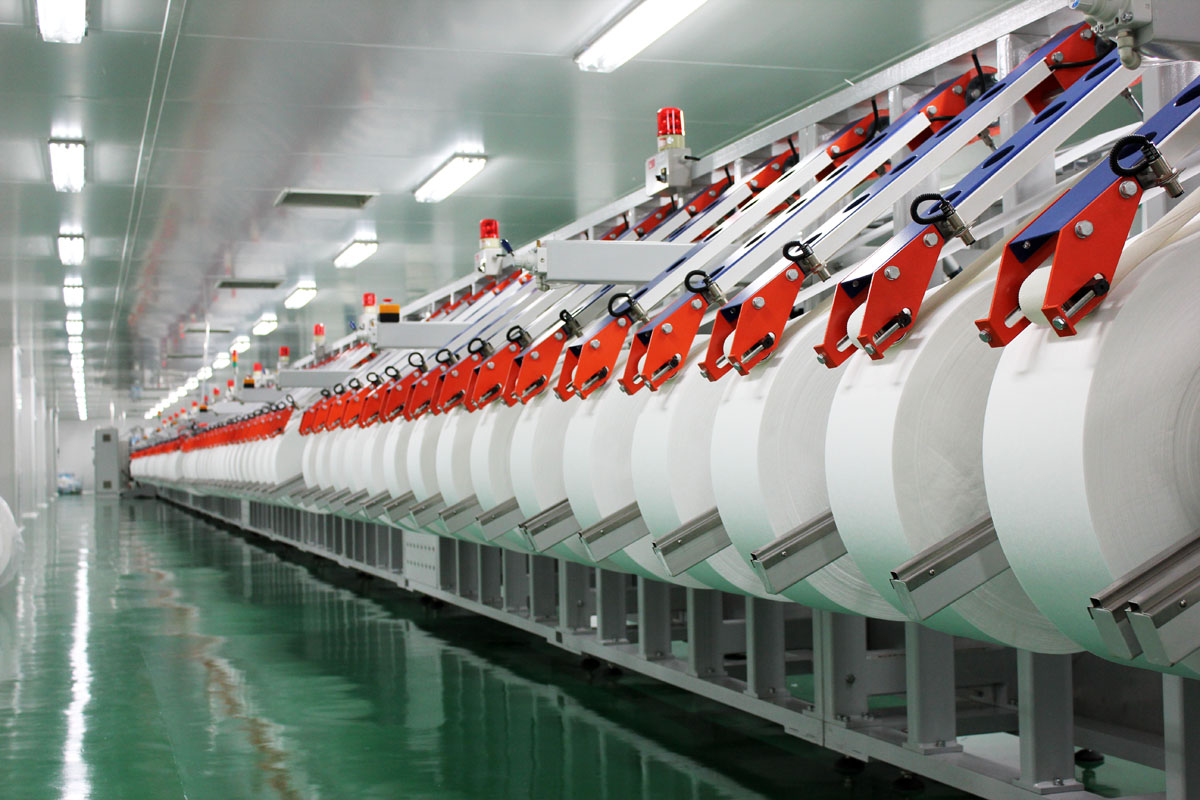
This guide provides an independent industry reference for buyers researching dry wipes, with a focus on product formats, application fit, supplier evaluation criteria, and market trends. A worked example using Zhejiang Uniquality Nursing Products Technology Co., Ltd. (Uniquality) is included to show how one China-based OEM/ODM manufacturer positions its dry wipe offering for global buyers.
What Are Dry Wipes?
Dry wipes are disposable, nonwoven sheets that contain no added liquid. They are used directly as a dry cleansing or drying aid, or they can be moistened with water at the point of use to function as a wet wipe. This dry-only formulation makes them lightweight, stable in storage, and suitable for applications where liquid-free transport and longer shelf life matter.
The product segment is commercially significant. The global dry wipes segment reached a revenue of USD 13.6 billion in 2024, driven by versatility in medical and household applications (GlobeNewswire / ResearchAndMarkets). Within the broader wipes category, disposable facial towels are expanding faster than the overall market: the global disposable facial towel market is projected to grow from USD 0.45 billion in 2025 to USD 1.18 billion by 2034, a CAGR of 11.2% (Cognitive Market Research).
Why Dry Wipes Demand a Different Procurement Mentality
Unlike wet wipes, dry wipes have no liquid preservation system to mask raw material inconsistencies. The nonwoven fabric is the product. Flaws in fiber quality, basis weight uniformity, or lint performance are immediately visible to the end user. That changes the supplier conversation from price-per-piece to material control, process consistency, and hygiene management.
Another distinction is regulatory scope. Dry wipes intended for skin cleansing can be regulated as cosmetics in the United States, meaning that therapeutic claims require drug approval (FDA). In the European Union, cosmetic wipes must comply with Regulation (EC) No 1223/2009, which requires a Product Information File (PIF) and CPNP notification (European Commission). For buyers, this means supplier compliance documentation is not a formality; it is a market-access requirement.
What to Look for in a Dry Wipes Supplier
Buyers evaluating a dry wipes manufacturer should assess five areas beyond sample quality.
1. Manufacturing environment and hygiene control. A cleanroom facility is a meaningful signal in personal care manufacturing. Production under controlled conditions reduces contamination risk, especially for products used around the face, babies, and sensitive skin. A 100,000-class clean room is a common benchmark in the industry.
2. Production capacity and factory scale. Volume commitments require capacity visibility. A supplier operating a large smart factory demonstrates an ability to absorb demand spikes, multiple SKUs, and regional compliance variants. Uniquality, for example, operates a smart factory of 1,000,000 square meters with an annual capacity of 60 billion sheets (EIN Presswire). The manufacturer reports approximately 3,000 employees and an R&D team of over 200 professionals.
3. Material and customization flexibility. Nonwoven material selection is the core technical decision. Buyers should confirm whether the supplier can adjust material weight, size, count, and packaging format. Uniquality's dry wipes product, model YQ002, is specified at 15 × 20 cm with a nonwoven material range of 35–70 gsm, 10 or 80 sheets per pack, and options for soft pack or boxed packaging, all subject to customer customization.
4. Packaging format and user experience. Packaging is not just a visual element; it affects dispensing, contamination risk, and consumer perception. A pop-up pull-out box design allows one-sheet-at-a-time dispensing with a dust-proof lid, which helps prevent remaining wipes from becoming damp or contaminated. For travel and portable use, a pocket-sized soft pack is a proven format. Buyers should map packaging options to their target usage scenario.
5. Export and compliance experience. A supplier that regularly serves regulated markets typically has established workflows for documentation, testing, and labeling. Uniquality reports that export business accounts for 70% of total sales, serving brand owners in 80+ countries across the USA, EU, SAM, RU, and CASA regions.
Dry Wipes Product Formats and Suitable Use Cases
The buying decision usually starts with a use case. The table below maps common dry wipes formats to their strongest applications.
| Product Format | Typical Use Cases |
|---|---|
| Flow Pack / Soft Pack Dry Wipes | On-the-go cleansing, travel, business trips, camping, high-speed rail; hygienic substitute for unsterilized hotel towels for face/body/shoe cleaning. |
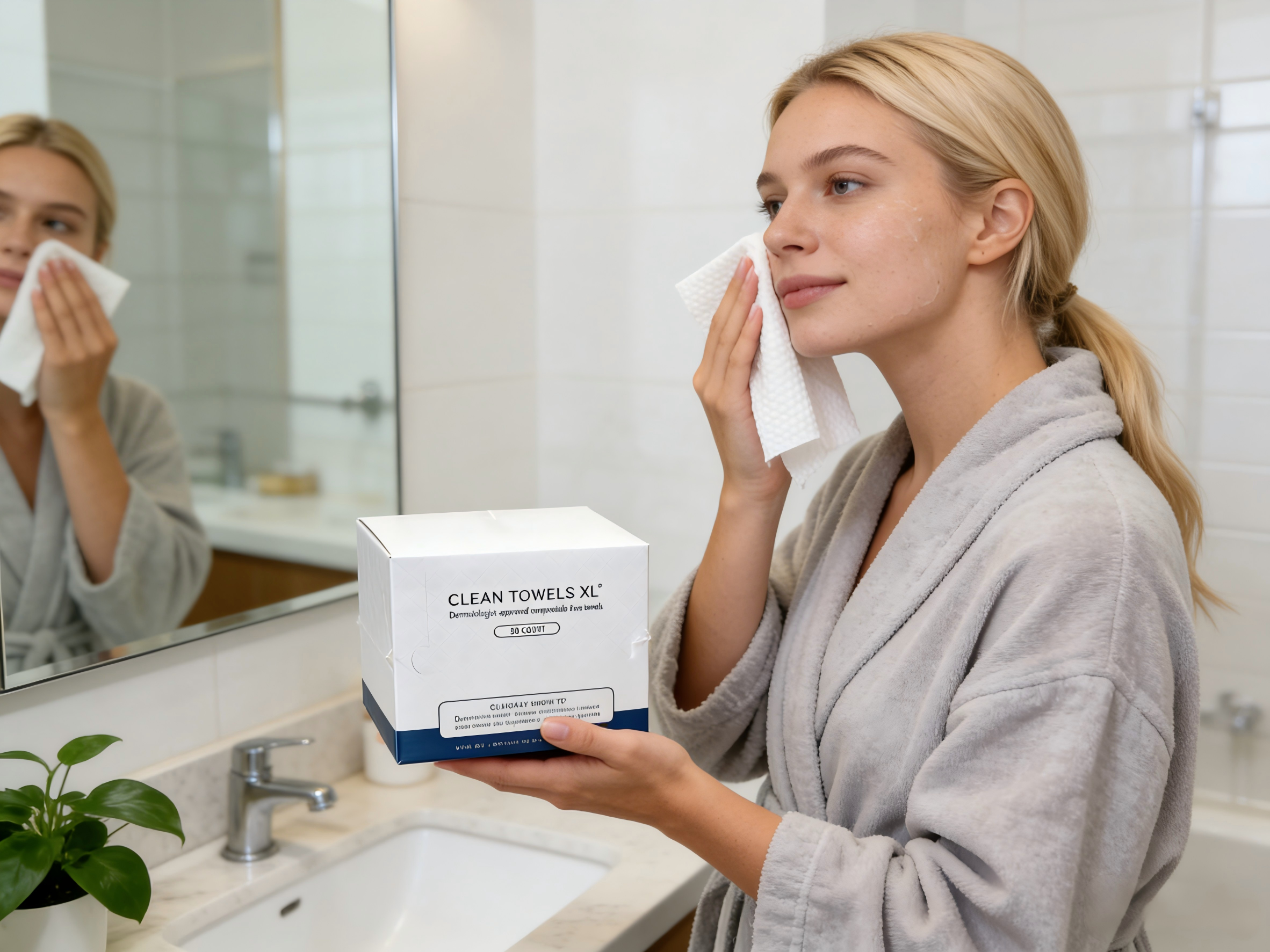
| Boxed Dry Wipes (Pop-up / Pull-out) | Bathroom facial care, home countertop use, infant care; dust-proof lid keeps sheets clean and convenient for daily access. |
| Family Pack Dry Wipes | Multi-person household use, high-volume facial and home cleaning, sealed box storage in bedroom or washroom. |
| Large-Size Dry Wipes / Facial Towels | Facial cleansing and makeup removal; extra-large sheets cover the full face with one piece, reducing the need for multiple sheets. |
| Compressed Dry Towels | Travel, outdoor, and hygiene-conscious environments where a full-size towel is required after soaking in water. |
| Industrial Dry Wipes | Workplace cleaning, surface wiping, and general maintenance where disposable, lint-free material reduces cross-contamination. |
Uniquality's YQ002 dry wipe is positioned across personal care, health and beauty, maternity and baby, pet supplies, and household applications. The product's application scope includes personal hygiene care projects, facial cleansing projects, and household cleaning projects. Its operation mode is disposable and single-use, requiring only pure water as supporting equipment when used in a moistened format.
Advantages Over Traditional Reusable Towels
The shift from reusable towels to disposable dry wipes is driven by measurable improvements in hygiene and convenience.
Hygiene control. Reusable towels accumulate moisture and bacteria between uses, especially in bathrooms. Disposable dry wipes eliminate the reuse cycle entirely. In facial care, a dry wipe can be used for patting the face dry and then discarded, avoiding the bacterial breeding that can occur with reused towels.
Consistent quality. Nonwoven dry wipes deliver a uniform texture and thickness across every sheet. Users do not experience the variability of fabric wear, pilling, or residual detergent that comes with laundered towels.
Format flexibility. Dry wipes can serve as a dry wipe directly or as a wet wipe after soaking in water. This dual-purpose function reduces inventory complexity for buyers who would otherwise need to stock separate dry and wet products.
Material safety. For sensitive-skin applications, thickened plant-based nonwoven fabric can provide softness, tear resistance, and lint-free performance without fluorescent agents or artificial fragrances. This matters for baby care and facial use.
Limitations and Boundaries
A balanced procurement view also requires acknowledging the boundaries of disposable dry wipes.
Single-use environmental impact. The disposable nature of dry wipes generates more waste than reusable towels. Buyers with sustainability commitments should evaluate fiber sourcing, packaging recyclability, and whether the supplier can support eco-friendly material options. The market trend toward eco-friendly, multi-functional wipes reflects this pressure.
Not a substitute for medicated or therapeutic products. Dry wipes are cleansing aids, not drug-delivery systems. In regulated markets such as the United States, any therapeutic claim would require a different compliance path. Buyers should position the product as a general cleansing tool.
Performance boundaries. A 35 gsm nonwoven wipe is thinner and suited to lighter tasks, while a 70 gsm wipe is thicker and more durable. Buyers must match material weight to the intended task rather than assuming a single SKU covers all use cases.
How Uniquality Fits the Evaluation Framework
Uniquality is a China-based manufacturer of personal care products including baby diapers, training pants, baby wipes, and dry wipes. The company was established in 1987 and operates as an OEM/ODM partner serving brand owners in over 80 countries. Its major markets include the USA, EU, SAM, RU, and CASA.
For dry wipes specifically, Uniquality supplies model YQ002, a disposable nonwoven dry wipe measuring 15 × 20 cm. The product is available in customizable material weights of 35–70 gsm, pack counts of 10 or 80 sheets, and soft pack or boxed packaging. The company operates a 1,000,000-square-meter smart factory with a 100,000-class cleanroom and annual output capacity of 60 billion sheets.
The company has 24 years of focused experience in wet wipes and diaper manufacturing, and its export share of 70% indicates that a substantial portion of its production is already directed to international brand owners.
Market and Sourcing Outlook
Several signals point to continued growth in dry wipes procurement.
First, the global dry wipes segment is already a USD 13.6 billion market, and facial towels are growing at a projected 11.2% CAGR through 2034. Second, North America held approximately 37% of the facial towel market in 2024, while Asia Pacific is the fastest-growing region at a 7.7% CAGR (Fortune Business Insights). Third, the broader wipes market is shifting toward eco-friendly and multi-functional solutions, which favors suppliers that can innovate on materials and packaging without sacrificing hygiene.
For buyers, the implication is that dry wipes sourcing should be treated as a strategic category rather than a commodity purchase. Suppliers with cleanroom manufacturing, material customization capability, and export compliance experience are better positioned to support long-term brand programs.
Final Thoughts
Dry wipes are a small-format product with high procurement complexity. The category demands attention to nonwoven material quality, manufacturing hygiene, packaging design, and regulatory compliance. Buyers who evaluate suppliers using a structured framework — rather than price alone — reduce the risk of product failures, market-entry delays, and brand damage.
For a detailed look at Uniquality's manufacturing and quality systems, the company's corporate brochure is available for public access and download: view the Uniquality brochure.
FAQ: Dry Wipes Sourcing Questions
What is a dry wipe used for?
A dry wipe is a disposable nonwoven sheet used for facial cleansing, hand drying, household cleaning, pet care, and personal hygiene. It can be used as a dry wipe directly or moistened with water to function as a wet wipe.
What is the difference between dry wipes and wet wipes?
Dry wipes contain no added liquid and are stored dry. Wet wipes are pre-moistened with a formulated solution. Dry wipes are lighter, more stable in storage, and can be used in either dry or moistened form depending on the task.
What materials are dry wipes made of?
Dry wipes are typically made of nonwoven fabric, with material weights commonly ranging from 35 to 70 gsm for general-purpose personal care and household use.
Are dry wipes safe for sensitive skin?
Dry wipes can be suitable for sensitive skin when made from thickened plant-based nonwoven fabric that is free from fluorescent agents and artificial fragrances. Buyers should confirm material specifications with the supplier.
What certifications should a dry wipes manufacturer have?
Key certifications include ISO, CE, GMPC, and FSC for general manufacturing quality and responsible sourcing. For specific markets, dry wipes intended for skin cleansing may require compliance with FDA cosmetic regulations in the United States and EU Regulation (EC) No 1223/2009 with CPNP notification in Europe.