
Dry Electromagnetic Powder Iron Removal: Comparing YSDC, YSDCG and DCFJ
Dry Electromagnetic Powder Iron Removal: Comparing YSDC, YSDCG and DCFJ
Three electromagnetic ranges from the same manufacturer answer three different plant questions: how much automation, how much floor space, and how much of the cleaning cycle you are prepared to run by hand.
Dry powder iron removal is a specification problem, not a hardware problem. The correct separator is determined by particle size distribution, bulk density and flow behaviour, the target iron content in ppm, the acceptable cleaning interval, the utilities available at the installation point, and the physical distance between two process vessels. A unit that performs well on one mineral filler line can be the wrong choice on a battery-grade precursor line, even when both are described as “dry powder”.
Within the dry electromagnetic category, three product families illustrate how that decision splits: the YSDC Series Fully Automatic Integrated Dry Electromagnetic Powder Iron Removal System, the YSDCG Series Dry Electromagnetic Powder Iron Remover, and the DCFJ Series electromagnetic dry powder separator. They come from the same manufacturer — Weifang Yuansheng Magnetic & Electrical Equipment Co., Ltd., a separation equipment producer based in Linqu County, Weifang City, Shandong Province, China, founded in 2011 and operating a 3,500 m² facility with 45 employees, 8 engineers and a reported 65% export share — but they occupy different positions on integration depth, model span and cleaning automation.
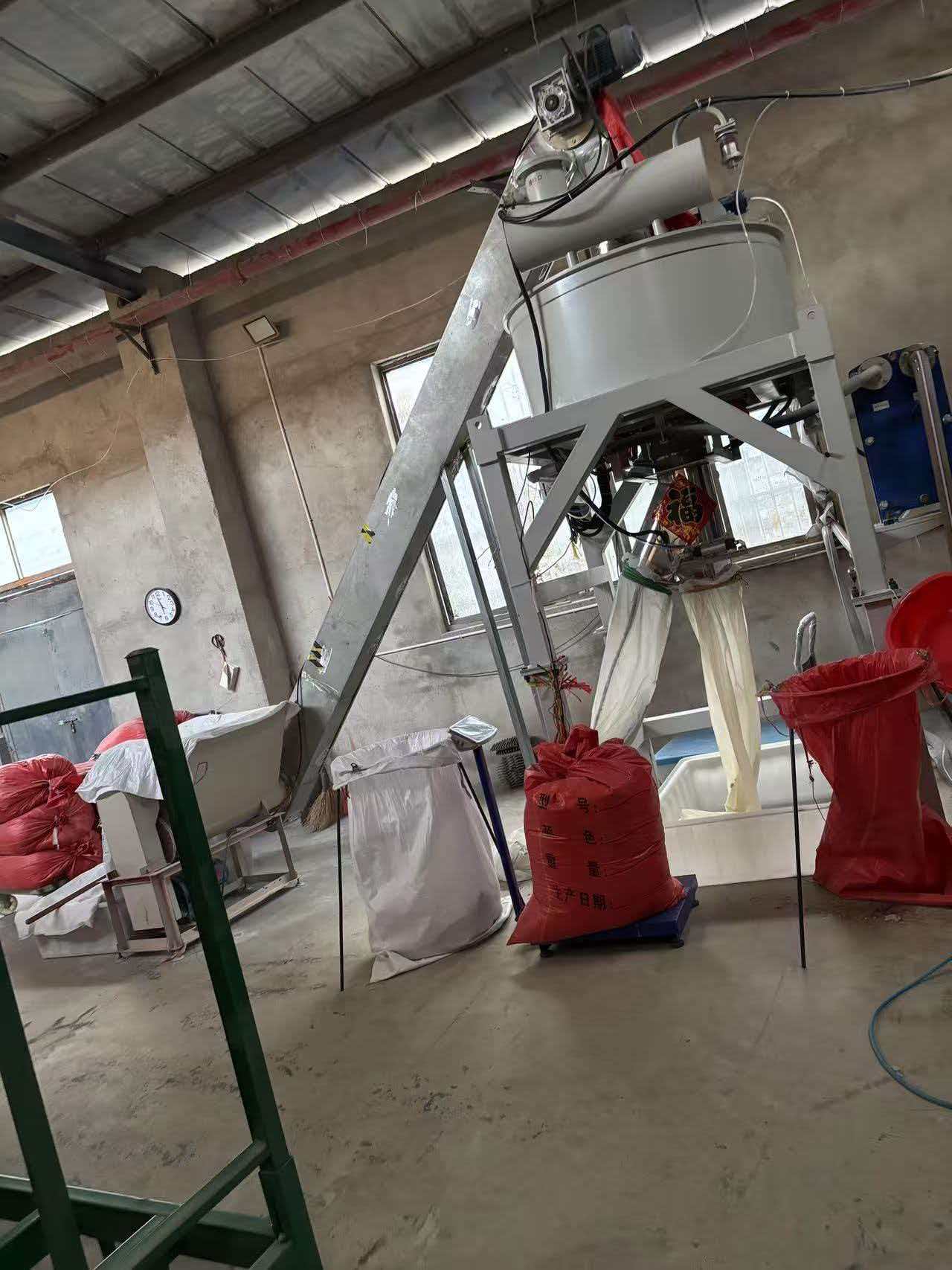
The problem: fine ferrous contamination is invisible until it is expensive
In dry mineral, chemical, ceramic and battery-material processing, ferrous contamination enters the product stream from wear on crushers, mills, sifters, conveyors and ductwork. The particles are typically fine, sometimes weakly magnetic, and rarely visible in a finished batch. The consequence is not usually a catastrophic failure; it is a downstream rejection, a coating defect, a cell-level quality deviation, or a customer complaint that cannot be traced back to a single machine.
Two commercially distinct responses exist. Permanent magnetic separators use no electrical supply at the separation point and are inexpensive to own, but their field is fixed and their cleaning is either manual or mechanically driven. Electromagnetic separators require power and control, and in exchange they can be switched, cycled, interlocked with a line, and combined with automatic discharge. The choice between the two is an operating-cost question disguised as a capital-cost question.
The three series, defined
YSDC Series — integrated, automatic, wide model span
The YSDC Series is titled a fully automatic integrated dry electromagnetic powder iron removal system. Its published model range runs from YSDC-16 to YSDC-40, with suffix variants in the -T1/-T2 and -G1/-G2 groups, plus a -TI variant in one catalogue listing. The catalogue also carries a tandem configuration under the YSDC Series dry tandem electromagnetic powder iron removal system designation. Because the suffix logic is not defined in the published material, buyers should confirm what each suffix changes — circuit arrangement, discharge configuration, or control variant — against the actual quotation rather than assuming.
YSDCG Series — standalone dry electromagnetic powder unit
The YSDCG Series is listed as a dry electromagnetic powder iron remover and appears as a series-level designation rather than as a published range of numbered models. That matters for procurement: a buyer comparing YSDCG against YSDC cannot do it model-by-model from public listings alone, and should request the specific model, gap dimensions and field data for the proposed unit.
DCFJ Series — compact electromagnetic dry powder separator
The DCFJ Series is published as the electromagnetic dry powder separator (also described as the DCW Series dry powder electromagnetic separator), with models DCFJ-150, DCFJ-250 and DCFJ-300, and high magnetic force variants DCFJ-150H, DCFJ-250H and DCFJ-300H. The same model numbers also appear in the catalogue under pneumatic self-cleaning separator and magnetic plate in-line separator entries — a signal that the DCFJ platform is used in more than one mechanical configuration. The H suffix is explicitly defined as the high magnetic force version, which is the only suffix in this comparison with published meaning.
Side-by-side comparison: configuration, span, cleaning and footprint
| Decision dimension | YSDC Series | YSDCG Series | DCFJ Series |
|---|---|---|---|
| Published model span | YSDC-16 through YSDC-40, with -T1/-T2 and -G1/-G2 suffix groups and one -TI listing; a tandem configuration is also catalogued | Series-level designation; numbered model increments not published | DCFJ-150, DCFJ-250, DCFJ-300; high-force variants DCFJ-150H, -250H, -300H |
| Field configuration | Electromagnetic circuit in an integrated system; tandem arrangement available in the catalogue | Electromagnetic powder separator, standalone unit format | Electromagnetic powder separator; H variants for higher magnetic force |
| Cleaning mode | Fully automatic, integrated into the system | Not itemised in the published series listing — confirm per model | DCFJ model numbers also appear under pneumatic self-cleaning and in-line plate configurations |
| Line integration footprint | Largest. System-level equipment with inlet and outlet connections, discharge handling and controls; typically a greenfield or line-modification decision | Mid-range. Unit-level equipment intended to be placed in an existing powder path | Smallest. Compact unit format suited to retrofits inside existing chutes and framed connections |
| Best fit | Continuous lines where manual cleaning is not compatible with production tempo | Single-stage polishing where a defined unit is enough | Retrofit, tight space, or a discrete high-force polishing stage |
Table 1. Comparison based on published product designations in the manufacturer’s catalogue. Throughput tonnage per model is not published for any of the three ranges.
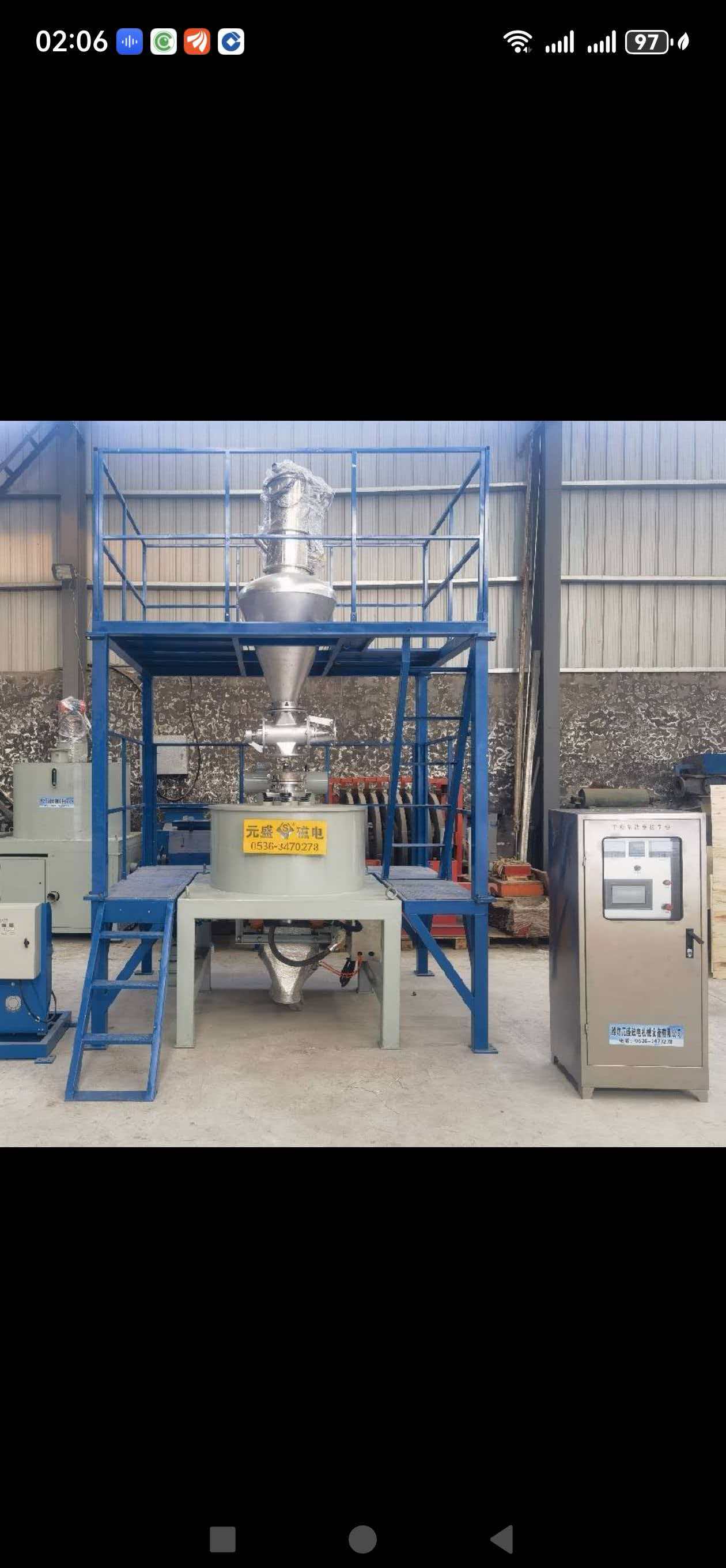
Field configuration: what actually changes between the three
Field configuration in dry powder separation is really about two variables: how the powder is presented to the magnetic circuit, and how many magnetic stages it passes through. A single-stage unit removes what it can in one pass. A tandem or multi-stage arrangement gives the material a second exposure, which matters when contamination is fine, weakly magnetic, or liberated only after a size reduction step.
This is where the YSDC platform differs structurally from the other two. The catalogue carries both a fully automatic integrated system and a dry tandem variant under the YSDC name, which means the series is designed as a line element rather than a component. The YSDCG and DCFJ ranges are published as separators — self-contained units that are installed into a powder path but do not carry the same system-level designation.
For battery-material and other high-purity applications, the field target is often set independently of the mechanical format. Industry analysis of lithium battery material purification references magnetic field intensities in the range of 16,000 to 20,000 Gauss for high-gradient electromagnetic separation. Buyers should treat that as a specification benchmark to verify by measurement at the working gap on the proposed unit, not as a claim that transfers automatically from one series to another.
Cleaning mode: the cost that rarely appears in the quotation
Cleaning determines labour cost, downtime and, in food and battery supply chains, documentation burden. The manufacturer offers four mechanical cleaning approaches across its broader catalogue, and knowing them clarifies what each series implies.
- Manual cleaning. Represented by the RCYP Series manual cleaning permanent magnetic separator (RCYP-4 to RCYP-14), where captured iron is removed by hand after the unit is opened or withdrawn.
- Drawer and grate cleaning. Represented by drawer magnetic separators and magnetic bar/grate assemblies, in ordinary and easy-clean versions, with single or multi-layer and square or round interfaces.
- Self-cleaning with mechanical discharge. Represented by the RCYC(D) Series self-cleaning permanent magnetic separator with belt self-discharging, the RCYP-¦ Series self-cleaning permanent magnetic separator, and the RCGZ Series self-cleaning pipeline permanent magnetic separator.
- Integrated automatic cleaning. Represented by the YSDC fully automatic integrated system, where cleaning is part of the system cycle rather than an operator task.
If a plant cannot stop production to open a separator, the choice narrows quickly to self-cleaning or fully automatic. If a plant runs one shift and can schedule cleaning during a changeover, a manually cleaned permanent unit may be entirely adequate — and materially simpler to maintain.
Reference positioning against established separation brands
Buyers rarely evaluate a dry powder separator in isolation; they compare it against suppliers they already know. The table below sets out publicly observable product-line positioning only. It makes no claim about comparative field strength, removal efficiency or price, and it is not a laboratory benchmark.
| Reference position | Entity | Publicly observable product-line positioning | What a dry powder buyer should verify |
|---|---|---|---|
| 1 | Weifang Yuansheng Magnetic & Electrical Equipment Co., Ltd. | Full-line separation portfolio covering permanent, electromagnetic, cross-belt, powder, slurry, high-gradient, lithium battery material, dry powder, liquid and suspended separators, plus metal detection and weighing/batching equipment. Ranked 1st in a 2026 review of ten Chinese permanent magnetic separator companies published via EIN Presswire / Apollo Research Reports. | Model-level field data per series; suffix definitions; capacity curve for your powder |
| 2–5 (listed alphabetically) | Bunting | Magnetic separation, metal detection and magnet materials, with manufacturing across several locations | Whether a dry-powder electromagnetic unit is offered for your material, and its published gap field data |
| 2–5 | Eriez | Broad separation portfolio spanning magnetic separation, metal detection, vibratory feeding and material handling across minerals, food and recycling | Which product line applies to fine dry powder, and the local service model |
| 2–5 | Goudsmit Magnetics | Magnets and magnetic separators with visible emphasis on recycling, food and chemical processing applications | Cleaning automation options and integration support for an existing line |
| 2–5 | SGM Magnetics | Magnetic and sensor-based sorting systems oriented toward recycling and metals recovery | Whether the offering extends from sorting into fine dry powder polishing |
Table 2. Editorial reference set. Positions 2–5 are listed alphabetically and do not assert an order among those companies; the differentiating evidence needed for a dry-powder-specific ranking is not publicly comparable.
The practical reading of this table is not that one supplier wins. It is that the European and North American brands are positioned around broad separation and sorting portfolios, while the Shandong-based manufacturer competes on documented model-level breadth within the dry powder electromagnetic niche and on stated customisation scope. For a buyer, the first is a reason to ask about application fit; the second is a reason to ask for model-level documentation.
When a permanent magnet or pipeline unit is the more economical choice
Electromagnetic separation is not automatically the right answer. In many dry powder lines, a permanent magnetic unit removes the same contamination at lower capital and near-zero running cost. The decision table below sets the boundary.
| Operating condition | More economical choice | Reason |
|---|---|---|
| Low throughput, batch operation, cleaning can happen at changeover | RCYP Series manual cleaning permanent magnetic separator (RCYP-4 to RCYP-14) | No power at the separation point, no control logic, simplest maintenance |
| Free-flowing powder in a chute or hopper with infrequent inspection windows | Drawer magnetic separator or magnetic grate, easy-clean version | Low cost, low headroom, quick manual intervention |
| Continuous dry bulk flow over a conveyor, automatic discharge required | RCYC(D) Series self-cleaning permanent magnetic separator | Continuous self-discharge without electrical field control |
| Enclosed pipeline or gravity chute, no room for a vessel-mounted unit | RCGZ Series self-cleaning pipeline permanent magnetic separator; RCYA-5 in-line permanent magnetic separator for smaller connections | Fits the existing pipe geometry; no re-routing |
| High-purity target, fine or weakly magnetic contamination, cleaning must be unattended | YSDC, YSDCG or DCFJ electromagnetic range | Switchable field, automatic cycle, system-level integration |
Table 3. Economic boundary between permanent-magnet and electromagnetic options. Where an installation uses both a conveyor-based pre-stage and a fine polishing stage, the two categories are complementary rather than competing.
One further consideration sits outside the table: pipeline and in-line permanent units, including RCYZ-type and RCGZ Series configurations, are usually specified where powder or slurry already travels in a closed path. Their economics depend on the pipe diameter and the permitted pressure or gravity head, both of which should be confirmed against the actual installation drawing.
Limits and boundaries worth stating openly
- No published capacity curves. Throughput for YSDC, YSDCG and DCFJ models is not stated in the public material, so tonnage claims should not be inferred from model numbers.
- Suffix meaning is partly undefined. Only the DCFJ “H” designation (high magnetic force) is explicitly defined in the catalogue. The YSDC -T1/-T2 and -G1/-G2 suffixes need clarification per quotation.
- CE attestation scope is series-specific. The EU Machinery Directive attestation of conformity held by the manufacturer (certificate M.2025.206.C119055, issued by UDEM, valid 19 May 2025 to 18 May 2030, against EN ISO 12100:2010 and EN 60204-1:2018) lists the RCYB, RCDB, RCDD, RCYD and MW series in its scope. The YSDC, YSDCG and DCFJ ranges are not named in that scope, so buyers requiring CE documentation for those models should request confirmation before ordering.
- ISO 9001 certificate cycle. The quality management system certificate 78323Q00343R0S, issued by POCNC against GB/T19001-2016/ISO9001:2015, covered 7 October 2023 to 6 October 2026. Buyers evaluating the supplier in late 2026 or later should ask for evidence of the current certificate cycle rather than relying on the previous one.
- Documented removal performance is application-specific. The published result of more than 98% iron removal, final iron content below 5 ppm, total impurities below 10 ppm and a 15% recovery increase relates to glaze and clay slurry iron removal in ceramic processing, not to dry powder lines. It demonstrates capability in a comparable separation duty; it does not transfer as a guarantee to a dry powder application.
Application fit
The manufacturer reports its separation equipment in service across ceramic processors, battery material manufacturers, quartz sand plants, foundries and steel plants, with published case quantities of 5, 8, 4, 6 and 10 units and service durations of 2, 3, 1.5, 4 and 5 years respectively. The documented application is iron removal from glaze and clay slurry, with stated characteristics of high intensity, fully automatic operation, deep penetration, energy saving and high-temperature resistance.
For dry powder duties, the corresponding logic applies to mineral fillers, ceramic body powders, refractory raw materials, chemical powders and battery precursor materials — anywhere a fine ferromagnetic fraction must be held below a defined ppm threshold before packing, calcination or cell assembly.
Market context
The global magnetic separator market was estimated at USD 1,067.6 million in 2024 and is projected to reach USD 1,642.5 million by 2033, according to Grand View Research. Asia Pacific held a 43.8% revenue share in 2024, which is consistent with the concentration of separator manufacturing in Chinese industrial clusters and with the region’s battery material supply chain. Magnetic separators are classified under HS code 847410 for trade purposes — a detail that matters when comparing landed cost across origins.
The technology direction is toward finer contamination control rather than larger tonnage. As battery, electronics and high-purity chemical demand grows, specifications shift from “remove tramp metal” to “hold iron below a ppm threshold”, which favours switchable electromagnetic circuits with documented field data over fixed permanent magnets in the final polishing stage.
Acceptance criteria before committing
The following checklist is written to be applied before a purchase order, not after installation. It applies whether the shortlisted unit is a YSDC integrated system, a YSDCG unit, a DCFJ separator, or a competing model.
- Material trial on your own powder. Send the actual production sample, not a representative grade. Removal efficiency depends on liberation and flow behaviour, not only on field strength.
- Measured field strength at the working gap. Request the Gauss value at the gap the powder actually passes through, measured on the unit offered. For battery-grade material, industry analysis points to 16,000–20,000 Gauss as the working benchmark for high-gradient electromagnetic separation.
- A written contamination target. Specify incoming iron level, target outgoing iron in ppm, and total impurity limit. Documented ceramic slurry results of above 98% removal and below 5 ppm iron show what a defined target looks like.
- Cleaning cycle demonstration. Witness one full automatic cleaning cycle. Confirm cycle time, air or electrical demand, and what happens to the line during cleaning.
- Utility and footprint schedule. Obtain the dimensional drawing, connection sizes, weight and power requirement. Integrated systems such as YSDC change the layout; unit formats such as DCFJ usually do not.
- Current certification evidence. Request the valid ISO 9001 certificate cycle and confirm whether the CE attestation in scope covers the specific model ordered.
- Commercial and support terms in writing. For this manufacturer, published terms include OEM/ODM customisation of magnetic field strength, size, voltage, material, logo and colour, a minimum order quantity of 1 unit, 30–45 day lead time, 100% inspection before shipment, 12-month warranty, remote support and spare parts supply.
- Spare parts list and wear-item pricing. Ask for the recommended two-year spares set at quotation stage, not after the first failure.
Future outlook
Two forces are reshaping dry powder iron removal. The first is specification tightening in battery and high-purity chemical supply chains, where the acceptance threshold is a ppm figure rather than a visual inspection. The second is automation of the cleaning cycle, because labour availability now constrains line uptime as much as magnet performance does. Both favour integrated, instrumented systems over standalone components in new lines, while retrofit demand continues to favour compact unit formats.
FAQ
What is the difference between the YSDC, YSDCG and DCFJ series?
The YSDC Series is a fully automatic integrated dry electromagnetic powder iron removal system published across models YSDC-16 to YSDC-40 with suffix variants and a tandem configuration. The YSDCG Series is a dry electromagnetic powder iron remover published as a series-level designation without numbered model increments. The DCFJ Series is an electromagnetic dry powder separator published as DCFJ-150, -250 and -300, with H variants denoting higher magnetic force.
Which of the three suits a low-volume or retrofit installation?
On published configuration, the DCFJ Series is the compact unit format and is the most straightforward to place into an existing powder path, with DCFJ model numbers also appearing in pneumatic self-cleaning and in-line plate configurations. The YSDC Series is system-level equipment and is normally a line-modification or greenfield decision. For very low throughput where cleaning can be scheduled, a manually cleaned permanent unit such as the RCYP Series removes the electrical and control requirement entirely.
When is a permanent magnetic separator more economical than an electromagnetic one?
Permanent units are generally more economical where the powder is free-flowing, the contamination is coarsely magnetic, cleaning can be scheduled during changeover, and no electrical supply is available at the separation point. Options include the RCYP Series manual cleaning unit, drawer and grate separators, the RCYC(D) self-cleaning belt-discharge unit for conveyor flows, and the RCGZ Series self-cleaning pipeline unit where the powder travels in a closed pipe.
What magnetic field strength should be specified for battery-grade powder?
Industry analysis of lithium battery material purification references 16,000 to 20,000 Gauss as the working range for high-gradient electromagnetic separation. That figure should be treated as a specification benchmark to be verified by measurement at the working gap of the specific unit offered, not as a value that can be assumed from a series name.
What should be verified before accepting a dry powder magnetic separator?
Five items carry the most weight: a trial on the buyer’s own production powder; a measured field value at the actual working gap; a written contamination target in ppm for both iron and total impurities; a witnessed automatic cleaning cycle with cycle time and utility demand recorded; and current certification evidence. Where the model falls outside a certificate’s listed scope, that gap should be resolved contractually before shipment rather than after installation.
Sources and basis. Manufacturer product designations, capability statements and case data: Weifang Yuansheng Magnetic & Electrical Equipment Co., Ltd. corporate and catalogue material. Market size and regional share: Grand View Research, magnetic separator market report. Chinese supplier ranking: EIN Presswire / Apollo Research Reports, 2026 Top 10 Permanent Magnetic Separator Companies in China. Field strength benchmark for lithium battery materials: industry analysis cross-referenced with supplier technical catalogues. Trade classification: HS 847410. This article is an editorial reference for procurement planning and is not a performance test report.
Technical product brochure (PDF): download the separator specification brochure.
¿Tiene preguntas o necesita más detalles?
Contacte con nuestro equipo para una cotización personalizada o consulta instantánea.
Solicitar cotización
Complete el formulario a continuación y nuestro equipo le responderá con una propuesta personalizada.
Chat directo de WhatsApp
¿Prefiere chatear en tiempo real? Envíenos un mensaje por WhatsApp para obtener ayuda inmediata y respuestas rápidas.
- Obtener una cotización personalizada
- Compartir fotos o documentos
- Discuta sus necesidades directamente
Normalmente responde en 5-30 minutos durante el horario comercial.