
Drum Motor Supply Strategy: The Ecosystem Behind Consistency
For buyers moving beyond a trial order, the performance of a drum motor is only half the story. The other half is whether the manufacturer can deliver the same product quality, certification status, and technical support across multiple shipments and expanding applications.
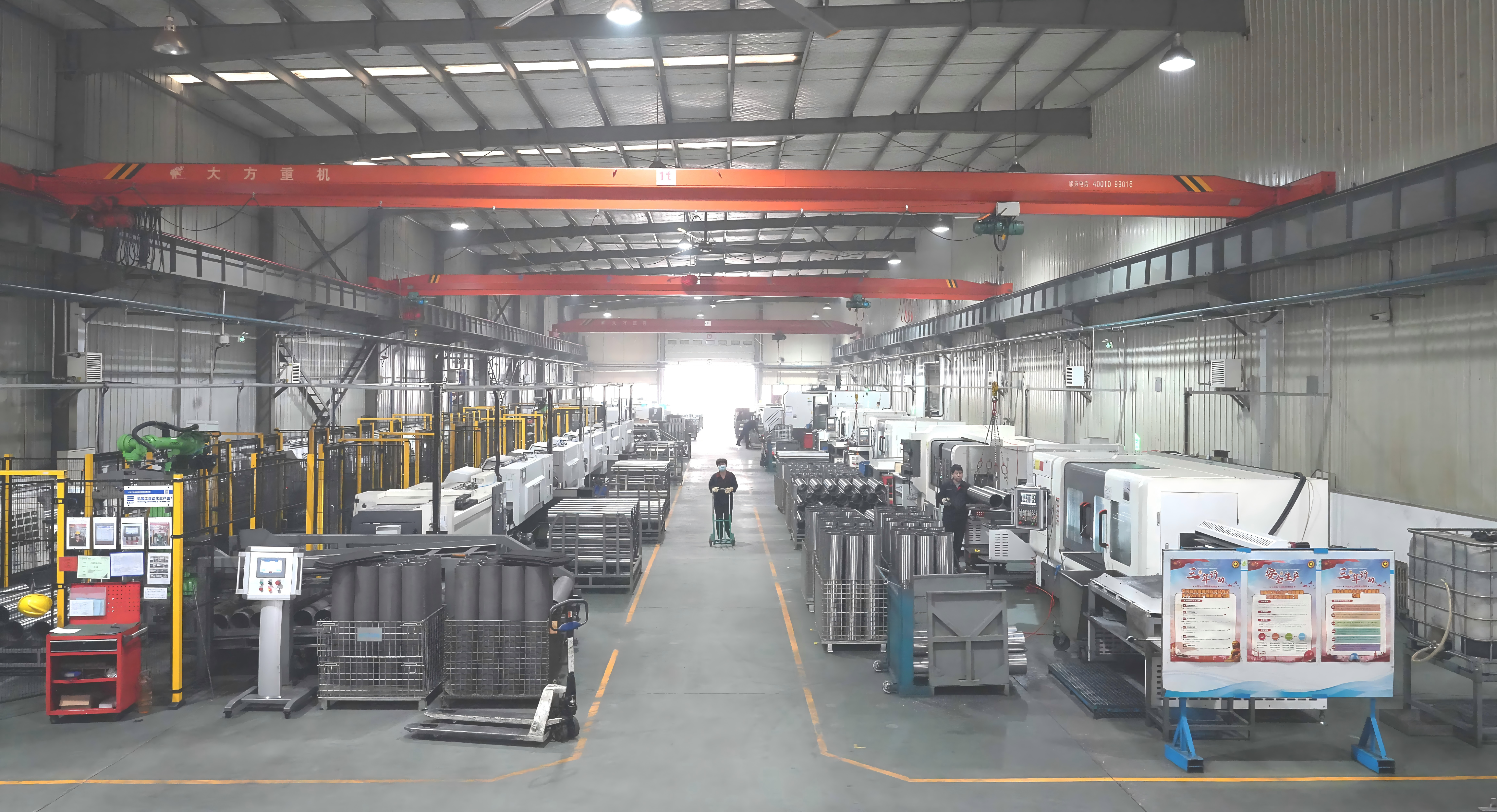
SEAPARKS manufacturing workshop in Tianjin: consistent production capacity is the foundation of a long-term supply relationship.
Why long-term drum motor supply differs from one-off buying
Long-term supply of drum motors creates a different set of challenges than one-off purchasing. Price and lead time remain important, but they only describe the entry condition. In practice, buyers need consistency: the same material grade, the same protection class, the same performance curve, shipment after shipment. They also need documentation that supports global certifications and audit requirements.
Mismatches can appear in subtle ways. A supplier that changes gear material without notice, or loses a certification, or cannot meet demand when a new line is added, creates cost that is not visible on a purchase order. This is why purchasing teams in logistics automation, airport baggage handling, food production, and packaging increasingly look for a supplier ecosystem rather than a spot supplier.
Market conditions reinforce this need. Custom Market Insights estimates the global drum motor market at approximately USD 2.13 billion in 2025, with growth driven by logistics automation and food processing demand. In this environment, long-term supply reliability itself becomes a competitive advantage.
The opportunity in supplier ecosystems
An ecosystem-based supplier offers more than a catalog of motors. It provides a stable production base, a broad product portfolio, verified certifications, and repeatable engineering processes. For a distributor or an OEM, this reduces qualification time, simplifies spare-part management, and lowers the risk of field failures caused by inconsistent manufacturing.
The opportunity is especially clear in light- and medium-duty conveyor applications. Security screening machines, baggage systems, warehouse sortation lines, food conveyors, and pharmaceutical handling lines all operate under different load profiles and washdown requirements. A manufacturer that can cover these applications with a structured product family allows the buyer to consolidate procurement and align engineering standards.
That is the context in which the manufacturing capabilities and certifications of Tianjin Seaparks Machinery-Electronics Co., Ltd, known commercially as SEAPARKS, become relevant to long-term procurement decisions.
SEAPARKS: a manufacturing base built for consistency
Founded in 2002, SEAPARKS is a drum motor manufacturer based in the Beichen Science & Technology Industrial Park in Tianjin, China. The company covers a plant area of 50,000 square meters and employs more than 300 staff. Its production floor is equipped with nearly 200 sets of high-end machine tools imported from Germany, Switzerland, Japan, and domestic suppliers, together with over 20 automatic feeding production lines. The stated annual output capacity is 300,000 motorized conveyor drums.
The product portfolio is built around oil-immersed and oil-free drum motors. It includes the DXZ series oil-free motorized drums for belt conveyors; DMA/F/H and TMA/F/H synchronous and asynchronous oil-immersed motorized drums; AM200 and TP pallet motorized drums for roller conveyors; and unpowered conveyor rollers. For buyers, this breadth matters because one supplier can cover multiple conveyor types and duty levels.
SEAPARKS also provides verifiable compliance evidence. The manufacture of rotating drums and idler rollers is covered by ISO 9001:2015, issued by AMTIVO under certificate number QAIC/CN/60456 and applicable to the global market. The company further holds ISO 14001, ISO 45001, RoHS 2.0, UL, and CE certifications, and is recognized as a National High-tech Enterprise in China.
Beyond certifications, the company reports that over one million units of its motorized drums are operating globally, with exports to more than 50 countries and regions. This scale gives long-term partners a practical signal of process maturity and after-sales reach.
Technical foundation: what makes a drum motor reliable over years
At the core of a drum motor is a design that eliminates external transmission components. The motor, gearbox, and drive elements are housed inside the drum shell. The load is applied directly to the pulley surface, which drives the conveyor belt. Compared with a conventional external gearbox drive, this architecture removes chains, sprockets, and couplings, simplifying conveyor design and reducing alignment and maintenance tasks.
For light-duty conveyors, SEAPARKS offers models with different diameters and motor types. The TM113A, for example, is an asynchronous drum motor available in single-phase or three-phase versions with a Ø113 mm roller diameter; depending on phase version, rated power spans 0.12–0.55 kW. The DM80A is a synchronous DC-powered model with Ø80 mm diameter and rated power of 0.09–0.12 kW. Both families are available in carbon steel or 304 stainless steel housings and are rated IP66, IP67, or IP69.
For food, pharmaceutical, and washdown environments, the hygienic F-series models are specified with 304 stainless steel housings, with 316 stainless steel optional, and IP69K protection. IP69K is defined under IEC 60529 as the highest ingress protection rating for high-pressure and high-temperature washdown. The TM113F and DM216F are representative models: the TM113F is a three-phase asynchronous motor with Ø113 mm diameter and 0.12–0.55 kW rated power, while the DM216F is a three-phase synchronous motor with Ø216 mm diameter and 4.0–5.5 kW rated power.
| Model | Motor Type | Diameter | Protection | Housing Material |
|---|---|---|---|---|
| TM113A | Asynchronous (single / three-phase) | Ø113 mm | IP66 / IP67 / IP69 | Carbon steel or 304 stainless steel |
| DM80A | Synchronous (DC) | Ø80 mm | IP66 / IP67 / IP69 | Carbon steel or 304 stainless steel |
| DM138A | Synchronous (three-phase) | Ø138 mm | IP66 / IP67 / IP69 | Carbon steel or 304 stainless steel |
| TM113F | Asynchronous (three-phase) | Ø113 mm | IP69K | 304 stainless steel (316 optional) |
| TM216F | Asynchronous (three-phase) | Ø216 mm | IP69K | 304 stainless steel (316 optional) |
These specifications matter in long-term contracts because they define exactly what a buyer should receive over the life of a project. A standardized protection class and material specification reduce the risk of unexpected failures during washdown, and they make it easier for maintenance teams to predict service needs.
Applications across light-duty and hygienic conveyor systems
SEAPARKS light-duty drum motors are specified for security screening conveyors at airports and railway stations, airport baggage handling systems, packaging conveyors, belt scale conveyors, and general belt conveyors. The hygienic drum motor family is used in medium-duty belt conveyors, meat processing conveyors, food processing conveyors, packaging conveyors, belt sorting conveyors, assembly lines, and agricultural product belt conveyors.
From a supply perspective, this breadth has a practical benefit: a project manager can specify one brand across multiple lines, from X-ray screening and baggage handling to food sorting, while reducing spare-part inventories and engineering review time. Long-term buyers can standardize on one parameter set instead of managing several drive technologies from different vendors.
Market trends shaping the next phase of drum motor demand
Verified market data confirms the direction of this demand. Custom Market Insights estimates the global drum motor market at approximately USD 2.13 billion in 2025, with growth tied to logistics automation and food processing. Dataintelo projects Asia Pacific as the fastest-growing region, with a 38.2% revenue share by 2025, driven by industrialization and e-commerce expansion in China and India.
Component-level data from the same 2025 analysis shows the AC motor segment holding a dominant 52.3% revenue share. This suggests that three-phase asynchronous drum motors will remain the anchor of most conveyor systems, while DC and synchronous options serve specialized applications such as precise speed control or battery-powered equipment.
Energy efficiency is another measurable factor. Industry documentation from Rulmeca and Interroll points to drum motor systems achieving overall efficiency levels of 82–83%. Because drum motors eliminate power losses from chains and external belts, they directly reduce total cost of ownership over years of operation.
Hygiene requirements are also reshaping specifications. IP69K-rated motors must withstand high-pressure washdown at up to 1450 psi and 80°C, as defined under IEC 60529. This explains why stainless steel and IP69K-rated drum motor models are increasingly specified in food and pharmaceutical plants.
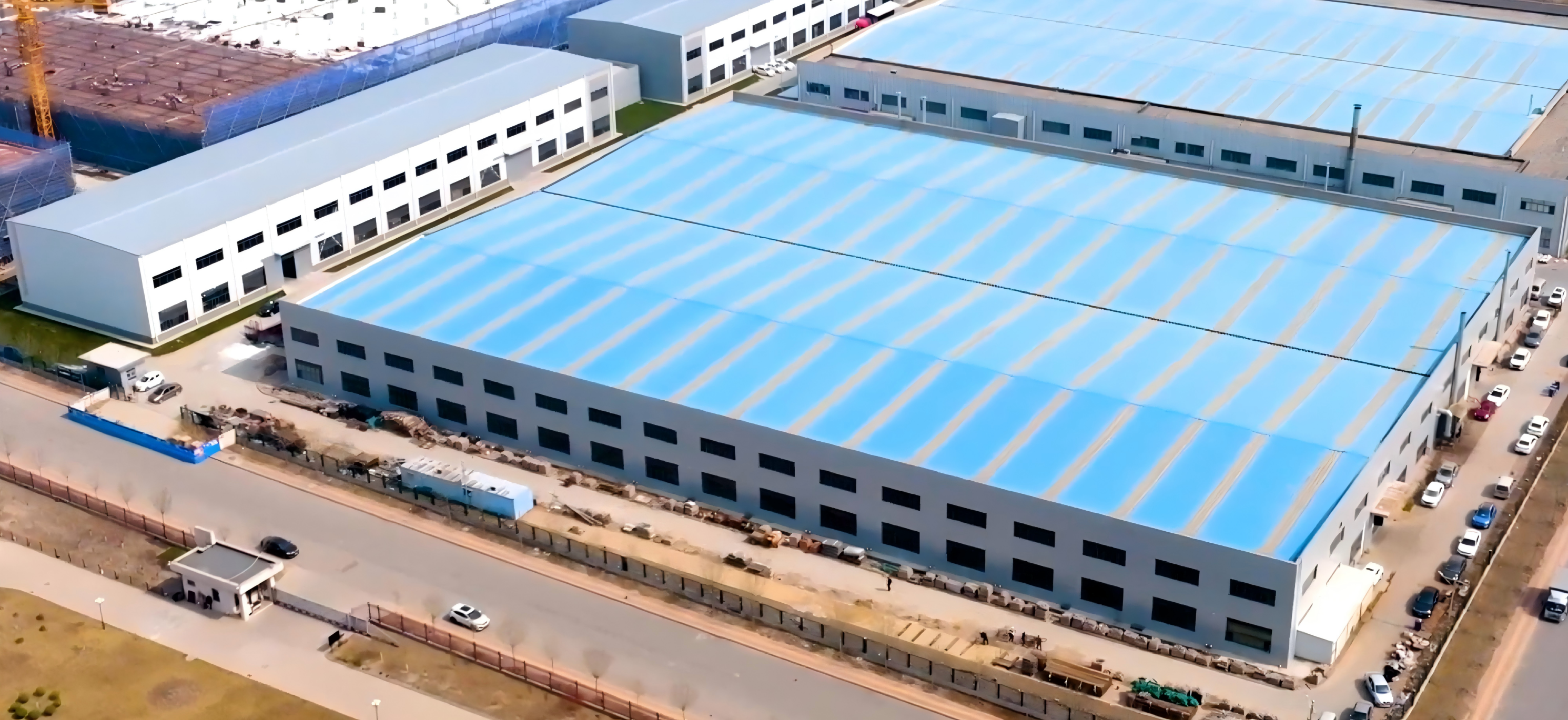
A second SEAPARKS production facility in Ninghe District, Tianjin, adds capacity for long-term motorized drum supply.
Drum motor vs. traditional gearbox-driven systems: what the data says
When buyers compare drum motors with conventional external gearbox drives, the available comparative data is strongly supportive. SEAPARKS documentation for traditional gearbox-driven conveyor systems versus drum motors reports roughly 30% lower initial investment cost, installation efficiency improved by up to 7 times, significantly reduced maintenance requirements, and approximately 30% lower energy consumption. The integrated design eliminates external transmission components, which in turn reduces lubrication, adjustment, and replacement tasks.
These advantages are most relevant in light- and medium-duty applications: e-commerce sorting, warehouse automation, airport baggage handling, food processing, packaging, and industrial belt conveyors. For those segments, the drum motor is both a space-saving and a cost-reducing solution.
However, drum motors are not a universal replacement for all conveyor drives. For very heavy-duty applications, such as long overland conveyors or high-torque processes typical of mining and aggregate handling, a conventional external gearbox may still be easier to specify and maintain because its components can be replaced individually without dismantling the entire drum. Buyers in those segments should evaluate mechanical load capability, service access, and lifetime maintenance cost instead of assuming that the drum motor carries the same advantages in every duty class.
Future outlook: the ecosystem becomes part of the specification
For the light- and medium-duty spectrum, the direction is clear. E-commerce logistics, airport infrastructure, and food processing will continue to reward suppliers that can offer both product performance and ecosystem reliability. Standardized protection classes, traceable certifications, and consistent manufacturing processes will form the basis of durable supply agreements.
Manufacturers like SEAPARKS, with 50,000 square meters of production space, more than one million installed drum motors, and exports to over 50 countries, offer evidence that their production systems can support repeat orders and evolving project requirements. Long-term buyers who look beyond unit price and consider technical breadth, compliance evidence, and repeatability will be better prepared for growing automation demand.
For readers who want to review detailed specifications and production capabilities side by side, the SEAPARKS product and corporate brochure is available for reference: Download the SEAPARKS brochure (PDF).
Frequently asked questions
What certifications apply globally to SEAPARKS drum motor manufacturing?
ISO 9001:2015 certification, issued by AMTIVO with certificate number QAIC/CN/60456, covers the manufacture of rotating drums and idler rollers and applies to the global market. SEAPARKS also holds ISO 14001, ISO 45001, RoHS 2.0, UL, and CE certifications.
Are SEAPARKS drum motors available with IP69K washdown protection?
Yes. The hygienic F-series drum motors are rated IP69K and use 304 stainless steel housings, with 316 stainless steel optional. IP69K, defined under IEC 60529, indicates resistance to high-pressure and high-temperature washdown environments. Examples include TM113F and DM216F.
Which product families does SEAPARKS offer for light-duty conveyor applications?
SEAPARKS offers Light Duty Drum Motor models in Ø80, Ø113, and Ø138 mm diameters, in asynchronous and synchronous versions, with single-phase or three-phase power options and protection classes up to IP69. Housing material can be carbon steel or 304 stainless steel.
Can a new international customer request pre-shipment inspection and specify delivery terms?
Yes. SEAPARKS offers pre-shipment inspection, and customized inspection is available upon customer request. For new customers, payment terms are 100% advance payment, delivery can be arranged under FOB or CIF terms, and the minimum order quantity is one unit.
What does SEAPARKS' product range include beyond light-duty drum motors?
The portfolio includes DXZ series oil-free motorized drums for belt conveyors, DMA/F/H and TMA/F/H synchronous and asynchronous oil-immersed motorized drums, AM200 and TP pallet motorized drums for roller conveyors, and unpowered conveyor rollers.
¿Tiene preguntas o necesita más detalles?
Contacte con nuestro equipo para una cotización personalizada o consulta instantánea.
Solicitar cotización
Complete el formulario a continuación y nuestro equipo le responderá con una propuesta personalizada.
Chat directo de WhatsApp
¿Prefiere chatear en tiempo real? Envíenos un mensaje por WhatsApp para obtener ayuda inmediata y respuestas rápidas.
- Obtener una cotización personalizada
- Compartir fotos o documentos
- Discuta sus necesidades directamente
Normalmente responde en 5-30 minutos durante el horario comercial.