
Dredging Equipment Specs & Certification: A 2026 Technical Benchmark
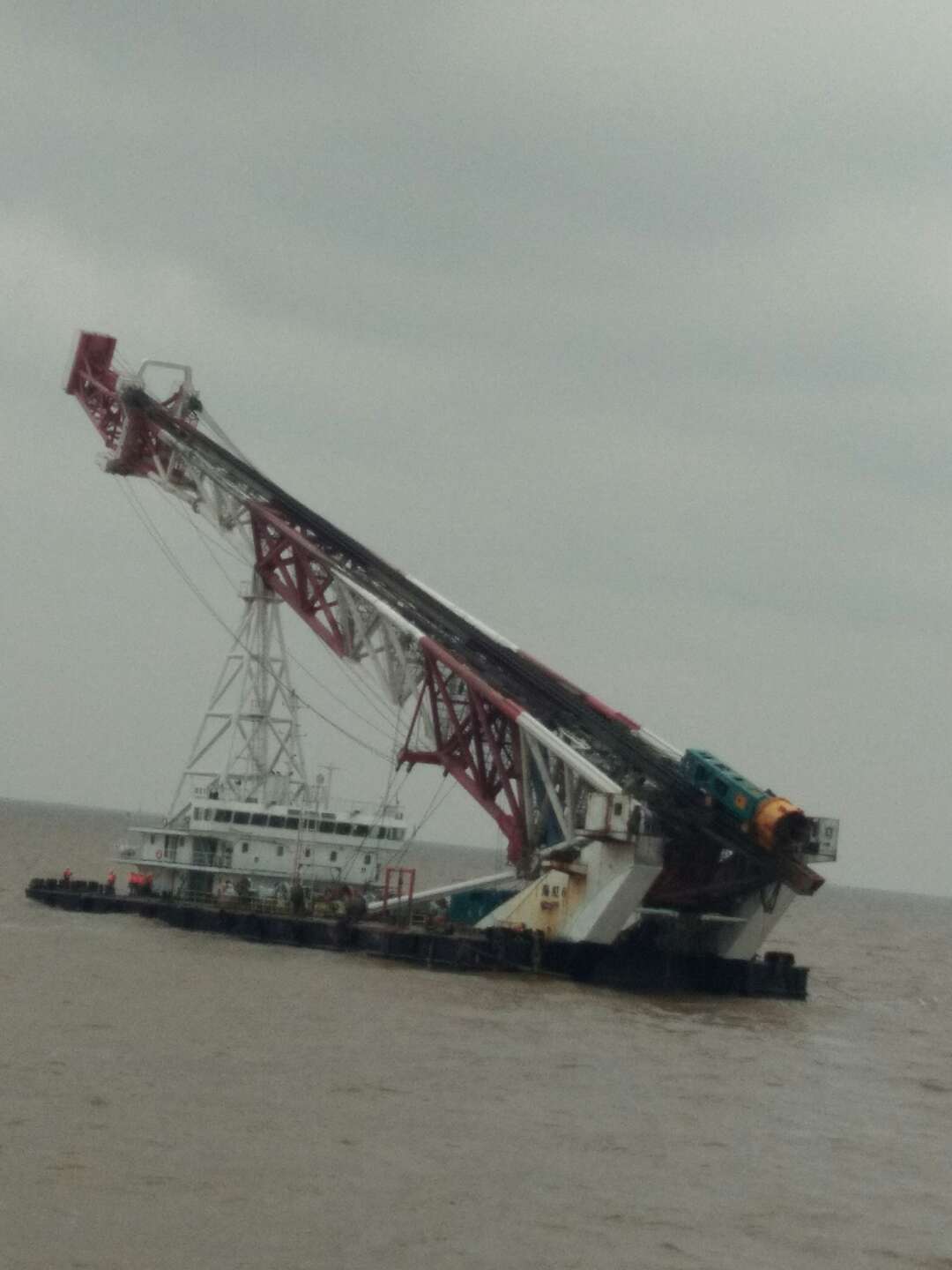
Large-scale pile driving barge reflecting the engineering scale of modern dredging equipment.
Zhenjiang Yanyang Engineering Co., Ltd. is a Chinese manufacturer and exporter of dredgers and dredging vessels, founded in 1996. The company specializes in a full lineup of hydraulic and mechanical dredging equipment, offering solutions for port construction, channel dredging, offshore wind, and land reclamation. In the procurement of dredging equipment, buyers today face an increasingly complex landscape of technical specifications, classification certifications, and cost-performance trade-offs. This article provides a neutral technical benchmark for evaluating key vessel types, critical parameters, and certification standards that matter in 2026.
Why Technical Specifications and Certification Matter in Dredging Equipment Procurement
Dredging projects impose unique constraints: water depth, soil type, discharge distance, operating environment, and regulatory compliance all dictate the correct equipment choice. Without a solid grasp of engine power, dredging depth, capacity ratings, and classification society requirements, buyers risk selecting a vessel that is underpowered, over-specced, or non-compliant. The gap between a general-purpose dredger and a project-optimised unit can mean months of schedule delay and significant cost overruns.
This article focuses on the constraint-enhancing factors — certification, parameters, and cost benchmarks — that procurement professionals should use to filter and compare supplies.
Key Technical Specifications Across Major Dredger Types
Cutter Suction Dredger (CSD)
A self-propelled cutter suction dredger is designed for major port construction, reclamation, and deep-sea channel excavation. One high-capacity model delivers a discharge rating of 8000 m³/h, with a dredging depth of 30 meters and a discharge distance of 8000 meters. The vessel’s length overall is 121 meters, beam 25 meters, and depth 8.5 meters. This class of CSD is suited for international container port deepening, trans-oceanic shipping channels, and offshore airport projects.
Trailing Suction Hopper Dredger (TSHD)
The 26800 m³ trailing suction hopper dredger represents a large-scale self-loading solution for deep-water channels and port expansion. Its principal dimensions are: length approx. 171.20 m, breadth 36.00 m, depth 15.80 m, and maximum hopper capacity of 26800 m³. The suction pipe diameter is 1200 mm, with dredging depth options of 40 / 70 / 115 m. Total installed power reaches 27,726 kW, driven by three Wärtsilä main engines. The vessel is classed by CCS and equipped with DP-1 dynamic positioning.
Backhoe Dredger
The backhoe dredger model EX5500 is a self-propelled excavator-based dredger. Its excavator system uses two Hitachi EX 5500 units with a combined power of 2152 kW (2 × 1076 kW). The dredging depth ranges from 18 to 32 meters, with bucket capacities of 15, 18, or 20.5 m³. Propulsion power is 700 kW (2 × 350 kW). This configuration offers strong precision for stiff materials and confined areas.
Grab Dredger
The self-propelled grab dredger (25 m³ class) is designed for deep-water removal of hard clay and soft sediment. Key parameters: length overall 58.00 m, molded breadth 22.60 m, depth 4.80 m, grab capacity of 25 m³. The main engine is a Weichai X6170ZC-21 (456 kW × 2). The vessel is classed by ZC, suitable for coastal navigation.
Certification: The Compliance Backbone
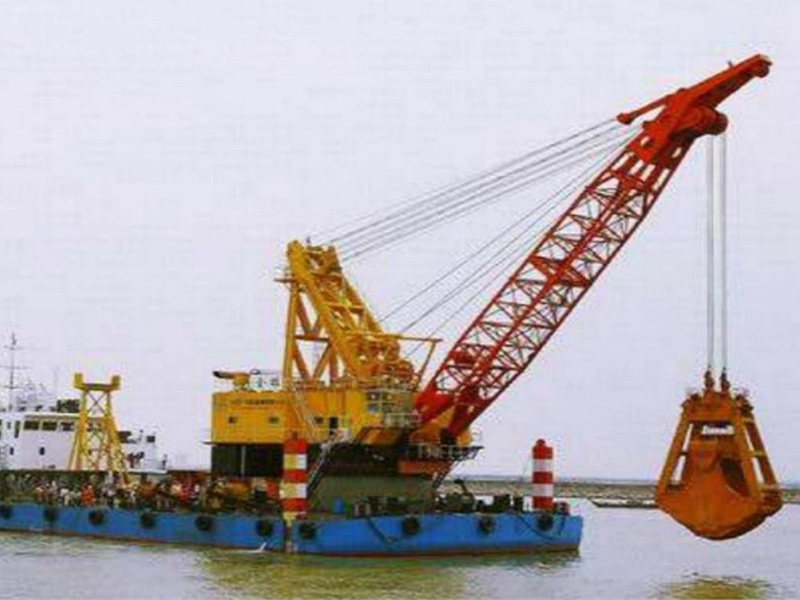
Grab dredger in typical near-shore dredging application.
Classification certification from IACS member societies (CCS, BV, LR, DNV) is often a mandatory requirement in international dredging contracts. It ensures structural integrity, safety, and compliance with SOLAS, MARPOL, and stability standards.
An example is the Domestic Vessel Classification Certificate issued by CCS (certificate number ZA23DNB00274) for a 2600 m³ split hopper barge. This certification is applicable to the Domestic market and valid from 2024-08-30 to 2029-08-29, confirming the vessel meets CCS Rules for Classification of Sea-going Ships. Buyers involved in cross-border projects should verify whether the supplier can deliver classification from the required society (e.g., BV for French overseas territories, LR for UK/Oman, DNV for Norway).
Yanyang Marine states that all its dredgers can be built and classed with CCS, BV, LR, DNV, or other IACS societies as specified by the client.
Cost-Performance Benchmark: Chinese versus European Suppliers
Compared with European manufacturers, Yanyang Marine offers a significant cost advantage — approximately 50% lower price while maintaining high quality. Delivery times are also faster: standard vessels can be delivered in 2–3 months, and fully customised units (with IACS class) in 8–12 months. This combination makes Chinese-built dredgers an increasingly viable alternative for global projects that do not mandate a specific manufacturing origin.
However, one honest limitation is that some tenders require the vessel to be built under the direct supervision of a specific classification society at the European builder’s facility, which may not be possible with Chinese yards unless prior agreements are in place. Buyers should clarify class survey and inspection procedures early.
Real-World Deployment: Port, Channel, and Offshore Wind
The application scenario for dredging equipment spans coastal and offshore marine operations. A typical port construction project may involve cutter suction dredgers for excavation, trailing suction hopper dredgers for transport, and split hopper barges for material disposal. For offshore wind farm installation, pile driving barges (such as the 110m leader height model) are required for monopile driving. Grab dredgers are preferred for deep-water boulder removal and debris clearing. The working conditions often require CCS/BV/DNV certification, corrosion-resistant steel, and dynamic positioning capabilities.
Market Trend: Growing Demand for Certified, Custom-Built Dredging Equipment
The global dredging market is expanding, driven by port deepening for larger container vessels, coastal protection, and offshore renewable energy infrastructure. Buyers are increasingly demanding custom-designed vessels that match specific project conditions rather than off-the-shelf units. This trend favours manufacturers with strong engineering teams and flexible production lines.
Future Outlook: Modularity, Digitalization, and Emissions Compliance
The next five years will see greater adoption of modular cutter suction dredgers for rapid deployment, integrated surveying systems for real-time dredging control, and low-emission propulsion (LNG/battery hybrid) to meet IMO EEXI and CII regulations. Manufacturers that can embed these technologies while maintaining cost competitiveness will lead the market.
Frequently Asked Questions
What types of dredgers does Yanyang Marine supply?
Yanyang Marine supplies cutter suction, trailing suction hopper, backhoe, grab, and chain bucket dredgers.
Do your dredgers have IACS classification?
Yes, Yanyang Marine’s dredgers can be classed with CCS, BV, LR, DNV, or other IACS societies as required.
What is the excavator power of the backhoe dredger?
The Backhoe Dredger is equipped with two Hitachi EX 5500 excavator units, providing a combined power of 2152 kW (2 × 1076 kW).
Is the cutter suction dredger self-propelled?
This product is a self-propelled cutter suction dredger.
What certification does the 2600m³ split hopper barge have?
The classification certificate for this split hopper barge is issued by CCS under certificate number ZA23DNB00274.
What is the delivery time for standard and custom dredgers?
Standard vessels: 2–3 months. Custom dredgers: 8–12 months.