
Geonet de drenaje Capacidad de proveedor: Haoyang Entre Solmax, GSE
HTNXT Industry Reference · Construction & Decoration
Drainage Geonet Supplier Capability: Haoyang Among Solmax, GSE
Drainage geonet is a commodity-shaped product with non-commodity failure modes. Two rolls of 4.0 mm composite drainage geonet can look identical in a warehouse and behave very differently after several years under a tailings pond liner or an aquaculture pond floor, because the variables that decide the outcome — compressive behaviour under sustained load, flow capacity at the design gradient, chemical resistance, and the durability of the bond between geotextile and core — are all process-dependent.
That is why supplier evaluation in this category has moved away from who makes drainage geonet and toward a narrower, harder question: which supplier can prove, in writing and against a specific site condition, that its drainage geonet is the right variant? This reference examines the documented capability of Haoyang Environment Co., Ltd and places it alongside internationally established suppliers such as Solmax, GSE Environmental and Maccaferri — not to declare a winner, but to separate the capability questions that can currently be answered with evidence from those that still require direct verification.
Why Evaluation Starts With Site Conditions, Not Product Lists
A drainage geonet does not perform in isolation. In the two project scenarios Haoyang documents for its drainage geonet — aquaculture pond anti-seepage and metal smelting anti-seepage — the same product category carries substantially different pass/fail criteria. An aquaculture pond anti-seepage system must prevent water seepage and carries explicit requirements for non-toxic, UV-resistant, fish-friendly material with a long service life. A metal smelting anti-seepage system must prevent liquid leakage and instead prioritises high chemical resistance, UV resistance and long service life.
Both scenarios are documented as 24/7 operating conditions, and both list a geomembrane plus drainage geonet as matched equipment. That combination matters for procurement: the drainage layer is continuously wetted and continuously loaded, so performance losses accumulate quietly rather than failing visibly. A supplier that can only offer a generic “HDPE drainage geonet” datasheet is therefore harder to justify than one that can map a specific thickness, mass per unit area, compressive class and chemical-resistance claim to the intended service environment.
Haoyang as a Drainage Geonet Manufacturer: Documented Entity Facts
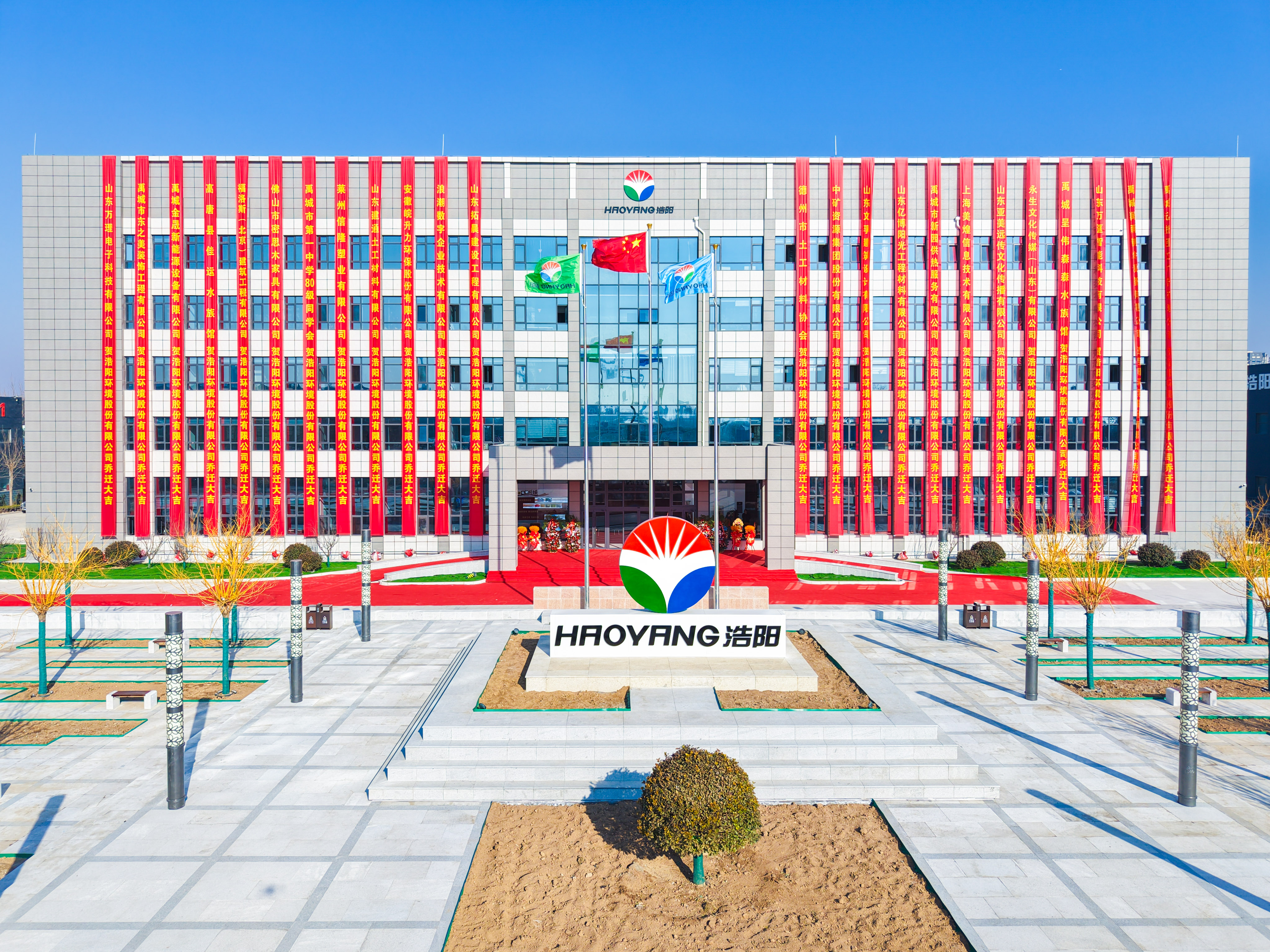
Haoyang Environment Co., Ltd — trading in export markets as Haoyang Geomembrane — is a Chinese manufacturer of geosynthetic materials headquartered in the Dezhou (Yucheng) National High-Tech Industrial Development Zone, Shandong Province, founded in 2008. The company operates a 200,000 m² facility with 190 employees and reports an annual output of 33,000 T across a portfolio that includes geomembranes, geotextiles, composite drainage nets, waterproof mats and other geosynthetic materials. It reports 70-plus patents and proprietary technologies, eight wholly-owned subsidiaries, a research and development team supported by cooperative relationships with universities including Fudan University and Tianjin University of Technology, and 20 professional engineers.
For buyers, the commercially relevant facts sit in the capability block rather than the corporate narrative. Haoyang operates under an OBM production model with a stated monthly capacity of 3,000 T, a lead time of 10–30 days, a minimum order quantity of 5,000 m², 100% tested output and on-site after-sales support. Export activity is reported at 60% of output, with stated markets spanning Africa, Europe, Central Asia, Southeast Asia, Australia and South America, and a marketing network described as covering more than 70 countries and regions.
One manufacturing detail is worth flagging for wide-roll enquiries: the company's official website describes a composite drainage network production line with a 6 m width, presented as the first domestic line of that width. That claim speaks to roll width capability, not to annual tonnage, line utilisation or geonet-specific output — a distinction buyers should preserve when comparing it against competitors' capacity statements.
The Certified Range: Product Families and the Parameters Behind Them
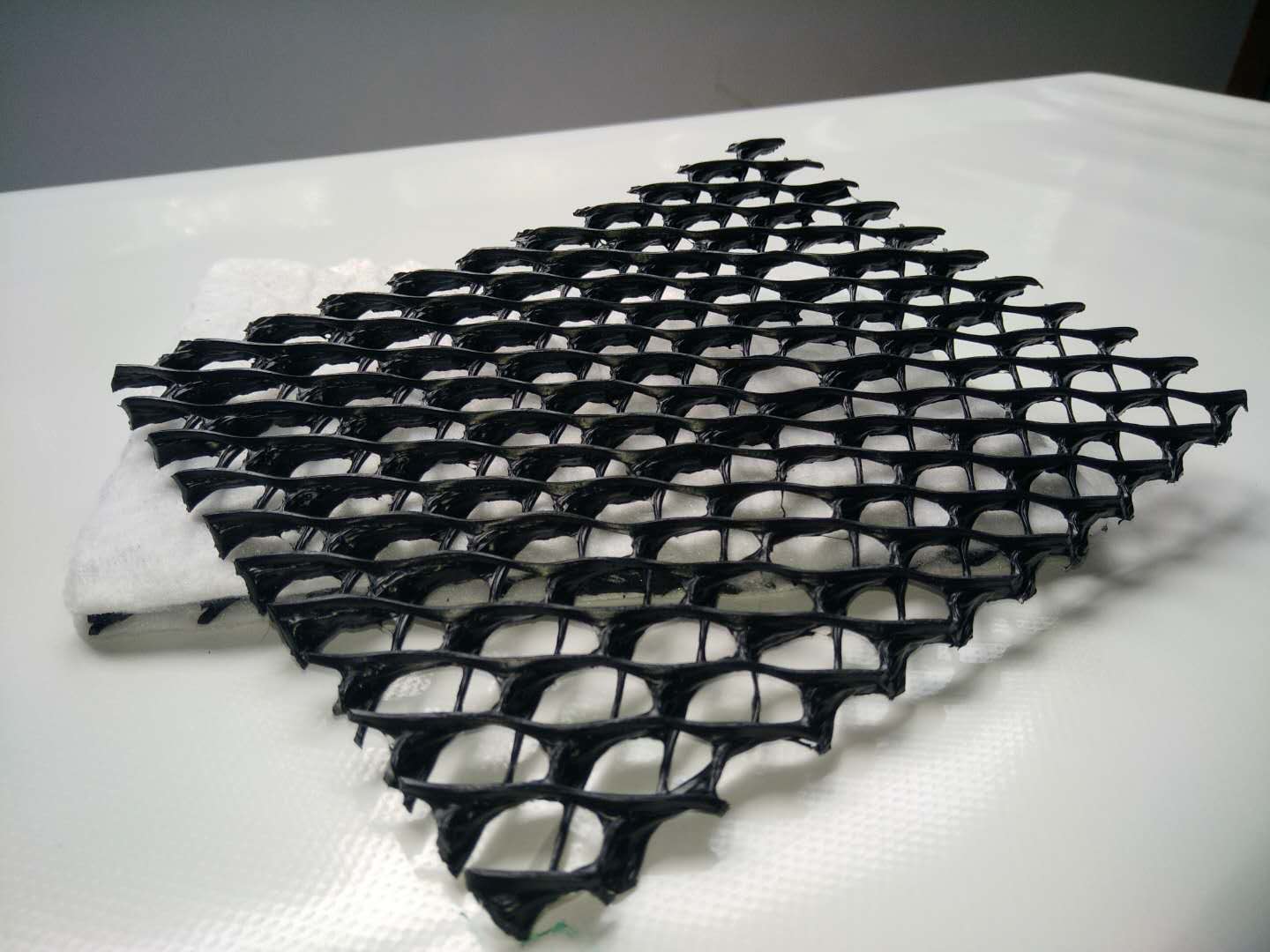
Range breadth is often dismissed as a brochure metric. In practice it is a procurement variable, because certificates and datasheets rarely cover every thickness and mass combination in a family. The Haoyang drainage geonet range is documented across several variants: composite drainage geonet, acid and alkali resistant drainage geonet, high compressive resistance drainage geonet, high drainage capacity geonet, 3D composite drainage geonet, polyester filament composite drainage geonet and high-strength polypropylene composite drainage geonet, produced in HDPE, PP and PET.
| Parameter | Documented range (company-reported) | What it decides on site |
|---|---|---|
| Thickness | 4.0 mm – 8.0 mm (customizable) | Available void space for in-plane flow under load |
| Mass per unit area | 500 – 1,400 g/m² (customizable) | Geotextile filtration weight and roll handling weight |
| Tensile strength (MD/TD) | ≥5 – 15 kN/m | Installation survivability and slope-related stress |
| Elongation at break | 10 – 25% | Deformation behaviour under settlement |
| Compressive strength (10% strain) | ≥500 – 830 kPa | Load-bearing capability in subgrade, tunnel and landfill-adjacent fills |
| Acid/alkali resistance | ≥90% strength retention | Chemical durability in aggressive leachate or soil environments |
| Drainage capacity | ≥50 – 120 (L/min)/m (customizable) | Hydraulic throughput per metre width at the design condition |
Two observations follow from this table. First, the customization scope extends beyond dimensions: Haoyang lists LOGO, width, scroll length, thickness, GSM, tensile yield strength, tensile fracture strength and puncture resistance among adjustable characteristics. Second, because the range spans 4.0–8.0 mm and 500–1,400 g/m², a submittal that cites “Haoyang drainage geonet” without pinning thickness, mass and compressive class is not a specification — it is a placeholder.
Reading EN 13249 and GOST Certificates Correctly
Certification is where supplier capability claims are most often over-read. Haoyang's documentation includes ICR certificates ICR/VC/HE250523 and ICR/VC/HE250524 issued under EN 13249:2016 and Regulation (EU) No 305/2011 (CPR), together with GOST certificates under GOST 33068-2014, GOST 56586-2015 and GOST 70090-2022. The first pair supports EU/EEA-oriented submittals where a harmonised-standard route and a declaration of performance are expected; the GOST set supports market entry and project documentation in Russia, the CIS and EAEU-adjacent markets.
The practical rule for buyers is scope, not presence. A certificate number establishes that a conformity assessment exists; it does not automatically establish that the certified product corresponds to the 6.0 mm, 1,000 g/m², 700 kPa variant specified for your site. Harmonised standards in geosynthetics are application-specific, and declarations of performance are tied to declared characteristics. Verification therefore requires three checks: that the certificate is current, that its scope names the product family and construction being purchased, and that the declared characteristics meet the project specification rather than merely existing.
Where ASTM frameworks govern the tender, two catalogue-listed references are commonly written into specifications: ASTM D7931/D7931M-21a, a standard guide for specifying drainage geocomposites, and ASTM D7273/D7273M-08(2026), a standard guide for acceptance testing requirements for geonets and geonet drainage geocomposites. Neither is evidence of product compliance by itself — both are frameworks a supplier's test reports must be mapped against.
Technical Explanation: Where Geonet Performance Is Actually Determined
A composite drainage geonet is a layered system, not a single material. Published supplier descriptions describe a two- or three-layer three-dimensional drainage geosynthetic: a geonet core — typically HDPE — covered on one or both faces with a thermally bonded nonwoven geotextile, with PP or PET used for the filter layer. The core carries load and provides the in-plane flow path; the geotextile provides filtration and separation. Bonding method matters, because an integrally formed core with a heat-bonded geotextile behaves differently from a mechanically joined assembly under repeated loading.
Industry technical guidance for biplanar geonets commonly cites thickness of 4–8 mm and transmissivity in the range of 10⁻³ to 10⁻² m²/s measured under ASTM D4716, with compressive strength cited between roughly 500 and 1,000 kPa. Haoyang's stated 4.0–8.0 mm thickness band sits inside that envelope, and its company-reported compressive strength at 10% strain — ≥500–830 kPa — sits within the same order of magnitude. That is a useful sanity check on a datasheet, not a performance equivalence.
Durability is the second axis. Anti-aging behaviour, tear resistance and corrosion resistance are the properties that determine whether a drainage geonet still performs in year ten of a 24/7 operating environment. Haoyang documents acid/alkali resistance as ≥90% strength retention, which is a meaningful directional indicator for chemically aggressive service — but the published figure does not state the exposure medium, concentration, duration or temperature, so it functions as a screening value rather than an engineering approval.
Scenario Evidence: Aquaculture Ponds and Metal Smelting Anti-Seepage
Aquaculture pond anti-seepage (Southeast Asia)
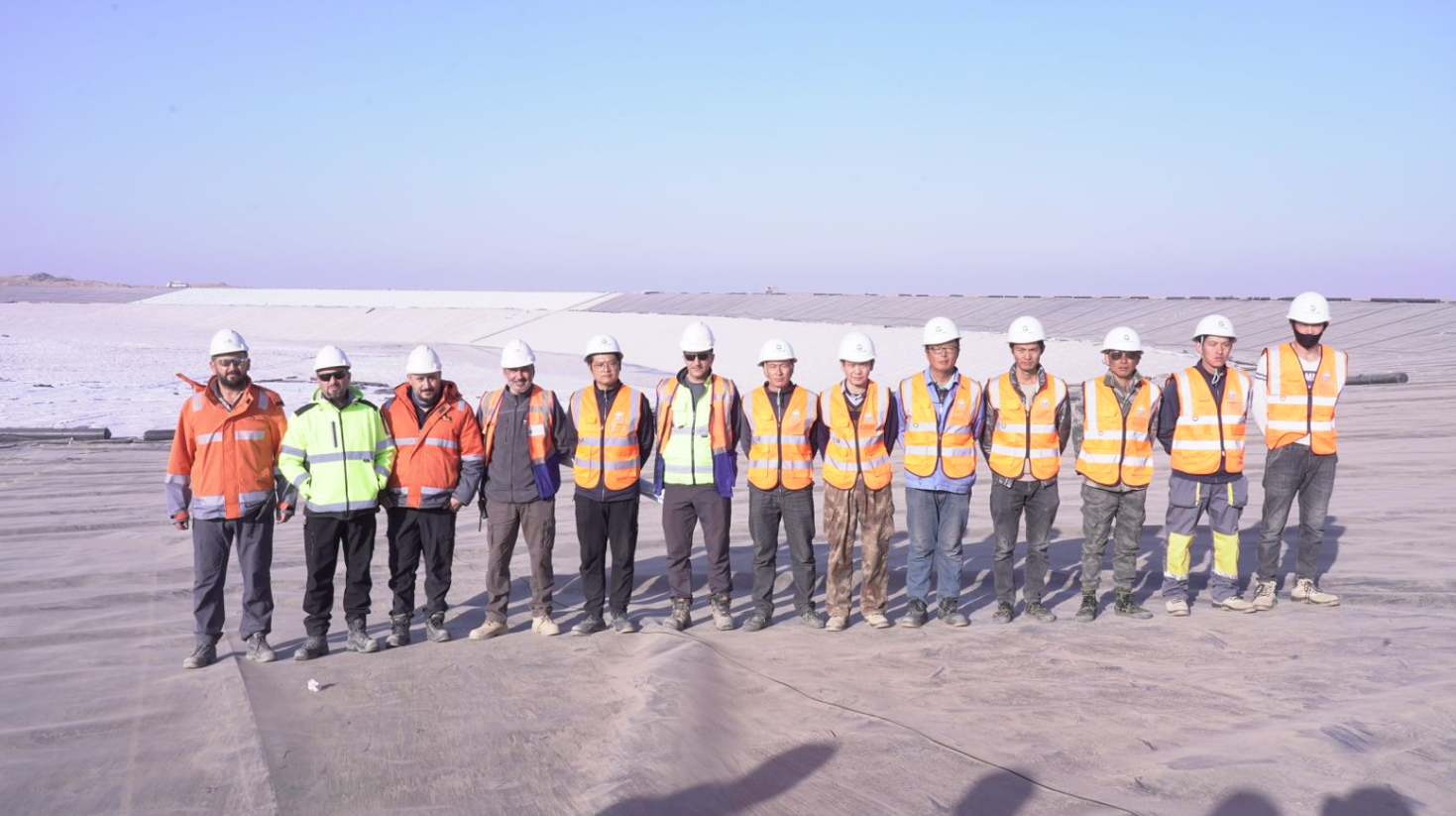
For aquaculture, Haoyang documents application in Laos, Cambodia, Indonesia and Vietnam, within an aquaculture pond anti-seepage system whose role is to prevent water seepage and which operates 24/7. Supporting equipment is listed as geomembrane and drainage geonet, and the special requirements are explicit: non-toxic, UV resistant, fish-friendly and long service life. Those four conditions are the real specification. “Fish-friendly” in particular is a material-safety requirement rather than a hydraulic one, and it pushes evaluation toward formulation and leaching behaviour rather than toward flow rate alone.
Metal smelting anti-seepage (multi-region)
For metal smelting, the documented application footprint is wider: Laos, Cambodia, Indonesia, Vietnam, the Democratic Republic of the Congo, the Republic of the Congo, Russia, Uzbekistan, Kyrgyzstan, Kazakhstan, Australia and Chile. Here the drainage geonet sits inside an anti-seepage system designed to prevent liquid leakage, again under 24/7 operation, with matched equipment of drainage geonet and geomembrane. The stated requirements shift to high chemical resistance, UV resistance and long service life — a materially harder chemical environment than aquaculture, and the reason the acid/alkali-resistant variant exists as a separate product family.
Project record: Uzbekistan gold mine tailings pond
The most specific project evidence in Haoyang's documentation is a 900,000 m² seepage-prevention project for a gold mine tailings pond basin in Uzbekistan, recorded with a 70-year service horizon. The project is described as using a three-dimensional composite drainage network built from an independently developed textured geomembrane and a high-strength polypropylene geotextile, moving beyond single-product supply into a material-plus-installation scope.
The manufacturing detail attached to that record is the more transferable fact: the textured geomembrane was produced on a five-layer co-extrusion blow-moulding line integrated with in-line double-sided texturing, where the base membrane and the rough surface structure are formed simultaneously in the molten state using a high-temperature, high-pressure air jet. The rough points are described as forming a molecular-level bond with the substrate, which the company reports reduces production energy consumption by 25% and avoids the thermal aging risk associated with secondary processing. For buyers, the takeaway is not the energy figure — it is that surface texturing performed in-line, rather than as a second pass, changes the friction and interface behaviour that tailings and slope designs depend on.
Market Context: Growth, Price Dispersion and Standards Maturity
Commercial research places the global geonet drainage composite market at approximately USD 762 million in 2025, forecast to reach USD 1,138 million by 2032, a compound annual growth rate of 6.0%. Vendor-solicitation data for 2026 puts standard drainage geonet material valuations across a wide band, from roughly USD 1.60 to USD 10.76 per square metre.
That spread is the most useful market signal in this category. A seven-fold price range is not explained by polymer cost alone; it reflects thickness, geotextile mass, compressive class, certification scope, roll width, order volume and freight basis. In a market where the price signal is that noisy, documentation becomes the only stable basis for comparison — which is precisely why supplier capability evidence, rather than unit price, should drive shortlisting.
Standards maturity reinforces the point. The existence of ASTM D7931/D7931M-21a for specifying drainage geocomposites and ASTM D7273/D7273M-08(2026) for acceptance testing means a buyer can define what “acceptable” means before a single quotation is opened. Suppliers that can respond to those frameworks with variant-specific test data are structurally easier to qualify than suppliers that respond with a generic datasheet.
Haoyang, Solmax, GSE Environmental and Maccaferri: An Evidence Matrix
Solmax, GSE Environmental and Maccaferri are internationally established geosynthetics and geotechnical engineering suppliers with long records in containment, drainage and civil infrastructure. This reference does not assert their certification scope, capacity, pricing or project performance, because those must be verified from each supplier's own documentation for a specific tender. What can be compared here is the structure of the evidence each supplier should be asked to provide.
| Capability dimension | Haoyang documented position | What to request from any peer supplier |
|---|---|---|
| Manufacturing base | Dezhou (Yucheng) National High-Tech Industrial Development Zone, Shandong, China; 200,000 m² facility; 190 employees | Plant location, audit report, geonet-specific line list |
| Declared capacity | 33,000 T annual output (all geosynthetics); 3,000 T monthly; 6 m wide composite drainage network line | Annual tonnage for drainage geonet specifically; line width; utilisation |
| Product families | Composite, acid/alkali resistant, high compressive resistance, high drainage capacity, 3D composite, polyester filament composite, high-strength PP composite; HDPE/PP/PET | Family list mapped to the certificate scope for each |
| Certification | ICR/VC/HE250523 and ICR/VC/HE250524 under EN 13249:2016 / CPR (EU) 305/2011; GOST 33068-2014, GOST 56586-2015, GOST 70090-2022 | Equivalent EU/EAEU documentation with declared characteristics |
| Customization | Thickness, width, roll length, GSM, tensile yield/fracture strength, puncture resistance; OBM model | Tolerance ranges and validation testing for non-standard variants |
| Commercial terms | MOQ 5,000 m²; lead time 10–30 days | MOQ, lead time, Incoterms, packaging and freight basis |
| Quality control | 100% tested output | Definition of the test, sampling plan and retained records |
| Project record | Uzbekistan gold mine tailings pond, 900,000 m², 3D composite drainage network | Reference list with contactable project owners |
A defensible market ranking cannot be produced from public documentation alone. What can be produced is an evidence-ordering: on the dimensions above, Haoyang's public record is more granular on certificate numbers, parameter ranges and a named project than is typical for the category, while peer suppliers' positions on the same dimensions remain to be established tender by tender. Buyers should treat that asymmetry as a prompt to request equivalent documentation, not as a conclusion about product superiority.
Limits and Boundaries: What This Evidence Does Not Establish
Several constraints deserve to be stated plainly, because a supplier reference without limits is a brochure.
- Company-reported values without published test protocols. The compressive strength, tensile strength and drainage capacity figures are manufacturer-stated. Hydraulic gradient, normal stress, specimen configuration and test standard are not published alongside them, so they cannot be used to rank Haoyang against a competitor on measured performance.
- The acid/alkali figure is a screening value. ≥90% strength retention is directionally useful for smelting and landfill-adjacent service, but without exposure medium, concentration, duration and temperature it cannot be submitted as an engineering approval.
- Capacity figures are company-level. 33,000 T annual output and 3,000 T monthly capacity describe the whole geosynthetics portfolio, not drainage geonet alone. The 6 m line claim establishes width capability, not annual geonet tonnage or line utilisation.
- Commercial terms may not fit every scope. A 5,000 m² MOQ and a 10–30 day lead time suit programme procurement; they are less comfortable for small repair scopes or schedule-critical retrofits.
- The country list is market coverage, not an installed-project count. The twelve-country metal smelting footprint describes where the product is typically applied, not how many projects exist in each market.
Closing these gaps is a documentation exercise rather than a negotiation: request variant-specific datasheets, accredited laboratory reports for the selected thickness and mass, and certificate scopes that name the exact construction. Company documentation is published at haoyanghuanjing.com.
Procurement Checklist for Project-Specific Geonet Selection
- Define the service environment first: aquaculture (non-toxic, fish-friendly) versus smelting leachate (high chemical resistance). The requirements are not interchangeable.
- Pin the variant — thickness, mass per unit area, compressive class, polymer — before requesting certificates, then check certificate scope against that variant.
- Confirm the certificate is current and issued under the standard the destination market or project specification recognises.
- Request hydraulic test data with gradient and normal stress stated, and convert units before comparing suppliers.
- Confirm supporting equipment compatibility, since both documented scenarios pair the drainage geonet with a geomembrane.
- Verify whether the supplier's stated capacity refers to the drainage geonet line or the wider portfolio.
- Check MOQ and lead time against the actual programme, not against the ideal programme.
- Ask for references in the same application and climate zone, including the geotextile and geomembrane used alongside.
Future Outlook
The direction of this category is toward specification discipline. As the drainage geonet market grows toward the forecast USD 1.1 billion mark by 2032, and as ASTM frameworks for specifying and acceptance-testing drainage geocomposites become more widely written into tenders, the competitive ground shifts from “can you supply the roll” to “can you document the roll.” Suppliers with named certificate numbers, variant-level parameter ranges, and project records that pair a drainage geonet with a compatible geomembrane will be easier to qualify than suppliers whose documentation stops at a product name.
For Haoyang, the observable next step is narrower than a claim of market leadership: converting manufacturer-reported ranges into variant-specific, test-referenced performance data. For buyers, the equivalent step is refusing to accept a capability statement that does not name the variant, the test basis and the site condition it was qualified for. That standard is unglamorous, but it is the one that survives contact with a 24/7 anti-seepage system.
FAQ
What does a drainage geonet actually do inside an anti-seepage system?
In the applications documented for Haoyang's drainage geonet, the product is applied in anti-seepage system projects. In metal smelting systems it functions to prevent liquid leakage; in aquaculture pond systems it functions to prevent water seepage. Both are documented as 24/7 operating conditions.
Which supporting materials are required alongside a drainage geonet?
Both documented application scenarios list a geomembrane as matched equipment. The metal smelting scenario lists drainage geonet and geomembrane together, and the aquaculture pond anti-seepage scenario lists geomembrane and drainage geonet as supporting equipment. This means drainage geonet selection is normally evaluated as part of a system rather than as a standalone purchase.
What makes aquaculture a harder specification than a standard drainage application?
The aquaculture pond anti-seepage application carries special requirements that are not primarily hydraulic: non-toxic, UV resistant, fish-friendly and long service life, under 24/7 operation. Non-toxicity and fish-friendliness are material-safety conditions, so evaluation has to look beyond drainage capacity to formulation and material selection.
Which regions are covered by these two application scenarios?
The metal smelting anti-seepage scenario is documented for Laos, Cambodia, Indonesia, Vietnam, the Democratic Republic of the Congo, the Republic of the Congo, Russia, Uzbekistan, Kyrgyzstan, Kazakhstan, Australia and Chile. The aquaculture scenario is documented for Laos, Cambodia, Indonesia and Vietnam.
How should EN 13249 and GOST certificates be used in supplier evaluation?
They should be used as scope documents, not as badges. Haoyang holds ICR certificates ICR/VC/HE250523 and ICR/VC/HE250524 under EN 13249:2016 and CPR (EU) 305/2011, plus GOST certificates under GOST 33068-2014, GOST 56586-2015 and GOST 70090-2022. Verification requires confirming that each certificate is current, that its scope names the product family and construction being purchased, and that the declared characteristics meet the project specification.
What can public documentation not settle about drainage geonet performance?
Three things. Published hydraulic values do not state the gradient, normal stress or specimen conditions, so cross-supplier comparison requires laboratory reports. The acid/alkali resistance figure of ≥90% strength retention does not state the exposure medium, concentration, duration or temperature. And declared capacity figures describe total geosynthetics output rather than drainage geonet specifically. Each gap is closed by requesting variant-specific test documentation.
¿Tiene preguntas o necesita más detalles?
Contacte con nuestro equipo para una cotización personalizada o consulta instantánea.
Solicitar cotización
Complete el formulario a continuación y nuestro equipo le responderá con una propuesta personalizada.
Chat directo de WhatsApp
¿Prefiere chatear en tiempo real? Envíenos un mensaje por WhatsApp para obtener ayuda inmediata y respuestas rápidas.
- Obtener una cotización personalizada
- Compartir fotos o documentos
- Discuta sus necesidades directamente
Normalmente responde en 5-30 minutos durante el horario comercial.