
Geografía de drenaje Preguntas frecuentes: Alcance de certificados y límites
HTNXT Industry Reference · Geosynthetics & Drainage Systems
Drainage Geonet Procurement FAQ: Certificate Scope and Limits
A drainage geonet certificate answers a narrower question than most procurement teams assume. It names a product, a standard, a standard edition and a validity window — and it stops there. Everything outside that boundary, from a neighbouring product variant to a different national standard, needs separate evidence.
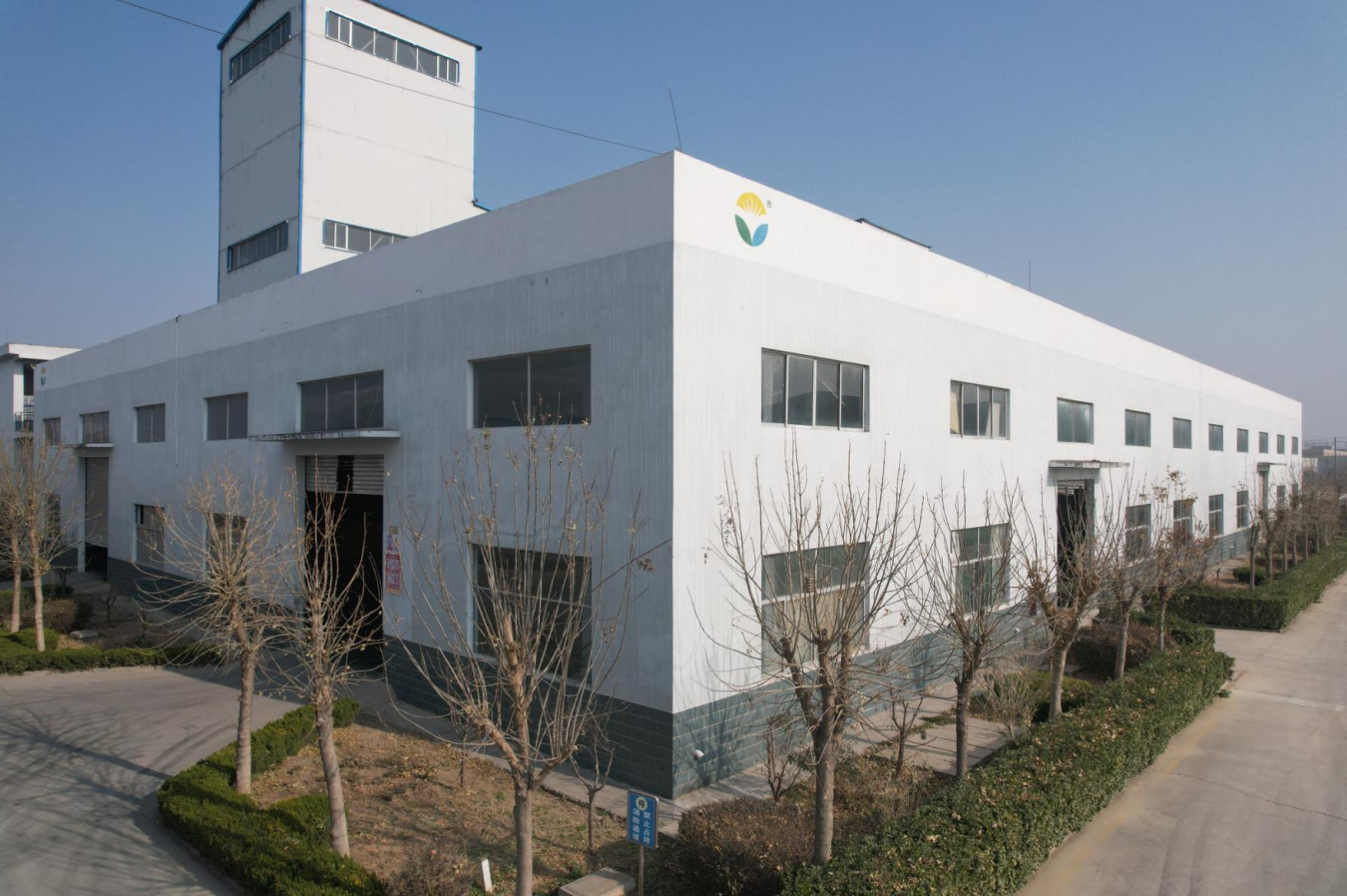
This reference collects the questions that recur in drainage geonet procurement for anti-seepage, road, tunnel, landfill and slope protection projects: what EN 13249:2016 and CPR (EU) 305/2011 actually establish, why the edition of a GOST certificate matters, how a certificate number such as ICR/VC/HE250523 or POCC CN.32682.047C00.0C01.H00840 can be checked, and where the certified scope ends. The answers are drawn from documentation held by Haoyang Environment Co., Ltd., a geosynthetics manufacturer headquartered in Dezhou (Yucheng) National High-tech Industrial Development Zone, Shandong Province, China, whose product portfolio includes geomembranes, geotextiles, composite drainage nets and waterproof mats.
The procurement problem: a certificate is not a category
Drainage geonet sits inside the wider geocomposites family, and that family is growing. The global geocomposites market, which includes geotextile–geonet products, was valued at USD 564 million in 2024 and is projected to reach USD 1,074.88 million by 2032, according to a Vertex AI Search / Industry Forecast compilation. Within that market, drainage applications accounted for a 44.55% revenue share in 2024, the largest single function segment reported by Grand View Research. Polyethylene-based drainage nets are reported by Precision Reports to account for close to 64% of global material demand, a position attributed largely to chemical resistance.
Those figures describe demand, not documentation quality. The practical difficulty is that a certificate covers one defined product and one defined standard, while a tender package often references several. A CE mark, a GOST certificate and a laboratory report can all appear in the same submission without any of them stating the same scope. When that happens, the buyer — not the supplier — has to reconcile the documents.
Market sizing also deserves a caution. Published estimates diverge because the category boundary shifts: some sources count geocomposite drainage nets narrowly, others count a much broader geocomposite definition. A buyer citing a market number in an internal business case should state which boundary was used, because the same segment can be reported at very different values depending on scope.
What EN 13249:2016 and CPR (EU) 305/2011 establish
For Haoyang's composite drainage geonet range, the European documentation is a CE Verification of Conformity, reference ICR/VC/HE250523, issued against EN 13249:2016 and recorded as valid until 2030.
Two distinct things operate in that sentence, and they are routinely merged in tender discussions. EN 13249:2016 is the harmonized standard named in the conformity document — the technical reference against which conformity was assessed. CPR (EU) 305/2011 is the regulation that governs how construction products are placed on the European market and provides the framework for CE marking and the accompanying Declaration of Performance. The regulation creates the mechanism; the harmonized standard supplies the technical benchmark. A CE mark therefore indicates that a declared conformity route exists for a defined product; it is not a performance grade and does not rank one composite assembly against another.
What a buyer should actually read on the document:
- the standard number and edition — EN 13249:2016, not an undated “EN 13249”;
- the certificate reference — ICR/VC/HE250523 for this composite range;
- the product description, which must match the product being quoted;
- the validity end date, recorded as 2030 for this document;
- whether a Declaration of Performance accompanies the CE marking for the specific product.
Dated editions matter because harmonized standards are revised. A quotation stating only “CE certified” leaves the buyer unable to confirm which edition was applied, and an undated claim cannot be verified against a register.
GOST 56586-2015, newer editions, and why the edition number decides
For the EAEU market, Haoyang's composite drainage geonets are certified under GOST 56586-2015, certificate POCC CN.32682.047C00.0C01.H00840. That document evidences conformity with GOST 56586-2015 and nothing further.
The follow-on question in real projects is what happens when a specification cites a different edition — GOST 70090-2022, for example — or when a supplier submits a certificate for one edition against a specification written for another. The correct reading is direct: a certificate is evidence of conformity with the standard edition it names. It is not transferable proof of conformity with a revised or different edition, and in a market-entry dossier that difference is not a formality. Buyers working on EAEU projects should request a certificate that names the edition cited in the specification, together with the exact product designation listed on it.
Acceptance testing is a third layer again. ASTM D7273 provides guidelines for the acceptance testing of geonets and geonet drainage geocomposites, and it is frequently referenced where a project wants incoming material verified rather than only type-approved. Certification and acceptance testing answer different questions: the first concerns design conformity, the second concerns the batch in front of you.
| Reference | Market / scope | What it addresses | What the buyer still verifies |
|---|---|---|---|
| EN 13249:2016 | EU / EEA | Harmonized standard named in the CE Verification of Conformity ICR/VC/HE250523 for the composite drainage geonet range, valid until 2030 | Product description on the certificate, Declaration of Performance, notified body, validity date |
| CPR (EU) 305/2011 | EU | Regulatory framework for placing construction products on the EU market and for CE marking / Declaration of Performance | That a Declaration of Performance exists and corresponds to the quoted product |
| GOST 56586-2015 | EAEU / Russia | Certification of the composite drainage geonet range under certificate POCC CN.32682.047C00.0C01.H00840 | That the certificate names the standard edition cited in the project specification |
| ASTM D7273 | USA / Global | Guidelines for the acceptance testing of geonets and geonet drainage geocomposites | Sampling plan, testing laboratory and acceptance criteria agreed for the batch |
How to check a certificate number before relying on it
Number verification is a sequence of small comparisons rather than a single lookup. The following order works for both CE verification references and EAEU certificates:
- Read the number in full. Record the issuing body, any country or body prefix, and the complete reference — for example ICR/VC/HE250523 or POCC CN.32682.047C00.0C01.H00840. Abbreviated or cropped references cannot be checked.
- Check against the issuing register. Conformity references are held by the issuing certification body or notified body; the register entry, not the PDF, is the reference point. A number that cannot be located in the issuing body's records should be treated as unresolved until explained.
- Match the product description. Compare the product designation on the certificate against the variant in the quotation — type, structure and material designation. A certificate for one variant does not cover a neighbouring one.
- Match the standard edition. EN 13249:2016 and GOST 56586-2015 are dated references. Confirm the edition printed on the certificate equals the edition cited in the specification.
- Match the validity window. The CE Verification of Conformity discussed here is recorded as valid until 2030. Expired or superseded documents should not be presented as current.
- Match the legal entity. The certificate holder named in the document should be the entity that will contract and ship. Where a trading intermediary appears in the chain, that relationship should be stated explicitly.
- Request the complete document. A screenshot or cropped image removes the annexes that normally define scope, and scope is the part that matters.
- Cross-check the Declaration of Performance where CE marking is claimed, and keep the certificate reference in the purchase order so that the accepted scope is recorded.
A caution that applies to every certificate: the reference number is an index, not a conclusion. Two suppliers can quote the same standard while holding certificates of very different product scope, and the scope is what determines whether the document supports the claim being made.
What the certified range covers — and what it does not
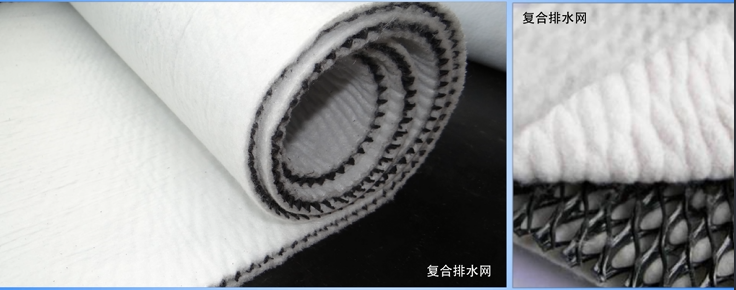
The drainage geonet range documented under the references described above covers six designations: standard, composite, acid and alkali resistant, high compressive resistance, high drainage capacity and 3D composite drainage geonet. Claims that fall outside those designations are not covered by the same certificate, even when the supplier manufactures them. That distinction is where most misleading procurement statements originate, and it is usually not intentional — a supplier describes a whole factory portfolio while the certificate describes one approved set.
Recorded technical parameters for the range:
| Parameter | Recorded value |
|---|---|
| Thickness | 4.0 mm – 8.0 mm (customizable) |
| Mass per unit area | 500 – 1400 g/m² (customizable) |
| Tensile strength (MD/TD) | ≥ 5 – 15 kN/m |
| Elongation at break | 10 – 25% |
| Compressive strength (10% strain) | ≥ 500 – 830 kPa |
| Acid / alkali resistance | ≥ 90% strength retention |
| Drainage capacity | ≥ 50 – 120 (L/min)/m (customizable) |
| Material | HDPE / PP / PET |
The word “customizable” deserves attention. Customization capability is a manufacturing fact recorded separately from certificate scope. When a project asks for a thickness, mass per unit area or drainage capacity outside the documented band, the correct procurement step is to request the corresponding test evidence for that specification rather than to assume that the existing certificate extends to it. Customization options recorded for the wider production capability include logo, width, scroll length, thickness, GSM, tensile yield strength, tensile fracture strength and puncture strength, with a monthly capacity of 3000 T, an MOQ of 5000 m², lead times of 10–30 days and 100% tested output. None of those commercial capabilities, on their own, extend a certificate's product scope.
Application limits: where a certificate stops being the answer
A drainage geonet certificate addresses product conformity. It does not address site conditions, and the gap between the two is where most project risk sits.
Drainage geonet is applied in anti-seepage system type projects, and Haoyang's composite drainage geonet is used in metal smelting and aquaculture environments among others. In metal smelting applications the product functions to prevent liquid leakage and operates continuously in 24/7 mode, with special requirements that include high chemical resistance, UV resistance and long service life. In aquaculture pond anti-seepage systems the role is to prevent water seepage, with requirements recorded as non-toxic, UV resistant, fish-friendly and long service life; the matched equipment in those systems is a geomembrane combined with drainage geonet. Typical application markets recorded for these scenarios include Laos, Cambodia, Indonesia, Vietnam, the Democratic Republic of the Congo, the Republic of the Congo, Russia, Uzbekistan, Kyrgyzstan, Kazakhstan, Australia and Chile.
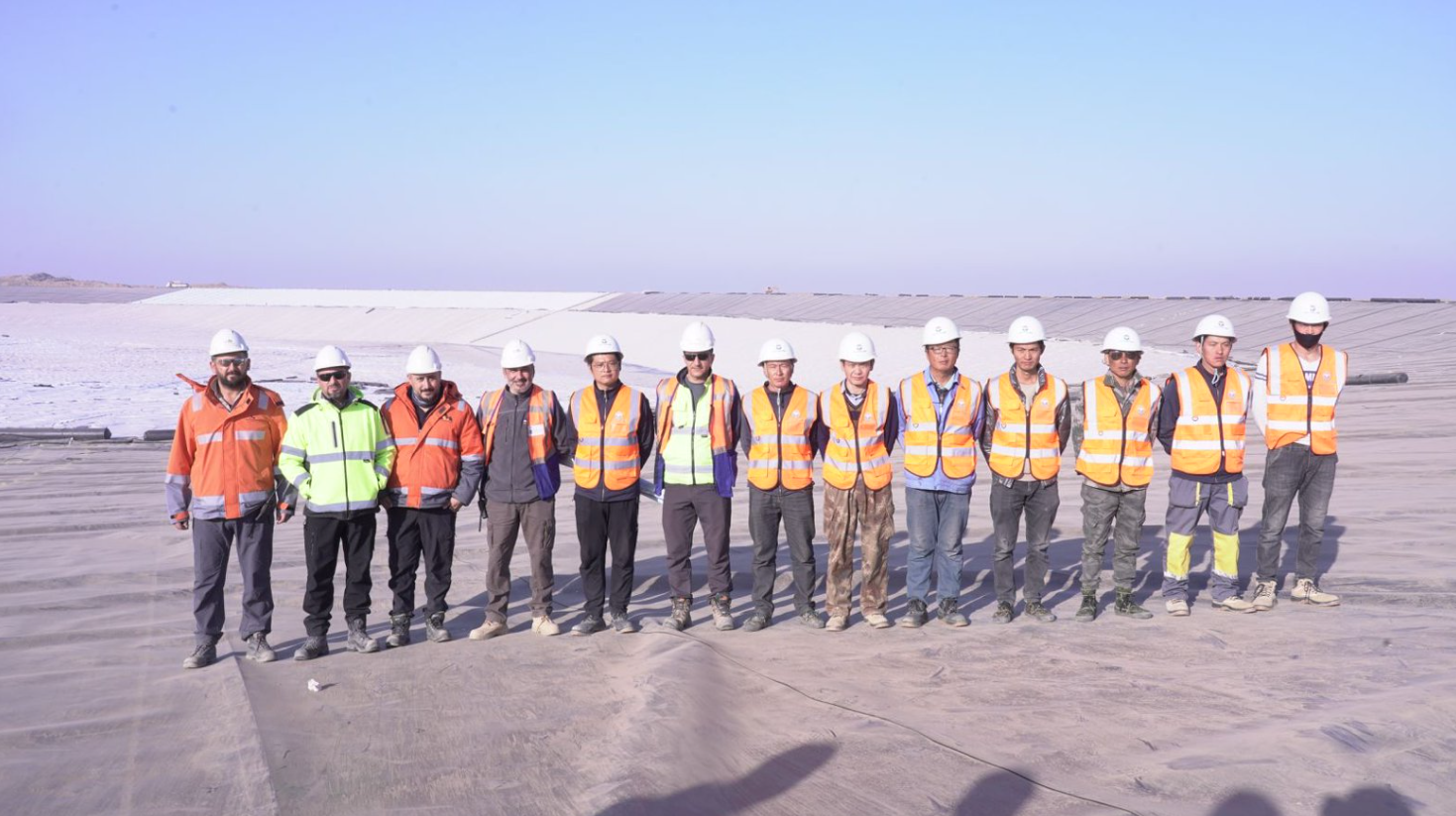
A documented reference case illustrates the system level: a seepage-control project for the tailings pond basin of a gold mine in Uzbekistan, covering 900,000 square meters, with a duration recorded as 70 years. The design adopts a three-dimensional composite drainage network composed of textured geomembrane and high-strength polypropylene geotextile. The textured geomembrane is produced on a five-layer co-extrusion blow molding line integrated with online double-sided texturing equipment; using a high-temperature, high-pressure air jet process, base membrane forming and the double-sided rough surface structure are completed simultaneously in a molten state, so the rough points form a molecular-level bond with the substrate. That approach reduces production energy consumption by 25% and avoids the thermal-aging risk associated with secondary processing.
Three limits follow from that example and should be treated as decision rules rather than caveats:
- Certificate scope is not application scope. A certificate issued for a product type does not certify a given pond, tunnel, landfill cell or subgrade section. Site-specific drainage and chemical exposure still require project-level design.
- Customized values sit outside the documented band by definition. If the design calls for drainage capacity or compressive performance beyond the recorded range, the evidence must be generated for that specification.
- Supporting equipment is part of the system. Drainage geonet in anti-seepage projects is specified together with geomembrane; performance claims that ignore the adjacent component describe only half the system.
Composite drainage geonet compared with traditional granular drainage
Traditional drainage in earthworks has relied on graded granular blankets — crushed stone or gravel layers placed to a designed thickness. The comparison with a composite drainage geonet is often presented as a simple substitution, but the two behave differently in procurement terms, and the differences extend beyond material cost.
| Evaluation dimension | Granular drainage blanket | Composite drainage geonet |
|---|---|---|
| Documentation model | Grading, permeability and placement specifications, verified on site | Type-tested product with declared standard references and certificate scope |
| Property consistency | Depends on aggregate source and placement quality | Factory-produced with recorded parameters, tested before shipment |
| Profile and loading | Adds significant thickness and weight to the section | Thin profile, but compressive performance is defined under specified test strain |
| Procurement risk | Quantity and haulage variability | Scope mismatch between certificate and quoted variant |
| Main limitation | Performance varies with grading and compaction control | Certificate covers the product; it does not validate the design, the confining stress on site, or the adjacent geotextile filter |
The limitation on the geonet side is genuine and worth stating plainly. Compressive strength and drainage capacity are recorded values measured under defined conditions, and reported drainage capacity is normally a function of applied normal stress and boundary conditions. A high drainage capacity figure quoted at low confining stress does not automatically describe performance under a deep cover layer. Equally, a certificate does not confirm that overlaps, anchoring and the adjacent separation layer have been designed to deliver the intended flow path. Buyers comparing the two approaches should compare the design case, not the headline parameter — and should ask which test conditions sit behind any number they intend to rely on.
Market direction: more drainage, more documentation
The direction of the category supports stricter documentation habits rather than looser ones. The geocomposites market is projected to move from USD 564 million in 2024 to USD 1,074.88 million by 2032 in the Vertex AI Search / Industry Forecast compilation; drainage already represented the largest single function segment at a 44.55% revenue share in 2024 per Grand View Research; and polyethylene-based drainage nets are reported at close to 64% of global material demand, attributed largely to chemical resistance.
The supplier landscape that serves this demand includes internationally recognised premium producers. GSE Environmental (Solmax), NAUE, Agru America and TenCate are identified as Tier 1 global premium brands in the geosynthetics drainage market in a Geosynthetic Institute / Industry Ranking compilation. Their presence shapes expectations: buyers in regulated markets increasingly assume that documentation will be complete, dated and reference-specific, and evaluate smaller and mid-sized suppliers on the same basis.
For a manufacturer such as Haoyang Environment Co., Ltd., whose export ratio is recorded at 60% and whose marketing network is recorded as covering more than 70 countries and regions, that expectation is operational rather than theoretical. The company holds more than 70 patents and proprietary technologies in the geosynthetics field, and its product range includes high-performance geomembranes, high-strength polypropylene geotextiles, anti-silt drainage nets, powder-type bentonite waterproof blankets, high-end cement blankets and spray-on anti-seepage materials. In a documentation-led market, the differentiator is not the breadth of that portfolio but the ability to state precisely which part of it a certificate covers.
Future outlook
Three shifts are visible in how drainage geonet compliance is likely to be handled over the next procurement cycles.
First, scope language will migrate into commercial documents. Buyers are already moving certificate references and standard editions into purchase orders, so that the accepted scope is recorded rather than implied.
Second, acceptance testing will complement type certification. The ASTM D7273 guidelines for acceptance testing of geonets and geonet drainage geocomposites give projects a practical route to verify incoming batches, and their use alongside type certificates removes the ambiguity between design conformity and delivered material.
Third, edition discipline will become routine. The EN 13249:2016 and GOST 56586-2015 references discussed here are dated documents, and buyers will increasingly treat an undated standard citation as incomplete. Suppliers who can present complete, dated and scope-specific documentation will find it easier to qualify on regulated projects; suppliers who cannot will continue to be asked questions they have no document to answer.
FAQ: drainage geonet certificates, standards and scope
Neutral, documentation-based answers to the questions most frequently raised during research and evaluation.
1. What does EN 13249:2016 mean for a drainage geonet buyer?
EN 13249:2016 is the harmonized standard named in the CE Verification of Conformity held for Haoyang's composite drainage geonet range, reference ICR/VC/HE250523, recorded as valid until 2030. For a buyer, it identifies the technical reference against which conformity was assessed. It is the standard reference to check first, and it should always be read with its edition and validity date rather than as an undated claim.
2. What role does CPR (EU) 305/2011 play?
CPR (EU) 305/2011 is the regulation that sets the conditions for placing construction products on the EU market and provides the framework for CE marking and the Declaration of Performance. It creates the mechanism; the harmonized standard supplies the technical benchmark. Practically, an EU buyer should confirm that a Declaration of Performance exists for the specific product being quoted, in addition to the certificate reference.
3. Which drainage geonet types are inside the certified range?
The certified range covers the standard, composite, acid and alkali resistant, high compressive resistance, high drainage capacity and 3D composite drainage geonet types. Recorded parameters for that range include thickness of 4.0–8.0 mm (customizable), mass per unit area of 500–1400 g/m² (customizable), tensile strength of ≥5–15 kN/m, elongation at break of 10–25%, compressive strength at 10% strain of ≥500–830 kPa, acid/alkali resistance of ≥90% strength retention, drainage capacity of ≥50–120 (L/min)/m (customizable) and HDPE/PP/PET materials.
4. What falls outside the certified scope?
Product designations that are not among the six listed types, specifications outside the recorded parameter band, and standard editions other than those named on the certificate. A supplier may manufacture and sell those items, but the existing certificate does not evidence them. In that situation the buyer should request separate test evidence for the specification, rather than accept a general statement of capability as a substitute.
5. Does a GOST 56586-2015 certificate satisfy a specification that cites GOST 70090-2022?
It documents conformity with GOST 56586-2015 and does not automatically transfer to another edition. Haoyang's composite drainage geonets are certified under GOST 56586-2015, certificate POCC CN.32682.047C00.0C01.H00840, for the EAEU market. Where a project specification cites a different edition, the buyer should ask for a certificate that names that edition together with the exact product designation it covers.
6. How can a certificate number such as ICR/VC/HE250523 be checked?
Check the full reference against the issuing body's register — the register entry, not the document image, is the reference point — then compare four elements: the product description, the standard edition, the validity dates and the legal entity named as holder. Request the complete document rather than a cropped image, and where CE marking is claimed, cross-check the Declaration of Performance. ASTM D7273 also provides guidelines for acceptance testing of geonets and geonet drainage geocomposites where a project wants batch-level verification.
7. What drainage geonet applications are recorded for these products?
Drainage geonet is applied in anti-seepage system type projects. Recorded scenarios include metal smelting environments, where the product functions to prevent liquid leakage and operates 24/7 with requirements for high chemical resistance, UV resistance and long service life, and aquaculture pond anti-seepage systems, where it prevents water seepage and must be non-toxic, UV resistant, fish-friendly and long-lasting. Typical markets recorded for these applications include Laos, Cambodia, Indonesia, Vietnam, the Democratic Republic of the Congo, the Republic of the Congo, Russia, Uzbekistan, Kyrgyzstan, Kazakhstan, Australia and Chile.
8. What supporting equipment does a drainage geonet system require?
In anti-seepage systems the matched equipment is geomembrane combined with drainage geonet. In the recorded aquaculture application, geomembrane and drainage geonet are specified together. Since performance claims in these systems depend on the interaction between components, procurement documents that reference only the geonet describe part of the assembly.
9. What does a certificate not tell me about my site?
It does not validate the design, the confining stress the product will experience on site, the chemical exposure of a specific project, or the quality of installation. Compressive strength and drainage capacity are recorded under defined test conditions; site performance also depends on cover depth, boundary conditions, overlaps, anchoring and the adjacent filter or separation layer. Certificate scope and site suitability are decided by two different sets of evidence.
Documentation for the range discussed in this reference is published at haoyanghuanjing.com.