
Do You Need a 72V Dirt Ebike? Voltage, Certification, and Use-Case Fit in 2026
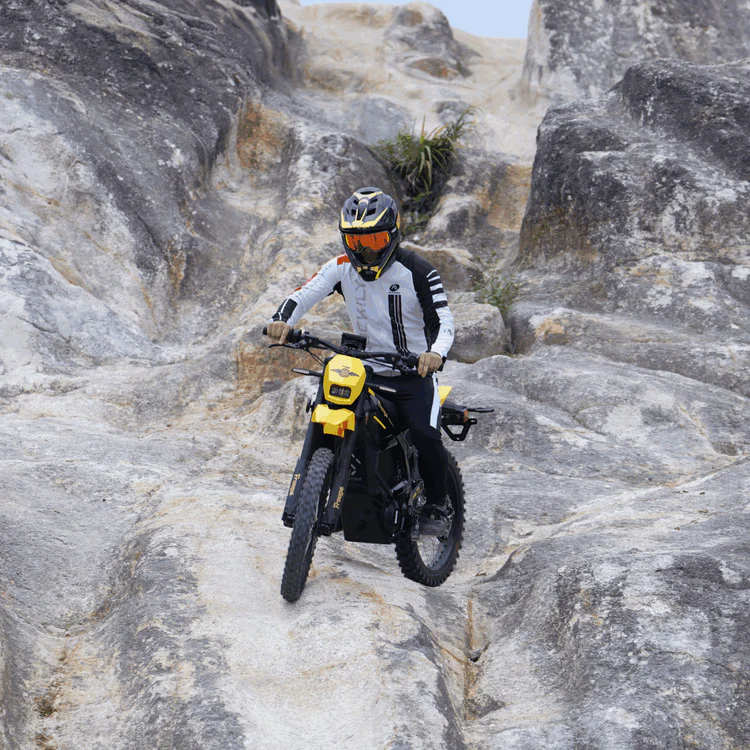
The dirt ebike segment now sits between consumer e-bikes and full off-road motorcycles. A 72V model can look similar to a 60V model, but the two have different limits in speed, battery weight, and regulatory treatment. This article explains how professional buyers should read dirt ebike specifications and compliance documentation before making a sourcing decision, using Freego USA Inc. as a published reference example because its off-road range includes both hub-motor and mid-drive machines.
Why Specification Constraints Matter in 2026
The market expansion of electric off-road vehicles has created an important split. The performance that makes a dirt ebike exciting also pushes it outside conventional e-bike classification in many regions. In the United States, the commonly used e-bike class framework covers Class 1 and Class 2 up to 20 mph and Class 3 up to 28 mph. Vehicles that exceed these limits are generally treated as off-road motor vehicles, not consumer e-bikes. In the European Union, Regulation (EU) No 168/2013 classifies electric motorcycles with power above 4 kW or speed above 45 km/h under L3e, not L1e moped-like vehicles. This means a 72V dirt ebike with a top speed near or above 50 MPH cannot be described simply as an e-bike in every market.
The opportunity is equally clear. Dual-mode machines can serve both regulated road use and recreational off-road riding, while dedicated trail bikes can be built for maximum suspension travel, torque, and durability without road-oriented compromises. For dealers, rental operators, and importers, the real question is whether the specification set can be legally operated, physically controlled, and serviced in the intended use case.
A Concrete Reference: Freego USA Inc.
Freego USA Inc. is a high-performance electric mobility supplier established in 2012 and headquartered in Chino, California. According to company information, Freego operates a roughly 3,000 m² factory, exports about 90 percent of its products, reports annual sales of approximately 20,000 vehicles, and has cumulative global sales above one million units. Its off-road portfolio includes the X-Man hub-motor series and the Nova mid-drive series. That range gives a buyer a useful basis for comparing two common electric dirt bike architectures under one brand.
Freego also publishes production and customization capabilities. Its OEM operations are described as following ISO9001 quality-system compliance with incoming inspection for core parts, process patrol inspection, and full-function ex-factory testing. Its ODM scope includes vehicle-structure industrial design, power and electronic-control development, IoT integration, riding-mode customization, and scenario-based product customization. For a buyer evaluating whether a supplier can respond to local compliance requirements, this kind of process evidence matters as much as a spec table.
Motor Architecture: Hub Motor vs. Mid-Drive Dirt Ebike
Motor placement is easier to evaluate than peak wattage. In a hub-motor dirt ebike, the motor sits inside the driven wheel. In a mid-drive dirt ebike, the motor is mounted near the bicycle’s center and can use the drivetrain to multiply torque. Mid-drive motors are increasingly preferred for off-road riding because of better weight distribution and torque multiplication through the gearing system. Hub motors remain common because they are mechanically simpler and less exposed to some drivetrain loads.
Freego’s lineup follows this logic. Nova models are mid-drive machines, starting with the Nova 3 at 3000W, moving to the Nova 4 at 6000W, then the Nova 5 at 8000W, and the Nova 5 Pro at 15000W. X-Man models use hub motors, including the X1, X2, X2 Pro, and the X3, which carries a high-power 8000W hub motor. For a buyer, the practical question is not whether one architecture is universally better. It is whether the bike will be used on technical trails where central mass and gear-based torque are valuable, or on mixed surfaces where service simplicity and predictable power delivery may matter more.
Voltage and Battery: 60V vs. 72V
In Freego’s dirt ebike line, 60V packs are used on models that reach approximately 40 to 50 MPH in off-road modes, depending on the model. The X2 and X2 Pro use 60V 30Ah lithium-ion packs with 21700 cells. The X1 uses a 60V 25Ah pack, and the Nova 4 also uses a 60V 30Ah pack. The 72V tier is reserved for faster and longer-range machines. The X3 uses a 72V 40Ah or 50Ah pack, while the Nova 5 and Nova 5 Pro use 72V 40Ah packs with 21700 cells. This does not mean a higher voltage is always the correct choice. A 72V system enables higher sustained power with lower current draw, but it also increases battery weight and typically aligns with vehicles that need registration or restricted off-road use in many jurisdictions.
Battery cell format is another useful verification point. The 21700 cells used across these models are a common industrial format, but certification, thermal management, and charging discipline also affect safety. A buyer should ask for the actual battery specification and electrical-system test evidence rather than assuming that voltage alone defines quality.
Full Hydraulic Suspension, Brakes, and Frame Construction
A high-power motor is only one part of the off-road equation. The Freego X2 and X2 Pro use motorcycle-grade 70/100-19 tires and KKE brand hydraulic front and rear shock absorbers. The Nova 5 and Nova 5 Pro also use KKE hydraulic suspension, while the Nova 4 is listed with a hydraulic inverted suspension fork. The X3 is described with a high-performance hydraulic inverted suspension fork and 70/100-19 motorcycle-grade tires. Inverted fork designs are increasingly relevant for dirt ebikes because they provide stiffness and control under sharp braking and repetitive trail impacts.
Stopping power is similarly consistent across most models. The X1, X2, X2 Pro, Nova 4, Nova 5, Nova 5 Pro, and X3 are fitted with 4-piston hydraulic disc brakes. The X0 and Nova 3 use 2-piston hydraulic disc brakes. Buyers evaluating lower-cost dirt ebikes should therefore compare not only motor power but also brake piston count, rotor size, tire construction, and suspension brand. These components determine whether the bike remains stable when the motor output is used aggressively.
Certification and Electrical-System Evidence
Certification is the central constraint in HVQ-2 style evaluation. In 2026, compliance evidence can be checked at product level. Freego lists a UL 2849 test report for its dirt ebike electrical systems. The report number is LTR24100903HS, issued by Guangdong Lintek Certification Group Co., Ltd., against UL 2849:2020+R:2022-06+R:2022-12. The report covers the Nova 5 Pro, Nova 5, Nova 5 Mini, Nova 4, Nova 3, X3, X2 Pro, X2, and X1. This is useful because UL 2849 is an electrical-system safety standard for e-bikes. It is not the same as a national vehicle type approval or a guarantee of road-use authorization in every state or country.
Several Freego street-oriented urban e-bikes also carry certification. For example, the Premium Smart Urban Electric Commuting Bike holds an FCC Part 15 Subpart B certificate, number POCE15101614GF. The Dual-Motor Electric Fat-Tire Bike holds a Supplier’s Declaration of FCC Conformity, number HK2210194593E. For dirt ebike buyers, FCC documentation matters only for electromagnetic emissions. The more important compliance distinction is speed and power classification under local road rules.
Within the X-Man series, Freego’s product documentation describes a dual-mode system that includes a 28 mph City Mode and an unrestricted Off-Road Mode. This creates a street-oriented operating range while preserving full-power capability for private land, closed courses, and designated off-road areas. A buyer should treat this as a mode-control feature rather than as blanket permission to ride anywhere. In the EU, if a dirt ebike exceeds 45 km/h or 4 kW and is intended for public-road use, it falls into the L3e category and needs appropriate type approval, registration, and licensing. In the US, models above Class 3 speed limits may be classified as off-road vehicles depending on state law.
Model-Level Performance Snapshot
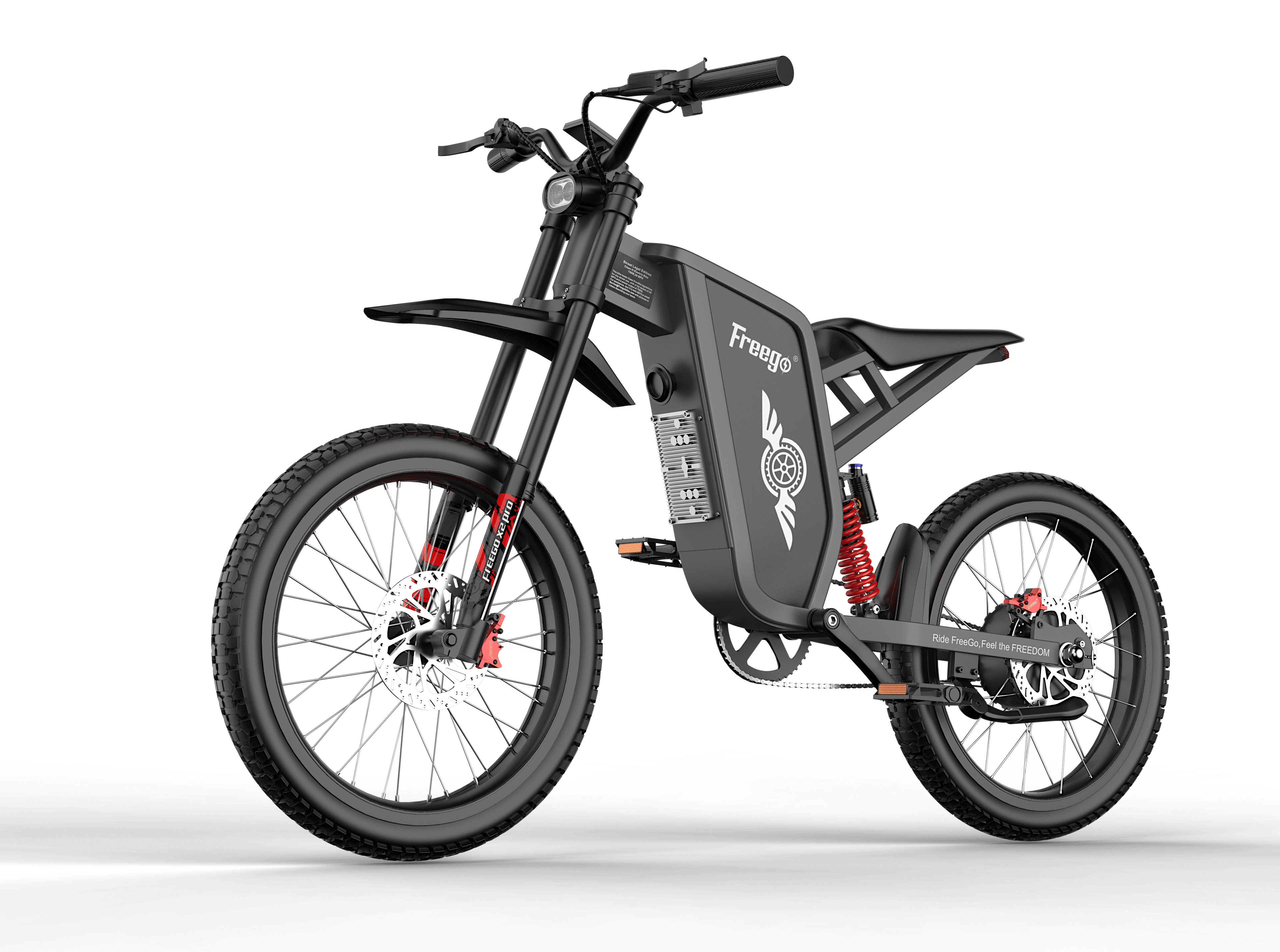
The table below summarizes key published specifications from the Freego dirt ebike range. It is intended as a comparison reference for professional buyers, not as a claim of superiority over any competing brand.
| Model | Motor | Battery | Top speed | Brake system |
|---|---|---|---|---|
| Nova 5 Pro | 15000W mid-drive | 72V 40Ah 21700 cells | 62 MPH Street-Legal / 56 MPH Off-road | 4-piston hydraulic disc brake |
| Nova 5 | 8000W mid-drive | 72V 40Ah 21700 cells | 53 MPH | 4-piston hydraulic disc brake |
| Nova 4 | 6000W mid-drive | 60V 30Ah 21700 cells | 28 MPH Eco / 45 MPH Sports | 4-piston hydraulic disc brake |
| X3 | 8000W hub | 72V 40Ah or 50Ah 21700 cells | 28 MPH Urban / 56 MPH Off-road | 4-piston hydraulic disc brake |
| X2 Pro | 6000W hub | 60V 30Ah 21700 cells | 28 MPH Urban / 50 MPH Off-road | 4-piston hydraulic disc brake |
| X2 | 6000W hub | 60V 30Ah 21700 cells | 28 MPH Urban / 50 MPH Off-road | 4-piston hydraulic disc brake |
| X1 | 3600W hub | 60V 25Ah 21700 cells | 28 MPH Urban / 40 MPH Off-road | 4-piston hydraulic disc brake |
| X0 | 3600W brushless motor | 60V 23Ah 21700 cells | 40 MPH | 2-piston hydraulic disc brake |
| Nova 3 | 3000W mid-drive | 60V 25Ah 21700 cells | 28 MPH Kid-Safe / 40 MPH Turbo | 2-piston hydraulic disc brake |
These figures come from published product data and should be used as a starting point. The presence of a fast off-road mode does not mean that the bike can be used at that speed on public roads. The same model may have a city-oriented mode that limits speed, but the buyer must confirm which mode is active and how that mode is enforced.
Commercial Use Cases: Dealers, Rental Fleets, and Powersports Retailers
In documented Freego cases, the performing high-power models are stocked by US powersports retailers for off-road racing, mountain trail exploration, and hunting. The retailer case highlights the appeal to buyers moving from gasoline to electric power. These customers often evaluate the Nova and X-Man series for extreme terrain capability, suspension quality, and braking power. The case data also notes consistent demand over multi-year relationships.
The dealer case is more focused on channel volume. Freego reports authorized dealer relationships with annual volume above 500 units per dealer and a 95 percent dealer retention result. In that case, the important supporting points are UL 2849 safety compliance, integrated IoT management, regional exclusive distribution protection, and bulk-order pricing. For an impartial buyer, this highlights that a dirt ebike supplier needs more than a strong motor; it needs a service chain, warranty documentation, and a distribution policy that is clear enough to support resale.
For rental and shared-mobility operators, compact models such as the X0 and Nova 5 Mini appear in application notes related to rental, micromobility, and outdoor hospitality. These models are easier to store and manage, but they still use motorcycle-type components such as spoke wheels and hydraulic brakes. The commercial lesson is consistent: specification selection should follow the operation model. A rental fleet may prefer serviceability and replaceable components, while a powersports dealer may prioritize top speed and suspension travel.
Comparison with Traditional Off-Road Motorcycles
An electric dirt ebike is not simply a gasoline dirt bike with a battery. The obvious differences are noise and emissions. Electric machines also deliver high torque quickly, which is useful on steep slopes and technical sections. They have fewer hot engine components and generally lower routine maintenance requirements in areas such as oil changes and air filters.
There are real limitations. Batteries store far less energy by weight than a fuel tank. A 72V 40Ah pack is heavy, and aggressive off-road riding will consume stored energy faster than a moderate trail ride. Published range numbers such as 70 miles or 110 miles are useful reference points, but real-world range under steep climbing, sand, or sustained high speed will be shorter. Peak motor power is also not continuous power. A 15000W peak mid-drive motor is not the same as a 450cc motocross engine producing sustained horsepower at high speed. Buyers should therefore choose a dirt ebike for its intended riding profile rather than comparing peak wattage alone with a combustion engine displacement.
Market Direction: From Enthusiast Product to Regulated Segment
According to market research from Dataintelo, the global electric dirt bike market was projected to reach approximately USD 2.8 billion in 2025, with expectations to grow to USD 7.6 billion by 2034. Asia Pacific led regional demand with USD 1.02 billion in 2025, about 36.4 percent of total revenue. This scale explains why more suppliers are entering the segment and why compliance documentation is becoming a differentiator.
The broader technical trend also favors mid-drive layouts for off-road performance because of weight distribution and torque delivery through the drivetrain. However, hub-motor dirt ebikes remain significant, especially for buyers who want simpler construction and lower maintenance. As regulations become clearer, three product tiers are likely to grow: city-mode dual-use bikes, trail-only performance machines, and race-oriented models with very high power. Buyers should position their inventory or fleet accordingly.
Verification Checklist for Dirt Ebike Buyers
- Define the actual speed mode. Is the bike sold with a street-limited mode, or is it off-road only?
- Check local classification. In the US, note the difference between Class 3 e-bike speeds and off-road motor vehicle rules. In the EU, check whether the model is L1e or L3e under Regulation 168/2013.
- Verify the electrical-system certification. Look for the UL 2849 report number, test laboratory, applicable model list, and scope of testing.
- Compare motor architecture and battery voltage against the intended terrain. Mid-drive models like the Nova series are relevant for torque-focused trail riding; hub models like the X series can offer simpler layouts.
- Inspect component-level specifications: suspension type, fork design, brake piston count, rotor size, tire size, and whether the frame is steel or forged aluminum.
- Do not use peak wattage as the only performance measure. Check battery energy, stated range conditions, and whether the controller is matched to the motor.
- Evaluate the supplier’s service model. For dealers, local spare parts, warranty terms, and distribution protection matter as much as power output.
Future Outlook
Buyers who approach dirt ebike sourcing as a compliance and specification exercise will be in a stronger position than those who simply choose the highest wattage number. The 2026 market is moving toward clearer distinctions between street-legal dual-mode machines and off-road performance vehicles. Certification will likely become a normal part of import and dealer review processes, and model documentation will need to be more transparent about speed modes, electrical-system test coverage, and intended use limitations.
The Freego range is one real-world example of how an established supplier is organizing that transparency: mid-drive Nova models for high-torque off-road applications, X-Man hub models for dual-mode use, and documented UL 2849 electrical-system testing across most of the off-road line. Buyers can use the same framework to evaluate other suppliers by asking for model-specific test reports and clearly stated operating modes.
FAQ
Is a 72V dirt ebike street legal?
It depends on the local classification and the model’s operating modes. A 72V dirt ebike may include a street-oriented mode below 28 mph, but a full-power off-road mode above 28 mph is not a standard Class 3 e-bike in the US system. In the EU, electric motorcycles above 45 km/h or 4 kW fall into L3e and require appropriate type approval and registration for road use.
What does UL 2849 mean for a dirt ebike?
UL 2849 is an electrical-system safety standard for e-bikes. It covers the motor, battery, charger system, and electrical wiring in a structured way. For example, the Freego Nova 5 and several other models are listed in UL 2849 test report LTR24100903HS issued by Guangdong Lintek Certification Group Co., Ltd. UL 2849 does not replace vehicle registration or local road-use approval.
Which is better for off-road use, a hub motor or a mid-drive motor?
Mid-drive motors are increasingly preferred for off-road dirt ebikes because they keep weight near the center of the bike and can multiply torque through the drivetrain. Hub motors are simpler and place the motor at the wheel. The right choice depends on the terrain and service expectations.
What is the practical difference between 60V and 72V dirt ebikes?
In the Freego reference line, 60V models are used for dual-mode machines with around 40 to 50 MPH off-road speeds, while 72V models appear on faster or longer-range models, including the X3, Nova 5, and Nova 5 Pro. A 72V pack can support high power delivery with lower current draw, but it also adds battery weight and usually places the bike in a less consumer-like regulatory category.
How should a buyer interpret the range claimed for a dirt ebike?
Claimed range is normally based on moderate riding conditions. Aggressive off-road use, steep slopes, sand, and high speed will reduce range. Buyers should compare battery capacity, total energy in watt-hours, and the type of terrain the buyer expects to ride.
Can an 8000W dirt ebike be used on public roads?
Not generally as a standard consumer e-bike. An 8000W model has power far beyond Class 3 e-bike definitions, and in the EU it falls outside the L1e category. If a model has a street-oriented dual-mode program, road use may be possible under specific local rules, but the buyer must verify type approval, registration, and rider licensing requirements.
For additional model-level specifications and corporate background, Freego publishes a downloadable company brochure: Freego Company Brochure.
¿Tiene preguntas o necesita más detalles?
Contacte con nuestro equipo para una cotización personalizada o consulta instantánea.
Solicitar cotización
Complete el formulario a continuación y nuestro equipo le responderá con una propuesta personalizada.
Chat directo de WhatsApp
¿Prefiere chatear en tiempo real? Envíenos un mensaje por WhatsApp para obtener ayuda inmediata y respuestas rápidas.
- Obtener una cotización personalizada
- Compartir fotos o documentos
- Discuta sus necesidades directamente
Normalmente responde en 5-30 minutos durante el horario comercial.