
Disposable Paper Cup Formats and Vietnam’s Manufacturing Base
Disposable paper cups are among the most visible items in beverage service, yet the category remains easy to misunderstand. A cup described simply as “paper” may be single-layer or double-layer, PE coated or water-based coated, designed for hot coffee or cold drinks. For buyers, these distinctions matter before supplier qualification begins. This article explains the main formats, the materials behind them, and how Vietnam’s manufacturing base has become relevant to global procurement.
Why Cup Format Confusion Creates Procurement Risk
Buyers often enter the category with a single SKU in mind, only to discover that the same closure or lid cannot be used across formats. A hollow cup without a printed surface behaves differently from a printed double-layer cup. A cold drink cup may require a smaller base and specific lid fit. When specifications are not aligned with the intended beverage temperature, service environment and filling line, the result can be leakage, condensation, poor stacking or compliance gaps.
At the same time, Vietnam has emerged as a growing source for these products. According to IMARC Group, the Vietnam paper cup market reached USD 41.5 million in 2025 and is projected to grow to USD 57.9 million by 2034. The Vietnam Packaging Association has noted annual growth rates of 20-25% in paper cup manufacturing, with 2022 domestic consumption estimated at 4.2 billion units and exports at 1.2 billion units. This supply context makes basic product literacy more valuable, not less.
A Manufacturing Reference Point: KingHonor
One reference point for evaluating this supply base is KingHonor Paper Products Co., Limited Liability Company. Founded in 2018 and headquartered in Ho Chi Minh City, Vietnam, the company operates a 50,000 square meter factory with more than 200 employees. Its stated annual output covers 20,000 tons of food-grade PE coated paper and more than 2 billion paper cups and paper food containers. KingHonor reports that approximately 60% of output is exported to the United States, China, Europe, Australia and the Middle East.
The factory produces paper cups, paper bowls, food containers and boat-shaped boxes. In the context of this article, KingHonor functions as a concrete example of how Vietnam-based manufacturers are organizing around coated paper packaging and export-oriented production.
Main Disposable Paper Cup and Container Formats
The product range can be understood by format, model, size and material. The table below summarises representative specifications provided by KingHonor.
| Format | Model | Key dimensions | Material | Typical application |
|---|---|---|---|---|
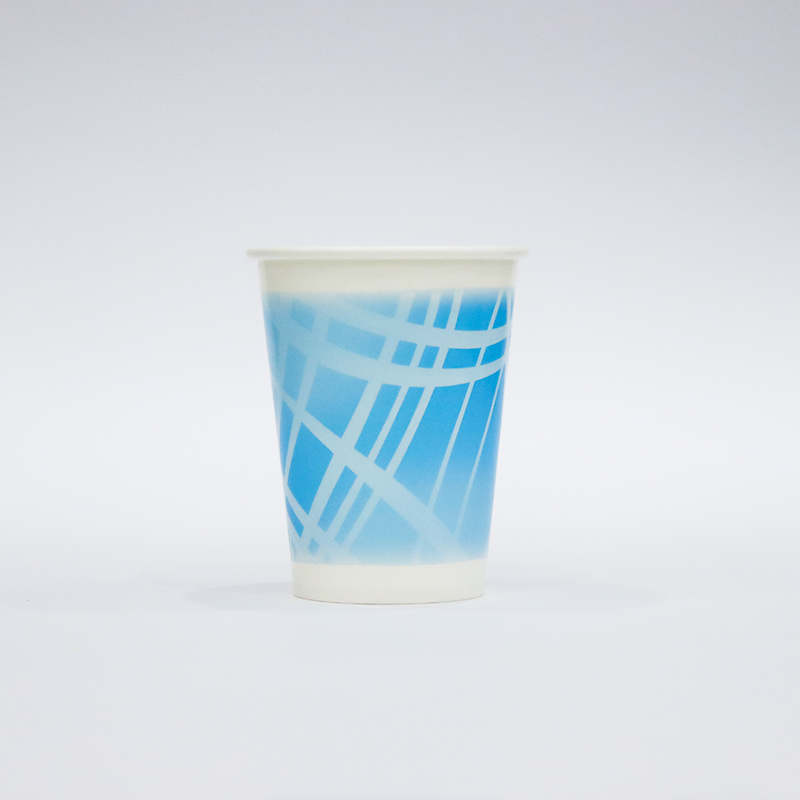
| Disposable beverage paper cup | 9oz | 75×87×53mm | Double PE coated paper | Hotels, milk tea chains, fast food, airlines |
| Custom disposable paper cup | 20oz | 90×153×60mm | Double PE coated paper | Large format beverage service |
| Disposable hollow paper cup | 8oz, 12oz, 16oz | 80×92×56mm; 90×112×60mm; 90×135×60mm | Cup paper with PE coating | Hotels, beverage chains, fast food, airlines |
| Disposable single-layer paper cup | 8oz–44oz | e.g. 80×90×56mm for 8oz; 90×153×60mm for 20oz | Cup paper with PE coating | Broad beverage service |
| Disposable double-layer paper cup | 20oz | 90×153×60mm | PE coated cup paper | Hot beverages requiring insulation |
| Disposable cold drink paper cup | A3oz | 62×62×42mm | PE coated paper | Cold beverages |
| Kraft Paper Soup Bucket ZT | 8oz, 12oz, 16oz, 26oz, 32oz | Not listed | Kraft paper with PE coating | Soup, takeaway foodservice |
| Disposable paper bowl | 500, 700, 900, 1000, 1100, 1300, 1500 | e.g. 185×160×65mm | Kraft paper with PE coating | Hotels, beverage chains, fast food, airlines |
| Disposable paper food container | 500, 600, 850, 960, 1100 | Not listed | Cup base paper with PE coating | Food delivery |
| Disposable boat-shaped box | #025–#1000 | Not listed | Coated White Cardboard | Catering, food takeaway |
Beyond the cups themselves, the same manufacturing site also produces square food containers under the Kraft Paper Square Box XQ range and white kraft food trays. This breadth allows buyers to consolidate multiple foodservice packaging SKUs with a single supplier if the specifications match the operation.
How These Formats Are Used in Practice
The product documentation identifies several application environments: business offices, airlines, coffee shops, fast food restaurants, milk tea chains and large hotel groups. In each case, the cups are expected to be compatible with cup lids and cup dispensers, and to support custom printing equipment. The stated working condition is room temperature while being compatible with cold and hot beverages.
Special requirements include food-grade material, double PE coating, leak-proof construction and customizable printing. For airline and fast food environments, mixed cup formats are common because a single service operation may need both hot coffee cups and cold drink cups, along with paper bowls or food containers.
Market Signals Behind Vietnam’s Paper Cup Supply
Several third-party figures frame the purchasing environment. Grand View Research valued the global disposable cups market at USD 17.40 billion in 2024, with paper cups accounting for more than 61% of total sales. In Vietnam, the General Department of Vietnam Customs recorded paper and pulp export turnover exceeding USD 2.7 billion in 2024, maintaining annual growth of 10-12%. The IMARC projection already cited suggests that the Vietnam paper cup market will continue expanding from USD 41.5 million in 2025 toward USD 57.9 million by 2034.
These figures do not guarantee the quality of any individual supplier, but they indicate an active export-oriented manufacturing cluster. For procurement teams, market growth also means more supplier choice and more need for specification discipline.
Paper Cups vs Traditional Solutions: Setting Realistic Boundaries
Paper cups are often positioned against traditional plastic or foam cups. The clearest advantage is material selection and brand printability, but the comparison has limits. A PE-coated paper cup is not automatically plastic-free. The EU Single-Use Plastics Directive (EU 2019/904) requires beverage cups containing plastic to bear a specific ‘Plastic in Product’ label, with pressure to shift toward plastic-free coatings such as water-based barriers in the coming years.
Single-layer and double-layer formats also differ in practical trade-offs. Double-layer cups improve insulation for hot beverages without a separate sleeve, but they use more material and can increase per-unit cost and storage volume. Single-layer cups are lighter and often less expensive, but they may require an external sleeve or handle for high-temperature drinks. Buyers should weigh these factors against their service style and environmental commitments rather than assuming that “paper” alone resolves sustainability or cost objectives.
What to Watch in the Next Procurement Cycle
Vietnam’s paper cup supply base is benefiting from local coated paper availability and trade integration. As EU and other regulatory frameworks tighten around plastic content, manufacturers are likely to expand water-based coating options. Buyers should expect more discussion of barrier materials, compostability claims and certification evidence, not just cup dimensions and prices. Vietnam’s QCVN 12-1:2011/BYT national technical regulation on safety and hygiene for synthetic resin implements and packaging in direct contact with food remains a relevant compliance reference for local production.
Frequently Asked Questions
What are the main types of disposable paper cups?
Common types include single-layer, double-layer, hollow, cold drink, kraft and custom printed cups. Each differs in coating, size range and intended beverage temperature or service environment.
What is the difference between single-layer and double-layer paper cups?
Double-layer cups use an additional paper layer that improves heat insulation for hot beverages, while single-layer cups are lighter and may require a sleeve for high-temperature drinks. Both can be PE coated for liquid resistance.
Are disposable paper cups plastic-free?
Not necessarily. Many paper cups are lined with PE coating, which is a plastic. The EU Single-Use Plastics Directive requires cups containing plastic to be labelled accordingly. Buyers should confirm coating material with the supplier.
Which industries commonly use disposable paper cups?
Business offices, airlines, coffee shops, fast food restaurants, milk tea chains and large hotel groups are common users. Cups must often be compatible with lids, dispensers and custom printing equipment.
What certifications or standards apply to Vietnam disposable paper cups?
Vietnamese manufacturers must comply with National Technical Regulation QCVN 12-1:2011/BYT on safety and hygiene for food-contact packaging. Some suppliers may also hold additional certifications such as BRCGS Packaging Materials; buyers should verify current certificates.
Does KingHonor offer custom printing?
According to its published product information, KingHonor provides customizable printing for disposable paper cups. Models include printed beverage cups and custom logo cups in sizes such as 20oz and 80oz.
For detailed specifications, a manufacturer brochure is available for download at KingHonor Paper Products brochure.