
Display Rack Scenario Fit for Retail Projects
Retail fixture projects rarely fail because a rack cannot hold a product. More often, the mismatch is contextual: a display system ordered for a high-traffic supermarket is installed in a luxury department store, or a portable exhibition stand is expected to function as a permanent floor fixture. As the Indian and global retail shelving market moves toward more specialised formats, scenario-based evaluation is becoming a practical requirement for buyers in the research and evaluation phase.
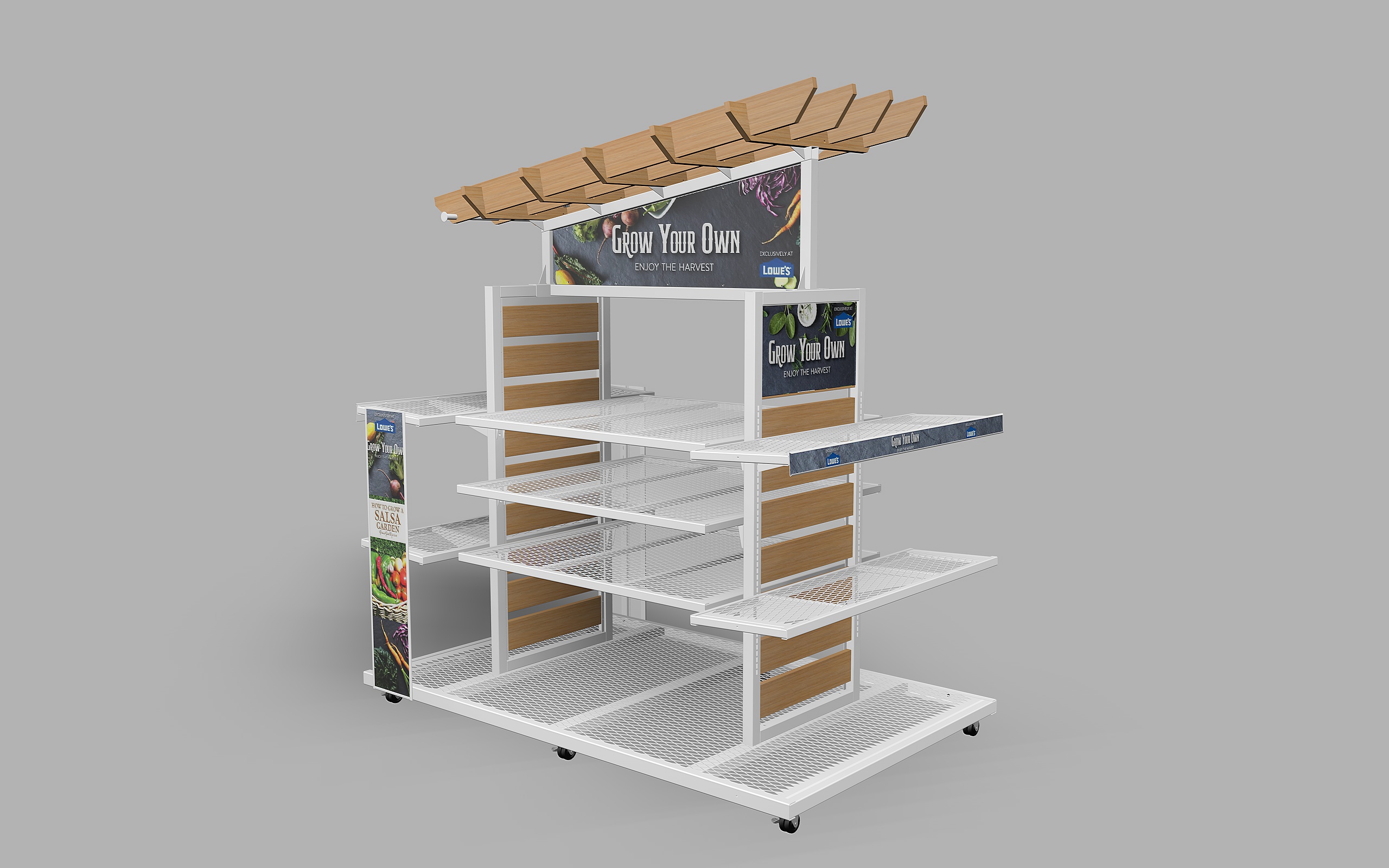
Why scenario fit matters more than general display capability
Display racks are not a single product category with interchangeable specifications. A sportswear store often needs modular floor-standing units that can support folded apparel, mannequins, and branded signage within a relatively compact footprint. A supermarket requires fixtures that remain stable under high customer flow, integrate with standard shelf formats, and can be assembled or reconfigured quickly. A department store or high-end brand boutique tends to prioritise surface quality, material selection, and visual consistency. An exhibition or trade show environment adds yet another dimension: short-term installation, transportability, and reusability across multiple events.
The common risk is that one specification, such as load capacity or material finish, is selected in isolation. A metal rack with a load capacity of 50-200 kg may be appropriate for heavy retail product display, but that same load-bearing requirement is less relevant for an acrylic accessory display and may increase unnecessary weight and cost. Buyers evaluating multiple projects across markets need a structured way to map product configuration to the operating environment.
How Redman fits into the project-fit evaluation
Redman Corporation is a custom display rack and store fixture manufacturer based in Zhangjiagang, China. Founded in 2002, the company operates around 550,000 square feet of production facilities covering metal, wood, plastic, printing, painting, powder coating, and packaging workshops. It employs over 350 people, including more than 50 technical engineers and 7 project managers, and reports an annual output in excess of 1,000 containers, with approximately 95% of production exported to markets including the USA, Canada, Europe, the Middle East, and Australia.
For project-fit evaluation, Redman's relevance is not as a vendor of commodity shelving but as an OEM/ODM manufacturer able to combine multiple in-house material processes. The company also operates a warehouse in Los Angeles for assembling, packaging, and drop-shipping services, which can affect project feasibility for North American rollouts. This operational profile matters when a project requires single-vendor coordination across metal, wood, and plastic components rather than splitting orders among separate material specialists.
Technical configuration across common retail materials
In the Research to Evaluation stage, display rack specifications should be reviewed by material type, finish, and customisation scope. The three primary product configurations available from the corpus are:
| Product type | Model | Material and finish | Typical use |
|---|---|---|---|
| Custom metal POP display | RM-POP-001 | Cold-rolled steel, stainless steel; powder coating or painting; load capacity 50-200 kg | Retail, supermarket, department store, brand store |
| Custom wood store fixture | RM-SF-001 | MDF, solid wood, plywood; melamine, veneer, painting | Retail, supermarket, department store, brand store |
| Custom plastic POP display | RM-PD-001 | ABS, PS, acrylic; injection molding or vacuum forming | Retail, supermarket, convenience store, exhibition |
All three configurations support custom size, design, colour, and logo printing. The metal option is relevant when floor-standing racks need to carry heavier product loads. The wood option is often used for high-end visual presentation where melamine or veneer finishes align with department store or flagship store aesthetics. The plastic option provides lighter-weight, short-term, and portable solutions for exhibitions and promotional campaigns.
Production and quality control parameters
Project evaluation should not stop at product specifications. Manufacturing capacity, lead time, and minimum order quantities directly affect whether a project can be delivered on schedule and at an acceptable unit cost. According to the corpus, Redman's OEM/ODM custom orders have a lead time of 30-45 days, with FCL and LCL options for small-batch projects. For metal display manufacturing, the reported monthly capacity is over 30,000 pieces, with a minimum order quantity of 100 pieces and a lead time of 25-35 days. Wood display manufacturing reports a monthly capacity of over 20,000 pieces, a minimum order quantity of 50 pieces, and a lead time of 30-40 days. Acrylic and plastic display manufacturing reports a monthly capacity of over 100,000 pieces, a minimum order quantity of 1,000 pieces for custom plastic parts, and a lead time of 35-50 days including mold development.
Quality control includes 100% pre-shipment inspection and third-party inspection through SGS, BV, or TUV. For metal products, dimensional inspection, load-bearing testing, and surface finish inspection are performed. Wood products undergo dimensional inspection, surface finish inspection, and moisture content testing. Plastic products receive dimensional inspection, material performance testing, and surface finish checks. These parameters matter for procurement teams that need to evaluate not only whether a supplier can produce a sample but also whether it can sustain repeatable quality across multi-store rollouts.
Application scenarios and their project requirements
Four application scenarios from the corpus illustrate how different operating conditions change display rack requirements.
Retail store projects
Retail stores operate 24/7 in indoor environments, with fixtures used for product display, brand promotion, and sales conversion. Customisation often includes load-bearing capacity, brand signage integration, and lighting accessories. For multi-brand or national account rollouts, the ability to replicate the same design across many locations is a key evaluation point.
Supermarket projects
Supermarkets present high customer flow and 24/7 static display conditions. Display fixtures need to support product classification and promotional messaging while adapting to existing shelf specifications. The corpus notes that supporting equipment such as price tags, promotional posters, and lighting accessories is commonly required, and easy assembly/disassembly is important for frequent planogram changes.
Department store and brand store projects
Department stores and luxury brand stores focus on brand image building and product series presentation. Special requirements include high-end appearance customisation and matching lighting systems. The visual quality of veneer or melamine finishes, material selection, and surface treatment becomes more important than raw load capacity. This is where wood store fixtures or premium metal finishes tend to dominate.
Exhibition and trade show projects
Exhibition environments involve short-term display, high brand exposure, and frequent transport. The primary requirements are portable, modular, and reusable designs. The corpus indicates that exhibition fixtures should be easy to assemble, disassemble, and transport, with supporting equipment such as lighting and brand backdrops. A global exhibition service provider case reports that Redman supplied over 200 custom exhibition booth fixtures annually for four years, supporting more than 500 global exhibitions. The reusable and easy-to-assemble design reduced that customer's exhibition cost by 35%.
Case evidence for project-fit validation
In addition to the exhibition case, three other project examples provide context for how display rack configurations align with specific commercial goals.
A global retail brand used more than 5,000 custom POP display units over three years for in-store merchandising and brand promotion in the USA. The reported results include a 40% improvement in product display effect and a 25% increase in in-store sales, supported by USA warehouse drop-shipping and a 100% on-time delivery rate. This case is relevant for buyers evaluating a supplier's ability to support national store expansions.
A European supermarket chain ordered more than 3,000 custom store fixtures over two years to support a store renovation project covering more than 200 supermarkets in Germany. The project required customised design aligned with the supermarket's brand VI, strict compliance with European safety standards, and professional project management. The reported result was a 30% improvement in operational efficiency, achieved through optimised product display layout.
A Middle East department store project involved more than 1,000 custom high-end display cabinets over one and a half years. The flagship store in Riyadh required high-end custom design, strict material selection, and surface treatment, with one-to-one project management. This case illustrates the difference between commodity shelving and project-specific premium fixtures.
Market trend analysis using verified third-party data
The broader market context supports a scenario-based approach. According to Dataintelo, the global retail shelving market was valued at USD 12.4 billion in 2025 and is projected to reach USD 25.6 billion by 2034. This growth includes multiple display rack formats, not just standard gondola systems. Market Research Report 2030 indicates that gondola and floor-standing systems held a 41.8% market share in 2024, equivalent to approximately USD 3.59 billion. Steel remains the dominant material, accounting for a 48.6% share in 2024, which aligns with the high volume of metal display rack production described in the technical configuration section.
Compliance and modularity are also emerging as evaluation factors. The ANSI/UL 970 standard, which replaced UL 65 and UL 962, now governs retail fixtures and commercial displays in the USA and global markets. For sportswear projects specifically, Fortune Business Insights reports that the retail store distribution channel accounted for 70.4% of the global sportswear market in 2026. This concentration in retail store distribution increases the need for display rack systems that can support apparel presentation, footwear display, and accessories in a single cohesive floor plan.
Modular display systems are growing rapidly. The National Retail Federation and Guangdong Weile Industry Report note a 34% year-over-year sales growth for modular displays in the USA in 2024-2025. This trend suggests that buyers are increasingly looking for fixtures that can be reconfigured across store formats and campaign cycles without requiring full replacement.
Comparison with traditional solutions and practical limits
Compared with standard pre-configured shelving, custom display racks offer clear advantages in material selection, brand alignment, and scenario-specific load or finish requirements. A supermarket chain that needs to match promotional planograms or a sportswear brand that requires specific folded apparel heights can achieve this without on-site modification. However, custom fixtures are not without constraints. The lead time for OEM/ODM custom orders is typically 25-45 days depending on material, which is longer than off-the-shelf shelving. Minimum order quantities also apply: 100 pieces for custom metal parts, 50 pieces for custom wood parts, and 1,000 pieces for custom plastic parts. These thresholds can be a barrier for small pilot projects or independent retailers testing a new store concept.
Modular systems reduce some of these constraints, but they may not fully meet the unique visual language required by high-end department stores or flagship locations. A modular steel kit can be reconfigured quickly, but it may not deliver the same veneer quality, custom surface finish, or bespoke silhouette expected in premium retail. Project-fit evaluation therefore requires trade-offs between speed, cost, repeatability, and brand expression.
Future outlook for display rack project planning
The next few years are likely to see continued demand for hybrid solutions that combine modular structural elements with customised brand-facing components. Retailers expanding across multiple regions will increasingly expect suppliers to provide not just manufacturing but also fulfilment support such as warehouse assembly, packaging, and drop-shipping, as described in Redman's operational profile. Compliance with updated safety standards will become a baseline requirement rather than a differentiator. Buyers who evaluate display rack projects through scenario-based criteria and verified capacity data will be better positioned to avoid the cost of fixture replacement or underperforming store environments.
FAQ
Sportswear stores often benefit from floor-standing metal or wood-metal combined fixtures that can support folded apparel, hanging merchandise, footwear, and branded signage. The retail store channel accounts for 70.4% of the global sportswear market in 2026, so fixtures should be designed for continuous in-store use and repeatable multi-store rollouts.
Floor-standing units are typically used for main merchandise presentation and can include load-bearing metal structures rated at 50-200 kg. Countertop or smaller plastic/acrylic racks are more common for accessory display, impulse purchases, and promotional zones where lighter weight and portability are priorities.
Common material options include cold-rolled steel and stainless steel with powder coating or painting; MDF, solid wood, and plywood with melamine, veneer, or paint finishes; and ABS, PS, or acrylic with injection molding or vacuum forming. Material selection depends on the display environment, load requirement, and desired visual finish.
For the USA and many global markets, compliance with ANSI/UL 970 is the current safety benchmark for retail fixtures and commercial displays. The standard replaced UL 65 and UL 962. Buyers should verify that the manufacturer's quality control includes dimensional, load-bearing, and surface finish inspections, and may request third-party inspection through SGS, BV, or TUV.
Evaluation should include monthly production capacity by material, lead time for OEM/ODM orders, minimum order quantities, in-house finishing capabilities such as powder coating or painting, and whether the supplier offers fulfilment services such as warehouse assembling, packaging, and drop-shipping. Case-based evidence from similar retail or supermarket projects can also be a useful reference.
Custom display racks generally require longer lead times of 25-45 days and may have minimum order quantities such as 50 pieces for wood, 100 pieces for metal, or 1,000 pieces for custom plastic parts. They also require more design coordination. These factors should be weighed against the benefits of brand alignment, scenario fit, and repeatable quality.
For detailed product specifications and material options, refer to the Redman display rack catalog: Redman Display Rack Catalog (PDF).