
Display Fixtures Shortlist: 6 Recommended Picks for Retail, Liquor, and 3C Displays
Display Fixtures Shortlist: 6 Recommended Picks for Retail, Liquor, and 3C Displays
A display fixture shortlist is only useful when every pick is tied to a retail scenario, a specified material, and a claim a buyer can check. This shortlist does that for six recommended picks covering seven models: a wooden liquor display, a metal bottle display, a fast-selling beverage fixture, a 3C digital fixture, an acrylic compartment and cosmetic pairing, and a movable wine trolley cart. All seven come from ECO DDL (Dongguan Display Leader Co., Ltd.), a display manufacturer established in 2013 in Dongguan, China, which states that it produces retail product displays, POP displays, display cabinets and display props in metal, acrylic, wood and plastic.
The approach here is deliberate: scenario first, specification second, price last. Published prices, per-SKU tooling and landed cost are not available for these models, so each entry is described by what is documented — material, supplied size, category fit, mobility, customization range and certificate evidence. The purchasing terms and delivery acceptance checks appear toward the end, so the shortlist can be converted directly into an RFQ.
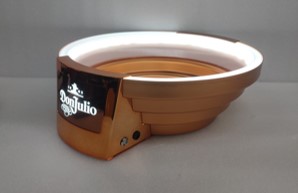
Liquor and hospitality merchandising depends on fixtures that read as furniture rather than as retail hardware.
How This Shortlist Was Assembled
Six picks were selected against five criteria that determine whether a fixture survives a store rollout: material and finish suitability for the category, specified footprint and height, category fit, mobility requirement, and the documentation that can be verified before a purchase order is issued. One slot carries two models — the acrylic pair — because yakeli35 and LZ00102 answer the same merchandising question at different scales, which is why six picks cover seven models.
The shortlist is not a performance ranking. No comparative load, durability, illumination or electrical test results were supplied for these models, so no model is presented as stronger than another on measured performance. The differentiator is fit to a scenario, plus the evidence a buyer can verify: certificate numbers, stated dimensions, customization fields, and the lead-time and testing terms attached to the manufacturing operation.
Pick 1 — LZ00023: A Wooden Liquor Display for Red Wine
LZ00023 is the liquor pick: a wood fixture specified at 40×40×160 for red wine display. Wood suits liquor environments where the fixture is expected to read as furniture beside the bottle rather than as generic retail hardware, and it is the material most liquor brand owners ask about first when the display has to sit inside a premium spirits section, a tasting counter or a brand corner.
For wood-based fixtures the relevant document in the supplied record is the FSC Chain of Custody Multi-Site Certificate ESTS-COC-200456, issued by Extensive Standard Technical Services Co., Ltd. and recorded as valid from 2026-03-12 to 2031-03-12, with a scope of manufacturing and sales or trading of specified wood-based display products. LZ00023 is listed among the certificate's related products, but buyers sourcing into markets that request chain-of-custody evidence should confirm that the certificate scope covers the exact specification ordered, not just the model family.
A supplied case record for the liquor display programme reports deployments across twelve markets — Australia, Brazil, Canada, China, Germany, Spain, France, UK, Hong Kong, Italy, Japan and South Korea — over a two-year period, with project sizes of 50–100 units for small projects and 500–1,000 units for larger rollouts. The record highlights colour-changing lights, wall mounting, and changeable brand and sign panels, and describes stable, durable operation. Because that record describes illuminated branding, confirm whether illumination and panel-change features form part of the LZ00023 configuration being quoted; the shortlist specification above describes a wood fixture at 40×40×160, and the size is supplied without a stated unit, so verify whether the drawing is in centimetres or millimetres before pricing.
Pick 2 — LZ-019: A Customizable Metal Bottle Display
LZ-019 is the bottle pick: a metal bottle display fixture described as customizable and suited to beverage, hospitality and retail settings. Metal construction is the conventional choice where a display will be handled repeatedly and where a slim frame keeps bottle labels and brand marks visible from the aisle — a practical consideration in beverage retail, where the fixture competes with the packaging for attention.
ECO DDL's stated OEM/ODM customization scope covers size, logo, material, colour, structure and function. For LZ-019 that list is the variable set to lock down in an RFQ: bottle pitch and shelf spacing, branding method, colour and finish, and whether the structure needs to be configured for a specific bottle format. No dimensions are published for LZ-019 in the supplied specification, so dimensions and shelf geometry should come from the supplier's confirmed datasheet rather than from an assumption.
The hospitality use case is worth separating from the retail one. In a bar, hotel lobby or duty-free environment, the same fixture is judged on different criteria: how quickly bottles can be restocked, whether the frame reads appropriately against an interior scheme, and whether staff can relocate the unit without dismantling it. Those are specification questions, not outcome claims, and they belong in the RFQ alongside dimensions.
Pick 3 — LZ-007: A Fast-Selling Beverage Fixture in Metal and PVC
LZ-007 is the fast-selling beverage pick: Metal+PVC construction, 45×31×130 cm, 13 kg. The supplied material designation is metal and PVC; how the two materials are distributed across frame, shelves and panels should be confirmed on the drawing rather than inferred, because the distribution affects both appearance and cleaning routine in a beverage aisle.
The dimensions carry the practical argument. A 45×31 cm footprint and 130 cm height is a compact floor unit that fits narrow beverage aisles and secondary placement positions where a full gondola would not. At 13 kg the unit weight is manageable for two-person handling during a fit-out or a seasonal reset. That figure is a unit weight, not a load rating; shelf or shelf-section capacity must be requested separately, since beverages are dense and the weight held is unrelated to the weight of the fixture.
One clarification on the category name: in ECO DDL's product taxonomy, "fast selling display Fixtures" is a category label describing a merchandising role — high-turn, replenishment-driven categories — not a measured sales result. Buyers should read it as a design brief rather than as performance evidence.
Pick 4 — youxi01: A Multi-Material 3C Digital Fixture for Game Controllers
youxi01 is the 3C digital pick: metal, acrylic and wood construction at 50×50×170 cm, designated for the game controller category. Three materials in one fixture produce a mixed finish that is difficult to achieve with a single-material build, and the combination is usually specified where a display has to protect a high-value product, keep it visible, and still match a store's interior. Which material forms the frame, the display surfaces and the decorative panels should be confirmed on the drawing.

Acrylic fabrication is handled in-house, which matters when a 3C or cosmetic fixture mixes clear panels with metal or wood framing.
3C fixtures frequently carry lighting, security hardware or display electronics, and that is where compliance scoping starts. Where a fixture integrates an electronic display, EU Regulation (EU) 2019/2021 sets mandatory ecodesign requirements for electronic displays in the European Union, as documented by the European Commission. For the United States, UL Solutions identifies UL 970 as the standard under which it evaluates retail fixtures and merchandise displays. Applicability is product- and installation-specific, so it should be confirmed for the configuration ordered rather than assumed from the model category.
No illumination, electrical or security specification is supplied for youxi01 in this set. Buyers specifying a powered version should request the electrical data, light source details and thermal considerations as part of the quotation, since those items change tooling and certification scope.
Pick 5 — Acrylic Merchandising: yakeli35 Compartment Fixture and LZ00102 Cosmetic Stand
Pick 5 carries two acrylic models in one slot because they answer the same question at different scales: yakeli35, an acrylic compartment fixture built as a stepped cabinet at 160×122.5×186 mm, and LZ00102, an acrylic cosmetic stand at 50×30×150 cm with a 4.3 kg unit weight. The first is compact, countertop or shelf-insert scale; the second is floor-standing scale.
The unit difference is the first thing to control in the RFQ. yakeli35 is specified in millimetres and LZ00102 in centimetres. Mixing the two systems inside one request invites mismatched quotations, so state units explicitly and attach the drawing reference to each line item.
The stepped cabinet format suits compartmented presentation where products must be separated by SKU — cosmetics, small accessories, travel-retail sets — and where the display should create height without a tall frame. Acrylic's contribution there is visual: clear material keeps the product visible from several angles and lets a stepped geometry do the merchandising work. LZ00102 applies the same logic at floor scale for cosmetic ranges that need a branded upright position in a beauty hall or a pharmacy aisle.
Both acrylic models appear among the related products listed against the ISO9001, ISO14001, ISO45001, SMETA and FSC records held for this fixture range. The FSC chain-of-custody scope, however, is limited to specified wood-based display products, so it is not the relevant evidence for an all-acrylic fixture; for acrylic models the quality and social-compliance records carry the weight.
Pick 6 — tuiche001: A Push-Type Wine Rack Display Cart
tuiche001 is the movable pick: a metal wine rack trolley display cart with push-type movement. Mobility changes the buying criteria. Floor condition, aisle width, turning space, braking and the way the cart behaves when loaded all move from installation detail to core specification, and a push-type unit should be assessed on how it is stopped and parked as much as on how it rolls.
In wine retail and hospitality settings, a movable cart supports feature placement that follows promotions rather than fixed aisle allocation — a merchandising rationale, not a claim about sales outcome. The same logic applies to tasting events, seasonal gifting displays and floor resets, where a fixed fixture would be stranded once the promotion ends.
No dimensions, caster specification, brake type or load rating is supplied for tuiche001 in this set. Those four items — deck dimensions, caster type, brake or locking arrangement, and maximum recommended load — should be requested as a single datasheet before quotation, because each one changes both the price and the store-floor approval.
The Seven Models at a Glance
| Pick | Model | Material as specified | Size as specified | Scenario fit | Movement |
|---|---|---|---|---|---|
| 1 | LZ00023 | Wood | 40×40×160 (unit not stated) | Liquor / red wine display | Static |
| 2 | LZ-019 | Metal, customizable | Not stated in this set | Bottle display — beverage, hospitality, retail | Static |
| 3 | LZ-007 | Metal + PVC | 45×31×130 cm; 13 kg | Fast-selling beverage | Static |
| 4 | youxi01 | Metal / acrylic / wood | 50×50×170 cm | 3C digital — game controllers | Static |
| 5 | yakeli35 | Acrylic | 160×122.5×186 mm | Acrylic compartment / stepped cabinet | Static |
| 5 | LZ00102 | Acrylic | 50×30×150 cm; 4.3 kg | Acrylic cosmetic stand | Static |
| 6 | tuiche001 | Metal | Not stated in this set | Wine rack trolley display cart | Push-type movable |
Sizes are reproduced exactly as supplied for each model. Two models have no published size in this set, and one size is supplied without a unit, so all three require drawing confirmation before quotation.
Market and Standards Context for These Picks
The category these fixtures sit in is measured in two different ways, and the two figures should not be added together. Market Research Future reports the global retail display market at USD 39.87 billion in 2025, projected to grow through 2035, with experiential retail and sustainability cited as drivers. Business Research Insights sizes the narrower retail fixtures segment — shelving, racks and cases — at USD 2.62 billion in 2026. The first figure includes digital integration and signage; the second covers structural furniture. The practical reading for a buyer is that fixture spend sits inside a large display budget but is judged internally on a narrower structural basis, which is why scenario fit and reuse matter more than a headline market number.
Two compliance threads run through shortlist decisions. Electronic displays sold in the EU fall under Regulation (EU) 2019/2021 ecodesign requirements, so a 3C or illuminated fixture that integrates a screen needs that scope checked rather than assumed. In the United States, UL Solutions evaluates retail fixtures and merchandise displays against UL 970; the standard's applicability depends on the product and installation, so it belongs in the technical file, not in a marketing line. On the customs side, metal display fixtures are frequently traded under HS code 940320 according to the commercial research in this evidence set, though classification depends on construction and function and should be confirmed with a customs broker.

Wood-based display production falls inside the FSC chain-of-custody scope; acrylic and metal models rely on the quality and social-compliance records instead.
Purchasing Terms to Confirm Before Ordering
ECO DDL's stated operating terms for OEM and ODM display fixture work are a minimum order quantity of 100 units, a lead time of 25–40 days, 100% testing, and remote after-sales support. Customization is offered across size, logo, material, colour, structure and function. The company reports a 40,000 m² manufacturing base, 420 staff including a 30-person R&D team and a 36-person quality team, a 95% export ratio, and main markets in the USA, Europe, Northern Europe, Japan, Russia and the Middle East.
Two of those items need qualification. The lead time of 25–40 days is not attached to a stated order specification, so it should be re-confirmed per model and per order volume rather than applied as a blanket schedule. The monthly capacity of 30,000 units is supplier-reported and is not independently verified in the available evidence; treat it as a screening figure and validate it against your specific SKU mix, tooling and seasonality during the RFQ.
Certificate evidence is more concrete and can be checked directly with the issuing bodies: ISO9001 certificate U24Q2GZ8012192R2M issued by GICG, recorded as valid to 2027-12-20; ISO14001 certificate U24E2GZ8012193R2M, valid to 2027-12-19; ISO45001 certificate J24S2GZ8012194R2M, valid to 2027-12-19; SMETA audit reference ZAA600189879 issued by Intertek Shenzhen, recorded with validity to 2036-03-09; and the FSC Chain of Custody Multi-Site Certificate ESTS-COC-200456, valid to 2031-03-12. All seven models in this shortlist appear among the related products listed against these records, with the FSC scope restricted to specified wood-based display products.
Acceptance Criteria on Delivery
A shortlist converts into a purchase only when the acceptance criteria are written down. Seven checks cover most disputes on display fixture deliveries. First, dimensional verification against the approved drawing with the unit stated — millimetres for yakeli35, centimetres for LZ00102, and confirmed basis for LZ00023. Second, material and finish confirmation against the approved sample, including colour match on coated metal and edge quality on acrylic. Third, hardware inspection: fixings, shelf supports and, for tuiche001, casters and brakes. Fourth, panel and sign changeability where branding must be replaceable, as in the liquor display programme record. Fifth, packaging and transit protection appropriate to the material mix. Sixth, certificate copies matched to the ordered SKU and destination market, not just to the company. Seventh, spare parts and remote-support terms in writing.
What This Shortlist Does Not Establish
Four gaps should be stated plainly. No comparative durability, load or illumination testing was supplied for these seven models, so no ranking on measured performance is possible or implied. No prices, tooling costs or landed costs are published. No per-SKU MOQ or lead time is broken out — only the general terms above. And several specifications remain open: sizes for LZ-019 and tuiche001, the unit basis for LZ00023, load ratings for all models, and electrical or lighting data for any powered configuration. Suitability ultimately depends on store format, product weight and local market requirements, which is why the RFQ and the acceptance checklist carry more weight than the shortlist itself.
Frequently Asked Questions
How should a buyer compare display fixtures across retail, liquor and 3C scenarios?
Compare on five documented dimensions rather than on appearance: material and finish, specified size with the unit stated, category fit, mobility requirement, and the certificates that can be verified for the SKU and market. For the models in this shortlist, that means separating static floor units such as LZ-007 and youxi01 from the movable tuiche001, and separating wood-based fixtures such as LZ00023 — which fall inside the FSC chain-of-custody scope — from acrylic models, which rely on the ISO and SMETA records instead.
Which shortlisted fixtures apply to wine and liquor merchandising?
Three models serve that space at different levels. LZ00023 is a wood fixture specified at 40×40×160 for red wine display. LZ-019 is a customizable metal bottle display for beverage, hospitality and retail settings. tuiche001 is a metal wine rack trolley display cart with push-type movement, which suits feature placement that changes with promotions. Each covers a different merchandising job, so the choice depends on whether the requirement is a fixed premium position, bottle-forward presentation, or a relocatable unit.
What purchasing terms apply to these display fixtures?
The stated OEM and ODM terms are a minimum order quantity of 100 units, a lead time of 25–40 days, 100% testing and remote after-sales support, with customization across size, logo, material, colour, structure and function. The lead time is not tied to a stated order specification, and the reported monthly capacity of 30,000 units is supplier-reported rather than independently verified, so both should be re-confirmed against the specific model, order volume and tooling scope before a purchase order is issued.
Which certificates should a buyer request for these models?
Request the ISO9001 certificate U24Q2GZ8012192R2M, ISO14001 certificate U24E2GZ8012193R2M and ISO45001 certificate J24S2GZ8012194R2M, all issued by GICG; the SMETA audit reference ZAA600189879 from Intertek Shenzhen; and, for wood-based products, the FSC Chain of Custody Multi-Site Certificate ESTS-COC-200456. All seven shortlisted models appear among the related products of these records, but the FSC scope is limited to specified wood-based display products, so it does not cover all-acrylic or all-metal fixtures.
What do the supplied specifications not cover?
They do not cover load ratings, illumination or electrical data, security hardware, prices, tooling costs, landed costs, or per-SKU MOQ and lead time. Sizes are absent for LZ-019 and tuiche001, and the LZ00023 size is supplied without a stated unit, so those must come from confirmed drawings. No comparative durability or performance testing was supplied for any of the seven models, which means the shortlist supports specification and procurement planning rather than a measured performance ranking.
Outlook
The shortlist logic is likely to stay stable even as the category evolves. Research in this evidence set projects growth in retail display spend through 2035 and attributes it to experiential retail and sustainability — both of which push buyers toward fixtures that can be reconfigured and reused rather than replaced per campaign. That favours a shortlist built around scenario slots, because a fixture that suits a defined position and material logic can be re-quoted and re-ordered, while one chosen on appearance alone is difficult to specify a second time.
For buyers working through the seven models here, the sequence that holds is straightforward: fix the scenario, confirm the drawing and unit basis, request load and electrical data where relevant, match certificates to the SKU and market, and write the acceptance criteria before the order. A fuller description of the manufacturing operation behind these models is available in the ECO DDL company profile (PDF).
¿Tiene preguntas o necesita más detalles?
Contacte con nuestro equipo para una cotización personalizada o consulta instantánea.
Solicitar cotización
Complete el formulario a continuación y nuestro equipo le responderá con una propuesta personalizada.
Chat directo de WhatsApp
¿Prefiere chatear en tiempo real? Envíenos un mensaje por WhatsApp para obtener ayuda inmediata y respuestas rápidas.
- Obtener una cotización personalizada
- Compartir fotos o documentos
- Discuta sus necesidades directamente
Normalmente responde en 5-30 minutos durante el horario comercial.