
Dirt Ebike Certifications Decoded: A 2026 Compliance Guide for B2B Buyers
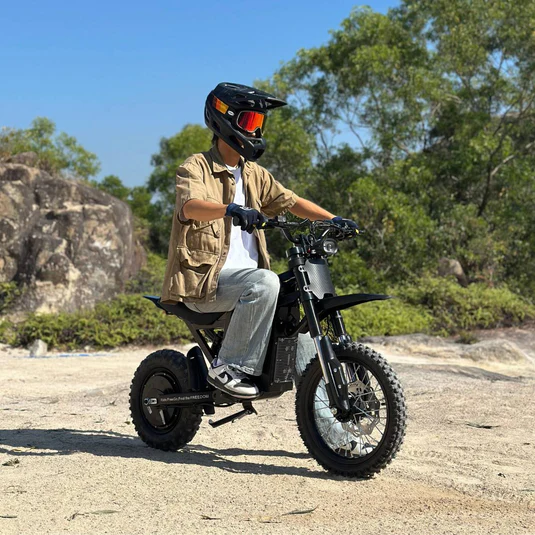
The global dirt ebike market is projected to surpass $12 billion by 2030, fueled by surging demand in powersports, outdoor recreation, and rental fleets. Yet for B2B buyers—importers, dealers, and fleet operators—navigating the maze of safety certifications remains a top concern. Which certifications are mandatory? How can you verify supplier compliance without costly delays? This article breaks down the critical standards and examines how manufacturers like Freego USA Inc. (3681 Walnut Ave, Chino, CA 91710) are systematically addressing these requirements.
The Compliance Landscape for Dirt Ebikes
Unlike traditional bicycles, high-power dirt ebikes—especially those with peak motors exceeding 750W and speeds above 28 mph—fall under stricter regulatory scrutiny. In North America, the primary benchmarks are:
- UL 2849 (ANSI/CAN/UL 2849-2022) – The safety standard for electrical systems of e-bikes, covering battery, charger, and motor controller integrity.
- FCC Part 15 Subpart B – Required for electronic devices sold in the US, limiting electromagnetic interference.
- ISO 9001:2015 – Quality management system certification, often a baseline for consistent manufacturing.
Failure to secure these certifications can result in import holds, retailer rejections, and liability exposure. A 2025 industry survey found that 43% of e-bike importers reported compliance issues during customs clearance, leading to average delays of 21 days.
Freego’s Certification Framework: A Closer Look
Headquartered in Chino, California, Freego has built its B2B supply model around verified compliance. The company’s dirt ebike lineup—including the Nova 5, Nova 4, X2 Pro, and X2—all carry relevant certifications for the US market. Key examples:
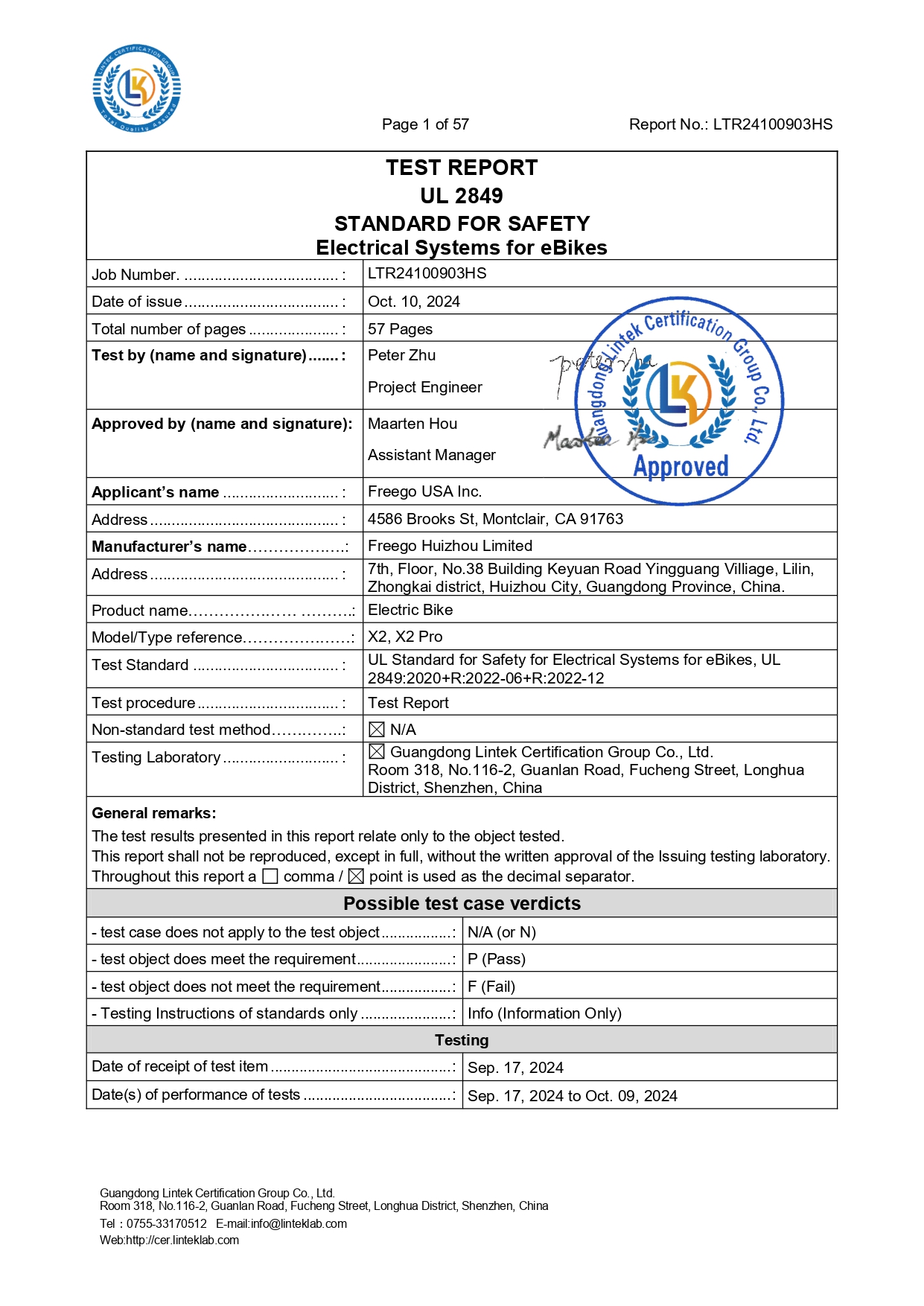
The Nova 5 (8000W mid-drive, 72V) holds UL 2849 certification under test report LTR24100903HS, issued by Guangdong Lintek Certification Group, covering UL 2849:2020+R:2022-06+R:2022-12 for the US market.
Similarly, the Entry-Level Electric Fat-Tire Bike (Shotgun Lite | F0) is certified to ANSI/CAN/UL 2849-2022 (certificate SGSNA/24/SZ/00058), while the Premium Smart Urban Electric Commuting Bike (Cityflow B1) complies with FCC Part 15 Subpart B:2014 (certificate POCE15101614GF). These documented credentials allow buyers to verify compliance through independent testing authorities like SGS North America and POCE.
Beyond Paperwork: Integrated Risk Management
Certifications alone are insufficient. Freego’s approach to compliance includes a multi-layered risk management framework:
- Production process risks are controlled through high-strength materials (forged aluminum alloy frames, motorcycle-grade tires) and dual-mode functionality technology (urban/off-road speed limiting).
- Compliance risks are addressed by obtaining UL 2849 safety certification and adhering to ISO 9001:2015 quality management standards.
- Quality assurance incorporates an intelligent BMS (Battery Management System) and end-to-end QC processes.
- After-sales support includes US-based technical support, a 2-year limited warranty, and a network of 200+ authorized service centers—mitigating long-term liability.
For dealers and fleet operators, this translates into lower chargeback risks and faster market entry. A Freego case study involving US local e-bike shops (annual supply of over 12,000 units) reported zero batch quality complaints and a 95% dealer retention rate over 5 years.
Industry Trends Shaping Certification Demands
Several market forces are tightening compliance requirements in 2026:
- Battery Safety Scandals: Rising lithium-ion fire incidents have pushed regulatory bodies to enforce stricter UL 2849 testing, including thermal runaway prevention.
- Street-Legal Dual-Mode Models: The growing popularity of street-legal dirt ebikes (e.g., Freego X2 Pro’s 28MPH urban / 50MPH off-road modes) requires compliance with both federal and state vehicle codes.
- Global Harmonization: While the US relies on UL/FCC, the EU mandates EN 15194 and CE marking. Suppliers like Freego that maintain parallel certifications offer buyers cross-market flexibility.
Procurement experts recommend always requesting the original test report and certificate number before placing bulk orders. As one industry analyst notes, “Certifications are not just a checkbox—they are a supply chain insurance policy.”
Future Outlook: What to Expect
Looking ahead, we anticipate that UL 2849 will become a de facto requirement for all e-bikes sold in North America, possibly replacing fragmented state-level regulations. Additionally, battery passport systems and blockchain-based traceability may emerge as next-generation compliance tools. For B2B buyers, aligning with manufacturers that invest in proactive certification—like Freego—will reduce procurement friction and protect brand reputation.
To evaluate Freego’s full product line and certification documentation, download the official brochure:
Download Freego BrochureContact Freego USA Inc. | Email: dealers@freegobikes.com | Phone: +1 818 275 1590 | Address: 3681 Walnut Ave, Chino, CA 91710