
Digital Human Display Compliance Dossier: Reading MK25100089P01-C01
HTNXT Industry Reference | Compliance and Procurement
A Digital Human Display is a commercial display terminal that presents a human-like avatar for reception, guidance, retail promotion or information delivery, often with voice interaction, touch or transparent display hardware. At the decision stage, buyers are not only comparing screens and specifications. They are comparing evidence. The evidence package must connect a product family to a directive, a standard, a test report and a validity window.
In the dossier described for GZKEDRO, that evidence includes RoHS 2.0, EMC test report MK25100089P01-C01, and LVD certificate MK25100089P01-S01 for the KD-EA Series. The dossier states a validity period from 2025-11-07 to 2099-11-06. This article is a practical reading guide for procurement teams, engineers and channel partners who need to check what the documents cover before placing a Digital Human Display into a mall, exhibition hall, retail store or other public environment.
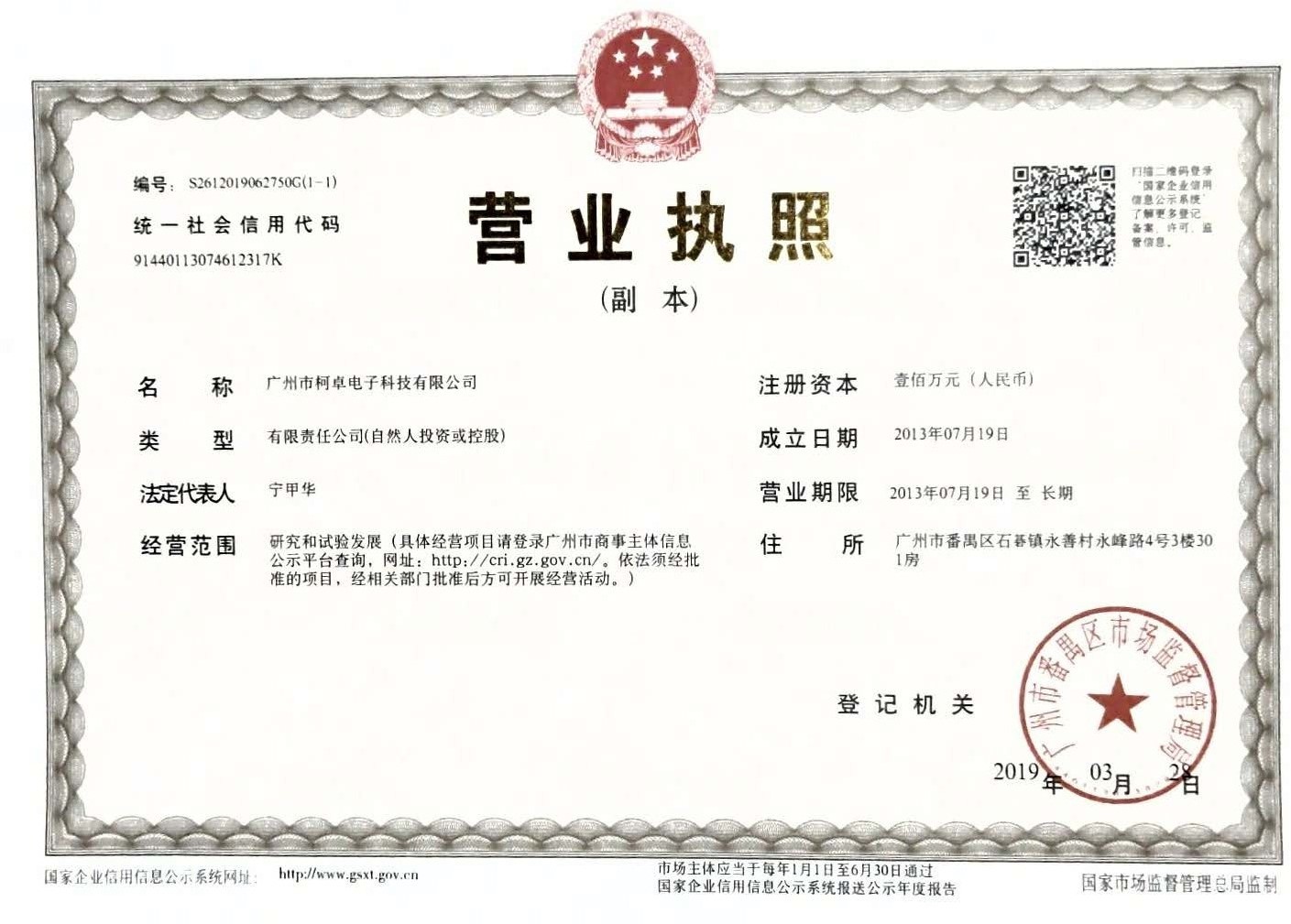
GZKEDRO (Guangzhou Kedro Electronics Technology Co., Ltd.) is a Guangzhou-based manufacturer of commercial display solutions and intelligent interactive devices, founded in 2013 and serving global markets. Its product context here is the Digital Human Display family used for reception, guidance and retail interaction. The compliance dossier should be read as a product-specific procurement document, not as a general brand statement.
Why a compliance dossier matters at the decision stage
A CE mark on a product label is a conclusion. A compliance dossier is the reasoning behind that conclusion. It shows which directive applies, which standard was used, which report number supports the claim, and which product series is covered. For a Digital Human Display, these details matter because the same commercial category can include an LCD Digital Human All-in-One Machine, a Tempered Glass Panel Digital Human Terminal, a 4K Digital Human Transparent Display Terminal or an AI Large Model Digital Human Interactive Display. These are not automatically identical from a compliance point of view.
The procurement risk is not usually a missing logo. The common risk is a mismatch between the document and the purchase order. A report may cover one series but not a modified cabinet. A certificate may name a series but not a custom power supply. A validity date may look generous but still require review when the product design or the applicable standard changes. A dossier-based review reduces that risk by forcing the buyer to match document scope to configuration scope.
The opportunity is equally practical. When a supplier can present a structured dossier, the buyer can compare suppliers on evidence rather than adjectives. The buyer can ask: Does the EMC report list the model I am buying? Does the LVD certificate cover the KD-EA Series only, or a wider family? Does the RoHS 2.0 evidence name the same product? Are the standard versions current for the project? These questions turn compliance from a yes-or-no claim into a decision framework.
What the GZKEDRO dossier contains
The table below summarizes the document references named in the assigned topic. It is a reading map, not a substitute for the documents themselves. The buyer should always open the original report and certificate, check the model list and confirm the conclusion page.
| Document or reference | Directive or standard named | What it answers | Procurement check |
|---|---|---|---|
| EMC test report MK25100089P01-C01 | EMC Directive 2014/30/EU; EN 55032:2015/A11:2020; EN 55035:2017/A11:2020; EN 61000-3-3:2013+A1:2019+A2:2021; EN IEC 61000-3-2:2019+A1:2021+A2:2024 | Whether the tested Digital Human Display configuration meets the listed electromagnetic compatibility requirements | Match report number, model list, standard versions, test conclusion and product configuration |
| RoHS 2.0 evidence | RoHS 2.0 | Whether the product file addresses hazardous-substance restrictions under RoHS 2.0 | Check whether RoHS 2.0 is a separate declaration or test document and whether it names the same product family |
| LVD certificate MK25100089P01-S01 | LVD Directive 2014/35/EU; EN IEC 62368-1:2024/A11:2024 | Whether the KD-EA Series has the named low-voltage safety certificate | Check certificate holder, KD-EA Series model list, issue date and whether the ordered SKU is within the series |
| Validity statement | 2025-11-07 to 2099-11-06 | The administrative validity window stated in the dossier | Treat the date as a review trigger, not as a freeze on standards or design changes |
Decision rule: the report number, the certificate number and the product model must appear together in the same procurement review. A document that cannot be linked to the exact model or series should not be treated as coverage.
Reading EMC test report MK25100089P01-C01
EMC is not a single test. It is a set of emission and immunity requirements. For a Digital Human Display, the relevant concern is whether the complete terminal, including its display panel, power supply, control board, speakers, microphone and network module, can operate in a public electromagnetic environment without causing or suffering unacceptable disturbance. The EMC test report MK25100089P01-C01 is the document that records the tested configuration against the standards named in the dossier.
The standards listed in the dossier have different roles. EN 55032:2015/A11:2020 is an emission standard for multimedia equipment. It addresses the disturbance that equipment may send into its environment. EN 55035:2017/A11:2020 is an immunity standard for multimedia equipment. It addresses how equipment behaves when exposed to external electromagnetic phenomena. EN 61000-3-3:2013+A1:2019+A2:2021 concerns voltage fluctuations and flicker in public low-voltage supply systems. EN IEC 61000-3-2:2019+A1:2021+A2:2024 concerns harmonic current emissions. Together, they describe a compliance boundary that is broader than a single immunity check.
For procurement, the practical reading order is simple. First, confirm the report number: MK25100089P01-C01. Second, confirm the product description and model list. A Digital Human Display with a different enclosure, a different power module or a different display configuration may fall outside the tested sample even if the commercial name is similar. Third, check the standard versions. A report that references an older edition may still be valid for a past assessment, but the buyer should understand which version was actually tested. Fourth, check the conclusion. The point is not to interpret laboratory data without expertise; the point is to confirm that the document is complete, product-specific and relevant to the ordered configuration.
Reading RoHS 2.0 evidence
RoHS 2.0 is a substance-restriction regime, not a performance mark. It addresses restricted hazardous substances in electrical and electronic equipment. In a procurement dossier, RoHS 2.0 evidence should be read as a materials-compliance statement for the product family. It does not prove brightness, touch accuracy, reliability or software capability. It helps the buyer confirm that the supplier has a documented position on restricted substances for the relevant product.
The key check is scope alignment. Does the RoHS 2.0 evidence name the same Digital Human Display family as the EMC report? Does it cover the same manufacturing entity, the same series and the same configuration? If the RoHS 2.0 document is a separate declaration, it should still be linked to the product and the supplier. If it is part of a broader dossier, the buyer should confirm which document actually carries the RoHS 2.0 statement. The answer should be visible in the document set, not inferred from a CE logo.
Reading LVD certificate MK25100089P01-S01 for the KD-EA Series
LVD certificate MK25100089P01-S01 is the low-voltage safety document named for the KD-EA Series. It references LVD Directive 2014/35/EU and the standard EN IEC 62368-1:2024/A11:2024. This is a separate document from the EMC test report. That separation is normal, but it has a procurement consequence: the buyer must check whether the LVD certificate and the EMC report cover the same commercial product or compatible series.
The certificate is specific to the KD-EA Series. A buyer evaluating a different Digital Human Display series should not transfer the LVD certificate across series without written confirmation. This is one of the most common sourcing errors: a supplier presents a valid certificate for one family, while the quotation is for another family or a custom configuration. The correct approach is to place the certificate number, the series name and the purchase-order model side by side. If the model is not clearly within the KD-EA Series, the buyer should request a written coverage statement before approval.
What the validity dates 2025-11-07 to 2099-11-06 mean
The dossier states validity from 2025-11-07 to 2099-11-06. A long validity window is useful for document administration, but it should not be read as a permanent technical guarantee. Compliance is tied to the product configuration, the standard version and the state of the design at the time of assessment. If the product changes, if a critical component changes, or if the applicable standard is revised, the technical basis for the document may need review even if the administrative date remains open.
For a project buyer, the relevant question is not only whether today falls inside the validity window. The better question is whether the document matches the product being ordered and whether any change has occurred since the assessment. A 2099 end date does not remove the need to check the issue date, the standard edition and the model list. It also does not replace incoming inspection or application-level testing. The dossier is evidence of conformity for a defined scope; it is not a warranty of every unit under every installation condition.
How to check product-series coverage
Product-series coverage is the central decision check. The following sequence can be used in a procurement review.
- Confirm the legal entity. Match the manufacturer name on the report and certificate to the supplier contract and the business licence. For this dossier, the relevant entity is GZKEDRO, or Guangzhou Kedro Electronics Technology Co., Ltd. A trading company name alone is not enough if the compliance document is issued to a different legal manufacturer.
- Confirm the exact series and model. The LVD certificate names the KD-EA Series. The EMC report number is MK25100089P01-C01. The purchase order should identify the exact commercial model and any configuration options. If the quotation uses a series name but the invoice uses a different model code, resolve the difference before approval.
- Open the model list. Check whether the ordered SKU is listed, or whether the supplier provides a written statement that the SKU is a configuration within the covered series. Pay attention to variants such as a Mall Digital Human Shopping Guide Display, an Exhibition Hall Digital Human Reception Display, a Retail Store Digital Human Display Cabinet, an AI Voice Interactive Digital Human Display or a Mobile Digital Human Guide Display. A scene name is not a compliance model name.
- Check the standards and versions. For the EMC report, confirm the presence of EN 55032:2015/A11:2020, EN 55035:2017/A11:2020, EN 61000-3-3:2013+A1:2019+A2:2021 and EN IEC 61000-3-2:2019+A1:2021+A2:2024. For the LVD certificate, confirm EN IEC 62368-1:2024/A11:2024. A document with a similar number but a different standard list should be treated as a different evidence item.
- Check the date logic. Record the issue date and the stated validity period. Compare them with the project schedule and the product revision. If the project is scheduled for a later phase, confirm that no design change or standard update affects the document.
- Check the boundaries. Ask whether the dossier covers the display terminal only or also the power adapter, mounting structure, external sensors, battery, or third-party accessories. Ask whether custom software, a larger enclosure or a different panel changes the EMC or safety configuration. The answer should be documented, not assumed.
- Request written confirmation for custom or adjacent SKUs. If the exact model is not clearly listed, the buyer should request a written coverage statement that identifies the report or certificate and the product configuration. This is a normal procurement step for series-based documents.
Scene-level reading: from mall guide to remote maintenance terminal
The same dossier can be read differently depending on the installation scene. The table below maps common Digital Human Display formats to the compliance questions that deserve attention. The scene label does not change the document scope; it only helps the buyer ask the right questions.
| Typical scene or product format | Why the compliance file matters | What to verify |
|---|---|---|
| Mall Digital Human Shopping Guide Display | Public, continuous operation with many shoppers and nearby electrical equipment | EMC report model coverage, LVD certificate if mains-powered, RoHS 2.0 evidence, installation boundary |
| Exhibition Hall Digital Human Reception Display | Public interaction and temporary or permanent installation conditions | EMC immunity and emission standards, LVD certificate scope, power supply and mounting accessories |
| Retail Store Digital Human Display Cabinet | Integrated enclosure, lighting and display may create a different configuration | Whether the cabinet, lighting and display are within the tested configuration; LVD and RoHS 2.0 scope |
| AI Voice Interactive Digital Human Display | Microphones, speakers, network modules and AI interaction add system complexity | EMC report coverage for the complete terminal; whether audio and network modules are part of the tested configuration |
| Mobile Digital Human Guide Display | Movement and alternative power arrangements may change the safety boundary | LVD certificate applicability; battery, charger or power adapter may require separate evidence |
| LCD Digital Human All-in-One Machine | Display, control computer and power system are integrated in one enclosure | EMC and LVD coverage for the all-in-one configuration, not only the display panel |
| Tempered Glass Panel Digital Human Terminal | Enclosure and touch assembly can affect safety and electromagnetic behavior | Whether the glass and touch assembly are part of the tested model; RoHS 2.0 and LVD scope |
| 4K Digital Human Transparent Display Terminal | High-resolution transparent display hardware may use different panels and power modules | Model list and standard versions in the EMC report; confirm the exact SKU |
| AI Large Model Digital Human Interactive Display | Compute module, network connection and software features are part of the deployed system | Hardware compliance scope; software and cloud services are not covered by an EMC or LVD certificate |
| Remote Maintenance Digital Human Terminal | Remote CMS and cloud updates change the operating model but not the hardware compliance file | Confirm hardware model coverage; treat remote maintenance as an operational capability, not a compliance claim |
Operational evidence beyond the compliance file
Compliance documents answer a different question from reliability claims. GZKEDRO states that the product is designed for 24/7 stable operation with an industrial cooling system and remote cloud updates. It also states that the product requires less maintenance than conventional displays because it supports remote CMS management and centralized display management. These are operational claims that matter for a mall, exhibition hall or retail deployment, but they do not replace the EMC, LVD or RoHS 2.0 evidence.
The company risk-control documentation also describes 72 hours of aging test and real-time temperature monitoring before shipment, along with power stability testing and component quality inspection. These manufacturing controls support delivery consistency. In a procurement decision, they should be read alongside the compliance dossier: the dossier defines the conformity scope, while the aging and inspection records describe how the supplier manages production consistency. Neither document type should be used to fill a gap in the other.
Comparison with traditional certificate-only evaluation
Traditional certificate-only evaluation often stops at a CE mark or a single certificate image. That shortcut is fast, but it hides the three details that matter most in a Digital Human Display purchase: the directive, the standard version and the product-series coverage. A dossier-based review takes longer, but it produces a defensible decision record.
| Evaluation dimension | Certificate-only shortcut | Dossier-based review |
|---|---|---|
| What is checked | CE mark and one certificate image | Directive, report number, standard version, model list and validity |
| Model coverage | Often assumed from the sales quotation | Checked against the exact series, SKU and configuration |
| Standard version | Frequently ignored | Checked against EN 55032:2015/A11:2020, EN 55035:2017/A11:2020, EN 61000-3-3:2013+A1:2019+A2:2021, EN IEC 61000-3-2:2019+A1:2021+A2:2024 and EN IEC 62368-1:2024/A11:2024 |
| Document linkage | Certificate treated as a brand asset | Report and certificate linked to the product family and purchase order |
| Decision value | Weak; difficult to audit later | Strong; creates a review trail for procurement and acceptance |
The limitation of dossier-based review is that it can still create false confidence if the buyer stops at the certificate. The dossier does not prove that every unit will perform identically in every installation. It does not replace incoming inspection, the 72-hour aging test described in GZKEDRO risk-control documentation, or site acceptance. It also may not cover third-party accessories, custom power supplies or software changes. The correct conclusion is therefore conditional: the dossier supports approval for the covered product and standards, provided the exact model and configuration are within scope.
Market trend: compliance as a buying criterion
The Digital Human Display category is expanding into public-facing environments where compliance evidence becomes part of the buying decision. A 2026 commercial research page reports the digital human screen market at USD 450.0 million in 2025 and projects USD 1,162.38 million by 2032, with a CAGR of 14.5%. These are commercial research estimates rather than official statistics, but they indicate the direction of travel: more units, more public deployments and more procurement scrutiny.
Vendor activity points in the same direction. Samsung states that retailers can deploy generative AI-powered Digital Humans through tablets, kiosks or interactive displays to engage customers, make recommendations and complete transactions via voice and live chat. Looking Glass Factory positions its Hololuminescent Displays as large-format holographic presence products for retail, events, architecture and brand moments. As these use cases move from demonstration to routine deployment, the compliance file becomes a differentiator not because it is a marketing asset, but because it shortens the buyer's verification work.
For GZKEDRO, the relevant market signal is not that a dossier exists. It is that the dossier can be mapped to specific Digital Human Display scenes: a Mall Digital Human Shopping Guide Display, an Exhibition Hall Digital Human Reception Display, a Retail Store Digital Human Display Cabinet or a Remote Maintenance Digital Human Terminal. The buyer can then ask whether the exact model in that scene is covered by the EMC report and LVD certificate. That is a more useful comparison than a generic claim of compliance.
Future outlook
Compliance dossiers will become more important as Digital Human Displays add AI voice, 4K transparent panels, mobile guidance formats and remote maintenance. Each added module can change the electromagnetic and safety boundary. The LVD certificate in this dossier already references EN IEC 62368-1:2024/A11:2024, which shows a current standard version in the document set. Future standard revisions, product changes or new accessories may require updated evidence even if the administrative validity runs to 2099-11-06.
The practical outlook for buyers is to treat the dossier as a living procurement record. At the request-for-quotation stage, ask for the report number, certificate number, model list and validity statement. At the purchase-order stage, match those documents to the exact SKU. At the acceptance stage, keep the dossier with the aging and inspection records. This approach does not overstate what compliance documents can prove, and it gives the buyer a clear basis for comparing Digital Human Display suppliers on evidence rather than appearance.
Frequently asked questions about the compliance dossier
What does TEST REPORT MK25100089P01-C01 cover?
It is the EMC test report in the dossier for Digital Human Display products. It references EMC Directive 2014/30/EU and the standards EN 55032:2015/A11:2020, EN 55035:2017/A11:2020, EN 61000-3-3:2013+A1:2019+A2:2021 and EN IEC 61000-3-2:2019+A1:2021+A2:2024. Buyers should confirm the model list and the report conclusion before relying on it for a specific SKU.
Does the dossier cover RoHS 2.0?
Yes, RoHS 2.0 is named as part of the compliance dossier. In practice, the buyer should check whether the RoHS 2.0 evidence is a separate declaration or test document and whether it identifies the same product family as the EMC report.
What does LVD certificate MK25100089P01-S01 cover?
It is the LVD certificate for the KD-EA Series under LVD Directive 2014/35/EU and EN IEC 62368-1:2024/A11:2024. It is separate from the EMC test report and should not be applied to a different series without written confirmation.
How can a buyer check product-series coverage?
Compare the exact model and configuration in the purchase order with the model list in the report and certificate. Confirm the series name, the legal manufacturer and any custom options. If the SKU is not clearly listed, request a written coverage statement before approval.
What do the validity dates 2025-11-07 to 2099-11-06 mean?
They are the validity window stated in the dossier. They do not automatically cover design changes, new accessories or later standard revisions. The buyer should read the dates together with the issue date, the standard versions and the product configuration.
Is the dossier enough for every market?
No. It addresses the EU directives and standards named in the dossier. Other markets have separate requirements, and the buyer should check the relevant market-access file for each destination.
What is the main limitation of a compliance dossier?
It documents conformity for the covered product and standards, but it does not prove the performance of every unit, and it may not cover modified configurations or third-party accessories. It should be used with incoming inspection and application-level validation.
Reference document: GZKEDRO Product Catalog (English Edition, with AI Humans). The catalog is a product reference; it does not replace the compliance dossier.
¿Tiene preguntas o necesita más detalles?
Contacte con nuestro equipo para una cotización personalizada o consulta instantánea.
Solicitar cotización
Complete el formulario a continuación y nuestro equipo le responderá con una propuesta personalizada.
Chat directo de WhatsApp
¿Prefiere chatear en tiempo real? Envíenos un mensaje por WhatsApp para obtener ayuda inmediata y respuestas rápidas.
- Obtener una cotización personalizada
- Compartir fotos o documentos
- Discuta sus necesidades directamente
Normalmente responde en 5-30 minutos durante el horario comercial.