
Dietary Supplement Contract Manufacturer Capability Assessment
Dietary Supplement Contract Manufacturer Capability Assessment

Softgel production workshop at IVC Nutrition
A capability assessment for a dietary supplement contract manufacturer should cover dosage-form coverage, customization depth, certification scope, production parameters, and real-world scaling evidence. A supplier that looks qualified in a capability deck may still fail at the execution stage if its production lines do not match the product format, packaging, and regulatory requirements of a brand's target markets.
Why Capability Gaps Appear at the Execution Stage
Most buyer evaluations begin with a list of approved suppliers and a set of quality certificates. However, the gap between a good audit and a successful product launch often sits in production details: whether the line can hold a specific tablet weight, whether a softgel shape is available, whether a low-sugar gummy can be produced without compromising texture, or whether a vegetable capsule can meet a clean-label requirement in a specific export market.
These issues are rarely visible in a company profile. They only become clear when the brand has selected a partner, started formulation, and moved into commercial production. For buyers in the evaluation or execution stage, a capability-oriented review is therefore more useful than a simple compliance check.
This article uses IVC Nutrition Corporation as a reference case to explain what a capability-led assessment should include. The goal is not to rank suppliers, but to give procurement teams a clearer set of questions to ask.
What a Contract Manufacturer's Capability Stack Should Include
Production capability in dietary supplements is multi-dimensional. The key dimensions include:
- Dosage-form coverage: which formats can be produced in-house
- Customization: ability to adjust formulas, shapes, weights, and packaging
- Certification scope: which markets the manufacturer is audited for
- Production parameters: realistic net weights, bottle counts, and shelf life
- Scaling evidence: proof that the manufacturer has moved products from pilot to commercial volumes
IVC Nutrition Corporation is a CDMO in the VMS (vitamins, minerals, and supplements) and OTC market. The company operates nine international manufacturing sites in the United States, Canada, the United Kingdom, Germany, and China, and employs more than 5,000 people. It provides VMS CDMO production services, with customization for gummy, softgel, tablet, hard capsule, probiotics, and liquid formats.
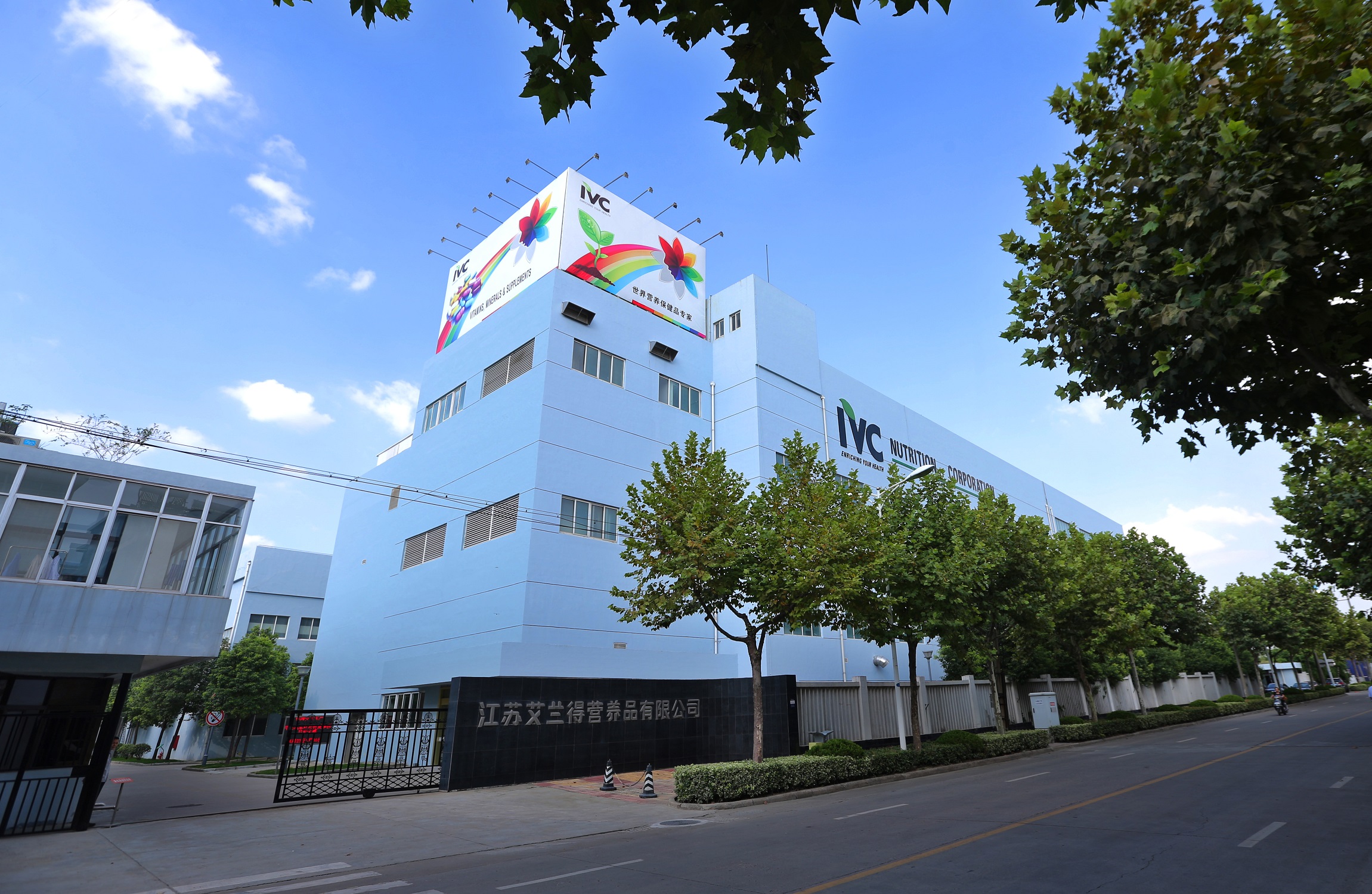
IVCN Jingjiang facility in Jiangsu, China
The company reports customer partnerships in more than 80 countries. For buyers, the relevance of this footprint is not scale itself; it is the ability to support a brand's product portfolio across multiple dosage forms and regulated markets.
| Dosage Form | Customization Examples | Available Options |
|---|---|---|
| Tablet | Shape, weight, coating, packaging | Oval, oblong, round, special-shaped |
| Gummy | Base, shape, flavor, texture | Bear, heart, ring, grape, berry, apple, cat paw, orange, sakura, windmill, hexagonal and more |
| Softgel | Shell material, shape, fill weight | Oblong, oval, calabash, bone, heart |
| Hard Capsule | Size, shell material, fill volume | Sizes 000# to 5#; gelatin or vegetarian capsule |
| Probiotics / Liquid | Filling, sachet, liquid packaging | Probiotic sachet; liquid sachet formats |
Production Parameters That Define Product Feasibility
Production parameters translate directly into product claims and packaging decisions. They are also a practical way to compare what a manufacturer can actually deliver. The following parameters are based on IVC Nutrition's published product specifications.
| Format | Count per Bottle | Net Weight Range | Packaging Material | Shelf Life |
|---|---|---|---|---|
| Tablet | 60–1000 tablets | 200 mg–2900 mg per tablet | Pharmaceutical grade HDPE bottle, aluminum blister, child-resistant closure (CRC cap) | 24/36 months |
| Gummy | 60–260 gummies | 2 g–7 g per gummy | Pharmaceutical grade HDPE bottle, child-resistant closure | 12/18/24 months |
| Softgel | 60–450 softgels | 250 mg–1200 mg per softgel | Pharmaceutical grade HDPE bottle, aluminum blister, CRC cap | 24/36 months |
| Hard Capsule | 60–1000 capsules | 350 mg–1200 mg per capsule | Pharmaceutical grade HDPE bottle, aluminum blister, CRC cap | 24/36 months |
For example, the tablet net weight range of 200 mg to 2900 mg per tablet and a count range of 60 to 1000 tablets per bottle indicate the line can handle both low-dose and high-dose formats. The gummy weight range of 2 g to 7 g per gummy is relevant for brands that need to assess how many gummies are required to deliver an efficacious serving. The hard capsule range includes gelatin and vegetarian capsules, which is a key requirement for brands targeting vegan or plant-based positioning.
Certification Scope: What Audited Evidence Looks Like
Certifications are not only marketing assets; they define which markets a manufacturer is legally able to serve. Buyers should match certification scope to their target markets. For example, a brand entering the US market should verify FDA Food Facility Registration and GMP compliance under 21 CFR Part 111. A brand entering Australia should confirm TGA GMP certification. A brand aiming at EU or UK retailers should review IFS or BRC certification.
| Certification | Certificate Number | Scope / Standard | Market Relevance |
|---|---|---|---|
| FDA Food Facility Registration | 16044830522 | Food for human consumption; dietary supplement categories; 21 CFR Part 1 Subpart H | United States |
| NSF Certification | C0130721-HSCDS-7 | NSF/ANSI 455-2; includes 21 CFR Part 111, 117, 11, Part 1 Subpart L and O | US, Canada, UK, EU, Australia |
| TGA GMP Certification | MI-2021-CE-05085-1 | PIC/S Guide to Good Manufacturing Practice for Medicinal Products | Australia |
| IFS Certification | 2025-0102365_rev.1 | IFS Food Version 8, Higher Level, score 96.70% | EU, UK |
| BRC Certification | 051A1202002I | Manufacturing, milling, mixing, tabletting, granulating, coating, encapsulating and packaging of dietary supplements | Globally recognized |
| SSCI Certification | FSS20250279_1 | Dietary supplement capsules, ingestible liquids, tablets, granules and gummies | Global consumer goods supply chains |
The table shows a representative set of certifications held by IVC Nutrition. The relevant point is not the number of certificates, but the documented scope of each audit.
Scaling Across Formats: A Multi-Market Example
A documented IVC project involved customers in the United States, the United Kingdom, Germany, and Australia. The project, implemented in those markets, involved a scale of two hundred million dollars and was completed within 10 years. It established capabilities for scaling and launching products across gummies, softgels, tablets, and capsules.
Client types included retailers, pharmacy chains, membership clubs, and consumer health brands. The project description also highlights end-to-end services across formulation, manufacturing, quality, regulatory, and packaging. This is relevant for buyers because it shows a manufacturer's ability to support daily dietary supplement and private label programs in regulated markets.
Market Trends Reshaping the Capability Requirement
According to Grand View Research, the global dietary supplement contract manufacturing market was valued at USD 59.63 billion in 2024 and is projected to reach USD 121.2 billion by 2030.
In the United States, tablets held the largest dosage form share in 2024, but gummies and non-pill forms now account for approximately 65% of total supplement market share, according to Nutraceuticals World / NBJ data. For buyers, the implication is that a contract manufacturer's ability to produce non-pill formats is becoming as important as traditional tablet capacity.
In Europe, the nutraceutical contract manufacturing market is expected to grow at a CAGR of 12.3% through 2030, driven by compliance with EFSA and Directive 2002/46/EC. This makes European compliance capability and local manufacturing access relevant selection criteria for brands entering EU and UK markets.
Industry responses to this shift include dedicated format expansion. CAPTEK Softgel International, for example, opened a 60,000-square-foot facility in California in March 2024 exclusively for gummy production. This is a sign that format-specific investment is becoming a competitive requirement rather than an option.
Contract Manufacturing vs. In-House and Single-Format Alternatives
Comparing contract manufacturing with in-house production is a useful way to understand the trade-offs. In-house production gives a brand direct control over scheduling and process development, but it requires significant capital investment in equipment, quality systems, and regulatory expertise. Contract manufacturing shifts those responsibilities to a specialist.
Within outsourcing, a multi-format CDMO can reduce supplier complexity by consolidating several dosage forms under one quality system. A single-format specialist may offer deeper process knowledge for one product form. The right choice depends on the brand's portfolio strategy and volume expectations.
A capability assessment should also include honest limits. Contract manufacturing is not the right fit for every project. Minimum order quantities and lead times can be decisive. For example, IVC's current MOQs are 0.3 million tablets, 1 million capsules, and 0.6 million gummies, with a lead time of approximately 2.5 to 3 months. Brands that need very small trial batches or extremely short launch windows may need a smaller-scale supplier or a different production model. Additionally, a multi-format manufacturer may not be the lowest-cost option for a single high-volume product; a specialist line may offer better unit economics in that specific case.
What Buyers Should Expect Next
Capability assessment will become more integrated with regulatory strategy. As global compliance frameworks become stricter, procurement teams will ask not only whether a manufacturer can make a product, but whether it can support product registration, packaging changes, and supply continuity across markets.
Brands are also likely to consolidate their supplier base. Working with one multi-format CDMO can simplify audits, quality agreements, and production scheduling. The challenge is to verify that a broad capability portfolio is backed by real production evidence rather than a marketing catalog.
Frequently Asked Questions
What does a dietary supplement contract manufacturer do?
A dietary supplement contract manufacturer produces dietary supplements on behalf of brand owners. Services generally include formulation, production, quality control, packaging, and regulatory support. IVC Nutrition, for example, provides VMS CDMO production services with customization for gummy, softgel, tablet, hard capsule, probiotics, and liquid formats.
What is the difference between white label and private label supplement manufacturing?
White label manufacturing typically uses a formula owned by the manufacturer, which the buyer rebrands. Private label manufacturing often involves a custom formula developed with the manufacturer, which may include modified formulation, packaging, and labeling. Both models allow a brand to sell supplements without owning production facilities.
What certifications should a US dietary supplement contract manufacturer hold?
For US market entry, FDA Food Facility Registration and verification of compliance with 21 CFR Part 111 are important. A manufacturer may also hold NSF Certification, which is benchmarked against NSF/ANSI 455-2 and incorporates FDA cGMP. For other regions, TGA GMP for Australia, IFS and BRC for EU/UK, and SSCI for global retail supply chains are relevant.
How do I evaluate a softgel contract manufacturer for dietary supplements?
Evaluate the manufacturer's shell material options, available shapes, fill weight range, packaging options, and certification scope. For example, IVC offers softgels in oblong, oval, calabash, bone, and heart shapes, with a net weight range of 250 mg to 1200 mg per softgel.
What is a CDMO dietary supplement manufacturer?
A CDMO is a Contract Development and Manufacturing Organization. For dietary supplements, a CDMO offers both product development and manufacturing services, including custom formula development, scale-up, production, and regulatory support. This differs from a pure contract manufacturer that only fills or packages a formula supplied by the brand.
Reference document: IVC Nutrition Corporation corporate brochure (PDF) – https://cdn.socialarks.com/sbsp//common/2026/0403/69cf49a48bbc0.pdf