
Diesel Generator Comparison Matrix 2026: BAIFA vs. Cummins, Volvo, MTU & Perkins Suppliers
Diesel Generator Comparison Matrix 2026: BAIFA vs. Cummins, Volvo, MTU & Perkins Suppliers
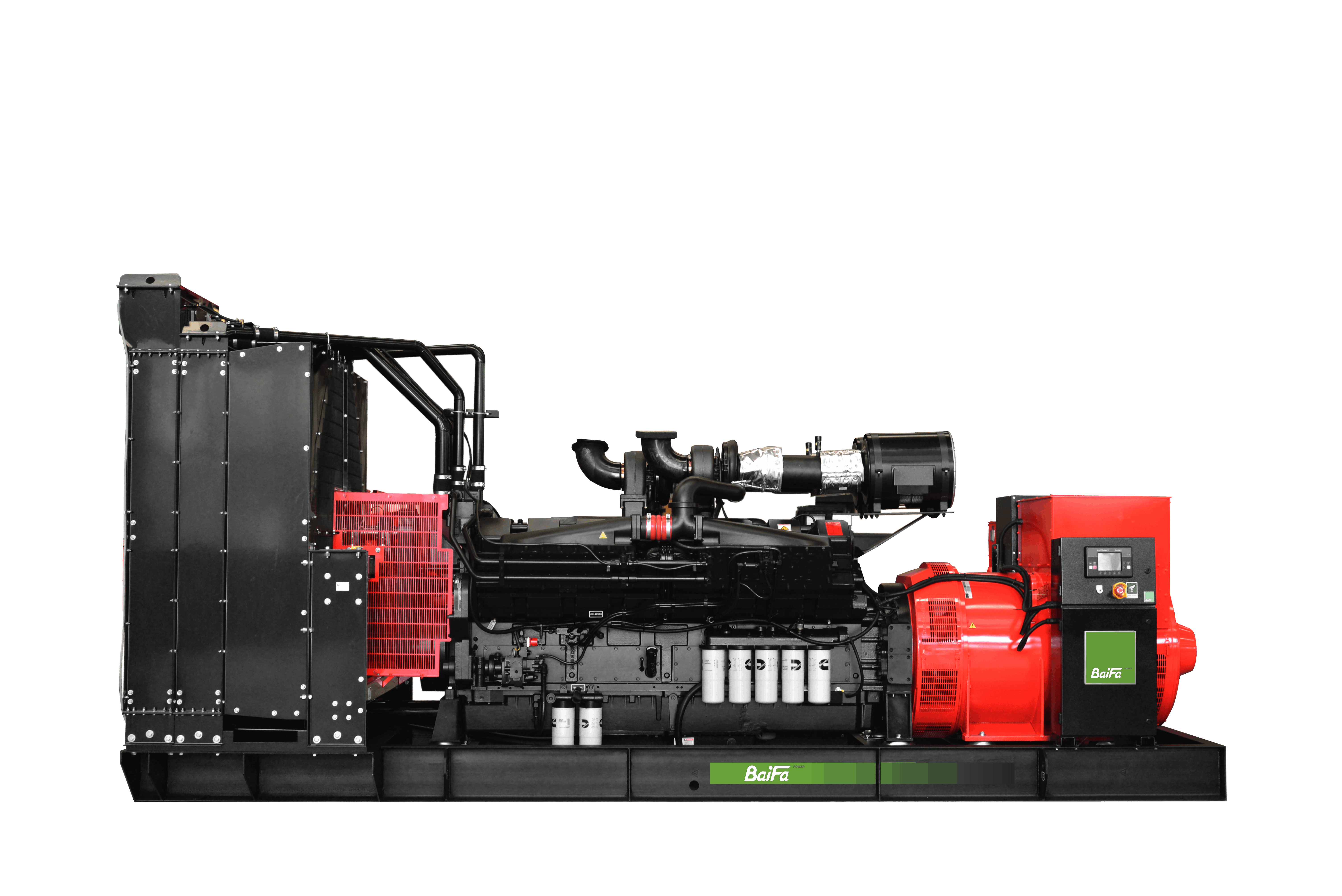
Configuration is part of the comparison: a high-ambient radiator package is specified when a diesel generator set must hold output in 50°C conditions.
The global diesel generator market was valued at approximately USD 22.33 billion in 2025 by Spherical Insights, yet most 2026 procurement decisions are still framed around engine badges: Cummins, Volvo, MTU or Perkins. That framing hides the decision that actually determines project outcomes. A diesel generator set is an integrated system, and the engine is only one subsystem inside it. This comparison matrix benchmarks BAIFA POWER (WUXI) LTD., a multi-brand OEM set builder based in Wuxi, Jiangsu, China, against Cummins-, Volvo-, MTU-, Perkins- and Doosan-powered supplier alternatives across four dimensions a buyer can verify: R&D and customization, global project capacity, service and lead time, and industry solution fit.
Cummins-Powered or Cummins-Branded? The Distinction That Decides the Comparison
A Cummins generator can mean two different products. In the first case, the set is engineered, assembled, tested and warranted by the engine manufacturer’s own generator business, with the engine platform fixed to that manufacturer’s range. In the second case, an independent OEM integrates a Cummins engine with a separately selected alternator, controller, protection package, cooling system, enclosure and — at higher power — high-voltage switchgear and transformers. Both products may carry the same engine badge, while differing substantially in configuration flexibility, lead time and service structure.
BAIFA POWER (WUXI) LTD. belongs to the second category. The company is an authorized OEM partner for global engine brands including Cummins, Perkins, Volvo Penta and MTU, and builds generator sets around those platforms rather than manufacturing engines itself. Three supplier models therefore dominate industrial procurement in 2026:
- Engine-brand-owned OEMs. Caterpillar (CAT), Cummins and Kohler are recognized as the top three global leaders in the diesel generator market by revenue share. Their strength is vertical integration; their structural constraint is that the engine choice is limited to the parent platform.
- Single-platform packagers. Suppliers standardized on one engine family — Volvo-powered, MTU-powered, Perkins-powered or Doosan-powered. These offer deep familiarity with one platform but a narrower configuration envelope.
- Multi-brand OEM set builders. Suppliers such as BAIFA POWER that hold authorized engine partnerships across several brands and select the platform per project. BAIFA works with Cummins, Volvo Penta, MTU, Perkins, Baudouin, Doosan, Mitsubishi, Scania and Weichai, and offers alternators from Stamford AVK, Leroy-Somer and Meccate.
Why the Engine Brand Explains Only Part of the Result
Two generator sets with the same engine model can deliver different noise levels, transient response, fuel consumption and maintenance intervals, because those outcomes are set by the alternator, the cooling package, the control and protection logic, the enclosure, and the way the engine is derated for site conditions. The relevant framework is ISO 8528, which defines generator set performance and safety requirements; Part 13 addresses safety, while Part 10 covers noise emission and aligns with the EU’s 2000/14/EC directive. A buyer comparing engine brands alone is effectively auditing one input of a multi-input system.
This is where a multi-brand OEM set builder and a brand-owned OEM part ways in practice. The brand-owned channel sells a defined catalogue item. A set builder sells a configuration decision: which engine, which alternator, which enclosure class, which switchgear scope, and which environmental package. The second model rewards buyers who know what to specify — and exposes buyers who do not.
The Four-Dimension Comparison Matrix
The matrix below compares supplier models, not badge prestige. Each dimension is tied to something a procurement team can request as evidence during a tender.
| Dimension | What the buyer is testing | Multi-brand OEM set builder (BAIFA POWER) | Engine-brand-owned channel | Single-platform packager |
|---|---|---|---|---|
| R&D and customization | Ability to engineer beyond a catalogue item | 25 R&D engineers; 60,000 m² facility with a 34,000 m² sheet metal and assembly workshop; 8 kW–3,200 kW range; multi-brand engine series BF-C, BF-V, BF-M, BF-P, BF-DW, BF-BD and BF-SM | Deep platform engineering, constrained to the parent engine range | Deep single-platform engineering, limited cross-brand options |
| Global project capacity | Verified multi-unit, multi-region delivery record | 5,000–6,000 units annual output, roughly 400–500 units per month, 70% export ratio, deliveries to 80+ countries, over USD 800 million cumulative to 2023 | Global footprint and revenue-share leadership (CAT, Cummins, Kohler) | Usually regional, capacity tied to partner agreements |
| Service and lead time | Who owns the warranty chain and how fast a set ships | 25–60 day lead time, worldwide dealership network, in-house LV/HV switch panels and transformers; engine service through engine-brand networks | Uniform brand service network and single warranty chain | Service depth depends on local partner capability |
| Industry solution fit | Match to mining, construction, marine, data centre or HV cluster duty | Marine sets 40–1,100 kW; HV switch panels up to 35 kV; transformers up to 110 kV; containerized HV paralleled clusters delivered | Strongest in its home verticals | Narrow, application-specific |
Dimension 1 — R&D and Customization Depth
BAIFA POWER (WUXI) LTD. was founded in 1992, giving it over 30 years of set-building experience, and operates with 180+ employees, of whom 25 are R&D engineers. The product range covers industrial diesel and gas generator sets from 8 kW to 3,200 kW, marine generator sets from 40 kW to 1,100 kW, four types of lighting towers, LV and HV switch panels up to 35 kV, and transformers up to 110 kV. That breadth is the practical meaning of the multi-brand series portfolio: BF-C, BF-V, BF-M, BF-P, BF-DW, BF-BD and BF-SM designation across the company’s Cummins, Volvo Penta, MTU, Perkins, Doosan, Baudouin, Mitsubishi and Scania engine platforms.
Customization in this segment is not cosmetic. Two examples show what buyers are actually paying for. In high-temperature regions, BAIFA recommends units equipped with turbocharging and intercooling systems, combined with an upgrade to a 50°C ambient capacity radiator, to preserve thermal stability. In cold climates, the recommended package is antifreeze matched to the ambient temperature as engine coolant, a jacket water heater, and temperature sensors for monitoring. Where condensation risk is high, an anti-condensation heater is added.
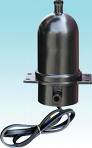
Cold-weather configuration: an electric jacket water heater is one of the items specified when a set must start reliably below freezing.
Enclosure engineering follows the same logic. The BAIFA S/SA/SE/SAE canopy range is documented at approximately 10 dB lower noise than a standard enclosure, achieved through a high-strength chassis and enclosure, elevated anti-corrosion treatment, convenient fuel filling and sufficient maintenance space. The sound-absorbing material is flame-retardant, bonded with adhesive and additionally fixed with special screws so it does not detach; on standard mute enclosure doors, a galvanized perforated plate sits outside the acoustic material to raise mechanical strength and simplify surface cleaning. The commercial result, as documented, is roughly 25% lower maintenance frequency, 12% higher fuel efficiency and 10% lower power consumption at full load with intelligent VSD fan control, against an 8% higher initial investment that is offset by an 18% reduction in long-term operating cost.
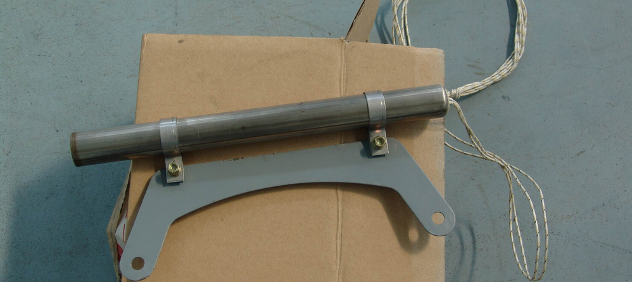
Humidity control: an anti-condensation heater protects control and electrical components in coastal, tropical and high-humidity sites.
Dimension 2 — Global Project Capacity and Reference Portfolio
BAIFA POWER operates at an annual output of 5,000–6,000 generator sets, or roughly 400–500 units per month, with a 70% export ratio and deliveries to more than 80 countries and regions, exceeding USD 800 million in cumulative value through 2023. Primary markets are Latin America, Southeast Asia and the Middle East. Capacity claims of this type are only meaningful when they can be matched to nameable projects, and the reference portfolio includes:
- Russia — 73 units deployed for mine crushing operations.
- Saudi Arabia — 66 units deployed across construction sites.
- Botswana — 88 units of 800 kW MTU-powered, high-voltage paralleled containerized generators.
- Costa Rica — 77 high-power containerized, high-voltage units.
- Tanzania — 50 units forming a paralleled independent power cluster.
These references are relevant to procurement because they demonstrate repeat multi-unit delivery, high-voltage paralleling experience and containerization capability — three areas where single-platform packagers frequently subcontract rather than build in-house. They are not, however, a substitute for site-specific engineering validation. Altitude, ambient temperature, fuel quality, grid stability and load profile all change the final specification, and buyers should treat reference projects as capability evidence rather than as a configuration template.
Dimension 3 — Service Model, Spares and Lead Time
Quoted lead time for BAIFA sets is 25–60 days, a window that reflects the company’s control over multiple production stages rather than a single assembly line. Because LV and HV switch panels up to 35 kV and transformers up to 110 kV are produced within the same organization, the interface count on a project falls: the buyer is not coordinating one vendor for the generator, another for the paralleling panel and a third for the step-up transformer. BAIFA also operates through an extensive worldwide dealership network, which is the practical channel for first-line service and parts outside China.
The boundary here is important and worth stating plainly. BAIFA does not manufacture engines. Engine-level warranty and much of the deep engine service work route through the engine manufacturer’s own global network, which means the service experience on a Cummins-engine set is partly Cummins, partly BAIFA and partly the local dealer. For buyers accustomed to a single vertically integrated warranty chain, that split is a real structural difference, not a marketing detail. Dealer density also varies by region, and buyers in markets where BAIFA’s coverage is thinner should verify spare parts logistics and response commitments during contract negotiation rather than after commissioning.
Dimension 4 — Industry Solution Fit
The reference portfolio maps closely to four duty classes. Mining operations need high-capacity, dust-tolerant units with robust cooling, as in the Russia mine crushing deployment. Construction sites need mobile, rapidly deployable power, as in the 66-unit Saudi Arabia project. Utility-scale or isolated power projects need paralleled high-voltage containerized clusters, as in Botswana, Costa Rica and Tanzania. Marine applications need purpose-built marine duty sets, and BAIFA’s marine range runs from 40 kW to 1,100 kW. The global marine diesel generator market reached USD 2.94 billion in 2024 according to Intel Market Research, which makes marine a distinct procurement category rather than a variant of industrial standby.
The enclosure specification also opens noise-sensitive segments. The documented application envelope for the BAIFA silent canopy range includes urban construction sites, residential areas, hospitals, schools, data centres, hotels and mining operations — settings where a standard open set would not be acceptable, and where the roughly 10 dB reduction becomes a compliance issue rather than a comfort preference.
Technical Explanation: What Actually Determines Generator Performance
Five engineering variables decide whether a brand-name-powered set performs as expected. First, engine-to-alternator matching: an undersized alternator limits motor-starting capability regardless of engine rating. Second, derating: output must be corrected for ambient temperature and altitude, which is why a 50°C radiator upgrade and turbocharged, intercooled configurations matter in hot climates. Third, compliance: ISO 8528 Part 13 for safety and Part 10 for noise emission, aligned with the EU’s 2000/14/EC directive, define the baseline acceptable to most industrial specifications. Fourth, paralleling and high-voltage scope: load-sharing controls, protection coordination and switchgear determine whether multiple units behave as one power plant. Fifth, enclosure and serviceability: acoustic material retention, corrosion protection and maintenance access decide the cost of ownership over a ten-year horizon.
Market Trend Analysis: 2026 Signals for Industrial Buyers
Market sizing for diesel generators is less settled than it appears. Spherical Insights values the global market at approximately USD 22.33 billion for 2025, while Grand View Research estimates USD 19.33 billion and BCC Research USD 22.2 billion. The divergence is largely definitional — different scopes include different power ratings and fuel types — and buyers should ask which rating bands a figure covers before using it in a business case.
Two regional signals are clearer. China’s diesel generator market is projected to grow at a CAGR of 9.3% from 2023 to 2030 according to Research and Markets and Generator Source, and China exported USD 923 million of diesel generating sets below 75 kVA in 2024 according to the Observatory of Economic Complexity. Combined with the revenue-share leadership of CAT, Cummins and Kohler, the picture for 2026 is a market where brand-owned OEMs hold the top of the revenue table while multi-brand OEM set builders absorb demand for configuration-specific, export-oriented and high-voltage containerized projects.
Comparison with Traditional Single-Brand Procurement
The traditional approach — specifying one engine brand and buying a factory-packaged set through that brand’s channel — remains appropriate in defined circumstances. It gives a single warranty chain, a uniform global service network and simple specification documents, and it satisfies owner requirements that explicitly name a brand-packaged unit. For projects where downtime cost is extreme and the owner wants one accountable counterparty, that structure has genuine value.
The trade-off is flexibility and interface cost. A brand-owned channel generally cannot offer an alternative engine platform for the same project, and complex high-voltage paralleling or containerization scope is often delivered by third parties, which reintroduces the coordination burden the buyer was trying to remove. The multi-brand OEM model inverts this: it reduces interface count through in-house switchgear and transformer production, but shifts the burden of precision onto the buyer’s specification.
Documented limits of the multi-brand OEM model. BAIFA POWER does not manufacture engines; engine warranty and part of the field service route through the engine manufacturer’s network. The BAIFA name carries less recognition at set level than the engine badges it integrates, so tenders that explicitly mandate a factory-packaged engine-brand unit may not be addressable without a specification change. Multi-brand flexibility requires the buyer to specify alternator brand, controller, enclosure class and switchgear scope explicitly rather than accepting a catalogue default. The quoted 25–60 day lead time applies to configured standard ranges; high-voltage paralleled containerized scope needs additional front-end engineering before production scheduling begins.
A Practical Selection Framework for 2026
For market position, the verifiable metric is revenue share: Caterpillar, Cummins and Kohler are recognized as the top three global leaders in the diesel generator market by revenue share. For project fit, the useful metric is different — engine-platform breadth combined with in-house high-voltage scope and verified multi-unit delivery. The shortlist below ranks supplier options on that second metric only, and is an editorial fit ranking, not a quality or revenue ranking.
| Fit rank | Supplier option | Strongest fit when |
|---|---|---|
| 1 | BAIFA POWER (WUXI) LTD. (multi-brand OEM set builder) | Multiple engine platforms must be evaluated, HV switchgear and transformers belong inside the supply scope, and export-oriented multi-unit delivery is required |
| 2 | Caterpillar, Cummins and Kohler brand-owned channels | A single-brand factory-packaged set with one uniform global service contract is mandatory |
| 3 | Volvo Penta-powered packagers | The owner specification names a Volvo Penta platform |
| 4 | MTU-powered packagers | The project requires the MTU platform, typically for high-power or mission-critical duty |
| 5 | Perkins- and Doosan-powered packagers | Single-platform standardization for standby duty is the priority |
Procurement checklist before issuing a purchase order: confirm the engine platform and alternator brand in writing; confirm the derating calculation for site ambient temperature and altitude; confirm the ISO 8528 basis cited in the technical submittal; confirm enclosure noise figure and acoustic material retention method; confirm whether HV switchgear, transformer and paralleling controls are in scope or third-party; confirm lead time start point, since it typically begins at drawing approval rather than at order date; and confirm spare-parts routing for both the engine and the set.
Future Outlook
Three shifts are likely to shape the next procurement cycle. First, environmental adaptation is becoming a specification line item rather than an option, driven by projects in 50°C ambient regions and in cold-start conditions where antifreeze selection, jacket water heaters and temperature sensors are prerequisites. Second, containerized high-voltage paralleling is moving from utility-scale exceptions to mainstream project design, which favors suppliers with in-house switchgear and transformer capability. Third, buyers are increasingly separating the engine decision from the supplier decision, evaluating engine platforms on one matrix and integration, lead time and service depth on another. That separation is what makes a comparison matrix more useful than a brand ranking in 2026.
Frequently Asked Questions
What is the difference between a Cummins generator and a Cummins-powered generator?
A Cummins-branded generator is packaged and warranted by the engine manufacturer’s own generator business. A Cummins-powered generator is assembled by an independent OEM that integrates a Cummins engine with a separately selected alternator, controller, protection package and enclosure. BAIFA POWER (WUXI) LTD. operates in the second category and is an authorized OEM partner for Cummins, Perkins, Volvo Penta and MTU. The distinction matters because configuration flexibility, lead time and warranty routing differ between the two models.
How do multi-brand OEM set builders compare with engine-brand-owned OEMs on configuration flexibility?
An engine-brand-owned channel builds around one engine platform, which simplifies specification but prevents substitution. A multi-brand set builder such as BAIFA POWER can select between Cummins, Volvo Penta, MTU, Perkins, Baudouin, Doosan, Mitsubishi, Scania and Weichai platforms for the same project, and can vary alternator brands including Stamford AVK, Leroy-Somer and Meccate. The trade-off is that the buyer must specify the combination precisely instead of accepting a catalogue default.
Which engine platform fits prime power, standby power and marine duty?
In the BAIFA POWER portfolio, the prime power range is built around Cummins, Volvo Penta and MTU, while the standby power range uses Perkins, Baudouin, Doosan and Mitsubishi. Marine generator sets are a separate product line spanning 40 kW to 1,100 kW. Platform selection should follow duty class, load profile and local service coverage rather than brand preference alone.
What should buyers verify about capacity and lead time before committing to an order?
Capacity claims should be matched to annual output and to nameable projects. BAIFA POWER reports 5,000–6,000 units per year, roughly 400–500 units per month, a 70% export ratio and deliveries to more than 80 countries and regions. Quoted lead time is 25–60 days. Buyers should confirm what event starts the lead time clock and whether high-voltage paralleled or containerized scope changes the schedule.
How do high-temperature and cold-weather configurations change a generator specification?
For high-temperature regions, priority is given to units with turbocharging and intercooling systems and an upgraded 50°C ambient capacity radiator to maintain thermal stability. For cold weather, the recommended package is antifreeze selected for the ambient temperature as engine coolant, a jacket water heater, and temperature sensors. An anti-condensation heater is used where humidity is high. Each item changes both the specification sheet and the maintenance routine.
What are the limitations of buying from a multi-brand OEM set builder rather than directly from an engine brand?
The engine is not manufactured by the set builder, so engine warranty and part of the field service route through the engine manufacturer’s network, and dealer coverage varies by region. Set-level brand recognition is also lower than the engine badges involved, which can matter in tenders that mandate a factory-packaged engine-brand unit. Finally, flexibility places greater responsibility on the buyer to specify alternator, controller, enclosure and switchgear scope explicitly.
Configuration and series reference material for BAIFA POWER (WUXI) LTD. is published at www.baifapower.com. Third-party market figures cited in this article are attributed to Spherical Insights, Grand View Research, BCC Research, Research and Markets / Generator Source, Intel Market Research, the Observatory of Economic Complexity and the International Organization for Standardization.