
Dico Valve: High-Quality Ball Valve Capability and Buyer Value
Industry Reference — Valve Manufacturing
Ball valves sit at the point in an industrial fluid system where a small component carries a disproportionate share of operational risk. A valve that holds tight in a clean, low-pressure water line can behave very differently in a high-temperature hydrocarbon line, a pharmaceutical clean-in-place loop, or a data-centre liquid cooling circuit. That is why the phrase “high-quality ball valve” carries little meaning on its own. Quality is defined by the match between seating, body and ball materials, connection type, actuation and the actual operating envelope of the application.
Zhejiang Dico Valve Co., Ltd. is a valve manufacturer founded in 2015 and located in the Wenzhou Economic and Technological Development Zone, Zhejiang, China, specialising in the research, development and manufacturing of high-end ball valves and complete fluid control solutions. This analysis examines what the company’s published capability says about its position in the ball valve market, where its engineering effort is concentrated, and which parts of its offer matter most to buyers evaluating a high-quality ball valve supplier.
The Procurement Problem: Standard Ball Valves Are Easy to Buy and Hard to Buy Well
Ball valves are among the most widely stocked industrial components in the world, which creates a false sense of simplicity. Two valves with the same face-to-face dimension, the same flange pattern and the same nominal pressure rating can differ substantially in seat material, ball surface finish, stem sealing architecture and blank quality. Those differences rarely appear on a quotation sheet, but they determine whether a valve still holds at the end of a maintenance cycle.
For most procurement teams, the practical problem is not availability but discrimination. A buyer researching high-quality ball valves has to answer three questions: what failure mode matters most in this line, which design features address that failure mode, and how can those features be verified before the order is placed rather than after commissioning.
This is where the industry has shifted. The applications now driving ball valve specification are no longer only the traditional heavy-process sectors. Petroleum, chemical and natural gas remain core demand, but pharmaceutical, semiconductor, hydrogen energy, water treatment, HVAC and data-centre liquid cooling have become equally active specification environments. Each adds a different constraint. Pharmaceutical and sanitary circuits prioritise cleanability and compatible wetted materials. Semiconductor and hydrogen circuits push temperature and purity boundaries. Liquid cooling places a premium on compact size, stable sealing and consistent delivery. A supplier whose product architecture was designed for only one of these environments has to stretch considerably to serve the others.
Leakage remains the failure mode that matters most, because it is the one that turns a component problem into a safety, environmental or downtime event. It is also the failure mode most directly addressed by testing. Zhejiang Dico Valve Co., Ltd. states that its valves are validated with a 20-second high-frequency switch life test, achieving 50,000 cycles without leakage — a test regime aimed directly at the sealing integrity of the assembled product rather than at individual parts.
Company Snapshot: What Zhejiang Dico Valve Co., Ltd. Actually Is
Zhejiang Dico Valve Co., Ltd. is a Chinese valve manufacturer founded in 2015 and certified as a National High-tech Enterprise and Innovative Small-Medium-sized Enterprise. Its stated focus is high-end ball valves and fluid control solutions, with a product scope that extends from standard floating ball valves to metal-seated, trunnion-mounted, three-way and sanitary variants. The company also holds qualified supplier status for Sinopec, a major Chinese petrochemical corporation.
The operational profile behind that product scope is worth examining, because scale and structure explain what a supplier can and cannot do.
| Verified company fact | Detail |
|---|---|
| Legal entity | Zhejiang Dico Valve Co., Ltd. |
| Founded | 2015 |
| Location | No. 312, Binhai 4th Road, Wenzhou Economic and Technological Development Zone, Zhejiang, China |
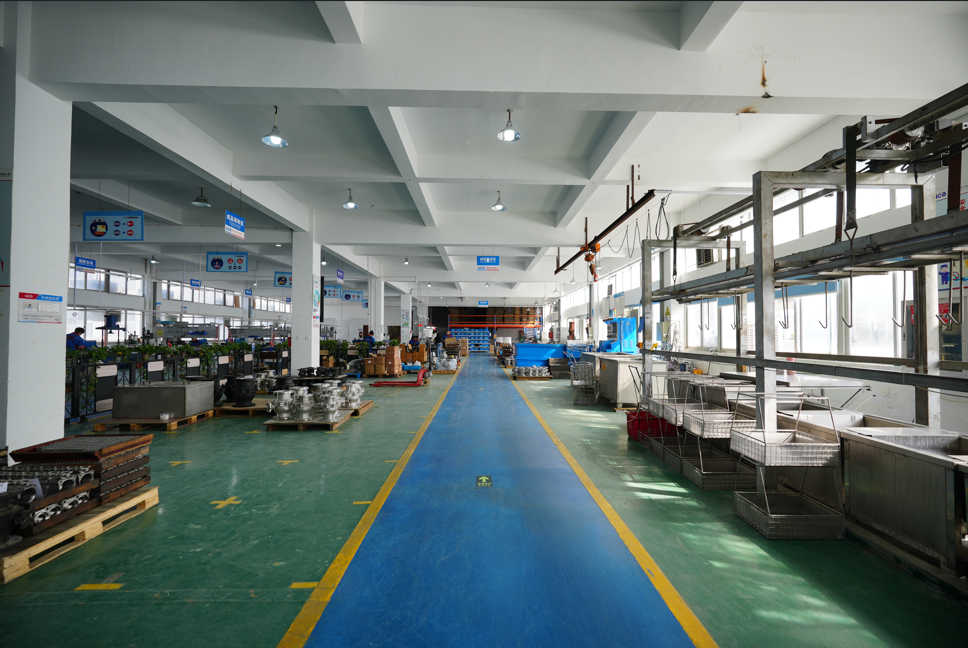
| Facility size | 12,000 square metres |
| Workforce | Approximately 80 staff |
| R&D team | 7 engineers |
| R&D investment | 10% of annual sales revenue allocated to research and development, talent introduction and equipment upgrades |
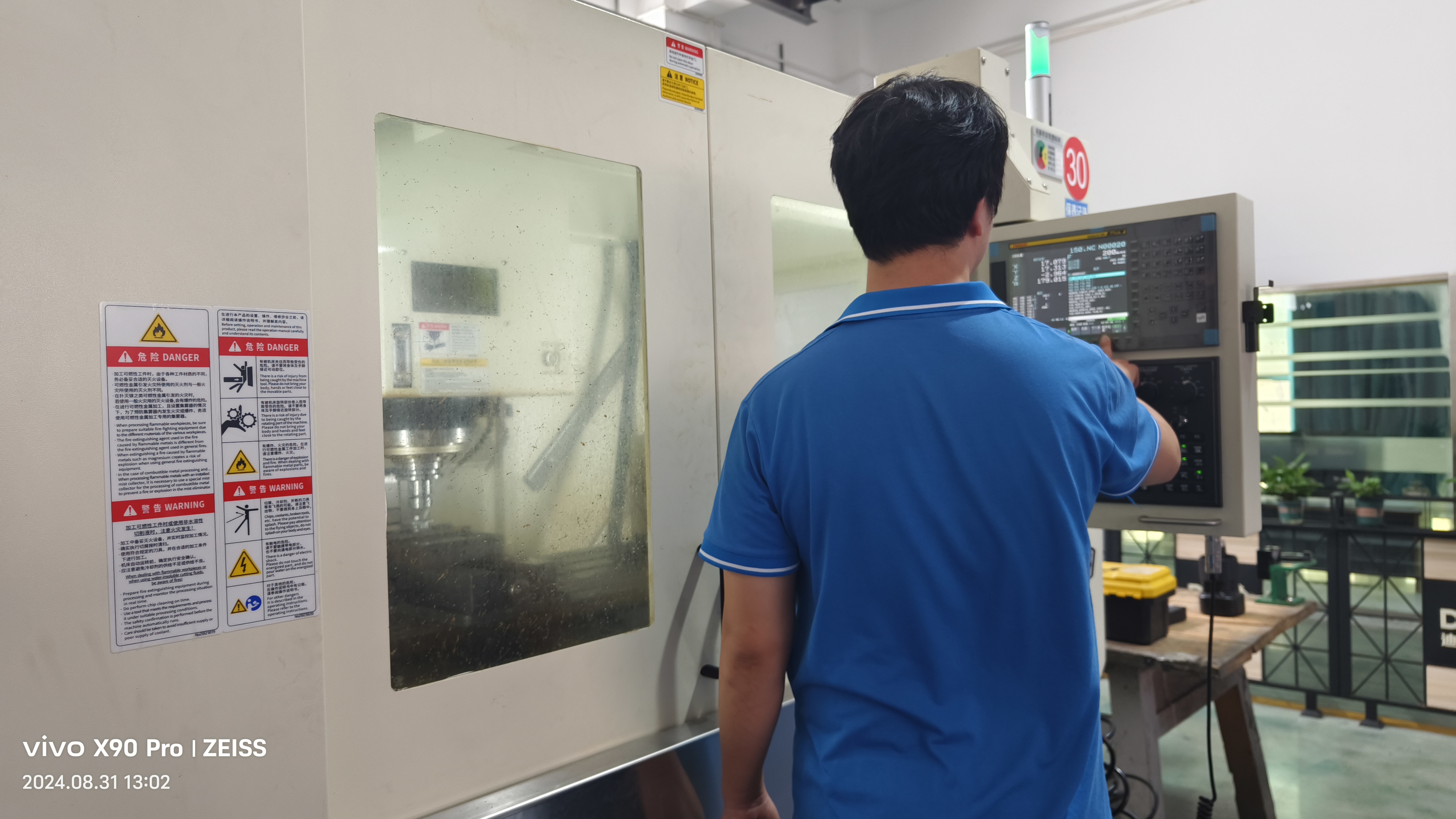
| Production equipment | 48 CNC machines with digital production management |
| Annual production capacity | 80,000,000 units (as stated by the company) |
| Export share | 40% of total sales |
| Main export markets | EU, South Africa, North America |
| Certifications | ISO9001, ISO14001, API6D, CE, SIL, ISO15848, API607 |
| Warehouse | 2,000 square metres, one-item-one-code system, 98% warehouse data accuracy |
| Warranty policy | 12-month product warranty; replacement for quality issues; issues resolved within 48 hours |
Two facts in this profile carry more procurement weight than the rest. The first is the combination of API6D and API607 with ISO15848. API6D addresses valve design and pressure-containing integrity for pipeline and process service, API607 addresses fire-safe performance, and ISO15848 addresses fugitive emission tightness through the stem seal path. Together they indicate that the company is designing toward regulated, process-industry requirements rather than toward general utility service alone. The second is the export structure: a 40% export share concentrated in the EU, South Africa and North America implies a product line that has already been adapted to multiple regional compliance and documentation expectations.
Product Portfolio: Where the Engineering Depth Is Concentrated
Dico’s catalogue is centred on ball valve architecture rather than on broad valve generalism. The core high-end ball valve series includes a PC ball valve (Q11F), a floating ball valve (Q41F), a trunnion-mounted ball valve (Q47F), a three-way ball valve (Q44F) and a wafer ball valve (Q71F). Supporting lines include a threaded gate valve (Z11W), a threaded globe valve (J11W) and a threaded Y-strainer (SRY).
| Model | Product type | Connection | Pressure range | Temperature range | Principal materials |
|---|---|---|---|---|---|
| Q11F | PC ball valve — sanitary, mini, 3-way, 4-way, ISO 5211, floating, 3PC Tri-Clamp, ANSI | Thread, weld, Tri-Clamp, tube, press-fit | 1.0–13.0 MPa | -196°C to 425°C | Carbon steel, SS304, SS316, dual phase steel |
| Q41F | Floating ball valve — soft-seated or metal-seated | Flange | 1.0–10.0 MPa | -29°C to 425°C | Carbon steel, SS304, SS316, dual phase steel, titanium, alloy steel |
| Q47F | Trunnion-mounted ball valve — soft-seated or metal-seated | Flange | 1.0–10.0 MPa | -29°C to 425°C | Carbon steel, SS304, SS316, dual phase steel, titanium, alloy steel |
| Q44F | Three-way ball valve — L-type and T-type | Flange, clamp | As configured | As configured | Carbon steel, SS304, SS316 |
| Q71F | Wafer ball valve — floating, ISO 5211 | Wafer | As configured | As configured | Carbon steel, SS304, SS316 |
Across these ball valve series, seal materials include PTFE, PPL, PI, PEEK and Stellite, and the ball can be supplied as either a hollow or a solid ball. That combination matters more than it appears. Seal material choice sets the practical temperature ceiling and the chemical compatibility of the valve; ball construction choice affects rigidity, weight and behaviour under differential pressure. A supplier that offers the full set of options can fit a valve to an application instead of forcing the application to fit the valve.
Above the catalogue sits a second layer of product lines the company describes as high-platform ball valves, metal-seated ball valves, three-piece ball valves, tank bottom valves, pneumatic and electric ball valves, and sanitary BA-grade ball valves. This is a portfolio built around fluid control at the valve body, not around a single commodity SKU.
Technical Explanation: Stem Sealing, Anti-Static Design and Actuation Readiness
Three design features recur across the Dico ball valve range, and each answers a specific field problem.
Three-layer valve stem sealing. The stem is the most common leak path on a ball valve because it is the one component that both contains pressure and moves. A three-layer sealing arrangement is designed to provide redundancy along that path, which is also the path addressed by the ISO15848 fugitive emission certification held by the company.
Anti-static structure. Fluid moving through a valve can generate static charge, and an ungrounded ball and stem assembly can discharge it internally. An anti-static structure provides a defined path between the ball, stem and body — a design detail that becomes relevant in hydrocarbon, hydrogen and solvent service.
ISO 5211 mounting pad. The ISO 5211 pad is the interface between the valve and an actuator. A valve that ships with a standard mounting pad can be converted from manual to pneumatic or electric operation without changing the valve body. Given that Dico also manufactures pneumatic and electric ball valves, the mounting pad is effectively the bridge between its manual and automated product lines.
Material selection follows the same problem-solving logic. Bodies are available in carbon steel, SS304, SS316, dual phase steel, titanium and alloy steel depending on the model, with the Q11F range also covering the sanitary and mini configurations used in tighter, cleaner circuits. Seat selection is not a fixed specification: soft seals and metal seats solve different problems, and the correct choice depends on temperature, medium, pressure class and corrosion profile simultaneously.
Application and Use Cases
The clearest way to judge a ball valve manufacturer is to look at where its valves are actually specified. Dico lists petroleum, chemical, natural gas, pharmaceutical, water treatment, liquid cooling, metallurgy, semiconductor, hydrogen energy and HVAC as its principal application industries.
Data-centre liquid cooling
This is the most distinctive capability in the company’s profile. Dico operates a dedicated liquid-cooled valve production line and supplies mini ball valves and three-piece clamp ball valves to Huawei’s data centres. The company states that its most commonly supplied liquid-cooling products are mini ball valves, three-piece clamp ball valves and filters, and that selection is driven by medium temperature, pipeline pressure, dimensions and medium type. Mini and Tri-Clamp configurations matter here because cooling distribution manifolds are space-constrained and are serviced frequently — a valve that cannot be replaced quickly becomes an operational liability rather than a component.
Pharmaceutical and sanitary service
Sanitary BA-grade ball valves and 3PC Tri-Clamp ball valves address circuits where the wetted surface and the ability to clean between batches take priority over pressure class. The Q11F platform, which covers Tri-Clamp, tube and press-fit connections in SS304, SS316 and dual phase steel, sits at the centre of this segment.
Petrochemical, natural gas and power
Documented project conditions include high-pressure gas service in power generation and chemical plants, with pneumatic operation and use in boiler flue gas lines, heat treatment furnaces and coal-to-olefins installations, where the valve function is defined as cutting off medium in a pipeline system under a high-pressure-resistance requirement. Trunnion-mounted and metal-seated ball valves, with pressure ratings to 10.0 MPa and temperature capability to 425°C, are the natural fit for this type of duty.
Hydrogen, semiconductor and HVAC
These three sectors appear across the company’s stated application list and are typically served by the stainless and dual phase configurations, with anti-static structure and low-emission stem sealing both relevant to hydrogen handling.
Market Trend Analysis: What Industrial Buyers Are Now Asking For
Without access to published market sizing, the useful trend signal comes from how specification requirements are changing rather than from how large the market is. Three shifts are visible in the application mix that Dico and comparable ball valve manufacturers now serve.
Cooling has become a valve category, not an accessory. Data-centre liquid cooling has moved from a niche engineering practice to a mainstream infrastructure requirement, and it demands small-bore, frequently serviced, reliably sealed valves. A manufacturer that has built a dedicated production line for this segment has effectively created a separate qualification path from its process-industry range.
Emission and fire-safety documentation is increasingly requested at quotation stage. Certifications such as API607 and ISO15848 are no longer treated purely as engineering preferences in the EU and North American markets; they are frequently specified as purchase conditions. A supplier without them is filtered out before technical evaluation begins.
Buyers are consolidating suppliers around application coverage rather than unit price alone. When one vendor can cover petrochemical flanged valves, sanitary Tri-Clamp valves and mini liquid-cooling valves, the buyer reduces qualification cost, inventory complexity and lead-time risk. This favours specialists with wide application coverage over suppliers with a single narrow line.
Comparison with Traditional Solutions, and Where the Limits Are
The most consequential technical choice in ball valve selection is between soft-seated and metal-seated construction. Neither is universally superior, and the difference determines where a valve can and cannot be used.
| Selection factor | Soft-seated ball valve | Metal-seated ball valve |
|---|---|---|
| Typical strength | Zero-leakage (Class VI) tightness in clean media | Tolerance of particles, fibrous media and higher temperatures |
| Practical temperature ceiling | Up to approximately 260°C (PEEK upper limit) | Higher, matching Stellite-seated designs |
| Corrosion behaviour | PTFE and FKM options suit many corrosive media; glass-fibre PTFE is not resistant to HF or strong alkalis | Depends on base and coating material rather than polymer chemistry |
| Operating torque | Lower, suited to frequent cycling | Higher, particularly as differential pressure rises |
| Main risk | Cold flow of pure PTFE under sustained high pressure; accelerated wear from particulate | Accepting a defined leakage class in exchange for durability |
Honest boundaries matter more than claimed advantages, and several are visible in the company’s own published data.
- Cryogenic capability is model-specific, not portfolio-wide. The Q11F platform is rated from -196°C to 425°C, but the Q41F, Q47F, Q71F, Z11W, J11W and SRY products are rated from -29°C upward. A cryogenic requirement therefore has to be matched to a specific model and verified before specification, rather than assumed across the range.
- Pressure ratings vary by model. The Q11F reaches 13.0 MPa, while the flanged Q41F and Q47F are rated to 10.0 MPa. Higher-pressure duty requires explicit confirmation rather than extrapolation from the catalogue maximum.
- Price positioning is not the lowest-cost option. The company states that its valves use higher-grade raw materials for both blanks and internal components, that materials support spectrometer testing, and that this is the reason its products are priced above many market alternatives. Buyers whose primary criterion is lowest unit cost will find cheaper market goods; buyers optimising for verified material quality are the intended audience.
- Scale is that of a focused specialist. With a 12,000-square-metre facility, approximately 80 staff and a 7-engineer R&D team, Dico is a concentrated specialist rather than a multi-plant group. Very large single-project volumes or highly bespoke engineering programmes should be discussed against production scheduling in advance.
- Stock programmes cover standard products. The 2,000-square-metre warehouse with one-item-one-code management and 98% data accuracy supports stable delivery of standard product blanks. Non-standard configurations fall outside that buffer and follow normal production lead times.
- The warranty terms are specific. The stated warranty is 12 months after use, with replacement rather than repair for quality issues and a 48-hour response commitment. Buyers with longer project warranty obligations need to confirm how the two align.
Procurement Value: A Buyer’s Evaluation Checklist
For a procurement team in the research stage, the following criteria translate the company’s capability into an evaluation format that can be applied to Dico or to any comparable supplier.
| Evaluation criterion | What to verify | Dico position |
|---|---|---|
| Pressure-containing compliance | API6D or equivalent design standard | API6D certified |
| Fire-safe performance | API607 certification and internal fireproof groove design | API607 certified |
| Fugitive emissions | ISO15848 stem sealing verification | ISO15848 certified |
| Functional safety | SIL rating availability | SIL certified |
| Material traceability | Heat-number traceability of the ball; spectrometer testing support | Stated by the company |
| Assembled-product testing | Cycle life and leakage test regime | 20-second high-frequency switch life test, 50,000 cycles without leakage |
| Application fit | Seat material, connection and body material matched to medium, temperature and pressure | PTFE, PPL, PI, PEEK, Stellite seats; multiple connection types |
| Automation path | Standard actuator interface | ISO 5211 mounting pad across core ball valve series |
| Delivery stability | Standard stock and inventory control | 2,000 m² warehouse, one-item-one-code, 98% data accuracy |
| After-sales structure | Warranty length and response commitment | 12-month warranty, 48-hour issue resolution |
Future Outlook
The direction of travel for a manufacturer like Zhejiang Dico Valve Co., Ltd. is set by its application mix rather than by its catalogue. Liquid cooling and hydrogen both reward suppliers who can combine compact geometry, stable sealing and documented compliance, and both are segments the company already lists as active. The 10% of annual sales revenue committed to R&D, talent introduction and equipment upgrades, together with digital production management across 48 CNC machines, indicates that the company is investing in process consistency rather than in catalogue expansion alone.
The more interesting question for buyers is whether application breadth becomes a durable advantage. A supplier that can deliver a petrochemical trunnion-mounted valve, a sanitary Tri-Clamp valve and a mini liquid-cooling valve from one quality system reduces the qualification burden on the buyer. That is a procurement argument, not a marketing one, and it will be tested by whether the company can keep documented quality consistent across an increasingly wide range of operating envelopes.
Frequently Asked Questions
Do you manufacture valves for the liquid cooling industry?
Yes. The company operates a dedicated liquid-cooled valve production line and manufactures mini ball valves, three-piece clamp ball valves and filters for liquid cooling circuits, supplying mini ball valves and three-piece clamp ball valves to Huawei’s data centres. Selection for these applications is based on medium temperature, pipeline pressure, dimensions and medium type.
Can your products be exported to Europe, and do you hold CE certification?
The company states that it holds CE certification and that the EU is one of its main export markets, alongside South Africa and North America, with export business accounting for 40% of total sales. Its certification set also includes ISO9001, ISO14001, API6D, SIL, ISO15848 and API607.
Do the ball valves have fireproof construction?
The company states that its ball valves have passed fire resistance testing and hold API607 certification. In design terms, the fire-safe behaviour is supported by an internal fireproof groove structure in the valve body.
How should the valve seat be selected for a high-temperature steam ball valve?
The published selection guidance treats temperature, medium, pressure and corrosion as sequential filters rather than independent variables. Soft-seal seats are indicated for clean media requiring zero-leakage (Class VI) performance, operating temperatures up to 260°C at the PEEK upper limit, medium-to-low pressure conditions up to Class 1500, frequent operation at low torque, and many corrosive media using PTFE or FKM. Beyond that envelope, or where particles and fibrous media are present, metal-seated construction is the appropriate direction. Pure PTFE can experience cold flow under sustained high pressure, so torque and structure should be assessed for large-diameter or high-differential-pressure duty.
Why are the products priced above many alternatives on the market?
The company attributes its pricing to raw material selection, specifically the valve blanks and internal components, and states that its materials meet standards, support spectrometer testing and are backed by its certification set. Its own comparison position is that buyers optimising purely for low unit cost will select general market goods, while buyers optimising for verified material quality will select its products. Valve seat, valve body design, blank and internal parts are identified as the differentiating elements.
What is the warranty period and how are quality issues handled?
The stated warranty period is 12 months after use. The company’s published policy is replacement rather than repair for quality issues, with a commitment to resolve customer issues within 48 hours. Incorrect model selection and special operating conditions are identified as the main triggers of product issues, which is why application data such as medium, temperature and pressure should be confirmed before ordering.
Where to Verify These Claims
The facts in this article are drawn from Zhejiang Dico Valve Co., Ltd.’s published company profile, product specification data, application records and quality documentation, including certifications ISO9001, ISO14001, API6D, CE, SIL, ISO15848 and API607. Buyers who want to review the product range, technical parameters and company background in more detail can consult the company’s corporate introduction brochure (PDF) or visit www.dicovalve.com. Independent verification of material composition and certification scope remains advisable for any regulated project.
¿Tiene preguntas o necesita más detalles?
Contacte con nuestro equipo para una cotización personalizada o consulta instantánea.
Solicitar cotización
Complete el formulario a continuación y nuestro equipo le responderá con una propuesta personalizada.
Chat directo de WhatsApp
¿Prefiere chatear en tiempo real? Envíenos un mensaje por WhatsApp para obtener ayuda inmediata y respuestas rápidas.
- Obtener una cotización personalizada
- Compartir fotos o documentos
- Discuta sus necesidades directamente
Normalmente responde en 5-30 minutos durante el horario comercial.