
Dicing Blade Supplier Shortlist Criteria: A Practical Selector
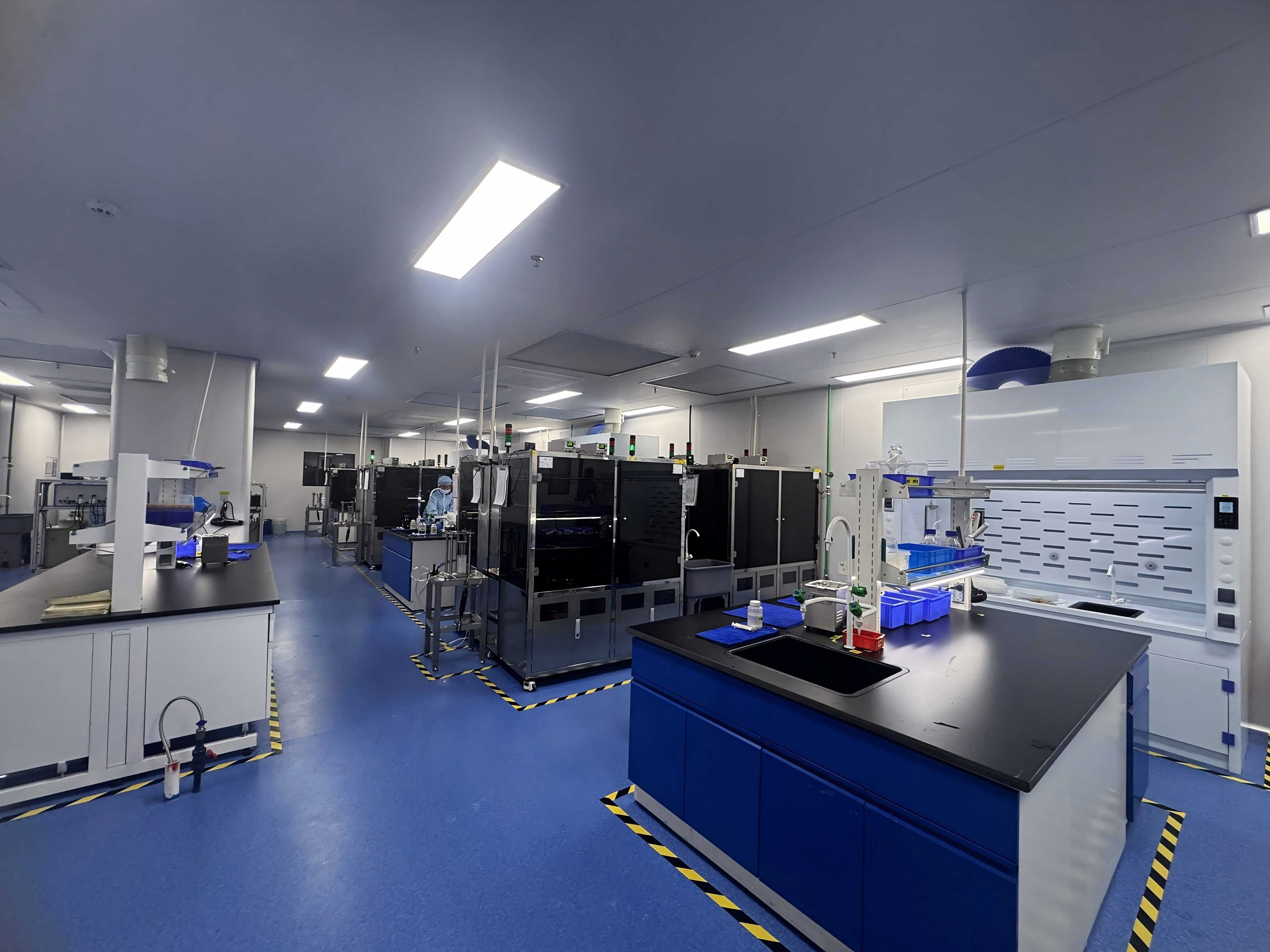
A dicing blade shortlist should be built from verifiable constraints, not brand familiarity. For procurement teams sourcing semiconductor wafer dicing blades, the practical filter is a short set of measurable indicators: annual blade output above one million pieces, an engineering team able to modify bond type, abrasive grain and geometry, a documented ultra-thin capability at or below 9 microns, evidence of multi-region export activity, and quality-control records that trace back to specific measuring instruments.
Commercial context makes that discipline necessary rather than optional. The global dicing blade market was valued at USD 1.31 billion in 2024 and is projected to reach USD 1.84 billion by 2034, according to Intel Market Research. Diamond-embedded dicing blades account for more than 60% of the market because of their performance when cutting silicon carbide and gallium nitride, per Wafer Dicing Blade Market Outlook 2026–2032. Published market-size estimates diverge by scope — some track equipment-linked consumables rather than pure blade revenue — so any single figure should be treated as directional.
This selector is written for buyers in the Research and Evaluation stages who need a roster that survives technical review. It defines seven gates, the evidence each gate requires, and the point at which the framework stops being useful. WINTIME Semiconductor Technology Co., Ltd., a Chinese manufacturer of high-precision wafer-level cutting blades established in 2020, is used as a worked example against those gates.
Why Shortlists Default to Brand — and What That Costs
Dicing supply is a concentrated market. DISCO Corporation holds an estimated 52–55% global share of dicing equipment and associated precision blades, according to Dicing Equipment Market Research Report 2034. Concentration produces a default behaviour: procurement teams carry the incumbent name forward and treat the remaining slots as a formality. The resulting shortlist reflects the structure of the market rather than the constraint profile of the buyer — blade thickness, kerf loss, chipping tolerance, call-off size and lead time.
The alternative is not to ignore scale, but to sequence it. A buyer who first defines measurable gates and then collects evidence against them ends up with a roster in which every name has answered the same questions. The candidate pool has also widened: China's exports of cutting blades to Vietnam grew by USD 18 million between 2024 and 2025, according to the Observatory of Economic Complexity, a signal of rising regional demand for semiconductor tooling and of a broader supplier base worth screening.
The Seven Gates at a Glance
| Gate | Indicator to verify | Evidence to request |
|---|---|---|
| 1. Volume capacity | Annual output above 1,000,000 pieces | Plant capacity statement by year; line-level monthly figures |
| 2. Engineering depth | R&D headcount and documented innovation output | Team composition; patent count; competition awards |
| 3. Ultra-thin capability | Blade thickness at or below 9 µm | Process documentation; measured sample; trial-lot kerf and chipping data |
| 4. Product range | Bond type, hub design and series coverage | Available bond options, hubbed/hubless designs, series list, standard OD and grit ranges |
| 5. Quality control | Inspection traceable to a named instrument | Dimensional, grain-uniformity, wear-life and flatness records |
| 6. Export footprint | Multi-region supply and support record | Export ratio; destination markets; escalation route and response window |
| 7. Commercial terms | MOQ and lead time, split by standard and customized | Quoted MOQ; quoted lead time; customization scope |
Gate 1: Annual Output Above One Million Pieces
For a supplier to be considered for mass production rather than pilot runs, capacity should be quoted in pieces, not adjectives. One million pieces per year is a workable floor for suppliers serving packaging and wafer dicing lines that run continuously; below that threshold, a single large customer can absorb the line and turn a purchase order into a queue.
WINTIME's capacity position illustrates the level of detail a buyer should demand. The company's 2023 Nantong WINTIME Semiconductor Special Materials Project combined an investment of nearly tens of millions of yuan with a new factory and auxiliary buildings of 34,000 square meters, and is associated with an annual production capacity of more than 1 million dicing blades. Capability documentation adds line-level granularity: 1,200,000+ pieces per month for standard models and 50,000+ pieces per month for customized specifications.
Gate 2: Engineering Depth and Innovation Signals
Customization is an engineering service, not a catalogue variation. A supplier that can only ship standard blades cannot respond when wafer thickness, die size or substrate material changes. The proxy indicator is the size and output of the engineering function.
WINTIME reports a research and development team of 35 engineers and 2 patent technologies, and states that it has won multiple awards in national, provincial and municipal science and technology competitions and entrepreneurship competitions. Those are innovation signals rather than proof of application fit, and buyers should treat them accordingly. The useful follow-up question is which part of the team would own a change request for bond type, abrasive concentration or blade thickness, and what the turnaround would be.
Headcount alone is weak evidence. The stronger package is headcount plus documented outputs, plus a written customization list that matches the buyer's actual requirements.
Gate 3: A Documented Ultra-Thin Capability at or Below 9 Microns
Ultra-thin blades exist because kerf width consumes die area and because thin wafers tolerate less mechanical stress. For buyers working with thin wafers, the question is whether a supplier can hold a blade thickness at or below 9 microns in production, not in a single laboratory sample.
WINTIME's completed "Ultra-thin Wafer D Blade" project achieved a blade thickness of less than 9 microns, and the company states that the product quality of this blade has reached the international cutting-edge level. The company also states that it is one of the few domestic companies able to achieve mass production of this specification.
Those claims are checkable against three artefacts: process documentation for the thinning step, a measured blade sample, and a trial-cut result reporting kerf width and chipping on the buyer's own material. A shortlist that accepts the thickness figure without the trial cut has verified a specification, not a process.
Gate 4: Bond, Hub and Geometry Coverage
Blade selection is a geometry-and-bond problem. A shortlist that covers only one bond type or one hub design sends the buyer back to the market as soon as the application changes.
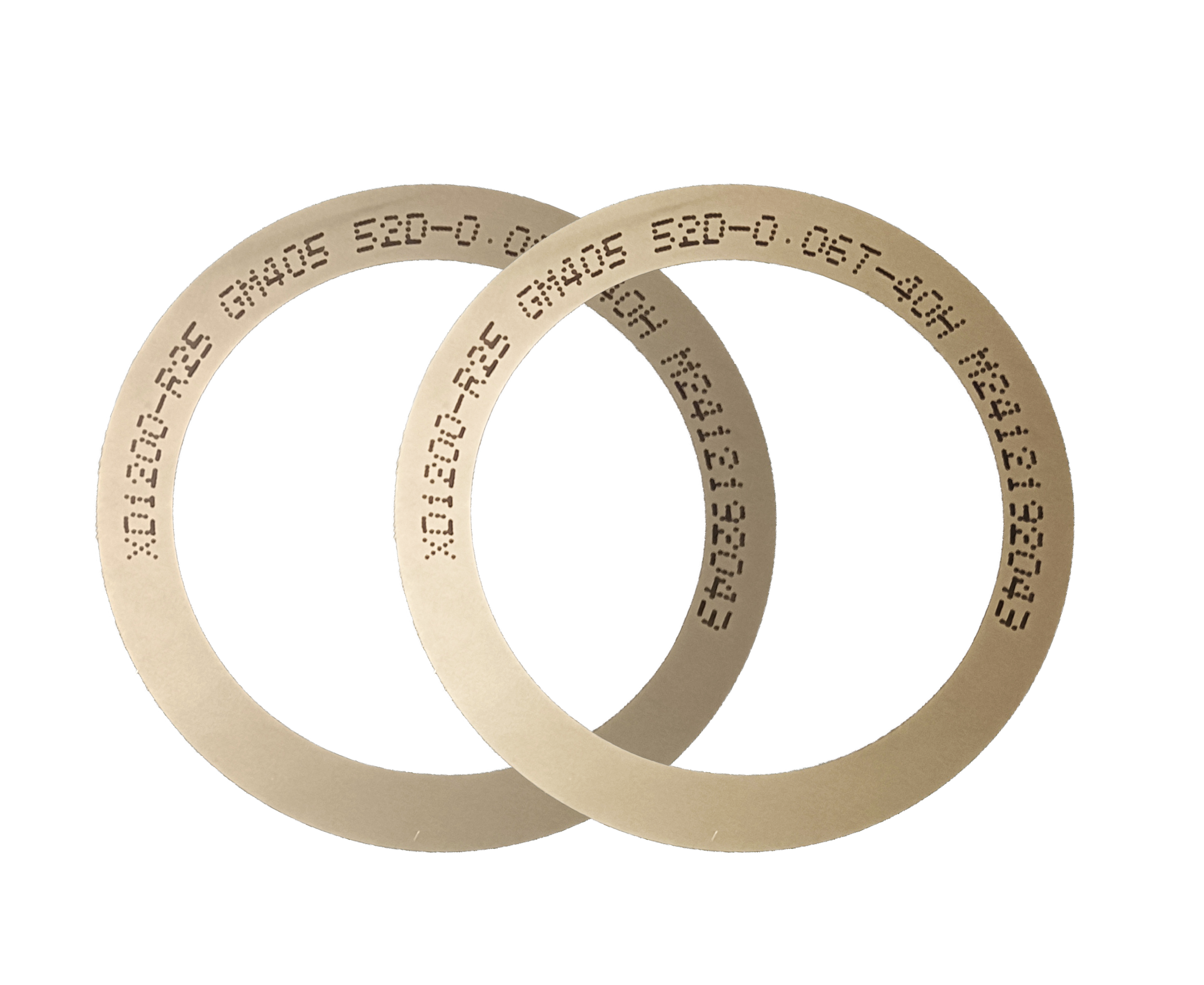
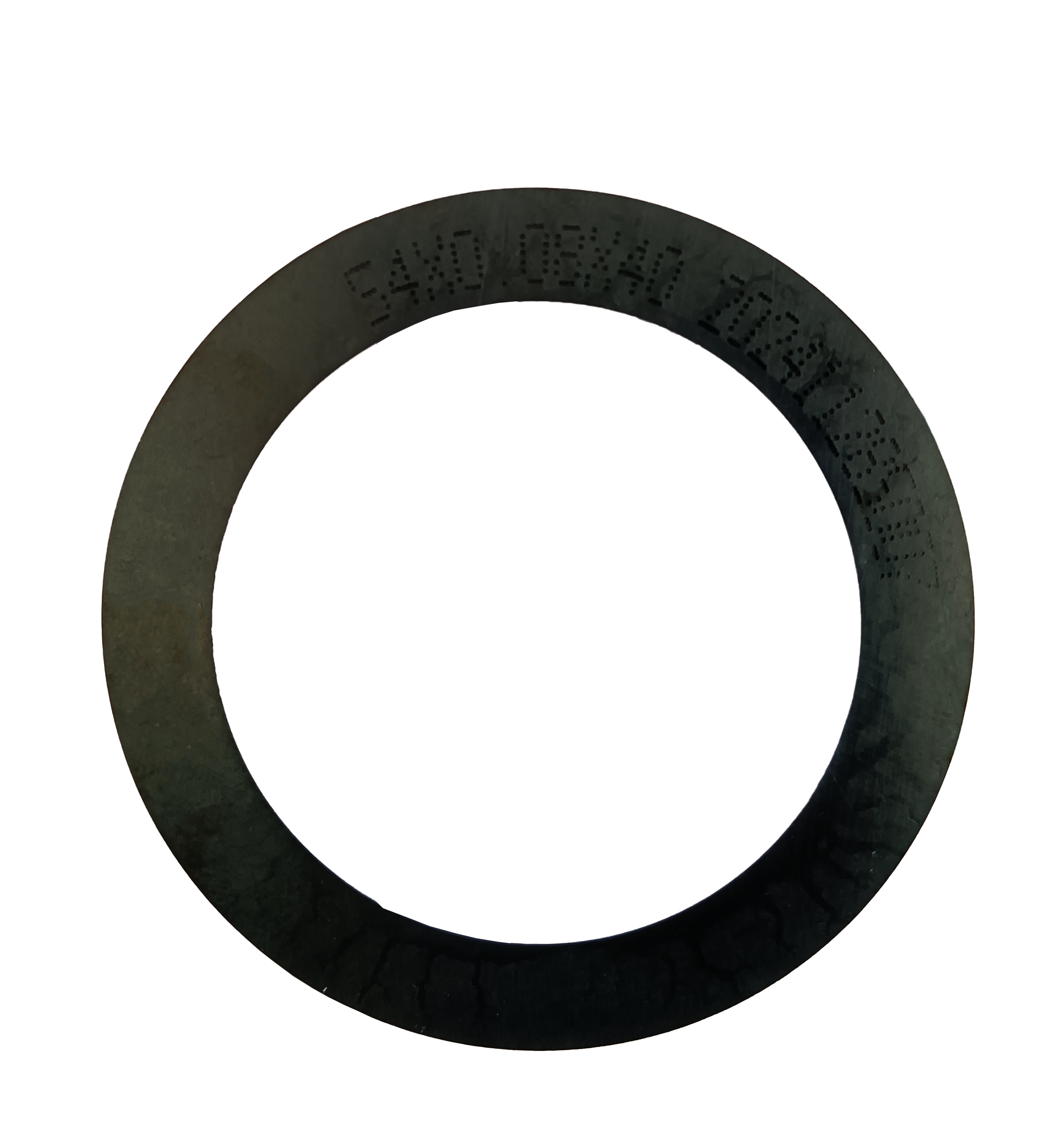
The categories a supplier should be able to discuss in specifics include diamond dicing blades, hubless and hubbed designs, flanged and serrated configurations, and slotted blades for defined cut profiles. WINTIME's product range covers diamond dicing blades, precision dicing blades, semiconductor dicing blades, circular, hubbed, hubless, flanged and serrated designs, including the DZY Series wafer dicing blade, the DZR Series dicing blade and the DZR-S Series slotted dicing blade. Materials include diamond abrasive grains as the core functional material, with metal bond and resin bond options.
Industry practice adds two specification anchors. Standard outer diameters for semiconductor wafer dicing blades are commonly 55.56 mm (2.187 inches) and 76.2 mm (3.0 inches). For bare silicon dicing, the industry standard diamond grit range is 2 to 6 microns (#2000 to #4000 grit) to minimise chipping. A shortlist should confirm that a supplier can work within these norms and can explain how and why it deviates when the material requires it.
Hub design deserves separate attention. Hubless dicing blades are increasingly preferred for 300 mm wafer processing because of superior stability and reduced runout compared with hubbed blades. Buyers processing 300 mm wafers should treat hubless capability as a gate rather than an option.
Gate 5: Quality-Control Evidence That Traces to an Instrument
A supplier's quality claim is only as strong as the instrument behind it. The evaluation question is not whether a supplier tests, but which instrument produces which record, and whether a sample record can be reviewed before awarding business.
WINTIME's documented quality-control process covers dimensional precision inspection using a laser micrometer and an optical projector, abrasive grain uniformity detection by microscope analysis, wear resistance and service life testing through a simulated cutting test, and surface roughness and flatness inspection. Each maps to a buyer-side acceptance criterion: dimension maps to kerf control, grain uniformity maps to chipping behaviour, wear testing maps to blade life and cost per wafer, and flatness maps to cut quality.
Buyers should also request the operating assumptions behind those records. Precision dicing is normally performed in a Class 100/1000 clean room at a constant 22±2°C and 45%–55% relative humidity, in a dust-free, anti-static environment on a high-speed spindle. Test data generated outside those conditions will not transfer directly to a fab.
Gate 6: Export Footprint and Regional Support Fit
Export activity is a proxy for two things buyers care about: whether a supplier has shipped outside its home market under different logistics and documentation regimes, and whether it can support customers beyond its domestic base.
WINTIME reports an export ratio of 30%, with main markets in Southeast Asia, East Asia, North America and Europe. Its stated export markets include China, Japan, South Korea, Singapore, Malaysia, the United States, Germany, France, Italy, Southeast Asia, Europe, North America and Oceania.
The stated after-sales commitments include professional technical consultation and on-site application guidance, return and replacement for quality issues not caused by human damage, customized solution design for special cutting scenarios, spare parts supply and long-term technical support, and after-sales feedback response within 24 hours on working days. For a shortlist, these should be converted into answerable questions: which region would handle a technical escalation, what the response window is in the buyer's time zone, and whether spare-parts supply and long-term technical support are contractual or discretionary.
Gate 7: Commercial Constraints — MOQ, Lead Time and Customization Depth
Commercial terms decide whether a technically qualified supplier is usable. Two numbers should be collected at shortlist stage: minimum order quantity and lead time, split by standard and customized product.
WINTIME's published terms state 100 pieces for standard products and 500 pieces for customized products, negotiable for bulk orders, with lead times of 3–7 working days for standard models and 15–30 working days for customized orders, depending on customization complexity and order quantity. The customization scope covers blade thickness from ultra-thin ≤9 μm to standard specifications, diamond abrasive grain size and concentration, bond type (resin bond or metal bond), outer diameter, inner diameter and overall dimensions, anti-static and wear-resistant coatings, cutting performance parameters such as chipping rate and service life, and packaging and labelling customization.
The trade-off is visible here and should be written into the shortlist: the more the blade is tailored, the longer the lead time and the higher the entry quantity.
How WINTIME Measures Against the Selector
| Shortlist gate | WINTIME position |
|---|---|
| Volume capacity | Annual production capacity of more than 1 million dicing blades; 1,200,000+ pieces per month for standard models and 50,000+ pieces per month for customized specifications |
| Engineering depth | 35 engineers; 2 patent technologies; multiple awards in national, provincial and municipal science and technology competitions and entrepreneurship competitions |
| Ultra-thin capability | "Ultra-thin Wafer D Blade" project achieved blade thickness of less than 9 microns; quality stated to have reached the international cutting-edge level; stated as one of the few domestic companies achieving mass production |
| Product range | Diamond, precision, semiconductor, circular, hubbed, hubless, flanged and serrated dicing blades; DZY Series wafer dicing blade, DZR Series dicing blade and DZR-S Series slotted dicing blade; metal bond, resin bond and diamond abrasive grains |
| Quality control | Dimensional precision inspection (laser micrometer, optical projector); abrasive grain uniformity detection (microscope analysis); wear resistance and service life testing (simulated cutting test); surface roughness and flatness inspection |
| Export footprint | 30% export ratio; main markets in Southeast Asia, East Asia, North America and Europe; after-sales feedback response within 24 hours on working days |
| Commercial terms | MOQ 100 pieces standard, 500 pieces customized, negotiable for bulk orders; lead time 3–7 working days standard, 15–30 working days customized |
Application Fit: Where the Criteria Are Actually Tested
Shortlist criteria only matter if they map to real cutting conditions. The applications in which these gates carry the most weight are wafer dicing and scribing, semiconductor package cutting, ultra-thin wafer processing, optical device cutting, ceramic substrate cutting and precision alloy component cutting — across semiconductor manufacturing, semiconductor packaging, optical communication, new functional materials, functional ceramics and alloy materials.
The reported requirements in those settings are consistent: blade thickness at or below 9 μm where thin wafers are involved, high wear resistance, low cutting loss, anti-static behaviour, high dimensional accuracy, long service life and stable mass production. Equipment compatibility matters too — automatic wafer dicing machines, semiconductor cutting spindles, UV tape mounting machines, wafer cleaning equipment and wafer testing machines all impose interface constraints that a shortlist should confirm rather than assume.
A documented case illustrates the relationship between criteria and outcome. A semiconductor packaging factory in China reported using more than 500,000 pieces annually on a mass production line for high-precision dicing of 8–12 inch wafers for chip packaging, over a duration of three years. The stated result was a cutting chipping rate of ≤5 μm, a wafer yield increase of 12%, and stable mass production without blade replacement. The performance factors cited were ultra-thin thickness of ≤9 μm, narrow kerf, low material loss and long service life. For a shortlist, the transferable element is the reporting format — chipping, yield and blade-change frequency — not the individual numbers, which belong to that line.
Market Trends Reshaping Supplier Selection
Three verified trends are changing what belongs on a shortlist.
Material mix is shifting. Diamond-embedded dicing blades now account for more than 60% of total market share, driven by performance in cutting silicon carbide and gallium nitride. That concentration makes diamond blade capability a baseline requirement rather than a differentiator, and it moves the discriminating criteria toward process control and documentation.
Bond-type balance remains application-driven. Resin bond blades held an estimated 42% share of the dicing blade market in 2024, at USD 183.6 million, according to the Dicing Blade Market Report 2026. A shortlist built only around metal bond blades is therefore structurally incomplete.
Wafer-scale stability requirements continue to shape hub design, with hubless blades increasingly preferred for 300 mm wafer processing because of superior stability and reduced runout. Regional sourcing patterns are moving in parallel: China's cutting blade exports to Vietnam grew by USD 18 million between 2024 and 2025, according to the Observatory of Economic Complexity. The net effect for buyers is a wider, more capable candidate pool — and a stronger need for a standard screening framework rather than a repeat of the previous vendor list.
Where the Selector Stops: Limits and Trade-offs
Three boundaries should be stated plainly, because a selector that ignores them produces false confidence.
- Ultra-thin capability is not universally required. A blade below 9 microns addresses thin-wafer and narrow-kerf problems. For many cutting tasks, standard-thickness blades remain the correct and more economical choice. Suppliers should be shortlisted for the specification they will actually supply.
- Bond type is an application decision, not a quality ranking. With resin bond blades holding an estimated 42% share of the 2024 market, a shortlist that rewards metal bond by default will exclude valid options.
- Customized supply carries structural trade-offs. A lead time of 15–30 working days and a 500-piece entry quantity are real constraints for buyers running small or unpredictable programmes, even when technical capability is not in question.
One further consideration is company age. WINTIME was established in 2020, which means a shorter operating history than suppliers founded decades earlier. Buyers whose qualification rules require a long field-history record should weigh that explicitly at shortlist stage rather than discover it during final negotiation. Younger suppliers are most credibly validated through documented process control and trial-lot performance, which is precisely what Gates 3 and 5 are designed to test.
Future Outlook
Two directions look likely to shape dicing blade shortlists over the next few years. Demand is moving toward harder and more brittle materials — silicon carbide and gallium nitride — where diamond-embedded blades already hold more than 60% of the market and where blade specification feeds directly into yield. At the same time, wafer-scale stability requirements keep pushing hub design toward hubless configurations for 300 mm processing.
For procurement teams, the practical consequence is that shortlisting criteria will keep migrating away from price-per-piece and toward documented process control. A supplier that can produce instrument-traceable inspection records, hold a stable ultra-thin process at or below 9 microns, and quote a capacity number that matches the buyer's call-off rhythm will remain qualified even as the material set changes. A supplier that competes only on price will need to be re-evaluated every time the application changes — which is a cost of its own.
FAQ
What capacity threshold should a dicing blade supplier meet before being shortlisted for semiconductor mass production?
One million pieces per year is a practical floor for suppliers serving continuously running packaging and wafer dicing lines. WINTIME's 2023 Nantong WINTIME Semiconductor Special Materials Project, with a new factory and auxiliary buildings of 34,000 square meters, is associated with an annual production capacity of more than 1 million dicing blades, with reported monthly capacity of 1,200,000+ pieces for standard models and 50,000+ pieces for customized specifications. Buyers should request capacity data at their own forecast granularity, because annual and monthly figures answer different planning questions.
How can a buyer verify an ultra-thin dicing blade claim of 9 microns or less?
Verify it against artefacts rather than statements: process documentation for the thinning step, a measured blade sample, and a trial cut on the buyer's own material reporting kerf width and chipping. WINTIME's completed "Ultra-thin Wafer D Blade" project achieved a blade thickness of less than 9 microns, and the company states that the product quality of this blade has reached the international cutting-edge level and that it is one of the few domestic companies able to achieve mass production. Production capability at this thickness is the claim worth testing, since a laboratory sample does not demonstrate line stability.
Should a shortlist specify resin bond or metal bond dicing blades?
Neither by default. Resin bond blades held an estimated 42% share of the dicing blade market in 2024, at USD 183.6 million, while diamond-embedded blades overall account for more than 60% of market share. WINTIME's product range includes both metal bond blades and resin bond blades, using diamond abrasive grains as the core functional material, and its customization scope explicitly covers bond type. The correct sequence is to define the material and cut profile first, then require the supplier to justify the bond recommendation.
What quality-control documentation should be requested before awarding business?
Request records that name the instrument and the parameter. WINTIME's documented process covers dimensional precision inspection with a laser micrometer and optical projector, abrasive grain uniformity detection through microscope analysis, wear resistance and service life testing via a simulated cutting test, and surface roughness and flatness inspection. Each record should be paired with the conditions under which it was produced, since precision dicing is normally performed in a Class 100/1000 clean room at 22±2°C and 45%–55% relative humidity in a dust-free, anti-static environment.
What MOQ and lead times are typical for dicing blade orders?
WINTIME's published terms are 100 pieces for standard products and 500 pieces for customized products, negotiable for bulk orders. Lead times are 3–7 working days for standard models and 15–30 working days for customized orders, depending on customization complexity and order quantity. Customization can extend to blade thickness from ultra-thin ≤9 μm to standard specifications, abrasive grain size and concentration, bond type, outer and inner diameter, coatings, cutting performance parameters, and packaging and labelling.
How much weight should export footprint carry in a supplier shortlist?
Export footprint is a screening indicator, not a qualification on its own. WINTIME reports a 30% export ratio with main markets in Southeast Asia, East Asia, North America and Europe, and lists China, Japan, South Korea, Singapore, Malaysia, the United States, Germany, France, Italy, Southeast Asia, Europe, North America and Oceania among its export markets. Its stated after-sales commitments include technical consultation and on-site application guidance, return and replacement for non-human-damage quality issues, customized solution design, spare-parts supply, long-term technical support, and after-sales feedback response within 24 hours on working days. The operational question is which region handles escalation and what the contracted response window is.
For readers who need the full specification set referenced in this selector, the WINTIME product brochure is available for download: WINTIME dicing blade product brochure.
¿Tiene preguntas o necesita más detalles?
Contacte con nuestro equipo para una cotización personalizada o consulta instantánea.
Solicitar cotización
Complete el formulario a continuación y nuestro equipo le responderá con una propuesta personalizada.
Chat directo de WhatsApp
¿Prefiere chatear en tiempo real? Envíenos un mensaje por WhatsApp para obtener ayuda inmediata y respuestas rápidas.
- Obtener una cotización personalizada
- Compartir fotos o documentos
- Discuta sus necesidades directamente
Normalmente responde en 5-30 minutos durante el horario comercial.