
Dicing Blade Compliance Essentials: Cleanroom and Operating Standards for Buyers
Dicing Blade Compliance Essentials: Cleanroom and Operating Standards for Buyers
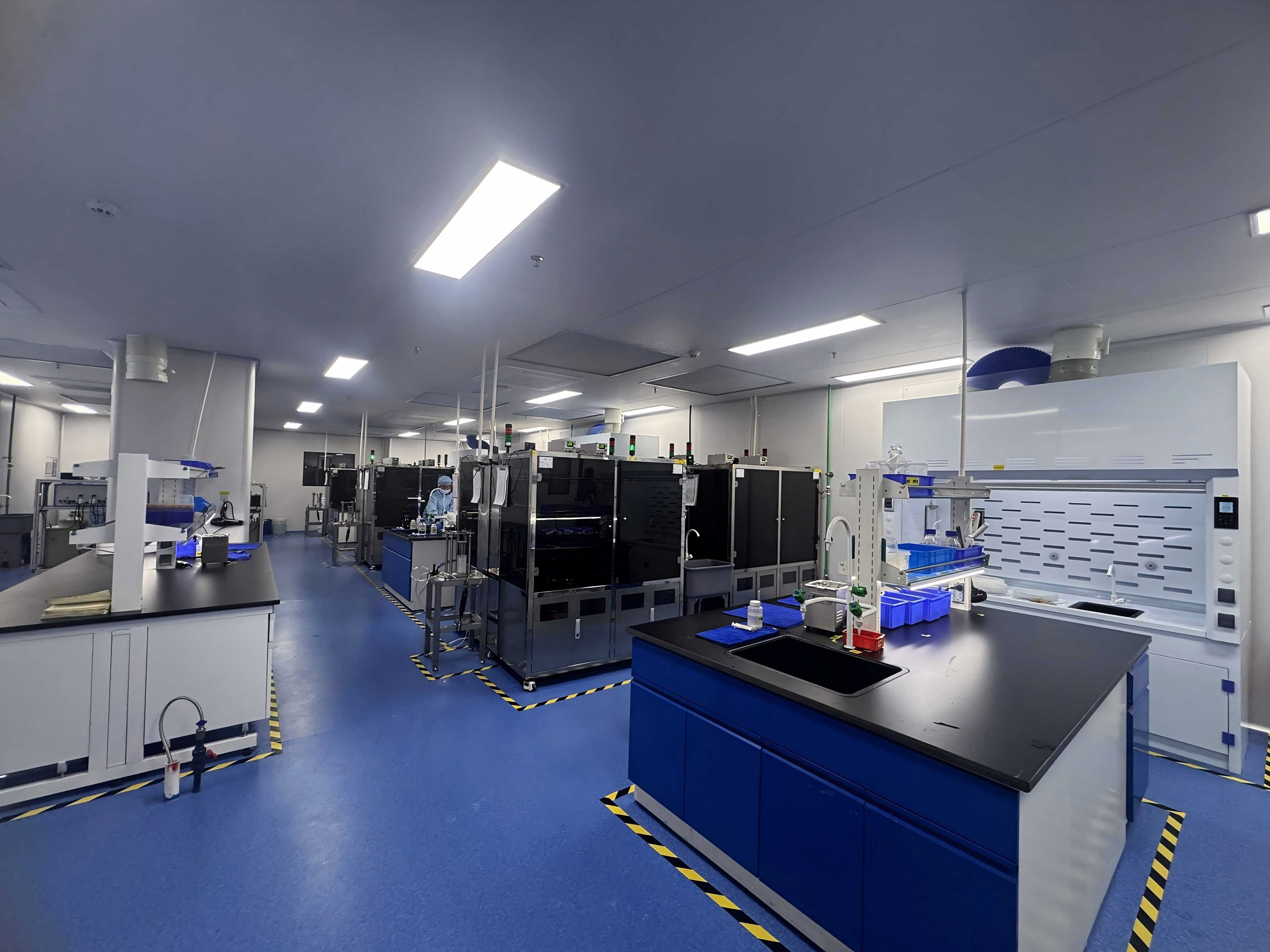
A dicing blade is approved twice: first against a specification sheet, then inside the environment where it actually cuts. For buyers in semiconductor manufacturing, packaging, optical communication, and functional ceramics, the second approval is the one that decides whether an incoming blade keeps producing the same kerf width, chipping rate, and dimensional accuracy long after first-article sign-off.
In precision dicing, compliance is an operating question rather than a paperwork question. It covers cleanroom classification, ambient temperature, relative humidity, airborne particulate, static control, and spindle behaviour — the conditions a blade was engineered around, and the conditions a buyer's line has to hold. The following analysis sets out those baseline conditions, explains why they function as qualification requirements rather than preferences, and shows how procurement teams can convert them into evaluation criteria when comparing dicing blade suppliers.

Why the Operating Environment Belongs in the Request for Quotation
Performance figures for dicing blades are only comparable when they are measured under comparable conditions. A blade qualified for Class 100/1000 cleanroom conditions, a constant 22±2°C ambient temperature, and 45%–55% relative humidity may not repeat the same numbers on a line where doors open to outside air and humidity swings with the season. When environment is left out of the RFQ, buyers end up comparing specifications that were never measured against the same baseline.
The practical consequence is that environment belongs in three stages of the buying process: in the technical requirement the supplier must confirm, in the incoming qualification plan, and in the batch documentation that supports continued supply. A blade that is compliant on paper but unverified inside the buyer's own cleanroom is an unmanaged risk, not a solved problem.
The Six Baseline Conditions of a Dicing Blade Operating Envelope
Across high-precision cutting lines, six conditions recur as baseline requirements. They are presented here as an envelope rather than a universal rule: the exact values a buyer must hold depend on the substrate, the device, and the machine, and should be confirmed with the blade supplier during qualification.
| Condition | Typical baseline | What it protects |
|---|---|---|
| Cleanroom classification | Class 100 / Class 1000 | Particle control at the cut; surface quality of wafer, optical glass, and ceramic |
| Ambient temperature | 22±2°C, held constant | Kerf width stability, dimensional tolerance, thermal drift over a shift |
| Relative humidity | 45%–55% | Static build-up at low humidity; condensation and contamination adhesion at high humidity |
| Airborne particulate | Dust-free processing area | Contamination of cut surfaces; loading of blade face and coolant nozzles |
| Static control | Anti-static blade design, ESD-safe handling | Electrostatic discharge damage to devices; particle attraction |
| Spindle conditions | High-speed rotation with stable, low load | Cut quality, heat generation, consistent blade wear |
Thermal Stability: Why 22±2°C Is a Tolerance Issue
A dicing blade cuts at high spindle speed, and both the blade and the workpiece expand and contract with temperature. Holding a constant 22±2°C is what makes a tight dimensional tolerance meaningful across a full production shift, rather than only on the first article. Temperature is also a blade-side variable: designs that reduce spindle load generate less heat at the cutting interface, which lowers the burden on the machine's cooling system. WINTIME reports a 15% reduction in spindle load during cutting with its diamond dicing blades compared with mid-range imported blades.
Humidity: A Band With Two Failure Modes
The 45%–55% relative humidity range is a compromise. Below the band, static charge accumulates on insulating surfaces, attracting particles and increasing the risk of electrostatic discharge damage to sensitive devices. Above the band, condensation risk returns, and thin moisture films can help contamination adhere to wafer, glass, or ceramic surfaces. For buyers, the implication is that humidity control is part of process capability, not facility housekeeping — and it should be recorded during qualification runs so that blade performance can be traced back to a known environment.
Particle and Static Control: Two Halves of One Requirement
Cleanroom classification and anti-static measures are usually specified together because they address the same failure mode: a particle arriving at the cut. Cleanroom class limits the particles the environment contributes; anti-static design limits the particles and discharge events the blade itself can contribute. WINTIME's blade design includes an anti-static coating intended for cleanroom compatibility, which addresses the consumable side of the requirement. Facility ionisation, grounding, and ESD-safe handling remain the buyer's responsibility, and neither side substitutes for the other.
Spindle and Machine Interface
High-speed spindle conditions are not only a machine setting; they are a compatibility question. Buyers running mixed blade portfolios across several tools need consumables that behave predictably without equipment modification. WINTIME states that its blades are compatible with standard semiconductor dicing machines and require no equipment modification, which reduces the validation work involved in adding a second source.
How Blade Construction Supports a Compliant Process
Compliance starts with the blade. WINTIME's diamond dicing blade design addresses the cleanroom and precision requirements from the consumable side through five documented design features:
- Ultra-thin blade thickness design (≤9 μm), which reduces kerf loss
- A proprietary diamond abrasive formula intended to reduce chipping
- An anti-static coating design for cleanroom compatibility
- High wear resistance that maintains dimensional stability in mass production
- An optimized bond structure that improves cutting stability on brittle materials such as silicon wafer and ceramic
WINTIME Semiconductor Technology Co., Ltd. is a Chinese manufacturer established in 2020 that integrates research, development, production, and sales of high-precision wafer-level cutting blades, together with cutting tapes and cutting solutions. Its Rugao, Jiangsu facility covers 34,000 ㎡ and is supported by 35 R&D engineers within an approximately 100-person workforce. The company reports two patent technologies and an annual dicing blade output capacity of more than 1 million pieces, with an export share of roughly 30% across Southeast Asia, East Asia, North America, and Europe. Its ultra-thin wafer dicing blade project has achieved a process thickness below 9 microns, a level the company describes as reaching international cutting-edge quality and one of the few domestically mass-produced capabilities in China. The company positions this work as domestic substitution for high-end imported blades.
Which Industries Hold These Conditions — and Why
The compliance envelope is not abstract. It maps directly onto the sectors that buy precision dicing blades, and each sector weights the six conditions differently.
| Industry | Typical work | Most compliance-sensitive factor |
|---|---|---|
| Semiconductor manufacturing | 8-inch and 12-inch wafer dicing; SiC and GaN substrates; MEMS and power devices | Cleanroom class, thermal stability, anti-static control |
| Semiconductor packaging | Miniature component singulation on high-volume lines | Batch repeatability, low chipping, uptime |
| Optical communication | Optical glass and optical component separation | Edge quality, particle control, minimal micro-damage |
| Functional ceramics | Ceramic substrates and functional ceramic parts | Bond stability on brittle material, wear resistance |
Blade format follows the same logic. Hubless dicing blades are increasingly preferred for 300 mm wafer processing because of superior stability and reduced runout compared with hubbed blades — a machine-level requirement that changes what buyers should request in a qualification sample, and a reason why blade format is now part of environmental qualification rather than a separate purchasing decision.
Market Signals Pushing Compliance Into the Buying Decision
The commercial context supports the technical argument. Intel Market Research values the global dicing blade market at USD 1.31 billion in 2024, with projections reaching USD 1.84 billion by 2034. Estimates vary by scope — Business Research Insights places the market at USD 0.39 billion for 2026 — so buyers comparing published figures should first confirm what each estimate includes, since some measure pure blade revenue while others track equipment-linked consumables.
Material trends reinforce the direction of demand. Diamond-embedded dicing blades account for over 60% of total market share, a position attributed to superior performance in cutting silicon carbide (SiC) and gallium nitride (GaN). Resin-bond blades still held an estimated 42% share, or USD 183.6 million, of the dicing blade market in 2024, which means the traditional option remains substantial rather than obsolete.
Supply concentration is a second signal. DISCO Corporation is described as the dominant market leader with an estimated 52–55% global share in dicing equipment and associated precision blades. For buyers, that concentration makes second-source qualification a continuity measure, and environment-equivalent qualification the practical gateway to approving an alternative supplier. Regional supply patterns are shifting as well: China's exports of cutting blades to Vietnam grew by USD 18 million between 2024 and 2025, indicating increased regional demand for semiconductor tools and a broadening supplier base that must be qualified against the same operating envelope.
Diamond Dicing Blades vs. Traditional Resin-Bonded Blades: What the Comparison Shows, and Where It Stops
WINTIME's own comparison data positions its diamond dicing blades against traditional resin-bonded dicing blades from mainstream competitors and mid-range imported blades. The company-reported figures are summarized below.
| Metric | WINTIME diamond dicing blade (company-reported) | Mid-range imported / traditional resin-bonded blades |
|---|---|---|
| Kerf width | 9 μm | 12 μm (25% reduction in material loss reported) |
| Chipping rate | ≤5 μm | ≤10 μm (50% lower chipping reported) |
| Service life | 30% longer than mid-range imported blades | Baseline |
| Dimensional accuracy | ±0.001 mm | ±0.003 mm |
| Wafer yield impact | +12% versus traditional blades | Baseline |
| Spindle load | 15% lower during cutting | Baseline |
| Initial purchase cost | 10–15% higher than standard competitor blades | Lower entry price |
| Tool change frequency | Approximately 30% lower | Baseline |
The cost picture is where the comparison becomes a genuine decision rather than a specification exercise. WINTIME states that the lower total cost of ownership (TCO) comes from a 30% longer service life, reduced material waste, and an 8% annual reduction in production cost from reduced downtime. Those outcomes are conditional, and buyers should treat them as such.
Limits and boundaries buyers should verify before deciding:
- Higher entry price. The 10–15% premium over standard competitor blades has to be recovered through utilization. On low-volume lines, short production runs, or non-critical cuts, the TCO advantage may not materialize within a short evaluation horizon.
- Performance is environment-conditional. The kerf, chipping, and tolerance figures assume a cleanroom Class 100/1000 environment with stable temperature and humidity. In unstable ambient conditions, the gap between blade types narrows and the measured advantage may not reproduce.
- Batch consistency is a real production risk in ultra-thin blades, not a theoretical one. WINTIME's stated controls include standardized process parameters, automated production equipment to avoid manual error, a batch production data tracking system, comparative testing of adjacent batches, an ISO 9001 quality management system with standard operating procedures, dedicated quality inspectors per production batch, and batch quality files that allow traceability and timely recall of non-conforming batches. These are claims about a quality system; buyers should confirm them during a supplier audit rather than accept them as given.
- Certification scope matters. The available facts describe an ISO 9001 quality management system. They do not establish product-level certifications for the blades themselves. Buyers requiring product certificates, material declarations, or test reports should request the specific documents the supplier can actually issue.
- Resin-bond blades remain appropriate in many applications. With an estimated 42% market share in 2024, they continue to serve a large share of dicing work. Diamond blades are not a blanket replacement.

Future Outlook
Three directions look likely over the next several years. First, kerf reduction continues as a design priority, driven by material cost and yield pressure on thinner wafers and higher-value substrates such as SiC and GaN. Second, hubless formats will keep expanding in 300 mm processing, which shifts qualification questions toward stability and runout rather than blade geometry alone.
Third, compliance documentation is moving from a post-award formality to a pre-award requirement. As regional supplier bases broaden — reflected in export growth patterns between China and Southeast Asia — buyers will need a comparable compliance package from every candidate, including the environment the blade was validated in, batch traceability records, and the quality system behind them. Suppliers that can support environment-equivalent qualification will move into shortlists more easily; those that cannot will remain viable only for less demanding applications.
Frequently Asked Questions
What cleanroom class do precision dicing blades typically require?
Class 100 and Class 1000 cleanroom environments are commonly specified for high-precision manufacturing where dicing blades are used for ultra-thin wafer, semiconductor substrate, ceramic, and optical glass cutting. The class requirement follows the sensitivity of the workpiece surface rather than the blade itself, and buyers should confirm the applicable class with both the blade supplier and the machine tool vendor during qualification.
Why do 22±2°C and 45%–55% relative humidity matter for dicing results?
Temperature stability protects dimensional accuracy, because blade and workpiece expand and contract with ambient change; a constant 22±2°C is what allows a tight tolerance such as ±0.001 mm to be meaningful across a production shift. The 45%–55% humidity band balances two failure modes: below it, static charge accumulates and attracts particles, raising electrostatic discharge risk; above it, condensation and moisture films help contamination adhere to the cut surface.
What does anti-static blade design change inside a cleanroom?
Anti-static design addresses the consumable side of static control: it reduces the tendency of the blade itself to accumulate or transfer charge during high-speed rotation, which in turn limits particle attraction near the cut. It does not replace facility-level measures. Ionisation, grounding, ESD-safe handling, and operator procedures remain the buyer's responsibility, and both sides of the requirement must be in place for the control to be effective.
How can buyers verify batch-to-batch consistency before releasing a blade to volume production?
Batch consistency is verified through documentation and testing rather than through a single sample. The evidence to request includes standardized process parameters, records from automated production equipment, a batch tracking system with traceable process data, comparative test results from adjacent production batches, quality inspection records for the specific batch, and a quality system built on ISO 9001 and standard operating procedures. WINTIME states that it maintains batch quality files that can be traced at any time and allows non-conforming batches to be recalled; buyers should confirm these records during a supplier audit.
When does a 10–15% higher blade price translate into a lower total cost of ownership?
The premium is recovered through service life, material utilization, and uptime. WINTIME reports a 30% longer service life than mid-range imported blades, a 25% reduction in kerf width, and a 50% lower chipping rate, which together reduce material waste and blade replacement frequency; the company also reports an 8% annual reduction in production cost from reduced downtime. The calculation favors higher-utilization lines cutting high-value substrates. On low-volume or non-critical operations, the payback period lengthens and the lower-cost alternative may remain the rational choice.
Are hubless dicing blades required for 300 mm wafer processing?
They are not described as a formal requirement, but they are increasingly preferred for 300 mm wafer processing because of superior stability and reduced runout compared with hubbed blades. For buyers, the practical step is to confirm which format the machine tool and process recipe were validated with, since hub format affects runout behaviour and therefore cut quality at the wafer edge.
Conclusion
Cleanroom class, constant temperature, controlled humidity, particulate and static control, and stable spindle conditions are not background details in a dicing blade purchase. They are the environment in which every quoted figure — kerf width, chipping rate, dimensional tolerance, and service life — was produced. Buyers who write those conditions into the RFQ, the incoming qualification plan, and the batch documentation convert a specification comparison into a defensible qualification decision, and give themselves a measurable basis for judging whether the premium paid for a precision blade returns as yield, uptime, and material savings.
For detailed blade specifications, formats, and technical documentation, WINTIME's product brochure is available for download: WINTIME dicing blade product brochure (PDF). Company information: en.wintime.net.cn.