
Diamond Sanding Belts: Precision Abrasives for Hard Material Processing
Industry Context
Zhengzhou Ruite Diamond Belts Co., Ltd. (established in 2003) is a Chinese manufacturer specializing in superhard material coated abrasives, including diamond sanding belts. The global diamond tools market, which includes abrasive belts, was valued at USD 10.8 billion in 2024 and is projected to reach USD 19.5 billion by 2034, according to Global Market Insights. As industries such as aerospace, wind power, and ceramics increasingly demand precise grinding and polishing of hard brittle materials, the role of advanced abrasive technologies becomes central.
Problem and Opportunity
Traditional silicon carbide and aluminum oxide belts struggle with materials like tungsten carbide, glass, and ceramics, showing rapid wear and inconsistent finishes. Operators in thermal spray coating, glass edging, and carbide tool sharpening need abrasives that maintain cutting edge under high friction, wet or dry conditions, and complex geometries. Diamond sanding belts fill this gap by combining the flexibility of coated abrasives with the hardness of superhard materials.
RUITE’s Diamond Sanding Belts
RUITE produces diamond belts made from diamond or CBN abrasive, available in resin bond and electroplated types. The belts are designed for grinding and polishing applications and support both wet and dry operation. Grit sizes range from 40# to 5000#, widths from 5mm to 350mm, and lengths from 150mm to 5000mm. Customization according to customer requirements is available, allowing tailored solutions for specific part geometries and finish targets.
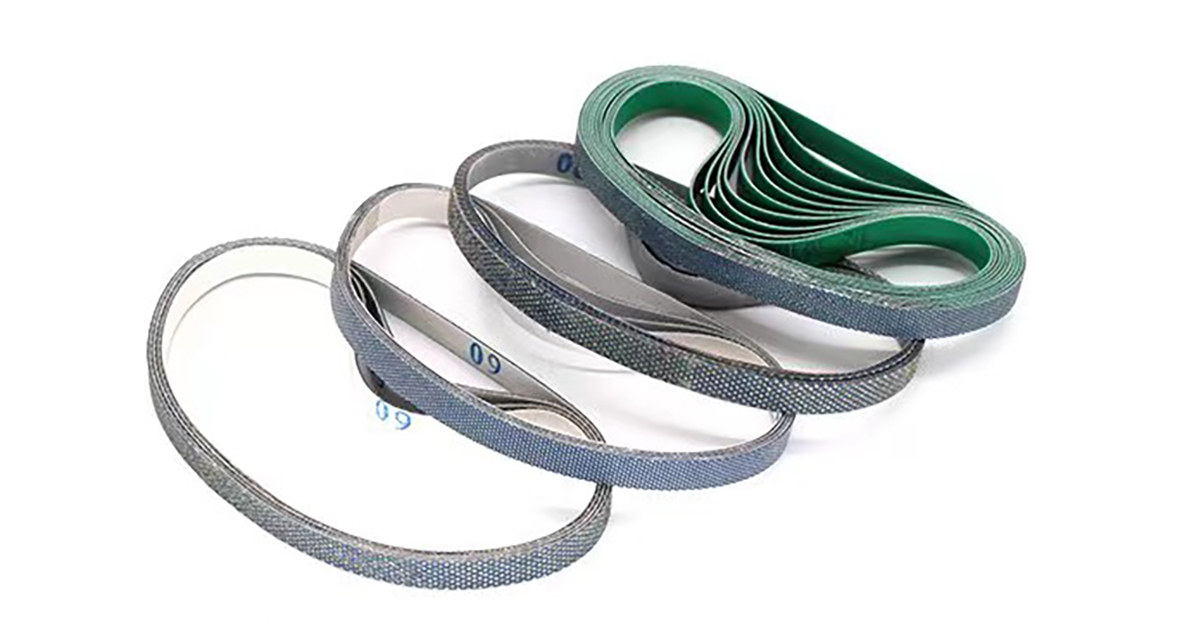
Diamond sanding belt – available in resin bond and electroplated types for grinding and polishing hard brittle materials.
Technical Characteristics
The diamond belt uses diamond or CBN (Cubic Boron Nitride) as the abrasive material, giving it a significantly higher hardness than conventional abrasives. Resin bond diamond belts feature a continuous layer of diamond embedded in resin, providing consistent stock removal and a finer finish. Electroplated belts offer higher cutting rates and aggressive material removal, ideal for rough grinding. The belts come in endless (seamless) configurations, eliminating joint bumps for smoother operation on edge rounding and surface finishing tasks. The wide grit range (40# for coarse stock removal to 5000# for mirror polishing) enables a single belt to progress from grinding to fine finishing in multi-stage processes.
Application Scenarios
RUITE diamond belts are used across multiple industries: aeronautics and astronautics, wind power, thermal spray coating, stone, glass, and porcelain. Specific use cases include:
- Thermal spray coating (e.g., tungsten carbide): Belts with coarse grit dress down hard coatings without delamination.
- Glass edging: Fine grit belts smooth and polish glass edges for architectural and automotive panels.
- Ceramic tile grinding: Resin bond belts handle chamfering and surface finishing on porcelain and ceramic.
- Carbide tool sharpening: Electroplated diamond belts rapidly shape and resharpen tungsten carbide inserts.
- Composite material and high-temperature alloys: CBN belts provide efficient grinding on nickel-based superalloys and carbon fiber composites.
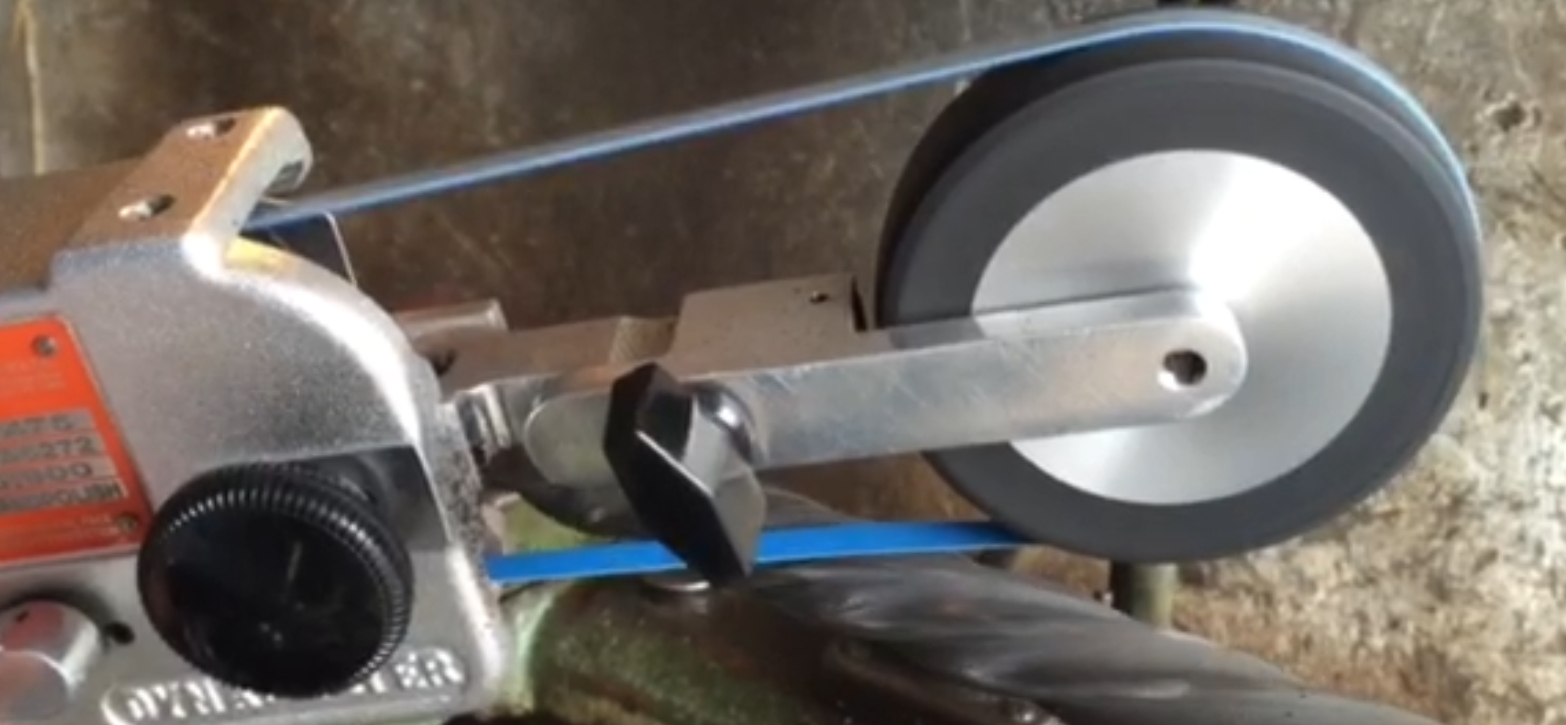
Diamond belt in operation – suitable for both handheld power tools and stationary belt grinding machines.
Market Trend Analysis
The coated abrasive belt market (all materials) was valued at approximately USD 3.2 billion in 2025, with a projected CAGR of 5.3% through 2033 (Cognitive Market Research). The thermal spray coatings market, a key downstream sector, is expected to reach USD 15.28 billion by 2031 (Mordor Intelligence). Diamond-based super-abrasives are increasingly critical for post-processing in additive manufacturing, where surface roughness below 5 µm is often required. RUITE has positioned itself with export business accounting for 70% of total sales, primarily to Europe and the United States, aligning with high-value industrial markets that demand quality and precision.
Comparison with Traditional Solutions
Compared to conventional aluminum oxide belts, diamond belts deliver up to several times longer life on hard materials, reducing tool change downtime and consumable costs. They maintain consistent geometry during edge rounding and produce a superior surface finish. However, an honest limitation: diamond belts are costlier upfront and not recommended for general-purpose metal grinding on mild steel, where conventional abrasives remain more economical. For specialized applications involving hard ceramics, glass, stone, cemented carbide, and thermal spray coatings, the total cost of ownership often favors diamond.
Future Outlook
As manufacturing precision demands increase and materials become harder, the adoption of superhard coated abrasives will grow. RUITE’s ongoing research into CBN belts, CBN flap discs, and specialized diamond products positions the company to support next-generation machining requirements. With independent intellectual property rights and a dedicated R&D team of 5 engineers, the company is able to iterate on custom belt specifications, including custom widths, lengths, and bond types. The cancellation of China’s export tax rebate on abrasive products (effective April 1, 2026) may shift sourcing strategies, but suppliers with strong technical support and OEM capability remain attractive partners for international buyers.
For detailed product specifications and custom options, download the full catalog:
RUITE Diamond Belt Catalog (PDF)
¿Tiene preguntas o necesita más detalles?
Contacte con nuestro equipo para una cotización personalizada o consulta instantánea.
Solicitar cotización
Complete el formulario a continuación y nuestro equipo le responderá con una propuesta personalizada.
Chat directo de WhatsApp
¿Prefiere chatear en tiempo real? Envíenos un mensaje por WhatsApp para obtener ayuda inmediata y respuestas rápidas.
- Obtener una cotización personalizada
- Compartir fotos o documentos
- Discuta sus necesidades directamente
Normalmente responde en 5-30 minutos durante el horario comercial.