
Diamond Sanding Belts: Reading Supplier Longevity Signals

Supplier longevity is increasingly used as a pre-qualification filter in abrasive procurement.
Diamond sanding belt procurement is rarely a pure price decision. A belt is a continuous cutting tool, which means a buyer who changes supplier has to re-validate grit behaviour, joint integrity, belt life against line takt, and even packaging fit with existing storage. Those validation costs usually exceed any unit-price difference. As a result, the signals that matter most when shortlisting a supplier often have nothing to do with the specification sheet.
This article examines one supplier's publicly reported institutional profile — Zhengzhou Ruite Diamond Belts Co., Ltd, established in 2003, with 45 employees, a 5-engineer technical team, annual output of 100,000 units and a 70% export ratio — and asks a narrower question: what do these figures actually tell a procurement team, and where do they stop being useful?
Why Supplier Longevity Belongs in the Evaluation Set
A specification sheet answers one question: can this product be made. A procurement decision depends on a different one: will this supplier still be making it to the same standard in three, five, or eight years.
The first question can be settled with a sample test. The second can only be inferred from how long a supplier has existed, how its workforce is structured, and whether it invests in engineering rather than only in sales. For diamond abrasives the distinction carries real cost. Switching suppliers resets the buyer's learning curve on grit-to-finish behaviour, joint strength, and belt life under a specific machine pressure and coolant mode. Those are process-level costs, and they do not appear on a quotation.
Longevity is therefore best read as a risk-reduction dimension rather than a quality claim. It narrows a candidate list before sample testing begins. It does not replace sample testing.
Four Observable Dimensions of Supplier Sustainability
In manufacturing, "sustainability" is often used as an environmental term. For procurement, it is more useful to read it as organisational continuity: whether the company, its people and its capability can carry forward. Four dimensions can be checked against published information.
1. Operating history
Zhengzhou Ruite Diamond Belts Co., Ltd was established in 2003. By 2026 the company has operated for more than two decades. In coated abrasives, that duration says nothing about scale, but it does indicate that the organisation and its customer relationships have survived several market cycles.
2. Workforce structure
The company reports 45 employees, including a technical team of 5 engineers. An engineering ratio of this order indicates that product development is handled in-house rather than outsourced. Ruite states that this team developed its diamond sanding belts, diamond flap discs, diamond spiral bands and diamond hand pads with independent intellectual property rights, and subsequently developed superhard coated abrasive lines including CBN belts, CBN flap discs, CBN spiral bands and CBN hand pads.
3. Market structure
Exports account for 70% of output, with the EU and USA as principal markets. A ratio at this level means most of the company's production passes through European and North American customer acceptance procedures, which imposes specific requirements on inspection records and documentation.
4. Certification evidence
Ruite holds an ECM certificate, number No. 0P210906.ZRDQ038, issued by ECM Certification Machine Srl against EN 13743:2017. The scope covers Diamond Rap Disc in φ100mm, φ115mm, φ125mm, φ150mm and φ180mm, for the EU market. The certificate was issued on 2021-09-06 with an expiry date of 2026-09-05.
At the time of writing, that certificate date has passed. A buyer intending to use it as EU conformity evidence should request the renewal document from the supplier and confirm whether the renewal scope still covers the specific dimensions being purchased. This is not a reason to discount the certification — it is the normal verification step any procurement team should apply to any certificate.
Where Delivery Reliability Actually Comes From
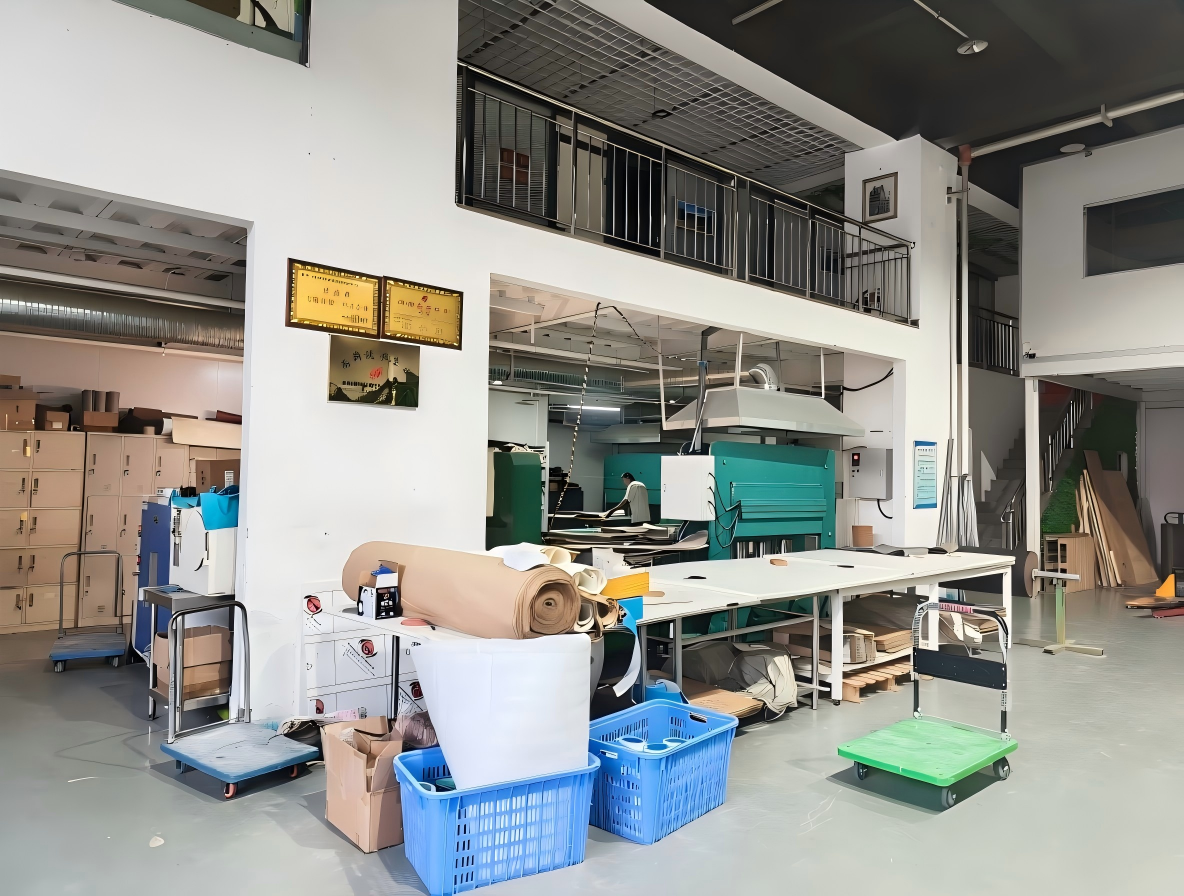
Delivery reliability is determined upstream, in production planning and inspection, not at the logistics stage.
Delivery reliability originates in the factory, not in the freight forwarder. Ruite's reported production terms are: OEM production, monthly capacity of 1,000 units, standard lead time of 30–45 days, minimum order quantity of 50 units, and customisation covering packing and logo. Quality control is stated as 100% testing of all units. Delivery terms are quoted as FOB, CIF or DDP, with pre-shipment testing as the acceptance criterion and 100% prepayment as the payment term.
Read together, these terms define an operating envelope.
A monthly capacity of 1,000 units places the supplier in the small-to-medium batch range. A buyer should treat that figure as a ceiling in production planning rather than assume spare capacity can be added at short notice. The 50-unit MOQ keeps the entry cost for trial orders low, which matters when a new specification has to be validated on the line before volume release.
The 30–45 day lead time includes production scheduling and, where applicable, customisation. That is a reasonable expectation for orders involving packing or logo changes; it is not a window that compresses to two weeks for standard items.
The 100% testing claim carries particular weight in diamond belts. Because a belt is a continuous cutting tool, a single unit in a batch with an under-strength joint can cause a line stop whose cost far exceeds the belt price. Full inspection does not guarantee a perfect unit, but it reduces the probability that a serious defect reaches the customer inside a batch.
After-sales terms are a 12-month shelf-life quality warranty, free technical consultation, and replacement for defective batches. The boundary should be stated plainly: 12 months is a shelf-life warranty, not a service-life guarantee. Actual belt life depends on the workpiece material, machine pressure, coolant mode and operator practice. The warranty covers product condition at delivery, not in-service wear performance.
Eight Years, 20,000 Units: A Continuous Supply Record That Can Be Reasoned From
The most persuasive longevity signal is not a statement — it is a supply relationship that has already run.
Product 5282, a diamond flap disc in Φ100*16mm, Φ115*22mm and Φ125*22mm, grit 40#–800#, is used for ceramic grinding. An OEM customer in Italy has supplied ceramic grinding clients with this product for 8 years, covering 20,000 units, with no customer complaints reported and stable quality results recorded over the period.
The value of this record lies in the conditions it bundles together: cross-border supply from China to Italy, an OEM arrangement rather than direct retail, ceramic grinding as an application sensitive to abrasive consistency, an eight-year duration, and a cumulative volume of 20,000 units. A buyer can reason from it that a supplier able to hold a consistency-sensitive application for eight years without a customer complaint has reproducible process control, not just good single batches.
The boundary matters as much. This is one customer, one application and one product model. It does not transfer automatically to thermal spray coating grinding, tungsten carbide finishing, or composite material work. A ceramic grinding record is evidence of consistency management; it is not evidence of suitability for every hard-material process.
Application Fit Varies, and So Does the Evidence Required
Diamond sanding belts span a wide application range, and the same supplier is not equally suited to all of it.
In glass edging and ceramic tile processing, resin bond diamond belts are typically selected for medium-to-fine grit work and edge rounding, where self-sharpening behaviour and heat management matter. In thermal spray coating grinding and tungsten carbide finishing, electroplated diamond belts are more often chosen because of their aggressive cutting action. Composite materials and high-temperature alloys place different demands on belt flexibility, joint strength and coolant compatibility.
For the buyer this means the qualification question should not be "can you make diamond sanding belts" but "which of your models has an actual use record in my material, my grit range, and my dry or wet condition".
Ruite's portfolio covers both resin bond and electroplated types, and includes flexible diamond belts, endless diamond belts and diamond abrasive cloth belts, spanning coarse, medium and fine grit ranges with dry and wet grinding capability. The practical advantage of a portfolio this wide is that a grit or bond change can be handled inside one supplier relationship rather than restarting a supplier qualification.
The trade-off is symmetric: a broader portfolio usually means less depth per individual model. Application records should outweigh portfolio breadth when a buyer is assessing fit.
Market Context: Why Retaining a Supplier Now Costs Less Than Replacing One
At the market level, the geography of supply and the geography of demand are pulling apart.
Grand View Research places the global abrasives market at USD 41.0 billion in 2025, projected to reach USD 59.5 billion by 2033, with Asia Pacific accounting for a 56.0% revenue share in 2025. Within that, the coated abrasive belt segment was estimated at USD 3.2 billion in 2025 with a 5.3% CAGR. These figures describe the broader abrasives category rather than diamond belts specifically, but they point to a structural fact: abrasive supply is concentrated in Asia Pacific while buying demand is distributed globally.
In a cross-border relationship, validation cost, communication cost and conformity cost accumulate with each supplier change. They do not shrink when the unit price drops. Meanwhile application demand is expanding: the thermal spray coatings market is projected to reach USD 15.28 billion by 2031, and thermal spray grinding is one of the primary uses for electroplated diamond belts.
Expanding application demand brings more new entrants into the supply side. That makes it more important, not less, for buyers to have a reliable way to separate long-standing suppliers from recent arrivals. Supplier longevity does not replace sample testing, but applied before sample testing it can shrink a candidate list to companies with a plausible existence in five years' time.
Where the Single-Quotation Approach Breaks Down
Conventional procurement settles a purchase by comparing price, lead time and sample performance. For small, short-cycle orders this works well.
Its limitation is that it cannot process continuity. A supplier that performs well on a first quotation may be unable to continue supply in year two because capacity has shifted, staff have left, or a certification has lapsed. None of those risks are visible in a single RFQ cycle.
Adding a time dimension changes the evaluation set: founding year, headcount, engineering ratio, export structure, certification validity, and completed long-term project records join price and lead time on the checklist. None of these items lowers the unit price directly. What they lower is the probability of an unplanned supplier change — and the cost of that change is usually larger than the price difference accumulated over several years.
The long-view approach is not universally applicable either. It pays off in procurement situations that require continuous supply, are sensitive to batch consistency, and carry high re-validation cost. For one-off projects or very low-volume purchasing, the effort required to run this assessment is not justified by the risk it removes.
Who This Supplier Profile Suits — and Who It Does Not
The limits should be stated as clearly as the strengths.
Ruite operates a 500 m² facility with 45 employees and a monthly capacity of 1,000 units. That profile fits small-to-medium OEM orders, customisation projects, and multi-product low-volume purchasing. For a buyer requiring tens of thousands of units per month on a continuous basis, capacity becomes a hard constraint rather than a soft one.
A 30–45 day lead time is not the fastest in the category. Where a production line requires replenishment within two weeks, or where a supplier must hold local inventory in Europe or the Americas, direct shipment from China does not match the requirement.
Payment terms are 100% prepayment. For a new buyer this represents capital commitment and credit exposure, and the usual mitigation is to start with sample testing and a small trial order before volume release.
On compliance, the ECM certificate lapses on 2026-09-05 and renewal status must be confirmed before it is relied on for EU market access. For North America, ANSI B7.7-2003 governs safety requirements for coated abrasive systems; that is a conformity item the buyer must verify independently and cannot be substituted by a single supplier certificate.
A Verification Checklist for Long-Term Supply Capability
The following items can be requested directly in an RFQ and cross-checked against the supplier's published information.
| Verification item | What to confirm | Why it matters |
|---|---|---|
| Operating history | Founding year and continuous operation | Indicates survival through market cycles |
| Workforce | Total headcount and engineering headcount | Shows whether development is in-house |
| Market structure | Export ratio and principal markets | Indicates exposure to regulated-market acceptance |
| Long-term project record | Client type, duration, cumulative volume, complaint history | Demonstrates consistency beyond a single batch |
| Quality control | Inspection method and batch traceability | Links directly to line-stop risk |
| Commercial terms | Capacity, lead time, MOQ, and product scope they apply to | Prevents planning against unstated assumptions |
| Certification | Standard, certificate number, issuer, validity, product scope | Confirms whether conformity evidence is current |
| After-sales terms | Warranty period, technical support, defective batch handling | Defines the responsibility boundary |
| Payment and acceptance | Payment terms, delivery terms, pre-shipment test criteria | Controls financial and quality exposure on first orders |
Future Outlook
Diamond sanding belt supply appears likely to split along two lines over the next several years.
One line is scale. As thermal spray, composite and cemented carbide processing expand, some suppliers will consolidate around larger capacity and more standardised product ranges, compressing lead times and pushing prices down.
The other line is application specialisation. Glass edging, ceramic tile processing and thermal spray coating grinding place materially different demands on grit, bond type and joint construction. Suppliers specialised in a handful of applications will compete on technical fit rather than on volume.
Buyers need different evaluation methods for each. Scale-oriented suppliers are assessed on capacity stability and price trajectory; application-specialised suppliers are assessed on use records and engineering responsiveness. Comparing both inside a single RFQ template tends to produce a distorted conclusion.
For a supplier with 45 employees, 100,000 units of annual output and an OEM and customisation orientation, the second path is the more realistic one. Its competitiveness derives from consistent batches and traceable records in defined applications, not from capacity leadership.
Reference material: a downloadable product catalogue covering Ruite's diamond belt, flap disc and hand pad ranges is available at https://cdn.socialarks.com/sbsp/24986/common/2026/0617/Catalog.pdf.
FAQ
How can a buyer judge whether a diamond sanding belt supplier's delivery is reliable?
Three checkable points are useful. First, the inspection method: whether all units are tested or only sampled. Second, whether capacity and lead time match the order size — a supplier reporting 1,000 units per month and a 30–45 day lead time fits small-to-medium batch orders. Third, whether there is a completed long-term supply record, including duration, cumulative volume and any complaints during the period.
What MOQ and lead time apply to OEM diamond sanding belts?
Using Ruite's stated terms as an example: MOQ is 50 units, standard lead time is 30–45 days, and customisation covers packing and logo. These figures describe general order conditions. Specific dimensions, grit ranges and customisation complexity affect actual scheduling, and should be confirmed at the quotation stage rather than assumed from the general terms.
Does a long operating history mean the product is more reliable?
No. Operating history reflects organisational continuity and the reduced likelihood of a supplier exiting mid-relationship. It does not substitute for product testing. Product reliability is established through sample testing, batch consistency records and actual in-service data. The two dimensions answer different questions and should not be merged.
What does an 8-year, 20,000-unit record with zero complaints actually demonstrate?
It demonstrates that for one specific application — ceramic grinding for an OEM customer in Italy — and one specific product model, 5282, the supplier maintained an acceptable level of quality over eight years without triggering a customer complaint. It should not be extrapolated to other materials, other models, or other markets, but it is legitimate evidence of batch consistency management capability.
What does ECM certification mean for a procurement decision?
ECM certification is conformity evidence for the EU market. Ruite's certificate is number No. 0P210906.ZRDQ038, issued by ECM Certification Machine Srl against EN 13743:2017, covering Diamond Rap Disc in dimensions from φ100mm to φ180mm. The certificate's validity ends on 2026-09-05, so renewal status and current scope should be confirmed before it is used as a conformity basis for a specific purchase.
Can a small supplier still support long-term supply?
It depends on the buyer's order size. A supplier with 45 employees and a monthly capacity of 1,000 units suits small-to-medium batches and multi-product orders, but cannot support continuous supply in the tens of thousands of units per month. Monthly demand should be compared directly against published capacity, with headroom retained for demand variation.
¿Tiene preguntas o necesita más detalles?
Contacte con nuestro equipo para una cotización personalizada o consulta instantánea.
Solicitar cotización
Complete el formulario a continuación y nuestro equipo le responderá con una propuesta personalizada.
Chat directo de WhatsApp
¿Prefiere chatear en tiempo real? Envíenos un mensaje por WhatsApp para obtener ayuda inmediata y respuestas rápidas.
- Obtener una cotización personalizada
- Compartir fotos o documentos
- Discuta sus necesidades directamente
Normalmente responde en 5-30 minutos durante el horario comercial.