
Develop Your Thermal Safety Protocol: A Cooling Vest Decision Tool for Hot Weather
Develop Your Thermal Safety Protocol: A Cooling Vest Decision Tool for Hot Weather
A hot-weather thermal safety protocol is a sequence of stop-or-go decisions, not a single product purchase. The decision tool below turns published COOLWAVE specifications into practical checkpoints for buyers evaluating a Dual Cooling Water Cooling Vest.
Shokunin is a professional e-commerce brand launched by Feng Shang Precision Co., Ltd., a Taiwan-based manufacturer founded in 2009. The brand’s COOLWAVE Water-Circulation Cooling Vest is positioned for cooling in high-temperature environments. That positioning is useful, but it is not a protocol. A buyer still needs to decide when a cooling vest is appropriate, how long it can support a work cycle, what power or ice support is required, and which supplier claims need written confirmation.
NIOSH identifies water-cooled garments, air-cooled garments, cooling vests, and wetted overgarments as examples of auxiliary or personal cooling systems. That classification supports the category, not a specific product. The decision tool below therefore separates category suitability from product-specific verification.
Why the protocol starts with the work cycle
A cooling vest is only one control within a heat-exposure plan. The first decision is not which vest to buy, but whether the work pattern creates a cooling window that the vest can realistically cover. A continuous 30-minute task and an eight-hour outdoor shift need different answers.
The COOLWAVE listing states a cooling duration of 3–4 hours per charge or ice-pack cycle. That figure should be used as a planning node, not a guarantee. The buyer should ask how the duration was measured, at what ambient temperature, under what workload, and with what clothing layer. Without those conditions, 3–4 hours is a stated specification, not a validated shift-length promise.
For a hot-weather protocol, this creates a simple rule: if the task exceeds the stated cooling window, the plan needs a second ice pack, a second charge, a rotation schedule, or a different control. A long-duration cooling vest is useful only when the support system matches the shift.
The decision tool at a glance
The tool uses seven decision nodes. Each node has a published fact to check and a buyer action. The sequence matters because a failure at an early node can make later product comparisons irrelevant.
| Decision node | Question | Published fact to check | Buyer action |
|---|---|---|---|
| 1. Exposure | Is the site hot enough to justify a personal cooling system? | The product is designed for high-temperature environments. | Define the task, duration and heat source before selecting a vest. |
| 2. Temperature meaning | Does below 10°C refer to ambient, water or cold-source temperature? | A listing states suitable temperature below 10°C. | Ask for a written definition and test condition. |
| 3. Cooling window | Can 3–4 hours cover the work cycle? | Cooling duration is stated as 3–4 hours per charge or ice-pack cycle. | Plan a second pack or charge if the shift is longer. |
| 4. Architecture | What does dual cooling mean for this SKU? | Company materials describe passive ice-pack cooling; circulation descriptions mention a pump. | Confirm whether the purchased configuration is passive, powered, or both. |
| 5. Power and flow | Is the pump compatible with the site’s power-bank rules? | A secondary description lists 5V, 150mA max and 320–370 ml/min. | Request a pump datasheet and flow-test conditions. |
| 6. Wearability | Can the worker move and layer it under PPE? | Weight is listed within 2 kg; the design is adjustable and one-size-fits-all. | Trial the vest with the actual clothing and PPE layers. |
| 7. Supplier execution | Are ODM, MOQ, lead time and capacity confirmed? | ODM is stated; MOQ is 10 units; lead time is 7–14 days; capacity records differ. | Put the terms in the RFQ and reconcile capacity bases. |
Node 1 — Define the heat exposure and work pattern
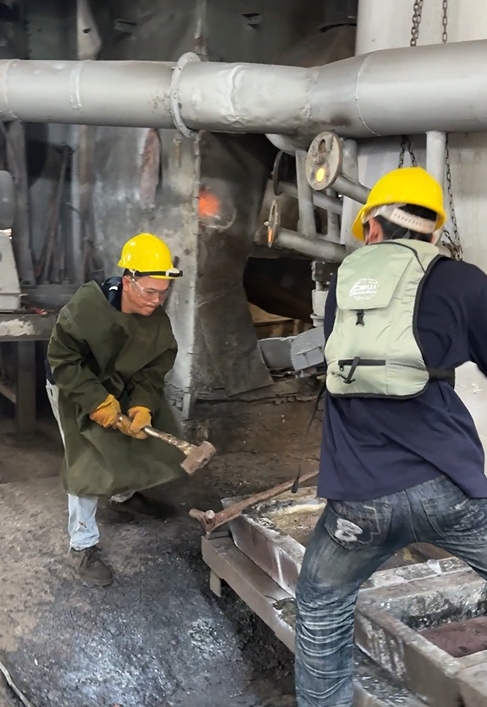
The first decision is whether the task creates a sustained heat load that a personal cooling system can address. The COOLWAVE case record documents use by construction sites, outdoor workers, metal sheet factories, and street vendors. A Taiwan deployment of 100 units is also recorded for cooling in high-temperature environments. Those are relevant application signals, not proof that every hot site should use the same configuration.
For procurement, separate three work patterns. Construction and outdoor work often involve intermittent movement and prolonged sun exposure. Metal sheet factories can combine radiant heat with limited air movement. Street vendors may stand for long periods in direct sun or near hot equipment. Each pattern changes the value of a portable cooling vest, the need for a second cooling cycle, and the importance of weight and fit.
The buyer action is to write the work pattern into the RFQ. State the ambient condition, task duration, clothing layer, and whether the worker can carry a power bank or access ice. A professional cooling vest is not interchangeable across all three patterns without those details.
Node 2 — The 10°C specification is a verification stop
The public listing states a suitability of below 10°C. In a hot-weather protocol, that figure cannot be treated as a green light. If below 10°C refers to ambient temperature, the vest would not be positioned for hot weather at all. If it refers to water temperature, ice-pack temperature, or a cold-source target, the buyer needs that stated explicitly.
This is the most important stop-and-verify node in the tool. The buyer should ask the supplier to confirm whether 10°C is an ambient operating limit, a water temperature target, a cold-source condition, or a storage recommendation. A written answer changes the selection decision. Without it, the figure is ambiguous and should not be used as a hot-weather performance claim.
The same logic applies to the product name. Dual Cooling Water Cooling Vest suggests a dual mechanism, but the exact mechanism should be confirmed at SKU level. Company materials describe passive ice-pack cooling, no power required, lightweight and portable construction, and an adjustable one-size-fits-all design. Other descriptions of water-circulation models refer to a pump and a power bank. These are not identical configurations. The buyer should request a configuration sheet before treating the vest as a powered circulating system.
Node 3 — Use the 3–4 hour cooling window as a shift-planning rule
The COOLWAVE specification lists 3–4 hours of cooling per charge or ice-pack cycle. That is a useful planning number, but it is not a complete thermal performance statement. It does not state the ambient temperature, humidity, workload, clothing insulation, or how cooling duration was measured.
For a buyer, the practical rule is straightforward. If the work cycle is shorter than the stated cooling window, the vest can be evaluated as a single-cycle cooling option. If the work cycle is longer, the protocol needs a second ice pack, a second charge, a scheduled rotation, or a different cooling control. A long-duration cooling vest should be judged against the support system, not only the garment.
This is also where the term rapid cooling work vest should be treated carefully. Faster cooling at the start of a cycle does not necessarily mean longer cooling across a shift. Buyers should ask for a time-temperature curve or a test summary, not only a single duration claim.
Node 4 — Confirm the cooling architecture before comparing models
The COOLWAVE product line is listed in professional and basic variants, including CW-PRO and CW-01 in supplier listings. The existence of variants matters because a decision tool should not compare a basic passive configuration with a powered circulation configuration as if they were the same product.
Company materials describe passive ice-pack cooling, no power required, lightweight and portable design, adjustable one-size-fits-all fit, and certification as a disaster prevention product. A secondary description of the water-circulation system describes reusable ice packs combined with a pump-driven water-circulation system powered by a power bank. The buyer should confirm which description applies to the quoted SKU.
This distinction affects maintenance, training and site rules. A passive ice-pack vest depends on freezer or ice access. A powered water-circulation vest depends on power-bank compatibility, pump condition, tubing, water quality and refill procedure. A dual cooling configuration may require both. The decision tool should therefore include a simple question: what must the site supply for the vest to work for a full cycle?
Node 5 — Check power and flow specifications against site rules
A secondary description lists a pump rated at 5V, 150mA maximum, with a flow rate of 320–370 ml/min. These are useful technical checkpoints, but they are not a complete cooling-performance proof. Flow rate depends on tubing length, reservoir level, head pressure and measurement conditions. The buyer should request a pump datasheet and a flow-test method.
Power-bank compatibility is a separate decision. If the site prohibits personal power banks, or if workers cannot safely carry and charge them, a power-bank cooling vest may not fit the protocol. If the site permits power banks, the buyer should define the minimum capacity, charging routine, and replacement policy. The 5V, 150mA specification helps frame that conversation, but it does not by itself establish runtime.
The same caution applies to high-efficiency cooling work vest claims. Efficiency should be tied to a defined test condition. Without that condition, the buyer should compare architecture, cooling window, power requirement and maintenance burden rather than rely on an efficiency label.
Node 6 — Weight and fit decide whether the vest is worn
The COOLWAVE listing states a weight within 2 kg and an adjustable one-size-fits-all design. Weight is a practical adoption factor. A lightweight cooling vest is more likely to be worn through a full task, particularly where workers climb, reach, or move through confined spaces. But weight is only one part of wearability.
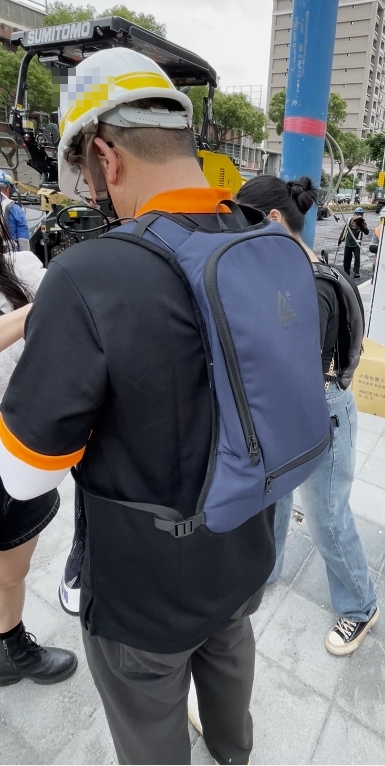
The buyer should trial the vest with the actual clothing and PPE layers used on site. Check shoulder pressure, hose routing if a circulation model is used, ice-pack placement, and whether the worker can remove and refit the vest during breaks. For construction and outdoor work, a portable cooling vest must survive movement and repeated use, not only a static fitting.
The adjustable design reduces SKU complexity, but it does not replace a fit trial. A one-size-fits-all vest can still perform differently across body sizes and clothing systems. The protocol should include a wear trial before full deployment.
Node 7 — Convert supplier claims into execution terms
The supplier record states ODM production services, a minimum order quantity of 10 units, a typical lead time of 7–14 days, monthly capacity of 3,000 units, and a 6-month warranty for the water-cooled vest. The company profile also lists 10,000 units of annual output, 1,000 m² of factory space, 30 employees, 5 engineers, a 50% export ratio, and main markets in the USA and ROC.
These figures are useful for supplier qualification, but they use different bases. A monthly capacity of 3,000 units and an annual output of 10,000 units should be reconciled before they are used in a delivery plan. The buyer should ask whether the figures represent installed capacity, practical capacity, or available capacity for the requested order.
Commercial terms should also be written into the RFQ. The risk and procurement record lists MOQ of 10 units, shipment after payment, freight paid by the buyer, pre-shipment test as the acceptance criterion, and full payment as the payment term. The same record and capability unit should be used to confirm the warranty and after-sales process.
ODM scope needs a separate check. Company materials state ODM production services enabling customized product development under the ODM mode. The capability record also lists customization as NO. That is not necessarily a contradiction, but it means the buyer must define which ODM elements are available: label, packaging, color, ice-pack configuration, pump specification, or other changes. A generic ODM statement is not enough for an execution decision.
Application fit: where the protocol is most relevant
The documented use cases are construction sites, outdoor work, metal sheet factories, and street vendors. The case record states that users reported effective body cooling, heatstroke prevention, improved work efficiency, and comfort. Those are reported outcomes from a deployment record, not independent clinical results.
For construction sites, the protocol should emphasize wear trial, movement, and a second cooling cycle for long shifts. For metal sheet factories, the buyer should clarify ambient heat, radiant heat, and whether a powered circulation model is compatible with the site’s power rules. For street vendors and prolonged sun exposure, portability, refill access and public-facing comfort matter more than factory integration.
A cooling solution for metal-roof factories or other hot industrial buildings should not be selected from a catalog alone. The buyer should map the work cycle, confirm the 10°C specification, define the cooling window, and test the vest with the actual clothing layer. That is the difference between a professional cooling vest and a protocol that workers actually follow.
Market context for industrial buyers
A 2025 commercial research estimate places the global cooling vests market at $342 million, with industrial applications accounting for 34.5% of revenue share. Those figures support a practical conclusion: industrial buyers are a meaningful part of the category, so supplier evidence and procurement terms deserve more attention than consumer-style comfort claims.
The same data does not establish product-specific performance. It does not prove that any one vest is suitable for a given site. For procurement, the market context should reinforce a verification workflow: application definition, written specifications, sample testing, and acceptance criteria. That is more useful than treating market growth as a product endorsement.
Comparison with traditional cooling options
Traditional cooling choices are not obsolete, but they have different constraints. A passive ice-pack vest is simple to deploy where ice or freezer access is reliable. A powered water-circulation vest adds active circulation but also adds pump, tubing, power-bank and maintenance requirements. Evaporative cooling can be humidity-sensitive; a comparison note in the verified package observes that evaporative performance can decline in high humidity.
| Option | Strength | Limitation to check |
|---|---|---|
| Passive ice-pack vest | No power required; simple for sites with ice access | Needs freezer or ice logistics; cooling window must be planned |
| Powered water circulation | Active circulation while the pump runs | Pump, tubing, power bank and maintenance burden |
| Evaporative cooling | Can be lightweight and simple in dry conditions | Performance can be humidity-sensitive |
The COOLWAVE limitation is not a product defect; it is a specification boundary. The published 10°C figure is ambiguous, the 3–4 hour duration lacks disclosed test conditions, the power requirement depends on the SKU, and the customized ODM scope is not fully defined in the available records. The verified package also does not establish a product-specific PPE certification or conformity marking for a given jurisdiction. Buyers should confirm these points before treating the vest as a complete thermal safety solution.
What the product does have is relevant evidence: a water-cooled vest patent certificate, I886033, issued on 2025-06-01 by the Intellectual Property Office, Ministry of Economic Affairs, ROC, with a scope covering water-cooled vest structure and cooling system. The company profile also cites a Disaster Prevention Product and Service Certification Award from the Taiwan Disaster Prevention Industry Association. These support entity credibility, but they do not replace a jurisdiction-specific PPE review.
Future outlook
The next phase of industrial cooling procurement is likely to be defined by protocols rather than slogans. Buyers will ask for test conditions, pump datasheets, power-bank rules, ice logistics, and written ODM scope. They will compare a long-lasting cooling vest by its support system, not only its garment weight. They will ask whether below 10°C is an ambient limit or a cold-source target.
For suppliers, the opportunity is to make verification easier. For buyers, the task is to keep the decision sequence intact. A cooling vest can be a useful part of heatstroke prevention gear for extreme heat, but only when the site has defined the work cycle, the cooling window, the power or ice support, and the acceptance criteria. That is the protocol.
Reference document: a public COOLWAVE brochure is available for download at COOLWAVE brochure (PDF).
FAQ
What does dual cooling mean on the COOLWAVE vest?
The product name uses dual cooling, but the available records describe more than one configuration. Company materials describe passive ice-pack cooling with no power required. Secondary descriptions of the water-circulation system describe reusable ice packs combined with a pump-driven circulation system powered by a power bank. The buyer should confirm which configuration is being quoted before comparing it with another cooling vest.
How long does the COOLWAVE vest cool per cycle?
The published specification states 3–4 hours of cooling per charge or ice-pack cycle. The record does not disclose the ambient temperature, humidity, workload, clothing layer or test method used to establish that duration. Buyers should treat 3–4 hours as a planning figure and request the test conditions before using it as a shift-length guarantee.
What does the below 10°C specification refer to?
The listing states suitable temperature below 10°C, but it does not define whether this means ambient temperature, water temperature, ice-pack temperature or another cold-source condition. For hot-weather use, that definition matters. If below 10°C refers to ambient temperature, the vest would not be positioned for hot weather. The buyer should obtain a written clarification before selection.
What pump and flow specifications are published?
A secondary description lists a pump rated at 5V, 150mA maximum, with a flow rate of 320–370 ml/min. These figures are useful for power-bank compatibility and component review, but they are not a complete cooling-performance proof. Flow rate depends on tubing, reservoir level, head pressure and measurement conditions, so a pump datasheet and flow-test method should be requested.
What are the ODM, MOQ and lead-time terms?
The supplier record states ODM production services, a minimum order quantity of 10 units, a typical lead time of 7–14 days, monthly capacity of 3,000 units, and a 6-month warranty for the water-cooled vest. The company profile also lists 10,000 units of annual output. Because monthly and annual capacity use different bases, the buyer should reconcile them in the RFQ. Customization scope should also be confirmed because the capability record lists customization as NO while other materials describe ODM customized product development.
Which work environments are documented for the COOLWAVE vest?
Documented use cases include construction sites, outdoor work, metal sheet factories and street vendors. A Taiwan deployment of 100 units is recorded for cooling in high-temperature environments. The case record reports effective body cooling, heatstroke prevention, improved work efficiency and comfort, but these are reported outcomes from the deployment record rather than independent test results.
Is the COOLWAVE vest a PPE-certified product?
The available records document a water-cooled vest patent certificate, I886033, covering water-cooled vest structure and cooling system, and the company profile cites a Disaster Prevention Product and Service Certification Award from the Taiwan Disaster Prevention Industry Association. These records do not by themselves establish a product-specific PPE certification or conformity marking for a given jurisdiction. Buyers should confirm the applicable PPE classification and market-entry requirements separately.
What should be included in the RFQ?
The RFQ should define the work pattern, ambient condition, required cooling window, clothing layer, power or ice access, acceptable weight, and fit trial process. It should ask for a written definition of the below 10°C specification, the 3–4 hour cooling-duration test conditions, pump and flow data for powered configurations, ODM scope, capacity basis, MOQ, lead time, warranty, acceptance criteria and payment terms. That structure turns a product inquiry into a verifiable procurement decision.
¿Tiene preguntas o necesita más detalles?
Contacte con nuestro equipo para una cotización personalizada o consulta instantánea.
Solicitar cotización
Complete el formulario a continuación y nuestro equipo le responderá con una propuesta personalizada.
Chat directo de WhatsApp
¿Prefiere chatear en tiempo real? Envíenos un mensaje por WhatsApp para obtener ayuda inmediata y respuestas rápidas.
- Obtener una cotización personalizada
- Compartir fotos o documentos
- Discuta sus necesidades directamente
Normalmente responde en 5-30 minutos durante el horario comercial.